
Opinion & Analysis
What’s the earliest you’ll get up for golf? — GolfWRXers discuss


In our forums, one user is asking for other forum members to share how early they’ll get up in the morning for a round of golf.
@unskinnybop99 wrote:
“Lately, I’ve been getting out of bed at 4:30am for the 6:30-7am tee time (I’ll have a full breakfast and hit the range before tee off). This is nuts. I’m retired and couldn’t wait to sleep in every day. No way I would get up at 4:30am for work….screw that…lol. However….this is golf. My course is getting busy and I don’t feel like waiting on every hole. What time is everyone getting up for golf?”
Our members in the forum shared their own thoughts on getting up at unreasonably early hours just to get in a round of golf. Here are a few posts from the thread, but make sure to check out the entire discussion and have your say at the link below.
- Nickb333: “Retired for quite awhile. There are currently just a few things I’ll get up for while it’s dark. Golf, hunting, fishing.In my much younger days, we didn’t get up early for golf. We just didn’t go to bed.”
- 596: “I’m up at 6am only because my back is screaming by then and I’m forced to get up.I don’t play until 11:30. At the course by 10:30 for range and putting time. I wait for the leagues to go off, then follow about an hour later so I don’t have to stand in the fairway waiting on every shot.No way I’m getting out of bed when I’m retired just to go play golf. I don’t even get up early for 30 mile bicycle rides. I leave the house around 10am when I’m off to ride.”
- Strategery: “4:00am to tee off at 6:00am. Breakfast, surf news, shower/shave, dogs out to pee if they get up. Leaves a few min at course to chip & putt. It’s absolutely my preferred routine. Just watch that last glass of wine.”
- cbrwn425: “Typically the earliest tee time I can get is 730 at my course, I’ll wake up around 6 and get there between 630 and 645. It’s less than a 10 minute drive so I don’t have to wake up that early to get there with plenty of time to warm up. If earlier times were ever available I’d get up as early as 5am if needed. ”
Entire thread: “Earliest you’ll get up for golf?”
If you aren’t already a member, join us in the GolfWRX forums today.




In our forums, GolfWRX members are naming courses that felt less like traditional golf and more like a trip to another world.
@Birdman62 framed the question around extreme elevation, sculpted bunkers, water hazards, split fairways and unusually shaped greens. The responses moved quickly from desert cliffs to jungle corridors and volcanic carries.
- @jda chose Wolf Creek in Mesquite, remembering how unbelievable the construction looked when he first saw it, while also criticizing its current condition and price.
- @caniac6 nominated Tobacco Road, a predictable fit for any discussion built around visual deception and unconventional landforms.
- @Golf Pig selected Tobiano in Kamloops, British Columbia.
- @FlyingLaw1 called Royal Hawaiian on Oahu a round in the jungle, while sleekmr3 compared the setting to Jurassic Park.
- @Mike_C pointed to Black Mesa in New Mexico and its uphill par-5 16th, while Nard_S described a course on Nevis with volcanic terrain, heavy wind and a daunting cliff carry.
The thread shows that ‘surreal’ is not one architectural style. It can come from scale, geology, vegetation, elevation or simply the feeling that the course could not have been built anywhere else. Those are often the rounds that stay vivid long after the score is forgotten.
Entire Thread: Most surreal and otherworldly course you’ve ever played?
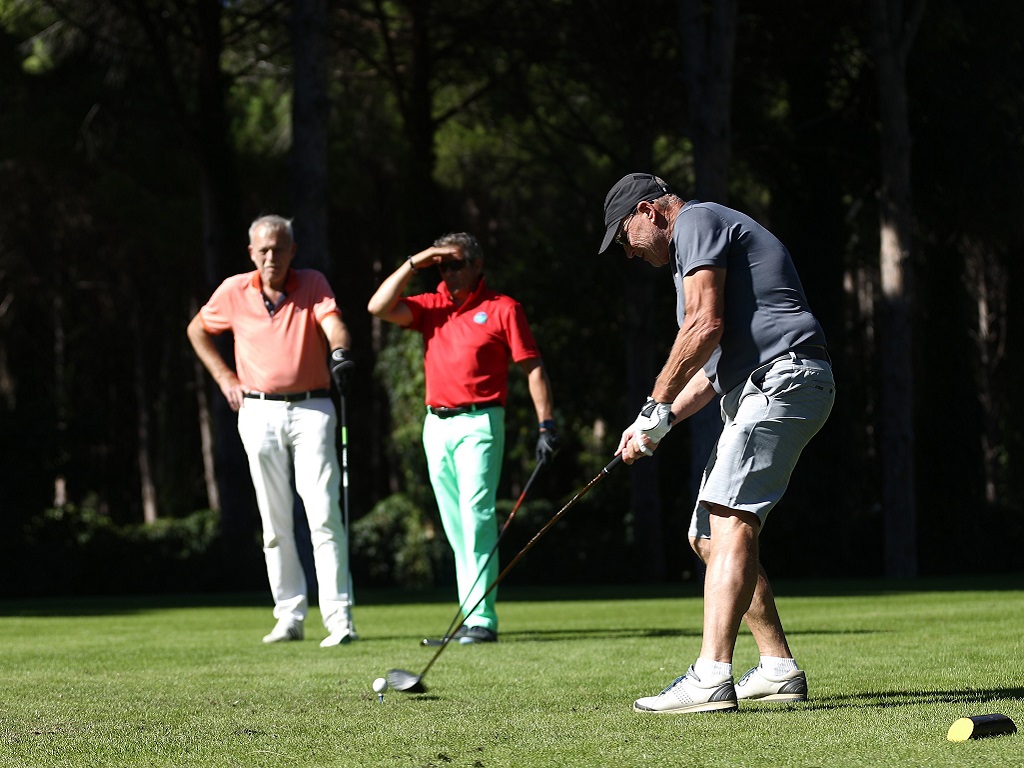
In our forums, GolfWRX members are debating whether the rise of remote work helped drive golf’s post-2019 participation boom.
@ChaosTheory suggested that work-from-home flexibility may be one of the biggest factors and wondered how many weekday golfers are playing while technically on the clock. The replies split between members who see a major connection and others who think the theory overstates how modern remote work operates.
- @2bGood said schedule flexibility matters, but argued that the rediscovery of outdoor activities during the pandemic and golf’s ability to retain new players were larger forces.
- @bcjim said remote work can create room in the day, especially for salaried employees measured by productivity rather than fixed hours.
- @dropkicked called the effect significant and said he knows younger players who began during the boom and have taken work calls from the course.
- @Springsteennut questioned how common that is because many remote workers are monitored closely.
- @jwacky pushed back on the broad ‘on the clock’ framing and said flexible schedules and paid time off are more relevant than simply working from home.
The thread does not settle the cause of the boom, but it does identify an important distinction. Remote work did not give every golfer a free afternoon. For some, though, it removed commuting time and made a nine-hole window easier to find. In a game that depends heavily on available time, that difference matters.
Entire thread: The golf boom and working from home
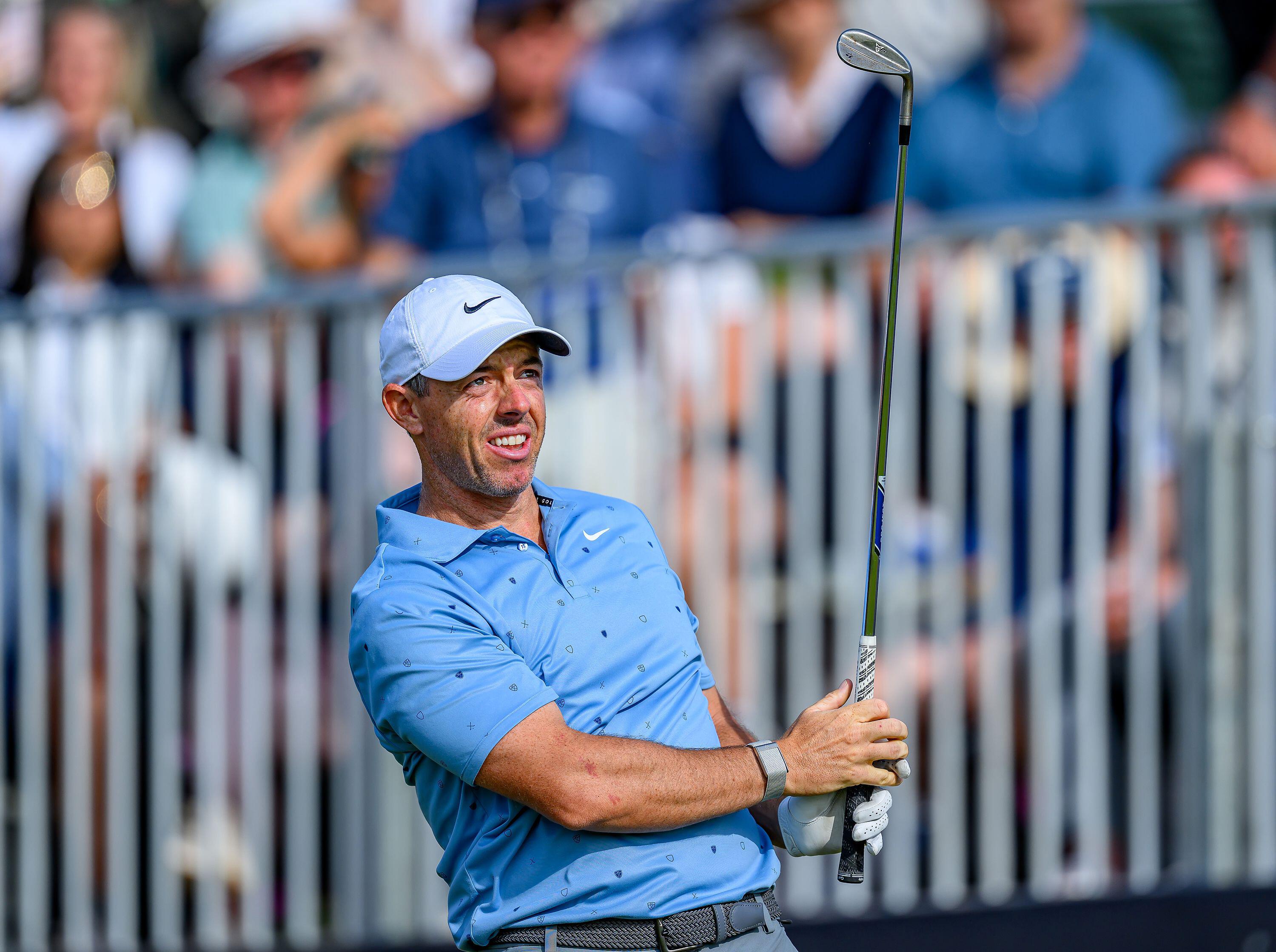
Watching Rory McIlroy and Tom Kim work their way around The Renaissance Club through two rounds of the Genesis Scottish Open offered much more than an entertaining leaderboard.
McIlroy and Kim each opened with rounds of 65 before adding matching 66s on Friday, reaching nine under and earning a share of the 36-hole lead. They arrived there with different physical tools and different styles of play, which is precisely why recreational golfers can learn so much from watching them.
McIlroy possesses speed and power that few players in the world can match. Kim relies more heavily on precision, strategy and the ability to manage his golf ball. Yet both have demonstrated qualities that translate to golfers at every level.
Here are two lessons from each player that you can take to the practice tee and the course.
Rory McIlroy: Identify Your Scoring Holes
McIlroy said after Thursday’s opening round that he played The Renaissance Club’s three par 5s well, reaching each green in regulation and playing them in four under.
That is an important lesson in course management.
You do not need to attack every hole to produce a good score. Instead, identify the holes that present your best opportunities and play them with purpose.
For McIlroy, the par 5s offer an obvious advantage because of his length. Your scoring holes may look different. They could be shorter par 4s, par 5s you can reach in three comfortable shots or holes where your preferred shot shape fits the design.
Before your next round, look at the scorecard and identify three or four holes where you believe you can be aggressive without becoming reckless.
On those holes:
- Select a tee club that gives you a comfortable next shot.
- Play toward the widest part of the fairway.
- Leave approach shots at yardages you practice regularly.
- Give yourself a realistic birdie putt without forcing the issue.
Great scoring is not always about creating more chances. It is often about recognizing and taking advantage of the right ones.
Rory McIlroy: Use Controlled Speed
McIlroy’s power attracts attention, but recreational golfers should pay just as much attention to how efficiently he produces it.
He does not create speed by lashing at the ball with his hands. His motion is athletic, balanced and sequenced. His body, arms and club work together rather than competing against one another.
Many golfers see a long hitter and immediately try to swing harder. That usually produces more tension, poorer contact and less usable distance.
Try this during your next range session:
- Hit five drives at approximately 70% effort.
- Hit five more at 80%.
- Finish with five at what feels like 90%.
- Note which group produces the best combination of contact, distance and balance.
Most golfers discover that their longest playable drives occur below their perceived maximum effort.
Your goal is not to swing slowly. It is to create speed without losing your structure. Finish in balance, hold your pose and make centered contact the priority. Speed becomes far more valuable when you know where the ball is going.
Tom Kim: Build Your Game Around Precision
Kim does not need to overpower a golf course to compete with the game’s longest players. His success is a reminder that golf rewards control, patience and thoughtful target selection.
That should be encouraging for players who believe additional distance is the only answer to lower scores.
Distance helps, but predictable distance is even more useful.
Begin by learning how far your clubs carry rather than relying solely on their total distance after rollout. Carry numbers become especially important when playing over bunkers, water, slopes or firm ground.
A simple distance-control drill can help:
- Choose a short iron or wedge.
- Pick three targets at different yardages.
- Hit one ball to the shortest target, one to the middle and one to the longest.
- Repeat the sequence three times.
- Change clubs and begin again.
Do not hit every shot at full effort. Learn how changing the length of your backswing, tempo and finish affects the ball’s carry.
A golfer who knows three useful distances with one wedge often has a greater scoring advantage than someone who only knows how far that club travels with a full swing.
Tom Kim: Make the Next Shot Your Priority
Links golf demands patience. Wind, firm turf and uneven bounces can turn a quality swing into an imperfect result.
Players who thrive in those conditions understand that frustration cannot be allowed to follow them from one shot to the next.
This is one of Kim’s most valuable qualities to study. His energy is noticeable, but so is his ability to remain engaged with the shot in front of him.
Recreational golfers often allow one mistake to become several. A poor drive creates frustration, the frustration produces a rushed recovery and the hole quickly gets away from them.
Use this four-step reset after a poor shot:
- Accept it: The shot has already happened.
- Assess it: Determine the lie, distance, wind and trouble.
- Choose wisely: Select the shot you can execute, not the miracle shot you wish you had.
- Commit fully: Give the next swing your complete attention.
You do not need to pretend the previous shot did not bother you. You simply need to avoid letting it influence the decision and motion that follow.
Different Games, Shared Fundamentals
McIlroy and Kim do not play golf the same way, and neither will most golfers who watch them.
That is part of the lesson.
You do not need McIlroy’s speed or Kim’s exact swing to benefit from what they demonstrate. You can identify your scoring holes, produce speed with balance, improve your distance control and become better at resetting after mistakes.
Those skills work in Scotland, but they are just as valuable at your home course.
The next time you play, do not attempt to copy everything a Tour professional does. Choose one habit that fits your game, practice it with a purpose and take it onto the course.
That is how inspiration becomes improvement.

Best irons 2026: Best irons overall, most forgiving irons, and more

J.T. Poston’s winning WITB: 2026 Memorial Tournament

Russell Henley’s winning WITB: 2026 Charles Schwab Challenge

Wyndham Clark’s winning WITB: 2026 U.S. Open

Memorial Tournament Tour Report: Rory McIlroy, Cameron Young switch up drivers, and more

Viktor Hovland’s winning WITB: 2026 Travelers Championship

Details on Jason Day’s latest prototype Avoda iron setup

WITB Time Machine: Retief Goosen’s winning WITB, 2004 U.S. Open

Photos from the 2026 U.S. Open

Bryson DeChambeau pairs new big-stick speed with new-shoe stability


Tom Vaillant WITB 2026 (July)
Tom Vaillant had >14 clubs in his bag when photographed prior to the ISCO Championship Driver: TaylorMade Qi4D (9 degrees) Shaft:...


JC Ritchie WITB 2026 (July)
Driver: TaylorMade Qi4D (9 degrees) Shaft: Fujikura Ventus Blue 6 X Mini driver: TaylorMade R7 Quad (13.5 degrees) Shaft: Mitsubishi Diamana BB 73...


Wenyi Ding WITB 2026 (July)
Driver: Callaway Elyte Triple Diamond (8.5 degrees) Shaft: Project X HZRDUS Smoke Blue RDX 3-wood: Callaway Quantum Max (15 degrees) Shaft: Fujikura...


Reigning Champ’s Clubs: A look at Scottie Scheffler’s 2025 Open winning WITB
Let’s take a trip back to last year and Scottie Scheffler’s four-stroke triumph at Royal Portrush. First up, BK’s deep...
-
 Whats in the Bag2 weeks ago
Viktor Hovland’s winning WITB: 2026 Travelers Championship
-

 News1 week ago
Rory McIlroy sheds light on Nike Golf’s 2016 equipment industry exit
-
 Whats in the Bag1 week ago
Chris Gotterup’s winning WITB: 2026 John Deere Classic
-

 Whats in the Bag3 days ago
Tom Kim’s winning WITB: 2026 Genesis Scottish Open
-

 News2 weeks ago
Details on Viktor Hovland’s driver, shaft change
-

 News2 weeks ago
Photos from the 2026 John Deere Classic
-

 News3 weeks ago
Travelers Championship Tour Report: The Spieth putter switch that never happened (and the Fowler, Spaun & Rose switches that did)
-

 News2 weeks ago
Player’s Eye: A look at some of Rickie Fowler’s preferred putters

