
Instruction
4 golf lessons to learn from Rory McIlroy and Tom Kim at the Genesis Scottish Open

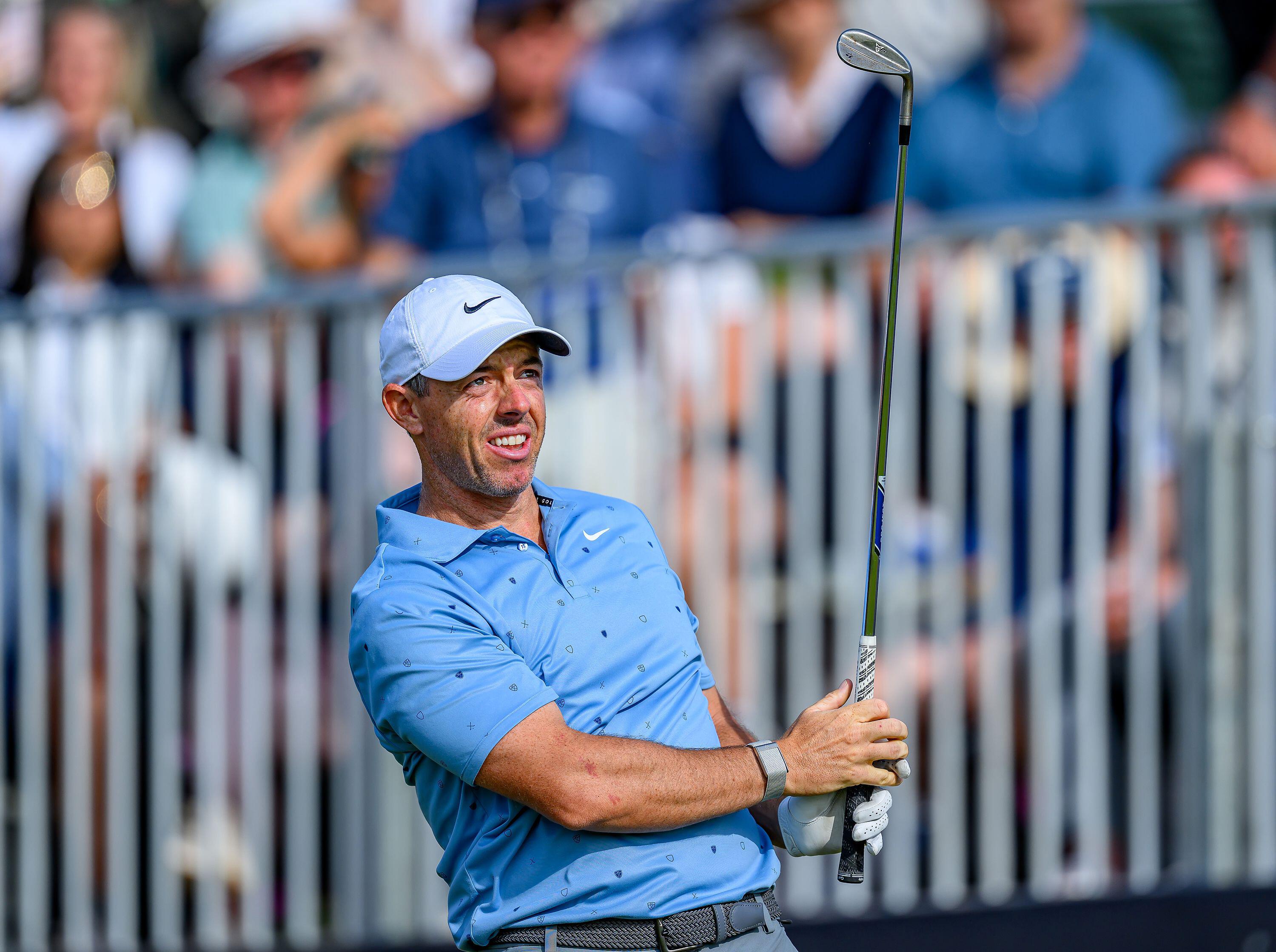
Watching Rory McIlroy and Tom Kim work their way around The Renaissance Club through two rounds of the Genesis Scottish Open offered much more than an entertaining leaderboard.
McIlroy and Kim each opened with rounds of 65 before adding matching 66s on Friday, reaching nine under and earning a share of the 36-hole lead. They arrived there with different physical tools and different styles of play, which is precisely why recreational golfers can learn so much from watching them.
McIlroy possesses speed and power that few players in the world can match. Kim relies more heavily on precision, strategy and the ability to manage his golf ball. Yet both have demonstrated qualities that translate to golfers at every level.
Here are two lessons from each player that you can take to the practice tee and the course.
Rory McIlroy: Identify Your Scoring Holes
McIlroy said after Thursday’s opening round that he played The Renaissance Club’s three par 5s well, reaching each green in regulation and playing them in four under.
That is an important lesson in course management.
You do not need to attack every hole to produce a good score. Instead, identify the holes that present your best opportunities and play them with purpose.
For McIlroy, the par 5s offer an obvious advantage because of his length. Your scoring holes may look different. They could be shorter par 4s, par 5s you can reach in three comfortable shots or holes where your preferred shot shape fits the design.
Before your next round, look at the scorecard and identify three or four holes where you believe you can be aggressive without becoming reckless.
On those holes:
- Select a tee club that gives you a comfortable next shot.
- Play toward the widest part of the fairway.
- Leave approach shots at yardages you practice regularly.
- Give yourself a realistic birdie putt without forcing the issue.
Great scoring is not always about creating more chances. It is often about recognizing and taking advantage of the right ones.
Rory McIlroy: Use Controlled Speed
McIlroy’s power attracts attention, but recreational golfers should pay just as much attention to how efficiently he produces it.
He does not create speed by lashing at the ball with his hands. His motion is athletic, balanced and sequenced. His body, arms and club work together rather than competing against one another.
Many golfers see a long hitter and immediately try to swing harder. That usually produces more tension, poorer contact and less usable distance.
Try this during your next range session:
- Hit five drives at approximately 70% effort.
- Hit five more at 80%.
- Finish with five at what feels like 90%.
- Note which group produces the best combination of contact, distance and balance.
Most golfers discover that their longest playable drives occur below their perceived maximum effort.
Your goal is not to swing slowly. It is to create speed without losing your structure. Finish in balance, hold your pose and make centered contact the priority. Speed becomes far more valuable when you know where the ball is going.
Tom Kim: Build Your Game Around Precision
Kim does not need to overpower a golf course to compete with the game’s longest players. His success is a reminder that golf rewards control, patience and thoughtful target selection.
That should be encouraging for players who believe additional distance is the only answer to lower scores.
Distance helps, but predictable distance is even more useful.
Begin by learning how far your clubs carry rather than relying solely on their total distance after rollout. Carry numbers become especially important when playing over bunkers, water, slopes or firm ground.
A simple distance-control drill can help:
- Choose a short iron or wedge.
- Pick three targets at different yardages.
- Hit one ball to the shortest target, one to the middle and one to the longest.
- Repeat the sequence three times.
- Change clubs and begin again.
Do not hit every shot at full effort. Learn how changing the length of your backswing, tempo and finish affects the ball’s carry.
A golfer who knows three useful distances with one wedge often has a greater scoring advantage than someone who only knows how far that club travels with a full swing.
Tom Kim: Make the Next Shot Your Priority
Links golf demands patience. Wind, firm turf and uneven bounces can turn a quality swing into an imperfect result.
Players who thrive in those conditions understand that frustration cannot be allowed to follow them from one shot to the next.
This is one of Kim’s most valuable qualities to study. His energy is noticeable, but so is his ability to remain engaged with the shot in front of him.
Recreational golfers often allow one mistake to become several. A poor drive creates frustration, the frustration produces a rushed recovery and the hole quickly gets away from them.
Use this four-step reset after a poor shot:
- Accept it: The shot has already happened.
- Assess it: Determine the lie, distance, wind and trouble.
- Choose wisely: Select the shot you can execute, not the miracle shot you wish you had.
- Commit fully: Give the next swing your complete attention.
You do not need to pretend the previous shot did not bother you. You simply need to avoid letting it influence the decision and motion that follow.
Different Games, Shared Fundamentals
McIlroy and Kim do not play golf the same way, and neither will most golfers who watch them.
That is part of the lesson.
You do not need McIlroy’s speed or Kim’s exact swing to benefit from what they demonstrate. You can identify your scoring holes, produce speed with balance, improve your distance control and become better at resetting after mistakes.
Those skills work in Scotland, but they are just as valuable at your home course.
The next time you play, do not attempt to copy everything a Tour professional does. Choose one habit that fits your game, practice it with a purpose and take it onto the course.
That is how inspiration becomes improvement.




For a long time, golf coaching had one accepted image.
A student stands on the lesson tee. A coach stands nearby. The coach watches, explains, adjusts, demonstrates and sends the player away with something to work on.
That model still matters. It always will.
But it is no longer the only serious way to coach.
Remote instruction used to be treated like a backup plan. It was something you did when distance, weather or scheduling made an in-person lesson impossible. That view is changing fast, and the combination of FlightScope data and Golf Live’s coaching platform helps explain why.
The lesson tee is still valuable. It just has more competition now.
Coaches Were Right To Be Skeptical
Good coaches are not wrong to ask hard questions about remote instruction.
How do you help a player with grip pressure if you are not standing next to them? How do you explain a backswing position through a screen? How do you know whether a player is actually changing the pattern or just feeling like they are changing it?
Those are fair questions.
In a recent interview, Jordan Vogler, who helps lead FlightScope’s work with affiliates, influencers and creator partnerships, talked about that skepticism during a conversation on FlightScope’s partnership with Golf Live. The most honest part of the discussion was the acknowledgment that remote coaching is not magic. It still requires clarity, communication and a coach who understands what matters.
But once you add reliable video, data and follow-up, the model becomes much more powerful than many old-school coaches may assume.
This Is Where My Own Coaching World Has Changed
This is the story where I can speak most directly from experience.
As a PGA Professional and coach, I still believe deeply in face-to-face instruction. There are things you can see, feel and communicate in person that are hard to fully replace. A player’s setup, rhythm, tension level, comfort, questions and body language all matter.
But I also know this: remote coaching is no longer some watered-down version of a lesson.
When it is done correctly, it can be extremely effective.
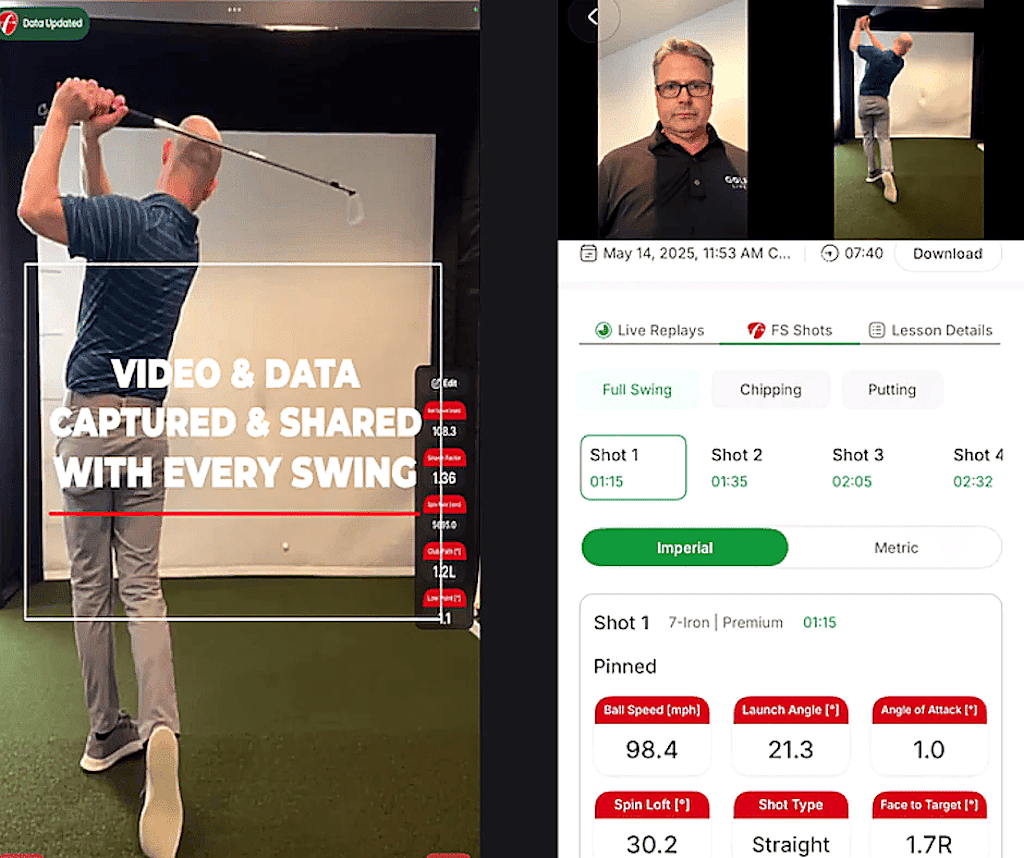
That is where the combination of video, communication and FlightScope data becomes so valuable. A player can send swing video from another state. I can look at the motion, listen to what they are feeling and then match that against actual numbers. If the club path is changing, we can see it. If launch and spin are improving, we can see it. If carry distance or dispersion is trending in the right direction, we can see it.
That gives both coach and student confidence.
In many ways, data becomes a form of coaching validation. It tells the student, “Yes, the work is starting to show up,” even before the swing feels completely natural. It also tells the coach whether the plan is working or whether the priority needs to change.
That is a very different experience than sending a student away with one swing thought and hoping they practice it correctly.
Remote coaching still needs a coach. It still needs interpretation. It still needs a plan. But with tools like FlightScope and Golf Live, the conversation between coach and student can continue long after the lesson ends.
That is not a small thing. That is where golf instruction is going.

Data Gives the Coach More Evidence
Video is useful, but video alone can still leave room for debate.
A player may feel like the club is moving more from the inside. The video may show part of the story. But the launch monitor data can confirm whether the path, face, launch, spin or carry numbers are actually changing.
That is where FlightScope becomes such an important part of remote coaching.
The coach is no longer only saying, “This looks better.” The coach can say, “Here is what changed, here is why it matters and here is the number we are trying to keep moving.”
That gives the student a better roadmap. It also gives the coach more evidence.
Sometimes a student does not feel better right away. Sometimes a swing change feels strange before it becomes productive. But if the numbers begin moving in the right direction, the player can build confidence before the final result fully shows up on the golf course.
That matters.
The Best Remote Lessons Still Need a Real Coach
There is a trap in golf technology.
Some people assume more data automatically means better instruction. It does not.
A launch monitor can tell you what happened. It can show club path, face relationship, ball speed, launch, spin and carry. It can reveal patterns that the naked eye might miss. But it still takes a coach to decide what matters most for that golfer.
That is why the FlightScope x Golf Live model makes sense. It is not technology replacing instruction. It is technology giving instruction more structure.
A student can send video. The coach can review the swing, pair it with data, draw lines, record voice notes and give the player a plan. The player can practice indoors or outdoors, then send new swings and new numbers back.
That loop is the key.
Not one lesson. Not one tip. A loop.
Remote Coaching Removes Barriers
One of the biggest strengths of remote coaching is obvious: geography matters less.
A player in New York, like the two I work with, Brevin and Bennett, can work with a coach in Florida- that being me. A junior golfer can send swings during a tournament week. A busy adult can practice indoors after work. A player who feels intimidated at a public range can start in a more comfortable environment before taking the work outside.
That last point is important. Many newer golfers do not love the idea of struggling in front of strangers. They worry about taking up space, hitting bad shots or not knowing what they are doing.
An indoor setup, paired with launch monitor feedback and remote coaching, can create a safer first step. It allows a player to build contact, confidence and understanding before bringing the work to the golf course.
That is good for instruction. It is also good for participation.
The strongest coaching model going forward will not be remote-only or in-person-only.
It will be blended.
There will still be times when a player needs an in-person lesson. There will still be moments when a coach needs to see ball flight, body movement and setup live. But there are also plenty of times when remote coaching can be more efficient, more consistent and more trackable.
The best teachers will not fight that. They will use it.
FlightScope and Golf Live are part of a larger shift in golf instruction. Players want access. Coaches want better information. Technology can help both sides stay connected between lessons, between tournaments and between practice sessions.
Remote coaching is not a lesser version of instruction.
Done well, it is an extension of good coaching. It gives the player a plan, gives the coach better evidence and gives both sides a way to measure progress.
That is not a backup plan anymore.
That is the future arriving on the lesson tee.
In our forums, one user is wrestling with one of the most common ball-flight frustrations among better players: trying to hit a pull cut that starts left and works back, only to watch it stay left.
@Asics10 said the move feels more solid than a draw because it gets the arms more in front, opens the hips better and keeps the swing less under plane. The problem is that even with an open clubface at address, the ball starts left and stays there.
From a coaching standpoint, that tells us the first question is not whether the player likes a cut. The first question is whether the clubface is actually open to the swing path at impact. A ball that starts left and stays left is not cutting because the face-to-path relationship is not producing a curve to the right.
- @GoGoErky and @rsballer10 both pointed toward the need for video before getting too specific, which is the right instinct.
- @US697 suggested that without video, a player might start by avoiding an open face at address and instead learn to square the face to the intended path.
- @TightFade asked whether the player is more of a lead-arm puller or trail-arm pusher from the top, which matters because intent and release pattern can change the face-to-path relationship.
- @BSI99 delivered the simplest reminder: the most important part of hitting a cut is making sure it cuts.
- @golferdude54 and @onehopstopt got into the bigger debate of pull cut versus push cut, and why the miss pattern may not be as automatic as golfers think.
The practical coaching answer is to stop trying to manufacture curve only through address. An open clubface at address does not guarantee an open face-to-path at impact. If the handle, body, release and path pattern return the face too square to the path, the ball will not curve right.
For a pull cut, the face needs to be left of the target but open to the swing path. If the ball starts left and stays left, the face is not open enough to the path at impact, or strike is influencing the curve. Address position may help create the shot, but impact is what decides it.
For a player fighting this, I would want two camera angles first: face-on and down-the-line. Then I would check three things: start line, divot or low-point direction and whether the player is actually swinging left enough relative to where the face is delivered.
The drill is simple. Put an alignment stick down the target line and another slightly left of it for the intended swing path. Set up with the clubface aimed between those two lines, then make waist-to-waist swings, trying to start the ball left of the target and curve it back. If the ball starts left and does not move, the face is too square to the path. If it starts right, the face is too open or the path is not far enough left.
A good cut is not a guess. It is face, path and contact working together. Until those three pieces match, the ball will keep telling the truth.


In our forums, one user is looking for help to cure their chipping woes. @CRGCBunkerRat is struggling with his short game, and is looking to the forum for some assistance.
@CRGCBunkerRat explained:
“Genuinely terrified of anything 40 yards and in lately, especially with tight or awkward. My most prevalent fail is probably decelerating through contact and duffing it short but I also opened a round yesterday by blading the hell out of a 25 yard chip from the fairway and allowing a lost-in-the-woods penalty stroke to ruin my bomb of a drive.
“What are your go-to drills for chipping and pitching, particularly with consistent contact? Trying to break 90 this summer so at this point I’m really just looking to get on the green for a 2-putt, not post some amazing up & down %.”
Our members in the forum offered up some drills and helpful questions so @CRGCBunkerRat can analyze what, exactly, is going wrong. Here are a few posts from the thread, but make sure to check out the entire discussion and have your say at the link below.
- MonteScheinblum: “There is no drill. You have to rectify the reasons giving you the yips.
Setup
Over active knees and hips
Excess right side weight shift.
Etc.Could be any number of reasons and you have to rectify it or it will get worse, especially with some random drill. Post videos from both angles and it will be easy to see why.” - ezra76: “I use a siding shingle 6” behind the ball in practice. I also use a cadence where I say out loud ‘chip…chip.’ I use that for tempo and it helps me a lot under pressure to keep moving through the shot as well as for distance control.Another thing that came from thousands of yard chips off dirt lies was ‘take a divot with the bounce.’ The bounce on my 60* is a permanent brown from punching that bounce through the dirt with a slightly open face.”
- Nickb333: “If you post the videos Monte suggested, he’ll hook you up.Personally, I almost quit golf because i forgot how to chip or pitch. Seemingly overnight, I went from being able to toss high bean bags or low rollers that hit within a few inches of my landing target to a clown that just chunked everything….Then Sir Nick Faldo saved my golfing enjoyment. During a broadcast, a pro chunked a chip. Sir Nick said something like, ‘see, you can’t just pick the club up and throw your hands at the ball. The club will crash into the ground. You have to turn. Turn back, turn through. Turn turn!’ That motion saved my bacon. Especially so as my hands have become less and less supple over the years.”

Best irons 2026: Best irons overall, most forgiving irons, and more

J.T. Poston’s winning WITB: 2026 Memorial Tournament

Wyndham Clark’s winning WITB: 2026 U.S. Open

Russell Henley’s winning WITB: 2026 Charles Schwab Challenge

Memorial Tournament Tour Report: Rory McIlroy, Cameron Young switch up drivers, and more

Viktor Hovland’s winning WITB: 2026 Travelers Championship

Details on Jason Day’s latest prototype Avoda iron setup

WITB Time Machine: Retief Goosen’s winning WITB, 2004 U.S. Open

Bryson DeChambeau pairs new big-stick speed with new-shoe stability

Photos from the 2026 U.S. Open


Reigning Champ’s Clubs: A look at Scottie Scheffler’s 2025 Open winning WITB
Let’s take a trip back to last year and Scottie Scheffler’s four-stroke triumph at Royal Portrush. First up, BK’s deep...

WITB Time Machine: Jordan Spieth’s winning WITB, 2017 Open Championship
At the 2017 Open Championship, Jordan Spieth offered up perhaps the most Spieth-ian performance in his entire career. There were...


Tom Kim’s winning WITB: 2026 Genesis Scottish Open
Driver: Titleist GTS3 (9 degrees) Shaft: Fujikura Atmos Black 6 X 3-wood: Titleist GTS3 (15 degrees) Shaft: Fujikura Atmos Black 7 X...

Luke List WITB 2026 (July)
Luke List had >14 clubs in his bag when photographed prior to the John Deere Classic. Driver: Titleist GTS3 (9 degrees, SureFit...
-
 Whats in the Bag2 weeks ago
Viktor Hovland’s winning WITB: 2026 Travelers Championship
-

 News5 days ago
Rory McIlroy sheds light on Nike Golf’s 2016 equipment industry exit
-
 Whats in the Bag1 week ago
Chris Gotterup’s winning WITB: 2026 John Deere Classic
-
 Equipment3 weeks ago
Wyndham Clark’s Ping putter: There’s more to the lead tape than just weight
-

 News2 weeks ago
Details on Viktor Hovland’s driver, shaft change
-

 News2 weeks ago
Travelers Championship Tour Report: The Spieth putter switch that never happened (and the Fowler, Spaun & Rose switches that did)
-

 News2 weeks ago
Photos from the 2026 John Deere Classic
-

 News2 weeks ago
Player’s Eye: A look at some of Rickie Fowler’s preferred putters

