
Opinion & Analysis
Snell: The Pros and Cons of Premium Golf Balls


My name is Dean Snell, and I own a golf-ball company called Snell Golf. Maybe you’ve heard of my company or even used one of my golf balls; that’s great. My company isn’t the focus of this piece, though; it’s you. GolfWRX has given me the opportunity to help its readers understand what type of golf balls are best for them. I’m a golf junkie, like many of you, so I often find my way to this site. I love reading what you all have to say about my golf balls, and golf balls in general. That’s why I said “yes” to writing this article. I hope to save some of you a few strokes, and some of you a few dollars.
To me, there are really only two different types of golf balls; premium golf balls, which are called “tour balls,” and then all the other balls, which for the sake of this discussion we’ll call “distance balls.” They’re more affordable. I sell both a tour ball and a distance ball, so I don’t have a dog in this fight. It’s true what you’ve heard, though, tour balls do technically perform better than distance balls, but that doesn’t mean everyone needs a tour ball. Once you know the facts, you’ll know why.
I’ve been designing golf balls for 27 years, and things have changed dramatically in golf-ball design during that time. The change was so rapid, in fact, that many golfers don’t have their facts straight about what the new tour balls do, and what they don’t do. Back in the early ’90s, when we used to test drivers and 8 irons for performance, the Tour Balata was the true tour ball, but it scared a lot of golfers away due to high driver spin rates. In fact, tour players back then used 6- or 7-degree drivers just to try to reduce the spin a bit. For the average golfer, the driver spin rate would go even higher, thus producing huge hooks and slices off the tee. So if you played a tour ball in those days, you might have had a driver spin rate of 4000 rpm. If you played a distance-ball, your spin rate rate probably dropped to about 2500 rpm. Since reducing the spin of your drives creates more distance, for the most part, many golfers liked distance balls better, even though they were harder to stop on the green.
It took some time, but today tour balls are designed with multiple layers, which help to create what’s called a spin curve across your set of clubs. What that means is the new tour balls give golfers the distance of those old distance balls, but the control of the old tour balls when you need it. The new distance balls are better than they used to be, but they don’t have the same spin curve the new tour balls do. With distance balls, golfers will experience low-spin performance with all their clubs, which makes it difficult to stop shots quickly on the green. Better players also have trouble controlling shots with distance balls, as they tend to launch higher and with less spin, creating shots known as “fliers.”
Now, this may be the most important paragraph in this story. Whether you buy a tour ball or a distance ball, know they will both go about the same distance off the tee. That’s because leading golf ball designers have worked to get the spin rates of all their golf balls in a very similar range off the tee, and aerodynamically each ball’s dimples are correct for its particular construction. The ball speeds of all of them have been maxed out to USGA limits, as well.
Once you leave the tee is where tour balls start to outperform distance balls. Statistically, golfers hit most of their shots from 150 yards and in, and more than half of those shots are from less than 100 yards. Inside 150 yards, and especially inside 100 yards, is where certain golfers can truly benefit from tour-ball performance. Although you may not be able to spin the ball back like a pro, you will still be able to add some spin and control to your shots with a tour ball. With every 1000 rpm of spin you can add to a wedge shot, you can stop the ball 5 feet closer to where it lands on the average green. Having the ball stop faster may mean a birdie, or reduce the chance of a three putt.
So, lower spin rates for longer drives, and more spin for more control around the greens are the biggest pros for tour balls sold today. With the new balls, however, something completely flip-flopped in the feel category. Back in the day, distance balls were very firm in feel, and the tour balls were very soft. Better players used to love the soft feel. To improve their performance, tour balls have gotten firmer over the years, and distance balls have become incredibly softer. So if a soft feel is important to you, some of the distance balls on the market today feel much softer than tour balls. Just like the old days, the durability of distance balls is also still a plus, but the gap is closing. Most distance balls are made with an ionomer or Surlyn cover than is less prone to getting cut, scraped or gouged, but improvements to the urethane covers used on tour balls have added to their durability.
The biggest con of a tour ball continues to be its price, though. They can cost as much as $48 per dozen. Regardless of how you feel about that price point, there is a reason tour balls cost more than distance balls. All tour balls use at least a three-layer construction, which improve performance, and also adds to the cost of making them. Their urethane covers are also more expensive, from both a materials and labor standpoint.
Still haven’t made up your mind about which ball is for you? Here’s how I suggest golfers make the decision between a tour ball and a distance ball.
Get a sleeve of tour balls and a sleeve of distance balls, and compare them against each other on the golf course. You don’t need to play both balls tee to green, though. When you can, hit multiple shots with each ball from 100 yards, 75 yards and 40 yards. Try chips and putts from different lies. Then, go to the next hole and do the same thing, and repeat this process for 5 or 6 holes.
By the time you walk off the last green, you should have a favorite, and it’s not always a tour ball. Maybe you liked the way one ball felt, or noticed that one ball was stopping closer to the hole because it was either checking up more or rolling out more. Something will likely stand out to you. If it doesn’t, then buy distance balls. There’s no reason to throw your money away for no measurable benefit.






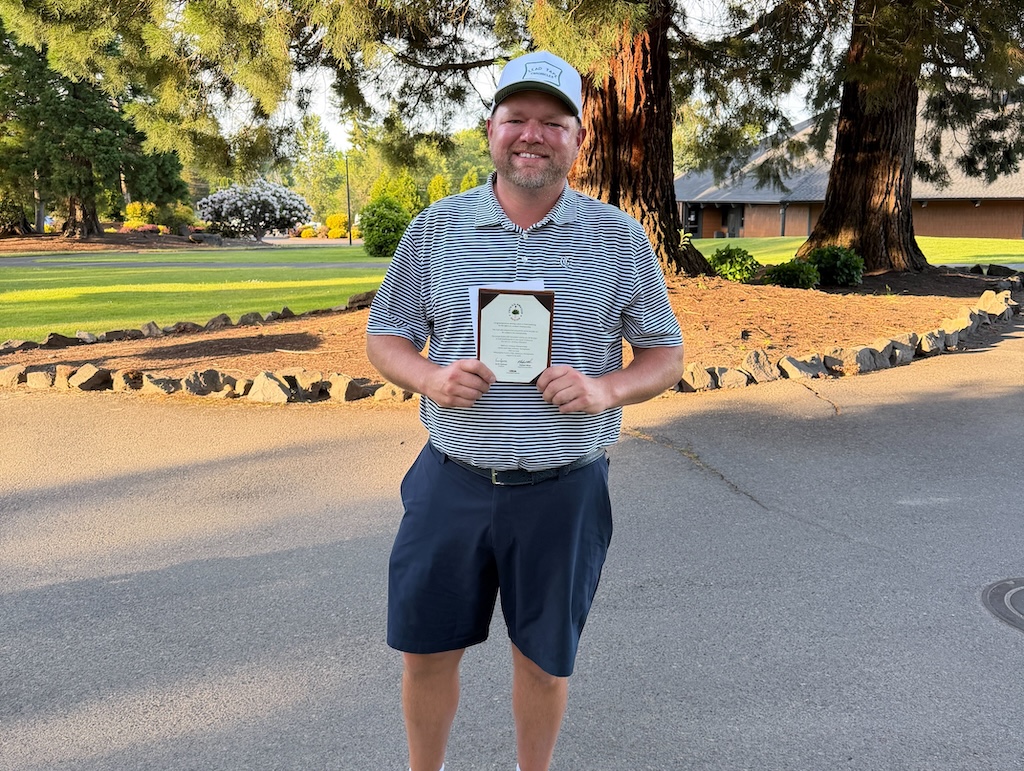
This past Monday, I played in the U.S. Amateur local qualifier at Rock Creek Country Club in Portland, Oregon. A full tee sheet from 7:30 a.m. to 1:55 p.m., the top 11 scores would make it to the U.S. Amateur final qualifying.
I teed off at 10:48 a.m.. With the 7:30 am tee time, you can get a feel for the leaders’ pace, and they were off and running on the challenging setup at Rock Creek.
View this post on Instagram
Getting to the highlight of the round on the par five 17th, a drive up the left side and 212 yards left to the front hole location. I took out a 5-iron with plans of middle of the green. The ball ended up 8 feet left of the hole, pin high. A slight downhill putt dropped in for an eagle 3 on the 17th. With the cut line looking to be anywhere from -2 to even par. This was the boost I had been waiting for all day.
With making par from the trees on 18, it was time to wait for a potential playoff with a posted score of one under par 71.
Three hours later, it was playoff time. 8 players for 6 spots. I made par on the playoff hole, which was good enough to advance to the U.S. Amateur final qualifying in July. USGA qualifiers sure deliver on all of the emotions in golf!
Club Junkie
Building my 2026 gamer WITB: Ranking the contenders and new putter projects – Club Junkie Podcast

The annual What’s In The Bag build is underway, and on this episode of Club Junkie, Brian breaks down the clubs currently leading the race for a spot in his 2026 gamer setup. From drivers and fairway woods to irons, wedges, and shafts, he ranks the equipment that’s performing best and explains what’s separating the front runners from the rest of the field.
Brian also heads into the workshop to discuss several putter projects currently on the bench. From head options and shaft choices to build ideas and testing plans, he shares what he’s working on and which putters could become serious contenders for the bag this season.
If you’re a gear junkie who loves equipment testing, club building, and the never-ending pursuit of the perfect setup, this episode is for you.
Follow Club Junkie:
Instagram: @clubjunkiepod
TikTok: @clubjunkiepod
Threads: @clubjunkiepod
X: @ClubJunkiePod
Club Junkie
Tour Edge Exotics mini driver review + TaylorMade Spider ZT Max first look – Club Junkie

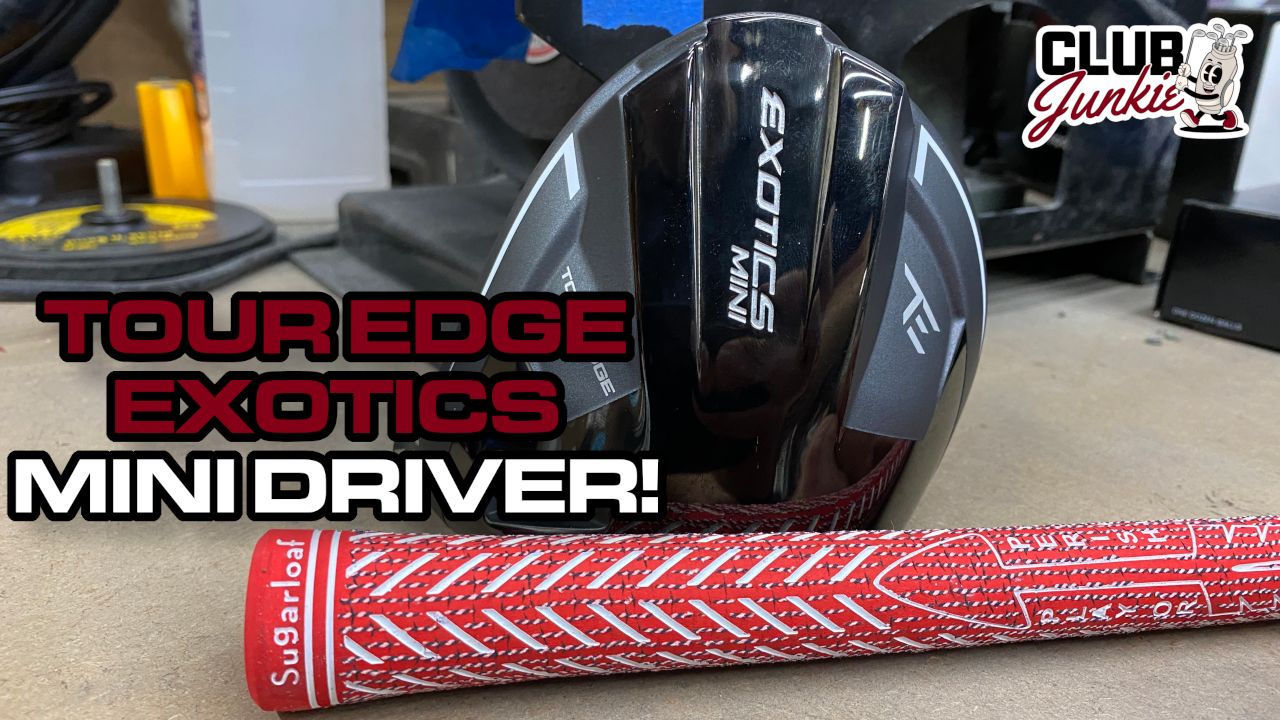
On this episode of Club Junkie, I put the new Tour Edge Exotics Mini Driver to the test and break down the performance, forgiveness, distance, and where it fits compared to a traditional driver or strong fairway wood. If you have been curious about adding a mini driver to the bag, this one is worth a look.
I also dive into the new TaylorMade Spider ZT Max putter that was recently spotted and discuss the growing zero torque putter trend. Plus, there is a closer look at the new Project X Titan Yellow shaft showing up on the PGA Tour and what makes it different from other profiles currently out there.

Justin Rose WITB 2026 (April): Full WITB breakdown with new McLaren irons

What’s the story behind Webb Simpson’s custom-stamped irons?

Memorial Tournament Tour Report: Rory McIlroy, Cameron Young switch up drivers, and more

Cadillac Championship Tour Report: Spieth’s sizable changes, McLaren Golf launches, and more

Russell Henley’s winning WITB: 2026 Charles Schwab Challenge

Kristoffer Reitan’s winning WITB: 2026 Truist Championship

Best irons 2026: Best irons overall, most forgiving irons, and more

J.T. Poston’s winning WITB: 2026 Memorial Tournament

Aaron Rai’s winning WITB: 2026 PGA Championship

Cameron Young’s winning WITB: 2026 Cadillac Championship


Bud Cauley WITB 2026 (June)
Bud Cauley had >14 clubs in his bag when photographed prior to the Memorial Tournament. Driver: Titleist GTS2 (8 degrees) Shaft: Fujikura...


Hannah Green WITB 2026 (June)
Driver: Titleist GTS3 (10 degrees, D4 SureFit setting) Shaft: Mitsubishi Chemical Diamana RB 53 S 3-wood: Titleist GT3 (15 degrees,...


Asterisk Talley WITB 2026 (June)
Driver: TaylorMade Qi4D (9 degrees) Shaft: Fujikura Ventus Blue 6 S 3-wood: TaylorMade Qi4D (16.5 degrees) Shaft: Fujikura Ventus Blue...

Brianna Do WITB 2026 (June)
Driver: Callaway Quantum Triple Diamond (9 degrees) Shaft: KBS PGW 3-wood: Callaway Elyte Titanium (15 degrees) Shaft: KBS PGW 5-wood:...
-
 Equipment6 days ago
Memorial Tournament Tour Report: Rory McIlroy, Cameron Young switch up drivers, and more
-
 News2 weeks ago
Russell Henley’s winning WITB: 2026 Charles Schwab Challenge
-
 Equipment3 days ago
Best irons 2026: Best irons overall, most forgiving irons, and more
-
 Whats in the Bag4 days ago
J.T. Poston’s winning WITB: 2026 Memorial Tournament
-
 Equipment1 week ago
Details on Jason Day’s latest prototype Avoda iron setup
-
 Equipment3 weeks ago
CJ Cup Byron Nelson Tour Report: Koepka and Kim’s newest putters finally get hot
-

 News2 weeks ago
Charles Schwab Challenge Tour Report: MacIntyre, Åberg and Spaun all switch putters, TaylorMade launches new Spider
-
 Equipment2 weeks ago
Details on J.J. Spaun’s surprise putter switch


scott
May 30, 2016 at 5:49 pm
Good players can debate balls all they want I would like to see more Amateurs on public courses pulling out Polara XS or XD golf balls and hitting drives they can find so we can speed up the public course round…..Maybe if Polara would advertise “Legal for Amateur non-Tournament golf” they could sell millions more…finding tee shots is a much bigger priority for the high handicapper then lhow much spin a ball does or does not have….
Steve
May 30, 2016 at 5:36 pm
Just wondering how many of us reading these articles can afford to have a shag bag with 50 tour quality balls in good playing condition to take out to practice with daily? Also how many of us get to hit tour quality balls (Pro v1 etc) by the hundreds on the driving range? Guarantee your looking at 2 to 3 shots off your handicap if you have that luxury. At least we can get on the putting and maybe chipping greens with the same quality ball we play….
Pingback: Are you playing with the wrong balls? – GolfDigest.com | Quick & Fast Sports News
mc3jack
May 13, 2016 at 2:36 pm
A few other ball considerations: Cover hardness and green speeds. Say you’re playing a ‘soft’ ball, and you’re on slow(ish) greens. Putts falling short, aggravation . . . you can even see this on the Tour level in soft conditions. The pro’s don’t change balls, and can’t adapt their stroke. Ammies like us deal with more variability, such as length of time between mowings, playing different courses, so picking the right putting ball can increase the fun.
Mr. Snell is correct about assessing the ball behavior around the green, first. You want a ball with cover hardness that matches your favorite putting stroke and makes the ball roll your familiar distance for that stroke.
Next assess green hardness. Firm and grainy or slow, for example, like Bermuda grass. You need a spinnier ball with a hardish cover. ProV1x, even though your driver swing speed is supposedly ‘not optimal’ for that ball. Firm and fast? Break out a spinny ball with a softish cover….which is why the ProV1 is so popular.
Ammies miss a lot of greens, so being aware of the spin/roll out characteristics of different balls on chips and pitches can pay real dividends, too. A earlier poster mentioned that players who have a lot of ground game like balls that don’t spin much…they can better gauge the bounce and roll without unpredictable ‘grabbing.’ And ammies tendency to hit/mishit balls short is mitigated by a ball that releases.
We’d all like to think that using a Tour ball might save us when we have a baby pitch over a bunker but get real . . . 99% of golfers are not good enough to pull that off. And then they gag the three-footer they ‘saved’ anyway!
Bill Mac
May 16, 2016 at 5:15 pm
Please don’t take this the wrong way but I think you overthink your game. Just hit the ball. Get lessons from a Pro, practice and work on all the aspects of your game and the ball will go in the direction it is hit at the speed at which you hit it.
It’s fairly simple.
Forsbrand
May 13, 2016 at 4:31 am
Excellent piece Dean!
Would like totry Snell in the UK but who distributes / sells them ?
Many thanks
Pepe
May 12, 2016 at 10:33 pm
To the Author…
Dean, have you heard of the Begock affect? Where multilayer balls after 36 straight holes need to almost “rest” to return to normal. Like sort of re-coup. Is this urban legend or true? #pepegolfdeliveries.com
RussF
May 12, 2016 at 5:07 am
While I appreciate the article stripped the issue back to Tour versus Non Tour or Distance balls, and assessment was based on construction and cover materials and their impact of flight spin and green stop control, at no time was COMPRESSION discussed. I know several sub 6 handicappers hitting Srixon Green Soft Feels as they provide great feel, yet they are 60 compression that I understand are fully driver compressed at around 80mph. These guys have swing speeds over 105mph so surely they are loosing 25 mph of speed as opposed to using a 3-piece tour ball like a Srixon Z Star or Titleist ProV1. How about a follow up article on ball compressions and swing speeds and how these effect choice. Ta.
Logan Hart
May 12, 2016 at 1:53 pm
Compression is simply a way for measuring how a golf ball will feel and has no effect on performance. Titleist and other manufacturers have found that balls “compress” a similar amount regardless of how fast or slow a swing is. The theory that high swing speeds + low compression = less distance is a myth that has been disproved many times. Therefore, there is no need for a follow up article. If these individuals do see a ball speed drop of 25mph it is most likely do to factors such as club head speed inconsistencies, different strike locations on the clubface, dynamic loft, etc.
joe
May 12, 2016 at 2:41 am
tried them and they did not work for me …. gave them to a 15 handicap who loved them
Chuck D
May 11, 2016 at 11:11 pm
@ M Shhmizzle, that would be “Straight up yo, best ball fo tha 2’s, 3’s, and fo’s.” If you’re gonna bite the format, get your spelling, grammar and punctuation correct, and keep it consistent.
Dave
May 11, 2016 at 10:34 pm
I played the snell and I thought it was a great ball. The only reason I’m not using it now is because I got a great deal on some callaway sr3.
Phil
May 11, 2016 at 7:10 pm
As a polymer scientist. Disagree with the article. The materials used for the covers of golf balls vary dramatically. Surlyn covers are the real cheap grade and others are elastomers or various blends.
Pablo
May 11, 2016 at 6:52 pm
Were are and the Snell balls made and who manufactures them?
Jim
May 11, 2016 at 4:01 pm
Pretty easy – if you play decent golf then get a premium golf ball, basically anything with a urethane cover. If you lose several balls per round then buy the cheaper distance ball and save some money. I’d recommend trying Snell’s MTB balls personally as they are easily as good as any urethane ball out there and cost a whole lot less too.
Carlos Danger
May 11, 2016 at 3:01 pm
Pretty easy for me…
If you are even somewhat of a decent golfer…premium balls feel great and go far (PRO) but are expensive (CON)
Nuff Said
Ned K
May 11, 2016 at 2:56 pm
If you want to shoot your lowest scores possible, use a “tour ball”. But there’s really no such
thing as a “Tour ball”. There’s just the BEST ones and the not as good ones.
Check to see what the World’s best players and amateurs use and you’ll get an idea.
tlmck
May 11, 2016 at 1:30 pm
For those of us with slower swing speeds, tour balls feel like rocks and don’t go anywhere. They are only good on and around the green for me. However, I have been using two piece Surlyn for so long, I have learned to control them, and actually prefer the firm feel.
tlmck
May 11, 2016 at 1:36 pm
Forgot to mention I use plain old Pinnacle Distance Yellow. Just the best performing ball for my game.
Steven
May 11, 2016 at 1:03 pm
Dean,
Great insight. I think most of us would benefit from testing out the different golf balls. If price weren’t an issue, then golfers may see a benefit with the tour balls. I went to Golf Galaxy and did their ball test. They did a good job of recommending golf balls at different price points and for my misses. My location even told me which balls to switch to when my drives changed trajectory. It was a great experience.
I agree with Dean. The key is to test out golf balls and find what works best for each person.
Robert
May 11, 2016 at 12:46 pm
Chrome soft 4 life, dawggg
Bob Hatcher
May 11, 2016 at 12:20 pm
Hitting to my greens are like hitting to a pool table so we need the most spin we can get from a ball.
Tankie
May 11, 2016 at 12:00 pm
This article comes at a great time for me. I have found a 2 piece distance ball that I just love off the tee – Straight and Far. A real fairway finder. However, on the green, it just lands and rolls, no stopping. I need to do the short game test against a 3 piece ball that I like as well to see if I can get it to stop or to see how much it rolls. The distance ball is half the price of the 3 piece that I like so if there is no difference, I might as well save the money. BTW, I have seen plenty of Senior Golfers (60 and older) who play distance balls along with a “bump and run” game and score just fine.
Michael
May 11, 2016 at 12:07 pm
What ball is it?
Tankie
May 11, 2016 at 12:37 pm
Pinnacle “Rush”
Dave
May 11, 2016 at 11:23 am
And Bert you sound like a ” greens keeper ” most of the ones around here think the sun shines out of you know where . Just do the job you get paid to do you are not gods.
cjb
May 11, 2016 at 11:00 am
Always use the same type of ball, regardless of what type you are using.
Switching between types are worse than using the “wrong” type of ball for your game.
Alex
May 11, 2016 at 10:33 am
Most comprehensive article in a long time. Great piece of info. Definitely you do know your trade.
Fred
May 11, 2016 at 1:05 pm
Alex: if you enjoyed the article, check out out Dean’s facebook page. He’s got a lot of great videos that discuss everything you need to know about today’s golf balls: how they’re made, how to find the right ball for your game, etc. As for Dean’s brand of balls, I’ve been using his MyTourBall for over a year now. MY Golf Spy called it “a better Prov1.” If you’re happy with your current ball, great. If you’re shopping around, you might give Dean’s balls a look.
Walter Scott Mohn
May 11, 2016 at 10:11 am
Excellent brief introduction/summary/update on past/current/relative golf performance. This is really all a golfer needs to know about golf balls regardless of age/gender/handicap. Thank you very much!
G
May 11, 2016 at 10:00 am
Great article Dean. One observation/question. Ive noticed that while tour balls do spin and check more on full or 3/4 swings, on shorter chip shots the low compression balls seem easier to get to stop and control. What does your testing and experience show on those shorter chip shots?
Johnny
May 11, 2016 at 9:43 am
As Jake said below, surely there are balls that are in between a tour ball and a distance ball when it comes to spin.
Kathy Marie
May 11, 2016 at 9:32 am
What about women’s golf balls–are they just a different color or are they made differently?
Josh
May 11, 2016 at 10:31 am
Ladies’ balls are also two piece distance balls as well most likely with the more durable Surlyn cover. But have a softer compression that works better at slower swing speeds.
Fred
May 11, 2016 at 1:29 pm
There are players on the LPGA tour who do use tour balls. Lex Thompson, Stacy Lewis, Lydia Ko, Michelle Wie, among others.
Kathy Marie
May 11, 2016 at 9:55 pm
Thank you for answering my question Josh and Fred! I appreciate that you took the time. 🙂
Mike Honcho
May 11, 2016 at 9:30 am
The Snell Get Sum ball, two words= VERY DISAPPOINTING.
Leon
May 11, 2016 at 10:35 am
Interesting. I had the opposite observation. The Snell get sum balls are very pleasing balls. They feel very soft, fly straight and long, spin less but have an amazing check and stop ability. (I hit the ball very high..). I broke 80s frequently by switching from tour balls to the get sum ball. And the price is so hard to beat ($75 for 6 dozens, man…)
Mike Honcho
May 11, 2016 at 11:13 am
I lost an average of 5-7 yards with my irons compared to other two piece balls I play (TM and Srixon). Putting feel was overly soft. Consistently shot 78-85 range with others, Get Sum 85-90.
Leon
May 11, 2016 at 12:32 pm
Have you tried the “My tour ball”? Different results?
Mike Honcho
May 12, 2016 at 3:45 pm
My swing speed is too slow for anything other than a 2-piece ball. As in, I’m a realistic golfer. Gotta compress it, to get it out there.
Fred
May 11, 2016 at 1:31 pm
The Snell Get Some ball earned a gold medal in Golf Digests “2016 Hot List.”
cgasucks
May 11, 2016 at 2:44 pm
Fred,
You do know OEMs PAY to get on the Hot List right? Most people here don’t value that list.
golferj
May 13, 2016 at 11:56 am
They don’t pay to be in the Hot List, the hot list is done independently and then they are ASKED to pay if they want to use the official logos of the Hot List. And more importantly they weigh more to the big advertisers, so when indie companies rank well, that is saying something…
Mike Honcho
May 11, 2016 at 9:29 am
Great article. Too bad I can’t give the same review to the Snell Get Sum ball. I ordered a dozen. In comparison to other two-piece balls I’ve played, these for sure where way near the bottom in performance. Lost 5-7 yards average with my irons and poor feel when putting.
Ma Ja
May 11, 2016 at 9:09 am
Been using Snell “my tour ball” for about two months now, converted from the pro v1x. Same distance off all my clubs, checks on the green from full wedge shots a little less, which for me is better. Snells simply stop where they land instead of sucking back 6 feet. Great ball, don’t see myself ever going back to titleist unless Snell raises their prices.
Steve
May 30, 2016 at 5:28 pm
Yes, agree, used the “my tour ball” in a 2 day four man scramble tournament (got to set that ball up on every approach shot) …also used 7 year old Strata TL Tour balls….Strata even being 7 years hold still would spin back some on fairly dry greens “my tour ball” almost always stopped dead…..not saying that stop dead is not bad for a 12 handicap armature that really does not need to spin a ball back 5 or 6 feet further from the hole….
Jake
May 11, 2016 at 9:09 am
Except that the majority of golfers underclub and leave the ball short of the pin last thing they need is more spin on the greens.There are balls in between these 2 groups which give good distance and decent spin and cost a whole lot less………..srixon soft feel is one.
Donald Quiote
May 11, 2016 at 10:21 am
I think the first part of your statement answered most of the ball question. If you are not a good enough that you don’t hit greens then no reason to spend the money on a tour ball.
Johnjohn
May 11, 2016 at 11:24 am
Try the RBZ urethane… 3 piece… Great price
Lef
May 11, 2016 at 11:57 am
I don’t think the majority of golfers habitually underclub. But high handicappers habitually hit it fat, which is why they tend to leave it short. When you chunk it the ball you play doesn’t matter one bit.
Bert
May 11, 2016 at 9:07 am
Let’s see; have no respect for the course and your Superintendent should be pleased and as well as other golfers;
“hit multiple shots with each ball from 100 yards, 75 yards and 40 yards. Try chips and putts from different lies. Then, go to the next hole and do the same thing, and repeat this process for 5 or 6 holes.”
Keith
May 11, 2016 at 9:25 am
Let the super do his/her job. Hitting multiple shots is not unusual, and any super who complains about golfers messing up the course playing actual golf should be in another business.
Ben
May 11, 2016 at 9:25 am
Bert,
Crazy idea here ……… start repairing your ball marks and filling your divots. I don’t know a super in the country that would have a problem with that. Many members of WRX would have the opportunity to conduct this experiment at their club with no issue from other golfers. A little awareness of your surroundings should squash any problems before they arise. It’s all gonna be ok Bert, I promise.
Rene
May 11, 2016 at 9:34 am
You have never played a round of golf with no one in front or behind you? If you have a course that wouldn’t let you test shots out, so long as you are not creating a major bottle neck, then you need to find a new course to play.
Donald Quiote
May 11, 2016 at 10:20 am
Damn you kids for disrespecting the game! How dare you hit a 2nd ball into a green and work on your game along a round when the course isn’t super busy! I bet you disrespectful kids also play prefered lies when its rained a bit out too don’t you! Geez play the game it is meant to be played. Hickory sticks and … Geez get off your high horse one time. I think every one on this site …except the high and mighty Bert here have hit a 2nd shot into a green before. You just repair your divots (assuming you can hit the green Bert) and help maintain your course.
Trevor
May 11, 2016 at 8:41 am
Question for those in the know:
If you purposely use a power fade off the tee, will a distance ball generate leas spin that a tour ball?
Bill Mac
May 19, 2016 at 5:42 pm
I think anyone who purposely hits a power fade off the tee would know the answer to that question.
Bill Mac AKA Jerk
Nov 13, 2017 at 12:21 pm
I think you are wrong and you are an idiot. Stop being a jerk Bill
Lee
May 11, 2016 at 8:41 am
I’ve always thought tour balls were a waste of money until recently playing in Spain on greens that were in the region of 12 on the stimp, I knocked the stick out 2-3 times with 7/8 iron playing an NXT Tour S only for it to release off the green. My pal threw me a Pro V1 (no I cried I lose to much distance with my irons) result knocked the stick out again and the ball stopped within 6 feet. I guess I’m saying use the ball that the conditions dictate if you lose half a club in length for increased scoring ability so be it.
Also would love to try the Snell tour ball but live in the UK!
Dave C
May 11, 2016 at 8:39 am
Good and accurate (from my own hacking around experience) article.
steve
May 11, 2016 at 8:26 am
always make sure your balls are clean
ACGolfwrx
May 11, 2016 at 8:35 am
And dry man, dry!!!