
Opinion & Analysis
Growing Up Golf: My Best Advice

All good things must come to an end at some point and time. This will be the last installment of “Growing Up Golf.” Not to worry, I have plenty more to write about and there will be future articles. I am only shedding the “Growing Up Golf” title and allowing myself to have a little more freedom to express my thoughts.
I felt that there was no better way to end this series than to give you my best advice from each article. Please take into account that this is just a summary and if you are seeking further information on each tidbit, please refer to the original article for more detailed information.
Click here to view all of Kadin’s Growing Up Golf stories in his featured writer profile.
Part 1: Introduction
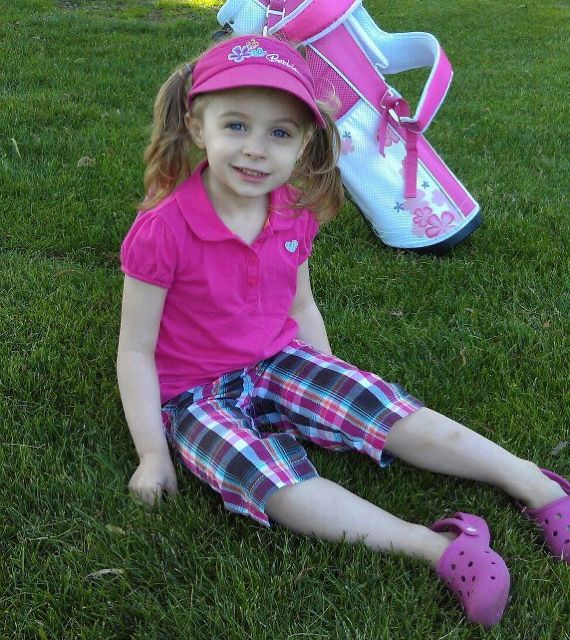
How early can you introduce golf to a child? Well, in our case we introduced golf to our daughter on her second birthday by giving her that first set of plastic golf clubs. She took the club out and swung it correctly without me ever showing her how to. How did this happen? The same way she learned to use an eating utensil, by watching me. She was observing me take practice swings and emulated what she was observing.
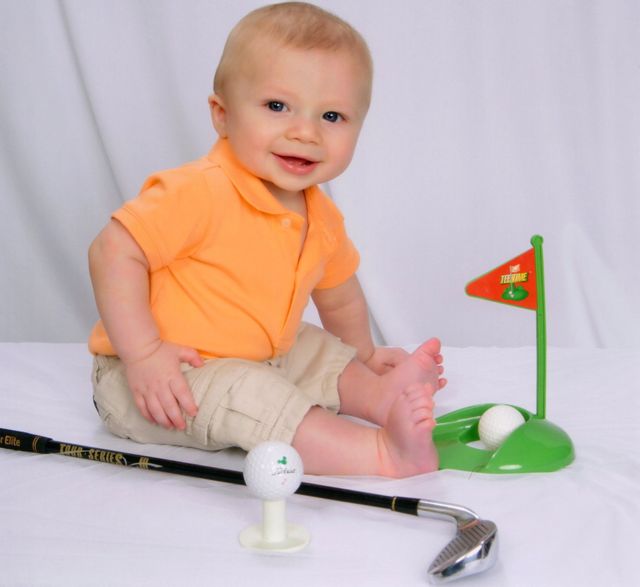
Our son took his first swing at 13 months. My wife and I believe that had we given him a club at the time he started walking (8 months) he would have been hitting balls with it. Our son was observing his big sister and me take swings and emulated what he saw.
In my opinion, I would start them off with the plastic clubs as soon as they start walking. You will be surprised at how well they will do just by watching mom and dad.
Part 2: Play Time
The key to keeping children interested in golf is to allow them to play and have fun. Even if they are not swinging a club or putting on the green, as long as there is an association with golf during the activity you’re doing is OK.
These activities can be as simple as allowing them to play with the head covers from your clubs. A lot of the covers today are animals and characters; you could even put on a little puppet show with them. My daughter loves to color on my golf balls. Let them mark a few for you. My son has an obsession with wanting to go through all the zippered pockets on my bag. So from time to time I will bring my bag into the family room and let him rummage through it.
You can color golf balls with any over-the-counter clothing dye. Try coloring some like Easter eggs. All these little activities have nothing to do with swinging a club but all are associated to golf.
Part 3: Golf Association
What happens when your child doesn’t want to putt or take swings with a club? After all, these are kids and their attention span is short for the most part. I have a list of 25 (please see original article to review the list) activities that will keep the interest of a child without having to always have a practice routine.
Now, some of these activities utilize swinging and putting but some are just fun ways to keep an association to golf, even if the child doesn’t realize it. Others are fun new ways to work on their game without doing the same old trip to the range or putting green. As long as you introduce golf-related activities, your child will remain interested and will have fun doing so.
Part 4: Lesson Time
First things first, you need to decide if the time is right for you child to take on structured lessons. I can not answer this for you — there is no magical age. You as the parent need to make this decision based on your child’s maturity and ability level. As a past instructor for baseball/softball, I had a rule that I would only take on students that were 7 or older. This is a pretty good general rule to follow.
Now, I know there are exceptions to the rule. My youngest student was 4 years old. When his dad called me to set up lessons and I explained that I only took students that were 7 or older, but he convinced me to take a look at him. Well, the 4-year-old turned out to have exceptional ability — the skill level of an 8-year-old. He was able to hit pitches at speeds above 40 mph. With that said, you as a parent will have a good idea if your son/daughter is ready to take on lessons.
Contact your local course and find one that offers The First Tee Program, also check into the U.S. Kids Golf Foundation for a list of the top-50 kid instructors. These are two good starting points.
Part 5: Structured Play
There will be a time when your child is going to cross over from “play time” to what I like to call “structured play time.” In the beginning stages of your child’s golf career, you have been able to get by with taking your child to the practice area and letting your child have fun. As your child grows and develops into a young golfer, there will need to be some form of structured play.
Structured play can come in the form of lessons, participating in the First Tee Program or enrolling into an age-appropriate group class. Our daughter started going to a program created for children ages 3 to 5 called “Little Tigers” when she turned 3. The class curriculum is very basic and there is no complicated instructions other than to have fun playing golf with other children the same age as her.
There is going to be a point in time when your child is going to believe you have exhausted all your knowledge of the game, even if it’s not true and you have a wealth of knowledge to share with them. They will simply look at you as mom or dad, unless of course, you are a certified teaching pro (sometimes that doesn’t matter either). This is completely normal and please don’t get frustrated if it happens. I want you to be aware of this and recognize it if it should start to happen. At that point, you will probably need to seek out an instructor who specializes in working with juniors and younger children. This will save an enormous amount of frustration for you and your child.
Part 6: The Right Ball
Don’t let the golf ball selection process scare you — it’s not as hard as it sounds. The little ones younger than 5 years old hit every round object under the sun. For players 5 to 12 years old, it’s a process of matching your swing speed to the compression rating. The older athletes competing in tournaments, high school matches and even those that are college bound, you need to attend a professional ball fitting.
Part 7: The Right Club
So how do we find the right club for our little golfer? Golf equipment designed for kids has come a long way. Long gone are the days when young golfers had to use adult clubs that had been cut down to size.
Most manufacturers create clubs for specific age ranges — typically, 3 to 5, 6 to 8 and 9 to 11 — as a general guideline. The age ranges are for different club lengths, and the clubs get longer as the age ranges increase. However, height is more important than age. I have found a very simple solution to acquiring clubs that will fit your child. You need not look any further than equipment made by U.S. Kids Golf, a company with a fitting system that is based on a color-coded chart that is adjusted every three inches. When you grow out of one color, you move up to the next.
Part 8: Deliberate Practice
Deliberate practice is characterized by several elements. It is activity designed specifically to improve performance, often with an instructors help; it can be repeated often; feedback on results is continuously available; it’s a high-demanding mentally, whether the activity is purely intellectual, such as chess, or heavily physical like sports and it isn’t much fun.
By definition alone, deliberate practice is very stressful, tiring and monotonous. At the same time, you are receiving feedback and ingraining positives in your chosen activity. Going to the driving range and hitting a bucket of balls at specified target is not deliberate practice. Going to the same range with the same bucket of balls and taking a very short back swing and working on contact and contact only is a better example of deliberate practice.
Another way to look at deliberate practice is working on one specified element of the swing. You need to work outside of your comfort zone to make progress. Most younger athletes I know of do not want to put time into something that isn’t fun. Remember, the key element of keeping kids interested in golf is by making it fun. Deliberate practice is just the opposite. It takes extreme dedication to put time into something that is stressful and exhausting.
Part 9: The Aggravation Factor
For you parents with little golfers ages 3 to 5 and maybe even beyond those ages, we need to talk about parent aggravation and frustration. There is going to come a time when your little golfer is going to give less than the effort he or she should. It’s not a matter of if, it’s going to be a matter of when.
Every single one of us will encounter this at some point and time. I want to you understand that what we say to our children can really affect how they feel about golf or anything else in life. We need to concentrate on what we say and even though frustration and aggravation is getting the best of us, we have to remain positive.
Part 10: Mixing It Up
Little golfers will eventually get tired of doing the same activities over and over again. Going to the range and hitting balls and then heading over to the putting green is only going to work for so long on the young mind. The best way to keep their interest is by changing things up every now and then. You don’t always have to putt to a hole. You can have them aim for one of their favorite plush toys or use some painters tape and make a tic-tac-toe game for them to play. You can also have them chip to a pyramid stack of cups and have them try and knock them down. The possibilities are endless, let your creative mind run wild. Your little golfer will thank you for it.
Part 11: Mini Golf
You may not have thought to use miniature golf as a stepping stone, but there is a good wealth of information that can be taught to your little golfer. First, there is the hand-eye coordination required to play. This translates into better reading and thinking. Secondly, the logic required for kids to adjust their swings as they shoot for the target also helps children learn to think. They also unconsciously acquire decision-making tools at the same time.
Adult interaction will exponentially increase the learning benefits of kids playing miniature golf. Most mini-golf courses have themes, usually a geographical or historic theme. Even those that have a theme set in fantasy or fiction lend themselves to creative thinking. If you incorporate creative questioning, this will cause children to imagine, create and dream as they observe their surroundings. By asking questions throughout the game about the surroundings, you as the parent can help the child become intentional with observation.
Part 12: My best advice
So there you have it, the best advice I can offer. I have enjoyed this series and I look forward to the next.
If you only take one piece of my advice, let it be that you will keep it fun for your little golfer. If you want your child to continue with this great game that can be so very frustrating at times, make it as fun as possible. I promise you that it will be better for the both of you in the long run.



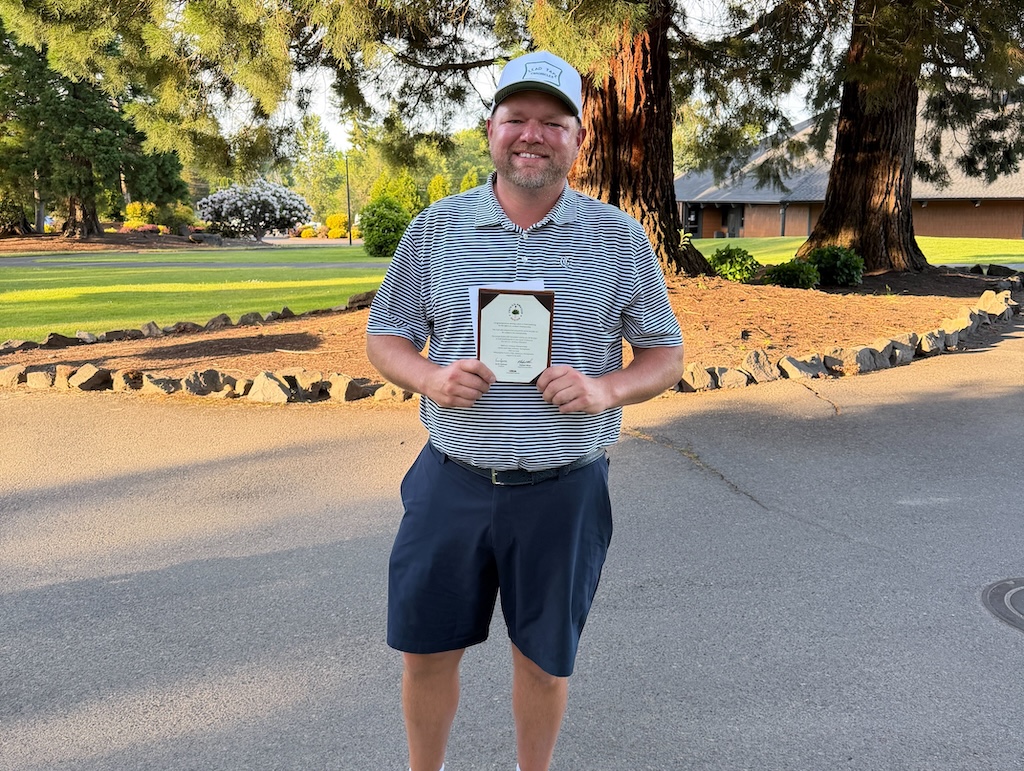
This past Monday, I played in the U.S. Amateur local qualifier at Rock Creek Country Club in Portland, Oregon. A full tee sheet from 7:30 a.m. to 1:55 p.m., the top 11 scores would make it to the U.S. Amateur final qualifying.
I teed off at 10:48 a.m.. With the 7:30 am tee time, you can get a feel for the leaders’ pace, and they were off and running on the challenging setup at Rock Creek.
View this post on Instagram
Getting to the highlight of the round on the par five 17th, a drive up the left side and 212 yards left to the front hole location. I took out a 5-iron with plans of middle of the green. The ball ended up 8 feet left of the hole, pin high. A slight downhill putt dropped in for an eagle 3 on the 17th. With the cut line looking to be anywhere from -2 to even par. This was the boost I had been waiting for all day.
With making par from the trees on 18, it was time to wait for a potential playoff with a posted score of one under par 71.
Three hours later, it was playoff time. 8 players for 6 spots. I made par on the playoff hole, which was good enough to advance to the U.S. Amateur final qualifying in July. USGA qualifiers sure deliver on all of the emotions in golf!
Club Junkie
Building my 2026 gamer WITB: Ranking the contenders and new putter projects – Club Junkie Podcast

The annual What’s In The Bag build is underway, and on this episode of Club Junkie, Brian breaks down the clubs currently leading the race for a spot in his 2026 gamer setup. From drivers and fairway woods to irons, wedges, and shafts, he ranks the equipment that’s performing best and explains what’s separating the front runners from the rest of the field.
Brian also heads into the workshop to discuss several putter projects currently on the bench. From head options and shaft choices to build ideas and testing plans, he shares what he’s working on and which putters could become serious contenders for the bag this season.
If you’re a gear junkie who loves equipment testing, club building, and the never-ending pursuit of the perfect setup, this episode is for you.
Follow Club Junkie:
Instagram: @clubjunkiepod
TikTok: @clubjunkiepod
Threads: @clubjunkiepod
X: @ClubJunkiePod
Club Junkie
Tour Edge Exotics mini driver review + TaylorMade Spider ZT Max first look – Club Junkie

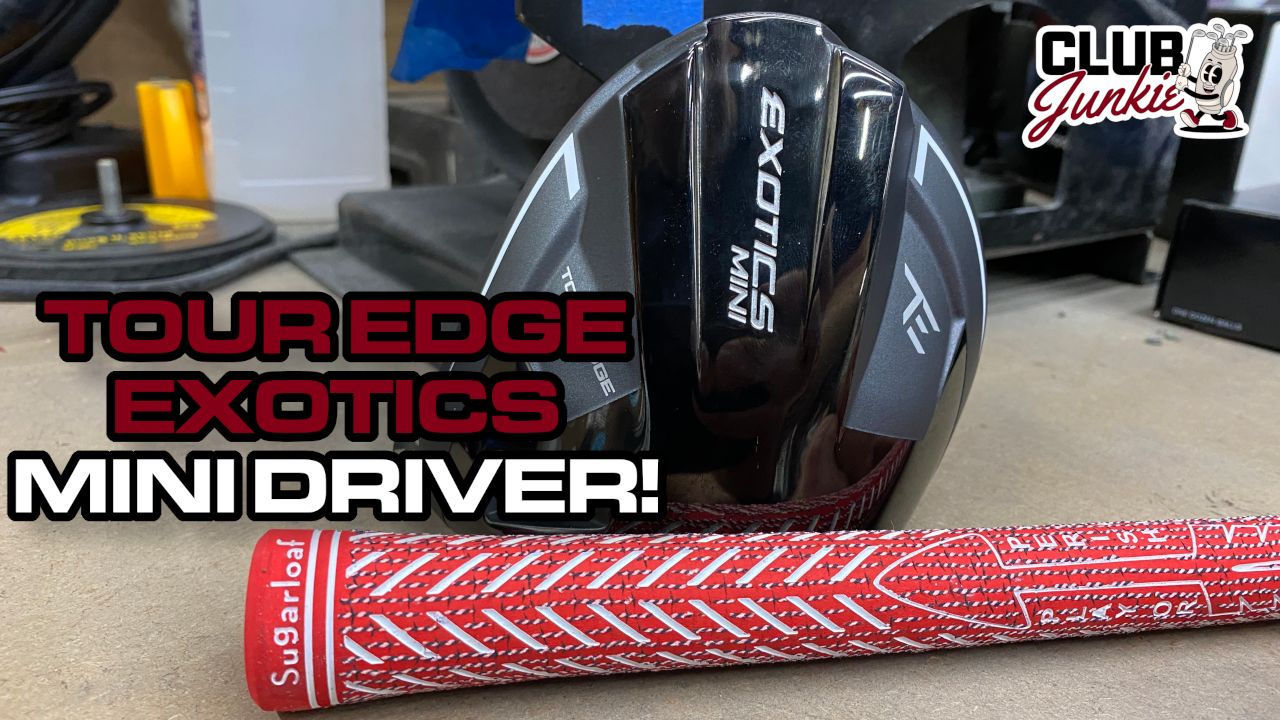
On this episode of Club Junkie, I put the new Tour Edge Exotics Mini Driver to the test and break down the performance, forgiveness, distance, and where it fits compared to a traditional driver or strong fairway wood. If you have been curious about adding a mini driver to the bag, this one is worth a look.
I also dive into the new TaylorMade Spider ZT Max putter that was recently spotted and discuss the growing zero torque putter trend. Plus, there is a closer look at the new Project X Titan Yellow shaft showing up on the PGA Tour and what makes it different from other profiles currently out there.

Justin Rose WITB 2026 (April): Full WITB breakdown with new McLaren irons

What’s the story behind Webb Simpson’s custom-stamped irons?

Cadillac Championship Tour Report: Spieth’s sizable changes, McLaren Golf launches, and more

Memorial Tournament Tour Report: Rory McIlroy, Cameron Young switch up drivers, and more

Russell Henley’s winning WITB: 2026 Charles Schwab Challenge

Kristoffer Reitan’s winning WITB: 2026 Truist Championship

Aaron Rai’s winning WITB: 2026 PGA Championship

Cameron Young’s winning WITB: 2026 Cadillac Championship

J.T. Poston’s winning WITB: 2026 Memorial Tournament

Best irons 2026: Best irons overall, most forgiving irons, and more


Bud Cauley WITB 2026 (June)
Bud Cauley had >14 clubs in his bag when photographed prior to the Memorial Tournament. Driver: Titleist GTS2 (8 degrees) Shaft: Fujikura...


Hannah Green WITB 2026 (June)
Driver: Titleist GTS3 (10 degrees, D4 SureFit setting) Shaft: Mitsubishi Chemical Diamana RB 53 S 3-wood: Titleist GT3 (15 degrees,...


Asterisk Talley WITB 2026 (June)
Driver: TaylorMade Qi4D (9 degrees) Shaft: Fujikura Ventus Blue 6 S 3-wood: TaylorMade Qi4D (16.5 degrees) Shaft: Fujikura Ventus Blue...


Brianna Do WITB 2026 (June)
Driver: Callaway Quantum Triple Diamond (9 degrees) Shaft: KBS PGW 3-wood: Callaway Elyte Titanium (15 degrees) Shaft: KBS PGW 5-wood:...
-
 Equipment5 days ago
Memorial Tournament Tour Report: Rory McIlroy, Cameron Young switch up drivers, and more
-
 News1 week ago
Russell Henley’s winning WITB: 2026 Charles Schwab Challenge
-
 Whats in the Bag3 days ago
J.T. Poston’s winning WITB: 2026 Memorial Tournament
-
 Equipment2 days ago
Best irons 2026: Best irons overall, most forgiving irons, and more
-

 Equipment1 week ago
Details on Jason Day’s latest prototype Avoda iron setup
-
 Equipment3 weeks ago
CJ Cup Byron Nelson Tour Report: Koepka and Kim’s newest putters finally get hot
-

 News2 weeks ago
Charles Schwab Challenge Tour Report: MacIntyre, Åberg and Spaun all switch putters, TaylorMade launches new Spider
-
 Equipment2 weeks ago
Details on J.J. Spaun’s surprise putter switch


Jeffrey Faulk
Apr 7, 2013 at 3:39 am
Thanks for the advice! I’m actually an expecting father (due in August), and was wondering ways, and the right time to introduce our future little guy to the game of golf. I think you pretty much nailed everything on the head.
Kadin Mahmet
Apr 7, 2013 at 8:38 am
Congratulations!!!!! You will be surprised at how young you can introduce them to golf! I would recommend weaning them off the plastic clubs as soon as possible. Start with a putter and go from there *view “The Right Club for additional information.
See ya on the green….Kadin
KCCO
Apr 6, 2013 at 8:42 pm
Really appreciate you pull not push approach if that makes sense….very good article, as were the previous..
Kadin Mahmet
Apr 7, 2013 at 8:35 am
KCCO thank you for taking the the time to read them. I appreciate that!
Kadin Mahmet
Apr 5, 2013 at 7:56 pm
Thank you Connected! I am glad you enjoyed it!
Connected hands
Apr 5, 2013 at 7:54 pm
Great way to finish up an entertaining series. Awesome job
Tyrone Taylor
Apr 5, 2013 at 7:43 pm
I would like to comment on Kadin passion and comittment to the game of golf. He truly loves this game and I am truly proud of him.
Kadin Mahmet
Apr 7, 2013 at 8:34 am
Thank you very much Tyrone!!
Kadin Mahmet
Apr 5, 2013 at 7:37 pm
Thank you Chelsea for taking the time to read and post!
Chelsea Adams
Apr 5, 2013 at 7:15 pm
Very interesting thoughts. Thanks for the write up Kadin!