
Opinion & Analysis
Does the Ryder Cup need a 9th man?

Woulda, coulda, shoulda.
On Wednesday, Tom Watson announced that he would eliminate the fourth captain’s pick and allow the top-nine players on the U.S. Ryder Cup Team to qualify on points.
“There’s not a lot of method in my madness, if you will,” said Watson, 63, who will be the oldest U.S. Ryder Cup captain in history. “I truly think the players themselves ought to have another shot at getting on the team because of … their play.”
In every Ryder Cup, there is always a debate on whether or not the captain’s picks were the correct ones, and there are different schools of thought on the best approach. Should captain’s picks be veteran players who have experience and can mentor the younger guys, or should they be younger players who can provide a spark? Let’s take a hard look at the facts of the last five Ryder Cup matches and get a firm grasp on the importance of those captain’s picks.
CASE STUDY No. 1: 2004 at Oakland Hills

Won by Team Europe (18.5 to 9.5)
The 2004 U.S. Team’s points list had the top-10 point getters making the team, which in this case left veteran player Steve Flesch in the 11th spot. In 2004, Flesch won at Colonial and also tied for seventh at the U.S. Open.
That’s an impressive campaign for most, but it wasn’t enough for captain Hal Sutton to take notice. Sutton eventually went with seasoned veteran Jay Haas, who in 2003 had an impressive showing at the Presidents Cup (he went 2-1-1) and was ranked in the top 20 in the OWGR at the time of his selection to the Ryder Cup. Stewart Cink, who had won twice in 2004 including the prestigious WGC Invitational at Firestone, was the second captain’s pick.
Sutton’s picks were somewhat expected, so there wasn’t a whole lot of discussion about them leading into the matches. Granted, the U.S. got manhandled in the matches, but it was Sutton’s pairings — Phil and Tiger together, mostly — that took most of the heat. Both Cink and Haas finished with records of 1-2-1, which in 2004 was a lot of points for a U.S. player.
Analysis: No amount of clever picks would have been enough for the U.S. to triumph at Oakland Hills.
CASE STUDY No. 2: 2006 at The K Club

Won by Team Europe (18.5 to 9.5)
A good of amount of debate was provided in 2006 as to the captain’s picks and the point system in general. Relatively unknown players like J.J Henry, Vaughn Taylor and Brett Wetterich made the team on points, which led most to believe that the point system was flawed.
John Rollins finished 11th in points and was overlooked so that veterans Stewart Cink and Scott Verplank could be added to the inexperienced squad. Verplank finished the matches with a record of 2-0, which supported captain Tom Lehman’s pick, and Cink who played in all five matches and finished 1-1-3. In the end, much like 2004, it didn’t really matter who Lehman picked because of the birdie onslaught from Team Europe, which was fueled by the inspiring play of Irishman Darren Clarke who had just lost his wife to breast cancer.
Analysis: Hogan, Snead and Nicklaus could have been picked for the squad, but nobody was going to beat Clarke that week, especially on his home turf.
Case Study No. 3: 2008 at Valhalla

Won by the U.S. (16.5 to 11.5)
Captain Paul Azinger made a controversial decision prior to the 2008 matches — he adjusted the qualifications for the U.S. Team to allow only eight players to make it on points, which enabled him to make four captain’s picks.
His pod system proved to be just what the U.S. Team needed to spur them on. He paired players based on personalities rather than their style of play. Even with six rookies on the team, his plan came off without a hitch.
Azinger was able to compensate for the absence of Tiger Woods, who was sidelined with a knee injury. So in this case the “9th player” on the list happened to be the 10th player, Steve Stricker, who in the golf world’s mind was a shoo-in to make the team. Although he provided some fireworks when he halved a match with Ben Curtis against Sergio Garcia and Paul Casey, Stricker finished the matches winless at 0-2-1.
All told, the four captains picks (Hunter Mahan, J.B. Holmes, Steve Stricker and Chad Campbell) finished the matches 6-3-5 and further solidified Captain Azingers model.
Analysis: Although Stricker was the highest-ranked player on the points list (No. 10) and the most experienced, he was the least successful of Azinger’s picks.
Case Study No. 4: 2010 at Celtic Manor

Won by Team Europe (14.5-13.5)
U.S. Team Captain Corey Pavin continued with Azinger’s 2008 model and used four captain’s picks. Pavin decided that injury-laden Anthony Kim, who slipped to 9th in the Ryder Cup standings, would watch the matches from home.
His four captain’s picks of Tiger Woods, Zach Johnson, Ricky Fowler and Stewart Cink finished the week 6-3-5, and left little doubt as to whether Pavin made the right choices. The U.S. Team fought hard in Wales, and if two or three more putts would have gone in perhaps it would have hoisted the cup for a second straight time.
Analysis: Pavin picked the four best players he had access to at that moment, and most agreed that going leaving the injury-plagued Kim off the roster was the right choice.
Case Study No. 5: 2012 at Medinah
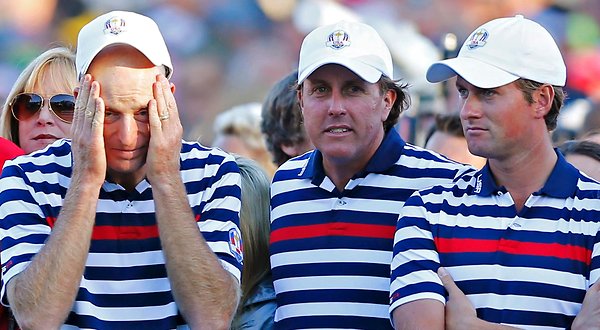
Won by Team Europe (14.5 to 13.5)
There was some buzz early in the week in regards to Mahan’s name missing from the roster, but at no point was it 100 percent obvious that Love had made an oversight.
Love’s captains picks of Dustin Johnson, Steve Stricker, Jim Furyk and Brandt Snedeker finished a total of 5-8. The man who shouldered the majority of the scrutiny was Steve Stricker, who finished the week 0-4. But Love’s real mistake was picking Furyk, because there’s just no way an aging Furyk has more value to the future of the U.S. Ryder Cup team than Hunter Mahan, one of the game’s brightest stars who has plenty of Ryder Cup appearances in his future.
Yes, Mahan finished the 2010 Ryder Cup in tears after fatting a chip that could have kept the U.S. in the match, but Furyk blew several tournament leads in 2012, including the Transitions Championship, the U.S. Open and the WGC-Bridgestone Invitational. Shocker that he did the same thing on Sunday at the Ryder Cup, right?
Analysis: Strickers’ 0-4 record and Furyk’s meltdown on the final holes started this debate. In retrospect, either or both of them probably should have been replaced with Hunter Mahan and Nick Watney, all in their early 30s.
The Takeaway
Having the access to pick four key Ryder Cup players seems like a great weapon for a captain to have, but it’s hard to prove that picks have faired any better than comparable players would have over the years. Keeping that in mind, Watson might have a point — what’s wrong with putting the responsibility of the team’s success on the shoulders of the players to qualify?
Up until 1989, that’s how all players qualified for the U.S. Team. And get this, the U.S. completely dominated the Ryder Cup. If you take a look back at how captains have used their picks, they were often to add a couple of experienced veterans (or friends) to the roster. Rarely has a captain used a pick to select a younger player.
If the U.S. Team went back to the old format, there’d be no picks and no debate — just simple math. I can assure you that the guy who is in the 13th spot is going to make sure he’s never there again, sort of like the guy who landed at 126th on the money list. Motivation works in mysterious ways and what it does to a player is amazing.
Click here to see what people are saying in the Tour Talk forum.







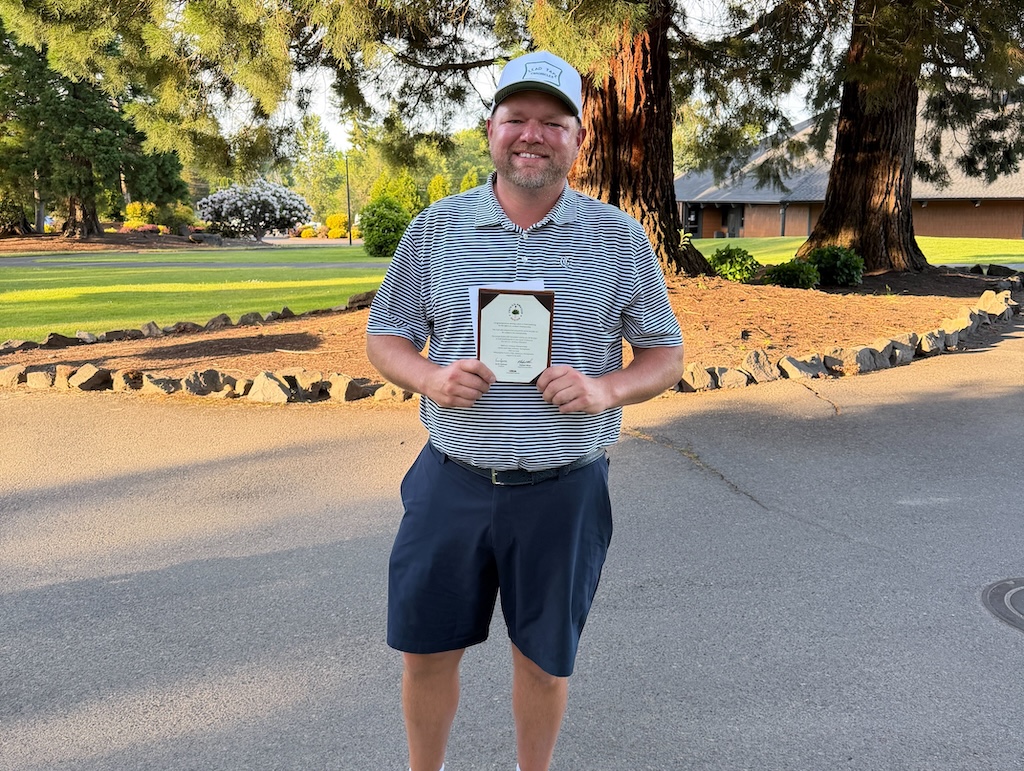
This past Monday, I played in the U.S. Amateur local qualifier at Rock Creek Country Club in Portland, Oregon. A full tee sheet from 7:30 a.m. to 1:55 p.m., the top 11 scores would make it to the U.S. Amateur final qualifying.
I teed off at 10:48 a.m.. With the 7:30 am tee time, you can get a feel for the leaders’ pace, and they were off and running on the challenging setup at Rock Creek.
View this post on Instagram
Getting to the highlight of the round on the par five 17th, a drive up the left side and 212 yards left to the front hole location. I took out a 5-iron with plans of middle of the green. The ball ended up 8 feet left of the hole, pin high. A slight downhill putt dropped in for an eagle 3 on the 17th. With the cut line looking to be anywhere from -2 to even par. This was the boost I had been waiting for all day.
With making par from the trees on 18, it was time to wait for a potential playoff with a posted score of one under par 71.
Three hours later, it was playoff time. 8 players for 6 spots. I made par on the playoff hole, which was good enough to advance to the U.S. Amateur final qualifying in July. USGA qualifiers sure deliver on all of the emotions in golf!
Club Junkie
Building my 2026 gamer WITB: Ranking the contenders and new putter projects – Club Junkie Podcast

The annual What’s In The Bag build is underway, and on this episode of Club Junkie, Brian breaks down the clubs currently leading the race for a spot in his 2026 gamer setup. From drivers and fairway woods to irons, wedges, and shafts, he ranks the equipment that’s performing best and explains what’s separating the front runners from the rest of the field.
Brian also heads into the workshop to discuss several putter projects currently on the bench. From head options and shaft choices to build ideas and testing plans, he shares what he’s working on and which putters could become serious contenders for the bag this season.
If you’re a gear junkie who loves equipment testing, club building, and the never-ending pursuit of the perfect setup, this episode is for you.
Follow Club Junkie:
Instagram: @clubjunkiepod
TikTok: @clubjunkiepod
Threads: @clubjunkiepod
X: @ClubJunkiePod
Club Junkie
Tour Edge Exotics mini driver review + TaylorMade Spider ZT Max first look – Club Junkie

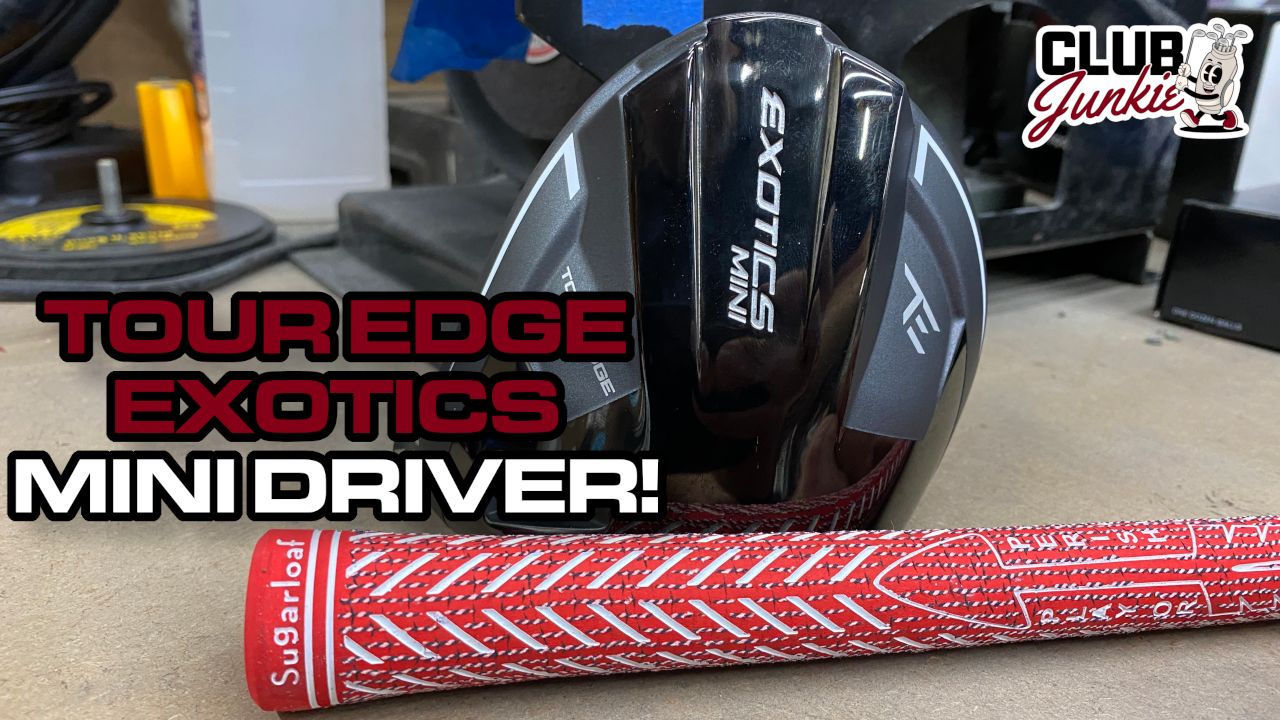
On this episode of Club Junkie, I put the new Tour Edge Exotics Mini Driver to the test and break down the performance, forgiveness, distance, and where it fits compared to a traditional driver or strong fairway wood. If you have been curious about adding a mini driver to the bag, this one is worth a look.
I also dive into the new TaylorMade Spider ZT Max putter that was recently spotted and discuss the growing zero torque putter trend. Plus, there is a closer look at the new Project X Titan Yellow shaft showing up on the PGA Tour and what makes it different from other profiles currently out there.

Justin Rose WITB 2026 (April): Full WITB breakdown with new McLaren irons

What’s the story behind Webb Simpson’s custom-stamped irons?

Memorial Tournament Tour Report: Rory McIlroy, Cameron Young switch up drivers, and more

Cadillac Championship Tour Report: Spieth’s sizable changes, McLaren Golf launches, and more

Russell Henley’s winning WITB: 2026 Charles Schwab Challenge

Kristoffer Reitan’s winning WITB: 2026 Truist Championship

Aaron Rai’s winning WITB: 2026 PGA Championship

Cameron Young’s winning WITB: 2026 Cadillac Championship

J.T. Poston’s winning WITB: 2026 Memorial Tournament

Best irons 2026: Best irons overall, most forgiving irons, and more


Bud Cauley WITB 2026 (June)
Bud Cauley had >14 clubs in his bag when photographed prior to the Memorial Tournament. Driver: Titleist GTS2 (8 degrees) Shaft: Fujikura...


Hannah Green WITB 2026 (June)
Driver: Titleist GTS3 (10 degrees, D4 SureFit setting) Shaft: Mitsubishi Chemical Diamana RB 53 S 3-wood: Titleist GT3 (15 degrees,...


Asterisk Talley WITB 2026 (June)
Driver: TaylorMade Qi4D (9 degrees) Shaft: Fujikura Ventus Blue 6 S 3-wood: TaylorMade Qi4D (16.5 degrees) Shaft: Fujikura Ventus Blue...

Brianna Do WITB 2026 (June)
Driver: Callaway Quantum Triple Diamond (9 degrees) Shaft: KBS PGW 3-wood: Callaway Elyte Titanium (15 degrees) Shaft: KBS PGW 5-wood:...
-
 Equipment6 days ago
Memorial Tournament Tour Report: Rory McIlroy, Cameron Young switch up drivers, and more
-
 News1 week ago
Russell Henley’s winning WITB: 2026 Charles Schwab Challenge
-
 Whats in the Bag3 days ago
J.T. Poston’s winning WITB: 2026 Memorial Tournament
-
 Equipment3 days ago
Best irons 2026: Best irons overall, most forgiving irons, and more
-

 Equipment1 week ago
Details on Jason Day’s latest prototype Avoda iron setup
-
 Equipment3 weeks ago
CJ Cup Byron Nelson Tour Report: Koepka and Kim’s newest putters finally get hot
-

 News2 weeks ago
Charles Schwab Challenge Tour Report: MacIntyre, Åberg and Spaun all switch putters, TaylorMade launches new Spider
-
 Equipment2 weeks ago
Details on J.J. Spaun’s surprise putter switch


GAMES
May 2, 2013 at 7:46 pm
Picking the #10 player in the world (Stricker) over #19 (Mahan) and #29 (Watney) was a no-brainer. No one could have seen Stricker’s 0-4 record coming.
BTW, if the same decision had to be made today, picking Stricker would be EVEN MORE of a no-brainer as he has moved UP to #9 in the world, while Mahan and Watney have both fallen three spots, to #22 and #23, respectively.
I know Steve Stricker’s modest midwest demeanor doesn’t play well with you people on the coasts. But, the reality is Stricker simply was AND IS a better player than either Watney or Mahan…
Brandon
Mar 25, 2013 at 12:01 pm
I still think leaving Mahan off last years team was a mistake, especially considering how well he plays in match play. I definitely like the idea of one less captains picks I would say get rid of them all together and just take the top 12 at the time. I don’t think you can go wrong with pick the guys who are playing the best that year.