
Opinion & Analysis
In the GolfWRX forums — My journey forward 3 tee boxes, so far


In our forums, one user is documenting their journey playing from a different set of tee boxes than they’re used to.
@RoyalMustang shared an in-depth story about their decision to change up their playing routine, inspired by a professional’s advice.
They wrote:
“I play the same course 5x a week; almost always 9 holes after work or after church/brunch on Sunday. Sometimes front 9, sometimes back 9. 18 is a big commitment and I usually don’t have the 5+ hour blocks necessary for 18. The course is in great shape! For whatever reason, I was conditioned to play the tips (7k at my course, but plays more like 7200 due to a few layups. Only one par 5 is regularly reachable for me in 2 shots at 530). I have the distance to do so; my long irons never make an appearance outside of our long par 3s most days.
“After reading the Johnny Keefer article in The AthleticI began to think why am I not doing this? Why do I go out, day after day, carding between a 36 and 42 for that really tough front 9 (37.2/139)? Sure, I’ve played shorter tees before, but only due to extreme conditions like high wind, and only for a round or 2. What if I bounced up to the 6K tees and played to score, rather than to survive, long term?
“My last 4 rounds have all been at the 6k tees (bronze at our course). I still mostly suck, playing exactly to par through those 4 rounds, but it’s taught me a lot and gotten me excited about playing again! I’m trying to get to a place where I’m consistently shooting 34, which would be playing to roughly scratch. I’m averaging 2 birdies/round, but also 2 bogeys.
“1) My mentality is different. I need to score on certain holes. Par 5s namely. With winter conditions and hard fairways, these 465 yard par 5s can be driver (290 carry-60 degree rollout) and 54 degree wedge. In fact, on the 8 par 5s I’ve played, the longest approach I’ve had is 170 yards, and that was into a stiff headwind the whole way. A 5 is not really acceptable if I’m hitting a 2nd shot approach with a 3/4 swing gap wedge. The pressure is on to score, not par. On a par 4, a bogey is a disaster; it’s a double bogey for all intents and purposes. Again, you can’t afford to make a bad shot, and if you do, you’ve got to recover for par.
“2) Par 3s at my course are, again, somewhat “survival” mode from the tips. 2 play at 210-220, one with water and trees lurking at the edges. The 175 yard par 3 has no room for error and a hazard left-side. If I play these at par from the tips, it’s going to be a good day. But now, I’m looking at 120-145 yards on each of these holes. I’ve got to be on the green or just off, which means the pressure is on to put a crisp strike on the ball. Theoretically it’s an easier swing but I also know that I really want to avoid bogeys. It’s almost more pressure-packed somehow.
“3) my putting feels more consequential. Put an approach within 10 feet and it’s not “nice” to make birdie: it’s almost essential given that I’m going to screw up somewhere and make bogey. Whereas before, a par is just fine. Again, it feels more “pressure-packed” in a tournament sort of way.
“4) I’m forced look at the course differently. There are choke points that are newly relevant; things I’ve never noticed before. On hole #8, the bunker that sits 370 and uphill is just never in play for me. I’m well short from the tips and hitting far past it on my 2nd shot. I never noticed how the fairway slopes down L to R into the bunker. Now, I have to hit a tee shot that has R to L spin on it to stay up and out of trouble, or hit 3W and lessen my chances of getting home in 2. Some “bombs away” holes aren’t that anymore. On others, the foward tees mean I can carry the dogleg with ease and make a 470 yard par 5 play 435.
“All this hasn’t “improved” my game so far (again, I’m playing to my cap by shooting par) but it’s getting me in a scoring mentality, away from a survival mentality. Functionally, 72 from the 6k tees is the same as 78 from the 7k tees. Mentally, it’s a different feel.
“One other benefit: my normal “walk” time for an evening round is 85 minutes. This drops by 10 minutes by playing 3 tee boxes forward. Fewer shots and a more direct path of walking. It’s not nothing when I’m finishing at 6:10 before last light sets in and I can barely see the pin on hole #9 for my approach shot!”
Our members in the forum shared their thoughts on playing from forward tees. Here are a few posts from the thread, but make sure to check out the entire discussion and have your say at the link below.
- @596: “I play all 4 sets of tees at our course. Not near as long as yours as it was built in 1925. Small pedestal greens. Puts high priority on approach shots.The mentality changes when moving around on tees. I have to score under par from the 2 sets of forward tees to match my handicap. Absolutely zero bogies. They are a disaster. Playing smart comes into play from the forward tees. You can’t afford any recovery shots.I love playing all the tees. It changes the course and your mental and physical approach to the game.”
- @Ironman_32: “Reminds me of when tour pros switch drives with amateurs and then play in from there. A lot of times it’s skill when you get to the hole.Also, I’d add, it helps to look at stats or rounds on the PGA tour, not just the leaders, but guys who miss the cut, and guys who barely make the cut. I think there’s that stat that Tiger in his prime missed something like ~20% of greens from 125 yards (don’t quote me may be wrong). So while it’s also about making good swings, it’s managing the bad ones, but also managing the good ones, i.e., a good swing one yard off of where you are aiming to a tucked pin could lead to a bogey.I do agree that playing forward tees helps you get into the go low mindset.”
- @bazinsky: “I played D1 tennis in college and became good buddies with a lot of the guys on the golf team that were in the dorm suite next to us. They told me the coach often had little mini competitions from the up tees to teach guys to go low, and the guys that finished in the back of the pack had to do extra conditioning drills.Guys said it really helped with getting used to scoring under pressure, since if you weren’t converting a lot of birdies and eagles, you basically got left in the dust.”
Entire thread: “My journey forward 3 tee boxes, so far”
Join the GolfWRX forums today, if you aren’t already a member!



For a long time, golf coaching had one accepted image.
A student stands on the lesson tee. A coach stands nearby. The coach watches, explains, adjusts, demonstrates and sends the player away with something to work on.
That model still matters. It always will.
But it is no longer the only serious way to coach.
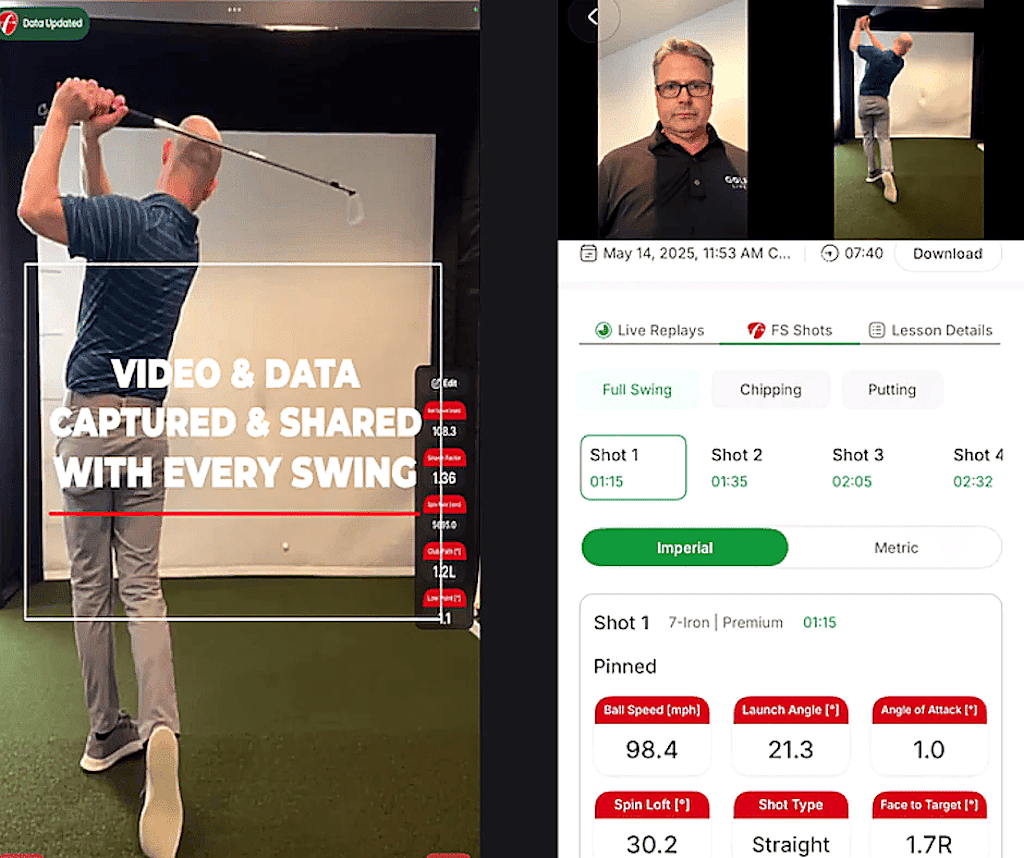
Remote instruction used to be treated like a backup plan. It was something you did when distance, weather or scheduling made an in-person lesson impossible. That view is changing fast, and the combination of FlightScope data and Golf Live’s coaching platform helps explain why.
The lesson tee is still valuable. It just has more competition now.
Coaches Were Right To Be Skeptical
Good coaches are not wrong to ask hard questions about remote instruction.
How do you help a player with grip pressure if you are not standing next to them? How do you explain a backswing position through a screen? How do you know whether a player is actually changing the pattern or just feeling like they are changing it?
Those are fair questions.
In a recent interview, Jordan Vogler, who helps lead FlightScope’s work with affiliates, influencers and creator partnerships, talked about that skepticism during a conversation on FlightScope’s partnership with Golf Live. The most honest part of the discussion was the acknowledgment that remote coaching is not magic. It still requires clarity, communication and a coach who understands what matters.
But once you add reliable video, data and follow-up, the model becomes much more powerful than many old-school coaches may assume.
This Is Where My Own Coaching World Has Changed
This is the story where I can speak most directly from experience.
As a PGA Professional and coach, I still believe deeply in face-to-face instruction. There are things you can see, feel and communicate in person that are hard to fully replace. A player’s setup, rhythm, tension level, comfort, questions and body language all matter.
But I also know this: remote coaching is no longer some watered-down version of a lesson.
When it is done correctly, it can be extremely effective.
That is where the combination of video, communication and FlightScope data becomes so valuable. A player can send swing video from another state. I can look at the motion, listen to what they are feeling and then match that against actual numbers. If the club path is changing, we can see it. If launch and spin are improving, we can see it. If carry distance or dispersion is trending in the right direction, we can see it.
That gives both coach and student confidence.
In many ways, data becomes a form of coaching validation. It tells the student, “Yes, the work is starting to show up,” even before the swing feels completely natural. It also tells the coach whether the plan is working or whether the priority needs to change.
That is a very different experience than sending a student away with one swing thought and hoping they practice it correctly.
Remote coaching still needs a coach. It still needs interpretation. It still needs a plan. But with tools like FlightScope and Golf Live, the conversation between coach and student can continue long after the lesson ends.
That is not a small thing. That is where golf instruction is going.

Data Gives the Coach More Evidence
Video is useful, but video alone can still leave room for debate.
A player may feel like the club is moving more from the inside. The video may show part of the story. But the launch monitor data can confirm whether the path, face, launch, spin or carry numbers are actually changing.
That is where FlightScope becomes such an important part of remote coaching.
The coach is no longer only saying, “This looks better.” The coach can say, “Here is what changed, here is why it matters and here is the number we are trying to keep moving.”
That gives the student a better roadmap. It also gives the coach more evidence.
Sometimes a student does not feel better right away. Sometimes a swing change feels strange before it becomes productive. But if the numbers begin moving in the right direction, the player can build confidence before the final result fully shows up on the golf course.
That matters.
The Best Remote Lessons Still Need a Real Coach
There is a trap in golf technology.
Some people assume more data automatically means better instruction. It does not.
A launch monitor can tell you what happened. It can show club path, face relationship, ball speed, launch, spin and carry. It can reveal patterns that the naked eye might miss. But it still takes a coach to decide what matters most for that golfer.
That is why the FlightScope x Golf Live model makes sense. It is not technology replacing instruction. It is technology giving instruction more structure.
A student can send video. The coach can review the swing, pair it with data, draw lines, record voice notes and give the player a plan. The player can practice indoors or outdoors, then send new swings and new numbers back.
That loop is the key.
Not one lesson. Not one tip. A loop.
Remote Coaching Removes Barriers
One of the biggest strengths of remote coaching is obvious: geography matters less.
A player in New York, like the two I work with, Brevin and Bennett, can work with a coach in Florida- that being me. A junior golfer can send swings during a tournament week. A busy adult can practice indoors after work. A player who feels intimidated at a public range can start in a more comfortable environment before taking the work outside.
That last point is important. Many newer golfers do not love the idea of struggling in front of strangers. They worry about taking up space, hitting bad shots or not knowing what they are doing.
An indoor setup, paired with launch monitor feedback and remote coaching, can create a safer first step. It allows a player to build contact, confidence and understanding before bringing the work to the golf course.
That is good for instruction. It is also good for participation.
The strongest coaching model going forward will not be remote-only or in-person-only.
It will be blended.
There will still be times when a player needs an in-person lesson. There will still be moments when a coach needs to see ball flight, body movement and setup live. But there are also plenty of times when remote coaching can be more efficient, more consistent and more trackable.
The best teachers will not fight that. They will use it.
FlightScope and Golf Live are part of a larger shift in golf instruction. Players want access. Coaches want better information. Technology can help both sides stay connected between lessons, between tournaments and between practice sessions.
Remote coaching is not a lesser version of instruction.
Done well, it is an extension of good coaching. It gives the player a plan, gives the coach better evidence and gives both sides a way to measure progress.
That is not a backup plan anymore.
That is the future arriving on the lesson tee.


Just a couple of weeks out from the U.S. Amateur final qualifying, and the last few weeks since the local qualifier have felt a bit mechanical. That’s good when I’m on the range — blending mechanics and rehearsing the feel of the swing in practice. The recent challenge has been bringing that mindset onto the course: playing golf swing instead of simply playing golf.
View this post on Instagram
A quick check on club face and alignment had me feeling back in business. Now, all of those mechanics are starting to sync up. It’s tough to know when to let go and just trust the work, especially when you’re in a bit of a funk and want to solve the problem. It’s easy to say, but hard to do. When you’re hitting it well, everything feels simple. But when your swing feels off, it’s easy to fixate on what’s wrong instead of focusing on the shot in front of you.
My dad gave me some good advice when I wasn’t seeing results on the course: I was spinning out of my driver swing. Now, I feel like I’m moving more down and through the ball, like I have in the past. That paired nicely with a recent practice round with my friend Blake Snyder—a former Asian Tour player and one of the best professionals in the PNW PGA Section, now a Class A PGA Professional. Blake noticed my trail foot was creeping back from being square at address with the driver. With those two adjustments, I was able to sync up what I’ve been working on with Chris Welch. It really does take a village! As I get back on the course, it’s about playing golf—not playing golf swing. I’m grateful to have people around me to remind me of that.


On this episode of Club Junkie, Brian dives into two very different flatsticks that have been getting plenty of attention lately: the Machine M12 ZTX zero torque putter and the HOG CSX Milled putter. How do they perform on the course? Which one delivers the best feel, forgiveness, and confidence on the greens? Brian breaks down the strengths and weaknesses of both and explains which golfers each model might fit best.
The show also shifts to the PGA Tour, where Srixon’s new prototype ZXi RKT drivers made their debut at the 2026 Travelers Championship. Brian takes a closer look at the new lineup, including the RKT, RKT LS, and RKT Max models, the updated weighting systems, new face technology, and what these early tour photos might tell us about the future of Srixon’s driver lineup.
If you’re a gear junkie who loves putters, prototype equipment, and getting an early look at what’s coming next, this is an episode you won’t want to miss.
Follow Club Junkie:Instagram: https://www.instagram.com/clubjunkiepod/X: https://x.com/ClubJunkiePodTikTok: https://www.tiktok.com/@clubjunkiepodThreads: https://www.threads.com/@clubjunkiepod

Best irons 2026: Best irons overall, most forgiving irons, and more

Memorial Tournament Tour Report: Rory McIlroy, Cameron Young switch up drivers, and more

J.T. Poston’s winning WITB: 2026 Memorial Tournament

Wyndham Clark’s winning WITB: 2026 U.S. Open

Russell Henley’s winning WITB: 2026 Charles Schwab Challenge

Details on Jason Day’s latest prototype Avoda iron setup

Aaron Rai’s winning WITB: 2026 PGA Championship

WITB Time Machine: Retief Goosen’s winning WITB, 2004 U.S. Open

Bryson DeChambeau pairs new big-stick speed with new-shoe stability

Photos from the 2026 U.S. Open


Scottie Scheffler WITB 2026 (June)
Driver: TaylorMade Qi10 (8 degrees @7.25) Shaft: Fujikura Ventus Black 7 X 3-wood: TaylorMade Qi10 (15 degrees @13.5) Shaft: Fujikura...


Viktor Hovland’s winning WITB: 2026 Travelers Championship
Driver: Ping G440 LST (9 degrees) Shaft: Fujikura Ventus TR Black VeloCore+ 6 X 3-wood: TaylorMade Qi4D (15 degrees) Shaft:...


WITB Time Machine: Dustin Johnson’s winning WITB, 2020 Travelers Championship
Dustin Johnson won the 2020 Travelers Championship at TPC River Highlands, finishing at 19-under-par and edging Kevin Streelman by a...


David Puig WITB 2026 (June)
Driver: Titleist GTS4 (10 degrees) Shaft: Fujikura Ventus Black 7 X 4-wood: Ping G440 MAX (17 degrees) Shaft: Fujikura Ventus Black 8 X, Project...
-
 News1 week ago
Wyndham Clark’s winning WITB: 2026 U.S. Open
-
 Whats in the Bag2 weeks ago
WITB Time Machine: Retief Goosen’s winning WITB, 2004 U.S. Open
-
 Equipment2 weeks ago
Bryson DeChambeau pairs new big-stick speed with new-shoe stability
-
 Tour Photo Galleries2 weeks ago
Photos from the 2026 U.S. Open
-

 Tour Photo Galleries7 days ago
Photos from the 2026 Travelers Championship
-
 Equipment5 days ago
Wyndham Clark’s Ping putter: There’s more to the lead tape than just weight
-

 News3 days ago
Travelers Championship Tour Report: The Spieth putter switch that never happened (and the Fowler, Spaun & Rose switches that did)
-

 Equipment1 week ago
U.S. Open Tour Report: More details on DeChambeau’s TaylorMade prototype driver + bag setups key at Shinnecock

