
Opinion & Analysis
Twilight, dew sweeping or midday golf? — GolfWRXers discuss


In our forums, one user is asking GolfWRX members to choose their favorite time to play: twilight golf, early-morning dew sweeping, or the middle of the day.
@Golfbit2X came down strongly on the side of twilight golf. The reasoning included discounted green fees, cooler temperatures during hot stretches, better availability, sunsets, and the chance to sleep later the night before. That is a pretty strong case for anyone who likes value and does not mind racing daylight.
As expected, the forum did not settle on one answer. Some members love the quiet rhythm of the first tee time of the day. Others prefer twilight because it is cheaper and often fits better around work or family. Midday players pointed to drier conditions and less moisture on the greens, even if the sun and pace can be less forgiving.
Our members in the forum shared their thoughts on the best time to play golf. Here are a few posts from the thread, but make sure to check out the entire discussion and have your say at the link below.
- @caniac6 kept it simple as a dew sweeper, favoring early golf and the clean rhythm that comes with being out first.
- @Warrior42111 said that with two small kids, the best time to play is simply whatever time he can actually get out.
- @LaurieK focused less on the clock and more on when the course is most empty.
- @mikedejong33 likes being first out or last out, avoiding the busiest middle-of-the-day window and chasing an empty course whenever possible.
Entire thread: “Twilight golf vs Dew golf vs Midday golf”
If you’re not already a member, sign up for the GolfWRX forums today.



In our forums, one user is wrestling with one of golf’s stranger emotional contradictions: shooting a lifetime-best score and still walking away unsatisfied.
@Saijin posted that he shot 64 from 7,198 yards with a course rating of 73.4, making four birdies and a bogey on the front nine before adding six straight birdies on the back. The scoring was outstanding, the wedges and putter felt terrific and the pace of play was ideal. Yet the full swing felt off enough that the round left him feeling strangely flat.
That is a very GolfWRX problem in the best possible way. For a player who cares deeply about the process, the score alone does not always tell the whole story. Some members pushed back and said a record round should be appreciated, especially when it comes without the player’s best long game. Others understood the distinction between scoring well and feeling fully in command of the golf ball.
Our members in the forum shared their thoughts on scoring, feel and learning how to appreciate rare golf highs. Here are a few posts from the thread, but make sure to check out the entire discussion and have your say at the link below.
- @Warrior42111 related it to being in the zone in another sport, where the body reacts and practice takes over without much conscious thought.
- @isaacbm argued that on the course the score still matters most and that big victories in golf are too rare not to appreciate.
- @Saijin clarified that the result was great, but the journey felt incomplete because the long game did not feel anywhere near as good as the scoring clubs.
- @jda made the point that playing well with less than your best stuff can say more about a golfer than scoring only when everything feels perfect.
Entire thread: “Broke my lifetime golf record today…. but I kinda feel meh.”
If you aren’t a member already, join us in the GolfWRX forums today.


This week, the action unfolds at Shinnecock Hills Golf Club in Southampton, New York — a venue renowned for its sun-drenched beaches and idyllic summer setting. While the scenery suggests relaxation, the 126th United States Open, hosted by the USGA, promises anything but ease for the world’s best golfers. As history shows, Shinnecock tests every facet of a player’s game, especially as the pressure mounts down the stretch.
This year, I am particularly focused on the menacing par-four 14th hole as the championship builds toward Sunday’s finale. Success on this hole comes down to knowing the situation and making the right call. That’s the same idea behind Attio, an AI-native CRM that keeps teams connected to the customer context that matters most.
Shinnecock Hills is steeped in golf history, being one of the original five clubs to establish the USGA in 1891. The course as we know it today was crafted by William Flynn in 1931, and its design reflects both tradition and challenge. There are no trees—just sandy soil and rolling terrain reminiscent of classic links courses. Combined with the prevailing winds, Shinnecock offers one of the sternest tests in major championship golf.
The club has been hosting U.S. Opens since 1896, when James Foulis won the inaugural event at Shinnecock with a 36-hole score of 156. Since then, the club has staged four more Opens—in 1986, 1995, 2004, and 2018. The lowest winning score came in 2004, when Retief Goosen finished at four under par. In 2018, Brooks Koepka captured the title at one over par, underscoring just how tough Shinnecock can play. With this history in mind, my attention turns to the pivotal closing stretch, especially the 14th.
Stretching to a championship length of 7,440 yards and playing to a par of 70, Shinnecock’s challenge is unrelenting. The par-four 14th—aptly named “Thom’s Elbow” after longtime head professional Charlie Thom—is the course’s longest par four at 520 yards. In 2018, it played as the tournament’s most difficult hole, averaging 4.567 strokes. Statistically, that makes it a par 4.5—an exacting test late in the round.
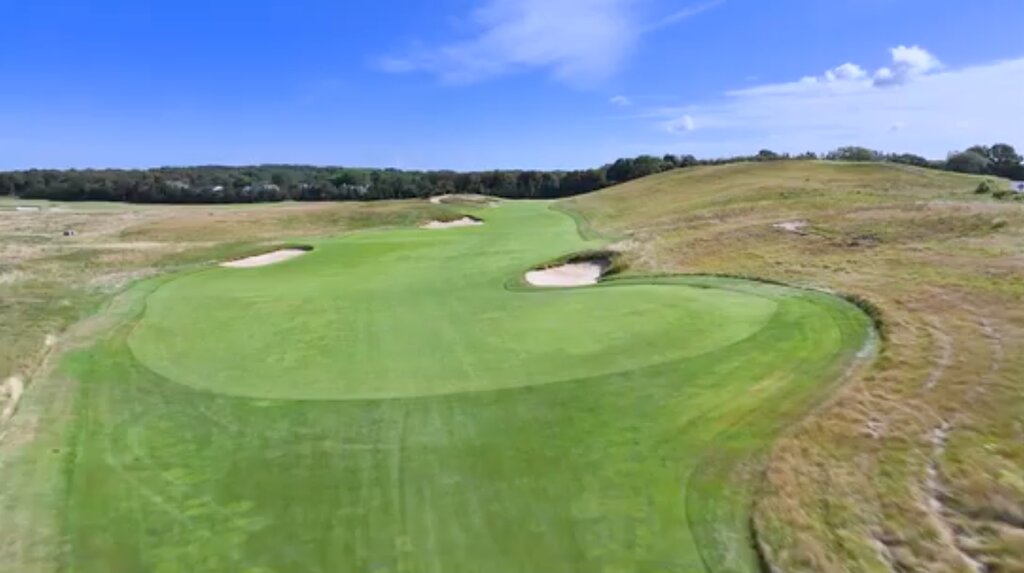
What makes the 14th so challenging? The tee shot is elevated, and the fairway slopes from right to left, with a bunker guarding the right side at about 290 yards. Precision is paramount here, especially with just five holes remaining. Although it’s one of the wider fairways at Shinnecock, the sloping terrain and firm conditions make it play much narrower. Notably, this year the fairway has returned to its traditional 60-yard width after being narrowed by 17 yards in 2018. Even so, the firmness still demands an accurate drive.
Typically playing downwind in the summer, the hole becomes even more treacherous if a tee shot finds the rough. The approach is blind, with the green guarded by two bunkers. Judging the wind, elevation, and lie is critical. The putting surface itself is challenging—sloping on both sides, with balls tending to gather toward the center or roll off the front if under-hit. On 14, erring on the side of caution is wise; a par here feels like a victory as players enter the home stretch.
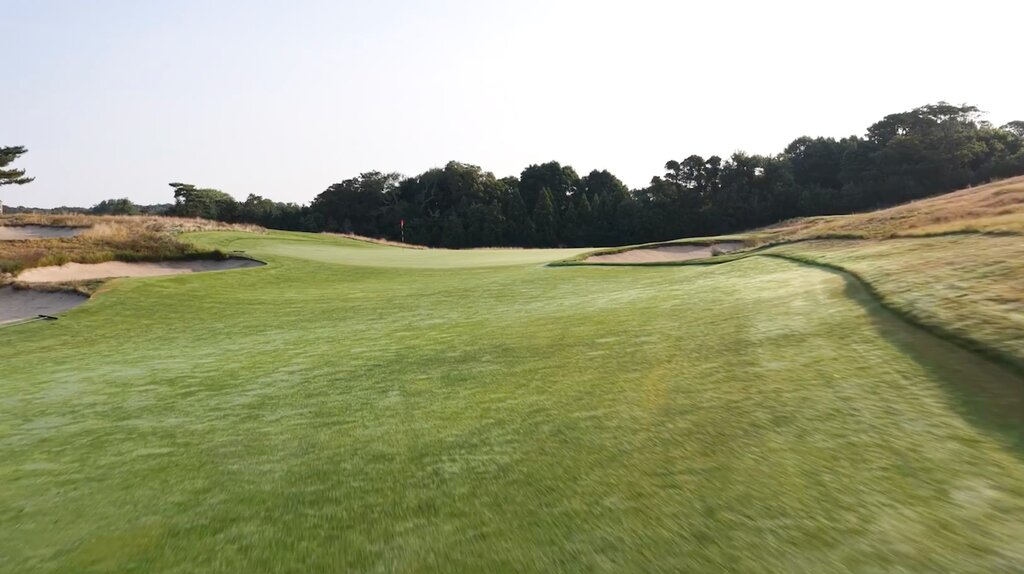
At a national championship, green speeds and hole locations are meticulously planned. Lag putting may not make the highlight reel, but it’s essential for anyone hoping to contend. The right side of the 14th green sits higher, and being above the hole makes for a perilous putt. With long, breaking putts the norm, accuracy on the approach becomes even more critical.
In the context of Shinnecock, a par on 14 is often a stroke gained on the field and sets the tone for the demanding final four holes. That’s why I believe the 14th will be pivotal in determining this year’s champion. Despite the wider fairway, the firmness and wind heighten the need for precision from tee to green. With the pressure mounting and the finish line in sight, the 14th hole is not the place to give anything back to the field.
@golfwrx The par-4 14th hole at Shinnecock is a par 5 in disguise and is sure to ruin a round or two this U.S. Open. Andrew Von Lossow explains in this Key Hole presented by Attio.
This article was presented in partnership with Attio, a modern CRM (Customer Relationship Management) platform designed to help companies manage contacts, sales pipelines, customer relationships, and business workflows.
All images via the USGA.

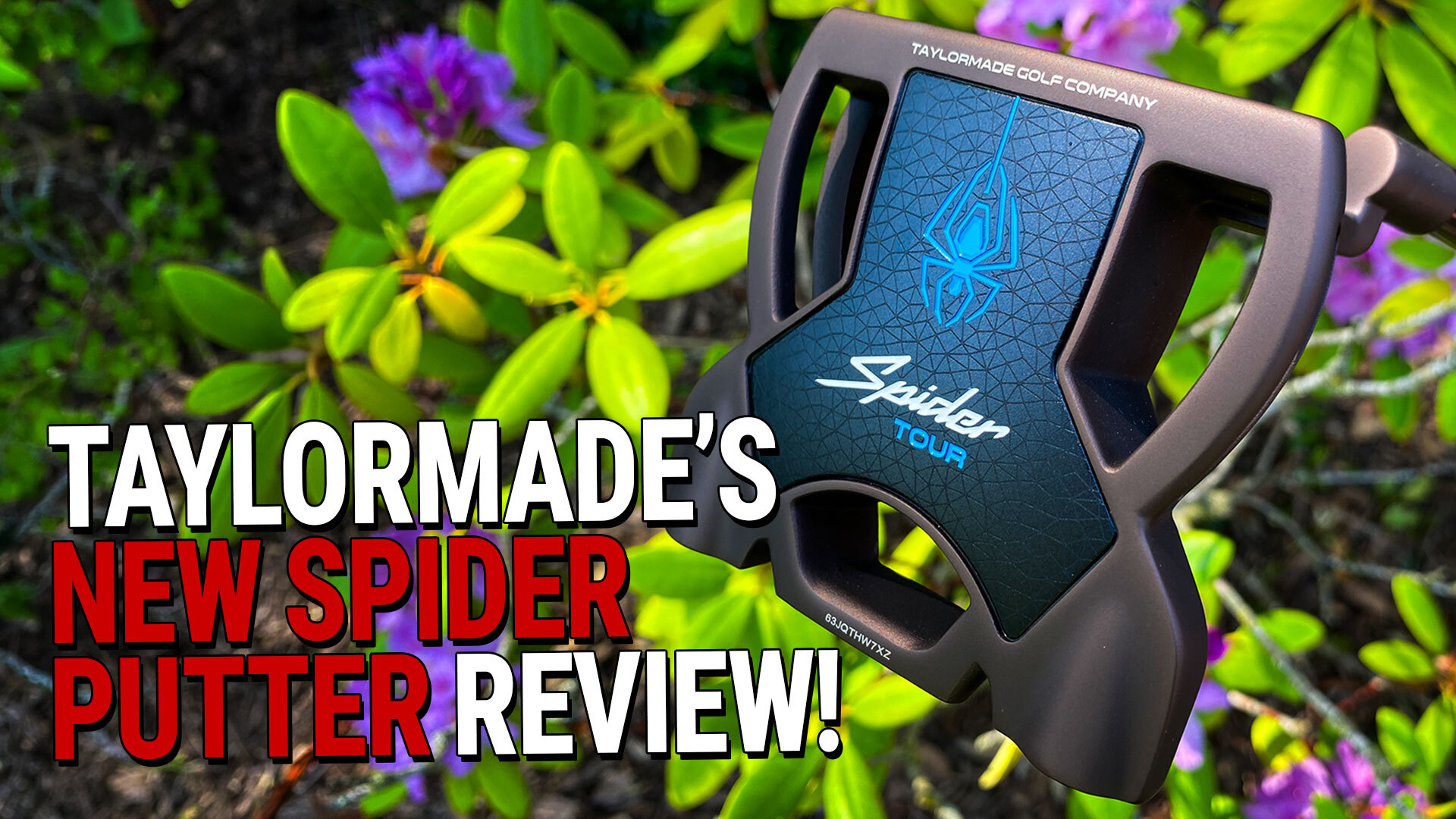
On this episode of Club Junkie, Brian dives into the all new TaylorMade Spider Tour Torched putters and breaks down everything from the unique torched finish to the performance, feel, and roll on the greens. Are these Spiders just a cosmetic upgrade, or is there more to the story?
Then, Brian is joined by Luke Williams from Odyssey Golf to discuss the highly anticipated Damascus Milled putters. Luke shares the inspiration behind the project, the challenges of working with Damascus steel, what makes these putters so special, and why collectors and players alike are excited about Odyssey’s latest premium offering.
Whether you’re a putter junkie, gear collector, or just looking for your next flatstick, this episode is packed with insights on two of the most talked-about putter releases of the year.

Best irons 2026: Best irons overall, most forgiving irons, and more

Memorial Tournament Tour Report: Rory McIlroy, Cameron Young switch up drivers, and more

J.T. Poston’s winning WITB: 2026 Memorial Tournament

Russell Henley’s winning WITB: 2026 Charles Schwab Challenge

Wyndham Clark’s winning WITB: 2026 U.S. Open

Aaron Rai’s winning WITB: 2026 PGA Championship

Kristoffer Reitan’s winning WITB: 2026 Truist Championship

WITB Time Machine: Retief Goosen’s winning WITB, 2004 U.S. Open

Details on Jason Day’s latest prototype Avoda iron setup

Bryson DeChambeau pairs new big-stick speed with new-shoe stability


WITB Time Machine: Dustin Johnson’s winning WITB, 2020 Travelers Championship
Dustin Johnson won the 2020 Travelers Championship at TPC River Highlands, finishing at 19-under-par and edging Kevin Streelman by a...


David Puig WITB 2026 (June)
Driver: Titleist GTS4 (10 degrees) Shaft: Fujikura Ventus Black 7 X 4-wood: Ping G440 MAX (17 degrees) Shaft: Fujikura Ventus Black 8 X, Project...


Miles Russell WITB 2026 (June)
Driver: TaylorMade Qi4D (10.5 degrees) Shaft: Fujikura Ventus Black 6 X 3-wood: TaylorMade Qi4D (15 degrees) Shaft: Graphite Design Tour AD IZ-8 X...


Ben James WITB 2026 (June)
Driver: Titleist GT3 (9 degrees, SureFit D3 setting) Shaft: Fujikura Ventus Black 7 X 3-wood: Cobra Darkspeed X (15 degrees, SureFit D3...
-
 Equipment2 weeks ago
Best irons 2026: Best irons overall, most forgiving irons, and more
-
 Equipment3 weeks ago
Memorial Tournament Tour Report: Rory McIlroy, Cameron Young switch up drivers, and more
-
 Whats in the Bag2 weeks ago
J.T. Poston’s winning WITB: 2026 Memorial Tournament
-
 News3 days ago
Wyndham Clark’s winning WITB: 2026 U.S. Open
-
 Whats in the Bag1 week ago
WITB Time Machine: Retief Goosen’s winning WITB, 2004 U.S. Open
-
 Equipment1 week ago
Bryson DeChambeau pairs new big-stick speed with new-shoe stability
-

 Tour Photo Galleries1 week ago
Photos from the 2026 U.S. Open
-

 Equipment5 days ago
U.S. Open Tour Report: More details on DeChambeau’s TaylorMade prototype driver + bag setups key at Shinnecock

