
Opinion & Analysis
Kelley: Changing your golf game through journaling


I started journaling in my daily life roughly a year ago. I would journal before bed as a daily reflection and to prepare for the next day. It quickly had a profound effect on my mental health.
It didn’t take long to realize journaling needed to be implemented in my golf game. I had read about great players, including multiple major winners using journaling as a tool to bring out the best in their game. I was always reluctant, being unaware of the research and science of the benefits.
I had been using a golf performance app designed by Karl Morris (Mind Caddie) for note-keeping after my rounds. I then started using the journaling portion of the app. After more research, I changed to a classic physical journal to handwrite in.
Sitting down and spending time writing in a journal is massively beneficial for multiple reasons. In short form, here are the biggest reasons why journaling can be beneficial to your golf game and mental health, which in my opinion, are correlated.
1. Makes you mindful and present
When you sit down and write in a journal, it makes you present in the moment. The act of writing on paper with a pen makes you focus your attention on what you are currently doing, writing. This can be used as a distraction for your brain to take a step back and view what you are journaling about from a different perspective.
This brief break from your influenced thoughts also gives you time to reflect. Imagine reflecting on your round when you are more clear-minded, not fresh off a bogey on the last hole. Creating this habit also trains your brain to be mindfully present in the moment, a skill that can be trained and will undoubtedly improve performance.
2. You can become what you think
People often become what they tell themselves. If you constantly tell yourself you are a poor putter, then you will become one. As Harvey Penick once said, “Make sure you go to dinner with good putters.” The energy of players’ attitudes around you will undoubtedly contaminate your thinking. Start the habit of changing the story.
For journaling, I have found it helped to write down the three best shots I hit during that round. Our brains naturally focus on the bad shots, as that has more of an impact on our thought process. Taking the time to write down the good shots reverses that natural thought process and can change your brain over time to what you have done well.
3. Programming commitments
The typical day ahead of you rarely goes as planned. In golf, you are almost certainly going to be faced with obstacles. Whether it be an unexpected change in weather, playing with a slow playing partner or just physically not feeling up to par, setting a commitment will help you weather the storm.
Before your round, write down a commitment you can maintain throughout the round. Examples include, “I will be a good playing partner despite what happens on the golf course today” or “I am going to do a great job of learning from my bad shots today”.
With this commitment in writing, it will serve as something you can control during the round and can revert back to mentally. Focusing on the controllable areas will steady the ship when things go awry. Focusing on outcomes you can’t control can put you in a mental tailspin.
4. Accountability
Holding yourself accountable for the day is a great tool to keep yourself in check. For daily life, processing what you did well and didn’t do well will promote self-awareness, giving you clarity on changes that need to be made. After your golf round, this time of reflection will serve as how well you held your “commitment” on the round.
As for my end of the day journaling, I have a section titled “Well/Not Well/Improvements Needed”. This usually contains one or two sentences where I have to self-reflect on those areas and how I can improve. Once this part of journaling becomes a habit, you will find yourself not wanting to have to write down the “Not well” part of the day. This indirectly forces you to be mindful and take a better approach to daily situations.
5. Facilitates a swing change
Making a swing change is difficult for even a professional player. The best way to go about it? Focus on building a new brain circuit on top of going to the range trying to build “muscle memory”.
A new movement first starts in the brain, so we should focus more on creating a strong memory of that movement. The best way to do this is simply write down in your notebook what you are working on. This can include distinct feels on the motion. To take it a step further, develop the habit of writing it down before bed, as the research shows before sleep is the optimal time to learn.
From reading biographies about philosophers, presidents, CEOs, Athletes, and top performance experts, journaling has always played a role in their lives. Only needing paper and a pen, anyone can do this at anytime. Start small with your golf journal, form a productive habit and see where it takes you.
Work Cited
Morris, Karl. “The Mindfactor Course”. Holiday, Ryan. “The Daily Stoic”. Nichol, Gary “The Lost Art of Golf”. Dr. Julie Smith, “Why Has No One Told Me This Before”
Twitter: KKelley_Golf



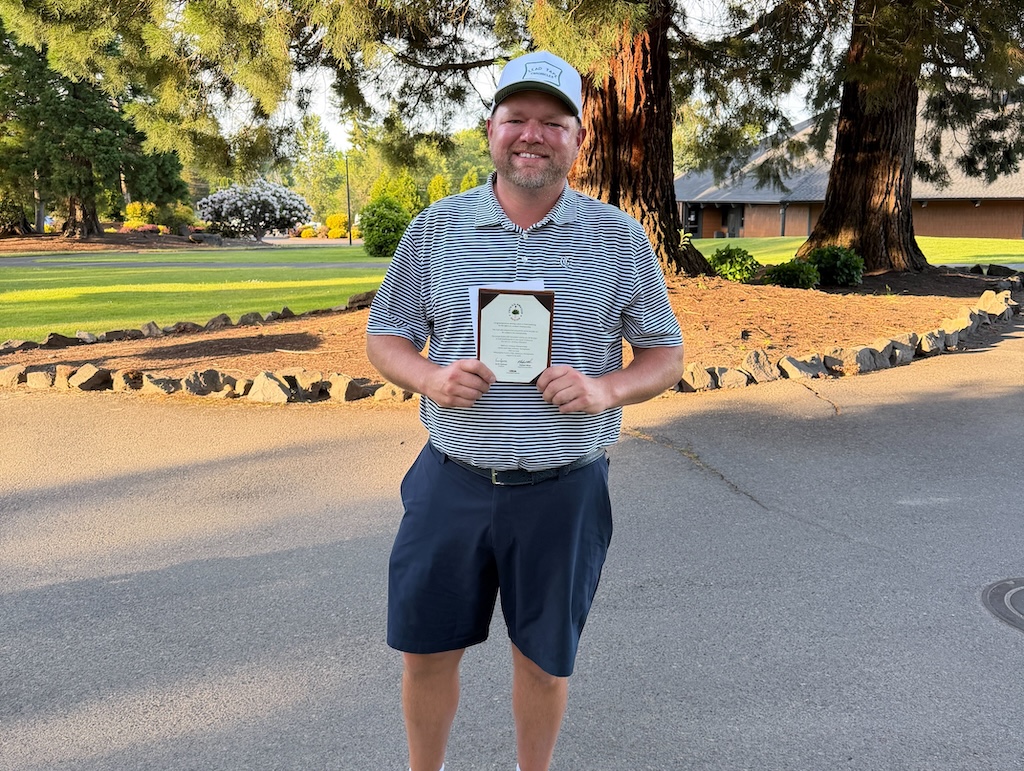
This past Monday, I played in the U.S. Amateur local qualifier at Rock Creek Country Club in Portland, Oregon. A full tee sheet from 7:30 a.m. to 1:55 p.m., the top 11 scores would make it to the U.S. Amateur final qualifying.
I teed off at 10:48 a.m.. With the 7:30 am tee time, you can get a feel for the leaders’ pace, and they were off and running on the challenging setup at Rock Creek.
View this post on Instagram
Getting to the highlight of the round on the par five 17th, a drive up the left side and 212 yards left to the front hole location. I took out a 5-iron with plans of middle of the green. The ball ended up 8 feet left of the hole, pin high. A slight downhill putt dropped in for an eagle 3 on the 17th. With the cut line looking to be anywhere from -2 to even par. This was the boost I had been waiting for all day.
With making par from the trees on 18, it was time to wait for a potential playoff with a posted score of one under par 71.
Three hours later, it was playoff time. 8 players for 6 spots. I made par on the playoff hole, which was good enough to advance to the U.S. Amateur final qualifying in July. USGA qualifiers sure deliver on all of the emotions in golf!
Club Junkie
Building my 2026 gamer WITB: Ranking the contenders and new putter projects – Club Junkie Podcast

The annual What’s In The Bag build is underway, and on this episode of Club Junkie, Brian breaks down the clubs currently leading the race for a spot in his 2026 gamer setup. From drivers and fairway woods to irons, wedges, and shafts, he ranks the equipment that’s performing best and explains what’s separating the front runners from the rest of the field.
Brian also heads into the workshop to discuss several putter projects currently on the bench. From head options and shaft choices to build ideas and testing plans, he shares what he’s working on and which putters could become serious contenders for the bag this season.
If you’re a gear junkie who loves equipment testing, club building, and the never-ending pursuit of the perfect setup, this episode is for you.
Follow Club Junkie:
Instagram: @clubjunkiepod
TikTok: @clubjunkiepod
Threads: @clubjunkiepod
X: @ClubJunkiePod
Club Junkie
Tour Edge Exotics mini driver review + TaylorMade Spider ZT Max first look – Club Junkie

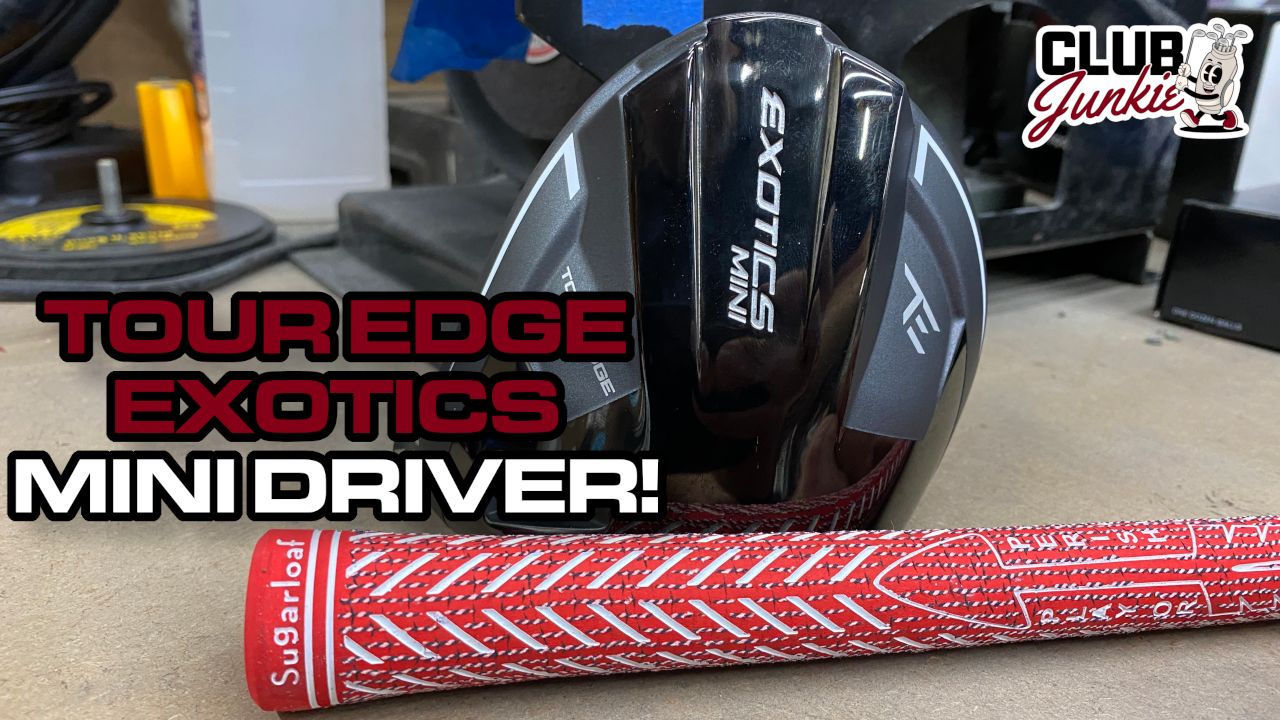
On this episode of Club Junkie, I put the new Tour Edge Exotics Mini Driver to the test and break down the performance, forgiveness, distance, and where it fits compared to a traditional driver or strong fairway wood. If you have been curious about adding a mini driver to the bag, this one is worth a look.
I also dive into the new TaylorMade Spider ZT Max putter that was recently spotted and discuss the growing zero torque putter trend. Plus, there is a closer look at the new Project X Titan Yellow shaft showing up on the PGA Tour and what makes it different from other profiles currently out there.

Justin Rose WITB 2026 (April): Full WITB breakdown with new McLaren irons

What’s the story behind Webb Simpson’s custom-stamped irons?

Memorial Tournament Tour Report: Rory McIlroy, Cameron Young switch up drivers, and more

Cadillac Championship Tour Report: Spieth’s sizable changes, McLaren Golf launches, and more

Russell Henley’s winning WITB: 2026 Charles Schwab Challenge

Kristoffer Reitan’s winning WITB: 2026 Truist Championship

Best irons 2026: Best irons overall, most forgiving irons, and more

J.T. Poston’s winning WITB: 2026 Memorial Tournament

Aaron Rai’s winning WITB: 2026 PGA Championship

Cameron Young’s winning WITB: 2026 Cadillac Championship


Bud Cauley WITB 2026 (June)
Bud Cauley had >14 clubs in his bag when photographed prior to the Memorial Tournament. Driver: Titleist GTS2 (8 degrees) Shaft: Fujikura...


Hannah Green WITB 2026 (June)
Driver: Titleist GTS3 (10 degrees, D4 SureFit setting) Shaft: Mitsubishi Chemical Diamana RB 53 S 3-wood: Titleist GT3 (15 degrees,...


Asterisk Talley WITB 2026 (June)
Driver: TaylorMade Qi4D (9 degrees) Shaft: Fujikura Ventus Blue 6 S 3-wood: TaylorMade Qi4D (16.5 degrees) Shaft: Fujikura Ventus Blue...


Brianna Do WITB 2026 (June)
Driver: Callaway Quantum Triple Diamond (9 degrees) Shaft: KBS PGW 3-wood: Callaway Elyte Titanium (15 degrees) Shaft: KBS PGW 5-wood:...
-
 Equipment6 days ago
Memorial Tournament Tour Report: Rory McIlroy, Cameron Young switch up drivers, and more
-
 News2 weeks ago
Russell Henley’s winning WITB: 2026 Charles Schwab Challenge
-
 Equipment3 days ago
Best irons 2026: Best irons overall, most forgiving irons, and more
-
 Whats in the Bag4 days ago
J.T. Poston’s winning WITB: 2026 Memorial Tournament
-

 Equipment1 week ago
Details on Jason Day’s latest prototype Avoda iron setup
-
 Equipment3 weeks ago
CJ Cup Byron Nelson Tour Report: Koepka and Kim’s newest putters finally get hot
-

 News2 weeks ago
Charles Schwab Challenge Tour Report: MacIntyre, Åberg and Spaun all switch putters, TaylorMade launches new Spider
-

 Equipment2 weeks ago
Details on J.J. Spaun’s surprise putter switch

