
Opinion & Analysis
The USGA comes to its senses with its Publinx decision


The United States Golf Association has come to its senses on at least one topic.
While I’ve been waiting for years for a bit of gender equity (USGA Senior Women’s Open, anyone?) and I don’t agree with the anti-anchoring proposal, nor am I a supporter of rules bifurcation, I applaud the decision of the USGA to retire the Dwyer and Standish trophies. Awarded annually to (respectively) the champions of the United States Women’s and Men’s Amateur Public Links championships, the two trophies boasted a combined 110-plus years of heritage and were intended to provide a championship outlet for career amateurs without access to the high-rent district of private clubs. Unfortunately, they did not.
Over time, this notion turned from fact and fancy to fiction. The event began to be dominated by the collegiate players, especially when the Masters Tournament announced a restructuring of its amateur invitation paradigm. Gone were the places in the tournament for every member of the United States and Great Britain and Ireland Walker Cup sides. In their place were five invitations for five champions, one of which was the U.S. Amateur Public Links. Knowing that a coveted Masters invite would go to the champion made participation in the Public Links for men a tempting proposition.
The Public Links lacked support and respect from its own sponsoring association. Brandt Snedeker won the 2003 championship, yet was inconceivably passed over for selection to that year’s Walker Cup team.
The most nebulous aspect of the Men’s Public Links was the fine line between those eligible and those not. According to the entry requirements, players could only be members of clubs or courses open to public play.
Eligibility Rule: Entries are open to amateur golfers who since January 1 of the current year have been bona fide public course players with an up to date men’s Handicap Index not exceeding 4.4 under the “USGA Handicap System” and have not held privileges of any course which does not extend playing privileges to the general public.
Privileges at a private course include, but are not limited to: Access to the course and its facilities whether or not you are a member. Honorary Memberships. Summer access at a private course your school team uses. Access more than one day a week for caddies and employees. Access through a “Come on over any time” relationship.
Exceptions: A bona fide public player may hold incidental privileges of a course not open to the public when such privileges are provided by:
- An educational institution at which he is a student; this includes members of a golf team when privileges are awarded at private facilities to the entire team on an equal basis, and are only available during the traditional school year/competitive golf season (including post season play which may include Conference, State and National Championships). No summer access.
- A federal armed service of which he is a member or retired member; or
- An industry by which he is employed or from which he is retired and said private course is owned by the employer.
The third exception is interesting, no? On the surface, it contradicts the “access more than one day a week” caveat listed previously. Did you know that three of the top-20 courses in the U.S. (most recent Golf Digest ranking) are public-access courses? Three more of the next 20, as well. Six more from Nos. 40 to 60, and another six among the final forty courses. Of that top 100, only one is a municipal course: Bethpage Black. The rest are high-end resorts that technically qualify as public courses. That’s a little sticky, don’t you think?
Enrollment in a specific educational institution (which I read as member of the varsity team) would certainly receive access to elite private courses for 10 of the year’s 12 months. The other two are usually devoted to travel and tournaments, meaning access is less necessary. The summer amateur tour runs from the beginning of June through the end of August, with many Public Links contestants following the amateur sun from Lewiston to Sunnehanna. With precious little time at home, there was never any need to frequent a public layout.
The other glaring loophole was the guest invitation. Once a golfer achieves a minimal level of renown, invitations to play as a guest at exclusive clubs come in like rain during a storm. A golfer could easily register for a season pass at the local muni, keep a USGA handicap there, yet never play a round over the course’s 18 during the season. At no time did the USGA specify that a minimum number of rounds must be played at public-access courses (or a maximum at private-access courses) in addition to the public-course membership caveat. By demanding this little bit of accountability, more PubLinks victors would have been true public-course champions.
“Time it was and what a time it was, it was. A time of innocence, a time of confidences,” sang Paul Simon and Art Garfunkel. For the women and men of the Public Links, that time will end in 2014. Down the road, if we’re lucky, the USGA will revisit the topic and script it properly.
Click here to see what people are saying in the forums.






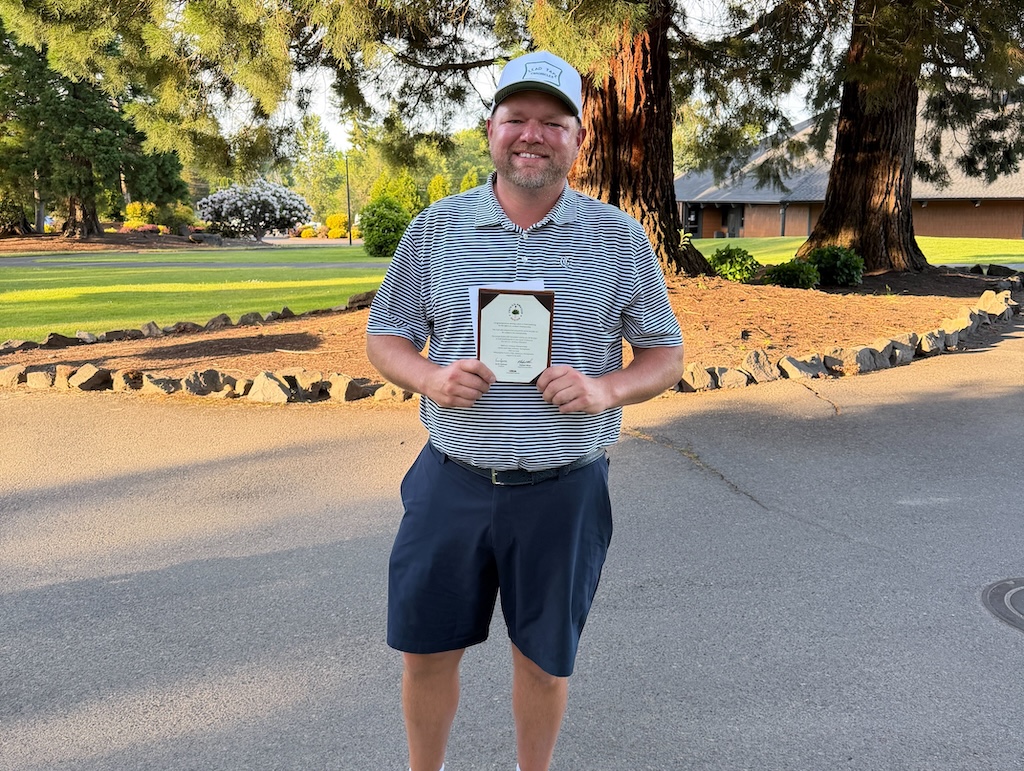
This past Monday, I played in the U.S. Amateur local qualifier at Rock Creek Country Club in Portland, Oregon. A full tee sheet from 7:30 a.m. to 1:55 p.m., the top 11 scores would make it to the U.S. Amateur final qualifying.
I teed off at 10:48 a.m.. With the 7:30 am tee time, you can get a feel for the leaders’ pace, and they were off and running on the challenging setup at Rock Creek.
View this post on Instagram
Getting to the highlight of the round on the par five 17th, a drive up the left side and 212 yards left to the front hole location. I took out a 5-iron with plans of middle of the green. The ball ended up 8 feet left of the hole, pin high. A slight downhill putt dropped in for an eagle 3 on the 17th. With the cut line looking to be anywhere from -2 to even par. This was the boost I had been waiting for all day.
With making par from the trees on 18, it was time to wait for a potential playoff with a posted score of one under par 71.
Three hours later, it was playoff time. 8 players for 6 spots. I made par on the playoff hole, which was good enough to advance to the U.S. Amateur final qualifying in July. USGA qualifiers sure deliver on all of the emotions in golf!
Club Junkie
Building my 2026 gamer WITB: Ranking the contenders and new putter projects – Club Junkie Podcast

The annual What’s In The Bag build is underway, and on this episode of Club Junkie, Brian breaks down the clubs currently leading the race for a spot in his 2026 gamer setup. From drivers and fairway woods to irons, wedges, and shafts, he ranks the equipment that’s performing best and explains what’s separating the front runners from the rest of the field.
Brian also heads into the workshop to discuss several putter projects currently on the bench. From head options and shaft choices to build ideas and testing plans, he shares what he’s working on and which putters could become serious contenders for the bag this season.
If you’re a gear junkie who loves equipment testing, club building, and the never-ending pursuit of the perfect setup, this episode is for you.
Follow Club Junkie:
Instagram: @clubjunkiepod
TikTok: @clubjunkiepod
Threads: @clubjunkiepod
X: @ClubJunkiePod
Club Junkie
Tour Edge Exotics mini driver review + TaylorMade Spider ZT Max first look – Club Junkie

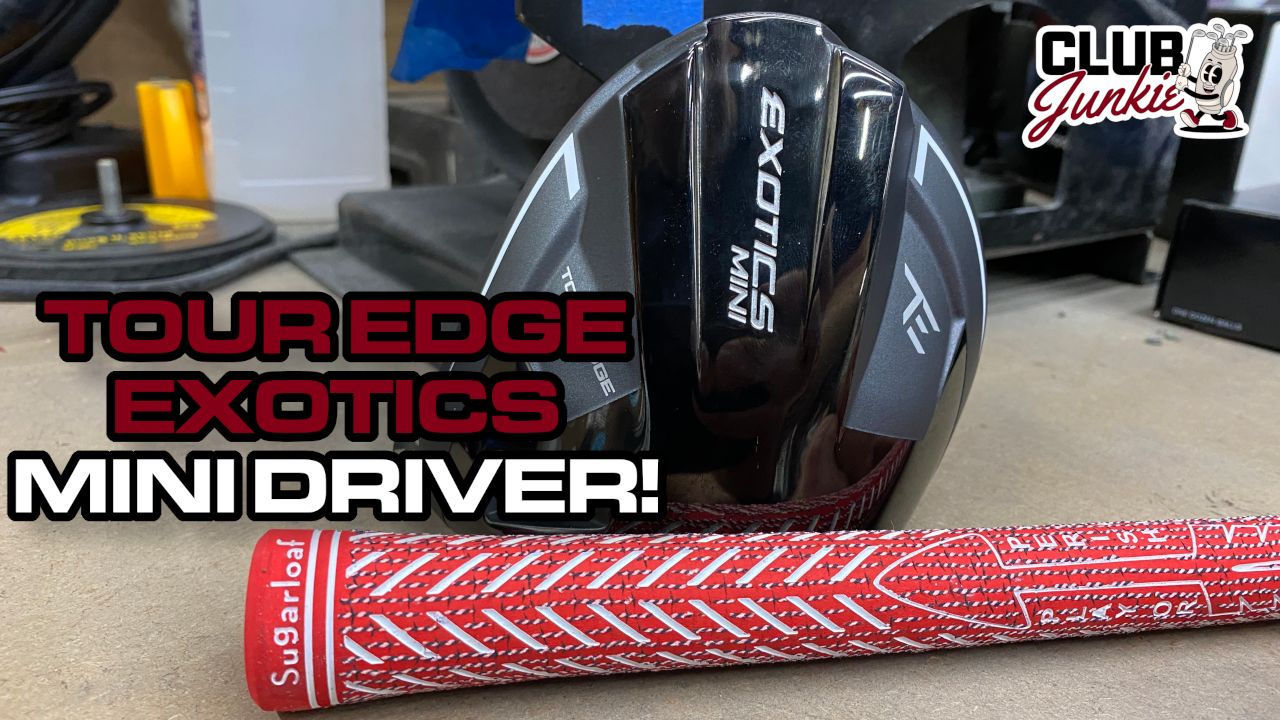
On this episode of Club Junkie, I put the new Tour Edge Exotics Mini Driver to the test and break down the performance, forgiveness, distance, and where it fits compared to a traditional driver or strong fairway wood. If you have been curious about adding a mini driver to the bag, this one is worth a look.
I also dive into the new TaylorMade Spider ZT Max putter that was recently spotted and discuss the growing zero torque putter trend. Plus, there is a closer look at the new Project X Titan Yellow shaft showing up on the PGA Tour and what makes it different from other profiles currently out there.

Justin Rose WITB 2026 (April): Full WITB breakdown with new McLaren irons

What’s the story behind Webb Simpson’s custom-stamped irons?

Memorial Tournament Tour Report: Rory McIlroy, Cameron Young switch up drivers, and more

Cadillac Championship Tour Report: Spieth’s sizable changes, McLaren Golf launches, and more

Russell Henley’s winning WITB: 2026 Charles Schwab Challenge

Kristoffer Reitan’s winning WITB: 2026 Truist Championship

Aaron Rai’s winning WITB: 2026 PGA Championship

J.T. Poston’s winning WITB: 2026 Memorial Tournament

Cameron Young’s winning WITB: 2026 Cadillac Championship

Best irons 2026: Best irons overall, most forgiving irons, and more


Bud Cauley WITB 2026 (June)
Bud Cauley had >14 clubs in his bag when photographed prior to the Memorial Tournament. Driver: Titleist GTS2 (8 degrees) Shaft: Fujikura...


Hannah Green WITB 2026 (June)
Driver: Titleist GTS3 (10 degrees, D4 SureFit setting) Shaft: Mitsubishi Chemical Diamana RB 53 S 3-wood: Titleist GT3 (15 degrees,...


Asterisk Talley WITB 2026 (June)
Driver: TaylorMade Qi4D (9 degrees) Shaft: Fujikura Ventus Blue 6 S 3-wood: TaylorMade Qi4D (16.5 degrees) Shaft: Fujikura Ventus Blue...

Brianna Do WITB 2026 (June)
Driver: Callaway Quantum Triple Diamond (9 degrees) Shaft: KBS PGW 3-wood: Callaway Elyte Titanium (15 degrees) Shaft: KBS PGW 5-wood:...
-
 Equipment6 days ago
Memorial Tournament Tour Report: Rory McIlroy, Cameron Young switch up drivers, and more
-
 News1 week ago
Russell Henley’s winning WITB: 2026 Charles Schwab Challenge
-
 Whats in the Bag3 days ago
J.T. Poston’s winning WITB: 2026 Memorial Tournament
-
 Equipment3 days ago
Best irons 2026: Best irons overall, most forgiving irons, and more
-

 Equipment1 week ago
Details on Jason Day’s latest prototype Avoda iron setup
-
 Equipment3 weeks ago
CJ Cup Byron Nelson Tour Report: Koepka and Kim’s newest putters finally get hot
-

 News2 weeks ago
Charles Schwab Challenge Tour Report: MacIntyre, Åberg and Spaun all switch putters, TaylorMade launches new Spider
-
 Equipment2 weeks ago
Details on J.J. Spaun’s surprise putter switch


Bob
Feb 17, 2013 at 7:25 pm
Big mistake, there are not enough USGA events and to eliminate this one is wrong. The rules and process may need some adjustment, but this was one of 3 I could enter in a year. And to tell the truth I do not think the USGA put their full effort into it either.
Ronald Montesano
Feb 12, 2013 at 4:58 pm
That is my premise, Bob. Without being on the inside, I cannot state with 100% certainty, but it looked tainted for a long time. A thread on this topic in another golf forum surmises that what the USGA needed were no-former-pros, no-public-links-pretenders events. Instead, what we have are the USGA MidAm (completely dominated by reinstated amateurs) and the soon to be defunct Publinks (with no real muni or hardscrabble champions.) Both are slippery slopes and both fail to a degree to identify the players they hoped to single out.
bob kendall
Feb 12, 2013 at 2:52 pm
I read the article. So, basically the USGA failed miserably in policing eligibility for the Publinks. You can bet that pressure from their private club brethern was responsible for allowing the loopholes to grow to aircraft carrier sized proportions.
Once the event was contaminated, rather than correct the faults, they simply abandoned ship and replaced it with a four ball. Gutless.