
Opinion & Analysis
TourPutt – The secret of the pros?


Driver vs. Putter: Your Choice?
If you were granted one golf-related superpower, which would you choose? The ability to hit 300-yard drives straight down the fairway all the time, or never 3-putt again?
Bobby Locke, one of the greatest putters in the game, said to ‘drive for show, but putt for dough’ And when you consider that the putter is the most used club in the bag, it seems like a no-brainer. But then again, according to Mark Brodie and his ‘strokes gained’ method, a long, straight driver may be more important to saving strokes. So what would you choose?
For me, I wouldn’t hesitate to go with the putting skills as I am currently suffering from the worst case of yips I’ve ever experienced in over 30 years. Sure, it’d be nice to outdrive the guys in my regular foursome, but I don’t think I can live down the shame of missing inside of 3ft all day, every day. And with no genie in site, I have searched high and low for that perfect putter that can cure my woes.
After trying nearly 50 putters over the past two years and enduring numerous snide remarks to get putting lessons instead, I finally gave in. I bit the bullet and sought professional help from Jong-hwan Choi, Korea’s number one putting coach to the pros.

Choi’s resume includes LynnBlake Master Instructor certification, AimPoint LV3, PuttDoctor, MichaelHebron Neuro Learning for Golf, and many others.
Choi is an accomplished Tour putting coach who has made a name for himself through relentless research and dedication to master his chosen craft. Thus far, the pros and elite amateurs he helped have won a total of 350 tournaments, including KPGA, KLPGA, and LPGA wins. He is so popular that it can take up to a year to book a lesson with the man himself, but I was desperate. After pulling all the strings I can muster, I was able to get an interview with him in the hopes of getting some help
with my flat stick.
When the day finally came, I arrived at Choi’s academy armed with 3 of my current best-performing putters. I was eager to glean the secrets of the pros and to find out which of these best fit my stroke. I was greeted by Choi and briefly shown around the spacious academy, which had a large flat putting surface and some basic training aids that are common online. Upon chatting about Choi’s background and teaching philosophy, he reminded me of the motivational speaker Tony Robbins. He was constantly emphasizing positivity and proactive learning reinforced with hard work and dedication towards self-growth – that skills are built, not born. Sure, I get that.
But surely, preaching alone doesn’t improve (my) putting?
TourPutt: The Secret of the Pros?
When Choi offered (after some subtle arm twisting) to look at my putting, I was puzzled when he pulled out a tablet rather than some kind of putting trainer. I figured maybe he was going to film me first, then point out some flaws on the monitor. Nope.
We were going high-tech for this one. We were joined by his friend and business partner Chan-ki Kim, a software engineer who co-developed TourPutt, a state-of-the-art putting training system.

According to the dynamic duo, TourPutt was developed to accurately assess a player’s putting tendencies, habits, and skills utilizing big data and A.I. Rather than second-guessing and trying to identify the faults, Tour Putt acts like an MRI machine that shows the doctor where to problem lies. Once the diagnosis is made, Choi would bring to bear his extensive experiences to cure the ailing putter. Sounded simple to me. But how would it know what my problem was?
As Choi’s fingers danced over the tablet in his hand, the TourPutt sprang into action and a small circle the size of a hole-cup appeared on the artificial putting surface. As I surveyed the circle of light beamed from a ceiling projector, Choi asked me a question I hadn’t considered before. ‘Which breaks are you most comfortable with on short putts? What are the odds that you make them?’ Taking my blank look as his cue, Choi proceeded to explain the process of mapping my putting pattern to gauge my stren gths and weaknesses.
To begin, I was directed to putt a golf ball into a hole from 36 random locations ranging from 3 to 6 ft. A ball tracking camera with two projectors mounted on the ceiling rendered various crisp, clear images onto the putting surface. Prior to start, I was informed that the putting surface was sloped 3% from top to bottom. So if you were to imagine a clock face, the 12 o’clock location would be a 3° downhill straight putt, while 6 o’clock would be a 3° uphill straight putt.
As I am right-handed, all putts from the left side of the 3 o’clock would be a hook like, and the left side a slice lie, all to varying degrees. When I asked why it was fixed at 3%, Kim explained that tour regulation greens don’t allow for more than a 3 degree slope within 6ft of the hole. Also, most amateur golfers had a difficult time detecting such a small amount of slope, and thereby misjudge the breaks to a higher score.

Knowing Where to Tap
After the pattern test began, it took me a little over 20 minutes to complete a total of 36 putts at random locations. I was quite conscious of the many eyes on my performance and equally frustrated at how often I was missing putts despite my best efforts. After I was done, Choi pulled up my results, or key performing index (KPI), on a large screen TV where I was able to see exactly where I was effective in my short putts. In brief, I had a tough time with both hook and slice lie putts. I showed slightly better results with uphill straight and slice putts, but absolutely nothing to write home about.
Now, I’m sure many of you are familiar with the story of the plumber who was called to fix a steam pipe. After looking around the pipes and tapping a couple of valves, he charged $200 for his services. When the irate customer demanded to know why it cost so much and asked for a detailed breakdown of the services, the plumber replied, ‘$10 for tapping, $190 for knowing precisely where to tap.’
As such, my results from the pattern test were eye-opening. I’ve never known what lie I was more effective at, much less the percentage of probable success. For example, the more often I use TourPutt to practice or diagnose my putting, the more accurately it can diagnose my skills. Thus, I can pinpoint which area to improve through practice, as well as try to get the ball to an area I am more likely to save par.
Wow. This was tour pro stuff. Was this the secret of the pros?

The green area indicates a successful putt and the red is where I missed. The numbers show how long it took me to strike the putt after being instructed by a bell sound.
I was starting to get heady with the possibilities this digital marvel was able to provide. It took both of them to bring me down to earth again by informing me that knowing the areas of improvement is only half the battle.
For the actual tapping part, Choi and Kim then walked me through the many innovative features of TourPutt focused on helping me improve my putting. I was mesmerized by the detailed graphics that flashed all over the putting surface.
I was already impressed with the diagnostic aspects of TourPutt, but upon seeing the actual features to help me improve my putting, I was doubly blown away. From reading the green speed and breaks accurately to effective swing tempo and motion tracking, the system seemed straight out of the future.

Putting from variations of the 3% slope helps golfers to get a better feel the greens, a skill that can translate onto reading the breaks on actual greens.
Before TourPutt came into being, Choi was frustrated with the difficulty in collecting crucial data from an actual green as it was difficult to find a flat area to map his student’s patterns. When he discussed the matter with Kim back in 2019, Kim immediately became interested in ways to mesh modern technology and A.I. driven data to the art of putting. As an elite level golfer with extensive knowledge in the fields of VR and AR (virtual and augmented reality), Kim understood right away the issues faced by Choi and how he could help.
Delving deep into Choi’s experience and insights, Kim designed the TourPutt’s interface to yield accurate and reliable data that can be cross-checked, correlated, and compared across past and future performances. Best of all, TourPutt and its proprietary app feature the ability to keep track of all of my performance from any TourPutt system and access the data anywhere at any time. I could even replay all of my past putts and see the speed and the path it took, and compare them with other golfer’s data in the system. Mind. Blown.
Kim further explained that this feature of collecting real-world significant big data is one of the biggest advantages of TourPutt, and enables it to evolve further with every putt stored in its vast database.

The app can be used in both English and Korean, and can keep track of my performance and improvements.
The Student Becomes The Teacher
Once the flaws are identified, we moved on to the more traditional slow-motion video to see what I was doing wrong to miss the putts. For me, I kept too much weight on the back foot, and also needed more forward press to keep the putter head online through impact.
After several minutes of drill to correct the issues, I was holing the putts much better. The data from the second pattern test confirmed the improvement, and I was also shown the actual paths that my two putts took before and after the fix. All in all, being able to verify that the diagnosis was correct with immediate results, all backed by data was highly reassuring and enlightening. But what if these improvements were short-lived? That as soon as I walk out of Choi's presence, the magic evaporates and my crappy putting returns? I can’t tell you how often a club I thought was the answer to my prayers devolved into an ordinary stick as soon as I paid for it. It’s downright uncanny how often this happens.
To this end, Choi gave me a glimpse of hope. He assured me that since I was investing time into my skills and not money into more equipment, it will definitely last longer. Also, the coaching provided by Choi is reflected in each and every putt I had made since the lesson and recorded as part of my putting profile. So if I were to stray from the ‘good’ putts, the system can be used to bring me back on track. And if this cycle of improvement continues, I would be able to be my own teacher and
eventually practice effectively and independently on my own.
Honestly, I don’t know about this part. After all, I too know that the right diet and exercise will give me a six-pack; but knowing and doing it are two separate things. In the end, how effective any tool can depend on how well I make use of it, so it will have to remain to be seen. What I can say with certainty, however, is that TourPutt seems to work for a lot of people. Choi’s students continue to post wins on various tours with regularity, each crediting him with their improved putting performance. In turn, Choi credits his partner Kim and TourPutt’s growing database for accurate diagnosis and self-learning.

ToutPutt and its built-in sensors are capable of sensing where the lies have changed. The self-learning A.I. system actively adjusts for the changes to the putting surface, thereby eliminating the need for recalibration.
In Korea, the art of putting has found its poster child in Choi, with more and more golf academies and private studios installing TourPutt for its members. Several local tour pros and top amateurs have also installed the not-so-cheap system in their homes and have said to benefit from the move. Remember when Tiger showed up one day at the range with his own Trackman? I would imagine having a TourPutt in your basement is something like that, but I can only guess. I don’t have a personal Trackman either.

Choi attends seminars all over the world each year to continue his improvement in putting instruction.He is currently working on compiling his own training and certification program to impart to a new generation of would-be putting gurus.
Now that I know where I need to improve on, does this mean I will be taking money off my foursome buddies with alarming regularity? Well, let me see. I signed up for pilates a few months ago and found out exactly where I need to work on for more flexibility. But as I still creak all over when bending over to tie my shoes, I’d guess my putting won’t miraculously improve right away neither. But hey, that’s on me. I’ll just have to start working on the tapping part. Anyone looking to buy some used putters?
For more information on TourPutt from the man himself, check out the video below.



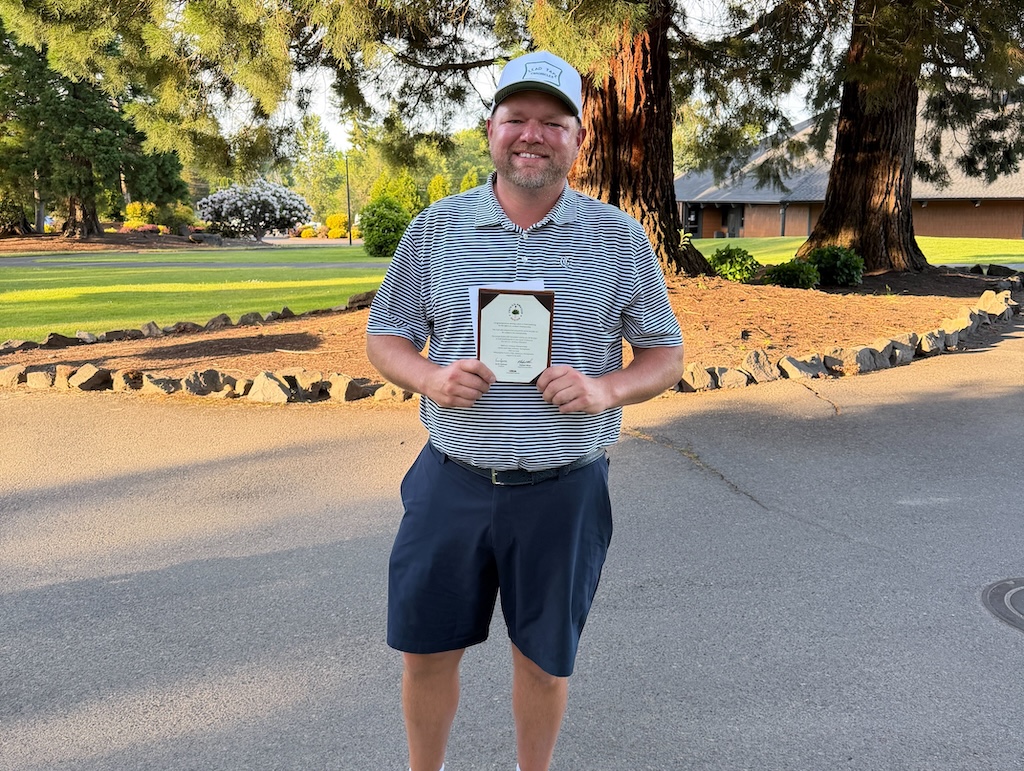
This past Monday, I played in the U.S. Amateur local qualifier at Rock Creek Country Club in Portland, Oregon. A full tee sheet from 7:30 a.m. to 1:55 p.m., the top 11 scores would make it to the U.S. Amateur final qualifying.
I teed off at 10:48 a.m.. With the 7:30 am tee time, you can get a feel for the leaders’ pace, and they were off and running on the challenging setup at Rock Creek.
View this post on Instagram
Getting to the highlight of the round on the par five 17th, a drive up the left side and 212 yards left to the front hole location. I took out a 5-iron with plans of middle of the green. The ball ended up 8 feet left of the hole, pin high. A slight downhill putt dropped in for an eagle 3 on the 17th. With the cut line looking to be anywhere from -2 to even par. This was the boost I had been waiting for all day.
With making par from the trees on 18, it was time to wait for a potential playoff with a posted score of one under par 71.
Three hours later, it was playoff time. 8 players for 6 spots. I made par on the playoff hole, which was good enough to advance to the U.S. Amateur final qualifying in July. USGA qualifiers sure deliver on all of the emotions in golf!
Club Junkie
Building my 2026 gamer WITB: Ranking the contenders and new putter projects – Club Junkie Podcast


The annual What’s In The Bag build is underway, and on this episode of Club Junkie, Brian breaks down the clubs currently leading the race for a spot in his 2026 gamer setup. From drivers and fairway woods to irons, wedges, and shafts, he ranks the equipment that’s performing best and explains what’s separating the front runners from the rest of the field.
Brian also heads into the workshop to discuss several putter projects currently on the bench. From head options and shaft choices to build ideas and testing plans, he shares what he’s working on and which putters could become serious contenders for the bag this season.
If you’re a gear junkie who loves equipment testing, club building, and the never-ending pursuit of the perfect setup, this episode is for you.
Follow Club Junkie:
Instagram: @clubjunkiepod
TikTok: @clubjunkiepod
Threads: @clubjunkiepod
X: @ClubJunkiePod
Club Junkie
Tour Edge Exotics mini driver review + TaylorMade Spider ZT Max first look – Club Junkie

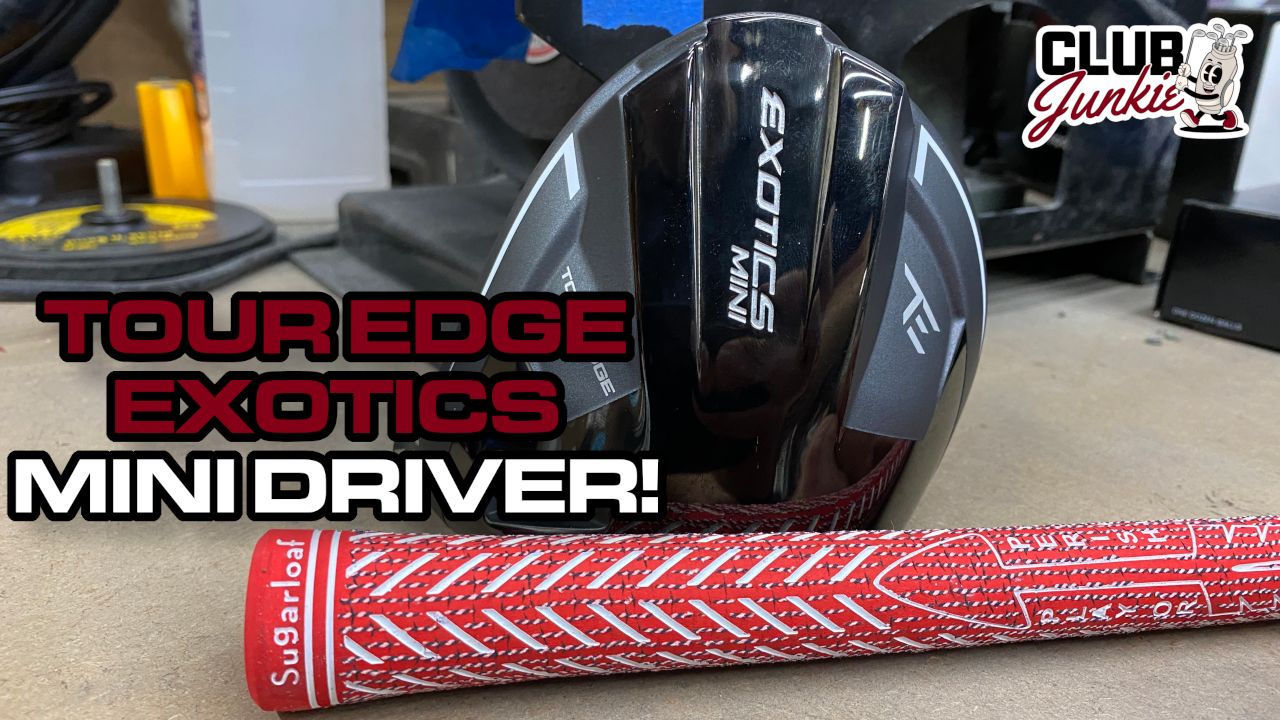
On this episode of Club Junkie, I put the new Tour Edge Exotics Mini Driver to the test and break down the performance, forgiveness, distance, and where it fits compared to a traditional driver or strong fairway wood. If you have been curious about adding a mini driver to the bag, this one is worth a look.
I also dive into the new TaylorMade Spider ZT Max putter that was recently spotted and discuss the growing zero torque putter trend. Plus, there is a closer look at the new Project X Titan Yellow shaft showing up on the PGA Tour and what makes it different from other profiles currently out there.

Justin Rose WITB 2026 (April): Full WITB breakdown with new McLaren irons

What’s the story behind Webb Simpson’s custom-stamped irons?

Memorial Tournament Tour Report: Rory McIlroy, Cameron Young switch up drivers, and more

Cadillac Championship Tour Report: Spieth’s sizable changes, McLaren Golf launches, and more

Russell Henley’s winning WITB: 2026 Charles Schwab Challenge

Kristoffer Reitan’s winning WITB: 2026 Truist Championship

J.T. Poston’s winning WITB: 2026 Memorial Tournament

Aaron Rai’s winning WITB: 2026 PGA Championship

Best irons 2026: Best irons overall, most forgiving irons, and more

Cameron Young’s winning WITB: 2026 Cadillac Championship


Bud Cauley WITB 2026 (June)
Bud Cauley had >14 clubs in his bag when photographed prior to the Memorial Tournament. Driver: Titleist GTS2 (8 degrees) Shaft: Fujikura...


Hannah Green WITB 2026 (June)
Driver: Titleist GTS3 (10 degrees, D4 SureFit setting) Shaft: Mitsubishi Chemical Diamana RB 53 S 3-wood: Titleist GT3 (15 degrees,...


Asterisk Talley WITB 2026 (June)
Driver: TaylorMade Qi4D (9 degrees) Shaft: Fujikura Ventus Blue 6 S 3-wood: TaylorMade Qi4D (16.5 degrees) Shaft: Fujikura Ventus Blue...


Brianna Do WITB 2026 (June)
Driver: Callaway Quantum Triple Diamond (9 degrees) Shaft: KBS PGW 3-wood: Callaway Elyte Titanium (15 degrees) Shaft: KBS PGW 5-wood:...
-
 Equipment6 days ago
Memorial Tournament Tour Report: Rory McIlroy, Cameron Young switch up drivers, and more
-
 News1 week ago
Russell Henley’s winning WITB: 2026 Charles Schwab Challenge
-
 Whats in the Bag3 days ago
J.T. Poston’s winning WITB: 2026 Memorial Tournament
-
 Equipment3 days ago
Best irons 2026: Best irons overall, most forgiving irons, and more
-

 Equipment1 week ago
Details on Jason Day’s latest prototype Avoda iron setup
-
 Equipment3 weeks ago
CJ Cup Byron Nelson Tour Report: Koepka and Kim’s newest putters finally get hot
-

 News2 weeks ago
Charles Schwab Challenge Tour Report: MacIntyre, Åberg and Spaun all switch putters, TaylorMade launches new Spider
-
 Equipment2 weeks ago
Details on J.J. Spaun’s surprise putter switch


Pingback: VRotein: 2023 PGA Show, booth #2025 – UNB
Just Normal
Dec 1, 2022 at 1:20 am
This is very nice advertising for this Korean Puttview
Andrew J
Nov 23, 2022 at 1:10 pm
Why not get something that helps on real golf coursea. That wouuld be on ebay, search P&SI-EGOS for confidence over a putt like you have never had before.
Jeff
Nov 23, 2022 at 12:50 pm
Any idea what the cost is for this system?
Steve
Nov 23, 2022 at 11:08 am
In he article you state
“When I asked why it was fixed at 3%, Kim explained that tour regulation greens don’t allow for more than a 3 degree slope within 6ft of the hole”.
Degrees and slope are not equal and are different standards for measuring slope. You conflate the two here and it is confusing as the amount of slope cannot be the same as measured in degrees and percent.
Jonghwan choi
Nov 28, 2022 at 6:35 pm
Hi, i’m putting coach Jonghwan choi “%” is correct! Kim miss typing or miss understood or many people confuse that. Not 3 DEGREE! 3%!
Thank you!
Benny
Nov 23, 2022 at 6:56 am
Love it. Great article. I believe I saw Tiger with something similar at his house in a video years back.
But his green shifted and adjust which was nuts.
But then again who wouldn’t want 300y minty drives every time?