
Opinion & Analysis
The Wedge Guy: A bunker experiment

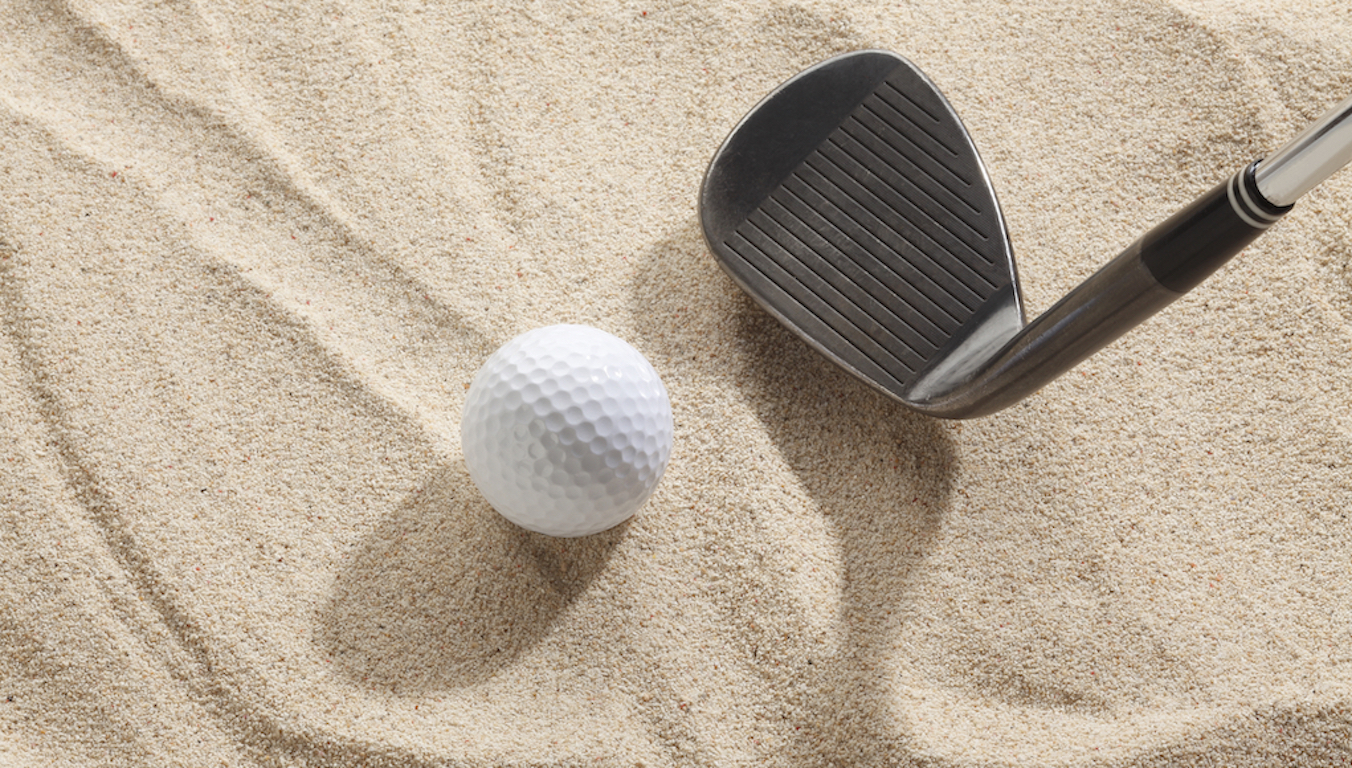
Based on my observations and feedback from recreational golfers of all skill levels, I believe one of the most puzzling and challenging of all shots for most golfers is the greenside bunker “explosion” shot. Far too many times, the result is either making a swing that is way too steep and plows the clubhead into the sand, or it’s the exact opposite – catching the ball right “in the forehead” and skulling it across the green into who-knows-what kind of new trouble. In either case, the end result is a blow-up hole that puts a double bogey or worse on the card.
And the damage to your psyche is much worse than that done to your card.
Besides the visual and mental intimidation of finding your ball in the bunker, we recreational golfers are faced with a super-wide variety of lies and sand textures, unlike the tour players who see essentially the same bunker texture week after week. In contrast, on my own private club course, for example, we have bunkers ranging from wet packed sand (almost mud) to dry fluffy sand several inches thick. In contrast to the tour professionals, we “mere mortals” have a constantly changing set of obstacles in the bunkers, each requiring a different approach.
Let’s start with the basic premise of the bunker shot we have all been taught. While there are slightly varying instructional directions for the execution of the swing, most teach that you should make contact about two inches behind the ball. And it’s often taught that this is the easiest shot in golf, because you don’t even have to hit the ball. I’ve always challenged that notion, because on EVERY OTHER SHOT I face, I am trying to make precise contact with the ball, from driver to putter. So, since those few bunker shots in a round require me to abandon my primary objective . . . couldn’t that possibly make bunker shots the hardest?
Anyway, back to the topic at hand . . . is there a different way to approach bunker shots that might help you improve your up-and-down percentage and significantly reduce those left-in-the-sand or skulled-over-the-green disasters? I believe there is, and I’ve been doing some experimenting with a different approach lately that is showing great promise.
What I’ve been doing is approaching bunker shots in very much the same way I execute any delicate greenside pitch, that is to view it as just another pitch shot, albeit from a more challenging lie than if the ball were sitting on the fairway or light rough. My goal is to make the wedge contact the ball and the sand at just about the same time, and just vary my swing power based on the texture of the sand – wet sand will “reject” the club more than dry, softer sand, requiring less power, much as tight firm turf will reject the club more than a softer lie in the rough.
As I play around with this approach, it seems much easier than trying to actually hit the sand some “measured” distance behind the ball, which also makes it easier for me to judge the distance I need the ball to fly and how much roll out I can expect. What’s most interesting for me is that as I began to experiment with this technique in the practice bunker, I paid close attention to where it “looked like” I was making contact with the sand. I put that in quotes because the sole of the wedge splashes out a large and clearly defined divot, so it really does look like I’m making contact further behind the ball than I really am.
If you are already an accomplished bunker player, my bet is that you are actually making contact much closer to the ball than the proverbial “two inch rule”, and kudos to you for figuring this out.
But for the majority of you out there who find a bunker shot a bit more challenging and fear-inducing, I highly recommend spending even a half hour in the practice bunker giving this “new” method a try. You still want to make a deliberate but relaxed swing and keep your angle of attack as shallow as possible so the bounce in your sand wedge’s sole can do what it was designed to do.
I’m sure we all would appreciate you sharing your own results and discovery with the rest of us.




This past Monday, I played in the U.S. Amateur local qualifier at Rock Creek Country Club in Portland, Oregon. A full tee sheet from 7:30 a.m. to 1:55 p.m., the top 11 scores would make it to the U.S. Amateur final qualifying.
I teed off at 10:48 a.m.. With the 7:30 am tee time, you can get a feel for the leaders’ pace, and they were off and running on the challenging setup at Rock Creek.
View this post on Instagram
Getting to the highlight of the round on the par five 17th, a drive up the left side and 212 yards left to the front hole location. I took out a 5-iron with plans of middle of the green. The ball ended up 8 feet left of the hole, pin high. A slight downhill putt dropped in for an eagle 3 on the 17th. With the cut line looking to be anywhere from -2 to even par. This was the boost I had been waiting for all day.
With making par from the trees on 18, it was time to wait for a potential playoff with a posted score of one under par 71.
Three hours later, it was playoff time. 8 players for 6 spots. I made par on the playoff hole, which was good enough to advance to the U.S. Amateur final qualifying in July. USGA qualifiers sure deliver on all of the emotions in golf!
Club Junkie
Building my 2026 gamer WITB: Ranking the contenders and new putter projects – Club Junkie Podcast

The annual What’s In The Bag build is underway, and on this episode of Club Junkie, Brian breaks down the clubs currently leading the race for a spot in his 2026 gamer setup. From drivers and fairway woods to irons, wedges, and shafts, he ranks the equipment that’s performing best and explains what’s separating the front runners from the rest of the field.
Brian also heads into the workshop to discuss several putter projects currently on the bench. From head options and shaft choices to build ideas and testing plans, he shares what he’s working on and which putters could become serious contenders for the bag this season.
If you’re a gear junkie who loves equipment testing, club building, and the never-ending pursuit of the perfect setup, this episode is for you.
Follow Club Junkie:
Instagram: @clubjunkiepod
TikTok: @clubjunkiepod
Threads: @clubjunkiepod
X: @ClubJunkiePod
Club Junkie
Tour Edge Exotics mini driver review + TaylorMade Spider ZT Max first look – Club Junkie

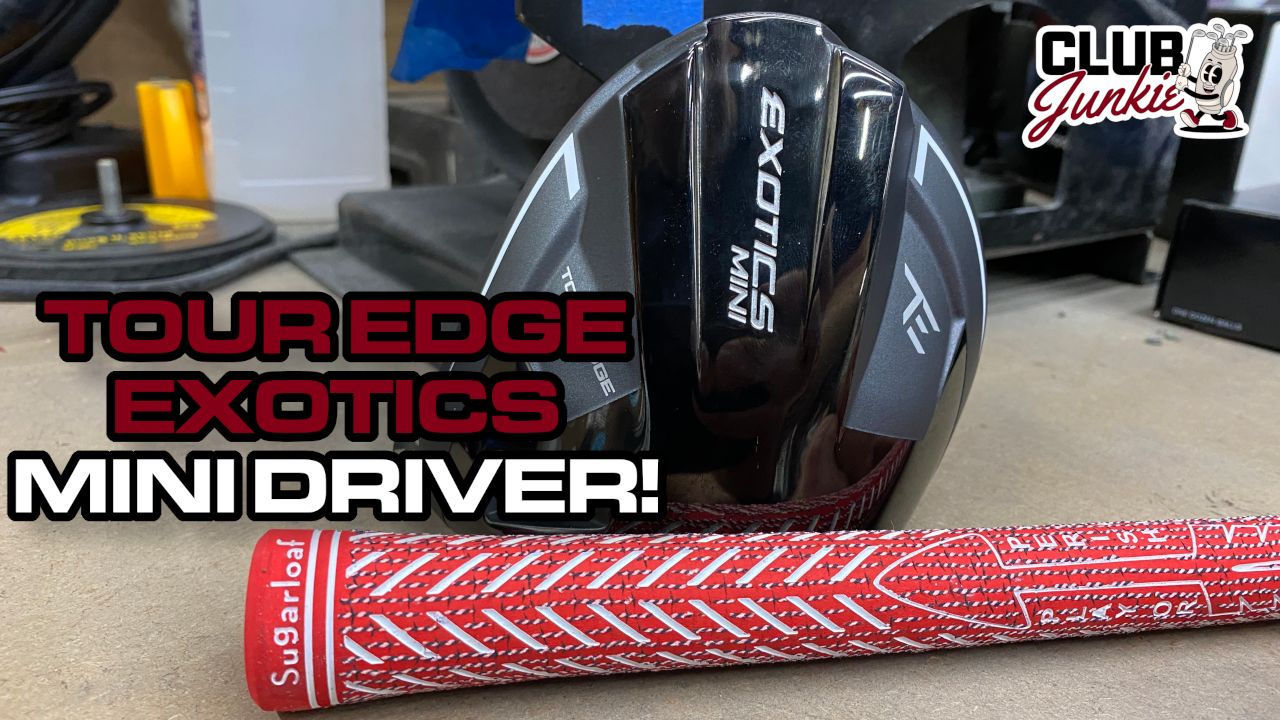
On this episode of Club Junkie, I put the new Tour Edge Exotics Mini Driver to the test and break down the performance, forgiveness, distance, and where it fits compared to a traditional driver or strong fairway wood. If you have been curious about adding a mini driver to the bag, this one is worth a look.
I also dive into the new TaylorMade Spider ZT Max putter that was recently spotted and discuss the growing zero torque putter trend. Plus, there is a closer look at the new Project X Titan Yellow shaft showing up on the PGA Tour and what makes it different from other profiles currently out there.

Justin Rose WITB 2026 (April): Full WITB breakdown with new McLaren irons

What’s the story behind Webb Simpson’s custom-stamped irons?

Memorial Tournament Tour Report: Rory McIlroy, Cameron Young switch up drivers, and more

Cadillac Championship Tour Report: Spieth’s sizable changes, McLaren Golf launches, and more

Russell Henley’s winning WITB: 2026 Charles Schwab Challenge

Kristoffer Reitan’s winning WITB: 2026 Truist Championship

J.T. Poston’s winning WITB: 2026 Memorial Tournament

Aaron Rai’s winning WITB: 2026 PGA Championship

Best irons 2026: Best irons overall, most forgiving irons, and more

Cameron Young’s winning WITB: 2026 Cadillac Championship


Bud Cauley WITB 2026 (June)
Bud Cauley had >14 clubs in his bag when photographed prior to the Memorial Tournament. Driver: Titleist GTS2 (8 degrees) Shaft: Fujikura...


Hannah Green WITB 2026 (June)
Driver: Titleist GTS3 (10 degrees, D4 SureFit setting) Shaft: Mitsubishi Chemical Diamana RB 53 S 3-wood: Titleist GT3 (15 degrees,...


Asterisk Talley WITB 2026 (June)
Driver: TaylorMade Qi4D (9 degrees) Shaft: Fujikura Ventus Blue 6 S 3-wood: TaylorMade Qi4D (16.5 degrees) Shaft: Fujikura Ventus Blue...


Brianna Do WITB 2026 (June)
Driver: Callaway Quantum Triple Diamond (9 degrees) Shaft: KBS PGW 3-wood: Callaway Elyte Titanium (15 degrees) Shaft: KBS PGW 5-wood:...
-
 Equipment6 days ago
Memorial Tournament Tour Report: Rory McIlroy, Cameron Young switch up drivers, and more
-
 News1 week ago
Russell Henley’s winning WITB: 2026 Charles Schwab Challenge
-
 Whats in the Bag3 days ago
J.T. Poston’s winning WITB: 2026 Memorial Tournament
-
 Equipment3 days ago
Best irons 2026: Best irons overall, most forgiving irons, and more
-

 Equipment1 week ago
Details on Jason Day’s latest prototype Avoda iron setup
-
 Equipment3 weeks ago
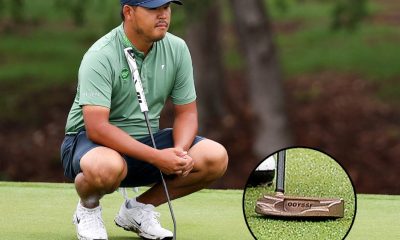
CJ Cup Byron Nelson Tour Report: Koepka and Kim’s newest putters finally get hot
-

 News2 weeks ago
Charles Schwab Challenge Tour Report: MacIntyre, Åberg and Spaun all switch putters, TaylorMade launches new Spider
-
 Equipment2 weeks ago
Details on J.J. Spaun’s surprise putter switch


Desert Dessert
Nov 21, 2022 at 3:02 pm
This is far too complex.
1. Imagine a poker chip behind your ball.
2. On the opposite side of the imaginary chip, find a grain of sand.
3. Swing 2-3x (depending on your sand) harder than the shot distance you normally play.
4. Open face a little, and hit that single grain of sand.
The sand grain is your target; just hit it and the ball will come out.
Tim Martin
Nov 20, 2022 at 11:28 pm
I bought one of Monte Scheinblum’s lessons and his bunker lesson was the best I’ve ever seen. And he explained it so easily and simplified it. Improved my bunker play immensely.
CrashTestDummy
Nov 20, 2022 at 2:08 am
Personally, I’d like to see the PGA tour players play from muni golf course bunkers to see how they would play rock hard bunkers with no sand. Chipping works, but it is still inconsistent and difficult to get any loft on the ball.
Tom Richards
Nov 18, 2022 at 9:11 pm
We’ve all seen the video with the pro drawing a line in the sand 2” behind the ball. I’ve found that my eyes need to look about 6” behind the ball to achieve that 2” blowout. Your article is the first that alluded to that difference. I hadn’t thought about varying my eye spot to vary my distance. Thanks!
Bob Jones
Nov 18, 2022 at 6:31 pm
If you want us to hit the ball and sand at almost the same time, as in a full shot from a fairway bunker, which is a shot I am very good at, should we ditch the sand wedge and use a pitching wedge from a bunker?
Murv
Nov 18, 2022 at 10:59 am
I like the idea and will try it. Also, on the heavy sand I play out of, you have to make sure you swing hard enough…almost a full swing with no decel. I have learned that if I open the face a great deal, even if I nip the ball first, the great amount if loft still keeps the shot decent.
Brian
Nov 18, 2022 at 10:51 am
Good simple tip from Rory was to keep checking that your shaft angle is vertical at address (no forward lean), this stopped me getting too steep and digging at the ball.
Peter Aiello
Nov 16, 2022 at 1:19 pm
Tour Tempo has an excellent comment / observation on bunker play which is worth a read for all frustrated bunker players.
Monty Castevens
Nov 16, 2022 at 1:29 pm
Where can I find that comment?