
Opinion & Analysis
The Wedge Guy: It’s a back-handed game

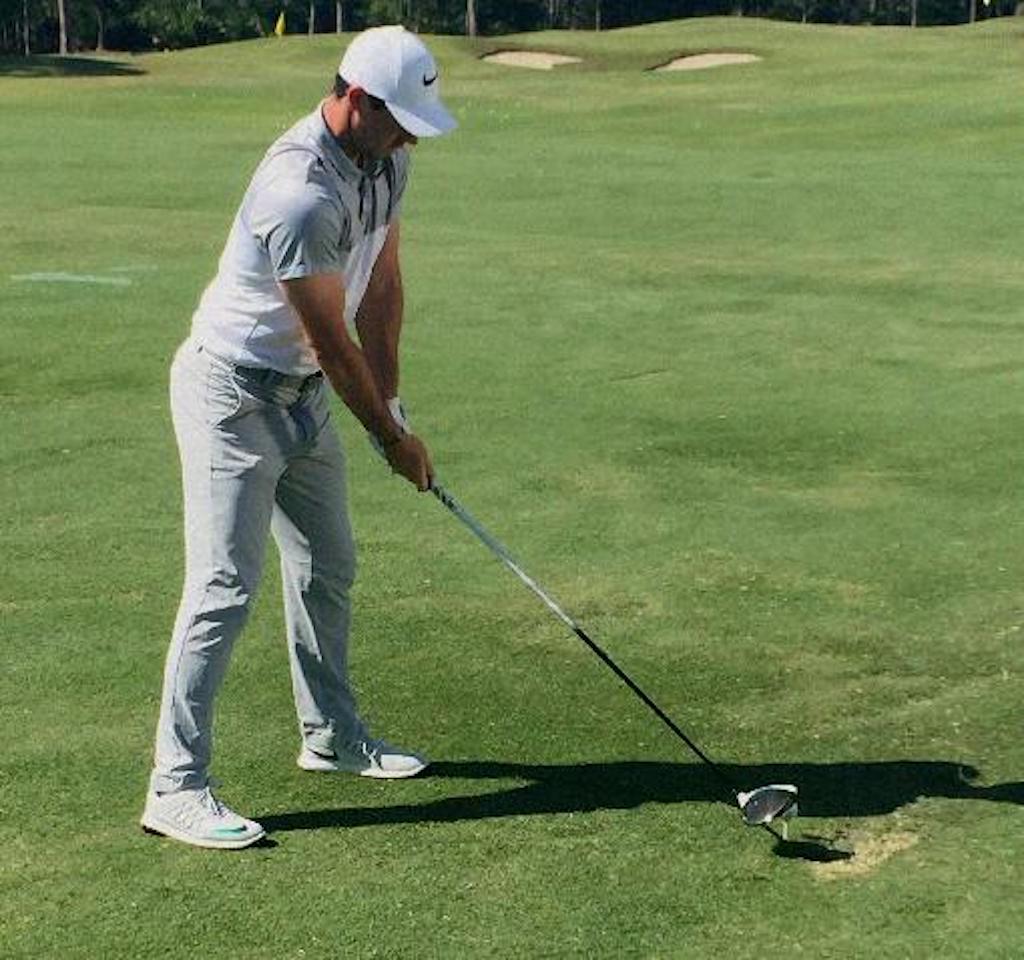
As I observe the vast majority of mid- to high-handicap golfers, I see the same approach to striking a golf ball, that is an over-reliance on their natural eye-hand coordination. Maybe that starts with the notion that the game is “right-handed” for most golfers, so they feel that this dominant hand is the driving force in the golf swing. (For you 8-9 percent of golfers that play “left-handed,” you likely do that because your left hand is your master hand, correct?)
The simple fact is this: as long as you approach striking a golf ball as a “hit” with your master hand, rather than a swing led by your body core and lead side, it is not likely you will ever achieve consistency or reach your full potential.
When I used to give wedge seminars to custom clubfitters, I had a little exercise that was fun and enlightening. I would have a volunteer from the audience come up and sign their name on my flip chart with a marker pen. Then I would hand them a wedge with a marker pen taped to the hosel and ask them to do that again, but this time holding the grip of the wedge with their hand and signing from that distance away.
You would be surprised at how hard this is because the length of the shaft is an error magnifier. Typically, those two signatures bore very little resemblance. So, if you cannot even sign your name – one of the most familiar things you do with your master hand – from 35 inches away, what are your chances of returning the club to the ball in exactly the same manner time after time?
One of the key fundamentals of the golf swing is that it is much more of a backhanded effort than most golfers realize. No matter which side of the ball you play from, the front side of your body has to lead the swing. For right-handers, that means the entire left side has to be stronger through the ball than your right side. This is tough, because as right-handers, that is our underdeveloped side, both in strength and coordination. We subconsciously are going to go with our stronger, more reliable right side.
Because the golf swing is a back-handed motion, we need to fully engage our body core to generate power and clubhead speed. Once you understand and begin to groove that core-driven rotation/pulling motion of the golf swing, you can add increasingly more master hand power to improve your distance and consistency. The master hand “assists” the lead side, rather than dominates it.
Understand that your lead side is likely underdeveloped as compared to your master hand, so it will take more focus to keep it stronger and in a lead position throughout the swing.
But this is a simple “ah-ha” thing to experience. All you have to do is step out into your back yard and swing a club with your lead hand only. You’ll very quickly find that you’ll use your body core rotation to push the club away into the backswing, and then rotate forward to pull the club through the impact zone and into a full follow-through. It’s almost a self-teaching exercise in feeling what a true golf “swing” feels like.
Once you get the feel of that core rotation/pulling action, you can lightly place your master back on the grip — but leave your thumb and forefinger totally off the club, holding it only in the middle two fingers of your right hand — lightly. That will keep your master hand from taking over.
If you are a mid- to high-handicap golfer and are really interested in making the jump to lower scores, this is the most fundamental change in your approach to golf that you can make. I would love to hear from all of you about this.
Hit some shots and watch what happens. I think you’ll be surprised.



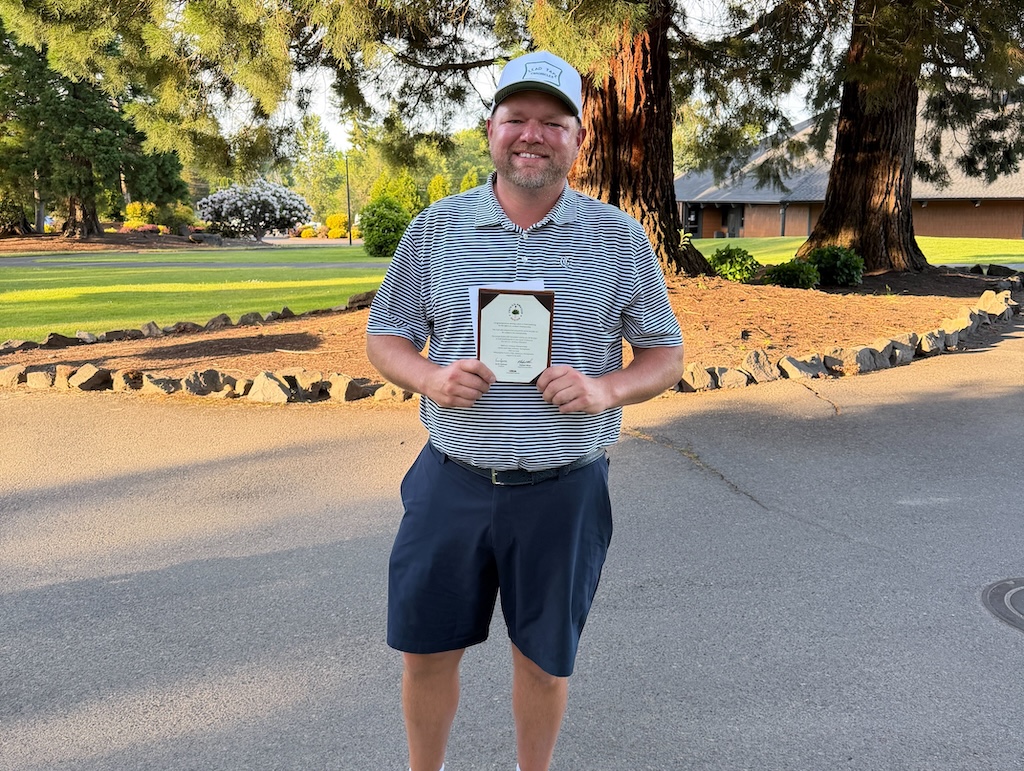
This past Monday, I played in the U.S. Amateur local qualifier at Rock Creek Country Club in Portland, Oregon. A full tee sheet from 7:30 a.m. to 1:55 p.m., the top 11 scores would make it to the U.S. Amateur final qualifying.
I teed off at 10:48 a.m.. With the 7:30 am tee time, you can get a feel for the leaders’ pace, and they were off and running on the challenging setup at Rock Creek.
View this post on Instagram
Getting to the highlight of the round on the par five 17th, a drive up the left side and 212 yards left to the front hole location. I took out a 5-iron with plans of middle of the green. The ball ended up 8 feet left of the hole, pin high. A slight downhill putt dropped in for an eagle 3 on the 17th. With the cut line looking to be anywhere from -2 to even par. This was the boost I had been waiting for all day.
With making par from the trees on 18, it was time to wait for a potential playoff with a posted score of one under par 71.
Three hours later, it was playoff time. 8 players for 6 spots. I made par on the playoff hole, which was good enough to advance to the U.S. Amateur final qualifying in July. USGA qualifiers sure deliver on all of the emotions in golf!
Club Junkie
Building my 2026 gamer WITB: Ranking the contenders and new putter projects – Club Junkie Podcast

The annual What’s In The Bag build is underway, and on this episode of Club Junkie, Brian breaks down the clubs currently leading the race for a spot in his 2026 gamer setup. From drivers and fairway woods to irons, wedges, and shafts, he ranks the equipment that’s performing best and explains what’s separating the front runners from the rest of the field.
Brian also heads into the workshop to discuss several putter projects currently on the bench. From head options and shaft choices to build ideas and testing plans, he shares what he’s working on and which putters could become serious contenders for the bag this season.
If you’re a gear junkie who loves equipment testing, club building, and the never-ending pursuit of the perfect setup, this episode is for you.
Follow Club Junkie:
Instagram: @clubjunkiepod
TikTok: @clubjunkiepod
Threads: @clubjunkiepod
X: @ClubJunkiePod
Club Junkie
Tour Edge Exotics mini driver review + TaylorMade Spider ZT Max first look – Club Junkie

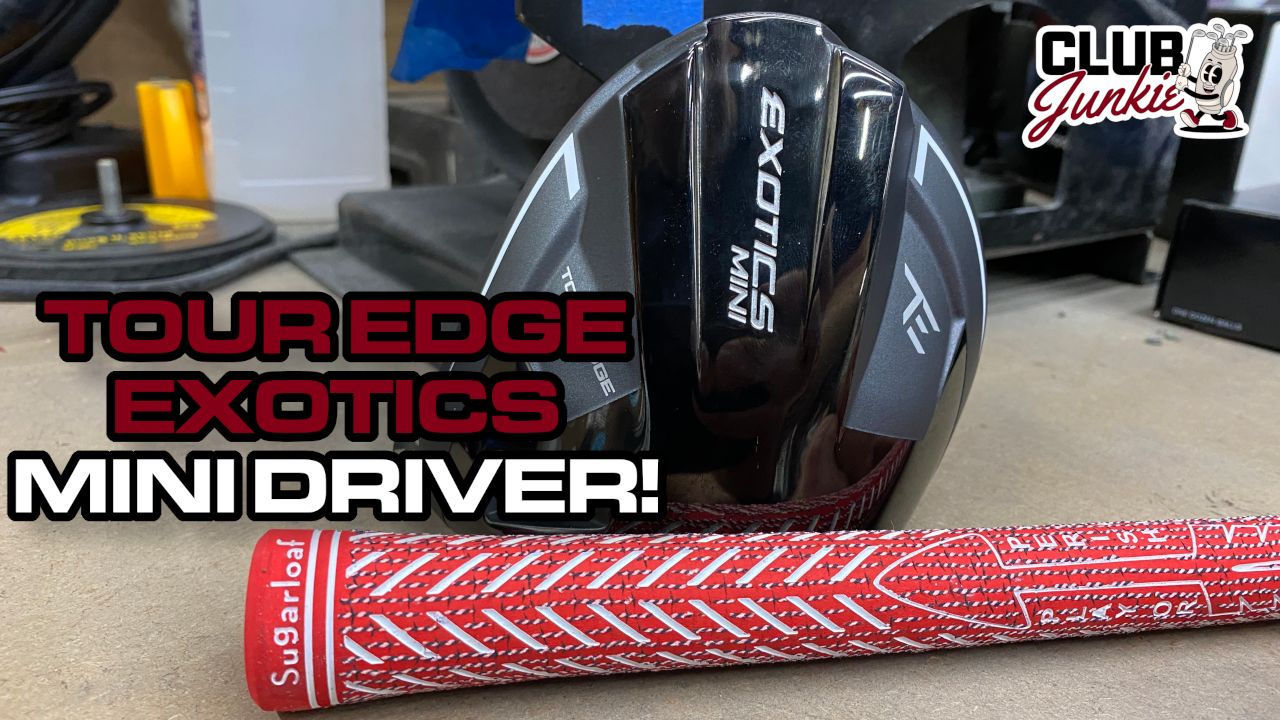
On this episode of Club Junkie, I put the new Tour Edge Exotics Mini Driver to the test and break down the performance, forgiveness, distance, and where it fits compared to a traditional driver or strong fairway wood. If you have been curious about adding a mini driver to the bag, this one is worth a look.
I also dive into the new TaylorMade Spider ZT Max putter that was recently spotted and discuss the growing zero torque putter trend. Plus, there is a closer look at the new Project X Titan Yellow shaft showing up on the PGA Tour and what makes it different from other profiles currently out there.

Justin Rose WITB 2026 (April): Full WITB breakdown with new McLaren irons

What’s the story behind Webb Simpson’s custom-stamped irons?

Memorial Tournament Tour Report: Rory McIlroy, Cameron Young switch up drivers, and more

Cadillac Championship Tour Report: Spieth’s sizable changes, McLaren Golf launches, and more

Russell Henley’s winning WITB: 2026 Charles Schwab Challenge

Kristoffer Reitan’s winning WITB: 2026 Truist Championship

J.T. Poston’s winning WITB: 2026 Memorial Tournament

Aaron Rai’s winning WITB: 2026 PGA Championship

Best irons 2026: Best irons overall, most forgiving irons, and more

Cameron Young’s winning WITB: 2026 Cadillac Championship


Bud Cauley WITB 2026 (June)
Bud Cauley had >14 clubs in his bag when photographed prior to the Memorial Tournament. Driver: Titleist GTS2 (8 degrees) Shaft: Fujikura...


Hannah Green WITB 2026 (June)
Driver: Titleist GTS3 (10 degrees, D4 SureFit setting) Shaft: Mitsubishi Chemical Diamana RB 53 S 3-wood: Titleist GT3 (15 degrees,...


Asterisk Talley WITB 2026 (June)
Driver: TaylorMade Qi4D (9 degrees) Shaft: Fujikura Ventus Blue 6 S 3-wood: TaylorMade Qi4D (16.5 degrees) Shaft: Fujikura Ventus Blue...

Brianna Do WITB 2026 (June)
Driver: Callaway Quantum Triple Diamond (9 degrees) Shaft: KBS PGW 3-wood: Callaway Elyte Titanium (15 degrees) Shaft: KBS PGW 5-wood:...
-
 Equipment6 days ago
Memorial Tournament Tour Report: Rory McIlroy, Cameron Young switch up drivers, and more
-
 News1 week ago
Russell Henley’s winning WITB: 2026 Charles Schwab Challenge
-
 Whats in the Bag3 days ago
J.T. Poston’s winning WITB: 2026 Memorial Tournament
-
 Equipment3 days ago
Best irons 2026: Best irons overall, most forgiving irons, and more
-

 Equipment1 week ago
Details on Jason Day’s latest prototype Avoda iron setup
-

 Equipment3 weeks ago
CJ Cup Byron Nelson Tour Report: Koepka and Kim’s newest putters finally get hot
-

 News2 weeks ago
Charles Schwab Challenge Tour Report: MacIntyre, Åberg and Spaun all switch putters, TaylorMade launches new Spider
-

 Equipment2 weeks ago
Details on J.J. Spaun’s surprise putter switch


Dan Tepstein
Mar 19, 2023 at 10:27 am
Really well written and communicated. I could not agree more and think you’ve explained it in a way that’s helpful for those of us who struggle to figure out why they’re not striking irons properly in particular. Thanks.
geohogan
Sep 2, 2022 at 11:00 pm
Straight from The Hogan Manual of Human Performance: GOLF, Gerry Hogan, 1991
CG
Aug 31, 2022 at 4:14 pm
No it’s not.