
Opinion & Analysis
Wedge Guy: A significant driver discovery


As most of you know, I’m quite the traditionalist when it comes to my equipment, even though I’ve been designing wedges for over 30 years, have over 100 putter designs to my credit and have “authored” several sets of irons.
To give you a look into my own bag, I’ve played only two iron designs over the past 27 year – the RL Blades I designed at Reid Lockhart, and the Ben Hogan Ft. Worth 15 irons I designed for the re-launch of the Ben Hogan brand in 2015 (those are still in my bag). Of course, my wedges have always changed to reflect my latest work in the category and now include lofts of 45, 49, 53, and 55 of the Edison Forged line.
I carry only one hybrid, a prototype that led to the Hogan VKTR product line, and an old favorite 4-wood.
Since early 2016, my driver has been a prototype we developed at Hogan, which is only 400cc in size, but was designed to accommodate working the ball in both directions. Though that club never made it to market, I have used it to become a very good driver of the ball – respectfully long and hitting lots of fairways.
I share all that because I began to wonder if I was leaving significant yardage “on the table” by not taking advantage of newer driver technology. So, I visited my local Edwin Watts Golf Shop, managed by a close friend, to get some insight into what he liked these days. Without “plugging” any brand, I chose to build a driver on a current model head with a story that appealed to me – lower spin and a fade bias. I opted for the 9-degree version, as I like to keep the ball down in our Texas coastal winds that are rarely below 15 mph, and often 20-25 or even higher.
My friends at KBS provided me with their new TD driver shaft at 60 grams.
After putting this new driver together at my preferred 45.25-inch length, I compared it to my Hogan before ever hitting it. Swingweight was a match, while the overall weight of the new one was about eight grams lighter. On the frequency machine, they were a close match, only five cycles different. So now, it was time to go to the course and see what I had.
After hitting some balls on the range to get the feel of it, I went out to the course to see “the numbers.” Using my MEVO+ launch monitor, and my regular game ball, the OnCore VERO 1x, I quickly saw that the new driver had definitely earned a place in my bag. Launch angle was about the same, but spin went down by over 400 rpms, and smash factor improved by almost four percent, which is huge. Between them, that translated to over 12 yards in additional carry on average, and over 15 yards on my less efficient impacts.
My best shots with both drivers gave a nod of almost 15 yards to the new technology. But more importantly, I found that I had “bought” that baby fade that I like as my regular shot pattern, and that I could aggressively hit a draw without it turning into a hook.
While enjoying this success, I read where Justin Rose said he could skip one generation of driver technology, but not two. Interesting.
So, my point here is that if you are playing a driver that is over three-to-four years old, you are likely leaving some yards “on the table.” There is no question that category continues to improve, as hard as it may be. The big boys are grinding every way they can to squeeze every yard out of that driver for all of us.
More from the Wedge Guy
- Wedge Guy: The top 7 short game mistakes
- The Wedge Guy: A putting experiment
- The Wedge Guy: The 2 putting triangles



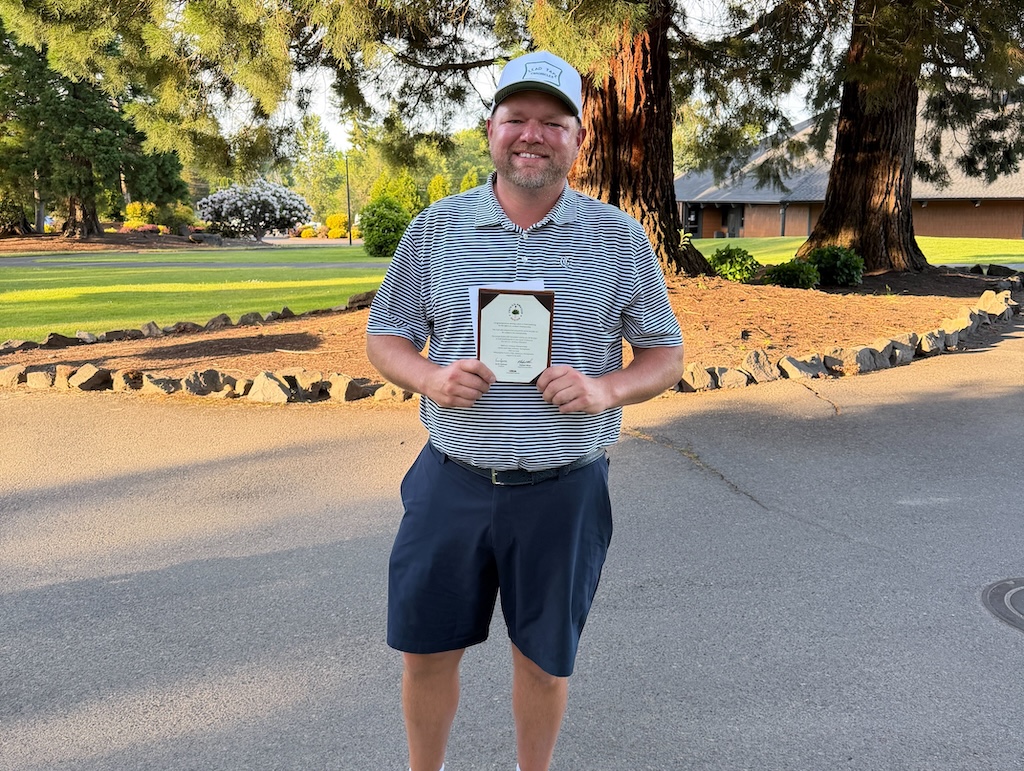
This past Monday, I played in the U.S. Amateur local qualifier at Rock Creek Country Club in Portland, Oregon. A full tee sheet from 7:30 a.m. to 1:55 p.m., the top 11 scores would make it to the U.S. Amateur final qualifying.
I teed off at 10:48 a.m.. With the 7:30 am tee time, you can get a feel for the leaders’ pace, and they were off and running on the challenging setup at Rock Creek.
View this post on Instagram
Getting to the highlight of the round on the par five 17th, a drive up the left side and 212 yards left to the front hole location. I took out a 5-iron with plans of middle of the green. The ball ended up 8 feet left of the hole, pin high. A slight downhill putt dropped in for an eagle 3 on the 17th. With the cut line looking to be anywhere from -2 to even par. This was the boost I had been waiting for all day.
With making par from the trees on 18, it was time to wait for a potential playoff with a posted score of one under par 71.
Three hours later, it was playoff time. 8 players for 6 spots. I made par on the playoff hole, which was good enough to advance to the U.S. Amateur final qualifying in July. USGA qualifiers sure deliver on all of the emotions in golf!
Club Junkie
Building my 2026 gamer WITB: Ranking the contenders and new putter projects – Club Junkie Podcast

The annual What’s In The Bag build is underway, and on this episode of Club Junkie, Brian breaks down the clubs currently leading the race for a spot in his 2026 gamer setup. From drivers and fairway woods to irons, wedges, and shafts, he ranks the equipment that’s performing best and explains what’s separating the front runners from the rest of the field.
Brian also heads into the workshop to discuss several putter projects currently on the bench. From head options and shaft choices to build ideas and testing plans, he shares what he’s working on and which putters could become serious contenders for the bag this season.
If you’re a gear junkie who loves equipment testing, club building, and the never-ending pursuit of the perfect setup, this episode is for you.
Follow Club Junkie:
Instagram: @clubjunkiepod
TikTok: @clubjunkiepod
Threads: @clubjunkiepod
X: @ClubJunkiePod
Club Junkie
Tour Edge Exotics mini driver review + TaylorMade Spider ZT Max first look – Club Junkie

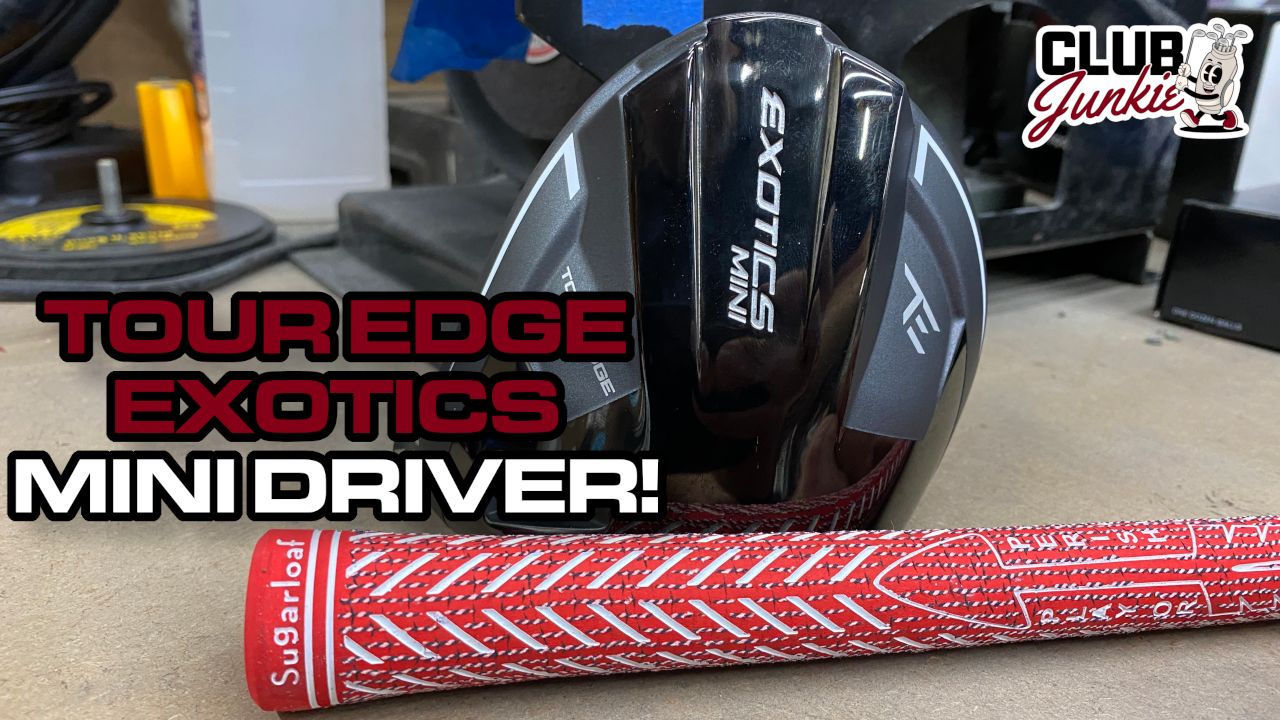
On this episode of Club Junkie, I put the new Tour Edge Exotics Mini Driver to the test and break down the performance, forgiveness, distance, and where it fits compared to a traditional driver or strong fairway wood. If you have been curious about adding a mini driver to the bag, this one is worth a look.
I also dive into the new TaylorMade Spider ZT Max putter that was recently spotted and discuss the growing zero torque putter trend. Plus, there is a closer look at the new Project X Titan Yellow shaft showing up on the PGA Tour and what makes it different from other profiles currently out there.

Justin Rose WITB 2026 (April): Full WITB breakdown with new McLaren irons

What’s the story behind Webb Simpson’s custom-stamped irons?

Memorial Tournament Tour Report: Rory McIlroy, Cameron Young switch up drivers, and more

Cadillac Championship Tour Report: Spieth’s sizable changes, McLaren Golf launches, and more

Russell Henley’s winning WITB: 2026 Charles Schwab Challenge

Kristoffer Reitan’s winning WITB: 2026 Truist Championship

Aaron Rai’s winning WITB: 2026 PGA Championship

Cameron Young’s winning WITB: 2026 Cadillac Championship

J.T. Poston’s winning WITB: 2026 Memorial Tournament

Best irons 2026: Best irons overall, most forgiving irons, and more


Bud Cauley WITB 2026 (June)
Bud Cauley had >14 clubs in his bag when photographed prior to the Memorial Tournament. Driver: Titleist GTS2 (8 degrees) Shaft: Fujikura...


Hannah Green WITB 2026 (June)
Driver: Titleist GTS3 (10 degrees, D4 SureFit setting) Shaft: Mitsubishi Chemical Diamana RB 53 S 3-wood: Titleist GT3 (15 degrees,...


Asterisk Talley WITB 2026 (June)
Driver: TaylorMade Qi4D (9 degrees) Shaft: Fujikura Ventus Blue 6 S 3-wood: TaylorMade Qi4D (16.5 degrees) Shaft: Fujikura Ventus Blue...

Brianna Do WITB 2026 (June)
Driver: Callaway Quantum Triple Diamond (9 degrees) Shaft: KBS PGW 3-wood: Callaway Elyte Titanium (15 degrees) Shaft: KBS PGW 5-wood:...
-
 Equipment5 days ago
Memorial Tournament Tour Report: Rory McIlroy, Cameron Young switch up drivers, and more
-
 News1 week ago
Russell Henley’s winning WITB: 2026 Charles Schwab Challenge
-
 Whats in the Bag3 days ago
J.T. Poston’s winning WITB: 2026 Memorial Tournament
-
 Equipment2 days ago
Best irons 2026: Best irons overall, most forgiving irons, and more
-

 Equipment1 week ago
Details on Jason Day’s latest prototype Avoda iron setup
-
 Equipment3 weeks ago
CJ Cup Byron Nelson Tour Report: Koepka and Kim’s newest putters finally get hot
-

 News2 weeks ago
Charles Schwab Challenge Tour Report: MacIntyre, Åberg and Spaun all switch putters, TaylorMade launches new Spider
-
 Equipment2 weeks ago
Details on J.J. Spaun’s surprise putter switch


geohogan
Sep 9, 2022 at 1:31 pm
IMO carbon face takes drivers to another level.
40% less weight in the face is huge. No surprise,
that Rory is finding more fairways, IMO.
Loweboy
Aug 24, 2022 at 3:16 pm
I discovered this a couple years back. While I like my Louisville Golf persimmon driver, and my Condor driver, they both are old technology and were not getting out there very far. In a scramble in 2010, one of the guys had a Cobra LD F driver, I tried it and the next day bought one. What I didn’t realize is it was severely draw-biased and I fought nasty hooks for years. I finally put the old driver(s) back in and found more fairways. In 2018 I bought a SLDR and installed a Project X shaft into an adapter, and thought I had it dialed in. It would blast out there when hit correctly, but nearly every drive was low and left. Some of that was my swing (not turning all of the way to clear the hips), but it was amazing to see how far it could go on good shots. I was already cleared for a driver purchase by my wife, but I hadn’t pulled the trigger. After a bad round with the SLDR, I set it next to my Condor and got out the measuring tape. SLDR was 45″, and the Condor was 43″. I ordered the 9* GS53 Max at 44″ and immediately was hitting penetrating bombs that got out there 300-315. Yes, I gained 50+ yards on my drives, and also gained accuracy. It changed the way I play golf. I can still hit the low duff hook, and the occasional slice that goes three streets over, but those pure drives are a thing of beauty and the guys marvel at how far I can hit it. I am not one to buy new clubs often, so it will be many generations of drivers before I get a new one, but if I can keep hitting this one new like I do, I won’t need a new one. I had no idea a new driver would make such a difference, but it did, and I am glad I bought it. Now, I have to dial in my wedge game, and that has plagued me for decades.