
Opinion & Analysis
The Wedge Guy: In defense of blade irons

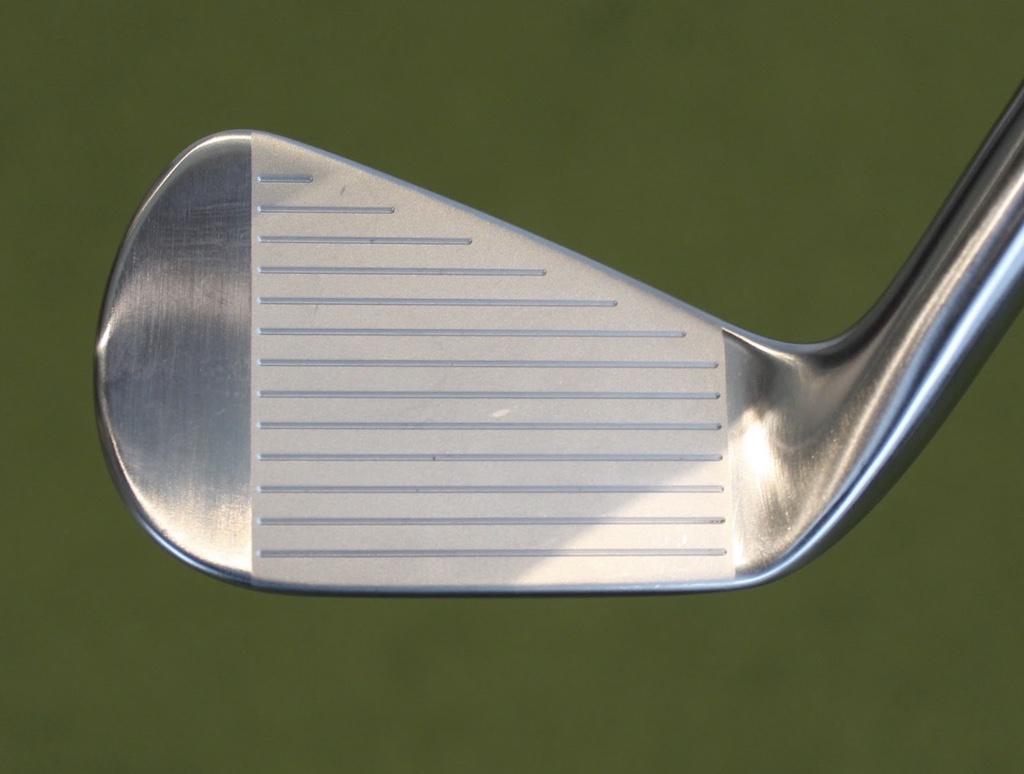
I ran across an article this past weekend from March of 2020, which identified the irons used by the top ten players in greens in regulation on the PGA Tour (at the time). What I have always found interesting and enlightening is that the best players in the world overwhelmingly choose to play mostly traditional forged blade irons, while it is estimated less than two percent of recreational players choose them.
So, do these elite players choose blades because they are the best players in the world—or could it possibly be that they are the best players partly because they choose blade irons? I believe it is both. Playing blades somewhat “guides” you to more precise ball-striking because of the improved feedback–you can feel the slightest of mis-hits so you always know how you’re doing. But, blade irons also allow you to shape shots and be more precise in your distance control–in other words, they allow you to optimize your skills because of their design.
I’ve long believed that many more players could benefit from blades than are willing to play them–especially in the higher lofts. I’ll qualify that statement by sharing that I’ve seen robotic testing prove that the higher the loft of the club, the less perimeter weighting or a cavity back design will improve ball flight performance and forgiveness. In fact, the nod to trajectory consistency and distance control may well go to the blade design in the higher lofts.

While technology has allowed all iron designs to be better today than ever before, perimeter weighting in irons allows many more visual variations than are possible with a traditional one-piece forged design. Take a look at today’s offerings from major brands in the blade category and you’ll see striking similarities to blades from past decades. But in the “game improvement” categories, you’ll see a vast variety of cosmetic looks, though many of those design intricacies are no more than that and don’t affect performance all that much. This is a competitive industry and the big brands need to be able to repeatedly deliver something that looks different from the previous model so they can claim to have created something better.
But let me get back to the notion that blade-style irons can be “defended” for many more golfers than the number that choose to game that kind of design.
As a club designer, I’ve long admitted that there is only so much I can do for you by the way a club is designed. For example, I cannot help the shot hit fat. Or the one that is thinned/bladed. I can’t correct an over-the-top move through impact, a shut-down face angle or a face delivered to the ball laid wide open. I cannot affect your swing path nor your thought processes before you even hit the shot.
No, as a club designer, I cannot help anything but the quality of impact if, and only if, the ball is contacted somewhere reasonably close to the desired impact area of the face, and the face is delivered pretty square to the intended line.
Understand that with any golf club, there is only one true “sweet spot”–the exact pinpoint where the transfer of clubhead speed to ball speed is optimized. And, with any club, impact efficiency or “smash factor” begins to be compromised as impact moves away from that tiny pinpoint location. What perimeter weighting aspires to do is to mitigate that energy loss. While there is no question that a half-inch miss with a cavity-back 7-iron will likely go longer than the same miss with a forged blade 7-iron, the actual difference is smaller than you might believe.
I will share that the difference between that miss with those two different styles of irons is increasingly larger as the loft decreases. In other words, the difference you’ll experience with a quarter-inch miss with a 40-degree 9-iron is less than you will see with a 30-degree 6- or 7-iron. But there is another anomaly of your actual misses of which you should be aware.
For most golfers I’ve measured, misses with longer irons tend to range more from heel to toe, and with shorter irons those misses tend to range from low to high in the face. Because of the more consistent blade thickness from top to bottom, true blade-style short irons quite often deliver more consistent distance and ball flight than their perimeter-weighted counterparts, both with real golfers and on robotic testing.
Having written weekly posts as The Wedge Guy for nearly 20 years, I have addressed this subject numerous times, and again offer the following challenge to conduct your own experiments. Talk to one of your golf professionals or a buddy who plays pretty traditional forged blade irons and ask to borrow their 8, 9 and PW for a few rounds. Even though the shafts might be stiffer and heavier than you are used to playing, I think you will still be surprised at how good your shotmaking consistency is with those, as opposed to the cavity back irons that you’ve been gaming.

I’ll close today’s post by also asking a question you probably haven’t pondered at all: If you think you are not “good enough” to play a traditional forged blade iron favored by the world’s best players, why would you think you can meet your expectations with the same wedges they play? Robotic testing has continually proven to me that even modern “tour design” wedges are much less forgiving of mis-hits than the most traditional forged blade 9-iron or pitching wedge.
In my 40 years in this industry, it is one of those things that make me go “hmm…”









This past Monday, I played in the U.S. Amateur local qualifier at Rock Creek Country Club in Portland, Oregon. A full tee sheet from 7:30 a.m. to 1:55 p.m., the top 11 scores would make it to the U.S. Amateur final qualifying.
I teed off at 10:48 a.m.. With the 7:30 am tee time, you can get a feel for the leaders’ pace, and they were off and running on the challenging setup at Rock Creek.
View this post on Instagram
Getting to the highlight of the round on the par five 17th, a drive up the left side and 212 yards left to the front hole location. I took out a 5-iron with plans of middle of the green. The ball ended up 8 feet left of the hole, pin high. A slight downhill putt dropped in for an eagle 3 on the 17th. With the cut line looking to be anywhere from -2 to even par. This was the boost I had been waiting for all day.
With making par from the trees on 18, it was time to wait for a potential playoff with a posted score of one under par 71.
Three hours later, it was playoff time. 8 players for 6 spots. I made par on the playoff hole, which was good enough to advance to the U.S. Amateur final qualifying in July. USGA qualifiers sure deliver on all of the emotions in golf!
Club Junkie
Building my 2026 gamer WITB: Ranking the contenders and new putter projects – Club Junkie Podcast

The annual What’s In The Bag build is underway, and on this episode of Club Junkie, Brian breaks down the clubs currently leading the race for a spot in his 2026 gamer setup. From drivers and fairway woods to irons, wedges, and shafts, he ranks the equipment that’s performing best and explains what’s separating the front runners from the rest of the field.
Brian also heads into the workshop to discuss several putter projects currently on the bench. From head options and shaft choices to build ideas and testing plans, he shares what he’s working on and which putters could become serious contenders for the bag this season.
If you’re a gear junkie who loves equipment testing, club building, and the never-ending pursuit of the perfect setup, this episode is for you.
Follow Club Junkie:
Instagram: @clubjunkiepod
TikTok: @clubjunkiepod
Threads: @clubjunkiepod
X: @ClubJunkiePod
Club Junkie
Tour Edge Exotics mini driver review + TaylorMade Spider ZT Max first look – Club Junkie

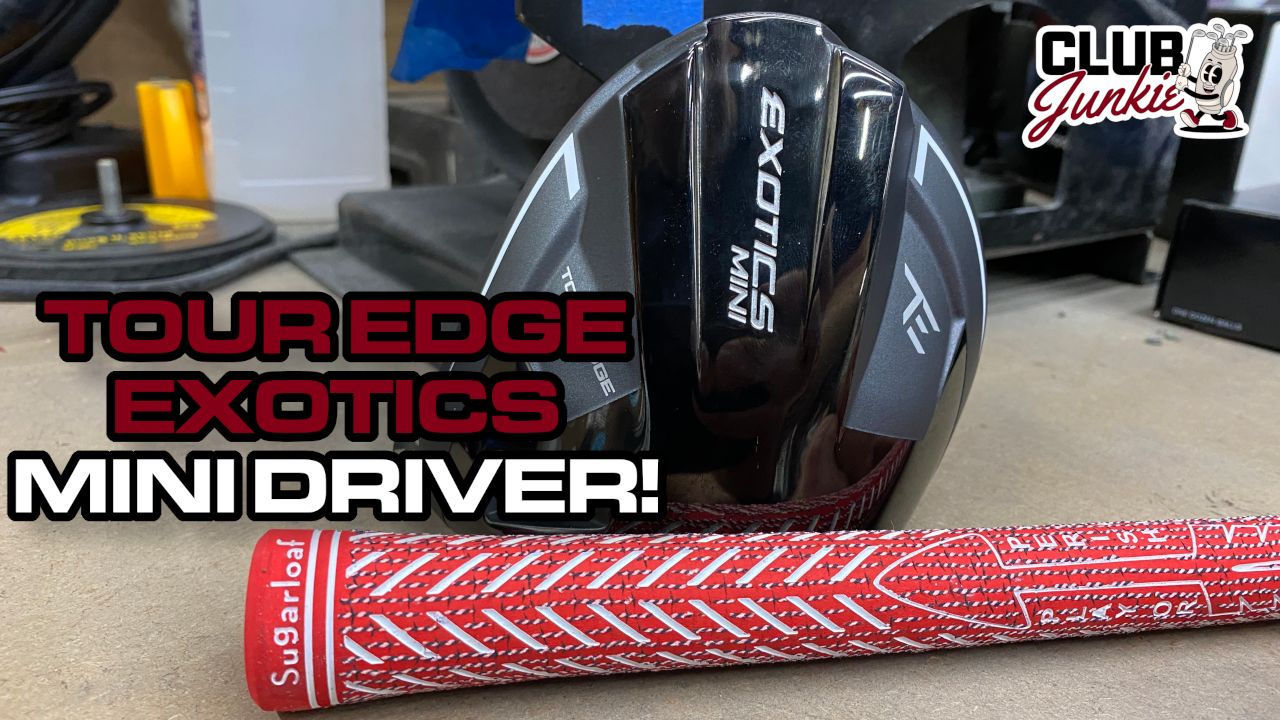
On this episode of Club Junkie, I put the new Tour Edge Exotics Mini Driver to the test and break down the performance, forgiveness, distance, and where it fits compared to a traditional driver or strong fairway wood. If you have been curious about adding a mini driver to the bag, this one is worth a look.
I also dive into the new TaylorMade Spider ZT Max putter that was recently spotted and discuss the growing zero torque putter trend. Plus, there is a closer look at the new Project X Titan Yellow shaft showing up on the PGA Tour and what makes it different from other profiles currently out there.

Justin Rose WITB 2026 (April): Full WITB breakdown with new McLaren irons

What’s the story behind Webb Simpson’s custom-stamped irons?

Memorial Tournament Tour Report: Rory McIlroy, Cameron Young switch up drivers, and more

Cadillac Championship Tour Report: Spieth’s sizable changes, McLaren Golf launches, and more

Russell Henley’s winning WITB: 2026 Charles Schwab Challenge

Kristoffer Reitan’s winning WITB: 2026 Truist Championship

J.T. Poston’s winning WITB: 2026 Memorial Tournament

Aaron Rai’s winning WITB: 2026 PGA Championship

Best irons 2026: Best irons overall, most forgiving irons, and more

Cameron Young’s winning WITB: 2026 Cadillac Championship


Bud Cauley WITB 2026 (June)
Bud Cauley had >14 clubs in his bag when photographed prior to the Memorial Tournament. Driver: Titleist GTS2 (8 degrees) Shaft: Fujikura...


Hannah Green WITB 2026 (June)
Driver: Titleist GTS3 (10 degrees, D4 SureFit setting) Shaft: Mitsubishi Chemical Diamana RB 53 S 3-wood: Titleist GT3 (15 degrees,...


Asterisk Talley WITB 2026 (June)
Driver: TaylorMade Qi4D (9 degrees) Shaft: Fujikura Ventus Blue 6 S 3-wood: TaylorMade Qi4D (16.5 degrees) Shaft: Fujikura Ventus Blue...

Brianna Do WITB 2026 (June)
Driver: Callaway Quantum Triple Diamond (9 degrees) Shaft: KBS PGW 3-wood: Callaway Elyte Titanium (15 degrees) Shaft: KBS PGW 5-wood:...
-
 Equipment6 days ago
Memorial Tournament Tour Report: Rory McIlroy, Cameron Young switch up drivers, and more
-
 News1 week ago
Russell Henley’s winning WITB: 2026 Charles Schwab Challenge
-
 Whats in the Bag3 days ago
J.T. Poston’s winning WITB: 2026 Memorial Tournament
-
 Equipment3 days ago
Best irons 2026: Best irons overall, most forgiving irons, and more
-
 Equipment1 week ago
Details on Jason Day’s latest prototype Avoda iron setup
-
 Equipment3 weeks ago
CJ Cup Byron Nelson Tour Report: Koepka and Kim’s newest putters finally get hot
-

 News2 weeks ago
Charles Schwab Challenge Tour Report: MacIntyre, Åberg and Spaun all switch putters, TaylorMade launches new Spider
-
 Equipment2 weeks ago
Details on J.J. Spaun’s surprise putter switch


Donn Rutkoff
Mar 10, 2021 at 7:50 pm
Ain’t nothing in the world like Mizuno GFF wedges. I’m a hi handicap, now 66 yrs old, but I rarely miss hitting the green with a 52 degree killer Mizuno.
Now here’s a question. I got fitted for 8-9-W. Looking to replace Nike Vapor Fly irons up top. Very nice irons but I wanted more precision, narrower sole. I hoped the fitter would put me into Mizunos but he said I did best with Ping I 500. So I got ’em and I like them a lot. They have a forged face. Question is how much of the overall club is forged and do any of y’all think they give the same feedback as a 100% forged Mizuno? I also have an old Mizuno Fli-hi GFF 24 degree hybrid, nice feel, and went to add an 18 deg. But no GFF. I got a new Mizuno MMC 18. Feels very similar to the GFF 24 deg. Comments???
Sean Foster-Nolan
Feb 19, 2021 at 9:20 am
I always thought the concept was a bit overrated, and the “mystique” surrounding blades a bit overblown.
MJD
Feb 19, 2021 at 9:01 am
The feel, feedback and flight of a decent bladed iron vs a cavity iron is like comparing The Beatles to Milli Vanilli!
Once you play bladed irons you NEVER go back for reasons of forgiveness or playbility. As Terry says, a bad swing will end up with a bad shot; doesn’t matter what you play…just embrace it.
Delbert
Feb 18, 2021 at 4:11 pm
The PGA and LPGA tours should go to a standard club and ball spec like major league baseball. Then we would see who has the game. Interesting that we don’t see Vokey introducing a cavity back wedge. Great article.
Ron Snyder
Feb 18, 2021 at 11:53 am
Years ago a monthly golf mag published an article on the results of they acquired after observing several strikes with a cavity back and a blade iron. Using Iron Byron set up to repeat strikes high toe, low heel and point of percussion. The blade was more accurate (20-30%) on heel toe strikes! CG strikes were equal as expected. I don’t remember the loft used but either 5 or 7 iron. Of the robot offered no feedback but had it been a cool autumn day it would have said ouch on those toe hits. Producing positive accurate feedback which is what thousands of golf facilitators look for. Now that pros are hitting thousand mile 8 irons(yipper I’m jealous) and their 8 irons are like my old Wilson staff 5 iron, there iirons are more consistent. Seems to me, merely observed, that most consistent winners are blade players. Feedback is so important for players, golfers not so much. Looks good feels good so must be good for golfers is a necessity. Here’s to blades and I like the fact that designers are bringing back the design of the Sting blades of long ago (tungsten can work wonders put in the right place)
Thx for the great articles
Bob Pegram
Feb 18, 2021 at 4:18 am
Terry’s explanation makes sense. I have RAZR X Forged irons (2011) which are cavity back one piece forged. The long and middle irons are very easy to hit and get up in the air, but I have to make sure I hit the short irons low on the face or they come up short. Now I understand why.
Kourt
Feb 18, 2021 at 12:17 am
Correction, a lot of the best male players in the world choose blade irons, but not all. But most of the LPGA players choose cavity irons. I’d argue that most amateur golfers resemble the swing speed of an lpga player not a pga player. An interesting question is why do most of the lpga choose to not play blades?
Lefthack
Feb 17, 2021 at 6:53 pm
My combo irons are blades from 8 to PW. I could likely play a full set, but my game wouldn’t be as pretty and I would have to work harder.
I would love to rock a set of Nike VR Pro blades, those look awesome.
delbert
Feb 18, 2021 at 4:08 pm
I picked up a used set of VRII Pro blades a few years ago for $129. They were barely used and very easy to hit. The combo sets are great, too.
Theoxii
Feb 17, 2021 at 6:34 pm
I am a recovering club junkie. I have 6 sets ranging from exotics game improvement, TM 790s, maxfli A10 combos to Reid Lockhart blades. Not a whole lot of difference in scoring average. I’ve shot at least 78 with each set; I’ve also been on the wrong side of 90 with each. I found that your course management adjusts to your capability with the set ie choking up on a fairway or hybrid rather than a full 3/4/5 blade. From 7i up- 165yds in I dont have a problem with blades.
Terry Koehler
Feb 17, 2021 at 10:54 pm
I gamed the Reid Lockhart RL Blades for 20 years, until I designed the Ben Hogan FT. Worth 15s, which I have had in the bag since the first prototype set in 2014. That said, I always thought the RL blades were close to the ultimate blade — precision + forgiveness of the toe miss, which is the most penalizing on blades.
Have to admit I’ve been toying with a reprise of that RL Blade with some updating . . . Hmmmmmm, maybe there is an “ultimate” blade in Edison’s future . . . .
G
Feb 18, 2021 at 4:49 am
Hi Terry,
The RL blades are a great looking iron.
I used them for years and would be more than willing to try a newer version of them.
Looks like you’ve got something to do in 2021?
Frank Walley
Feb 20, 2021 at 4:51 pm
I’d love to see the Edison update to the RL.
SV677
Feb 17, 2021 at 4:13 pm
I started with blades because that was all that was available. I have a blade to practice with and find that after just a few swings I find the sweet spot more consistently. I would think ideally a split set might be the answer. The problem would be synching lofts. With today’s stronger lofts at around a 6 or 7 iron you would end up with two of the “same” clubs to keep consistent gapping.
MarkM
Feb 17, 2021 at 4:07 pm
Terry, you have a very good way of frequently hitting the nail on the head. I’ve always thought “forgiveness” in irons was overrated and agree with your stance. I still want a 460 driver though so I can bash it as hard as possible and still find the course though.
I’ve always preferred the look of a blade at address. Like Mr. Walsh, it’s probably because I grew up playing them. At different times in my golfing life I’ve gone to “more forgiving” irons and eventually made my way back to blades.
I’m at that crossroads again. After playing a variety of cavity backs over the past 9 years I am back to playing a blade – the Honma Rose-Proto MBs, superb! This was after I experimented with a set of Hogan Grind blades after club season was over. In 3 months the ball striking improved enough with my irons to make my playing partners wonder if they were legal or not when I kept taking their money 🙂 As other say, to each his own but I’m pretty sure I’ll be playing blades for as long as I can get the ball in the air.
Current hcp 7.0
Robert Healey
Feb 17, 2021 at 2:41 pm
In an industry obsessing about COR,MOI and performance data lets not forget the most important metric of all, enjoyment.! Play what you like the look of, sound and feel of. For 99% or recreational gofers it doesn’t really matter if its a blade, game improvement or a combination.
Go and enjoy whatever kit you have chosen.
B_of_H
Feb 17, 2021 at 12:43 pm
Thank you. I have always thought that from 7 iron down blades are actually more accurate for me as I tend to miss a little high in the face at times and perhaps a bit on the heel. i’ve done a bunch of 7 iron fittings and blades had the most consistent distance and tightest dispersion each time.
Michael Welsh
Feb 17, 2021 at 12:35 pm
I have found that my scores with blade irons are the same or better as cavity backs. Could be because I learned to play with blades nearly 60 years ago because that was my only option. Could be that they just plain look better to my eye because of that old historical tie. Or it could be because I get sloppy with a cavity back relying on that supposed forgiveness. So at this point I simply select a blade because it makes me happy. It makes me think about all the things I need to do to hit a pure shot, and when I don’t I only blame myself. Handicap 9.
Bob Jones
Feb 19, 2021 at 12:40 pm
I was going to write a response, but I don’t have to. You just wrote it for me. Every word, and I mean EVERY WORD, is my story, too.
EDWARD JOHNSON
Feb 19, 2021 at 4:55 pm
Exactly!