
Opinion & Analysis
Wedge Guy: The “feel” no one talks about


Last week, I took you on a deep dive into the first part of the feel equation, that is the “sensation of impact.” I hope you better understand all the various elements of that part of club performance now than you might have before.
But there is another huge aspect to “feel” that very few talk about, especially in the wedge category—and that is the principal of motion feedback. In simple terms, what that means is the golf club’s ability to give constant feedback to your nervous system – through your hands – of exactly what the club is doing throughout its range of motion in the swing, whether that is a full swing or a very short chip.
And it is this aspect of “feel” that is the key to hitting exactly the right shot at the right time.

It has long been industry standard to build wedges to a slightly higher swingweight than our other clubs, specifically for this reason. The heavier swingweight gives you an enhanced sensation of where the clubhead is at all times – how fast it is moving, how far back it has been taken, the orientation of the face, the perception of load and release—in other words, all the variables you need to rehearse and repeat to hit the scoring shot you face.
Think about how you typically approach a short chip or pitch versus a full swing 8-iron shot, for example. You may or may not take any practice swings for the full shot, but around the greens, my bet is that you take multiple practice swings to get the “feel” for the shot you want to hit, right? That has nothing at all to do with the sensation of impact, and everything to do with loading your immediate-recall memory bank with the way the club has to move in order to execute the shot you see before you.
Call it a dress rehearsal that allows you to memorize the “motion feedback” that you want to repeat when you address the ball for the actual shot.
But I don’t believe simply adding a few points of swingweight is enough to provide optimized motion feedback, and my take is that the industry has really failed us all with their steadfast adherence to fitting all wedges with a heavy stiff “generic” steel shaft.
Regardless of the brand and model wedges you play, that shaft is likely much heavier and stiffer than the shaft in your irons, so you have a feel disconnect where you least can afford it. The majority of golfers now play softer flexes and lighter weight shafts in their irons, whether that be light steel or graphite. A simple improvement to your wedges is to have them re-shafted with something similar to the shaft in your irons to approach a “seamless transition” from irons to wedges.

But we also ask our wedges to do a lot more than we ask of any of our irons. For example, you might have a full-swing approach with your gap wedge – whether that be 90 yards or 135 really doesn’t matter. Either way, that club needs to deliver close to the same full swing performance as your short irons, because you simply cannot make the same swing with two clubs that are adjacent in the bag, but up to 30-40 grams and two flexes different in shaft.
But then, let’s say you miss the green with that shot, and leave yourself a 60-foot chip, for which you are going to choose your gap wedge again – two successive shots that are entirely different, but you are going to execute them with the same club. For the first shot, the shaft has to stabilize the heavier wedge head, while also providing you with the right flex characteristics to load and release like your short irons. But for the very next shot, you need the shaft to actually flex a bit – even on that very short swing –so that your practice swings can give you optimum motion feedback for the shot you envision.
A very stiff steel shaft simply cannot do that.
I know it seems like I am presenting quite the dilemma here—and I guess I am. That’s why I have spent many hours in my 30+ years of wedge design working with various shaft companies to try to create the optimum wedge shafts.
But until I have that perfected, my advice for most of us is this: Play the same shaft in your wedges as you do in your irons, but about a half flex softer. That gets pretty darn close to ideal. And it’s why many tour players put S400 shafts in their wedges, even though they play X100s in their irons (or equivalents).









This past Monday, I played in the U.S. Amateur local qualifier at Rock Creek Country Club in Portland, Oregon. A full tee sheet from 7:30 a.m. to 1:55 p.m., the top 11 scores would make it to the U.S. Amateur final qualifying.
I teed off at 10:48 a.m.. With the 7:30 am tee time, you can get a feel for the leaders’ pace, and they were off and running on the challenging setup at Rock Creek.
View this post on Instagram
Getting to the highlight of the round on the par five 17th, a drive up the left side and 212 yards left to the front hole location. I took out a 5-iron with plans of middle of the green. The ball ended up 8 feet left of the hole, pin high. A slight downhill putt dropped in for an eagle 3 on the 17th. With the cut line looking to be anywhere from -2 to even par. This was the boost I had been waiting for all day.
With making par from the trees on 18, it was time to wait for a potential playoff with a posted score of one under par 71.
Three hours later, it was playoff time. 8 players for 6 spots. I made par on the playoff hole, which was good enough to advance to the U.S. Amateur final qualifying in July. USGA qualifiers sure deliver on all of the emotions in golf!
Club Junkie
Building my 2026 gamer WITB: Ranking the contenders and new putter projects – Club Junkie Podcast

The annual What’s In The Bag build is underway, and on this episode of Club Junkie, Brian breaks down the clubs currently leading the race for a spot in his 2026 gamer setup. From drivers and fairway woods to irons, wedges, and shafts, he ranks the equipment that’s performing best and explains what’s separating the front runners from the rest of the field.
Brian also heads into the workshop to discuss several putter projects currently on the bench. From head options and shaft choices to build ideas and testing plans, he shares what he’s working on and which putters could become serious contenders for the bag this season.
If you’re a gear junkie who loves equipment testing, club building, and the never-ending pursuit of the perfect setup, this episode is for you.
Follow Club Junkie:
Instagram: @clubjunkiepod
TikTok: @clubjunkiepod
Threads: @clubjunkiepod
X: @ClubJunkiePod
Club Junkie
Tour Edge Exotics mini driver review + TaylorMade Spider ZT Max first look – Club Junkie

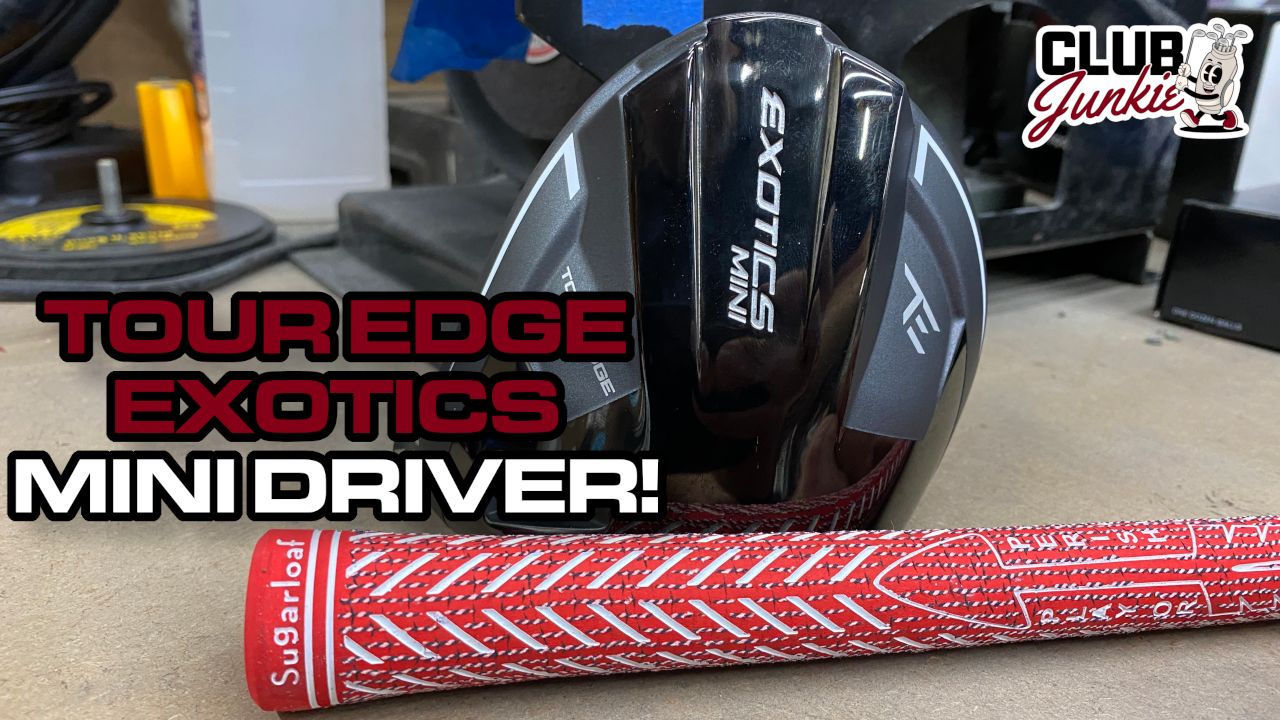
On this episode of Club Junkie, I put the new Tour Edge Exotics Mini Driver to the test and break down the performance, forgiveness, distance, and where it fits compared to a traditional driver or strong fairway wood. If you have been curious about adding a mini driver to the bag, this one is worth a look.
I also dive into the new TaylorMade Spider ZT Max putter that was recently spotted and discuss the growing zero torque putter trend. Plus, there is a closer look at the new Project X Titan Yellow shaft showing up on the PGA Tour and what makes it different from other profiles currently out there.

Justin Rose WITB 2026 (April): Full WITB breakdown with new McLaren irons

What’s the story behind Webb Simpson’s custom-stamped irons?

Memorial Tournament Tour Report: Rory McIlroy, Cameron Young switch up drivers, and more

Cadillac Championship Tour Report: Spieth’s sizable changes, McLaren Golf launches, and more

Russell Henley’s winning WITB: 2026 Charles Schwab Challenge

Kristoffer Reitan’s winning WITB: 2026 Truist Championship

Aaron Rai’s winning WITB: 2026 PGA Championship

Cameron Young’s winning WITB: 2026 Cadillac Championship

J.T. Poston’s winning WITB: 2026 Memorial Tournament

Best irons 2026: Best irons overall, most forgiving irons, and more


Bud Cauley WITB 2026 (June)
Bud Cauley had >14 clubs in his bag when photographed prior to the Memorial Tournament. Driver: Titleist GTS2 (8 degrees) Shaft: Fujikura...


Hannah Green WITB 2026 (June)
Driver: Titleist GTS3 (10 degrees, D4 SureFit setting) Shaft: Mitsubishi Chemical Diamana RB 53 S 3-wood: Titleist GT3 (15 degrees,...


Asterisk Talley WITB 2026 (June)
Driver: TaylorMade Qi4D (9 degrees) Shaft: Fujikura Ventus Blue 6 S 3-wood: TaylorMade Qi4D (16.5 degrees) Shaft: Fujikura Ventus Blue...

Brianna Do WITB 2026 (June)
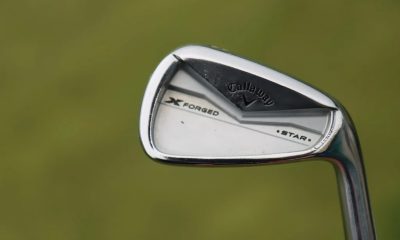
Driver: Callaway Quantum Triple Diamond (9 degrees) Shaft: KBS PGW 3-wood: Callaway Elyte Titanium (15 degrees) Shaft: KBS PGW 5-wood:...
-
 Equipment5 days ago
Memorial Tournament Tour Report: Rory McIlroy, Cameron Young switch up drivers, and more
-
 News1 week ago
Russell Henley’s winning WITB: 2026 Charles Schwab Challenge
-
 Whats in the Bag3 days ago
J.T. Poston’s winning WITB: 2026 Memorial Tournament
-
 Equipment3 days ago
Best irons 2026: Best irons overall, most forgiving irons, and more
-

 Equipment1 week ago
Details on Jason Day’s latest prototype Avoda iron setup
-

 Equipment3 weeks ago
CJ Cup Byron Nelson Tour Report: Koepka and Kim’s newest putters finally get hot
-

 News2 weeks ago
Charles Schwab Challenge Tour Report: MacIntyre, Åberg and Spaun all switch putters, TaylorMade launches new Spider
-

 Equipment2 weeks ago
Details on J.J. Spaun’s surprise putter switch


Jamho3
Feb 14, 2021 at 7:00 am
Thanks TK
Leyton
Feb 12, 2021 at 2:45 pm
Till yesterday we’ve been told the wedge shafts were stiffer to be more precise.
Now we have to use softer shaft than irons.
Ok.
Alex
Feb 12, 2021 at 12:31 pm
When I went single length on the Wishon Sterling irons, I had the same shaft in the SW and LW and I did like it, I thought I spun it back better.
Currently playing the 921 HM Pros, my shaft is the Nippon 950 Neo Regular Flex. I guess I would just go with the same shaft in the wedges then or maybe soft step it. I thought of going to the Nippon 105 wedge flex, currently playing the Hi-Rev 2.0 115, R flex.