
Opinion & Analysis
The Wedge Guy: Equipment tidbits for you to think about


One of the most fun things about being a golfer is that we all want to get better–hit drives longer and straighter, iron shots that find greens more often, pitches and chips that get closer, and putts that go in more often. And we all seem to take great pleasure in finding that next “missing link” in our bags that will help us achieve one of those goals.
Today I want to share some thoughts about how little things can often mean a lot when it comes to tweaking your equipment. On the surface, a golf club seems to be a pretty simple thing—a piece of metal, at the end of a tubular piece of metal or graphite, with a rubber-like handle at the end. But when that golf club is put into motion at 100 mph or so, a lot of dynamics begin to happen.
As we ponder the dynamics of the complex action of swinging a golf club and the broad set of mechanics that come into play on every shot, I thought I’d share some random observations I’ve made over the years about equipment cause and effect:
Increasing your driving distance: The industry has taken us on this dramatic quest for distance and power, and the average driver sold today is over 45” long. That’s two inches longer than the standard of 25 years ago. And while the humongous driver heads brag about “forgiveness”, the fact is that your longest drives (and straightest) will always come from dead center hits. It’s still a fact that a sweet spot miss of just ½” will cost you 7-9% distance loss, and a miss of 3/4” will increase that to 12-15%. I suggest you try gripping down on your driver an inch or more the next time you play and see if you don’t hit the ball closer to the sweet spot and see it consistently going longer and straighter. It’s been proven over and over again.
Examining iron specs: The “standard” way a set of irons was engineered for decades was that the irons vary in length by ½”, and in loft by 4 degrees. But the past few years – driven by the relentless quest for distance – we have seen the loft gaps increased to 5° at the short end of the set and as small as 2.5° at the long end. The harsh reality of this geometry is that almost every golfer will have much smaller distance gaps at the long end of the set than at the short end, where distance precision is critical. I have tweaked my irons for years so that I have smaller length and lie differences at the short end than the long, and that allows my distance gaps to be more consistent. Most golfers could benefit from examining their TRUE carry distances from club to club and then tweaking lofts and lengths to fix their gapping.
Fit your putter. It amazes me to watch how many golfers–even some of the pros on TV–and see the toe of the putter up in the air at address. Simple fact is that this makes the face point left because of the loft. I’ve become a true believer in putter fitting. A good fit will ensure that your putter really is aimed at the target, and that the lie angle allows the ball to come off the putter straight. Yes, the style of putter is a matter of personal preference, but a putter that is accurately fit to you makes this maddening part of the game much less so.
Watch your grips. We spend hundreds of dollars on a driver or set of irons, and we get disposable “handles”. It’s a fact that grips wear out. They get dirty. And they need replacing regularly. Take a close look at yours. Worn, dirty grips cause you to grip the club tighter to have control. And bad shots are much more frequent because of that.
Experiment. The toys are a big part of the fun of golf, so don’t be afraid to experiment. I’ve long suggested all golfers should try the blade style short irons of one of your better player friends or pros, but experiment with other clubs, too. Hit your buddies’ hybrids, fairways, irons, drivers. Try different golf balls. [But I just can’t buy that tees can make a difference, sorry.] It’s fun.
So, there you have some random thoughts of the hundreds that swirl around in my head. Let me know your other questions about equipment, and I’ll try to address them in future columns.










This past Monday, I played in the U.S. Amateur local qualifier at Rock Creek Country Club in Portland, Oregon. A full tee sheet from 7:30 a.m. to 1:55 p.m., the top 11 scores would make it to the U.S. Amateur final qualifying.
I teed off at 10:48 a.m.. With the 7:30 am tee time, you can get a feel for the leaders’ pace, and they were off and running on the challenging setup at Rock Creek.
View this post on Instagram
Getting to the highlight of the round on the par five 17th, a drive up the left side and 212 yards left to the front hole location. I took out a 5-iron with plans of middle of the green. The ball ended up 8 feet left of the hole, pin high. A slight downhill putt dropped in for an eagle 3 on the 17th. With the cut line looking to be anywhere from -2 to even par. This was the boost I had been waiting for all day.
With making par from the trees on 18, it was time to wait for a potential playoff with a posted score of one under par 71.
Three hours later, it was playoff time. 8 players for 6 spots. I made par on the playoff hole, which was good enough to advance to the U.S. Amateur final qualifying in July. USGA qualifiers sure deliver on all of the emotions in golf!
Club Junkie
Building my 2026 gamer WITB: Ranking the contenders and new putter projects – Club Junkie Podcast

The annual What’s In The Bag build is underway, and on this episode of Club Junkie, Brian breaks down the clubs currently leading the race for a spot in his 2026 gamer setup. From drivers and fairway woods to irons, wedges, and shafts, he ranks the equipment that’s performing best and explains what’s separating the front runners from the rest of the field.
Brian also heads into the workshop to discuss several putter projects currently on the bench. From head options and shaft choices to build ideas and testing plans, he shares what he’s working on and which putters could become serious contenders for the bag this season.
If you’re a gear junkie who loves equipment testing, club building, and the never-ending pursuit of the perfect setup, this episode is for you.
Follow Club Junkie:
Instagram: @clubjunkiepod
TikTok: @clubjunkiepod
Threads: @clubjunkiepod
X: @ClubJunkiePod
Club Junkie
Tour Edge Exotics mini driver review + TaylorMade Spider ZT Max first look – Club Junkie

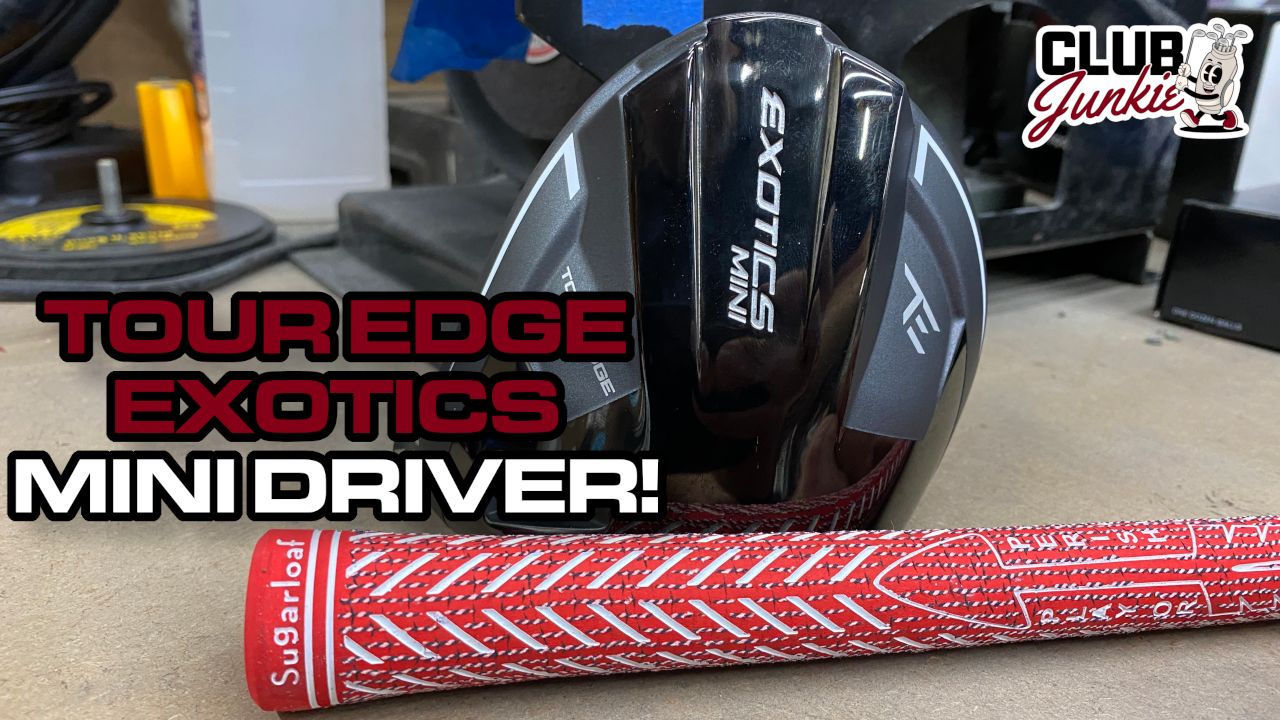
On this episode of Club Junkie, I put the new Tour Edge Exotics Mini Driver to the test and break down the performance, forgiveness, distance, and where it fits compared to a traditional driver or strong fairway wood. If you have been curious about adding a mini driver to the bag, this one is worth a look.
I also dive into the new TaylorMade Spider ZT Max putter that was recently spotted and discuss the growing zero torque putter trend. Plus, there is a closer look at the new Project X Titan Yellow shaft showing up on the PGA Tour and what makes it different from other profiles currently out there.

Justin Rose WITB 2026 (April): Full WITB breakdown with new McLaren irons

What’s the story behind Webb Simpson’s custom-stamped irons?

Memorial Tournament Tour Report: Rory McIlroy, Cameron Young switch up drivers, and more

Cadillac Championship Tour Report: Spieth’s sizable changes, McLaren Golf launches, and more

Russell Henley’s winning WITB: 2026 Charles Schwab Challenge

Kristoffer Reitan’s winning WITB: 2026 Truist Championship

Aaron Rai’s winning WITB: 2026 PGA Championship

J.T. Poston’s winning WITB: 2026 Memorial Tournament

Cameron Young’s winning WITB: 2026 Cadillac Championship

Best irons 2026: Best irons overall, most forgiving irons, and more


Bud Cauley WITB 2026 (June)
Bud Cauley had >14 clubs in his bag when photographed prior to the Memorial Tournament. Driver: Titleist GTS2 (8 degrees) Shaft: Fujikura...


Hannah Green WITB 2026 (June)
Driver: Titleist GTS3 (10 degrees, D4 SureFit setting) Shaft: Mitsubishi Chemical Diamana RB 53 S 3-wood: Titleist GT3 (15 degrees,...


Asterisk Talley WITB 2026 (June)
Driver: TaylorMade Qi4D (9 degrees) Shaft: Fujikura Ventus Blue 6 S 3-wood: TaylorMade Qi4D (16.5 degrees) Shaft: Fujikura Ventus Blue...


Brianna Do WITB 2026 (June)
Driver: Callaway Quantum Triple Diamond (9 degrees) Shaft: KBS PGW 3-wood: Callaway Elyte Titanium (15 degrees) Shaft: KBS PGW 5-wood:...
-
 Equipment6 days ago
Memorial Tournament Tour Report: Rory McIlroy, Cameron Young switch up drivers, and more
-
 News1 week ago
Russell Henley’s winning WITB: 2026 Charles Schwab Challenge
-
 Whats in the Bag3 days ago
J.T. Poston’s winning WITB: 2026 Memorial Tournament
-
 Equipment3 days ago
Best irons 2026: Best irons overall, most forgiving irons, and more
-

 Equipment1 week ago
Details on Jason Day’s latest prototype Avoda iron setup
-

 Equipment3 weeks ago
CJ Cup Byron Nelson Tour Report: Koepka and Kim’s newest putters finally get hot
-

 News2 weeks ago
Charles Schwab Challenge Tour Report: MacIntyre, Åberg and Spaun all switch putters, TaylorMade launches new Spider
-
 Equipment2 weeks ago
Details on J.J. Spaun’s surprise putter switch


Lefthack
Feb 1, 2021 at 9:26 am
I would love to take a swing with someone else’s clubs, but I don’t play with any other lefty’s.
Dennis Beach
Jan 9, 2021 at 8:58 am
The ball is probably one thing all players should look at. Don’t be a ball snob and play ProV’s just because the pros on TV do. It’s a great ball, just not for everyone, especially at the premium price. Do a ball fitting, or just buy sleeves if you can, to try different balls. I find a lot of different balls in the rough, and under bushes when I play. I sort them at home, and would put the ones I want to try back in my bag for my next round. After 10-12 years of trying all kinds of golfballs, I have my gamer-finally! And I totally agree about the club lofts of irons. Not helping anyone with strengthening lofts. And the industry needs to get off this distance kick. Distance is not any good if you are not in the fairway. Need to concentrate on control, and forgiveness in clubs. I personally like a heavier driver, so as to not get too quick in the backswing. I tend to put heavier shafts on my driver and woods, though I swing regular flex shafts in my clubs (80mph ss). The tech is out there to use, to make your game better, and more fun. You have to put in the time to research, and experiment. And a few lessons to get you going in the right direction couldn’t hurt.
Kyle
Oct 30, 2020 at 12:29 am
Amen on the loft of irons topic! It always cracks me up when playing with strangers and after hitting shots into greens, they’ll turn to me and ask what club I hit. If I say “7 iron”, I’m immediately hit with something along the lines of “Geez, I only hit 8 iron” to which my reply is “what’s the loft of your 8 iron?” which is then met by a blank stare and silence.
Tom Cafferky
Jan 9, 2021 at 4:53 pm
Exact same here my friends 7 iron loft is 30 and mine is 35
John
Oct 29, 2020 at 6:02 pm
Yeah, that stupid Tiger guy in the early 2000s winning major after major with the toe of his putter up.
He actually preferred to put like this at times because it allows the toe of the putter to open and close more. Agree with the putter fitting, but there is absolutely nothing wrong with the toe of the putter in the air if there’s a reason behind it.
geohogan
Oct 28, 2020 at 2:36 pm
..on larger clubheads and longer driver shafts:
the longer the shaft for any given head weight, the greater the potential for unwanted shaft droop, flexing and twisting.
…the larger the clubhead, ditto above
…the heavier the clubhead..ditto above
..the heavier and larger the clubhead..ditto above.
..the lighter the clubhead and shaft lower end, the greater the potential for head deceleration resulting from impact.
..the lower the clubhead speed at point of separation between ball and face, the slower the ball leaves the clubface.
Jason
Oct 28, 2020 at 2:08 pm
Very good suggestions.