
Opinion & Analysis
WRX Insider: How the Callaway tour staff matches up golf ball and irons

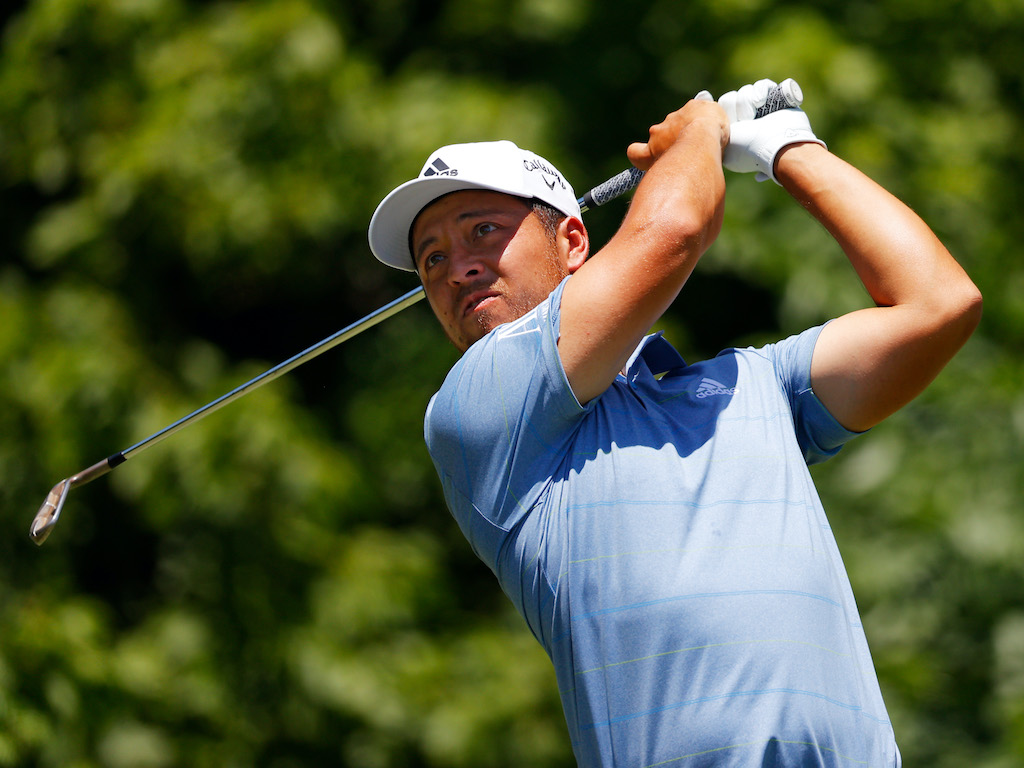
It’s not something that is widely explored. When it comes to the golf ball, we typically prioritize driver numbers, wedge numbers, and feel. In actuality, however, it’s a player’s irons that need to be optimized more than anything. Full shots, 3/4, fades, draws—the shot varietal with irons is all over the map.
So, when testing players, how does the team at Callaway dial in the ball and the irons to work in harmony with each other?
With the new Callaway X Forged and Apex MB just hitting the scene, it seemed like a perfect time to understand how the players on tour fit the ball to the irons and vice versa.
I had a chance to speak with Callaway Golf Ball R&D specialist Nick Yontz and Director of Tour Operations Jacob Davidson on dialing in the ball and the irons to match up with the best players in the world.
JW: How much do you depend on Nick’s expertise throughout the season, especially with new irons (X Forged and Apex MB) having just hit the market?
JD: Any time we launch a new product, it’s essential for the tour team to know how the new product will perform. Nick provides in-depth data on how our golf ball will perform with the new products. When you look at the golf bag, there is one constant variable and that’s the golf ball. Our ultimate goal is to collaborate with the iron engineers and golf ball engineers to design a product that works together to help golfers play better. Nick Yontz is a tremendous resource for our tour team and has worked closely with several major winners in his career. We lean on him weekly for insight into in-depth product performance and future prototype products.
JW: When considering the spin off of the irons for a player like Xander, is he working around one number or are the multiple spin windows to hit?
JD: Spin rates can vary from player to player depending on clubhead delivery and launch numbers. Currently, we’ve worked hard to get Xander’s iron spin rates into a range that we feel allows him to hit a variety of shots to play his best golf.
JW: Let’s look at an LPGA profile for a player like Anne van Dam. Where does Chrome Soft X benefit her the most?
NY: The Chrome Soft X has blended with Anne’s club set up in a way that she can be an excellent driver of the golf ball, while better controlling iron and wedge spin rates compared to her previous golf ball.
JW: If a player is looking for a higher launch window with the irons, what tweaks are you making, all while honoring the specific DNA of a player’s bag?
JD: There are several different levers we can move in order to raise the launch window. However, in order to determine which lever makes the most sense you have to fully understand the player’s bag. In order to do this, each club has to be studied deeply to know the cause and effects of a change. After we have completed this process, we will look at what options will best fit the player.
JW: As you look at the numbers, where do you see the improvements (gains) with the CS X vs what you saw with previous balls?
NY: Across the board, we’ve seen measurable ball-speed gains on the launch monitor during player testing sessions. It’s exciting for them and us when they reach driver ball speeds (and distances) that they couldn’t before!
JW: On the PGA Tour, is there an overall RPM profile that all players chase or is it player specific?
*question based on general rule of number on club x 1000 RPM IE 7 iron spins at 7000 RPM
JD: Our goal at Callaway is to move all of our staff players into optimal ranges in an iron spin. Our 2020 golf ball and the iron lineup has allowed us to move several players bags into a more optimal range this year. We work closely with the player, instructor, and caddie to constantly find ways to improve performance.
JW: In regards to working with a Champions Tour Player that has gone from Balata into CSX. Is that player still playing out of the same launch windows that he has for years or is he having to adjust for new technology?
NY: There are some differences in modern equipment that we hear from players that have played over multiple decades. The shape of the trajectory is an example. Current trajectories can look flatter or may get up higher sooner in the flight than a balata did. Players who have experienced balata and modern balls also talk about the amount of lateral movement being less today.
JW: Discuss how you guys work together on a week to week basis. What does it look like?
JD: Nick is an excellent resource for the tour team. Each week, we are providing feedback and observations to him from what we are seeing and hearing across all the major tours. Throughout the year, Nick will attend several tour events allowing us to work closely together with players on the range tee or on the golf course.
NY: Jacob and the entire tour team knows each tour player at the deepest level. For example, knowing each player’s swing tendencies and look preferences enhances the raw numbers we collect. Tour players are the best product testers in the world that push us to make better equipment.
JW: Can you both talk to me about the importance of spin with your irons?
JD: It’s much easier to take spin off than to add it from the fairway. The majority of shots that a tour player hits during a round of golf will be off-speed. When you reduce speed, spin also reduces. We’ve found that when we are fitting a player to a golf ball and irons, it’s imperative to pay close attention to how much reduction in spin comes from off-speed shots.
NY: Completely agree with Jacob. While we will do work on the driving range with a player, we need to see how it performs on the golf course in different situations as well (fairway/first-cut/rough, headwind/downwind/morning dew…)
Opinion
It may seem trivial, but to me, this is the secret sauce of really making a bag and fitting work for you. Pay attention to ball speed and launch but mostly spin rates. If the ball doesn’t spin you can’t control it—I don’t care how high it goes or steep it lands.
In the past year, I have focused way more on proper spin with my irons than ever before. What I have found is when 4-PW are in the right spin windows, which for me is around 6,800 RPM with a 7 iron, my iron play has improved dramatically.
See the PGA and LPGA TrackMan averages from 2019 below. At my age and speed, I actually strive to stay right in between the averages for both tours. It’s not only realistic for me but also has actually helped.





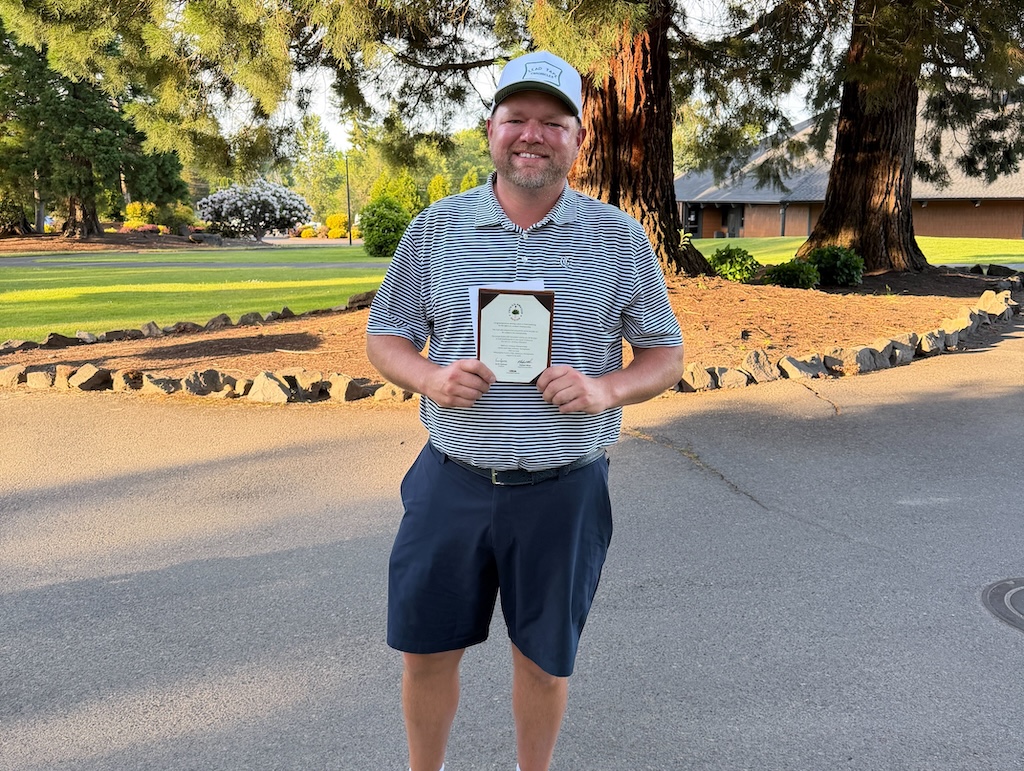
This past Monday, I played in the U.S. Amateur local qualifier at Rock Creek Country Club in Portland, Oregon. A full tee sheet from 7:30 a.m. to 1:55 p.m., the top 11 scores would make it to the U.S. Amateur final qualifying.
I teed off at 10:48 a.m.. With the 7:30 am tee time, you can get a feel for the leaders’ pace, and they were off and running on the challenging setup at Rock Creek.
View this post on Instagram
Getting to the highlight of the round on the par five 17th, a drive up the left side and 212 yards left to the front hole location. I took out a 5-iron with plans of middle of the green. The ball ended up 8 feet left of the hole, pin high. A slight downhill putt dropped in for an eagle 3 on the 17th. With the cut line looking to be anywhere from -2 to even par. This was the boost I had been waiting for all day.
With making par from the trees on 18, it was time to wait for a potential playoff with a posted score of one under par 71.
Three hours later, it was playoff time. 8 players for 6 spots. I made par on the playoff hole, which was good enough to advance to the U.S. Amateur final qualifying in July. USGA qualifiers sure deliver on all of the emotions in golf!
Club Junkie
Building my 2026 gamer WITB: Ranking the contenders and new putter projects – Club Junkie Podcast

The annual What’s In The Bag build is underway, and on this episode of Club Junkie, Brian breaks down the clubs currently leading the race for a spot in his 2026 gamer setup. From drivers and fairway woods to irons, wedges, and shafts, he ranks the equipment that’s performing best and explains what’s separating the front runners from the rest of the field.
Brian also heads into the workshop to discuss several putter projects currently on the bench. From head options and shaft choices to build ideas and testing plans, he shares what he’s working on and which putters could become serious contenders for the bag this season.
If you’re a gear junkie who loves equipment testing, club building, and the never-ending pursuit of the perfect setup, this episode is for you.
Follow Club Junkie:
Instagram: @clubjunkiepod
TikTok: @clubjunkiepod
Threads: @clubjunkiepod
X: @ClubJunkiePod
Club Junkie
Tour Edge Exotics mini driver review + TaylorMade Spider ZT Max first look – Club Junkie

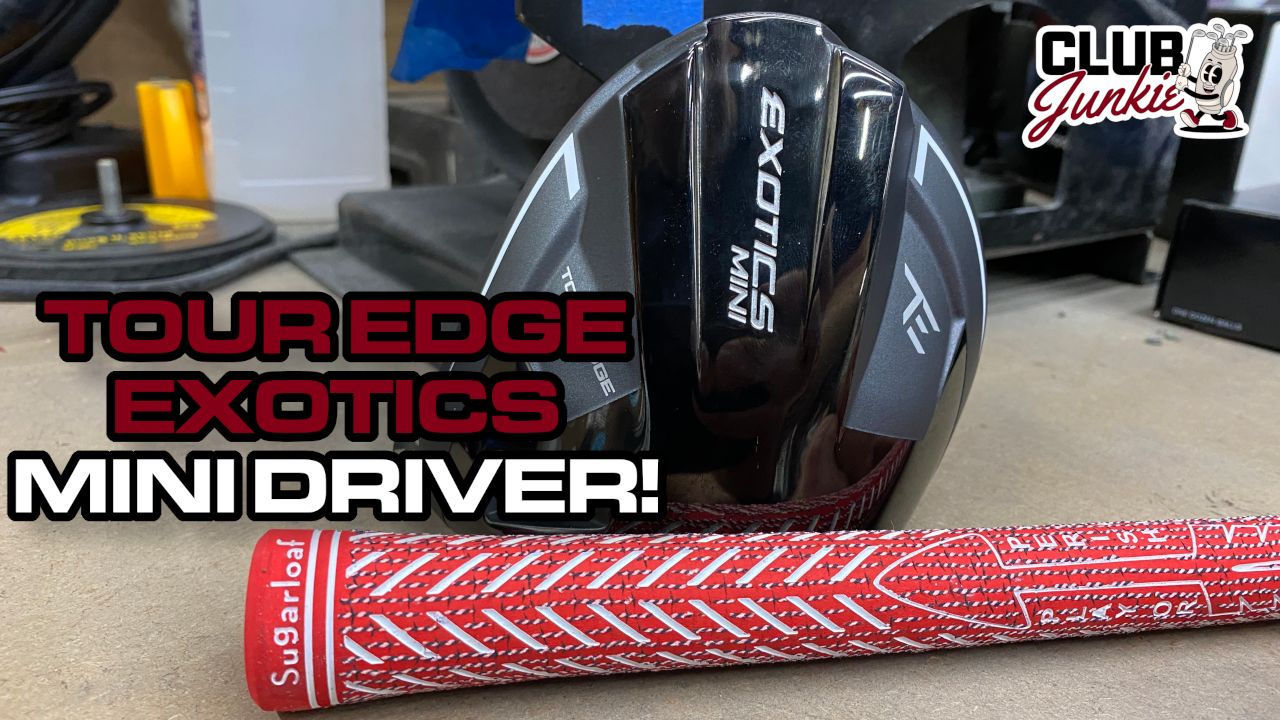
On this episode of Club Junkie, I put the new Tour Edge Exotics Mini Driver to the test and break down the performance, forgiveness, distance, and where it fits compared to a traditional driver or strong fairway wood. If you have been curious about adding a mini driver to the bag, this one is worth a look.
I also dive into the new TaylorMade Spider ZT Max putter that was recently spotted and discuss the growing zero torque putter trend. Plus, there is a closer look at the new Project X Titan Yellow shaft showing up on the PGA Tour and what makes it different from other profiles currently out there.

What’s the story behind Webb Simpson’s custom-stamped irons?

Memorial Tournament Tour Report: Rory McIlroy, Cameron Young switch up drivers, and more

Cadillac Championship Tour Report: Spieth’s sizable changes, McLaren Golf launches, and more

Russell Henley’s winning WITB: 2026 Charles Schwab Challenge

Kristoffer Reitan’s winning WITB: 2026 Truist Championship

Best irons 2026: Best irons overall, most forgiving irons, and more

J.T. Poston’s winning WITB: 2026 Memorial Tournament

Aaron Rai’s winning WITB: 2026 PGA Championship

Cameron Young’s winning WITB: 2026 Cadillac Championship

Details on Jason Day’s latest prototype Avoda iron setup


Christiaan Maas WITB 2026 (June)
Driver: TaylorMade Qi4D LS (8 degrees) Shaft: Fujikura Ventus TR Blue 6 X 3-wood: TaylorMade Qi10 (15 degrees) Shaft: Fujikura Ventus Black...


Ryan Palmer WITB 2026 (June)
Driver: Callaway Quantum Triple Diamond (9 degrees) Shaft: Project X HZRDUS Smoke Blue RDX 60 TX 3-wood: TaylorMade Qi10 (15 degrees) Shaft:...


Bud Cauley WITB 2026 (June)
Bud Cauley had >14 clubs in his bag when photographed prior to the Memorial Tournament. Driver: Titleist GTS2 (8 degrees) Shaft: Fujikura...


Hannah Green WITB 2026 (June)
Driver: Titleist GTS3 (10 degrees, D4 SureFit setting) Shaft: Mitsubishi Chemical Diamana RB 53 S 3-wood: Titleist GT3 (15 degrees,...
-
 Equipment6 days ago
Memorial Tournament Tour Report: Rory McIlroy, Cameron Young switch up drivers, and more
-
 News2 weeks ago
Russell Henley’s winning WITB: 2026 Charles Schwab Challenge
-
 Equipment3 days ago
Best irons 2026: Best irons overall, most forgiving irons, and more
-
 Whats in the Bag4 days ago
J.T. Poston’s winning WITB: 2026 Memorial Tournament
-
 Equipment1 week ago
Details on Jason Day’s latest prototype Avoda iron setup
-
 Equipment3 weeks ago
CJ Cup Byron Nelson Tour Report: Koepka and Kim’s newest putters finally get hot
-

 News2 weeks ago
Charles Schwab Challenge Tour Report: MacIntyre, Åberg and Spaun all switch putters, TaylorMade launches new Spider
-
 Equipment2 weeks ago
Details on J.J. Spaun’s surprise putter switch


Aztec
Oct 27, 2020 at 10:36 pm
“…each club has to be studied deeply to know the cause and effects of a change. After we have completed this process, we will look at what options will best fit the player.”.
The question was basically, what would you do to have a player hit higher. They should have just said, “no comment”…
jgpl011
Oct 27, 2020 at 5:03 am
Amazing this is only being highlighted and/or discussed now.
For me, just an ave club hack this is always considered when I am looking for new irons
The ball high, flight and spin with a 5 iron and 8 iron are big factors in deciding any new set
My ball is always a ProV1 and std lofts (7 iron 33deg max)
Rory
Oct 27, 2020 at 3:35 am
TXG just did a show on the Callaway Chrome Soft and the ball did not do well against the top tier balls…
drkviol801
Oct 26, 2020 at 11:43 pm
Callaway balls are the worst, funny how their best players have FJ and Titleist ball deals…
Eric
Oct 26, 2020 at 7:13 pm
Horrible answers to great questions, either they didn’t know or are too afraid to reveal stuff their bosses don’t want getting out. Why even agree to the interview if you’re gonna answer like Bill Belichick?
Paul Runyan
Oct 26, 2020 at 2:50 pm
So basically a very general non technical sales presentation for the new balls.
Like to see some actual data .
Bill
Oct 26, 2020 at 9:04 am
Answers were too general. I didn’t learn much.
Travis
Oct 26, 2020 at 9:03 am
Would’ve been nice to see some actual answers to the questions. The answers were so robotic and almost political in their detail avoidance as if this person is guarding some trade secret lol
DB
Oct 26, 2020 at 8:40 am
Good try at an interview, but would have been much more interesting if they had answered with some specific examples of players and the specific numbers and issues they fixed. Instead of just answering most questions with “we move into optimal ranges” or “There are several levers we can adjust”