
Opinion & Analysis
The Wedge Guy: Practicing putting

I’ve always been a “range rat” – I just love hitting balls and learning more and more about my swing. As a result, I’ve always been a pretty solid ball-striker.
My driving and iron play have been my strengths my entire golf life. It probably goes back to the advice my father gave me when I was very young. “There’s nothing wrong with your game that another 5,000 practice balls won’t fix,” he would repeatedly tell me. And I took that to heart and pounded balls by the hundreds daily it seems.
As I began to focus on wedge design and wedge play, I took that interest in “banging balls” to all kinds of short shots. And my pre-round routine has become about 70% those swings and 30% full swings, working my way from wedges to middle irons to driver. Then I finish the warm up with about a half dozen short pitches of various types.
But I’ve never applied that same philosophy to my putting. Hmmmmmm.
I’ve had a nearly lifelong struggle with the yips, and have had plenty of advice on how to beat them, mostly unsolicited. But in my past, two things I have learned in my life seemed to come together to give me a new perspective.
First, back in 2012 I had the opportunity to listen to a full day presentation by Dr. Rick Jensen, renowned sports psychologist. Part of his topic was on the subject of “you’re not good enough to choke.” What he meant was that most are too quick to apply the “choke” label, when what really happened is that the golfer didn’t have his or her skills polished to an adequate level. It was a very interesting angle on the subject. I highly recommend his books.
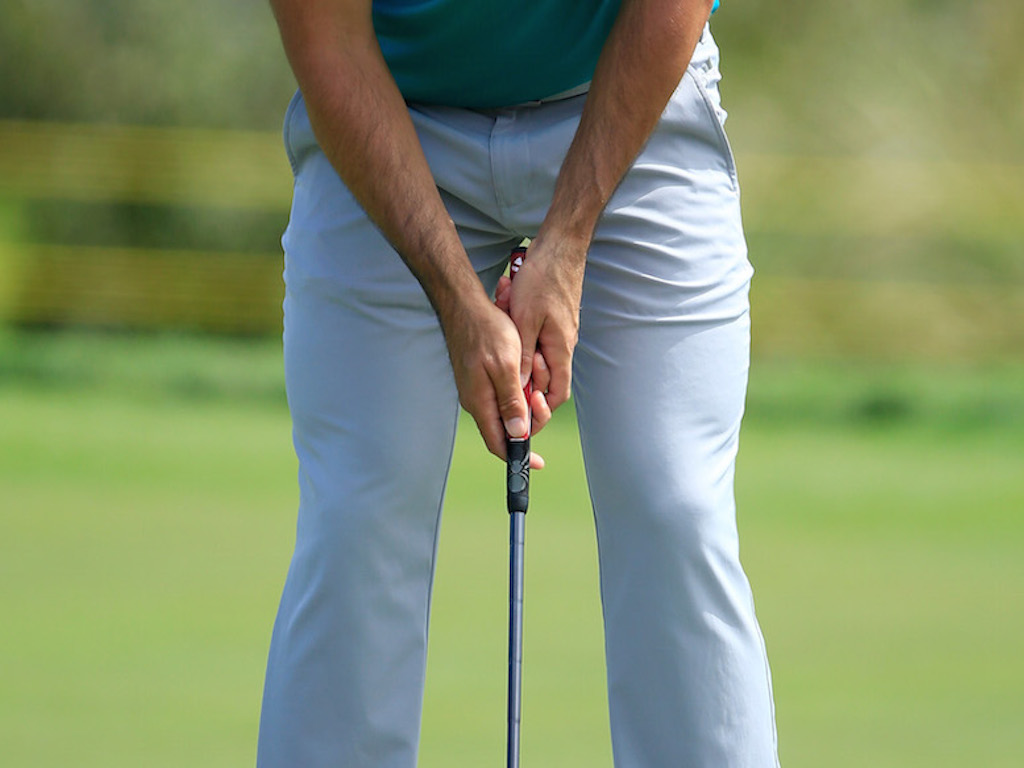
The other piece of the puzzle came in a small book I came across. In “How To Make Every Putt”, Dr. Joseph Parent advocates practicing your putting like you do everything else. Work on your fundamentals, where a hole is not even in the picture. Approach learning how to make solid, sound putting strokes like you do making solid, sound full swings.
So, way back when, I put these two together, I took my 100-ball bucket to the practice green one afternoon and hit about 500 putts. Various distances, no target . . . just making good solid strokes, evaluating and correcting, until I felt my routine and technique were gelling to something I could count on. It was as much fun as going to the range, to be honest. A concentrated practice session that was totally focused on the process, not the outcome.
Then I took that same drill to the practice green before a tournament round. I put down six balls and putted them different distances, but never to one of the holes on the green. Just practicing my technique, rhythm and tempo. Then I finished my putting warm up by making about 10-12 putts of not more than 2 feet. I wanted fresh feedback of the ball going into the hole.
I’m going to revisit this drill for a while to see if I can’t get my putting back to where I’m proud of it, and where it contributes positively to my rounds. Sometimes you just have to remember what you know.








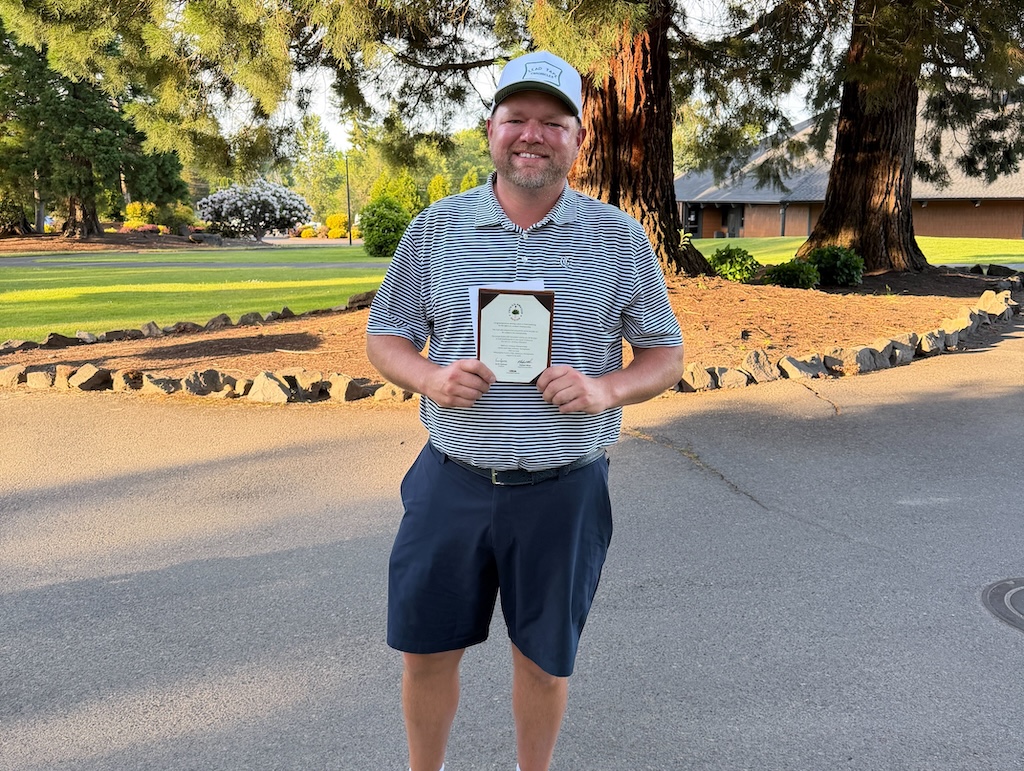
This past Monday, I played in the U.S. Amateur local qualifier at Rock Creek Country Club in Portland, Oregon. A full tee sheet from 7:30 a.m. to 1:55 p.m., the top 11 scores would make it to the U.S. Amateur final qualifying.
I teed off at 10:48 a.m.. With the 7:30 am tee time, you can get a feel for the leaders’ pace, and they were off and running on the challenging setup at Rock Creek.
View this post on Instagram
Getting to the highlight of the round on the par five 17th, a drive up the left side and 212 yards left to the front hole location. I took out a 5-iron with plans of middle of the green. The ball ended up 8 feet left of the hole, pin high. A slight downhill putt dropped in for an eagle 3 on the 17th. With the cut line looking to be anywhere from -2 to even par. This was the boost I had been waiting for all day.
With making par from the trees on 18, it was time to wait for a potential playoff with a posted score of one under par 71.
Three hours later, it was playoff time. 8 players for 6 spots. I made par on the playoff hole, which was good enough to advance to the U.S. Amateur final qualifying in July. USGA qualifiers sure deliver on all of the emotions in golf!
Club Junkie
Building my 2026 gamer WITB: Ranking the contenders and new putter projects – Club Junkie Podcast

The annual What’s In The Bag build is underway, and on this episode of Club Junkie, Brian breaks down the clubs currently leading the race for a spot in his 2026 gamer setup. From drivers and fairway woods to irons, wedges, and shafts, he ranks the equipment that’s performing best and explains what’s separating the front runners from the rest of the field.
Brian also heads into the workshop to discuss several putter projects currently on the bench. From head options and shaft choices to build ideas and testing plans, he shares what he’s working on and which putters could become serious contenders for the bag this season.
If you’re a gear junkie who loves equipment testing, club building, and the never-ending pursuit of the perfect setup, this episode is for you.
Follow Club Junkie:
Instagram: @clubjunkiepod
TikTok: @clubjunkiepod
Threads: @clubjunkiepod
X: @ClubJunkiePod
Club Junkie
Tour Edge Exotics mini driver review + TaylorMade Spider ZT Max first look – Club Junkie

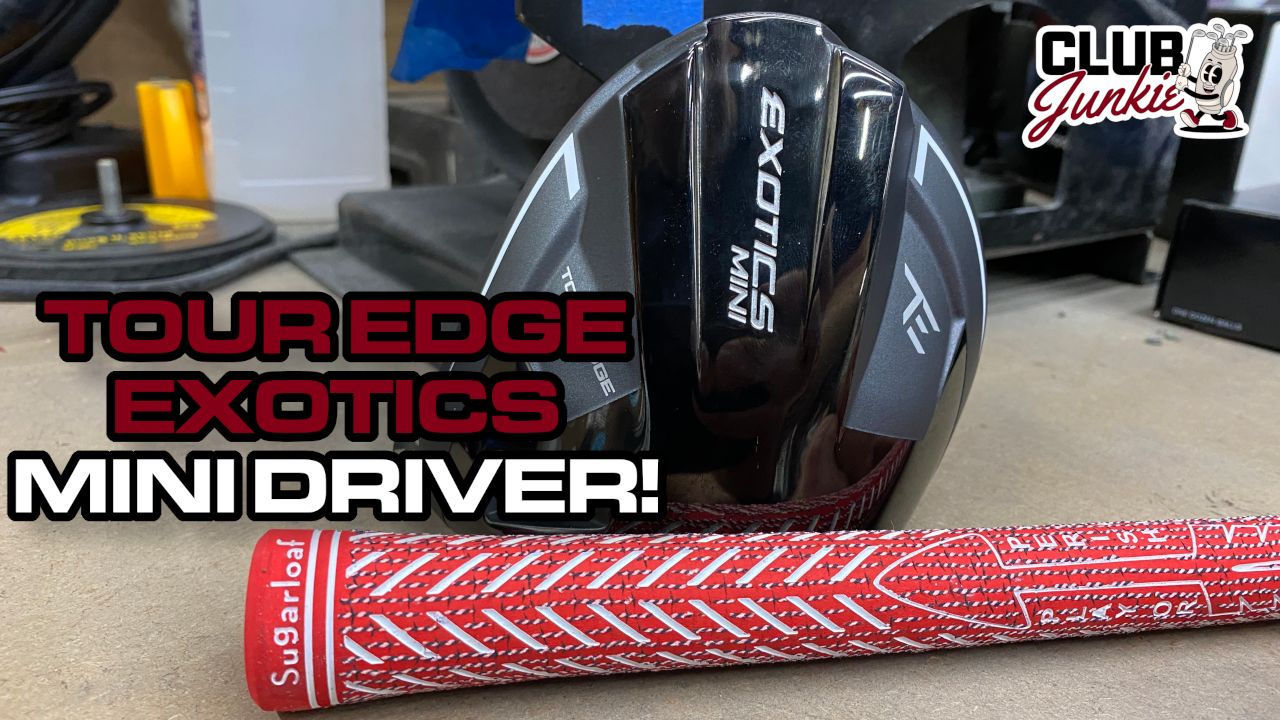
On this episode of Club Junkie, I put the new Tour Edge Exotics Mini Driver to the test and break down the performance, forgiveness, distance, and where it fits compared to a traditional driver or strong fairway wood. If you have been curious about adding a mini driver to the bag, this one is worth a look.
I also dive into the new TaylorMade Spider ZT Max putter that was recently spotted and discuss the growing zero torque putter trend. Plus, there is a closer look at the new Project X Titan Yellow shaft showing up on the PGA Tour and what makes it different from other profiles currently out there.

Justin Rose WITB 2026 (April): Full WITB breakdown with new McLaren irons

What’s the story behind Webb Simpson’s custom-stamped irons?

Memorial Tournament Tour Report: Rory McIlroy, Cameron Young switch up drivers, and more

Cadillac Championship Tour Report: Spieth’s sizable changes, McLaren Golf launches, and more

Russell Henley’s winning WITB: 2026 Charles Schwab Challenge

Kristoffer Reitan’s winning WITB: 2026 Truist Championship

Aaron Rai’s winning WITB: 2026 PGA Championship

J.T. Poston’s winning WITB: 2026 Memorial Tournament

Best irons 2026: Best irons overall, most forgiving irons, and more

Cameron Young’s winning WITB: 2026 Cadillac Championship


Bud Cauley WITB 2026 (June)
Bud Cauley had >14 clubs in his bag when photographed prior to the Memorial Tournament. Driver: Titleist GTS2 (8 degrees) Shaft: Fujikura...


Hannah Green WITB 2026 (June)
Driver: Titleist GTS3 (10 degrees, D4 SureFit setting) Shaft: Mitsubishi Chemical Diamana RB 53 S 3-wood: Titleist GT3 (15 degrees,...


Asterisk Talley WITB 2026 (June)
Driver: TaylorMade Qi4D (9 degrees) Shaft: Fujikura Ventus Blue 6 S 3-wood: TaylorMade Qi4D (16.5 degrees) Shaft: Fujikura Ventus Blue...

Brianna Do WITB 2026 (June)
Driver: Callaway Quantum Triple Diamond (9 degrees) Shaft: KBS PGW 3-wood: Callaway Elyte Titanium (15 degrees) Shaft: KBS PGW 5-wood:...
-
 Equipment6 days ago
Memorial Tournament Tour Report: Rory McIlroy, Cameron Young switch up drivers, and more
-
 News1 week ago
Russell Henley’s winning WITB: 2026 Charles Schwab Challenge
-
 Whats in the Bag3 days ago
J.T. Poston’s winning WITB: 2026 Memorial Tournament
-
 Equipment3 days ago
Best irons 2026: Best irons overall, most forgiving irons, and more
-

 Equipment1 week ago
Details on Jason Day’s latest prototype Avoda iron setup
-
 Equipment3 weeks ago
CJ Cup Byron Nelson Tour Report: Koepka and Kim’s newest putters finally get hot
-

 News2 weeks ago
Charles Schwab Challenge Tour Report: MacIntyre, Åberg and Spaun all switch putters, TaylorMade launches new Spider
-
 Equipment2 weeks ago
Details on J.J. Spaun’s surprise putter switch


Acemandrake
Jan 28, 2020 at 8:29 pm
Relax and have fun with it.
Practice whenever possible. A little goes a long way.
G
Jan 28, 2020 at 3:30 pm
Brad Faxon was always a proponent of not hitting to holes when practicing and before rounds would just knock one ball around the green, not aiming at anything. I’ve did it many times and it definitely helps. You really start to hit your putts – and you stop doing a putting stroke, which really messes you up.
Shallowface
Jan 28, 2020 at 12:59 pm
Terry, I think your approach to putting practice is sound. All one should be trying to do in practice is to hit solid square putts out of the middle of the clubface. Anything more is grooving success on that particular practice green, and will be irrelevant going forward. Even on that very course, as we all know one of the unwritten rules of the game is that the practice green at any given course will be nothing like the greens on the course.
Re: the yips. All I can offer is my experience with them. I had them something awful both chipping and putting. I saw Michael Breed give a lesson on TV to a Big Break contestant who was so bad he used a long putter from up to 30 yards off the green as long as he was in the fairway. This player’s problem turned out to be that he had his eyes aligned to the right of his target line at address, which gave him a distorted view of trying to deliver the club to the ball. Once he corrected his eye alignment, his yips disappeared. I am happy to say mine did as well, so if anyone is afflicted and nothing has worked, check your eye alignment.
the dude
Jan 28, 2020 at 10:20 am
uh….so how did your tournament round go??….you seemed to have left out the “ending” to your story..(albeit a short one)
also, whats your handicap? Do you plan on performing a “study” on your findings?…i’m curious. You live in Texas…so there’s no excuse to not begin it now (and share with us) 🙂