
Opinion & Analysis
Golf in Korea, Gangnam Style


Greetings from South Korea, a small country in terms of landmass but large in its unbridled enthusiasm for the game of golf.
Koreans’ love for the game is evident in the fact that six of the current top 10 players on the Rolex Women’s World Ranking (including the top two) are Korean born players, and Y.E. Yang remains the only Asian player to win a major championship. And we all know who he had to stare down over 18 excruciating holes…
Not only are Koreans obsessed about playing golf, but the numbers also show that we like to buy things. Lots of golf things.
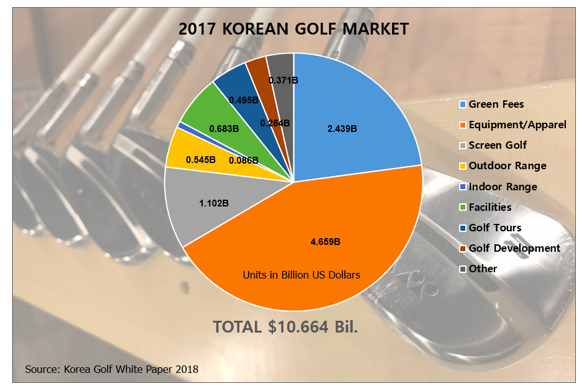
For example, despite having a little over 3 million active golfers (less than 6% of the country’s population), Korea is the third-largest golf consumer market in the world, only after the USA and Japan. It means we spend more on golf and golf-related things than all of Europe combined.
What’s more surprising is that golf hasn’t even been around for very long in Korea. It was said to be first introduced in 1897 when, to pass the time, a group of Englishmen employed by Korea’s Maritime Affairs and Tourism Organization built a makeshift six-hole course next to the Korean Customs Office.
But until Se-ri Pak’s win at the 1996 U.S. Women’s Open almost a hundred years later, most Koreans had no time in their lives for what they considered a hobby for the rich and the powerful elite.

So just how did South Korea go from a disinterested third party observer to a golf world-superpower in a single generation? How is it that its golfing population is actually on the rise while those in the U.S., Japan, and Europe are declining?
Rise of the Machines
With the ever-increasing number of video games and mobile phones, golf faces an uphill battle in getting youngsters away from the tiny screens and onto a golf course. Korea is no exception to the digital peril.
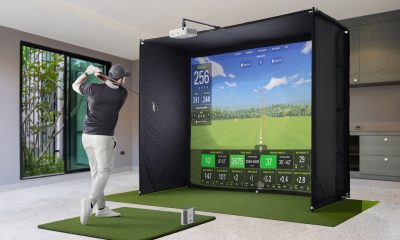
But in Korea, another type of digital revolution has also been responsible for growing the game of golf among people in their 20s and 30s, and even in their 50s. This growth in the unlikely age groups is credited to the burgeoning golf simulation game generally referred to here as “screen golf.”

Many of you have probably heard about golf simulation systems or have even played a few rounds on them. There are a good variety of systems now available in the U.S., and most do a decent job of “simulating” playing golf by calculating ball speed, launch angle, rate of spin and direction.
But to make a long story short, the current Korean golf industry owes a lot to the rise of the Screen Golf culture, which was first introduced in the late 1990s. As I said earlier, not only was golf expensive back then (still is!), but access to golf courses was also extremely limited.
Although screen golf didn’t quite catch on until about 2005, golfers and non-golfers alike gradually realized that it was an acceptable substitute for the real thing, especially in bad weather and during winter months.

Also, it was easy to access and cheap. You didn’t have golf clubs or shoes? No problem. The rental fee is even included with the modest “green fee” of about $15-$25 per person.
Overall, this new way of golfing allowed more people to experience this great game. Soon, people who were curious but could not readily access golf were eagerly lining up to see what the big deal was.
Today, a screen golf facility be found practically on every city block and many are open 24/7. You or your foursome can enjoy a competitive round or leisurely practice in a private room with hundreds of virtual courses from all over the world.
With millions of virtual rounds being played across the country each week, it was only a matter of time before those who experienced the game first-hand were motivated to further invest in their own clubs and venture onto the golf course.

What began as a means of practice in foul weather and largely derided by serious golfers, screen golf is now firmly rooted as an integral part of the Korean golf culture.
Some simulation systems even utilize an AI-assisted voice recognition software as digital caddies, while others analyze your swing or rank your skill level alongside millions of other golfers across the country and keep track of all data.

The popularity of screen golf has also lead to the creation of its own television channel, along with professional men’s and women’s tour participating in weekly tournaments for hefty prize money and sponsors.
Best of all, it proved that one is never too old to learn the game and that golf can be enjoyed by almost everyone, as it was always meant to be.
Be sure to check out the videos below to see just what the big hubbub is all about.









This past Monday, I played in the U.S. Amateur local qualifier at Rock Creek Country Club in Portland, Oregon. A full tee sheet from 7:30 a.m. to 1:55 p.m., the top 11 scores would make it to the U.S. Amateur final qualifying.
I teed off at 10:48 a.m.. With the 7:30 am tee time, you can get a feel for the leaders’ pace, and they were off and running on the challenging setup at Rock Creek.
View this post on Instagram
Getting to the highlight of the round on the par five 17th, a drive up the left side and 212 yards left to the front hole location. I took out a 5-iron with plans of middle of the green. The ball ended up 8 feet left of the hole, pin high. A slight downhill putt dropped in for an eagle 3 on the 17th. With the cut line looking to be anywhere from -2 to even par. This was the boost I had been waiting for all day.
With making par from the trees on 18, it was time to wait for a potential playoff with a posted score of one under par 71.
Three hours later, it was playoff time. 8 players for 6 spots. I made par on the playoff hole, which was good enough to advance to the U.S. Amateur final qualifying in July. USGA qualifiers sure deliver on all of the emotions in golf!
Club Junkie
Building my 2026 gamer WITB: Ranking the contenders and new putter projects – Club Junkie Podcast


The annual What’s In The Bag build is underway, and on this episode of Club Junkie, Brian breaks down the clubs currently leading the race for a spot in his 2026 gamer setup. From drivers and fairway woods to irons, wedges, and shafts, he ranks the equipment that’s performing best and explains what’s separating the front runners from the rest of the field.
Brian also heads into the workshop to discuss several putter projects currently on the bench. From head options and shaft choices to build ideas and testing plans, he shares what he’s working on and which putters could become serious contenders for the bag this season.
If you’re a gear junkie who loves equipment testing, club building, and the never-ending pursuit of the perfect setup, this episode is for you.
Follow Club Junkie:
Instagram: @clubjunkiepod
TikTok: @clubjunkiepod
Threads: @clubjunkiepod
X: @ClubJunkiePod
Club Junkie
Tour Edge Exotics mini driver review + TaylorMade Spider ZT Max first look – Club Junkie


On this episode of Club Junkie, I put the new Tour Edge Exotics Mini Driver to the test and break down the performance, forgiveness, distance, and where it fits compared to a traditional driver or strong fairway wood. If you have been curious about adding a mini driver to the bag, this one is worth a look.
I also dive into the new TaylorMade Spider ZT Max putter that was recently spotted and discuss the growing zero torque putter trend. Plus, there is a closer look at the new Project X Titan Yellow shaft showing up on the PGA Tour and what makes it different from other profiles currently out there.

Justin Rose WITB 2026 (April): Full WITB breakdown with new McLaren irons

What’s the story behind Webb Simpson’s custom-stamped irons?

Memorial Tournament Tour Report: Rory McIlroy, Cameron Young switch up drivers, and more

Cadillac Championship Tour Report: Spieth’s sizable changes, McLaren Golf launches, and more

Russell Henley’s winning WITB: 2026 Charles Schwab Challenge

Kristoffer Reitan’s winning WITB: 2026 Truist Championship

J.T. Poston’s winning WITB: 2026 Memorial Tournament

Best irons 2026: Best irons overall, most forgiving irons, and more

Aaron Rai’s winning WITB: 2026 PGA Championship

Cameron Young’s winning WITB: 2026 Cadillac Championship


Bud Cauley WITB 2026 (June)
Bud Cauley had >14 clubs in his bag when photographed prior to the Memorial Tournament. Driver: Titleist GTS2 (8 degrees) Shaft: Fujikura...


Hannah Green WITB 2026 (June)
Driver: Titleist GTS3 (10 degrees, D4 SureFit setting) Shaft: Mitsubishi Chemical Diamana RB 53 S 3-wood: Titleist GT3 (15 degrees,...


Asterisk Talley WITB 2026 (June)
Driver: TaylorMade Qi4D (9 degrees) Shaft: Fujikura Ventus Blue 6 S 3-wood: TaylorMade Qi4D (16.5 degrees) Shaft: Fujikura Ventus Blue...


Brianna Do WITB 2026 (June)
Driver: Callaway Quantum Triple Diamond (9 degrees) Shaft: KBS PGW 3-wood: Callaway Elyte Titanium (15 degrees) Shaft: KBS PGW 5-wood:...
-
 Equipment6 days ago
Memorial Tournament Tour Report: Rory McIlroy, Cameron Young switch up drivers, and more
-
 News1 week ago
Russell Henley’s winning WITB: 2026 Charles Schwab Challenge
-
 Whats in the Bag3 days ago
J.T. Poston’s winning WITB: 2026 Memorial Tournament
-
 Equipment3 days ago
Best irons 2026: Best irons overall, most forgiving irons, and more
-

 Equipment1 week ago
Details on Jason Day’s latest prototype Avoda iron setup
-
 Equipment3 weeks ago
CJ Cup Byron Nelson Tour Report: Koepka and Kim’s newest putters finally get hot
-

 News2 weeks ago
Charles Schwab Challenge Tour Report: MacIntyre, Åberg and Spaun all switch putters, TaylorMade launches new Spider
-

 Equipment2 weeks ago
Details on J.J. Spaun’s surprise putter switch


Pingback: Seoul-ful Swings: Korea’s obsession with night golf – GolfWRX
Pingback: East vs. West: The major differences between golfers in the U.S. and Korea – GolfWRX
Josh
Jan 20, 2020 at 8:45 am
Ummm, yah. Pretty sure Y.E. isn’t the only Asian born player to win a major. You even wrote about Se-ri Pak winning the U.S. Open in ‘96 a few paragraphs later. I know you meant to write “male Asian player” but come on. Not expecting perfect journalism on this site but if you’re posting an article here, maybe read it over a couple times? Just because spell check and grammar check don’t underline anything, doesn’t mean it’s factually accurate.
Jimmy
Jan 22, 2020 at 1:30 pm
Thanks for pointing it out, Josh. Glad you caught on to what was intended despite the missing word.
Shallowbutdeadly
Jan 19, 2020 at 11:11 pm
Screen Golf in Korea blows ours away! We need to up our game in North America, winters are long here.