
Opinion & Analysis
The Wedge Guy: Do you know why you miss short?

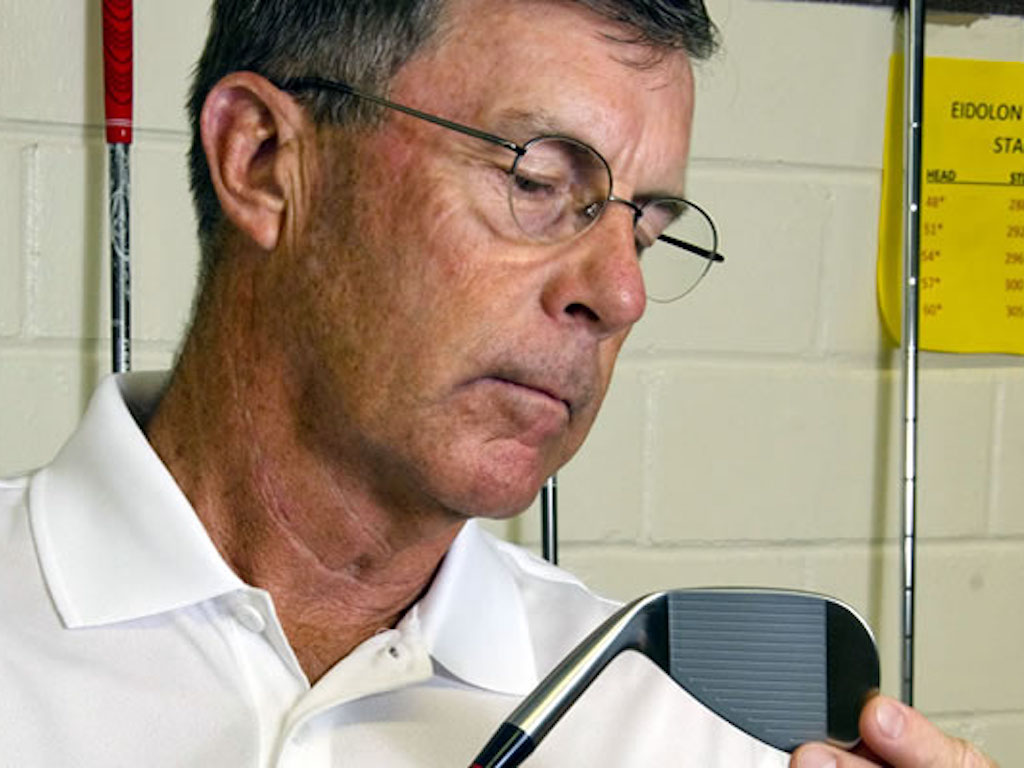
One of the facts revealed from our recent GolfWRX/Wedge Guy survey is that your wedge shot misses tend to end up short five times more than they do long. This really wasn’t surprising to me, in that every one of my prior research projects into golfers and their wedge play for the past 20-plus years has revealed the exact same thing.
The good news is that it’s not your fault!
That’s right, the fact is that all “tour-style” wedges have a very volatile smash factor as impact is moved around the face, especially on those high face impacts we all know. You feel it as soon as you make contact…the ball is hit high on the face or toward the toe and before you even look up you know it’s going to be short of the flag. Sometimes woefully short, ending up in the bunker, water or short of the green.
I know this, because for years I have put market-leading wedges on Iron Byron with the most respected independent research facility in the game. In all these tests, the operator has complete control over all swing variables – clubhead speed, angle of approach, shaft forward lean at impact, and point of impact on the face. The robot doesn’t miss, and the launch monitors don’t lie.
What I’ve learned from all this testing over the past 20-plus years is that “tour-style” wedges are much less forgiving than even the most traditional muscle-back blade 9-iron. And that these wedges really haven’t changed much in their impact/smash factor volatility in decades.
Shots hit low on the face always fly lower and go a slight bit longer, and have much more spin. We’ve all heard the old adage, “thin to win”, right? But those hit even 1/2 inch higher than the optimum “sweet spot” will launch 3-5 degrees higher, lose up to 60% of their spin and 15-20% of the smash factor. So what does that mean to you?
A miss of only one-half inch high in the face on a 90-yard wedge shot can cost you up to fifty feet or more in carry distance and 2-3,000 rpms in spin. [NOTE: I’ve always thought that was unacceptable, so my entire wedge design career has been spent making the top half of the blade thicker and thicker, more than any other wedges from any other company.]
What is most important to understand is that elite tour players–with their extraordinary skills and talents honed by thousands of hours of practice–actually use this smash factor volatility to their advantage. One of the ways they hit all these remarkable shots with their wedges is that they intentionally hit the ball a little higher or lower on the clubface, or maybe a bit out toward the toe or heel, in order to alter the launch angle, energy transfer and/or spin. Trust me, guys, these top-tier professionals have all the shots and are borderline magical on what they do around the greens. The very best of us recreational players are not even close.
Also, understand that they play more closely-cropped fairways than we do, so it is much easier for them to routinely make contact low on the face, where launch, distance and spin are all maximized.
The rest of us, however, have not spent countless hours perfecting our wedge contact to that degree. We play fairways that are not cut nearly as close so the ball sits up a bit higher, and we might even bump the ball to give ourselves a preferred lie (yes, recreational golfers are not nearly as committed to “play it as it lies” as you might think). As a result, we ordinarily make contact with our best wedge shots 2-3 grooves higher than the typical tour professional. And we miss that perfect sweet spot much more often than they do.
That said, nearly every week, you can hear a television announcer go in on a close up of a wedge shot that came up short and comment, “You can see he made contact a bit high on the face there,” or something similar.
So, what can you do about this? Well, short of spending thousands of hours of practice, you can do a couple of things that might help.
One, on every wedge shot you face from full swing to short shots around the greens, focus on the leading edge of the ball–the side toward the flag. This will help you sharpen your contact and be more likely to make impact lower on the face to improve launch angle, distance and spin. Of course, that doesn’t apply to bunker shots or other flop shots where you are trying for a higher launch and softer landing.
Secondly, I strongly suggest you experiment hitting shorter wedges shots with a stronger loft, say your 54 or 56 instead of your 58 or 60. The simple geometry of wedges is that the higher the loft, the more likely you are to make contact higher on the face than what is “perfect”. My bet is that you will be surprised that you will not necessarily lose spin by “lofting down” on your less-than-full wedge shots, and you might even get more.
Of course, you can only do so much to counter the effect of the club design itself.



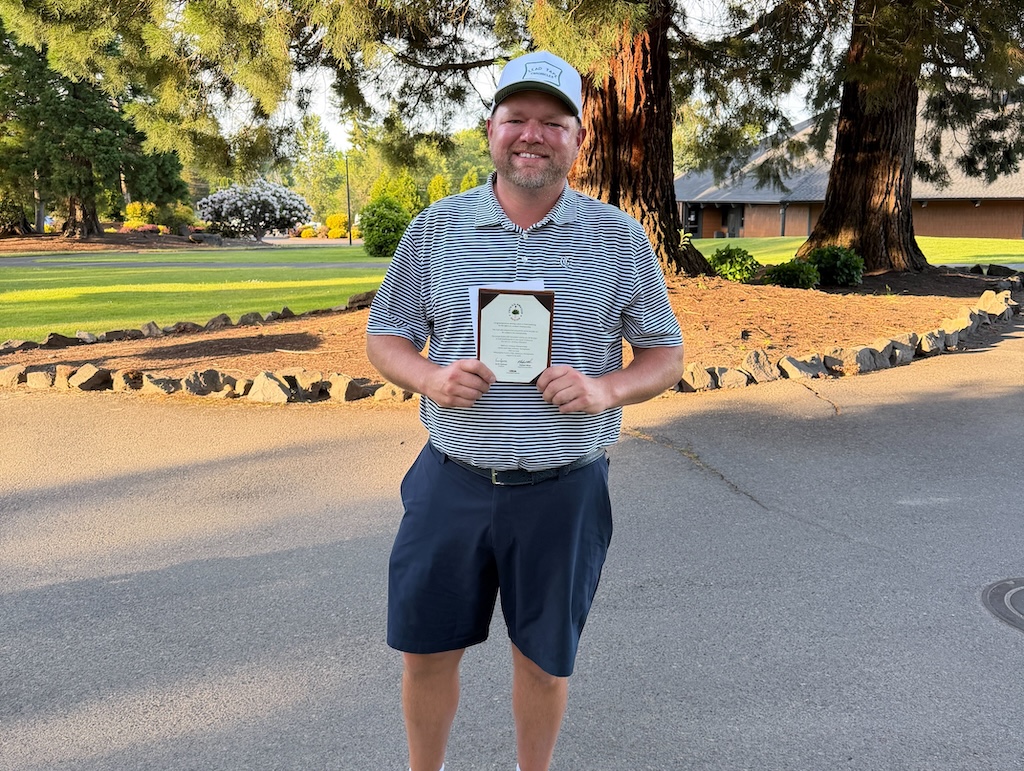
This past Monday, I played in the U.S. Amateur local qualifier at Rock Creek Country Club in Portland, Oregon. A full tee sheet from 7:30 a.m. to 1:55 p.m., the top 11 scores would make it to the U.S. Amateur final qualifying.
I teed off at 10:48 a.m.. With the 7:30 am tee time, you can get a feel for the leaders’ pace, and they were off and running on the challenging setup at Rock Creek.
View this post on Instagram
Getting to the highlight of the round on the par five 17th, a drive up the left side and 212 yards left to the front hole location. I took out a 5-iron with plans of middle of the green. The ball ended up 8 feet left of the hole, pin high. A slight downhill putt dropped in for an eagle 3 on the 17th. With the cut line looking to be anywhere from -2 to even par. This was the boost I had been waiting for all day.
With making par from the trees on 18, it was time to wait for a potential playoff with a posted score of one under par 71.
Three hours later, it was playoff time. 8 players for 6 spots. I made par on the playoff hole, which was good enough to advance to the U.S. Amateur final qualifying in July. USGA qualifiers sure deliver on all of the emotions in golf!
Club Junkie
Building my 2026 gamer WITB: Ranking the contenders and new putter projects – Club Junkie Podcast

The annual What’s In The Bag build is underway, and on this episode of Club Junkie, Brian breaks down the clubs currently leading the race for a spot in his 2026 gamer setup. From drivers and fairway woods to irons, wedges, and shafts, he ranks the equipment that’s performing best and explains what’s separating the front runners from the rest of the field.
Brian also heads into the workshop to discuss several putter projects currently on the bench. From head options and shaft choices to build ideas and testing plans, he shares what he’s working on and which putters could become serious contenders for the bag this season.
If you’re a gear junkie who loves equipment testing, club building, and the never-ending pursuit of the perfect setup, this episode is for you.
Follow Club Junkie:
Instagram: @clubjunkiepod
TikTok: @clubjunkiepod
Threads: @clubjunkiepod
X: @ClubJunkiePod
Club Junkie
Tour Edge Exotics mini driver review + TaylorMade Spider ZT Max first look – Club Junkie

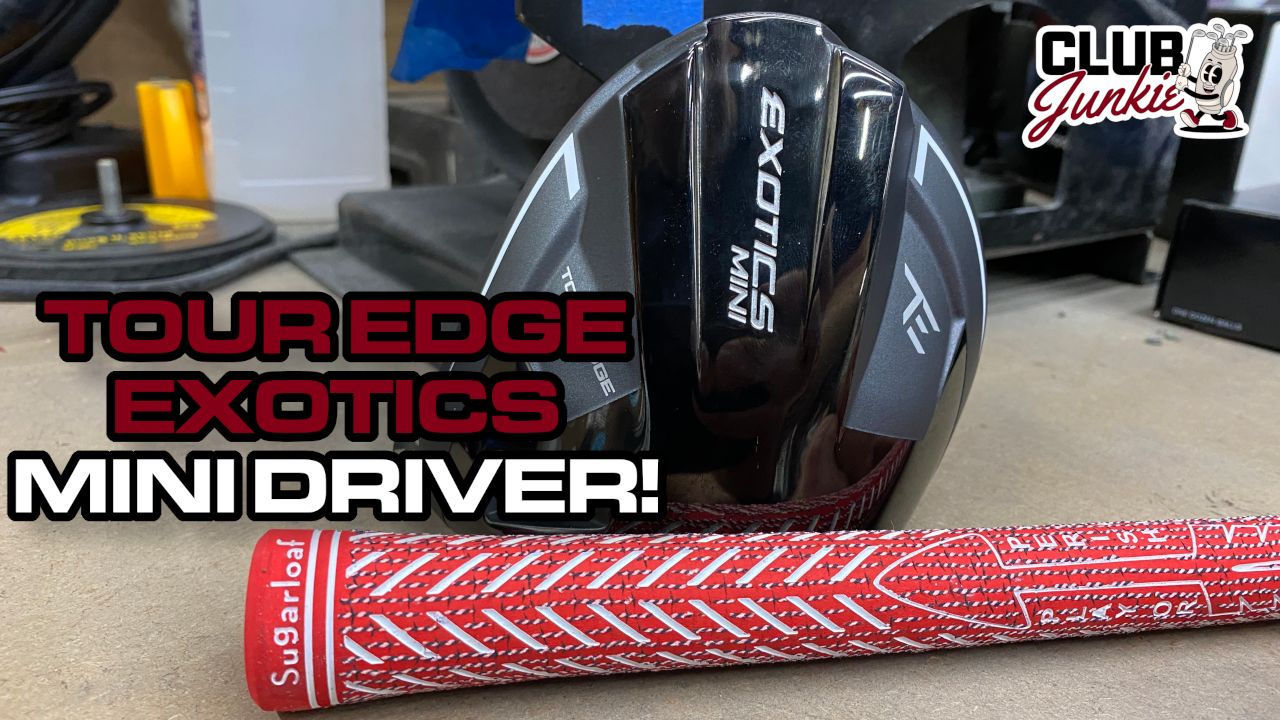
On this episode of Club Junkie, I put the new Tour Edge Exotics Mini Driver to the test and break down the performance, forgiveness, distance, and where it fits compared to a traditional driver or strong fairway wood. If you have been curious about adding a mini driver to the bag, this one is worth a look.
I also dive into the new TaylorMade Spider ZT Max putter that was recently spotted and discuss the growing zero torque putter trend. Plus, there is a closer look at the new Project X Titan Yellow shaft showing up on the PGA Tour and what makes it different from other profiles currently out there.

Justin Rose WITB 2026 (April): Full WITB breakdown with new McLaren irons

What’s the story behind Webb Simpson’s custom-stamped irons?

Memorial Tournament Tour Report: Rory McIlroy, Cameron Young switch up drivers, and more

Cadillac Championship Tour Report: Spieth’s sizable changes, McLaren Golf launches, and more

Russell Henley’s winning WITB: 2026 Charles Schwab Challenge

Kristoffer Reitan’s winning WITB: 2026 Truist Championship

J.T. Poston’s winning WITB: 2026 Memorial Tournament

Best irons 2026: Best irons overall, most forgiving irons, and more

Aaron Rai’s winning WITB: 2026 PGA Championship

Cameron Young’s winning WITB: 2026 Cadillac Championship


Bud Cauley WITB 2026 (June)
Bud Cauley had >14 clubs in his bag when photographed prior to the Memorial Tournament. Driver: Titleist GTS2 (8 degrees) Shaft: Fujikura...


Hannah Green WITB 2026 (June)
Driver: Titleist GTS3 (10 degrees, D4 SureFit setting) Shaft: Mitsubishi Chemical Diamana RB 53 S 3-wood: Titleist GT3 (15 degrees,...


Asterisk Talley WITB 2026 (June)
Driver: TaylorMade Qi4D (9 degrees) Shaft: Fujikura Ventus Blue 6 S 3-wood: TaylorMade Qi4D (16.5 degrees) Shaft: Fujikura Ventus Blue...

Brianna Do WITB 2026 (June)
Driver: Callaway Quantum Triple Diamond (9 degrees) Shaft: KBS PGW 3-wood: Callaway Elyte Titanium (15 degrees) Shaft: KBS PGW 5-wood:...
-
 Equipment6 days ago
Memorial Tournament Tour Report: Rory McIlroy, Cameron Young switch up drivers, and more
-
 News1 week ago
Russell Henley’s winning WITB: 2026 Charles Schwab Challenge
-
 Whats in the Bag3 days ago
J.T. Poston’s winning WITB: 2026 Memorial Tournament
-
 Equipment3 days ago
Best irons 2026: Best irons overall, most forgiving irons, and more
-

 Equipment1 week ago
Details on Jason Day’s latest prototype Avoda iron setup
-
 Equipment3 weeks ago
CJ Cup Byron Nelson Tour Report: Koepka and Kim’s newest putters finally get hot
-

 News2 weeks ago
Charles Schwab Challenge Tour Report: MacIntyre, Åberg and Spaun all switch putters, TaylorMade launches new Spider
-
 Equipment2 weeks ago
Details on J.J. Spaun’s surprise putter switch


Ty Webb
Oct 24, 2019 at 3:25 pm
I read an article by Vokey once where he talked about bounce being important as well, the higher the bounce the lower on the face ball contact is made typically. I think Rory was who was being discussed. Rory had been playing a Vokey 48.06 bounce but was losing distance because the impact was higher on the face. He went to the 48.10 version and got the proper distance back.
Reid Thompson
Oct 22, 2019 at 10:57 am
This is dead on. Get a gap wedge fit to your iron set. Best thing I ever did.
dave
Oct 9, 2019 at 2:19 pm
Larry, if this is true (and it seems to be consistent with my own experience, at least), what should those of us with less-than-pro ball striking abilities (i.e., 99.9% of us) be looking for in a wedge design? Any recommendations on specific makes and models?
Greg
Oct 8, 2019 at 10:06 pm
Terry, finally! You could have continued two more paragraphs on the advantages of proper ball striking. However, yes thin to win = lower on the face.
ChipNRun
Oct 8, 2019 at 7:28 pm
The Hogan wedges and the Vokeys starting with SM6 have tried to design a correction factor into the heads. The as you move from PW up through LW, you have progressively higher Vertical Center of Gravity to lessen chances of ballooning on high-face hits.
Another factor leading to high-face hits involves hitting wedges out of moderately thick rough or more. The golfer who weight well more than 100 pounds often sinks down do dirt level with his feet. The ball, however, only weighs a few ounces, and likely floats a quarter to half-inch above the dirt in the grass. (The float varies by turf grass; less float in bluegrass) So, this means the golfer is set up with his leading edge to hit about groove 5 or 6 on the face, leading to a lazy floater.
The trick is to choke down on your wedge… this will raise the leading edge and increase chances of a “groove 2” hit.
Deedern
Oct 8, 2019 at 2:50 pm
Interesting that when Koehler restarted Ben Hogan Golf they had the TK wedge that was built in the mold described, more mass higher and behind the full club face.
The other interesting note, as I just watched Lee6 come up woefully short on a chip with a 60, the old guys of yesteryear had it right. Use a club with just enough loft to get the ball onto the green and rolling. Could be anything from a 60* to a five iron. But that seems to be rarely taught. Instead the “simpler” technique is to change your swing and use one club for the majority of pitches and chips. Perhaps simpler from a club selection standpoint but not as effective in most cases.
larrybud
Oct 8, 2019 at 12:52 pm
So can we just throw some lead tape up the face a bit to counteract this?
Shallowface
Oct 8, 2019 at 1:37 pm
You can’t apply enough lead tape to make a measureable difference without making the club so heavy it would be unplayable. A strip or two of lead tape might tweak swingweight but it does next to nothing to alter the center of gravity.
A. Commoner
Oct 8, 2019 at 2:17 pm
How did you arrive at this? It is comedic.
enoughtrumpspam
Oct 9, 2019 at 12:28 pm
lol wut
you’re way off dude.
Ray
Oct 19, 2019 at 3:50 pm
STFU…
Are you kidding me?
LOLOL