
Opinion & Analysis
What the numbers say about one of the most hyped college golf signing classes in history

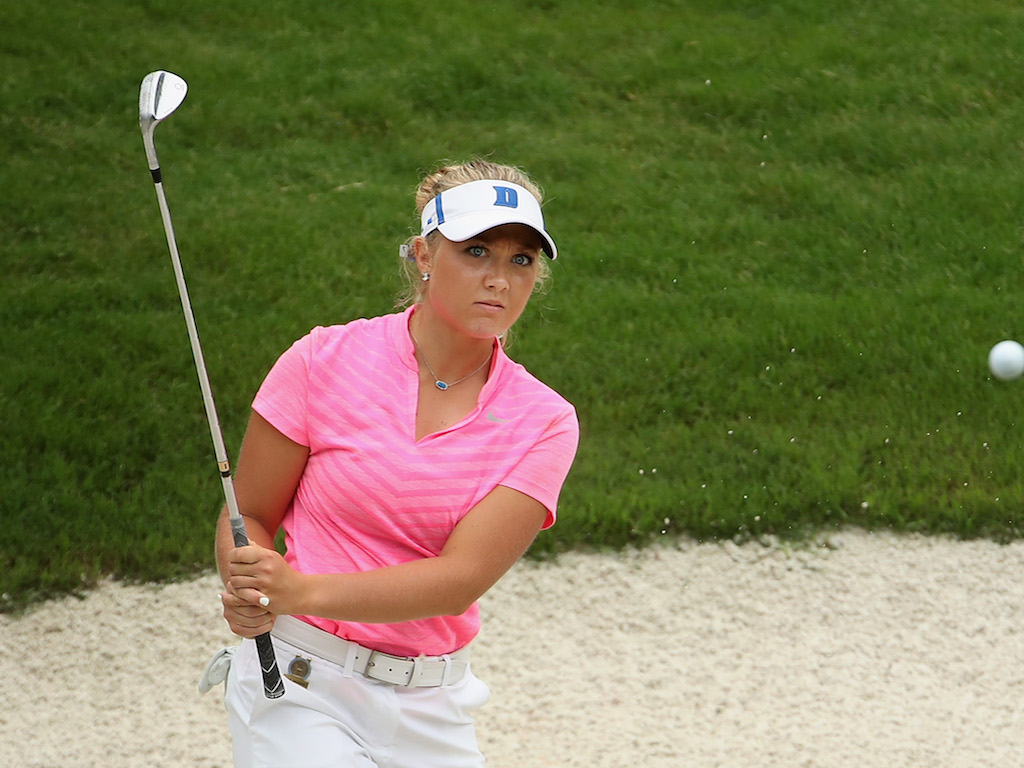
There has been much anticipation for this signing class, and so we thought we would do the numbers and see how they stack up against previous classes and what, if any, trends are there?
Let’s look at the numbers as of Saturday, November 24, and see what the data says. (NJGS = National Junior Golf Scoreboard)
- Average NJGS for Division One Men’s Golf in 2019 early signing was 271 with a scoring differential of .79 compare to an average rank of 262.6 last year.
- Average NJGS for Division One Women’s Golf in 2019 was 152 with a scoring differential of .95. This is significantly better than last year when the average scoring differential was 5.25. Only 7 players who signed had scoring differentials above 5.25.
- top 100 men’s recruits choose mid major programs with BYU and North Texas both landing players in the top 25.
- Men’s major conference schools reload: Florida signs 3 players with an average scoring differential of -3.17 and average rank of 45, Baylor signs 4 with 2 in the top 25, Arizona State signs #9 in NJGS and 141 in WAGR,
- Arkansas signs 2 in the top 35 with an average scoring differential of -3.35.
- In women’s golf, Duke reloads with 2 players in the top 31 with scoring differentials of -6 and -4.19 respectively. Michigan and Notre Dame also nab two within the top 50.
- 10/41 top 100 women’s recruits choose mid major schools with Pepperdine signing two of them.
- Coaches care where you are from; in men’s golf 80% of the players ranked above 400 in their class signed at a school within approximately 400 miles of their house. In women’s golf 82% of Division 1 players ranked above 250 signed within 400 miles of their house.
- Academics matter to Girls: 80% of girls in the top 100 chose a top academic school like Michigan, Pepperdine, Wisconsin, Penn or Yale.
- 17% percent of male recruits who signed where international and 24% percent of women’s recruits where internationals
My major take-aways from the data are
Women’s golf is getting crazy good. Consider that in 1997/98 the winner of Golfstat Cup (best player in college) was Jenny Chausiriporn from Duke with a scoring average of 72.94. This would translate into roughly a scoring differential of one, or the average scoring differential of the average women’s Division One recruit in 2018/19.
The best junior golfers are simply incredible. Erica Shepard of Duke was the highest ranked player to sign. According to NJGS her scoring differential is -6. For boys, the highest ranked player to sign was Ricky Castillo of Florida with a scoring differential of -5.53. This means that these players are statistically 6.95 shots (Erica) and 6.32 (Ricky) shots better per round than the average Division 1 player.
Although the numbers for the average signee for men’s golf is about the same as last year, the data shows that about 30 percent more players signed early. Although I can only speculate, my guess is that this was a result of coaches moving quicker than usually and taking a larger than average class. Part of this might be luck; some schools have a disproportional amount of money some years, but it may also be influenced by the new recruiting and transfer rules.




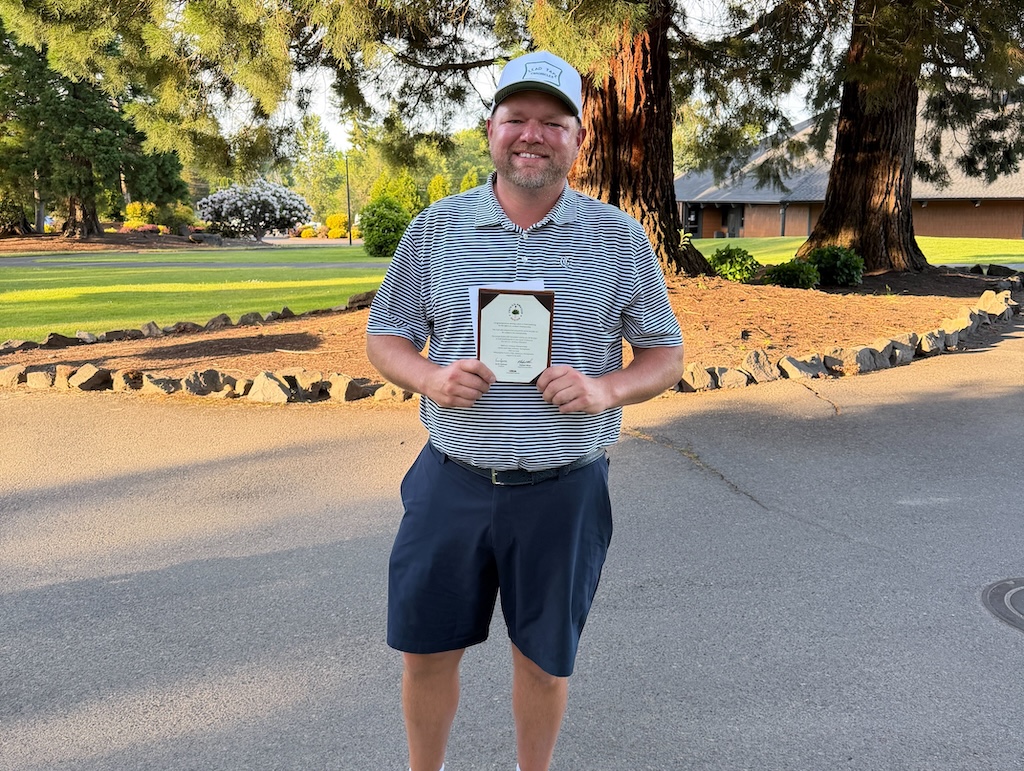
This past Monday, I played in the U.S. Amateur local qualifier at Rock Creek Country Club in Portland, Oregon. A full tee sheet from 7:30 a.m. to 1:55 p.m., the top 11 scores would make it to the U.S. Amateur final qualifying.
I teed off at 10:48 a.m.. With the 7:30 am tee time, you can get a feel for the leaders’ pace, and they were off and running on the challenging setup at Rock Creek.
View this post on Instagram
Getting to the highlight of the round on the par five 17th, a drive up the left side and 212 yards left to the front hole location. I took out a 5-iron with plans of middle of the green. The ball ended up 8 feet left of the hole, pin high. A slight downhill putt dropped in for an eagle 3 on the 17th. With the cut line looking to be anywhere from -2 to even par. This was the boost I had been waiting for all day.
With making par from the trees on 18, it was time to wait for a potential playoff with a posted score of one under par 71.
Three hours later, it was playoff time. 8 players for 6 spots. I made par on the playoff hole, which was good enough to advance to the U.S. Amateur final qualifying in July. USGA qualifiers sure deliver on all of the emotions in golf!
Club Junkie
Building my 2026 gamer WITB: Ranking the contenders and new putter projects – Club Junkie Podcast

The annual What’s In The Bag build is underway, and on this episode of Club Junkie, Brian breaks down the clubs currently leading the race for a spot in his 2026 gamer setup. From drivers and fairway woods to irons, wedges, and shafts, he ranks the equipment that’s performing best and explains what’s separating the front runners from the rest of the field.
Brian also heads into the workshop to discuss several putter projects currently on the bench. From head options and shaft choices to build ideas and testing plans, he shares what he’s working on and which putters could become serious contenders for the bag this season.
If you’re a gear junkie who loves equipment testing, club building, and the never-ending pursuit of the perfect setup, this episode is for you.
Follow Club Junkie:
Instagram: @clubjunkiepod
TikTok: @clubjunkiepod
Threads: @clubjunkiepod
X: @ClubJunkiePod
Club Junkie
Tour Edge Exotics mini driver review + TaylorMade Spider ZT Max first look – Club Junkie

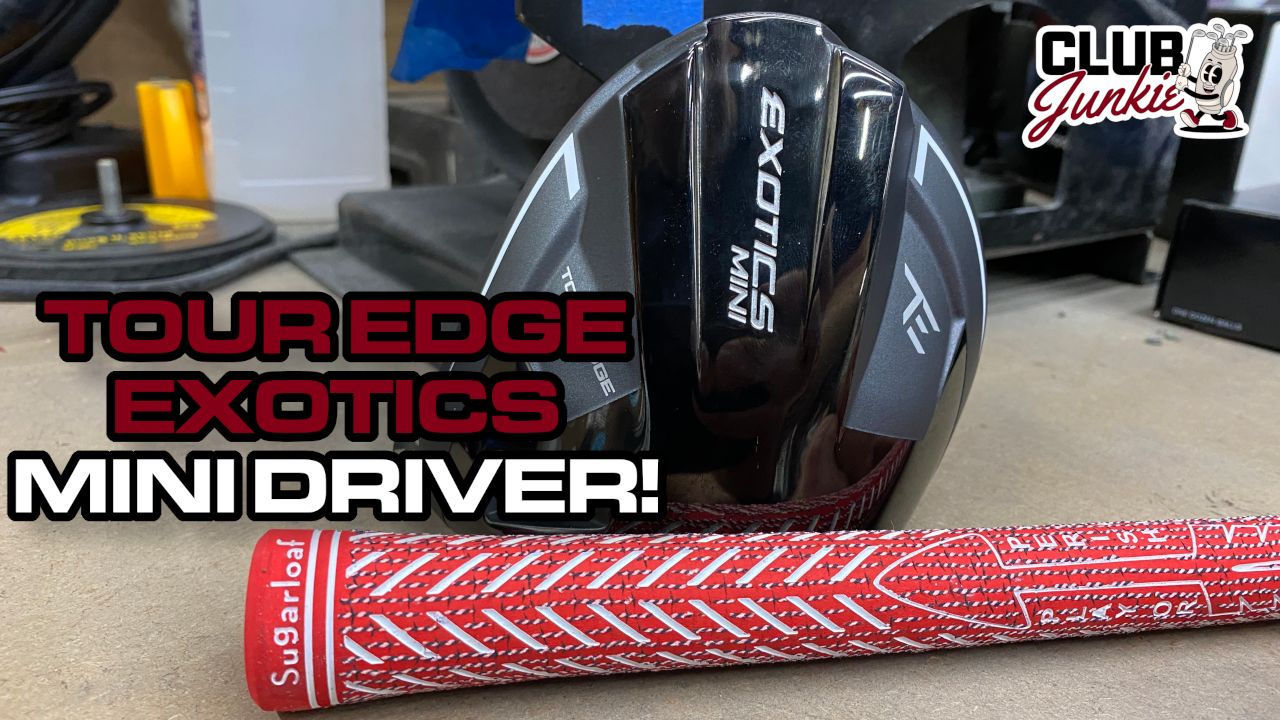
On this episode of Club Junkie, I put the new Tour Edge Exotics Mini Driver to the test and break down the performance, forgiveness, distance, and where it fits compared to a traditional driver or strong fairway wood. If you have been curious about adding a mini driver to the bag, this one is worth a look.
I also dive into the new TaylorMade Spider ZT Max putter that was recently spotted and discuss the growing zero torque putter trend. Plus, there is a closer look at the new Project X Titan Yellow shaft showing up on the PGA Tour and what makes it different from other profiles currently out there.

What’s the story behind Webb Simpson’s custom-stamped irons?

Memorial Tournament Tour Report: Rory McIlroy, Cameron Young switch up drivers, and more

Cadillac Championship Tour Report: Spieth’s sizable changes, McLaren Golf launches, and more

Russell Henley’s winning WITB: 2026 Charles Schwab Challenge

Kristoffer Reitan’s winning WITB: 2026 Truist Championship

Best irons 2026: Best irons overall, most forgiving irons, and more

J.T. Poston’s winning WITB: 2026 Memorial Tournament

Aaron Rai’s winning WITB: 2026 PGA Championship

Cameron Young’s winning WITB: 2026 Cadillac Championship

Details on Jason Day’s latest prototype Avoda iron setup


Christiaan Maas WITB 2026 (June)
Driver: TaylorMade Qi4D LS (8 degrees) Shaft: Fujikura Ventus TR Blue 6 X 3-wood: TaylorMade Qi10 (15 degrees) Shaft: Fujikura Ventus Black...


Ryan Palmer WITB 2026 (June)
Driver: Callaway Quantum Triple Diamond (9 degrees) Shaft: Project X HZRDUS Smoke Blue RDX 60 TX 3-wood: TaylorMade Qi10 (15 degrees) Shaft:...


Bud Cauley WITB 2026 (June)
Bud Cauley had >14 clubs in his bag when photographed prior to the Memorial Tournament. Driver: Titleist GTS2 (8 degrees) Shaft: Fujikura...


Hannah Green WITB 2026 (June)
Driver: Titleist GTS3 (10 degrees, D4 SureFit setting) Shaft: Mitsubishi Chemical Diamana RB 53 S 3-wood: Titleist GT3 (15 degrees,...
-
 Equipment6 days ago
Memorial Tournament Tour Report: Rory McIlroy, Cameron Young switch up drivers, and more
-
 News2 weeks ago
Russell Henley’s winning WITB: 2026 Charles Schwab Challenge
-
 Equipment3 days ago
Best irons 2026: Best irons overall, most forgiving irons, and more
-
 Whats in the Bag4 days ago
J.T. Poston’s winning WITB: 2026 Memorial Tournament
-
 Equipment1 week ago
Details on Jason Day’s latest prototype Avoda iron setup
-
 Equipment3 weeks ago
CJ Cup Byron Nelson Tour Report: Koepka and Kim’s newest putters finally get hot
-

 News2 weeks ago
Charles Schwab Challenge Tour Report: MacIntyre, Åberg and Spaun all switch putters, TaylorMade launches new Spider
-
 Equipment2 weeks ago
Details on J.J. Spaun’s surprise putter switch


Wilson
Dec 3, 2018 at 9:40 pm
One more thought, given the average Div I recruits’ score is around par, by 6 or 7 shots less per round, you mean Erica and Ricky can shoot 66 or 65 pretty much every round? Not even Tiger or Justin Rose or DJ or BK or Rory or Lexi or Lydia Ko can do that.
Please elaborate the stats further, thank you.
Wilson
Dec 3, 2018 at 9:27 pm
On average 6 shots less than Div I average for the top junior girl and boy recruits? Does this stat mean anything meaningful or should we look into the statistical fundamentals with broader perspectives because this stat seems quite unlikely or simply all other Div I players are simply weak?
Joe Weber
Dec 2, 2018 at 1:07 pm
This page (http://www.uwathletics.com/compliance/sa_eligibility_req_1690.pdf) , from the University of Wisconsin , seems to show a lack of academic rigor for UW athletes, as opposed to the academic rigor required of incoming non-athletes.
https://www.admissions.wisc.edu/apply/freshman/requirements.php
Luke Kitzan
Dec 2, 2018 at 3:41 am
Edit your “where/were”
Also, what’s with the 11/41 of the 100 top thing? Super confusing.
Gary Peterson
Dec 1, 2018 at 12:48 pm
Always great information