
Opinion & Analysis
Do longer hitters really earn more money on the PGA Tour?


If you have been hiding in the woods for the past 15 years, let me bring you up to speed: the great debate in golf is over distance. Are players hitting the ball further…and maybe even too far? Are working out and better athletes changing the game? In 2001, Hank Keuhne averaged 321 yards off the tee, compared to 318 yards in 2018 for PGA Tour Leader Rory McIlroy.
One should expect changes in distance between 2001-2006-ish, as players adopted better technology in balls and larger head drivers. But since those changes, what does the data say? Here is a chart with the data for players from 2007-2015, which shows year, average driving distance, the leader on the PGA Tour, their driving distance, and the number of players who averaged over 300 yards.
| Year | PGA Tour avg. driving distance | PGA Tour leader (yards) | Players avg. over 300 yards |
| 2015 | 289.7 | Dustin Johnson (317.7) | 26 |
| 2014 | 288.8 | Bubba Watson (314.3) | 25 |
| 2013 | 287.2 | Luke List (306.8) | 13 |
| 2012 | 289.1 | Bubba Watson (315.5) | 21 |
| 2011 | 290.9 | J.B Holmes (318.4) | 21 |
| 2010 | 287.3 | Robert Garrigus (315.5) | 12 |
| 2009 | 287.3 | Robert Garrigus (312) | 13 |
| 2008 | 287.3 | Bubba Watson (315.1) | 13 |
| 2007 | 288.6 | Bubba Watson (315.2) | 18 |
These numbers suggest that players are not hitting it any further but do not answer the question does distance matter? To answer this question, I looked closer at the numbers to examine the relationship between distance and earnings. When looking at the top 15 longest players over the past 3 years with at least 20 events played, here is the data
| Average Earnings / year (for all 15 players) | $52,000,000 |
| Average earnings per player/year | $3,500,000 |
| Top ten finish on money list | 4.3/15 (29%) |
| Number which maintained their PGA tour card for following year | 13.3/15 (89%) |
| 3 Year Total Earnings | $157,582,450 |
| 3 Year Driving Average | 310.2 yards |
| Average Dollars per yard (longest 15) | $508,002 |
| Average Dollars per yard (each player – longest 15) | $33,866 |
Now, let’s compare the top 15 longest players to the shortest 15 players with a minimum of 20 events
| Average Earnings / year (for all 15 players) | $13,600,000 |
| Average earnings per player/year | $910,000 |
| Top ten finish on money list | 0/15 (0%) |
| Number which maintained their PGA tour card for following year | 6/15 (40%) |
| 3 Year Total Earnings | $41,095,786 |
| 3 Year Driving Average | 278.6 yards |
| Average Earnings / Yard (shortest 15 players) | $147,508 |
| Average Dollars per Yard (each player – shortest 15) | $9,833 |
In this data set the 15 shortest hitters are averaging 278.6yards/drive (over 3 year period 2016-2018), while the 15 longest hitters are averaging 310.2 yards/drive (over 3 year period 2016-2018). This means each yard to the player at the bottom is worth approximately $9,833, while each drive for the top 15 players yields approximately $33,866.
Based on this simple information it tells us a couple things inherently
1) the players who are on the bottom of the list for driving distance have a distinct motivator for getting all areas covered in their coaching profiles, which includes fitness. Money tends to speak loudly and in this case we believe the trend on tour is showing this.
2) Peak physical conditioning for these golfers is a part of the pie that yields these staggering numbers with respect to earnings. Ignoring that piece of the pie is a very big gamble to the bottom line of the players. It is of our opinion that the reason you see less of the buffet line being utilized and more of the Whole Foods consumption, is that health and wellness matter to these players. The proof is in the numbers and in the last 3-5 years those numbers are speaking very loudly.




This past Monday, I played in the U.S. Amateur local qualifier at Rock Creek Country Club in Portland, Oregon. A full tee sheet from 7:30 a.m. to 1:55 p.m., the top 11 scores would make it to the U.S. Amateur final qualifying.
I teed off at 10:48 a.m.. With the 7:30 am tee time, you can get a feel for the leaders’ pace, and they were off and running on the challenging setup at Rock Creek.
View this post on Instagram
Getting to the highlight of the round on the par five 17th, a drive up the left side and 212 yards left to the front hole location. I took out a 5-iron with plans of middle of the green. The ball ended up 8 feet left of the hole, pin high. A slight downhill putt dropped in for an eagle 3 on the 17th. With the cut line looking to be anywhere from -2 to even par. This was the boost I had been waiting for all day.
With making par from the trees on 18, it was time to wait for a potential playoff with a posted score of one under par 71.
Three hours later, it was playoff time. 8 players for 6 spots. I made par on the playoff hole, which was good enough to advance to the U.S. Amateur final qualifying in July. USGA qualifiers sure deliver on all of the emotions in golf!
Club Junkie
Building my 2026 gamer WITB: Ranking the contenders and new putter projects – Club Junkie Podcast

The annual What’s In The Bag build is underway, and on this episode of Club Junkie, Brian breaks down the clubs currently leading the race for a spot in his 2026 gamer setup. From drivers and fairway woods to irons, wedges, and shafts, he ranks the equipment that’s performing best and explains what’s separating the front runners from the rest of the field.
Brian also heads into the workshop to discuss several putter projects currently on the bench. From head options and shaft choices to build ideas and testing plans, he shares what he’s working on and which putters could become serious contenders for the bag this season.
If you’re a gear junkie who loves equipment testing, club building, and the never-ending pursuit of the perfect setup, this episode is for you.
Follow Club Junkie:
Instagram: @clubjunkiepod
TikTok: @clubjunkiepod
Threads: @clubjunkiepod
X: @ClubJunkiePod
Club Junkie
Tour Edge Exotics mini driver review + TaylorMade Spider ZT Max first look – Club Junkie

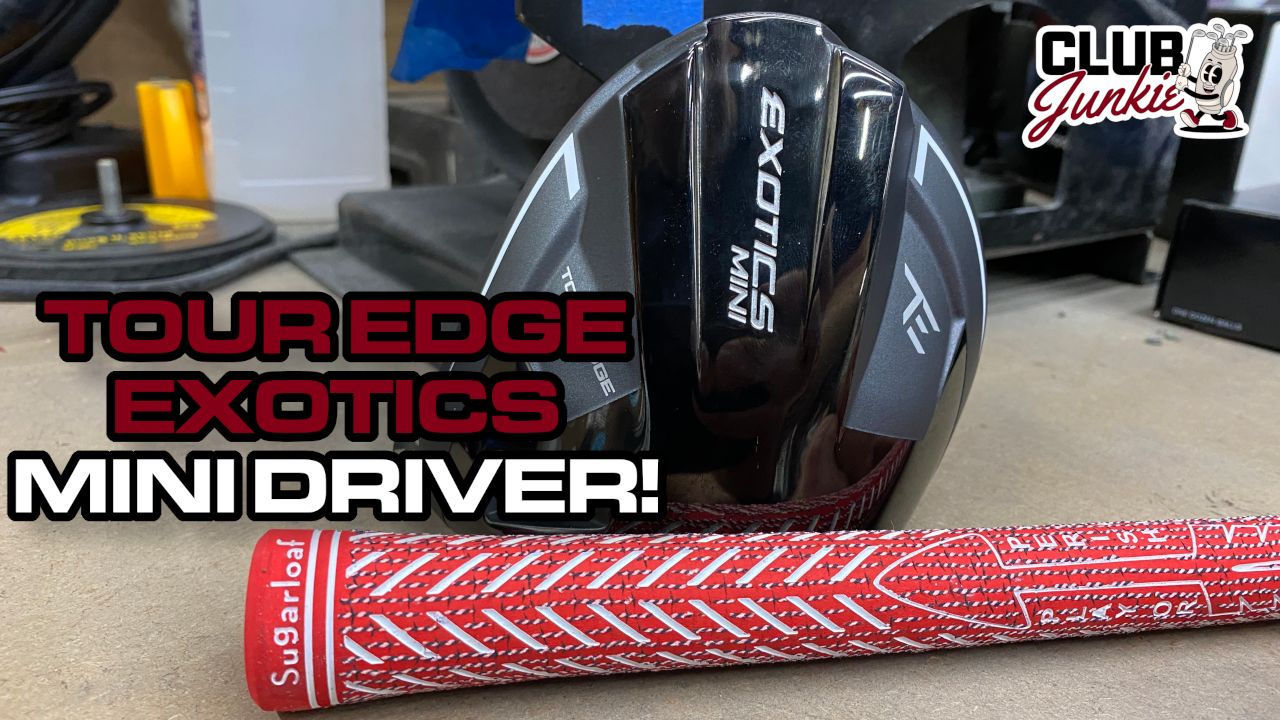
On this episode of Club Junkie, I put the new Tour Edge Exotics Mini Driver to the test and break down the performance, forgiveness, distance, and where it fits compared to a traditional driver or strong fairway wood. If you have been curious about adding a mini driver to the bag, this one is worth a look.
I also dive into the new TaylorMade Spider ZT Max putter that was recently spotted and discuss the growing zero torque putter trend. Plus, there is a closer look at the new Project X Titan Yellow shaft showing up on the PGA Tour and what makes it different from other profiles currently out there.

Justin Rose WITB 2026 (April): Full WITB breakdown with new McLaren irons

What’s the story behind Webb Simpson’s custom-stamped irons?

Memorial Tournament Tour Report: Rory McIlroy, Cameron Young switch up drivers, and more

Cadillac Championship Tour Report: Spieth’s sizable changes, McLaren Golf launches, and more

Russell Henley’s winning WITB: 2026 Charles Schwab Challenge

Kristoffer Reitan’s winning WITB: 2026 Truist Championship

Best irons 2026: Best irons overall, most forgiving irons, and more

J.T. Poston’s winning WITB: 2026 Memorial Tournament

Aaron Rai’s winning WITB: 2026 PGA Championship

Cameron Young’s winning WITB: 2026 Cadillac Championship


Ryan Palmer WITB 2026 (June)
Driver: Callaway Quantum Triple Diamond (9 degrees) Shaft: Project X HZRDUS Smoke Blue RDX 60 TX 3-wood: TaylorMade Qi10 (15 degrees) Shaft:...


Bud Cauley WITB 2026 (June)
Bud Cauley had >14 clubs in his bag when photographed prior to the Memorial Tournament. Driver: Titleist GTS2 (8 degrees) Shaft: Fujikura...


Hannah Green WITB 2026 (June)
Driver: Titleist GTS3 (10 degrees, D4 SureFit setting) Shaft: Mitsubishi Chemical Diamana RB 53 S 3-wood: Titleist GT3 (15 degrees,...


Asterisk Talley WITB 2026 (June)
Driver: TaylorMade Qi4D (9 degrees) Shaft: Fujikura Ventus Blue 6 S 3-wood: TaylorMade Qi4D (16.5 degrees) Shaft: Fujikura Ventus Blue...
-
 Equipment6 days ago
Memorial Tournament Tour Report: Rory McIlroy, Cameron Young switch up drivers, and more
-
 News2 weeks ago
Russell Henley’s winning WITB: 2026 Charles Schwab Challenge
-
 Equipment3 days ago
Best irons 2026: Best irons overall, most forgiving irons, and more
-
 Whats in the Bag4 days ago
J.T. Poston’s winning WITB: 2026 Memorial Tournament
-

 Equipment1 week ago
Details on Jason Day’s latest prototype Avoda iron setup
-
 Equipment3 weeks ago
CJ Cup Byron Nelson Tour Report: Koepka and Kim’s newest putters finally get hot
-

 News2 weeks ago
Charles Schwab Challenge Tour Report: MacIntyre, Åberg and Spaun all switch putters, TaylorMade launches new Spider
-
 Equipment2 weeks ago
Details on J.J. Spaun’s surprise putter switch


Jeff
Dec 4, 2018 at 1:51 am
A better correlation would be to compare the 15 longest hitters to the 15 closest to the tour median. It seems obvious the the 15 shortest are at a disadvantage, but the question is really whether the extra distance is a big advantage over tour average distance.
Gregg
Dec 3, 2018 at 7:47 pm
Distance is king for off course revenue, that OR boyish good looks and killer style. I’ll take distance!
Louie
Dec 3, 2018 at 2:33 pm
Your article is interesting but the conclusions do not necessarily fit the data. From my perspective distance does make a significant difference but course design matters. I would also look at the general stature of today’s golfer. Would be interesting to see how tall and muscular the top 15 are as compared to the lesser group. There are exceptions, like Justin Thomas.
Scrappy
Dec 3, 2018 at 2:31 pm
Totally jumped,from driving distance to fitness, without any correlation. Did you intend to prove a connection between strength or fitness with distance or earnings? Because you totally entered a third variable without any data behind it. Shank
TONEY P
Dec 3, 2018 at 12:55 pm
Longer hitters should make more on average. If a good golfer is hitting short irons and his competition is having to use middle irons then what is the likely result over a period of time. Even longer average golfers have a distinctive average on weekend rounds over their peers. The ability to hit irons into par 5’s and shorter clubs into par3’s give a great advantage over time in scoring, ie money. Now as far as course management , the advantage goes to the longer player. A
TONEY P
Dec 3, 2018 at 12:53 pm
Longer hitters should make more on average. If a good golfer is hitting short irons and his competition is having to use middle irons then what is the likely result over a period of time. Even longer average golfers have a distinctive average on weekend rounds over their peers. The ability to hit irons into par 5’s and shorter clubs into par3’s give a great advantage over time in scoring, ie money. Now as far as course management , the advantage goes to the longer player.
Raven
Dec 3, 2018 at 12:29 pm
It’s not that easy to find a simple stat to prove that distance is king as there will always be a flaw in the figures. I could plot all player finishes and distance together for each year then look to see if there is a consistent correlation over the years. But what if, for example, many of the long hitters do so because they are just better golfers? The distance figures then become irrelevant. Maybe a better method could be to find groups of players with similar playing stats (like putts gained etc.) and see if there is a distance/earnings relationship within those groups.
Rich Douglas
Dec 3, 2018 at 11:57 am
So I ran the correlation between 2017 money rankings and 2017 driving distance. The result: -0.044494783.
This says that there is literally no correlation between rankings among the top 50 drivers of the ball. Driving distance, it is very safe to say, is NOT a predictor of earnings.
Two caveats: First, correlation does not mean cause-and-effect. There may be some other, underlying cause to all of this, but it doesn’t seem likely since there is no statistically significant correlation. Second, I used the money rankings. This is a list of gross creditable earnings, not earnings-per event. This means European players who get to the PGA tour for a minimum number of events are somewhat under-represented. But there aren’t that many and the effect isn’t that big.
Longer driving does NOT predict higher earnings. I wonder what does…?
Vas
Dec 3, 2018 at 11:52 am
I think this is a very well done piece of work, but the variables don’t really match. A better correlation would be looking at the stats available for driving distance and money earned. This would be daunting because most long hitters use 3Ws or driving irons quite often… but if you wanted it enough, you could flesh out the necessary data. My hypothesis would be that pros who can carry drivers (and only looking at drivers) over 300y make significantly more money over the year compared to those who don’t. I think golf is going to see way more Koepka’s in the future, but the average career is going to be far shorter as a result. The new model will be to sacrifice everything for speed, and the one’s that excel will make their living between 25-35, before slowly fading away.
Gregg
Dec 3, 2018 at 7:38 pm
I like that analysis, but you got a bunch of 40 somethings now who have and continue to bomb it. Some bodies withstand time, some don’t.
Rich Douglas
Dec 3, 2018 at 11:18 am
A more reliable analysis would be a correlation between driving distance ranking and money ranking.
Rich Douglas
Dec 3, 2018 at 11:36 am
Just ran the numbers. There is NO correlation between driving distance and money winnings for the top 10 drivers of the ball. There was a slightly negative correlation (-0.019848574), but that’s not statistically significant.
Now, this was just with the top 10 in driving distance, not the whole list. Also, the data are slightly skewed because I used the money list instead of winnings per event. (For example, McIlroy is 39th on the 2017 money list, but he played only 14 events.)
You know what they now say….drive for show, hit accurate mid-irons for dough (Strokes Gained).
CrashTestDummy
Dec 2, 2018 at 3:40 am
Of course distance matters. The fact is that it is such a big advantage to hitting shorter clubs into greens. Also, one thing to note is that guys are still longer today even though the data doesn’t show it. The longest guys on PGA tour don’t always use the driver off the tee and use fairway woods or irons off the tee. The course management is better today.
Caroline
Dec 1, 2018 at 6:40 pm
We would have had a diffident answer to the long drive making money back when Daly was in his prime had it not been for Alcohol and wife’s.
Tommy
Dec 1, 2018 at 1:09 am
You say that today’s players are in peak condition? They are in very good specific condition for playing golf but they are far from peak. I’m watching Marc Leischman and Cameron Smith as I write….peak condition? They look more like a couple of bartenders rather than pro athletes from any sport. We have naturals like DJ, Tony Finau, Brooks, et al, but even the “15” are nowhere near peak. With the amount of time it takes to practice and play, professional golfers don’t even have the time to get in peak condition. Soon though, now that the conditioning has started even in many HS programs, the new crop will bring us some players in true peak condition. High intensity training for strength, flexibility, and speed will change the game again in ten years but it’s still a game of skill more than power and always will be. One day, another complete package like Tiger will show up….in PEAK condition.
Patricknorm
Dec 2, 2018 at 11:03 am
I’ll mildly disagree with your post. Yes Marc Leishman doesn’t look fit for a middle distance runner, whereas Cameron Smith does. What’s the ideal fitness level for a world class golfer? I said ideal, meaning a player that can earn say, top 25 status in money and rankings, play 25 tournaments a season , remain injury free, and travel multiple times across times zones. The ideal golf profile is ecto/ meso like Tiger, Cameron Champ, Dustin Johnson and Justin Rose.
I don’t how many tournaments you’ve played where they go 4 rounds 25 times a season. If you’re 20 years old and you’ve been playing tournaments at a high level since you were 12 it’s not a big ask. But if you’ve been on tour for 12 years , your Marc Lesihman body type has made you a very good living. What I’m saying is that appearances can be deceiving . Golf is one of those sports where skill, and strength and endurance are important. In that order too.
Adam
Nov 30, 2018 at 8:23 pm
Would like to see how the top 15 hitters from early/mid 2000’s during 3 year stretch compared to 2016-18. Then we could see if it was more important now than it was back then. You probably have to adjust the earnings piece as a percentage of the total purse payouts to compare the time periods but am curious what it would show.
Gunter Eisenberg
Nov 30, 2018 at 4:21 pm
Of course longer players make more money! What a stupid question. Have you not seen Happy Gilmore?!!?
Greg V
Nov 30, 2018 at 2:30 pm
You have your statistics mixed up in the chart above.