
Opinion & Analysis
Why You Should Be Playing Heavier Equipment

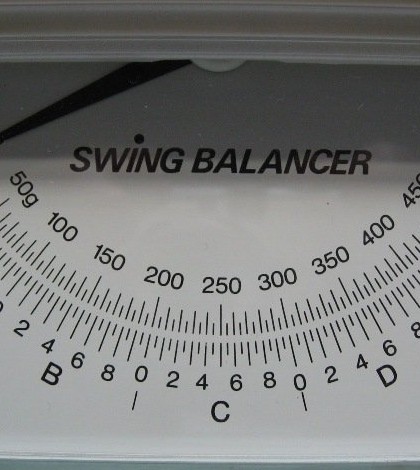
While I’ve been playing golf for the last 35 years, I only started tinkering with equipment for the last 17 years. I started with regripping and then graduated to full blueprints and rebuilds for myself and close friends and family. This came in handy when I had delusions of trying to compete with the guys in the Long Drivers of America (LDA). While my swingspeed is fast enough to necessitate the replacement of caved heads and broken shafts from time to time, I was humbled back into the amateur ranks very quickly. But the LDA guys were one of the early groups that made me realize that lighter shafts aren’t necessarily better for distance.
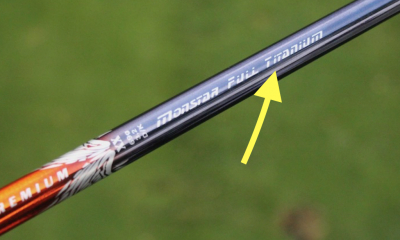
When golfers think of a great classic driver, the seasoned ones would talk about persimmon and steel while most WRXers will speak with reverence to the TaylorMade R510TP. This first re-launch of the Tour Preferred series was notorious for the high price tag as well as what justified the cost: the legendary Fujikura Speeder 757 shaft. At one point, you were not considered a player if you didn’t have a Speeder 757 in your driver. At 78 or 79 grams (based on flex), it was much lighter than steel. But its tight profile and low torque made for a very accurate shaft that produced a lower spin rate and allowed for good distance when you wanted to take a healthy swing at the ball.
Today, the manufacturers continue to promise distance gains with a marketer’s perfect formula: lighter total weight and longer shafts. Many WRXers have poo-pooed this concept of longer shafts over the years, professing their love for 44.5 inch drivers. You can go back to the inception of this board to read the questions of how to get a D2 or D3 swingweight on a club that has had the stock length cut down. Today, with some drivers measuring as long as 47 inches, you may have to add 15-20 grams of mass to the head to get the balance back to the club. Some of my early recollections of reshafting include removing the lightweight and big butt shafts from Callaway Great Big Berthas and Goldwin AVDP drivers to install 86 gram EI-70 shafts. My drives were much more accurate with the heavier driver shaft.
Until recently, this trend was applied only to woods and hybrids. But the next phase in the lighter/longer march by the OEMs has been irons. Lofts and lengths have literally made each iron one club longer than a similar numbered iron 25 years ago. And your 120-gram KBS or 130-gram True Temper Dynamic Gold shaft are now being substituted for 85-gram steel or 65-gram graphite. This was the norm for senior and ladies clubs for years. But these lighter weight clubs are now appearing in the men’s market as well.
Thankfully, most of the player or “pro” models still come with heavier shafts. But even there, you still have driver shafts in the 50-gram range, and they seem to be getting lighter each year. This follows the old club thought:
“Swing the lightest club that you can control.”

But control always seems to take a back seat to potential distance. I’m sure I could pick up 10-peak yards on a perfectly struck shot with a lighter driver shaft. However, the rest of my imperfect shots would suffer accuracy issues, whereas my heavier shaft would allow me a more consistent face contact and greater AVERAGE distance. My thought when I have built clubs for friends and family was to “swing the heaviest club that did not noticeably cost you distance.” My vindication for this is that your scoring clubs — wedges and putters — are trending heavier or maintaining their shaft weights. Read the GolfWRX thread about increasing accuracy and distance by going back to steel shafted drivers here: http://www.golfwrx.com/forums/topic/705558-now-this-is-how-a-cleveland-classic-should-look
I believe the quickest way to get someone to get excited about the game is to have them strike that one pure shot. Tin Cup described it as a “tuning fork going off in your loins” to Rene Russo, and he was right. Hit that one shot and you will be back for more. My experience has shown that more golfers would have more accurate shots with greater average distance with shaft weights in the following ranges:
Driver: 65-75 grams, 300 gram or more total weight
Fairway Woods: 80-130 grams
Hybrids: 90-130 grams
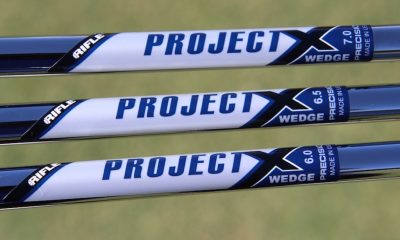
Irons and wedges: 110-140 grams
Compared to lighter equipment, most of your average male golfers will find the center of the face more often and realize more purely struck shots. This will increase your average distance and minimize the difference between your great shots and your misses.
The one argument that I cannot deny is the lighter weight in your bag if you are a walker. But consider that a golf ball weighs around 45 grams. The difference between heavy and light equipment for someone with three wedges is the equivalent of roughly three sleeves of balls in your bag. If that’s enough to break your back, then you should consider weight/endurance training or move to a push/pull cart. Fatigue at the end of the round from heavier gear is quickly fixed by strength training and sessions at the practice range.
Next time you visit your local clubfitter, pick their brain about being fitted into a slightly heavier shaft in your fairway, hybrid or driver by stressing that you want a more consistent and accurate swing instead of distance. You may find a new favorite club in your bag.








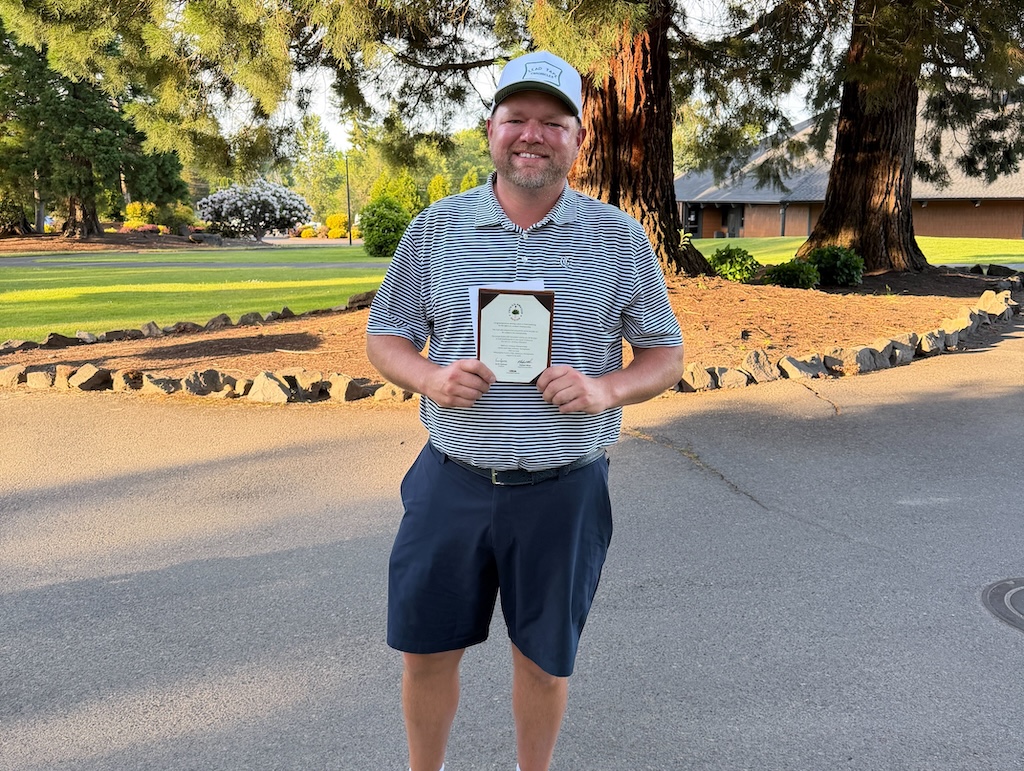
This past Monday, I played in the U.S. Amateur local qualifier at Rock Creek Country Club in Portland, Oregon. A full tee sheet from 7:30 a.m. to 1:55 p.m., the top 11 scores would make it to the U.S. Amateur final qualifying.
I teed off at 10:48 a.m.. With the 7:30 am tee time, you can get a feel for the leaders’ pace, and they were off and running on the challenging setup at Rock Creek.
View this post on Instagram
Getting to the highlight of the round on the par five 17th, a drive up the left side and 212 yards left to the front hole location. I took out a 5-iron with plans of middle of the green. The ball ended up 8 feet left of the hole, pin high. A slight downhill putt dropped in for an eagle 3 on the 17th. With the cut line looking to be anywhere from -2 to even par. This was the boost I had been waiting for all day.
With making par from the trees on 18, it was time to wait for a potential playoff with a posted score of one under par 71.
Three hours later, it was playoff time. 8 players for 6 spots. I made par on the playoff hole, which was good enough to advance to the U.S. Amateur final qualifying in July. USGA qualifiers sure deliver on all of the emotions in golf!
Club Junkie
Building my 2026 gamer WITB: Ranking the contenders and new putter projects – Club Junkie Podcast

The annual What’s In The Bag build is underway, and on this episode of Club Junkie, Brian breaks down the clubs currently leading the race for a spot in his 2026 gamer setup. From drivers and fairway woods to irons, wedges, and shafts, he ranks the equipment that’s performing best and explains what’s separating the front runners from the rest of the field.
Brian also heads into the workshop to discuss several putter projects currently on the bench. From head options and shaft choices to build ideas and testing plans, he shares what he’s working on and which putters could become serious contenders for the bag this season.
If you’re a gear junkie who loves equipment testing, club building, and the never-ending pursuit of the perfect setup, this episode is for you.
Follow Club Junkie:
Instagram: @clubjunkiepod
TikTok: @clubjunkiepod
Threads: @clubjunkiepod
X: @ClubJunkiePod
Club Junkie
Tour Edge Exotics mini driver review + TaylorMade Spider ZT Max first look – Club Junkie

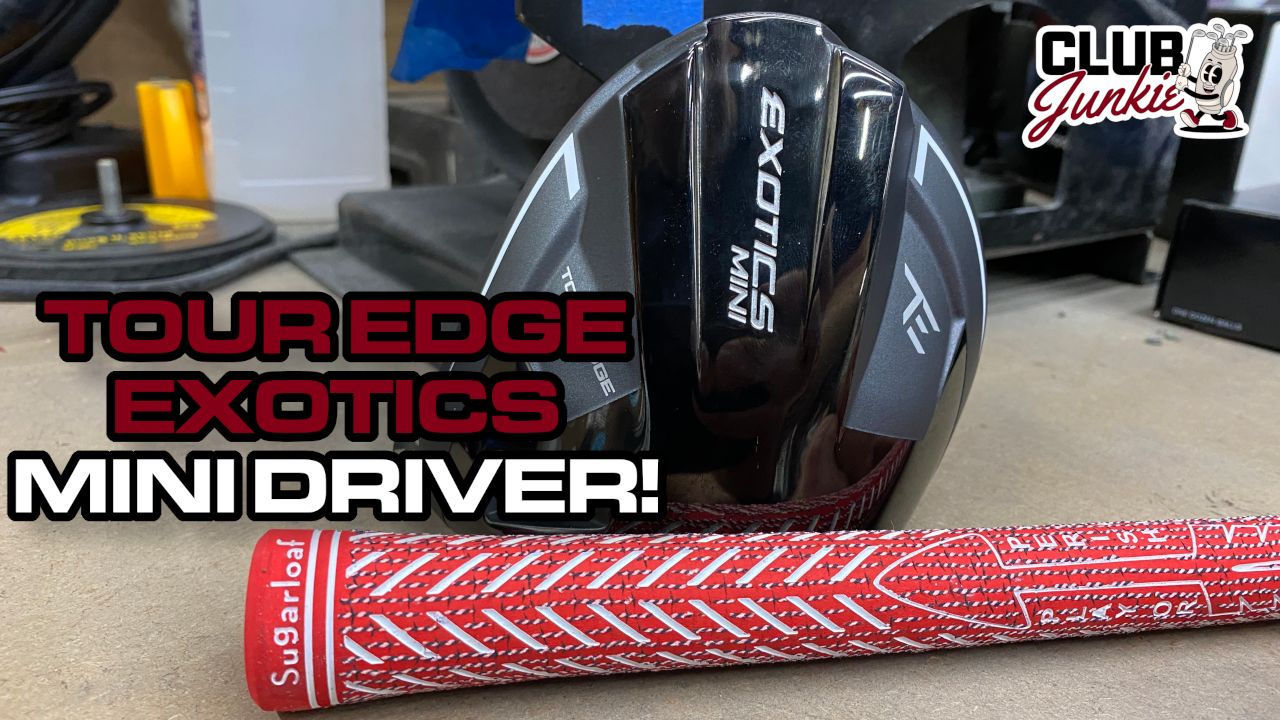
On this episode of Club Junkie, I put the new Tour Edge Exotics Mini Driver to the test and break down the performance, forgiveness, distance, and where it fits compared to a traditional driver or strong fairway wood. If you have been curious about adding a mini driver to the bag, this one is worth a look.
I also dive into the new TaylorMade Spider ZT Max putter that was recently spotted and discuss the growing zero torque putter trend. Plus, there is a closer look at the new Project X Titan Yellow shaft showing up on the PGA Tour and what makes it different from other profiles currently out there.

Justin Rose WITB 2026 (April): Full WITB breakdown with new McLaren irons

What’s the story behind Webb Simpson’s custom-stamped irons?

Memorial Tournament Tour Report: Rory McIlroy, Cameron Young switch up drivers, and more

Cadillac Championship Tour Report: Spieth’s sizable changes, McLaren Golf launches, and more

Russell Henley’s winning WITB: 2026 Charles Schwab Challenge

Kristoffer Reitan’s winning WITB: 2026 Truist Championship

J.T. Poston’s winning WITB: 2026 Memorial Tournament

Aaron Rai’s winning WITB: 2026 PGA Championship

Best irons 2026: Best irons overall, most forgiving irons, and more

Cameron Young’s winning WITB: 2026 Cadillac Championship


Bud Cauley WITB 2026 (June)
Bud Cauley had >14 clubs in his bag when photographed prior to the Memorial Tournament. Driver: Titleist GTS2 (8 degrees) Shaft: Fujikura...


Hannah Green WITB 2026 (June)
Driver: Titleist GTS3 (10 degrees, D4 SureFit setting) Shaft: Mitsubishi Chemical Diamana RB 53 S 3-wood: Titleist GT3 (15 degrees,...


Asterisk Talley WITB 2026 (June)
Driver: TaylorMade Qi4D (9 degrees) Shaft: Fujikura Ventus Blue 6 S 3-wood: TaylorMade Qi4D (16.5 degrees) Shaft: Fujikura Ventus Blue...

Brianna Do WITB 2026 (June)
Driver: Callaway Quantum Triple Diamond (9 degrees) Shaft: KBS PGW 3-wood: Callaway Elyte Titanium (15 degrees) Shaft: KBS PGW 5-wood:...
-
 Equipment6 days ago
Memorial Tournament Tour Report: Rory McIlroy, Cameron Young switch up drivers, and more
-
 News1 week ago
Russell Henley’s winning WITB: 2026 Charles Schwab Challenge
-
 Whats in the Bag3 days ago
J.T. Poston’s winning WITB: 2026 Memorial Tournament
-
 Equipment3 days ago
Best irons 2026: Best irons overall, most forgiving irons, and more
-
 Equipment1 week ago
Details on Jason Day’s latest prototype Avoda iron setup
-
 Equipment3 weeks ago
CJ Cup Byron Nelson Tour Report: Koepka and Kim’s newest putters finally get hot
-

 News2 weeks ago
Charles Schwab Challenge Tour Report: MacIntyre, Åberg and Spaun all switch putters, TaylorMade launches new Spider
-
 Equipment2 weeks ago
Details on J.J. Spaun’s surprise putter switch


Pingback: What Is The Best Golf Shaft Weight? – The Annika Academy
nikkyd
Mar 14, 2014 at 10:54 pm
My irons are sw at e6 and i tell you what, once you get that weight moving, you cannot stop it. Im shorter 5)at 5’8″ and play +1 1/4 ” over standard clubs. I can deadlift 600 lbs and bench 225 25× . Im not flexible by anymeans (not even as a child) but with my handsy swing, i find the heavier, the better. More consistant and straighter than ever . And good distance too! Now if only i could putt on muni greens that stimp out at about -13 haha
Phil
Dec 2, 2013 at 3:48 am
Excellent article. Through experiments I have found that my swing speed has increased by around 3% with a heavier shaft. Also note that swing speed isn’t everything you have to make a quality contact. I have been down the light shaft / totalweight route and am now making a U turn with great results. My latest driver shaft Fujikura Speeder 757 is superb with longer more consistent results Callaway RAZR Tour head with D4 swingweight at 44.75in
It all depends on the type of swing that you have but too many times We get conned with a short term increase in distance but lose control, consistency and accuracy over time.
Dave
Mar 21, 2013 at 7:25 am
Agreed, last year my most consistant club in the bag was my Titleist Hybrid which has a Heavier shaft installed.
Rick
Nov 9, 2015 at 10:48 pm
Exactly the same here…92 gm stiff Diamana ….it is sweet.
Adrian
Dec 11, 2012 at 7:25 pm
Excellent article. Thanks. And I totally agree.
I lost confidence with my rbz 3wood this summer, cut it down a half inch and added some snakeoil to the head. Changed the swing weight from D3 to D6 and it’s now the most consistent long club in my bag, by far. Lost maybe 5 yards of distance on average but added automatic fairways; seems worth it.
Roger F
Nov 30, 2012 at 11:04 am
Great article…..have added weight to my wedges, Putter, gone to heavier shafts on fairways and added tip weights, now have x flex Oxik Altus 86gr in 22 hybrid, very smooth, and 910D3 with Kai’li at 72 grams, regular shaft and 9gr head weight. Lots of Feel,Accuracy!
Ian harris
Nov 30, 2012 at 10:26 am
How about light,stiff,with low torque? Love my steel fiber 95 gram iron shafts. Straight and long!!!
joro3743
Nov 29, 2012 at 8:49 am
I totally agree with the heavier weight. When I was a young man and playing competitively my Driver was steel and wood with a 135 gr. shaft, XX flex, and 43.5 in. and the irons the same.
Today, much older and with several physical problems I use a 45 gr. shaft at 46 and all over the place. Recently I picked up a 60 gr. Stiff Driver with a Ahina shaft and hitting the heck out of it. I know being a club maker for years that the theory of that is wrong, but I love it. I also play a forged Iron with KBS Tour steel and put away the 65 gr. Graphite Irons I was playing.
At 73 this should not work, but it does.
pablo
Nov 28, 2012 at 3:09 pm
I agree. My girlfriend hits better with mens flex shafts even with a very low swing speed. She likes to be able to feel the weight, as it helps her make better ball contact.
John Muir
Nov 28, 2012 at 2:27 pm
I’m finding a lot of success with average male and female golfers and seniors with 45g wood shafts with lighter driver and fw heads and even new 50g iron shafts.
Robert
Nov 28, 2012 at 12:15 pm
Excellent article. Many thanks
Pingback: GolfWRX.com – Why You Should Be Playing Heavier Equipment | Golf Grip Instruction