
Opinion & Analysis
“Picking a shaft based solely on swing speed isn’t a great idea”


I see a lot of threads/post on here about golfers selecting shaft flex for their irons or driver based solely on swing speed. To quote the inimitable philosopher Peter Griffin, “that really grinds my gears”
Swing speed is only one element in choosing shaft flex. Yes, it’s an important element, but it’s not the only one. Other critical components in choosing a shaft include:
- a golfer’s tempo (from nice and smooth to almost violent)
- a golfer’s transition from the top (after the backswing is complete, what kind of transition does the golfer make?)
- a golfer’s release point (when does the golfer release the club?)
For example, golfer “A” can have a similar swing speed as golfer “B” yet require a regular shaft, while golfer “B” may require a stiff shaft. Why? Golfer A’s tempo is nice and smooth, he has an easy transition and releases the club a tad early. Golfer B’s tempo, on the other hand is faster, he has a more forceful transition and he releases the club much later.
So you see, picking a shaft based just on swing speed isn’t a great idea. Sure it will give you a starting point, but that’s it.
If you pick the wrong shaft, a lot of bad things can happen.
If the shaft if too stiff:
- the ball will flight will be too low
- the ball flight will have a tendency to go right (for a right-handed golfer, this means a fade or a slice)
- hits won’t feel as solid
If the shaft isn’t stiff enough:
- the ball flight will be too high
- the ball flight will have a tendency to go left (for a right-handed golfer, this means draws and hooks)
The next time you’re in the market for a choosing flex for your new irons or driver, please consider more then just swing speed. If you can’t see a fitter for any reason, consider your transition, rhythm, tempo and your release. Even if you narrow that down a bit you’ll come a lot closer to making the right choice in choosing the correct shaft for yourself.




This past Monday, I played in the U.S. Amateur local qualifier at Rock Creek Country Club in Portland, Oregon. A full tee sheet from 7:30 a.m. to 1:55 p.m., the top 11 scores would make it to the U.S. Amateur final qualifying.
I teed off at 10:48 a.m.. With the 7:30 am tee time, you can get a feel for the leaders’ pace, and they were off and running on the challenging setup at Rock Creek.
View this post on Instagram
Getting to the highlight of the round on the par five 17th, a drive up the left side and 212 yards left to the front hole location. I took out a 5-iron with plans of middle of the green. The ball ended up 8 feet left of the hole, pin high. A slight downhill putt dropped in for an eagle 3 on the 17th. With the cut line looking to be anywhere from -2 to even par. This was the boost I had been waiting for all day.
With making par from the trees on 18, it was time to wait for a potential playoff with a posted score of one under par 71.
Three hours later, it was playoff time. 8 players for 6 spots. I made par on the playoff hole, which was good enough to advance to the U.S. Amateur final qualifying in July. USGA qualifiers sure deliver on all of the emotions in golf!
Club Junkie
Building my 2026 gamer WITB: Ranking the contenders and new putter projects – Club Junkie Podcast

The annual What’s In The Bag build is underway, and on this episode of Club Junkie, Brian breaks down the clubs currently leading the race for a spot in his 2026 gamer setup. From drivers and fairway woods to irons, wedges, and shafts, he ranks the equipment that’s performing best and explains what’s separating the front runners from the rest of the field.
Brian also heads into the workshop to discuss several putter projects currently on the bench. From head options and shaft choices to build ideas and testing plans, he shares what he’s working on and which putters could become serious contenders for the bag this season.
If you’re a gear junkie who loves equipment testing, club building, and the never-ending pursuit of the perfect setup, this episode is for you.
Follow Club Junkie:
Instagram: @clubjunkiepod
TikTok: @clubjunkiepod
Threads: @clubjunkiepod
X: @ClubJunkiePod
Club Junkie
Tour Edge Exotics mini driver review + TaylorMade Spider ZT Max first look – Club Junkie

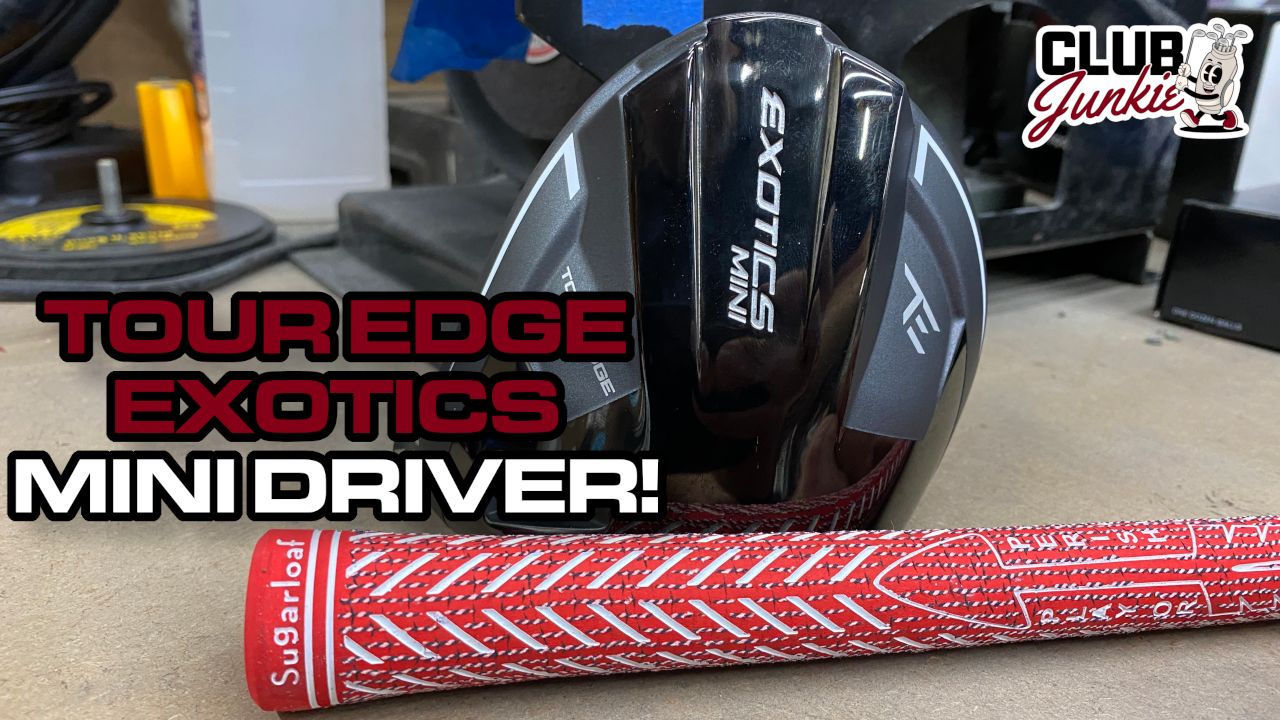
On this episode of Club Junkie, I put the new Tour Edge Exotics Mini Driver to the test and break down the performance, forgiveness, distance, and where it fits compared to a traditional driver or strong fairway wood. If you have been curious about adding a mini driver to the bag, this one is worth a look.
I also dive into the new TaylorMade Spider ZT Max putter that was recently spotted and discuss the growing zero torque putter trend. Plus, there is a closer look at the new Project X Titan Yellow shaft showing up on the PGA Tour and what makes it different from other profiles currently out there.

Justin Rose WITB 2026 (April): Full WITB breakdown with new McLaren irons

What’s the story behind Webb Simpson’s custom-stamped irons?

Memorial Tournament Tour Report: Rory McIlroy, Cameron Young switch up drivers, and more

Cadillac Championship Tour Report: Spieth’s sizable changes, McLaren Golf launches, and more

Russell Henley’s winning WITB: 2026 Charles Schwab Challenge

Kristoffer Reitan’s winning WITB: 2026 Truist Championship

Aaron Rai’s winning WITB: 2026 PGA Championship

J.T. Poston’s winning WITB: 2026 Memorial Tournament

Cameron Young’s winning WITB: 2026 Cadillac Championship

Best irons 2026: Best irons overall, most forgiving irons, and more


Bud Cauley WITB 2026 (June)
Bud Cauley had >14 clubs in his bag when photographed prior to the Memorial Tournament. Driver: Titleist GTS2 (8 degrees) Shaft: Fujikura...


Hannah Green WITB 2026 (June)
Driver: Titleist GTS3 (10 degrees, D4 SureFit setting) Shaft: Mitsubishi Chemical Diamana RB 53 S 3-wood: Titleist GT3 (15 degrees,...


Asterisk Talley WITB 2026 (June)
Driver: TaylorMade Qi4D (9 degrees) Shaft: Fujikura Ventus Blue 6 S 3-wood: TaylorMade Qi4D (16.5 degrees) Shaft: Fujikura Ventus Blue...

Brianna Do WITB 2026 (June)
Driver: Callaway Quantum Triple Diamond (9 degrees) Shaft: KBS PGW 3-wood: Callaway Elyte Titanium (15 degrees) Shaft: KBS PGW 5-wood:...
-
 Equipment6 days ago
Memorial Tournament Tour Report: Rory McIlroy, Cameron Young switch up drivers, and more
-
 News1 week ago
Russell Henley’s winning WITB: 2026 Charles Schwab Challenge
-
 Whats in the Bag3 days ago
J.T. Poston’s winning WITB: 2026 Memorial Tournament
-
 Equipment3 days ago
Best irons 2026: Best irons overall, most forgiving irons, and more
-

 Equipment1 week ago
Details on Jason Day’s latest prototype Avoda iron setup
-

 Equipment3 weeks ago
CJ Cup Byron Nelson Tour Report: Koepka and Kim’s newest putters finally get hot
-

 News2 weeks ago
Charles Schwab Challenge Tour Report: MacIntyre, Åberg and Spaun all switch putters, TaylorMade launches new Spider
-

 Equipment2 weeks ago
Details on J.J. Spaun’s surprise putter switch


Doug
Nov 30, 2012 at 7:42 pm
I have always been curious about the best way to select shaft flex. During the swing, it seems to me that the shaft is flexing in multiple directions. At the beginning it would be flexing in a primarily toe-up direction, and as the swing progresses, the flex develops a backwards component and a toe-down component. It has always seemed to me that all of this flexing is making it difficult to return the club square to the ball at impact, and that everyone would benefit from using the stiffest shafts possible. You indicate that if a shaft is too stiff for your swing your ball flight will be lower and to the right, and if the flex is to soft your ball flight will be higher and to the left, but don’t provide any explanations of how the shaft flex could cause these changes.
Joe Golfer
Dec 1, 2012 at 1:26 am
Doug: If the shaft is too stiff, it doesn’t load well, so it doesn’t release well, leading to low shots that tend to fade to the right (for RH golfers). If the shaft is too flexible, it loads too much, it releases too much, leading to higher shots. And because it is releasing early, the clubface closes earlier, leading to shots that curve left as a draw/hook or a pull hook, depending on initial aiming point.
Sean
Nov 29, 2012 at 12:34 am
Thanks Tony. 🙂
Tony Wright
Nov 27, 2012 at 7:50 pm
Sean, your post is absolutely right on. There are many of us in the Assn. of Golf Clubfitting Professionals (AGCP) that use a driver shaft fitting process that is similar to what you suggest – this process has been called BMT – Butt, Mid, Tip. We measure swing speed, swing tempo, and release point and correlate these to shaft flex profile measurements. This process works very well. Reduces shot dispersion because the shaft flex profile is a good fit to the driver swing profile.
Eric
Nov 30, 2012 at 12:13 pm
Tony:
Fascinating – Did not know any of this.
I am a scratch golfer for 35 years, and have switched to a Rifle 5.5 from a Dynamic X-100 because my swing speeds are down. I swing very fast with a quick transition. How should I decide which shaft to choose??
td
Nov 27, 2012 at 12:01 pm
Tom? Is that you?