
Opinion & Analysis
The PGA Championship: Headlining the new Triple Crown of American professional golf

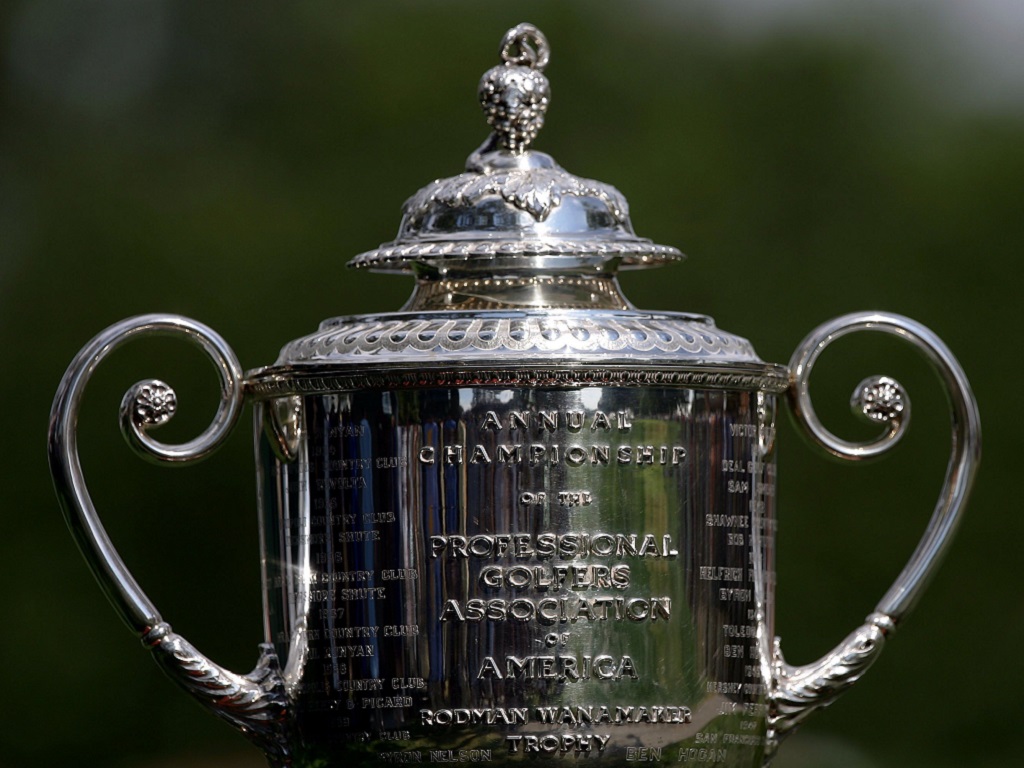
The PGA Championship, as it celebrates its 100th anniversary at Bellerive Country Club just outside of St. Louis, marks the end of an era. Since the 1960s, the PGA has been the final major of the year, the last leg of the modern “Grand Slam” of professional golf. All that will change next year as the event moves to the third weekend in May, and moves from a major afterthought to being the most important major in the on-going growth of interest in our sport here in the U.S.
The Grand Slam has long been considered competitive golf’s ultimate achievement. This is more than a bit of a misnomer, though, since it is something that has never been accomplished in the modern game, and is simultaneously considered by most to be all but unattainable. Sure, Bobby Jones won what was called the Grand Slam back in 1929 as an amateur, but that was back when two of the four legs were amateur events, excluding most of the most accomplished players of the day.
And the immortal Ben Hogan, in his “Triple Crown” season of 1953, when he won the Masters, the U.S. Open, and the Open Championship in succession, in theory had a shot at it. But at that time, the Open Championship and the PGA overlapped, making it impossible for him to compete in both, and the level of competition was nowhere near what it is today.
In modern professional golf, no player has ever even come into the PGA Championship with a shot at the “Grand Slam,” leaving the season’s final major to always feel like it’s finishing on a bit of an anti-climactic note. So maybe it’s time to stop wishing, hoping, dreaming, and talking about someone winning the Grand Slam, and instead, take a cue from Hogan’s immortal season, and start talking about someone winning the new “Triple Crown” of American professional golf that the PGA has set the stage for by making its move.
By moving to May, for the first time ever, the American majors will be conducted in three consecutive months. The PGA claims they did this for a number of reasons, including the addition of golf to the Summer Olympics, the fact that cooler May weather opens up a wider array of options for host courses, and to keep the season ending FedEx Cup Playoffs from having to compete with the start of football season. But there’s an unintended consequence of this move that will ultimately make the PGA Championship the most pivotal, and important major in seasons to come.
Like the Preakness in horse racing, the PGA Championship now becomes the second leg of what I will call the new “Triple Crown” of American major championships. Being only a month apart, winners of the Masters each year will now come into the PGA, the year’s second major, with more momentum. They will also contest that second leg under conditions most players feel are a fairer and more typical test of golf than the often brutal slog the USGA sets them up for at the U.S. Open.
The result of this should be that more future Masters champions will not only come into that second leg feeling like they have a realistic shot, but, as we see in horse-racing many years, could come out of it with a shot at the Triple Crown. The interest and excitement this will generate, and the build-up to the U.S. Open will increase ten-fold if we see a player winning the first two majors of the year, just as it does many years for the Belmont Stakes, when millions of eyeballs tune in because the storyline transcends the sport.
It doesn’t matter that (not unlike the Belmont) the course setup and conditions of the U.S. Open favors a very different type of player than the Masters and PGA Championship. What matters is more players at least having a shot at it. The move up of the PGA Championship will facilitate that, and with a more attainable goal, like the new Triple Crown of American professional golf, we should be in store for some much more exciting golf seasons in the very near future.
The PGA Championship will go from being a bit of an afterthought, to being the major most sought after in the quest for American professional golf’s new ultimate accomplishment.




This past Monday, I played in the U.S. Amateur local qualifier at Rock Creek Country Club in Portland, Oregon. A full tee sheet from 7:30 a.m. to 1:55 p.m., the top 11 scores would make it to the U.S. Amateur final qualifying.
I teed off at 10:48 a.m.. With the 7:30 am tee time, you can get a feel for the leaders’ pace, and they were off and running on the challenging setup at Rock Creek.
View this post on Instagram
Getting to the highlight of the round on the par five 17th, a drive up the left side and 212 yards left to the front hole location. I took out a 5-iron with plans of middle of the green. The ball ended up 8 feet left of the hole, pin high. A slight downhill putt dropped in for an eagle 3 on the 17th. With the cut line looking to be anywhere from -2 to even par. This was the boost I had been waiting for all day.
With making par from the trees on 18, it was time to wait for a potential playoff with a posted score of one under par 71.
Three hours later, it was playoff time. 8 players for 6 spots. I made par on the playoff hole, which was good enough to advance to the U.S. Amateur final qualifying in July. USGA qualifiers sure deliver on all of the emotions in golf!
Club Junkie
Building my 2026 gamer WITB: Ranking the contenders and new putter projects – Club Junkie Podcast

The annual What’s In The Bag build is underway, and on this episode of Club Junkie, Brian breaks down the clubs currently leading the race for a spot in his 2026 gamer setup. From drivers and fairway woods to irons, wedges, and shafts, he ranks the equipment that’s performing best and explains what’s separating the front runners from the rest of the field.
Brian also heads into the workshop to discuss several putter projects currently on the bench. From head options and shaft choices to build ideas and testing plans, he shares what he’s working on and which putters could become serious contenders for the bag this season.
If you’re a gear junkie who loves equipment testing, club building, and the never-ending pursuit of the perfect setup, this episode is for you.
Follow Club Junkie:
Instagram: @clubjunkiepod
TikTok: @clubjunkiepod
Threads: @clubjunkiepod
X: @ClubJunkiePod
Club Junkie
Tour Edge Exotics mini driver review + TaylorMade Spider ZT Max first look – Club Junkie


On this episode of Club Junkie, I put the new Tour Edge Exotics Mini Driver to the test and break down the performance, forgiveness, distance, and where it fits compared to a traditional driver or strong fairway wood. If you have been curious about adding a mini driver to the bag, this one is worth a look.
I also dive into the new TaylorMade Spider ZT Max putter that was recently spotted and discuss the growing zero torque putter trend. Plus, there is a closer look at the new Project X Titan Yellow shaft showing up on the PGA Tour and what makes it different from other profiles currently out there.

What’s the story behind Webb Simpson’s custom-stamped irons?

Memorial Tournament Tour Report: Rory McIlroy, Cameron Young switch up drivers, and more

Cadillac Championship Tour Report: Spieth’s sizable changes, McLaren Golf launches, and more

Russell Henley’s winning WITB: 2026 Charles Schwab Challenge

Kristoffer Reitan’s winning WITB: 2026 Truist Championship

Best irons 2026: Best irons overall, most forgiving irons, and more

J.T. Poston’s winning WITB: 2026 Memorial Tournament

Aaron Rai’s winning WITB: 2026 PGA Championship

Cameron Young’s winning WITB: 2026 Cadillac Championship

Details on Jason Day’s latest prototype Avoda iron setup


Christiaan Maas WITB 2026 (June)
Driver: TaylorMade Qi4D LS (8 degrees) Shaft: Fujikura Ventus TR Blue 6 X 3-wood: TaylorMade Qi10 (15 degrees) Shaft: Fujikura Ventus Black...


Ryan Palmer WITB 2026 (June)
Driver: Callaway Quantum Triple Diamond (9 degrees) Shaft: Project X HZRDUS Smoke Blue RDX 60 TX 3-wood: TaylorMade Qi10 (15 degrees) Shaft:...


Bud Cauley WITB 2026 (June)
Bud Cauley had >14 clubs in his bag when photographed prior to the Memorial Tournament. Driver: Titleist GTS2 (8 degrees) Shaft: Fujikura...


Hannah Green WITB 2026 (June)
Driver: Titleist GTS3 (10 degrees, D4 SureFit setting) Shaft: Mitsubishi Chemical Diamana RB 53 S 3-wood: Titleist GT3 (15 degrees,...
-
 Equipment7 days ago
Memorial Tournament Tour Report: Rory McIlroy, Cameron Young switch up drivers, and more
-
 News2 weeks ago
Russell Henley’s winning WITB: 2026 Charles Schwab Challenge
-
 Equipment4 days ago
Best irons 2026: Best irons overall, most forgiving irons, and more
-
 Whats in the Bag4 days ago
J.T. Poston’s winning WITB: 2026 Memorial Tournament
-
 Equipment1 week ago
Details on Jason Day’s latest prototype Avoda iron setup
-
 Equipment3 weeks ago
CJ Cup Byron Nelson Tour Report: Koepka and Kim’s newest putters finally get hot
-

 News2 weeks ago
Charles Schwab Challenge Tour Report: MacIntyre, Åberg and Spaun all switch putters, TaylorMade launches new Spider
-
 Equipment2 weeks ago
Details on J.J. Spaun’s surprise putter switch


doesnotno
Aug 9, 2018 at 8:55 am
An alternate view to the PGA moving to 2nd spot in the majors calendar (and thereby you suggest raising its importance) might be that rather than looking forward to the event as the final major its seen as pretty much indifferent from the regular PGA events that take place in the weeks before and after it and people begin to question why it even has major status. The Masters has Augusta, the US Open has penal setups on classic courses, the Open has British weather and links layouts.
Ask people what the PGA has and I feel most people would tell you ‘last major of the year’.
Ns
Aug 9, 2018 at 11:57 am
and……. you’re an idiot.
The PGA Championships is representative of the PGA and the PGA Tour. That’s why it’s a Major. Always has been, always will be. But to modernize the game, they had to change it from match-play.
If anything, they need this major sometime in October. That would be the way forward, where The Players would be the 5th Major in early summer and the PGA moved to the Fall since there is now a wrap-around season.
doesnotno
Aug 10, 2018 at 8:46 am
Some great ideas there. Oh no, you’re clearly sub-normal.
Greg V
Aug 9, 2018 at 8:50 am
Nice try at Triple Crown. But to leave out the Open Championship, which is the oldest and many would say, the best of the majors, is disingenuous.
Matt
Aug 9, 2018 at 7:30 am
Massive shank, find another term as Triple Crown is already being used in golf as the winner of the US Open, Open Championship and Canadian Open all in the same year. 2 players have done it, Trevino and Woods, there is even a trophy for it.
Ronald Montesano
Aug 9, 2018 at 6:09 am
The term “Grand Slam” came from bridge, and the term “Triple Crown” comes from harness racing. Seems odd that golf wouldn’t have its own term. May in the northeast is very wet, akin to Wales (cough cough Ryder Cup cough cough) in the fall. It can also be cold. Venues like Oak Hill and Bethpage will suffer more than a few days of St. Louis’ weather this week, but they won’t have the summer sun to dry things. Also, ask a superintendent how much easier it is to get the course in shape for a major in May. This might be the way in which southern courses finally get major-championship recognition. I’m not a xenophobe, though, so I think that any focus on an American whatever is pushing the game away from the global direction it needs.
Frankie
Aug 9, 2018 at 2:58 am
Amateurs vs pros in Bobby Jones’ era was completely the opposite from today, it was the amateurs who were better than the pros because pros couldn’t make enough money back then to play golf full-time so they had to work at the golf clubs as teaching pros. In Bobby Jones’ case, he was rich enough to play golf full-time and therefore he was better than all of the pros as an amateur, including Walter Hagen. The perception of amateurs vs pros in early 20th century golf didn’t shift until Ben Hogan and Byron Nelson beat Ken Venturi and Harvie Ward in the Match at Cypress Point in 1956. To deny Jones’ skill of winning the Grand Slam is just blasphemy.
Mike Dowd
Aug 9, 2018 at 7:38 am
Bobby Jones’ accomplishment was one of the greatest, if not the greatest story in the games’ storied History. I was merely pointing out that it was not the same accomplishment as it would be today, and giving nod to the fact that some will feel the two amateur events being a part of his Grand Slam gives it a bit of an asterisk because players like Hagen were excluded. No one will ever accomplish what Jones did again, and so to a degree, I really believe the term should have been retired with him as a testament to that. Even winning two majors a year in today’s game is something that Player of the Year seasons are made of, and that’s why I think we should shift the storyline to something that is at least potentially attainable. Otherwise, it’s just a whole lot of talk for talk’s sake.
Ns
Aug 9, 2018 at 12:01 pm
“it’s just a whole lot of talk for talk’s sake.”
That’s what America is built on. Talk without much substance.
Greg V
Aug 9, 2018 at 8:48 am
Not so. All of the other top 10 finishers in the 1930 US Open were pros. As a matter of fact, pros overtook Amateurs from the very beginning of American golf, as players such as Willie Anderson and Alex Smith were transplant pros from Scotland. Yes, you had Francis Ouimet, Jerry Travers and Chick Evans winning the US Open in the early teens, but after Jones won his 4 US Opens, no amateur has won since.