
Opinion & Analysis
Two physical tests every golfer should ace

The golf swing is a reflection of how your body moves. If you are generally a tight and stiff person, your golf swing is most likely tight and stiff as well. Amateur golfers love to buy new golf equipment and spend money on swing lessons. Neither of these things are bad by any means, but golfers tend to neglect to work on the way their body moves to improve golf performance.
When I work with golfers, I run them through an extensive screening process to determine their physical limitations and how they manifest in their golf swing. The screening process includes looking at trunk rotational mobility, hip rotational mobility, shoulder mobility, core stability and strength, glute strength, forearm/wrist mobility, and more.
There are two specific tests that every golfer should ace. These two tests have been shown to be correlated to some pretty serious swing faults, causing a leakage of power, decreased accuracy, and poor consistency. These swing faults can also contribute to experiencing low back pain by placing excessive stress on the lumbar spine with each swing.
There is no new golf club out there that can promise you pain-free golf. There are few golf coaches out there that can coach you into a good position if your body physically cannot get into that position. Therefore, a high priority should be placed on improving your movement quality.
The Toe Touch Test
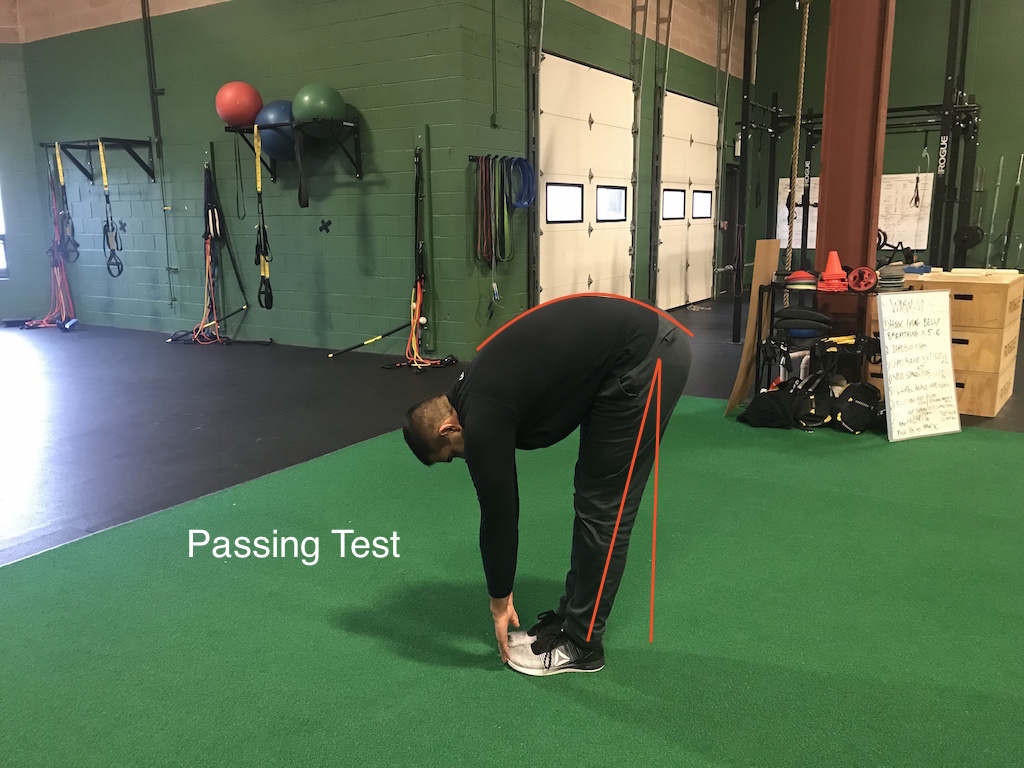
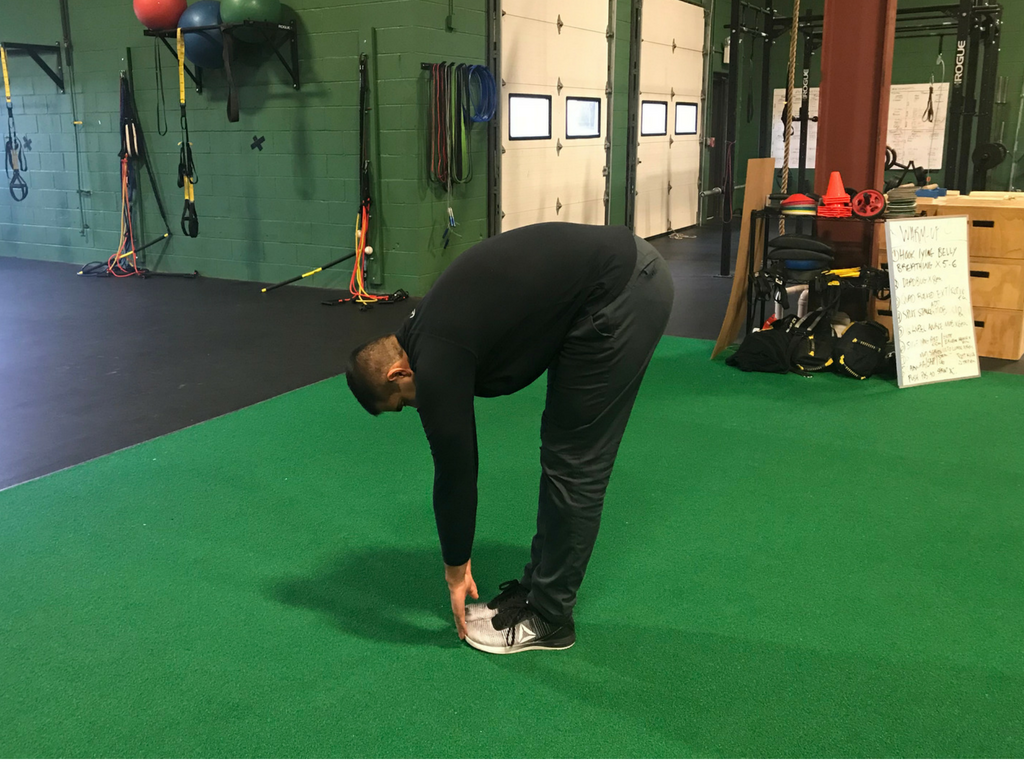
The test is simple: Can you touch your toes?
Keys to a passing score:
- Finger tips at least to your toes
- Knees stay straight
- Feet stay together
- No pain or discomfort
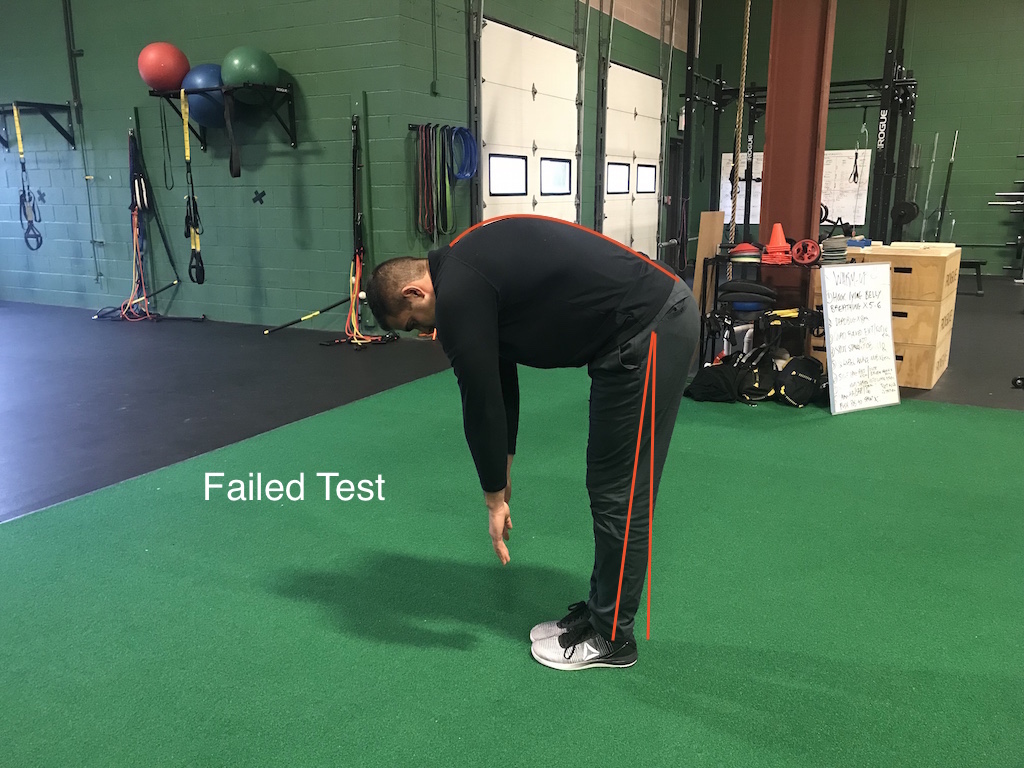
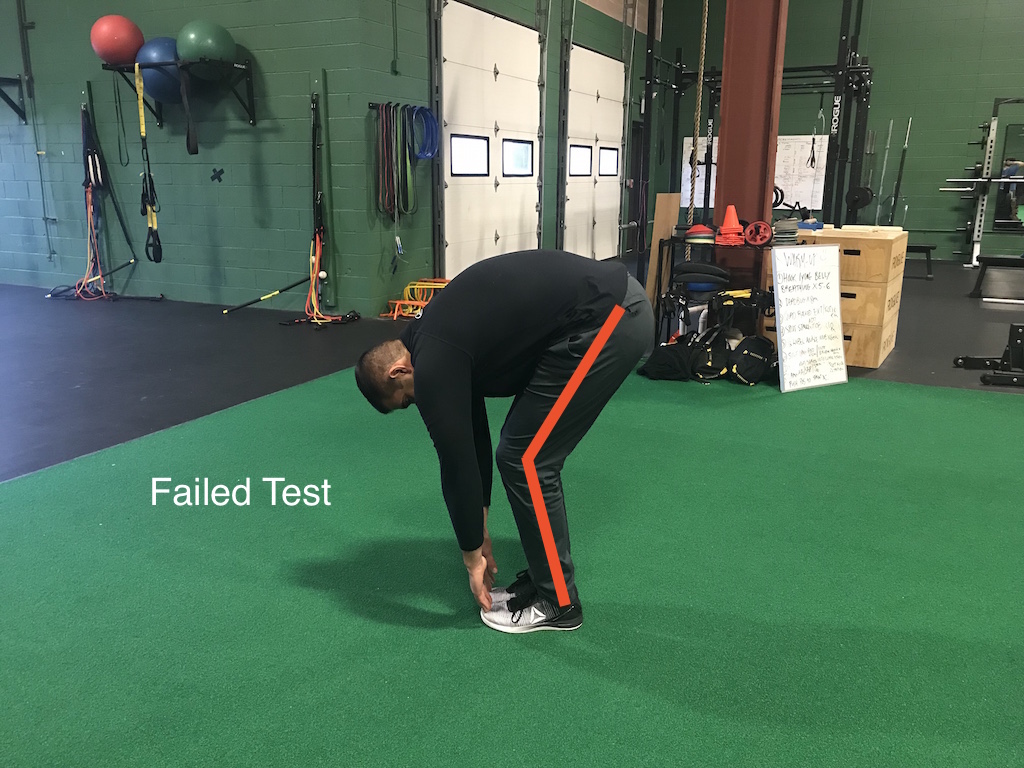
Failing the toe touch test can have many contributing factors. The most common limiting factors include:
- Limited hamstring flexibility and/or length
- Impaired lumbo-pelvic control
- Decreased core stability and strength
- Inadequate ability to shift weight posteriorly
- Increased neural tension
How Does This Impact Your Golf Game?
What we are essentially looking at is your ability to hip hinge. Most golfers set up in a bit of a hinged position, bending at the hips with their shoulders over the balls of their feet. In order to maintain posture throughout the swing, golfers must be able to maintain a hip-hinged position. If not, golfers will tend to lose posture and stand up in the backswing or in the downswing. This can lead to some serious compensations on the downswing, and make it difficult to generate clubhead speed, strike the ball well, and have consistent accuracy. A research study by Gulgin et al showed that a failed toe-touch test is strongly correlated to early extension in the downswing.
Single Leg Bridge Test
The single-leg bridge test looks at the ability of a golfer to extend through the hip by activating and maintain a contraction of the gluteus maximus muscle.
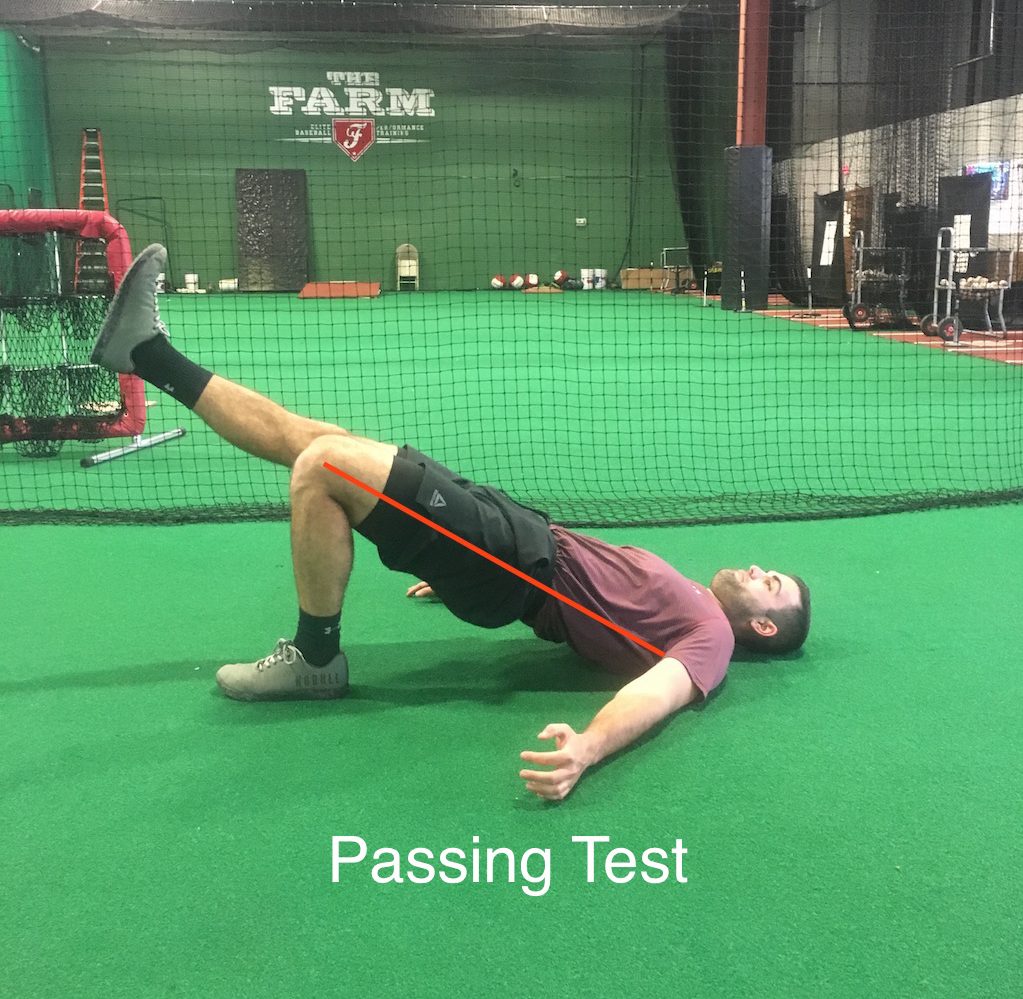
Keys to a Passing Score:
- Hips remain off the ground for 10-15 seconds
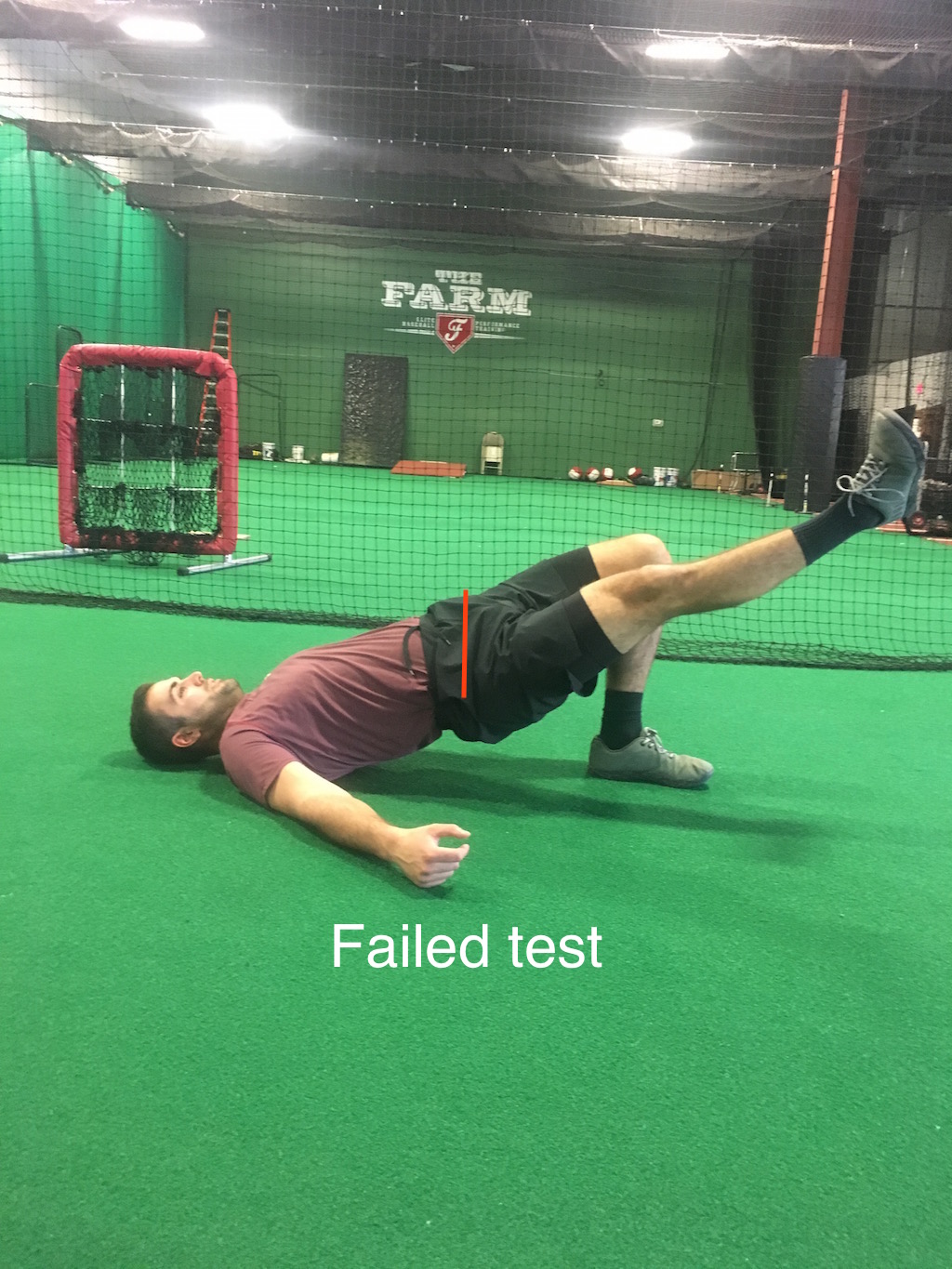
- Hips remain level to the ground
- Minimal compensation through the lower back
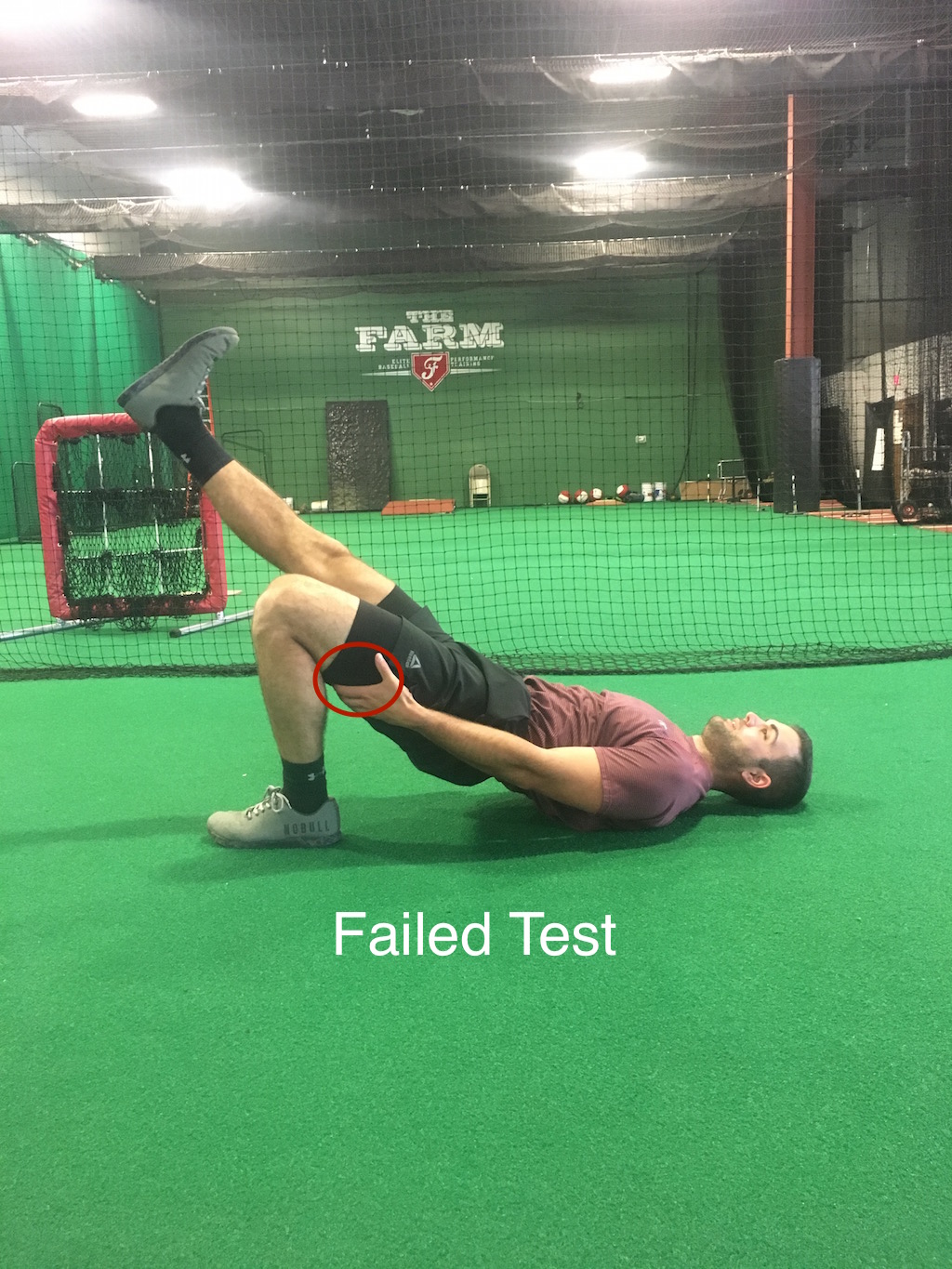
- No feeling of hamstring cramping
Failing the single leg bridge test can have many contributing factors. The most common limiting factors include:
- Lack of hip extension mobility
- Lack of hip extensor strength
- Motor control/ability to isolate glutes vs hamstrings
How Does This Impact Your Golf Game?
The glutes are probably the most important muscle group for golfers. Collectively, they act to extend the hip, stabilize the pelvis, and generate club head speed through pelvic rotation. Weakness or difficulty controlling the glutes has been shown to be correlated to early extension. Other faults that are related to weak or inactive glutes during the swing are swaying in the backswing and sliding through the downswing. Overall, the glutes enable a golfer to create power by stabilizing the pelvis and allowing for dissociation of the upper body and lower body. This helps generate torque and leads to increased club head speed.
How to Improve These Two Movements
Toe Touch/Hip Hinge
Touching your toes is such a basic movement that nearly every person was able to do at one point in their life. I often see middle-aged amateur golfers who work 40+ hours a week sitting at a desk fail the toe touch test. They certainly aren’t the only ones who fail this test, but I would say it is the majority in my experience.
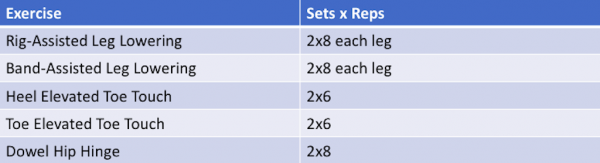
In order to improve this movement, we need to work on a few things including hamstring flexibility, core control, and allowing for a posterior weight shift. The following drills utilize components of each of these principles to help a golfer improve their toe touch.
Single Leg Bridge/Glute Strength
Initiating and maintaining a contraction of your glute max muscle is another seemingly simple movement that I see many golfers fail. In most cases, it isn’t a pure strength issue that leads to a failed test. Typically, it is a combination of a lack of strength and difficulty isolating a contraction of the glutes.
That being said, we typically have to “retrain the brain” to use the glutes to produce the desired movement. The following exercises are meant to be a progression, so if you have difficulty with the first two, master those before moving on to the rest.

Perform these exercises 3-4 times per week for 2-4 weeks and you should start to see some noticeable improvement in these two screening scores.
Once the movement dysfunction has improved, it is time to start working on getting into better positions in your golf swing. Working with a golf instructor on improving your particular swing faults is the best way to see significant results. Again, you can’t put the cart before the horse when it comes to physical restrictions. Working with a golf coach will be most successful once the movement dysfunctions have already been cleared and your movement quality improves.
If you’ve been struggling to see any improvement in your golf game in the past, do yourself a favor and work on any current physical restrictions you may have. When golfers invest in their body first, they often find that they spend less money on lessons because they have more meaningful lessons and are able to make the changes the coach is asking them to. By improving your movement you will also begin to feel better and play better, more consistent golf!



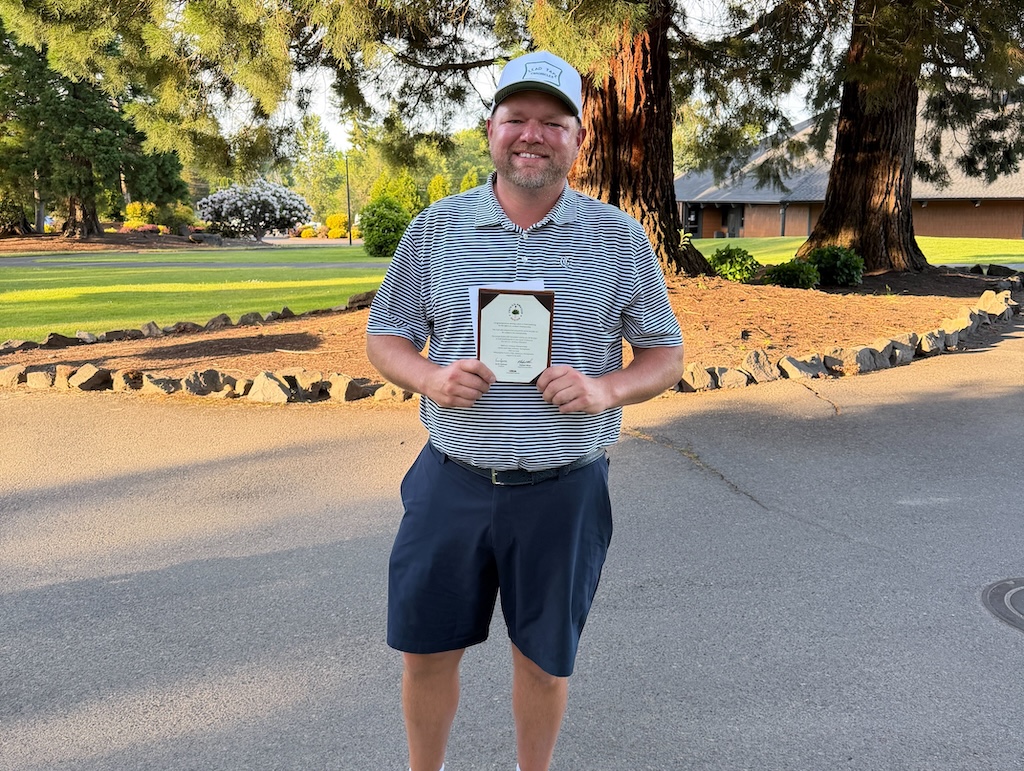
This past Monday, I played in the U.S. Amateur local qualifier at Rock Creek Country Club in Portland, Oregon. A full tee sheet from 7:30 a.m. to 1:55 p.m., the top 11 scores would make it to the U.S. Amateur final qualifying.
I teed off at 10:48 a.m.. With the 7:30 am tee time, you can get a feel for the leaders’ pace, and they were off and running on the challenging setup at Rock Creek.
View this post on Instagram
Getting to the highlight of the round on the par five 17th, a drive up the left side and 212 yards left to the front hole location. I took out a 5-iron with plans of middle of the green. The ball ended up 8 feet left of the hole, pin high. A slight downhill putt dropped in for an eagle 3 on the 17th. With the cut line looking to be anywhere from -2 to even par. This was the boost I had been waiting for all day.
With making par from the trees on 18, it was time to wait for a potential playoff with a posted score of one under par 71.
Three hours later, it was playoff time. 8 players for 6 spots. I made par on the playoff hole, which was good enough to advance to the U.S. Amateur final qualifying in July. USGA qualifiers sure deliver on all of the emotions in golf!
Club Junkie
Building my 2026 gamer WITB: Ranking the contenders and new putter projects – Club Junkie Podcast

The annual What’s In The Bag build is underway, and on this episode of Club Junkie, Brian breaks down the clubs currently leading the race for a spot in his 2026 gamer setup. From drivers and fairway woods to irons, wedges, and shafts, he ranks the equipment that’s performing best and explains what’s separating the front runners from the rest of the field.
Brian also heads into the workshop to discuss several putter projects currently on the bench. From head options and shaft choices to build ideas and testing plans, he shares what he’s working on and which putters could become serious contenders for the bag this season.
If you’re a gear junkie who loves equipment testing, club building, and the never-ending pursuit of the perfect setup, this episode is for you.
Follow Club Junkie:
Instagram: @clubjunkiepod
TikTok: @clubjunkiepod
Threads: @clubjunkiepod
X: @ClubJunkiePod
Club Junkie
Tour Edge Exotics mini driver review + TaylorMade Spider ZT Max first look – Club Junkie

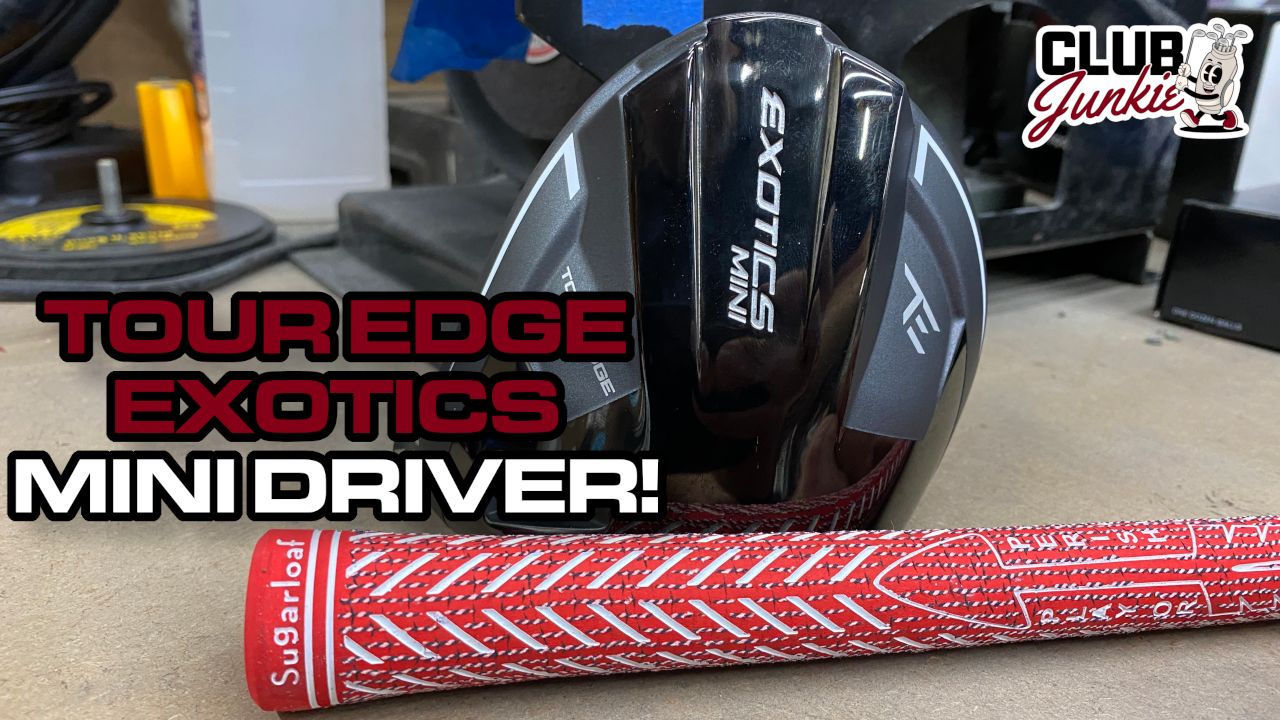
On this episode of Club Junkie, I put the new Tour Edge Exotics Mini Driver to the test and break down the performance, forgiveness, distance, and where it fits compared to a traditional driver or strong fairway wood. If you have been curious about adding a mini driver to the bag, this one is worth a look.
I also dive into the new TaylorMade Spider ZT Max putter that was recently spotted and discuss the growing zero torque putter trend. Plus, there is a closer look at the new Project X Titan Yellow shaft showing up on the PGA Tour and what makes it different from other profiles currently out there.

Justin Rose WITB 2026 (April): Full WITB breakdown with new McLaren irons

What’s the story behind Webb Simpson’s custom-stamped irons?

Memorial Tournament Tour Report: Rory McIlroy, Cameron Young switch up drivers, and more

Cadillac Championship Tour Report: Spieth’s sizable changes, McLaren Golf launches, and more

Russell Henley’s winning WITB: 2026 Charles Schwab Challenge

Kristoffer Reitan’s winning WITB: 2026 Truist Championship

Best irons 2026: Best irons overall, most forgiving irons, and more

J.T. Poston’s winning WITB: 2026 Memorial Tournament

Aaron Rai’s winning WITB: 2026 PGA Championship

Cameron Young’s winning WITB: 2026 Cadillac Championship


Bud Cauley WITB 2026 (June)
Bud Cauley had >14 clubs in his bag when photographed prior to the Memorial Tournament. Driver: Titleist GTS2 (8 degrees) Shaft: Fujikura...


Hannah Green WITB 2026 (June)
Driver: Titleist GTS3 (10 degrees, D4 SureFit setting) Shaft: Mitsubishi Chemical Diamana RB 53 S 3-wood: Titleist GT3 (15 degrees,...


Asterisk Talley WITB 2026 (June)
Driver: TaylorMade Qi4D (9 degrees) Shaft: Fujikura Ventus Blue 6 S 3-wood: TaylorMade Qi4D (16.5 degrees) Shaft: Fujikura Ventus Blue...

Brianna Do WITB 2026 (June)
Driver: Callaway Quantum Triple Diamond (9 degrees) Shaft: KBS PGW 3-wood: Callaway Elyte Titanium (15 degrees) Shaft: KBS PGW 5-wood:...
-
 Equipment6 days ago
Memorial Tournament Tour Report: Rory McIlroy, Cameron Young switch up drivers, and more
-
 News2 weeks ago
Russell Henley’s winning WITB: 2026 Charles Schwab Challenge
-
 Equipment3 days ago
Best irons 2026: Best irons overall, most forgiving irons, and more
-
 Whats in the Bag4 days ago
J.T. Poston’s winning WITB: 2026 Memorial Tournament
-

 Equipment1 week ago
Details on Jason Day’s latest prototype Avoda iron setup
-
 Equipment3 weeks ago
CJ Cup Byron Nelson Tour Report: Koepka and Kim’s newest putters finally get hot
-

 News2 weeks ago
Charles Schwab Challenge Tour Report: MacIntyre, Åberg and Spaun all switch putters, TaylorMade launches new Spider
-
 Equipment2 weeks ago
Details on J.J. Spaun’s surprise putter switch


TommyMaysHayes
Jul 5, 2018 at 3:18 am
Mike,
Kudos for presenting so.e useful metrics and solutions. Also for putting up with some snide comments with good humor. I hope you aren’t dissuaded from future contributions!
Mike Scaduto
Jul 5, 2018 at 7:20 am
Thank you Tommy! i will definitely be contributing more in the future!
Frank Xavier
Jul 3, 2018 at 8:00 pm
Thank you for the excellent article. You have got to the core of many/most golfers swing issues in a very targeted, thoughtful and constructive manner. Look forward to more like this.
Mike Scaduto
Jul 5, 2018 at 7:21 am
Thank you Frank! All swing “issues” are typically multi-factorial but I think working on movement quality is a fantastic place to start, especially for the amateur golfer.
JJD
Jul 3, 2018 at 7:10 pm
Doing a simple 5×5 program (my current favorite is ICF 5×5 [side note: blaha is an idiot but this program that he essentially stole is solid]) is a great way to be in shape for golf. I’m not a subscriber to the philosophy that amateurs need to do “sports-specific” programs. In fact, I think most would benefit more so from doing a generalized total-body program when considering the lack of any kind of fitness of the majority of the public.
Mike Scaduto
Jul 5, 2018 at 7:24 am
JJD– I totally agree. The majority of amateur golfers would see tremendous benefit from a “general” strength and conditioning program. Focusing on movement quality, strength, power, speed, agility, etc is a great way to feel better and improve your game. Exercises in the gym do not need to mimic the golf swing, sticking to fundamental movement patterns is typically the way to go for amateurs!
Bob
Jul 2, 2018 at 1:21 am
the test was failed when you chose to wear high black socks to the gym… My God what were you thinking.
Mike Scaduto
Jul 2, 2018 at 2:50 pm
Thanks for the feedback! I’ll be sure to where socks that you approve next time!
Jamie
Jul 1, 2018 at 4:35 pm
So golf is doomed then. Tip to the author: Suggest these exercises as a means of making an athletic and comfortable swing rather than saying someone will never succeed at the game unless …..
ogo
Jul 1, 2018 at 4:40 pm
Yup… 99.5% of all 50 million golfers worldwide will fail these tests. Why? Because maintaining fitness ain’t ffuunn …. 😛
Mike Scaduto
Jul 2, 2018 at 8:14 pm
Thanks for your feedback. I’m sorry that you didn’t find this article helpful.
Mike Scaduto
Jul 5, 2018 at 10:28 am
OGO– playing better golf is surely a lot more fun than struggling around the course though 🙂
Mike Scaduto
Jul 2, 2018 at 8:05 pm
Jamie– thanks for the comment. I’m sorry that that was your take away from this article, it wasn’t my intention.
The purpose of the article was to highlight that physical restrictions may impact your golf swing. I’m not sure where I made it seem like golf is doomed because of this? Plenty of golfers can be successful even if they can’t touch their toes or hold a glute bridge. There are also plenty (maybe even more) golfers who are trying to improve their game but are frustrated by their progress. My intention was to show that for some people, working on their movement quality may lead to more meaningful improvement and better play.
I’d be happy to discuss this further if you have any questions!
Mike
Sean
Jul 1, 2018 at 3:57 pm
I know scratch golfers that can’t do any of those things
Ryan
Jul 1, 2018 at 4:03 pm
I know about 5 guys that cant do either and shoot par easily
Mike Scaduto
Jul 2, 2018 at 8:13 pm
Sean–
No doubt. I’m sure there are millions of golfers who are scratch or better who can’t pass these tests. These tests are in no way meant to be predictive of a golfers handicap or skill level.
The article is written for golfers who are looking to improve their game but are frustrated by their lack of progress. The goal was to educate golfers that working on movement quality can have a positive impact on their game. Also, even scratch golfers (and professional golfers) are constantly trying to get better. This may be a great way for these great golfers to improve their game and take it to the next level.
I’d love to hear your opinion on this. I think we could have a great discussion on this.
David
Jul 12, 2018 at 12:11 pm
That would be me. LOL
Jay
Jul 1, 2018 at 12:41 pm
Mike, I haven’t been able to touch my toes since forever. I think I couldn’t do it even back in high school.
Do you think the drill will help, or should I start taking Yoga classes to increase basic flexibility first instead?
Mike Scaduto
Jul 2, 2018 at 8:25 pm
Hey Jay– Thank you for the comment.
Without knowing much about you, I would suggest that you find a qualified physical therapist, etc who can fully assess your particular situation and come up with a game plan tailored to your needs.
I’d be happy to connect via email or phone if you’d like to discuss this further!
-Mike