
Opinion & Analysis
How many Greens in Regulation should you be hitting based on your handicap?


What exactly is a Green-in-Regulation (GIR)?
This may seem like a silly question. It certainly did to me until I recently met with two of my long-time clients — prominent golf instructors — and learned that they both (independently of each other) had been coaching their elite juniors that a GIR meant that an approach shot was successful. REALLY guys?
To be clear, a GIR is a ball reaching the putting surface in two or more strokes less than par, regardless of how it gets there. A few examples of GIR’s:
- A Par 5 green reached in two shots.
- A Par 5 missed in two but the short game shot hit on the green in three.
- A Par 4 green driven or reached in one or two shots.
- A Par 3 tee shot that comes to rest on the green.
How do I know the Number of GIR’s players should hit?
I developed ShotByShot.com, a Strokes-Gained analysis website. We have been providing Strokes Gained analysis to players at all levels of the game since 1992, collecting more than 320,000 rounds from thousands of players in the process.
What is so important about GIR’s?
In my opinion, GIR’s is the most important of the Old School, one-dimensional traditional stats. ShotByShot.com replaced these dinosaur stats with a more dynamic and informative analysis methodology – now known as Strokes Gained. Those that have read my previous articles or visited my website will know these old stats as:
- Fairways Hit
- Sand Saves
- # Putts
- # Putts per GIR
In the ShotByShot.com program, Fairways Hit has been retained, but augmented by five categories of the severity of the fairways missed. (See my recent article explaining this further: How valuable is hitting fairways, really?) I kept GIR’s as they are an important positive in the game. First, it is an accomplishment to have been efficient enough to reach the green in regulation. Second, is always represents some sort of a birdie opportunity.
The Numbers?
The GIR numbers below represent the number hit by each handicap group in the rounds when they play to their handicap, or the BEST 10 of their most recent 20 rounds. In other words, if you strive to get to Scratch (0 handicap), your best rounds should average about 12 GIR’s.

Finally, you might ask how could the 0-2 handicap group hit virtually the same Number of GIR’s as the PGA Tour average? Here are a few reasons:
- The dramatic difference in the length of the courses played by the pros vs. amateurs.
- Pros tend to attack pins looking for birdies while amateurs learn to excel through consistency.
For a complete analysis of the strengths and weaknesses of your game, log onto ShotByShot.com.










This past Monday, I played in the U.S. Amateur local qualifier at Rock Creek Country Club in Portland, Oregon. A full tee sheet from 7:30 a.m. to 1:55 p.m., the top 11 scores would make it to the U.S. Amateur final qualifying.
I teed off at 10:48 a.m.. With the 7:30 am tee time, you can get a feel for the leaders’ pace, and they were off and running on the challenging setup at Rock Creek.
View this post on Instagram
Getting to the highlight of the round on the par five 17th, a drive up the left side and 212 yards left to the front hole location. I took out a 5-iron with plans of middle of the green. The ball ended up 8 feet left of the hole, pin high. A slight downhill putt dropped in for an eagle 3 on the 17th. With the cut line looking to be anywhere from -2 to even par. This was the boost I had been waiting for all day.
With making par from the trees on 18, it was time to wait for a potential playoff with a posted score of one under par 71.
Three hours later, it was playoff time. 8 players for 6 spots. I made par on the playoff hole, which was good enough to advance to the U.S. Amateur final qualifying in July. USGA qualifiers sure deliver on all of the emotions in golf!
Club Junkie
Building my 2026 gamer WITB: Ranking the contenders and new putter projects – Club Junkie Podcast

The annual What’s In The Bag build is underway, and on this episode of Club Junkie, Brian breaks down the clubs currently leading the race for a spot in his 2026 gamer setup. From drivers and fairway woods to irons, wedges, and shafts, he ranks the equipment that’s performing best and explains what’s separating the front runners from the rest of the field.
Brian also heads into the workshop to discuss several putter projects currently on the bench. From head options and shaft choices to build ideas and testing plans, he shares what he’s working on and which putters could become serious contenders for the bag this season.
If you’re a gear junkie who loves equipment testing, club building, and the never-ending pursuit of the perfect setup, this episode is for you.
Follow Club Junkie:
Instagram: @clubjunkiepod
TikTok: @clubjunkiepod
Threads: @clubjunkiepod
X: @ClubJunkiePod
Club Junkie
Tour Edge Exotics mini driver review + TaylorMade Spider ZT Max first look – Club Junkie

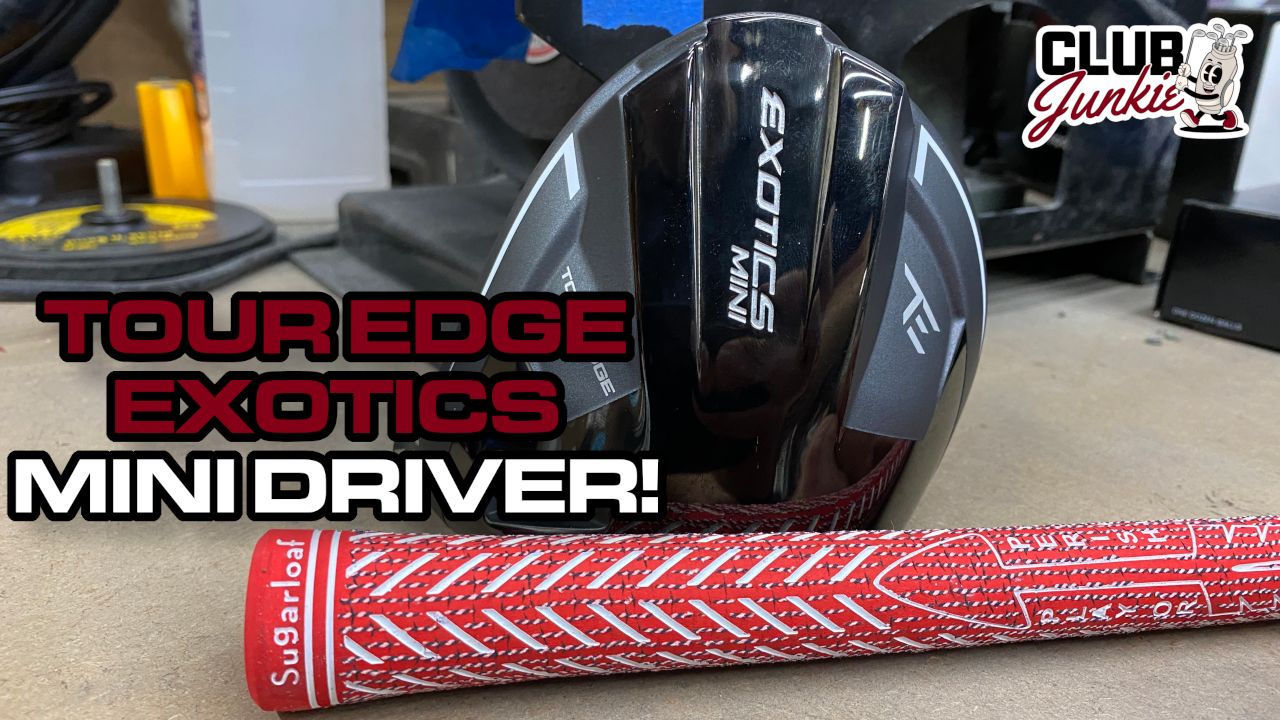
On this episode of Club Junkie, I put the new Tour Edge Exotics Mini Driver to the test and break down the performance, forgiveness, distance, and where it fits compared to a traditional driver or strong fairway wood. If you have been curious about adding a mini driver to the bag, this one is worth a look.
I also dive into the new TaylorMade Spider ZT Max putter that was recently spotted and discuss the growing zero torque putter trend. Plus, there is a closer look at the new Project X Titan Yellow shaft showing up on the PGA Tour and what makes it different from other profiles currently out there.

Justin Rose WITB 2026 (April): Full WITB breakdown with new McLaren irons

What’s the story behind Webb Simpson’s custom-stamped irons?

Memorial Tournament Tour Report: Rory McIlroy, Cameron Young switch up drivers, and more

Cadillac Championship Tour Report: Spieth’s sizable changes, McLaren Golf launches, and more

Russell Henley’s winning WITB: 2026 Charles Schwab Challenge

Kristoffer Reitan’s winning WITB: 2026 Truist Championship

J.T. Poston’s winning WITB: 2026 Memorial Tournament

Aaron Rai’s winning WITB: 2026 PGA Championship

Best irons 2026: Best irons overall, most forgiving irons, and more

Cameron Young’s winning WITB: 2026 Cadillac Championship


Bud Cauley WITB 2026 (June)
Bud Cauley had >14 clubs in his bag when photographed prior to the Memorial Tournament. Driver: Titleist GTS2 (8 degrees) Shaft: Fujikura...


Hannah Green WITB 2026 (June)
Driver: Titleist GTS3 (10 degrees, D4 SureFit setting) Shaft: Mitsubishi Chemical Diamana RB 53 S 3-wood: Titleist GT3 (15 degrees,...


Asterisk Talley WITB 2026 (June)
Driver: TaylorMade Qi4D (9 degrees) Shaft: Fujikura Ventus Blue 6 S 3-wood: TaylorMade Qi4D (16.5 degrees) Shaft: Fujikura Ventus Blue...


Brianna Do WITB 2026 (June)
Driver: Callaway Quantum Triple Diamond (9 degrees) Shaft: KBS PGW 3-wood: Callaway Elyte Titanium (15 degrees) Shaft: KBS PGW 5-wood:...
-
 Equipment6 days ago
Memorial Tournament Tour Report: Rory McIlroy, Cameron Young switch up drivers, and more
-
 News1 week ago
Russell Henley’s winning WITB: 2026 Charles Schwab Challenge
-
 Whats in the Bag3 days ago
J.T. Poston’s winning WITB: 2026 Memorial Tournament
-
 Equipment3 days ago
Best irons 2026: Best irons overall, most forgiving irons, and more
-

 Equipment1 week ago
Details on Jason Day’s latest prototype Avoda iron setup
-

 Equipment3 weeks ago
CJ Cup Byron Nelson Tour Report: Koepka and Kim’s newest putters finally get hot
-

 News2 weeks ago
Charles Schwab Challenge Tour Report: MacIntyre, Åberg and Spaun all switch putters, TaylorMade launches new Spider
-

 Equipment2 weeks ago
Details on J.J. Spaun’s surprise putter switch


henry
Jun 10, 2018 at 6:09 am
This is some solid advice. Though I dont know if I would ever throw a $20 on the ground for missing a putt on the practice green. I like the basis though. I keep a towel under my lead armpit for just about every swing, and the second I feel tired, I take it to the putting green. But i improved a lot by using this product. https://bit.ly/2HAGq7v
JJD
Jun 4, 2018 at 5:24 pm
Geez, I’m in the 0-5 handicap range and I’m lucky to hit 6 or 7 greens. I need to work on that.
Scott
May 14, 2018 at 4:20 pm
Thank you for the stats. This article is spot on. Sure there are some irregularities with small green courses or people that can’t putt hitting greens and not scoring, but I score better when I hit greens. I am sure most amateurs score better with a putter in their hand then with a wedge.
Mike
May 14, 2018 at 10:10 am
I think this also highlights how good of putters PGA tour pros are, as well as how good their short games are in general. I’ve been a 0-3 handicap for years and used to track my GIR, and about 12 was my average. However, my scoring was more like averaging 75-76, because I had/have a mediocre short game at best and made few birdie putts. I used to joke that a tour pro would probably average about 69 from where I hit it tee to green, and that is probably true….
OB
May 9, 2018 at 3:28 pm
the comment on pro’s attack flags and ams learning to be consistent is nonsense, and no basis in fact.
Si
May 8, 2018 at 5:00 am
I don’t always hit GIR….but when I do I 3 putt!!!
chris Jensen
May 4, 2018 at 3:57 pm
I agree with the poster who counts the Big GIR and includes the fringe, or what my playing partners refer to as “handy”; ie not on the green but still fairly near the pin and possibly make-able.
Is it better to be on the green a long way from the hole, or relatively near the pin, just off the green?
As a young junior I could hit 12-15 greens fairly consistently by playing away from the pin in most situations, and being happy with stress free pars. I’d always end up 3 putting a few though, and I’d only make a few birdies on average because I was 20-30 feet a lot. I seldom could break 70 but rarely shot over 75 or 76.
As an older player, I’ve learned that taking dead aim on most pins is far more fun and will yield a lot more makeable birdies. When I miss the green it’s usually In the general vicinity of the pin, pin high, though often short-sided. I feel pretty good about my odds of getting up and down from there compared to putting from 50 or 60 feet. And when I do hit the shot the way I want to, Ive got a great look at birdie.
Nothing worse than playing away from the pin, hitting a perfect shot, and then having 30 or 40 feet for birdie.
Another point is distance control. I can hit all 18 greens, but if I am constantly coming up on the front of the green when the pins are middle or Back, it’s not going to be a great scoring round. Few realistic chances for birdie and lots of 3-putt potential. Getting the ball all the way back to the pin is critical to success
Another point to missed GIR is when you hit a poor tee shot and have no realistic shot at the green, blocked out, water, lost ball, etc. So to hit more greens, hit more fairways, Total Driving has a huge influence on GIR.
So in summary, GIR is less important to me than how close to the hole I end up whether you hit or miss the green. (Obviously I’d rather be on AND close) Obviously some risks are not worth taking in certain situations and some up and downs are impossible from the wrong spot.
when to be aggressive require careful thought and execution.
try to set yourself up with good angles off the Tee to attack the pins, back it up with a confident short game when you miss, and try to make lots of birdies. You may shoot high on your bad days, but your good days will be much much lower.
Bob Jones
May 4, 2018 at 2:53 pm
I believe for higher handicap golfers GIR is a completely irrelevant stat. What is more important at that level of golf is getting the ball green-high in regulation (GHIR), which is measure of how efficiently you play from tee to green (no OB, lost balls, water balls, tops, chunks, recovery strokes, etc.). Once your GHIR is routinely below 40 you can switch to GIR because you are good enough to start having them be more of an expectation to a certain extent than a matter of luck.
James T
May 4, 2018 at 12:17 pm
I count BGIR’s. “Big Greens In Regulation”. If I’m on the fringe or just off with a fairly flat lie I still stand a good chance of getting it up and down… sometimes even a chip in! For me, personally, this is a better and more reliable stat. So if I hit 13-14 BGIR’s I stand a good chance of shooting around or slightly over par. Although only 10 of those may have been GIR’s.
TheCityGame
May 4, 2018 at 11:52 am
GIR is much more aligned with “what you shoot” than what handicap you are. Many golfers play courses rated in between 68 and 75.
If you’re hitting 10 greens on a CR 70 course and you’re a 4 who wants to get to scratch, you better start hitting more greens, or find a way to hit 10 greens on a longer/tougher course.
al
May 4, 2018 at 11:20 am
Years ago one of the golf mags had a similar study and said if you want to shoot 80 you need about 8 GIR and for every additional GIR from there you hit you can average 2 shots better per round. Since then I have kept a lot of stats on my rounds and the stats are legit. I have averaged between 12-13 GIR for a long while and I fall in the +3 to +1 hdcp range. My really low rounds are usually a combination of more GIR and fewer putts- the poor rounds less GIR and more putts including 3 putts. So I tell players who want to improve if they track one stat over time it is GIR. I just finished a city tourney and hit 25 greens in 36 holes and shot -3 for the event. Very “balanced” score based on my ball striking. The year I won the event I hit 31 greens and shot -13 and putted great the last round.
2putttom
May 4, 2018 at 10:19 am
a good read and the graph gave me the info i was looking for and encouragement I need.
larrybud
May 3, 2018 at 10:19 pm
I must be a short game wizard. I was a 4-5 when I was hitting 7 a round.
Now I’m bet 2-3 and hit 11, however my “bad” differentials are much better.
Yoker
May 3, 2018 at 8:42 pm
I got WITB full of fantastic clubs and I still can’t break 90… and my GIR is lousy… what’s wrong with my clubs??!!!
Big Papa is in the House
May 8, 2018 at 3:04 pm
It’s you my man
Scott
May 14, 2018 at 4:14 pm
PXG
Zach
May 3, 2018 at 5:44 pm
This appears to be fairly consistent with my game at least. 14 handicap, I usually hit 3-4 greens per side or so. This has me pegged at 6.9. I can also easily hit 7 on one 9 and miss all of them the next 9.
Obee
May 3, 2018 at 4:27 pm
Overwhelmingly dependent on the type of course you play, be you pro or am..
10 – 15 years ago as a solid +2 to +3, I averaged 12+ greens per round, but the course I played was 6500, with soft greens. I would have averaged only 10 if I played my current course back then at 7200, 75.8/147.
You mention that in your section about pros versus plus-cap ams, but an amateur 7 handicapper with a home course of 6250 yards is generally going to hit lots more greens than a 7-capper at a course that’s 6950.
Peter Sanders
May 4, 2018 at 9:36 am
I agree Obee. The avg. course in our database is under 6,500 and rated 71+ / 120+
Christopher Hansen
Jun 4, 2018 at 5:22 pm
^^ This
Joe
May 3, 2018 at 2:38 pm
These numbers look about how I would think they would. I would say that the biggest change for players within the single-digit handicap range is course management and learning to play away from sucker pins. GIR tends to be reflective of better course management. Not at all surprised to see PGA Tour #’s lower than the best group of players, by handicap, for exactly the reason the author stated.
Jerry
May 3, 2018 at 1:16 pm
Curious how many WRX’s match up, I know that my number relate fairly closely to these stats for my handicap.
ViagrGolfer
May 3, 2018 at 12:24 pm
Now that I got a set of PXGs in my bag and I’m gonna put a Stability shaft to my Scotty for a stiffer putter with more feel I am confident my GIRs will shoot up magnificently.
acew/7iron
May 3, 2018 at 8:09 pm
Like the VH song when DLR says:
“Let us know…How you do!”
James T
May 3, 2018 at 8:39 pm
A Stability shaft in your Scotty won’t help your GIR’s. But it might help your score.
lance
May 4, 2018 at 2:48 pm
A stiffer shaft will always help you “score”….. ºUº