
Opinion & Analysis
Teaching professionals, take a seat (literally)

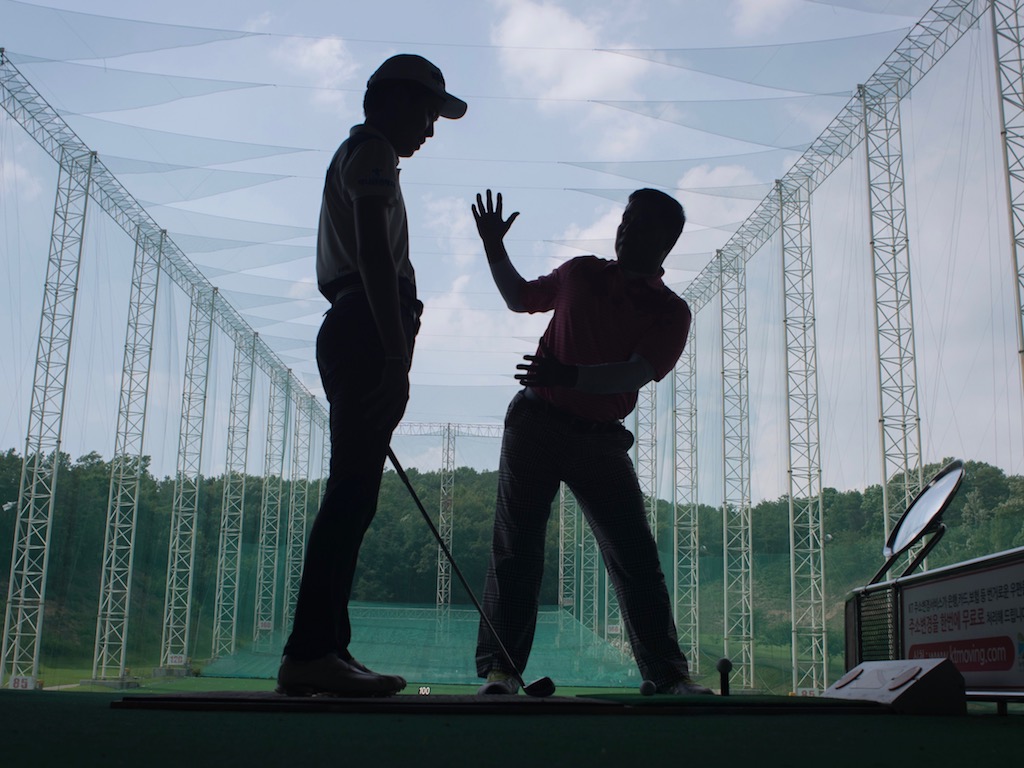
I’ve had the opportunity over the years to watch hundreds of teaching professionals give lessons — generally from a distance so as not to disturb them or their students. What I’ve observed is that they are always standing as if they were a waiter in a restaurant taking a dinner order.
I have to ask: Why?
Where is it written that a teaching professional must stand when giving a lesson? And yet I would venture that this is the standard protocol for virtually 100 percent of them. As a teacher, I think it is essential that we understand the great teachers that have gone before us, and so I’ve made a point to research each and every one of them dating back to Harry Vardon. In my research I found an accounting of John Jacobs’ life written by author Laddie Lucas in 1987. What he reported was that Jacobs, Europe’s preeminent teaching professional, had an advanced case of varicose veins because he had always stood while working with students during the course of his entire career.
I wish he could have read this article early in his career; it could have saved him a good deal of discomfort and pain. That said, before discussing this issue further, I think it is important to make a distinction between two different types of teaching professionals:
- Those that spend most of their time in the golf shop. When requested, they give a lesson here and there. They may not give more than 10-15 lessons per week, and in many cases these lessons are of a “touch-up” nature lasting no longer than 30 minutes.
- Those who are career teaching professionals and may give 40-50 lessons a week. They might be at a country club, a public course or a driving range. For the most part, their lessons are an hour in length. They may spend between 8-10 hours a day on the lesson tee teaching — on some occasions, seven days a week.
You might imagine standing for that long on your feet day after day, week after week, year after year. In what other profession would you be required to withstand that level of punishment. And for what? I was hired as the Teaching Professional at Interlachen Country Club in Edina, Minnesota in 1977. This was of course where Bobby Jones won the third leg of his Grand Slam in 1930. The very exclusive club is steeped in history, having held every possible USGA championship at one time or another. The invitation fee in 1977 was $50,000 and there was a two-year waiting list.
How did those members react back then when they saw two chairs sitting behind my teaching station? They were initially surprised, but when I explained the purpose of the chairs they understood completely. And those members who took lessons found how much they enjoyed the opportunity to sit down and relax between shots.
Here was the routine that I followed.
- At the beginning of the lesson, the student and I would sit down and talk about what had transpired since their last session.
- In the event they were a new student, I wanted to hear their story. I would, during this first session, ask them a few probing questions while identifying their goals and objectives — all the while in a relaxed and comfortable atmosphere.
- I would then ask them to hit a few shots with a variety of clubs. I would sit and watch. After they were done, I’d ask them to sit down. I would then stand, and move to the practice station, where I would explain what changes were necessary for them to improve. I would demonstrate the right and wrong way if I thought it would be helpful.
- The student would then stand and join me. I would then adjust their grip or setup if necessary. And then when advantageous, I would physically guide them through the correct backswing or downswing movements to provide them with the correct feel.
Through this process, I had armed the student with:
- An intellectual understanding of the problem.
- A visual picture of the correct position or desired movements.
- A physical feel for the required changes.
I would then sit down again as they began hitting shots, while at the same time giving them feedback from one shot to another. After they’d hit several shots, I would have them join me in sitting again. I would then have them state the changes they were to work on for two reasons:
- I wanted to make sure what they heard was what I had said, because I’d found over the years that often times the two accounts were different. This step avoided any possible confusion.
- I was of the opinion that if the student was not able to articulate what they’d learned, they likely didn’t really understand it. And in that case, I would clarify it for them.
In most cases, my next student would be warming up just as I was finishing with the first. I would slide over and repeat the entire process again with a fresh diagnosis and a custom-designed remedy.
I have not varied from this routine for more than 40 years. The only exception has been on some occasions that I have utilized a bench or a pair of stools while achieving the same effect. And what I’ve found through this process is that my students are not only more refreshed between shots, but they enjoy their lessons more because they are not so fatigued. You might be wondering, have I ever been chided by a student for sitting down? The answer is “No, never.” Whenever you visit the doctor, he enters the room what does he do? He sits down. Exactly.
Teachers around the country, I would like you to look at yourself in a mirror and repeat these words after me until you come to believe them as if they were gospel: “I am a highly trained and experienced professional, and for that reason there is no need for me to perpetually stand in front of my students as if I was hoping for a tip.” Once you have convinced yourself of that fact, find yourself two comfortable chairs, stools or a bench and start using them as I’ve described on the lesson tee.
And now that we’ve established that, let’s sit down and have a talk.








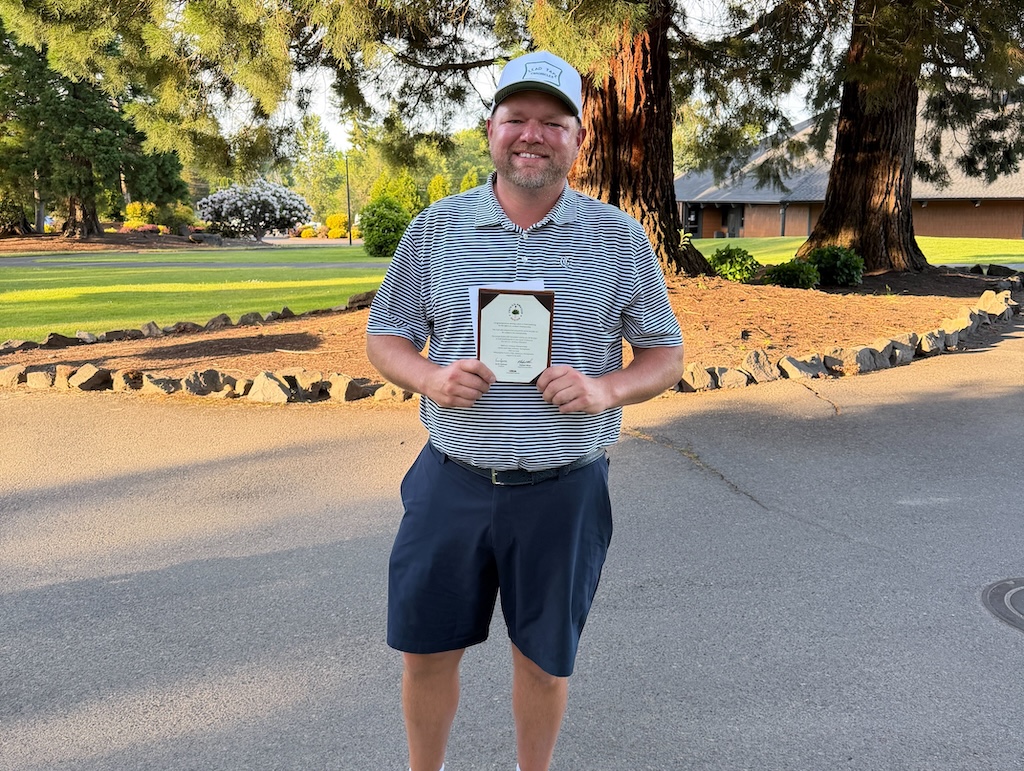
This past Monday, I played in the U.S. Amateur local qualifier at Rock Creek Country Club in Portland, Oregon. A full tee sheet from 7:30 a.m. to 1:55 p.m., the top 11 scores would make it to the U.S. Amateur final qualifying.
I teed off at 10:48 a.m.. With the 7:30 am tee time, you can get a feel for the leaders’ pace, and they were off and running on the challenging setup at Rock Creek.
View this post on Instagram
Getting to the highlight of the round on the par five 17th, a drive up the left side and 212 yards left to the front hole location. I took out a 5-iron with plans of middle of the green. The ball ended up 8 feet left of the hole, pin high. A slight downhill putt dropped in for an eagle 3 on the 17th. With the cut line looking to be anywhere from -2 to even par. This was the boost I had been waiting for all day.
With making par from the trees on 18, it was time to wait for a potential playoff with a posted score of one under par 71.
Three hours later, it was playoff time. 8 players for 6 spots. I made par on the playoff hole, which was good enough to advance to the U.S. Amateur final qualifying in July. USGA qualifiers sure deliver on all of the emotions in golf!
Club Junkie
Building my 2026 gamer WITB: Ranking the contenders and new putter projects – Club Junkie Podcast

The annual What’s In The Bag build is underway, and on this episode of Club Junkie, Brian breaks down the clubs currently leading the race for a spot in his 2026 gamer setup. From drivers and fairway woods to irons, wedges, and shafts, he ranks the equipment that’s performing best and explains what’s separating the front runners from the rest of the field.
Brian also heads into the workshop to discuss several putter projects currently on the bench. From head options and shaft choices to build ideas and testing plans, he shares what he’s working on and which putters could become serious contenders for the bag this season.
If you’re a gear junkie who loves equipment testing, club building, and the never-ending pursuit of the perfect setup, this episode is for you.
Follow Club Junkie:
Instagram: @clubjunkiepod
TikTok: @clubjunkiepod
Threads: @clubjunkiepod
X: @ClubJunkiePod
Club Junkie
Tour Edge Exotics mini driver review + TaylorMade Spider ZT Max first look – Club Junkie

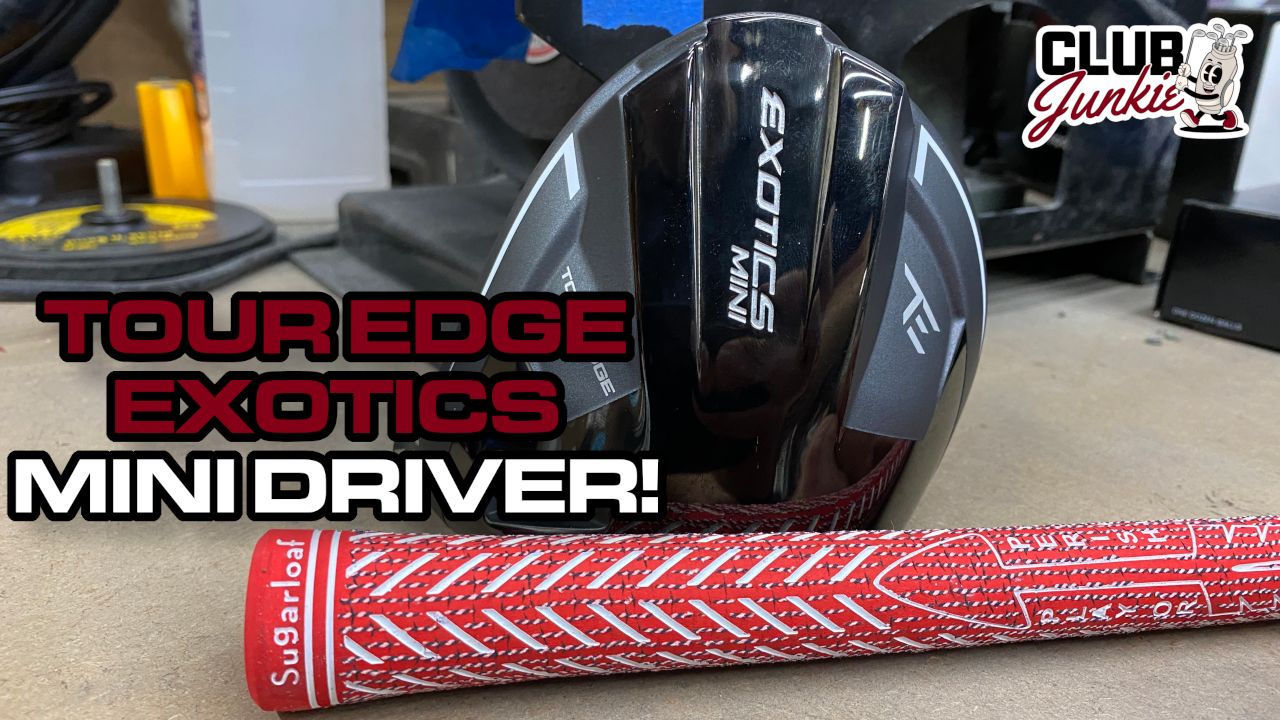
On this episode of Club Junkie, I put the new Tour Edge Exotics Mini Driver to the test and break down the performance, forgiveness, distance, and where it fits compared to a traditional driver or strong fairway wood. If you have been curious about adding a mini driver to the bag, this one is worth a look.
I also dive into the new TaylorMade Spider ZT Max putter that was recently spotted and discuss the growing zero torque putter trend. Plus, there is a closer look at the new Project X Titan Yellow shaft showing up on the PGA Tour and what makes it different from other profiles currently out there.

Justin Rose WITB 2026 (April): Full WITB breakdown with new McLaren irons

What’s the story behind Webb Simpson’s custom-stamped irons?

Memorial Tournament Tour Report: Rory McIlroy, Cameron Young switch up drivers, and more

Cadillac Championship Tour Report: Spieth’s sizable changes, McLaren Golf launches, and more

Russell Henley’s winning WITB: 2026 Charles Schwab Challenge

Kristoffer Reitan’s winning WITB: 2026 Truist Championship

J.T. Poston’s winning WITB: 2026 Memorial Tournament

Aaron Rai’s winning WITB: 2026 PGA Championship

Best irons 2026: Best irons overall, most forgiving irons, and more

Cameron Young’s winning WITB: 2026 Cadillac Championship


Bud Cauley WITB 2026 (June)
Bud Cauley had >14 clubs in his bag when photographed prior to the Memorial Tournament. Driver: Titleist GTS2 (8 degrees) Shaft: Fujikura...


Hannah Green WITB 2026 (June)
Driver: Titleist GTS3 (10 degrees, D4 SureFit setting) Shaft: Mitsubishi Chemical Diamana RB 53 S 3-wood: Titleist GT3 (15 degrees,...


Asterisk Talley WITB 2026 (June)
Driver: TaylorMade Qi4D (9 degrees) Shaft: Fujikura Ventus Blue 6 S 3-wood: TaylorMade Qi4D (16.5 degrees) Shaft: Fujikura Ventus Blue...


Brianna Do WITB 2026 (June)
Driver: Callaway Quantum Triple Diamond (9 degrees) Shaft: KBS PGW 3-wood: Callaway Elyte Titanium (15 degrees) Shaft: KBS PGW 5-wood:...
-
 Equipment6 days ago
Memorial Tournament Tour Report: Rory McIlroy, Cameron Young switch up drivers, and more
-
 News1 week ago
Russell Henley’s winning WITB: 2026 Charles Schwab Challenge
-
 Whats in the Bag3 days ago
J.T. Poston’s winning WITB: 2026 Memorial Tournament
-
 Equipment3 days ago
Best irons 2026: Best irons overall, most forgiving irons, and more
-

 Equipment1 week ago
Details on Jason Day’s latest prototype Avoda iron setup
-
 Equipment3 weeks ago
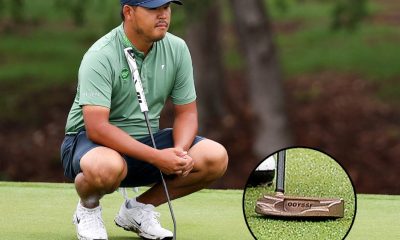
CJ Cup Byron Nelson Tour Report: Koepka and Kim’s newest putters finally get hot
-

 News2 weeks ago
Charles Schwab Challenge Tour Report: MacIntyre, Åberg and Spaun all switch putters, TaylorMade launches new Spider
-
 Equipment2 weeks ago
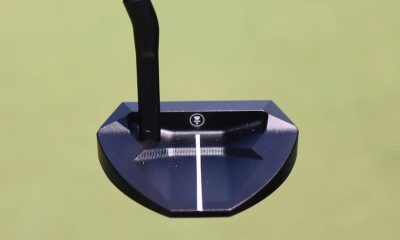
Details on J.J. Spaun’s surprise putter switch


One Day At A Time
May 10, 2018 at 1:49 am
I want to point out a chronological pattern I’ve observed. Working carts, we sat down for a few minutes twice a day. Working the driving range, the picker was considered a bit of a break. Working the counter, we met customers standing, face to face. Teaching juniors, we often were kneeling and moving up and down the line. Observing from down the line and moving to face on in doing a diagnosis. Standing in front of mirrors demonstrating an adjustment to an address position. Moving from an inside setting to an outside setting. Taking payment, face to face, with a handshake and a “Thank You for coming out”.
The trend is, it’s an active job when done in this linear fashion.
Dave r
May 5, 2018 at 11:08 pm
Hey. He’s giving you the lesson I’m not paying some pro $150.00 an hour to sit and watch sorry. I go for a reason for him to tell me what I’m doing wrong I shouldn’t have to ask .
Rev G
May 4, 2018 at 11:53 am
Another nice thing about sitting while practicing or taking a lesson is it gives you a chance to slow down and collect your thoughts. Also, physically it stretches out your back and relaxes your shoulders. If you just sit there and bang balls standing up for an hour straight, it’s often difficult to stay mentally and physically ready to hit balls in a manner like you want to on the course.
larrybud
May 3, 2018 at 10:54 pm
I quit an instructor because he would sit the entire lesson. He would say “do this” and never show me. So it depends on the student and what you’re working on. If you’re trying to get me into a certain position, or tell me a certain drill, you better show me.
PGA Coach
May 4, 2018 at 9:19 am
Did you ever say “I’m not sure understand, can you show me?”
Radim Pavlicek
May 5, 2018 at 6:31 am
Did you tell him?
ViagrGolfer
May 3, 2018 at 12:27 pm
A new set of golf clubs will do wonders for your swing and your game. It did for mine.. PXG.