
Opinion & Analysis
4 Reasons the RTJ Golf Trail should be your next golf trip

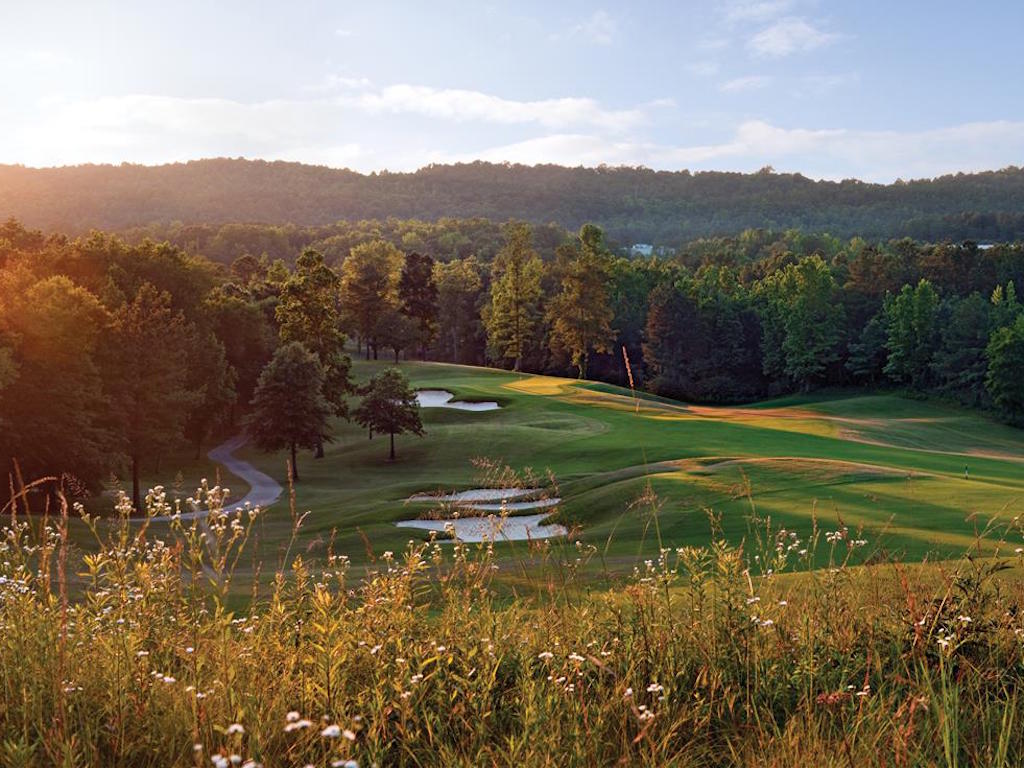
There is no other golf destination like it. The RTJ Trail in Alabama spans hundreds of miles. Only Myrtle Beach comes close in terms of top-to-bottom distance. The RTJ Trail courses were built concurrently. St. Andrews took hundreds of years, while Bandon took 2 decades. While Pinehurst unites three communities, the RTJ Trail unifies an entire state in golf.
And yet, the RTJ Trail bears elements that make each of those other destinations a success. It has the diversity of courses found along the Grand Strand, if not the variety of architects. RTJ offers variety of terrain and shot value, if not the native sands of North Carolina, the Oregon coast and Scotland. Most important, the RTJ Trail offers many reasons to return, all thanks to the range of venues where courses are located. Let’s have a look at 4 reasons to make Alabama’s Robert Trent Jones Golf Trail your next destination venture.
1) Sites and Scorecards
The first thing your eyes catch, even if you read from left to right, are the numbers on the official Trail web site: 468 holes, 26 courses, 11 sites. If you’ve ever gone on a trip where you change hotels and locales with the sun, you understand how frustrating and exhausting such poor planning is. I know from personal experience: I planned a trip to Michigan that way, and it ended with a near-fistfight! Only one of the 11 sites (Ross Bridge) has just 18 holes, but it’s a mere 5-minute car ride from the 54 holes at Oxmoor Valley. With the exception of the 36-hole Highland Oaks property, in the southeastern corner of the state, each site is within an hour drive of another. In the case of Highland Oaks, no southern Iditarod is necessary. Both Grand National (Auburn/Opelika) and Cambrian Ridge (Greenville) are 2 hours away.
A fact not emblazoned across the crest of the trail, each of the sites for golf courses was donated to the Retirement Systems of Alabama, the entity responsible for the massive undertaking. One might suspect that the lands acquired would be less than ideal for golf, but that’s not the case. The rumpled geography (including climate and weather, in addition to topography) of the state ensured an assortment of characteristics. Some layouts sit high above rivers and small lakes, while others traverse hillsides. Others still, abut the gulf of Mexico. In each case, the land offered was either viable in its current condition, or manipulable with minimal earth-moving.
2) Diverse Layouts
I’m the first to step forth and say that there was a lot about Roger Rulewich’s approach to golf course architecture that I dislike. I found his Ballyowen in New Jersey to be nearly unplayable. Perhaps it was the pretense of an Irish golf course, that in no way, shape or form looked like, felt like, played like, an Irish golf course. I wasn’t a fan of Saratoga National, either, as it seemed to base itself on ways to disrupt golf with water. It’s known that Rulewich was the driving force behind the RTJ Trail. Mr. Jones, Sr., was up in years when the trail was build: he passed away in 2000, 6 days short of his 94th birthday. As his lieutenant, Rulewich oversaw much of design and construction. AND he did a great job. Our trip took us from Prattsville to Birmingham, to Auburn/Opelika. None of the courses felt remotely like a copy or twin of any other. I will warn you that the Links course at Grand National (Auburn/Opelika) is actually more lakes than the adjacent Lakes course, but that’s nothing. Both courses and the 18-hole, par-three layout on site are a barrel of fun.
Let me tell you what it’s like to play an 8200-yard course. The Ross Bridge course near Birmingham is a delight for the senses. Up and down wondrous land, bagpiper playing as your come to 9 or 18, vistas across adjoining fairways, extending for acres. Back to the challenge. For transparency, I’m a 52-year old, 5’9″ guy with above-average fitness and golf ability (I’m fairly strong, very good hand-eye coordination and a traveling 5 handicap), so base your personalization of this experience off that. Now, here is the paradigm: everything in your mind shifts. Your shortest par-3 hole is 250 yards, and most of them require a 235-yard carry over doom. Your par-4 holes live in the rarefied air above 480 yards, unless they are uphill and only 450. As for the par-5 holes, I almost parred one of them. I hit more solid shots on this golf course than I can describe, and I did not make a single par. I had plenty of chances at par, but couldn’t get the putts to fall. Zero greens in regulation meant zero birdie putts. No chip-ins, either. Are you begging the question “Why did you do it?” Imagine the ultra-marathoner and the challenge that she faces in running way more than 26 miles. I wanted the experience. I wasn’t interested in a score. No one but you cares what you shot on your trip; they only ask about the experience. For me, the experience was brought to fruition at 8200 yards.
We had the opportunity to play two short courses. Long before par-3 courses became the rage at Bandon Dunes and other locales, the RTJ Trail incorporated them into their sites. Their reasoning, based on logic, was that golfers might not be up for 36 challenging holes in a day, but they might like a warm-up 18, or a day-ender. Hence, the open-arms approach to the short course. The day we played the 8200 yard course at Ross Bridge, we warmed up at Oxmoor Valley’s wee links. I use the term warm up with intent; the morning was a chilly, windy one on the ridge, but when we descended into the valley, the wind abated. The vertical topography demands that holes play either up or down a slope. The other reason for the term is, you will use nearly every club in your bag. No need to go to the range before a round at Oxmoor or Ross Bridge. Play the short course early and you’ll be ready for 18 holes in no time.
Our other venture onto a less-than-regulation layout was at Grand National. Home to the aforementioned pair of regulation courses (Lakes and Links), Rulewich and Jones found a way to weave the short course onto the same land as the big fellows. No perimeter wasteland here, no use of unneeded land for a throwaway course. The shortie at Grand National is just the thing to end a day, which is what we did when we pulled into town. Knowing that we had 36 big holes the following morning, we opted for brief and exciting, and Grand National Short offered both. Oh, if you’re wondering, the Lakes and Links courses provide the same memories, challenges and thrills. Former home to the PGA Tour’s Barbasol Championship, if I had to pick one resort to which to return, it would be hard to say no to Grand National.
3) Nearby Towns
It’s a 360 mile drive from Huntsville (in the north) to Point Clear (in the south), the longest distance between sites. Not far behind is the 340-mile trek from Muscle Shoals (also in the north) to Point Clear. That’s a lot of state, and to imagine 9 other sites and almost 400 other holes in between, is nearly preposterous. Fortunately, the Trail lives in harmony with its state. Unlike some resorts that strive to keep you on site, gypping the local businesses of needed cash and awareness, courses along the trail encourage you to visit places like Opelika, Prattville and Point Clear. The esprit de corps of an entire state is on display at every stop along the trail.
Case in point: Opelika. No need to ride-share from the resort. One of the drivers will take you into town, and pick you up at the pre-arranged hour. No charge for the ride, but don’t forget to tip the chauffeur. We took a 10-minute ride into town, expecting only dinner. What we found was a delightful, reclaimed downtown. Once home to factories and a busy train trestle, this pleasant area is now home to restaurants, breweries, distilleries and benches. What better place to be, after a round or two of golf, than an urban space with a place to dine, quaff, and relax? If you’re in the area in the fall, there’s another town nearby, called Auburn. Rumor is, they play a bit of football over there.
You’ll find an Opelika nearly everywhere you go along the trail. Each has its own flavor to savor, and offers the perfect complement to hard-fought battles on the links. As much as I want to return to see the other courses along the trail, I also want to visit the Yellowhammer state again for its small towns.
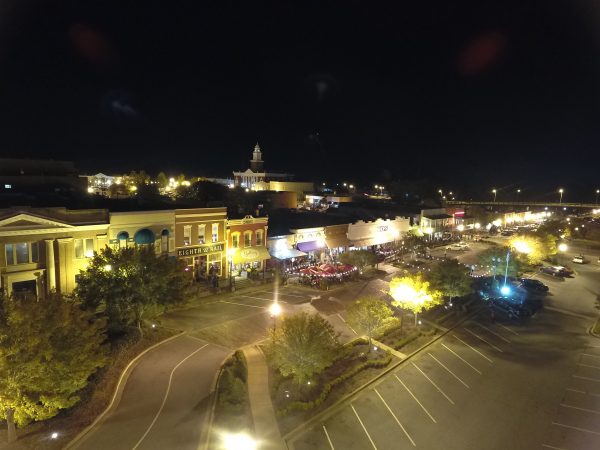
Opelika At Night
4) Lodging
It might seem odd to return to the importance of lodging, immediately after I’ve suggested you take a tour of the towns that house the Trail venues. There are times aplenty when you don’t want to go out after 36 holes. You want to lay down in a comfortable bed for a few hours, have a nice dinner on site, and watch a game or two on television, in the tavern. The majority of the properties have on-site lodging, allowing you to roll out of the golf cart and into your room. It’s time for a dip in the pool or hot tub, followed by a beverage at the outdoor bar. Or, a quick shower and nap, then down to the grill room for some vittles.
Oh, the room. Let’s not forget the beds that make you feel like you’re sleeping on air cushions, the sitting rooms that allow friends to gather for television or conversation, nor the windows that look out, more often than not, onto the golf courses themselves. If it weren’t for the golf, you’d be forgiven for spending as much time as possible in the suite! Ironically, the one resort where we had to stay off-site was the one we most wanted to see. The Ross Bridge clubhouse and lodge, a Marriott property, was completely booked by a company for a retreat. No rooms were available, and you couldn’t go inside at the turn or the 19th hole, except to visit the pro shop. It’s understandable why that company, and others like it, would want to seclude its employees for training purposes. With gentle waterfalls, distant vistas and multiple dining options, Ross Bridge might be the premier property along the entire Robert Trent Jones golf trail.
Concluding Thoughts
–The best place to fly into is Atlanta. The drive is not too distant, and is entirely interstate. You even gain an hour when entering Alabama. What’s more, with Atlanta being a hub for so many airlines, chances are excellent that travel costs will be reduced;
–Our visit included the middle row of courses, from top to bottom. We saw some of Oxmoor Valley, and all of Ross Bridge, Capitol Hill and Grand National. A second visit would be the northern trio of The Shoals, Hampton Cove and Silver Lakes, where 6 regulation and 1 short course await. Visit #3 would take on the southern tier, the most ambitious of the trips. Four sites, offering 8 full-size and 1 short course, sit in anticipation of our arrival. After that, a 4th trip would select the favorite properties. Interstates and beltways move travelers from each corner and every perimeter, in appropriate amounts of time;
–As with any golf getaway, do your homework and know what to expect from the weather. My threesome assumed (typical northerners) that anything south of us would be balmy, steamy and sunny. It certainly was more enjoyable than upstate New York in March, but had we packed properly, we would have muttered less. Alabama is a beautiful state, and the positioning of the RTJ Trail golf courses throughout, ensures that visitors will experience and enjoy something new, no matter which corners of the state they visit.
###
Photos Courtesy of Michael Clemmer for RTJ Golf Trail

Capitol Hill , Robert Trent Jones Golf Trail, Prattville, Alabama, Photo courtesy of Michael Clemmer

Capitol Hill, Prattville, AL, Photo courtesy of Michael Clemmer

Robert Trent Jones Golf Trail, Capitol Hill, Prattville, AL, Photo courtesy of Michael Clemmer

Oxmoor Valley/Robert Trent Jones Golf Trail Birmingham, AL, Photo courtesy of Michael Clemmer

Ross Bridge Golf Resort & Spa, Robert Trent Jones Golf Trail, Birmingham, AL, Photo courtesy of Michael Clemmer

Ross Bridge Golf Resort & Spa, Robert Trent Jones Golf Trail, Birmingham, AL, Photo courtesy of Michael Clemmer



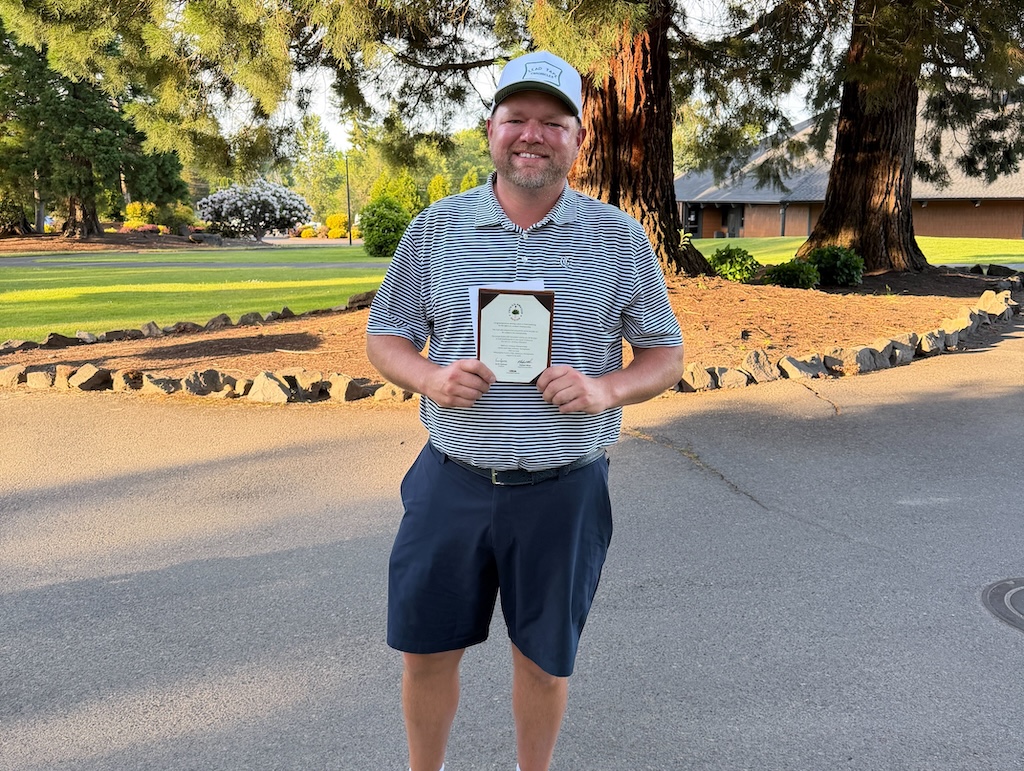
This past Monday, I played in the U.S. Amateur local qualifier at Rock Creek Country Club in Portland, Oregon. A full tee sheet from 7:30 a.m. to 1:55 p.m., the top 11 scores would make it to the U.S. Amateur final qualifying.
I teed off at 10:48 a.m.. With the 7:30 am tee time, you can get a feel for the leaders’ pace, and they were off and running on the challenging setup at Rock Creek.
View this post on Instagram
Getting to the highlight of the round on the par five 17th, a drive up the left side and 212 yards left to the front hole location. I took out a 5-iron with plans of middle of the green. The ball ended up 8 feet left of the hole, pin high. A slight downhill putt dropped in for an eagle 3 on the 17th. With the cut line looking to be anywhere from -2 to even par. This was the boost I had been waiting for all day.
With making par from the trees on 18, it was time to wait for a potential playoff with a posted score of one under par 71.
Three hours later, it was playoff time. 8 players for 6 spots. I made par on the playoff hole, which was good enough to advance to the U.S. Amateur final qualifying in July. USGA qualifiers sure deliver on all of the emotions in golf!
Club Junkie
Building my 2026 gamer WITB: Ranking the contenders and new putter projects – Club Junkie Podcast


The annual What’s In The Bag build is underway, and on this episode of Club Junkie, Brian breaks down the clubs currently leading the race for a spot in his 2026 gamer setup. From drivers and fairway woods to irons, wedges, and shafts, he ranks the equipment that’s performing best and explains what’s separating the front runners from the rest of the field.
Brian also heads into the workshop to discuss several putter projects currently on the bench. From head options and shaft choices to build ideas and testing plans, he shares what he’s working on and which putters could become serious contenders for the bag this season.
If you’re a gear junkie who loves equipment testing, club building, and the never-ending pursuit of the perfect setup, this episode is for you.
Follow Club Junkie:
Instagram: @clubjunkiepod
TikTok: @clubjunkiepod
Threads: @clubjunkiepod
X: @ClubJunkiePod
Club Junkie
Tour Edge Exotics mini driver review + TaylorMade Spider ZT Max first look – Club Junkie

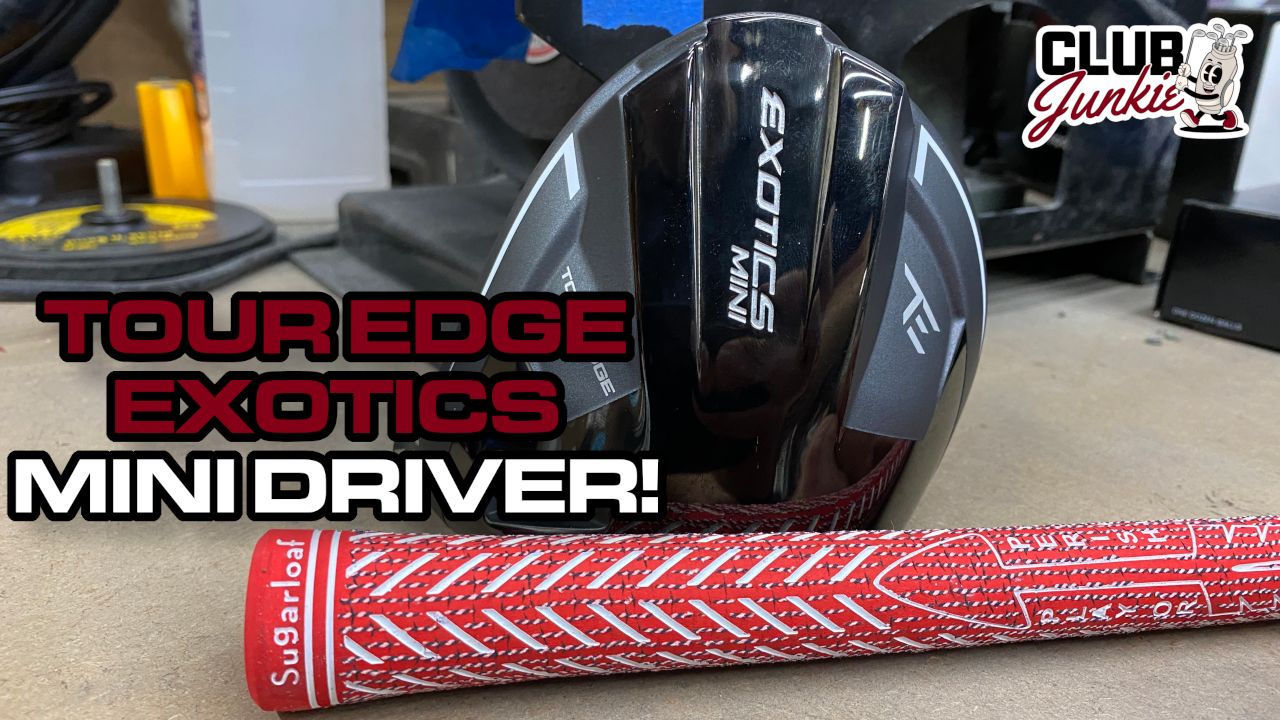
On this episode of Club Junkie, I put the new Tour Edge Exotics Mini Driver to the test and break down the performance, forgiveness, distance, and where it fits compared to a traditional driver or strong fairway wood. If you have been curious about adding a mini driver to the bag, this one is worth a look.
I also dive into the new TaylorMade Spider ZT Max putter that was recently spotted and discuss the growing zero torque putter trend. Plus, there is a closer look at the new Project X Titan Yellow shaft showing up on the PGA Tour and what makes it different from other profiles currently out there.

What’s the story behind Webb Simpson’s custom-stamped irons?

Memorial Tournament Tour Report: Rory McIlroy, Cameron Young switch up drivers, and more

Cadillac Championship Tour Report: Spieth’s sizable changes, McLaren Golf launches, and more

Russell Henley’s winning WITB: 2026 Charles Schwab Challenge

Kristoffer Reitan’s winning WITB: 2026 Truist Championship

Best irons 2026: Best irons overall, most forgiving irons, and more

J.T. Poston’s winning WITB: 2026 Memorial Tournament

Aaron Rai’s winning WITB: 2026 PGA Championship

Cameron Young’s winning WITB: 2026 Cadillac Championship

Details on Jason Day’s latest prototype Avoda iron setup


Ryan Palmer WITB 2026 (June)
Driver: Callaway Quantum Triple Diamond (9 degrees) Shaft: Project X HZRDUS Smoke Blue RDX 60 TX 3-wood: TaylorMade Qi10 (15 degrees) Shaft:...


Bud Cauley WITB 2026 (June)
Bud Cauley had >14 clubs in his bag when photographed prior to the Memorial Tournament. Driver: Titleist GTS2 (8 degrees) Shaft: Fujikura...


Hannah Green WITB 2026 (June)
Driver: Titleist GTS3 (10 degrees, D4 SureFit setting) Shaft: Mitsubishi Chemical Diamana RB 53 S 3-wood: Titleist GT3 (15 degrees,...


Asterisk Talley WITB 2026 (June)
Driver: TaylorMade Qi4D (9 degrees) Shaft: Fujikura Ventus Blue 6 S 3-wood: TaylorMade Qi4D (16.5 degrees) Shaft: Fujikura Ventus Blue...
-
 Equipment6 days ago
Memorial Tournament Tour Report: Rory McIlroy, Cameron Young switch up drivers, and more
-
 News2 weeks ago
Russell Henley’s winning WITB: 2026 Charles Schwab Challenge
-
 Equipment3 days ago
Best irons 2026: Best irons overall, most forgiving irons, and more
-
 Whats in the Bag4 days ago
J.T. Poston’s winning WITB: 2026 Memorial Tournament
-
 Equipment1 week ago
Details on Jason Day’s latest prototype Avoda iron setup
-
 Equipment3 weeks ago
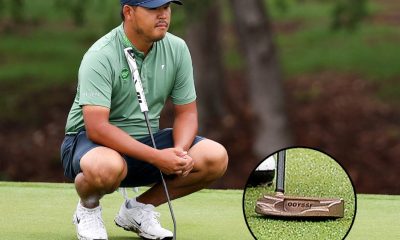
CJ Cup Byron Nelson Tour Report: Koepka and Kim’s newest putters finally get hot
-

 News2 weeks ago
Charles Schwab Challenge Tour Report: MacIntyre, Åberg and Spaun all switch putters, TaylorMade launches new Spider
-

 Equipment2 weeks ago
Details on J.J. Spaun’s surprise putter switch


ht
Aug 3, 2018 at 11:09 am
Great article! Couldn’t agree more. Everyone should put the trail on their list of future golf trips.
Personal favorite is the Senator at Capitol Hill in Prattville. Nice links style set up
Ronald Montesano
Aug 4, 2018 at 8:36 am
What an interesting course. The other two on property spend a good bit of time below the ridge, but Senator is always on top, always out of the trees, exposed to the elements. I didn’t ask, but I hope that they allow it to play firm and fast always. The ground game is often sorely missed here in the USA.
CJ
Aug 2, 2018 at 11:04 am
Prattville and Grand National were two of my home sites for years. Unbeatable quality of golf for the money just to reiterate. I urge would be travelers to include Farmlinks if possible.
Ronald Montesano
Aug 3, 2018 at 10:37 am
Thank you, CJ.
Two great locations. Very inspired golf. It’s hard to believe that the land was undesirable and was donated, more or less.
Egor
Aug 1, 2018 at 3:16 pm
I’ve played two of their sites – top quality, high class, well maintained and for what you’re getting – reasonable price.
I go every year if I’m able.
Ronald Montesano
Aug 2, 2018 at 10:02 am
Egor,
I don’t announce my arrival, as I don’t want service that differs from the non-writing customer. I agree with your assessment. We were in Alabama in late March, not necessarily the best time for climate, but every place we stopped was beyond standard, in the proper direction.