
Opinion & Analysis
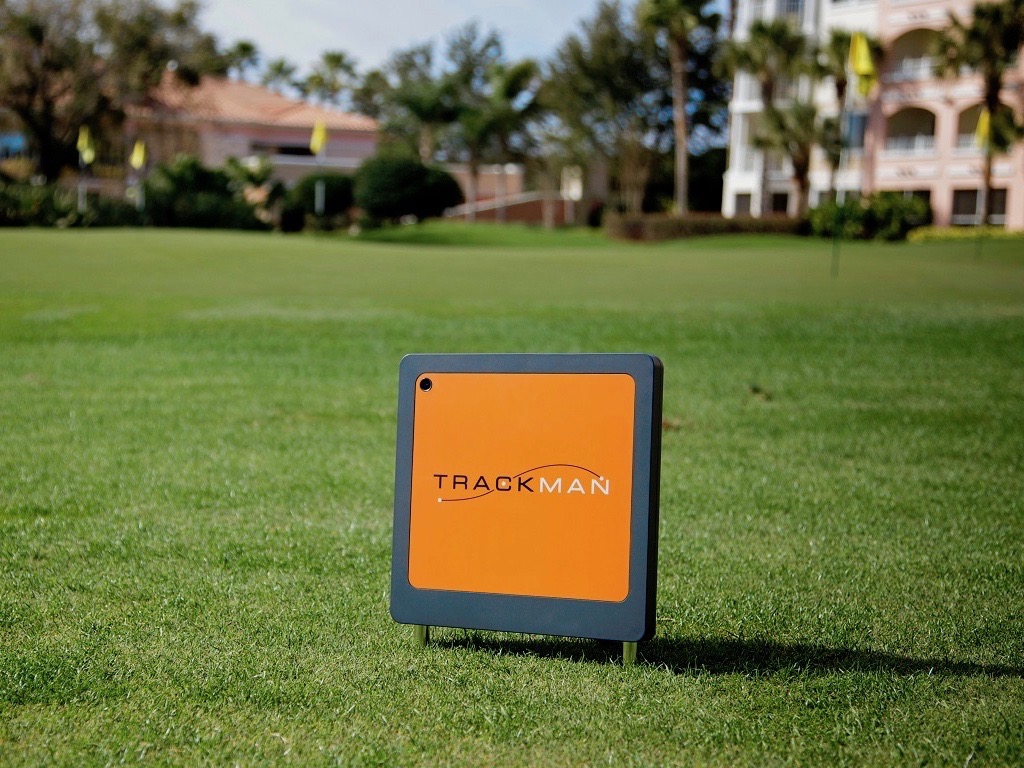
TrackMan: Zeroed Out and No Place To Go

I was looking forward to hearing Brandel Chamblee speak at the Golf Magazine Annual Summit for “Top 100” Teachers and their guests, which was held in 2016. He had made a second career for himself on the Golf Channel criticizing other PGA Tour players, and in the process, making himself a polarizing figure. I found myself agreeing with him some of the time, and then other times, not so much.
What I had observed was that he was not one to back down, and he seemed to enjoy a “healthy discussion,” which often would turn heated. He was in these discussions a formidable opponent, being both intelligent and quick witted — a deadly combination when debating any issue. Brandel was at that time on the verge of launching his new book, “The Anatomy of Greatness.” He planned on sharing some of the conclusions that he had reached with the group that evening. What he must have known going in was that he was entering the lion’s den. And for that reason alone, Chamblee deserves a good deal of credit for accepting the invitation knowing that he’d be under fire for some of the remarks he had made in the past.
On my end, I did some research prior to his presentation, wanting to be prepared in the event that I had an opportunity to ask him a question. As a teacher, I was especially interested in what he might have said up to that point about the role of technology in learning and performance — and more specifically, his view on the use of TrackMan.
***
Golf Channel, May 12, 2015
I found a clip on the internet dated May 12, 2015. Chamblee was at the Golf Channel desk during the Players Championship sitting with Frank Nobilo and David Duval. The topic was TrackMan: the pros and cons of gathering information. The other two announcers, at least for the 2 minutes and six seconds of the clip, had given the floor to Chamblee. Brandel, an outspoken critic of technology, began by criticizing the inaccuracies found in TrackMan’s numbers, citing a series of reports that he had consulted:
- That the machine is incapable of finding the center of mass but rather locates the geometric center of the club, which is more toward the heel.
- The machine under-reports clubhead speed because the club is swinging on an arc, and as a consequence, over-reports smash factor.
- The machine will often register a smash factor above 1.50 when measuring a tour player, which is impossible because the highest achievable number is 1.49.
- The machine doesn’t accurately measure where the ball is impacted on the face of the club because of various spin factors.
He found these facts disturbing. The one issue that concerned him the most, however, was that early adopters could not transfer their TrackMan numbers from the range to the golf course. In other words, they had one swing on the driving range and another swing on the golf course. To Chamblee, that made the use of TrackMan to improve player performance “counter-productive.”
He had a final point to make. It was that teachers ultimately had to transfer the cost of this new and expensive technology on to their students in a time when the game was getting more and more expensive to play. This was of concern to him as well.
***
That evening in 2016, Chamblee addressed some of the problems that in his opinion were associated with how TrackMan was being used. In this debate, there are two central issues:
- How TrackMan is being utilized by teachers.
- How Trackman is being utilized by players.
I listened closely to what he had to say, and on some of the issues we agreed. That said, I have my own concerns with regards to this debate. What I see happening is what I saw occur with the use of video many years ago, but on a smaller scale because of Trackman’s $20,000 price tag.
In the past, as the cost of cameras with slow-motion capability continued to drop from thousands of dollars to hundreds, they became more affordable. This made it possible for anyone to potentially become an expert. What evolved was that many run-of-the-mill teachers, using a video camera, would simply compare a student’s swing to a model and then point out the differences. This was without concern for the player’s individual biomechanics or if they were even physically capable of swinging in the prescribed manner.
For this reason, many top teachers have now either abandoned the use of video-analysis as part of their instruction or use it very little. They would prefer to spend their time connecting with their students on a more intimate one-on-one basis. This is the way that I now approach teaching after having worked with thousands of students over the past 45 years.
The nature of technology is that it will never take the place of human interaction between the teacher and his student. A central problem that is occurring in some quarters is that the machine is giving the lesson while the teacher simply reads off the numbers. This approach serves to undermine the establishment of a human connection between teacher and student.
In a Golf World article written by Matthew Rudy, dated April 19, 2017, he wrote that one of the common criticisms of modern instructors is that they’re helpless without information on a screen. I agree. I’m familiar with teachers who approach a lesson this way, caring only about the numbers without ever relating to the student.
Further, I have to agree with Hank Haney when he said in that same article “Information is great, and every teacher should be trying to get as much of it as possible. But that’s not the only piece.”
Randy Smith is of a similar opinion when talking about the use of TrackMan to coach a player: “Should a student want a sterile, perfect golf swing to work on in a room somewhere we can do that… but being efficient? Hitting different shots under different situations, different lies and pressure? That’s a different thing.”
Claude Harmon III who utilizes TrackMan on a limited basis was quoted in the same article with regards to younger players over dependence on the machine: “I have students come to me and quote their TrackMan combine numbers, and they can’t even tell me if they hit a fade or a draw. “
I’m not implying that TrackMan does not have a place in golf instruction or for use by players on a limited basis. As David Duval echoed at the very end of the Golf Channel clip, it should be used only “to check a few numbers.” As for teaching, what I am saying is that Trackman should be used only as a doctor would use an x-ray machine, which is to verify his diagnosis at times when he is unsure of the facts.
That said, is there a place for launch monitors?
Absolutely. They are invaluable, especially when it comes to driver fittings, where knowing the launch angle and the spin rate of the ball, is essential to maximizing distance through both carry and roll. And in terms of playing, knowing the carry distance of each club makes for more precise approach shots. But there are other launch monitors, aside from TrackMan, that can provide that same information at a much lesser cost.
The reality is that TrackMan is more than just a launch monitor, having the capability of providing detailed information about player performance—not just the ball. And for that reason, it’s easy for players to become obsessed with the numbers by seeking absolute perfection. They strive to, in TrackMan language, “zero-out” their swing. This is when the path and the face numbers are in perfect alignment with each other, both bracketed between the numbers +1 and -1. This state of being is considered by devotees to be the equivalent of finding the Holy Grail. The problem is that this type of perfectionism is not transferable to the course as noted earlier. And we know from our own experience as players that an attempt to be perfect can be a curse when it comes to this game, which at best is one of managed imperfection.
What can be concluded? I’m going to give Brandel the final word on this issue, as it was his name that ushered in the story. The opinion that he shared with Matthew Rudy, and I would like to share with you, was that he believed that modern players are both over analyzed and over coached.
“And as a consequence, they are not better for it, but they are worse,” Chamblee said.
My opinion? This time, I think Brandel got it right.









This past Monday, I played in the U.S. Amateur local qualifier at Rock Creek Country Club in Portland, Oregon. A full tee sheet from 7:30 a.m. to 1:55 p.m., the top 11 scores would make it to the U.S. Amateur final qualifying.
I teed off at 10:48 a.m.. With the 7:30 am tee time, you can get a feel for the leaders’ pace, and they were off and running on the challenging setup at Rock Creek.
View this post on Instagram
Getting to the highlight of the round on the par five 17th, a drive up the left side and 212 yards left to the front hole location. I took out a 5-iron with plans of middle of the green. The ball ended up 8 feet left of the hole, pin high. A slight downhill putt dropped in for an eagle 3 on the 17th. With the cut line looking to be anywhere from -2 to even par. This was the boost I had been waiting for all day.
With making par from the trees on 18, it was time to wait for a potential playoff with a posted score of one under par 71.
Three hours later, it was playoff time. 8 players for 6 spots. I made par on the playoff hole, which was good enough to advance to the U.S. Amateur final qualifying in July. USGA qualifiers sure deliver on all of the emotions in golf!
Club Junkie
Building my 2026 gamer WITB: Ranking the contenders and new putter projects – Club Junkie Podcast

The annual What’s In The Bag build is underway, and on this episode of Club Junkie, Brian breaks down the clubs currently leading the race for a spot in his 2026 gamer setup. From drivers and fairway woods to irons, wedges, and shafts, he ranks the equipment that’s performing best and explains what’s separating the front runners from the rest of the field.
Brian also heads into the workshop to discuss several putter projects currently on the bench. From head options and shaft choices to build ideas and testing plans, he shares what he’s working on and which putters could become serious contenders for the bag this season.
If you’re a gear junkie who loves equipment testing, club building, and the never-ending pursuit of the perfect setup, this episode is for you.
Follow Club Junkie:
Instagram: @clubjunkiepod
TikTok: @clubjunkiepod
Threads: @clubjunkiepod
X: @ClubJunkiePod
Club Junkie
Tour Edge Exotics mini driver review + TaylorMade Spider ZT Max first look – Club Junkie

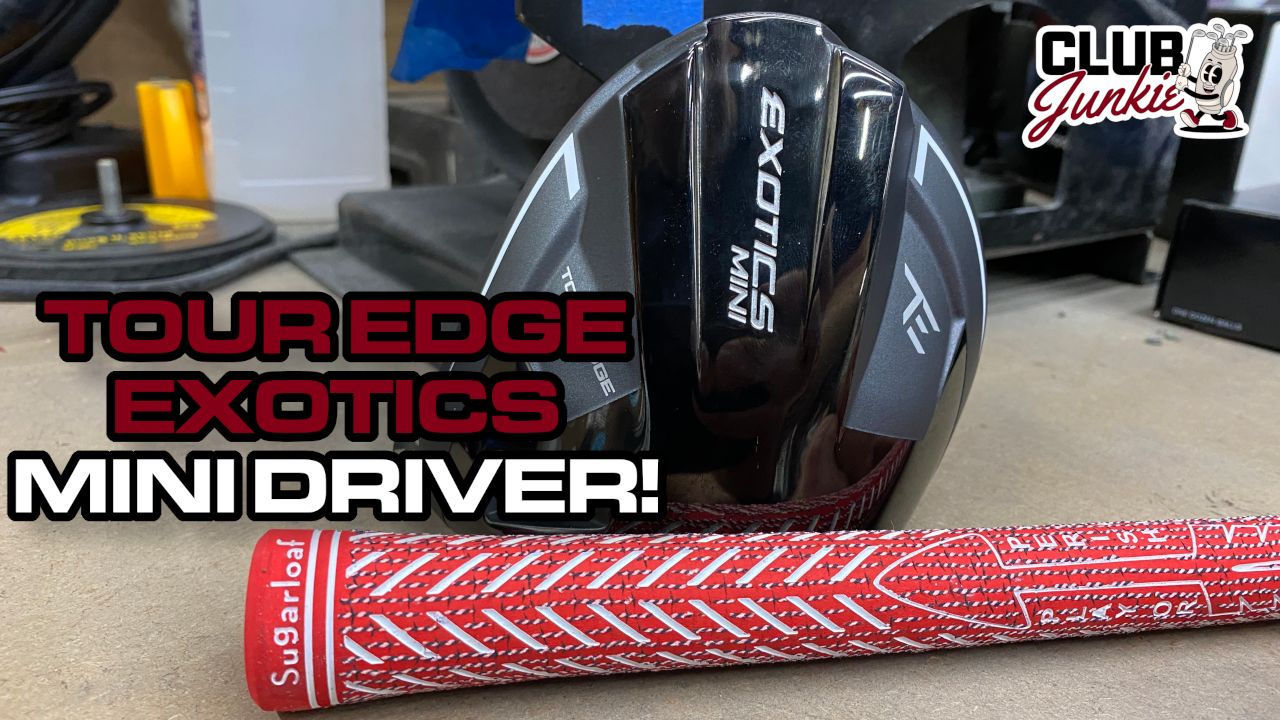
On this episode of Club Junkie, I put the new Tour Edge Exotics Mini Driver to the test and break down the performance, forgiveness, distance, and where it fits compared to a traditional driver or strong fairway wood. If you have been curious about adding a mini driver to the bag, this one is worth a look.
I also dive into the new TaylorMade Spider ZT Max putter that was recently spotted and discuss the growing zero torque putter trend. Plus, there is a closer look at the new Project X Titan Yellow shaft showing up on the PGA Tour and what makes it different from other profiles currently out there.

Justin Rose WITB 2026 (April): Full WITB breakdown with new McLaren irons

What’s the story behind Webb Simpson’s custom-stamped irons?

Memorial Tournament Tour Report: Rory McIlroy, Cameron Young switch up drivers, and more

Cadillac Championship Tour Report: Spieth’s sizable changes, McLaren Golf launches, and more

Russell Henley’s winning WITB: 2026 Charles Schwab Challenge

Kristoffer Reitan’s winning WITB: 2026 Truist Championship

J.T. Poston’s winning WITB: 2026 Memorial Tournament

Best irons 2026: Best irons overall, most forgiving irons, and more

Aaron Rai’s winning WITB: 2026 PGA Championship

Cameron Young’s winning WITB: 2026 Cadillac Championship


Bud Cauley WITB 2026 (June)
Bud Cauley had >14 clubs in his bag when photographed prior to the Memorial Tournament. Driver: Titleist GTS2 (8 degrees) Shaft: Fujikura...


Hannah Green WITB 2026 (June)
Driver: Titleist GTS3 (10 degrees, D4 SureFit setting) Shaft: Mitsubishi Chemical Diamana RB 53 S 3-wood: Titleist GT3 (15 degrees,...


Asterisk Talley WITB 2026 (June)
Driver: TaylorMade Qi4D (9 degrees) Shaft: Fujikura Ventus Blue 6 S 3-wood: TaylorMade Qi4D (16.5 degrees) Shaft: Fujikura Ventus Blue...


Brianna Do WITB 2026 (June)
Driver: Callaway Quantum Triple Diamond (9 degrees) Shaft: KBS PGW 3-wood: Callaway Elyte Titanium (15 degrees) Shaft: KBS PGW 5-wood:...
-
 Equipment6 days ago
Memorial Tournament Tour Report: Rory McIlroy, Cameron Young switch up drivers, and more
-
 News2 weeks ago
Russell Henley’s winning WITB: 2026 Charles Schwab Challenge
-
 Whats in the Bag4 days ago
J.T. Poston’s winning WITB: 2026 Memorial Tournament
-
 Equipment3 days ago
Best irons 2026: Best irons overall, most forgiving irons, and more
-

 Equipment1 week ago
Details on Jason Day’s latest prototype Avoda iron setup
-
 Equipment3 weeks ago
CJ Cup Byron Nelson Tour Report: Koepka and Kim’s newest putters finally get hot
-

 News2 weeks ago
Charles Schwab Challenge Tour Report: MacIntyre, Åberg and Spaun all switch putters, TaylorMade launches new Spider
-
 Equipment2 weeks ago
Details on J.J. Spaun’s surprise putter switch


Larry
Feb 17, 2018 at 9:41 am
This guy is a terrible teacher.
Andrew Cooper
Feb 17, 2018 at 9:02 am
Excellent article Rod. Trackman is amazing technology, but I think it’s healthy to keep a sense of perspective with it. On the course, every shot is a unique one-off. The skilled players aren’t so much relying on a consistent swing with perfect numbers, rather they’re using a refined feel to make the small adjustments and tweaks required to fit each situation; varying trajectory and curvature, adjusting to uneven lies etc. They’re not playing by numbers. Then you add in coping with the mental challenges of the game, course management, putting, short game etc. and having good Trackman numbers is great but translating that into lower scores is what counts.
OB
Feb 16, 2018 at 6:38 pm
TM has it’s scientific inadequacies but at least it is an empirical baseline from which to ‘track’ the progression of the student and tour pro. To regress back to a state of BLIND FEEL for changes to a golf swing is ludicrous…!
Scarface
Feb 17, 2018 at 9:12 am
Taylormade has that? lmao
Marcus Eglseer
Feb 15, 2018 at 9:29 pm
The author of this article could not be more wrong!!!
It would take too long to explain all his mistakes/misunderstandings, so I will list only a few:
First&most important, in what world is BC any top teacher/expert-because he is talking on the GC? That is flatout ridiculous!! He has never ever worked a teaching pro, not to speak of working with a tour pro of any success. Please do ask, if Peter Kostis is working with a TM when he is with Paul Casey..
Second example, do you really think, it is coincidence that more than 90% of all tour pros have&practice with a TM?
And last but not least, the author shows his incompetence with TM technology when he admits, it worth having the numbers for driver fitting. That shows, what an tec dinosaur the author is-it is like posssing an Iphone&just doing calls with it, never using it like a smartphone.
There is way more, but I am sure, nobody would read more than this.
My hope is that these clueless tec dinosaurs will soon be gone&in less than 8-10 years, the best pros/coaches will be working with their knowledge, eyes&tec in sync!
Scarface
Feb 17, 2018 at 9:15 am
I own an iPhone and use it only to text. Is that wrong? Who uses an iPhone to make calls?
JD
Feb 15, 2018 at 12:42 pm
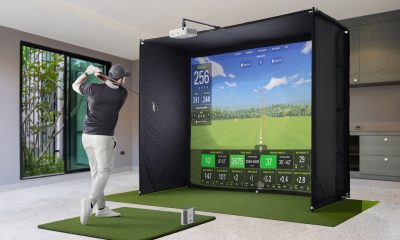
Moore’s Law. These guys will be irrelevant in 5 years as this technology will be available at a 10th of the cost. Hopefully some company will catch on to this and realize its a better investment for families to have a golf simulator in their homes than joining a club or paying $150 green fees for a family 3-4sum to play golf together. Trackman is like IBM in the 70s… stubborn and catering to a 0.0001% market of pro’s and teachers looking to be “Zeroed Out”… Once the tech catches up… companies like FlightScope, SkyTrack, and OptiShot that are trying to get into HOMES and not CLUBS should be a serious concern for Trackman and Foresight.
Steve Wozeniak
Feb 15, 2018 at 3:30 pm
Yep…….
Jack Nash
Feb 16, 2018 at 2:16 pm
Yup. All you need then is a new home with 10’ Ceilings to handle the new game.
Scarface
Feb 17, 2018 at 9:12 am
Why 15 years? You’re already irrelevant. lmao
dat
Feb 15, 2018 at 12:03 pm
TM LMs are all snake oil. Just hit the ball and get good instructions. The GC quad at least sees where you hit it on the face.
Steve moody
Feb 16, 2018 at 2:13 am
As does trackman from March onwards.
Jay Wonders
Feb 18, 2018 at 2:52 am
LOL and that camera technology is still inferior where only 10% of tour pros are using it. I am surprised that 10% is still using ti. If you can see the impact why is data algorithm still wrong? Because it does track the ball and does not account for aerodynamic.
Jay Wonders
Feb 18, 2018 at 2:54 am
Misspelled: it does not track the ball.
Sam
Feb 15, 2018 at 11:37 am
Like a wrench, Trackman can be a useful tool. – Useful when needed but be careful not to over-torque your nuts with it. Besides have you ever heard of a “Launch Monitor Golf Tournament” ? I haven’t. Maybe there is one. If there is, I don’t want to participate and I certainly don’t want to watch it.
Paul Booij
Feb 15, 2018 at 3:11 pm
There are virtual golf tournaments.
Dale Owens
Feb 15, 2018 at 11:09 am
Technology certainly has a place in development of the premier player. A player can marry feel and technology, to develop their own swing. Feedback provided by technology is very valuable.
TwitterBlocker
Feb 15, 2018 at 11:05 am
“I was looking forward to hearing Brandel Chamblee speak at the Golf Magazine Annual Summit for “Top 100”…” probably the only person ever looking forward to hearing BC talk.
the dude
Feb 15, 2018 at 2:25 pm
why??…he is a bright guy with plenty of knowledge…..
CW
Feb 15, 2018 at 10:48 am
Up until the past decade or so there were only a handful of guys that dominated the field. Now, it’s anybody’s game. I think the tech has helped, not hurt.