
Opinion & Analysis
Why you should consider playing Club Golf in college

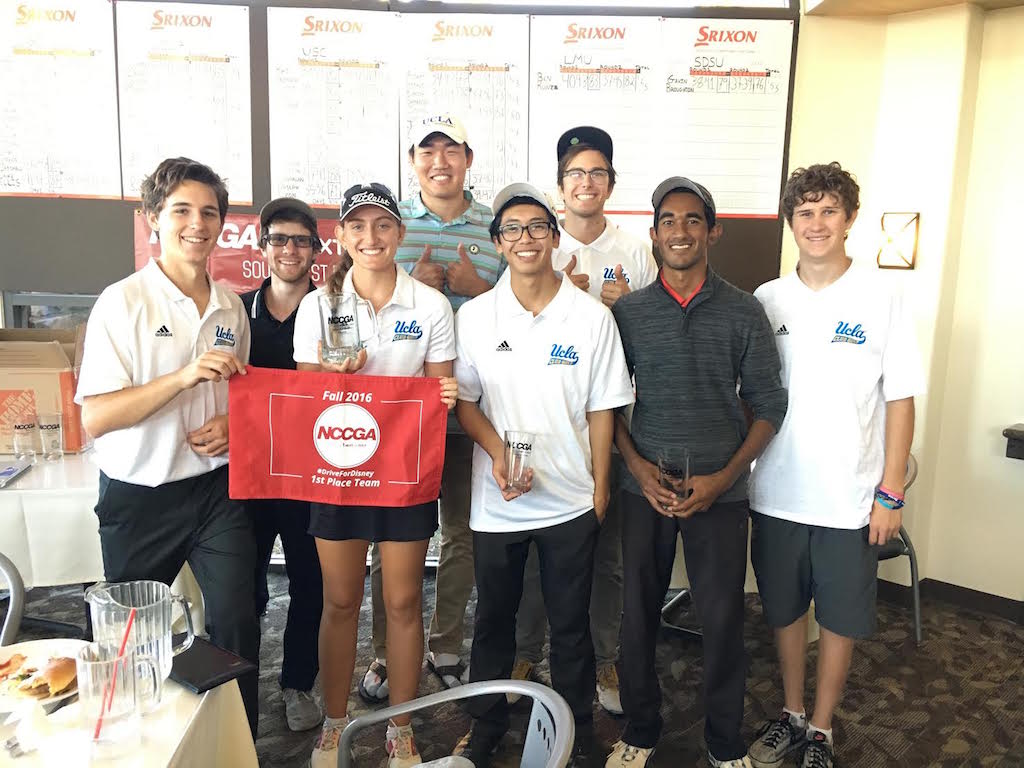
In 2003, college golf changed for the better when the Southeastern Club Golf Association started. The organization sought to provide college students in the southeast an opportunity to participate in organized, competitive golf. The Southeastern Club Golf Association grew to become the National Collegiate Club Golf Association (NCCGA) and is the governing body for club golf nationally. Today, fifteen years later, the NCCGA is a doing amazing things under the umbrella of Nextgengolf. Golf entrepreneurs and Nextgengolf founders Kris Hart, Matt Weinberger, and Mahesh Murthy were the guys behind making this happen. The NCCGA had 30 teams in 2009, and is now represented by 350+ programs including a wide spectrum of universities from Stanford, to the University of Florida, to Black Hills State University. With participation in the 10,000s, Nextgengolf is positioning itself to play a bigger role in the college and junior development scene.
Of the roughly 220,000 high school varsity boys and girls golfers, only about 17,000 will go on to play collegiate varsity golf. “Less than 8 percent of high school golfers will play any level of varsity golf in college,” Kris Hart, CEO of Nextgengolf, explained when describing the vast, pivotal industry segment.
Club Golf teams play a fall and spring season with over 60 tournaments being offered in the spring of 2018. These tournament allow both individuals, as well as teams, to compete on a regional and national scale. No matter the size of your college or skill level of your game, every college-aged golfer has a place to play and compete. Tournament entry fees are $95 on average per player for a two-day, weekend event at quality course. There are additional membership dues of $400 per team or $60 per individual as well. Teams are comprised of 8 players, with the top 5 scores from each team counting to form a team score.
Of the fall 2017 tournaments, 44 percent of them had an individual winner with a score under par. The lowest winning 36-hole score of the fall was by Ben Harden with a two-round total of 134 (10-under par). The average winning score in the fall of 2017 was 748 for 36 holes, counting 5 players per round. This means that the average score of a player on a winning team was 74.8. The average 5th place team score was 820 (averaging 82 for counting scores).
For junior golfers and their families, Nextgengolf provides an amazing opportunity to combine academics with competitive golf without having to worry about the recruitment process! Mason Wicks from Illinois State said “Club Golf is the perfect opportunity to play competitive golf in college without having the same time commitment as varsity golf. Through club golf you will meet lifelong friends and enjoy competing against many cool people all across the country.”
Club Golf has really carved out a segment quite complimentary to NCAA varsity golf. Varsity golf will always be the top destination for the top-ranked golfers, but many high school students are beginning to see the benefits of choosing a university for academics, on-campus experience, and club golf as opposed to subjecting themselves to varsity scholarship opportunities at schools they may not otherwise choose to attend.
“We have seen many varsity golfers transfer to bigger schools,” said Matt Weinberger, COO of Nextgengolf. “Ben Harden, the fall 2017 top ranked player, transferred from New Mexico State to Arizona State since he wanted to experience a larger school and was tired of each day being varsity practices and workouts, made a conscious choice that club golf was better suited for him.”
Each year, Club Golf continues to grow and the scores are dropping lower and lower. It wouldn’t be a surprise if we eventually see an elite player who used Club Golf as a path in their long-term development. College coaches are also starting to notice the strength of the players on club teams. Casey Luban of Michigan state said, “”I truly believe that club golf is a wonderful opportunity for players to continue to share their passion for the game and competitive golf outside of the Intercollegiate Athletics environment. I have always believed that in order for the game to continue to grow moving forward, we need to keep as many opportunities as possible out there for those who want to compete. Additionally, our game fosters and promotes relationships that can last a lifetime. I am a huge believer in club golf and I have been impressed by the accomplishments of these fine players.”
When deciding on where to go to college, club golf should be at the forefront versus an afterthought. The NCCGA provides a valuable service allowing anyone at any school to play college golf.



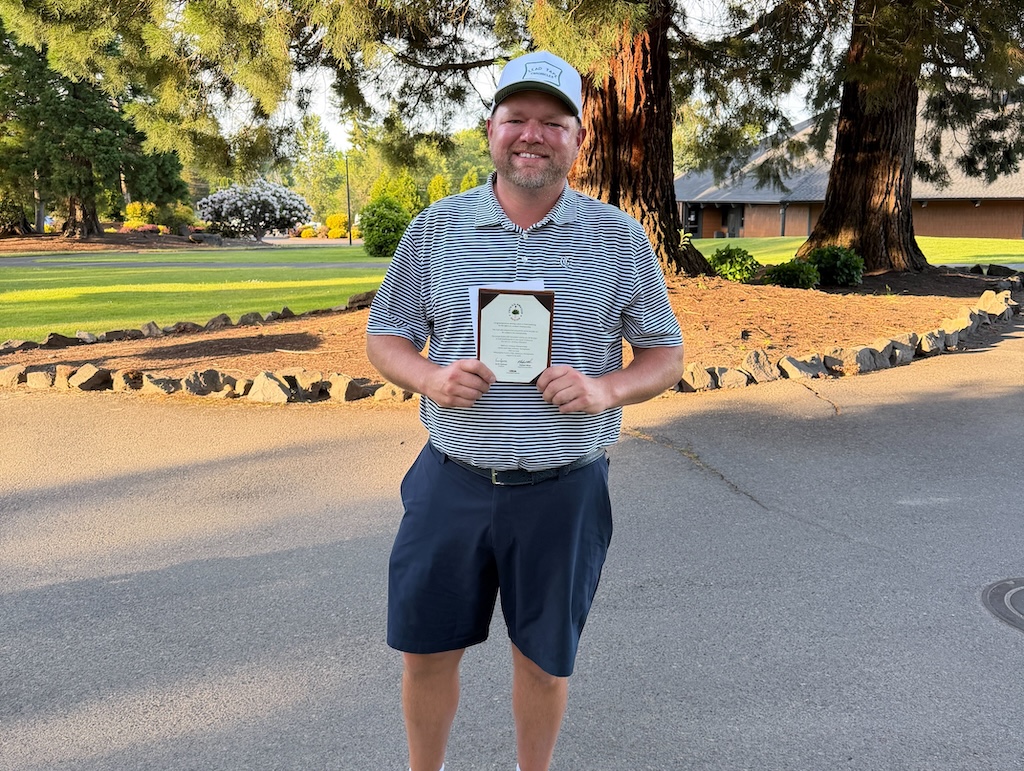
This past Monday, I played in the U.S. Amateur local qualifier at Rock Creek Country Club in Portland, Oregon. A full tee sheet from 7:30 a.m. to 1:55 p.m., the top 11 scores would make it to the U.S. Amateur final qualifying.
I teed off at 10:48 a.m.. With the 7:30 am tee time, you can get a feel for the leaders’ pace, and they were off and running on the challenging setup at Rock Creek.
View this post on Instagram
Getting to the highlight of the round on the par five 17th, a drive up the left side and 212 yards left to the front hole location. I took out a 5-iron with plans of middle of the green. The ball ended up 8 feet left of the hole, pin high. A slight downhill putt dropped in for an eagle 3 on the 17th. With the cut line looking to be anywhere from -2 to even par. This was the boost I had been waiting for all day.
With making par from the trees on 18, it was time to wait for a potential playoff with a posted score of one under par 71.
Three hours later, it was playoff time. 8 players for 6 spots. I made par on the playoff hole, which was good enough to advance to the U.S. Amateur final qualifying in July. USGA qualifiers sure deliver on all of the emotions in golf!
Club Junkie
Building my 2026 gamer WITB: Ranking the contenders and new putter projects – Club Junkie Podcast

The annual What’s In The Bag build is underway, and on this episode of Club Junkie, Brian breaks down the clubs currently leading the race for a spot in his 2026 gamer setup. From drivers and fairway woods to irons, wedges, and shafts, he ranks the equipment that’s performing best and explains what’s separating the front runners from the rest of the field.
Brian also heads into the workshop to discuss several putter projects currently on the bench. From head options and shaft choices to build ideas and testing plans, he shares what he’s working on and which putters could become serious contenders for the bag this season.
If you’re a gear junkie who loves equipment testing, club building, and the never-ending pursuit of the perfect setup, this episode is for you.
Follow Club Junkie:
Instagram: @clubjunkiepod
TikTok: @clubjunkiepod
Threads: @clubjunkiepod
X: @ClubJunkiePod
Club Junkie
Tour Edge Exotics mini driver review + TaylorMade Spider ZT Max first look – Club Junkie

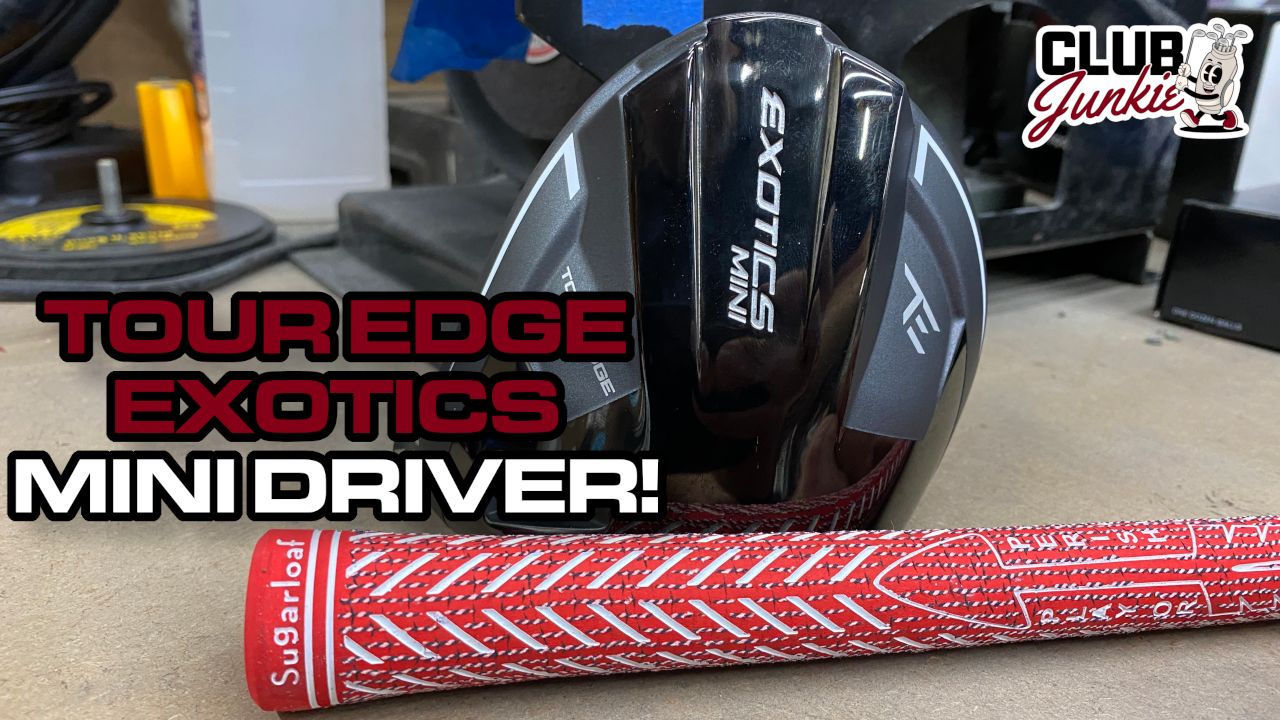
On this episode of Club Junkie, I put the new Tour Edge Exotics Mini Driver to the test and break down the performance, forgiveness, distance, and where it fits compared to a traditional driver or strong fairway wood. If you have been curious about adding a mini driver to the bag, this one is worth a look.
I also dive into the new TaylorMade Spider ZT Max putter that was recently spotted and discuss the growing zero torque putter trend. Plus, there is a closer look at the new Project X Titan Yellow shaft showing up on the PGA Tour and what makes it different from other profiles currently out there.

Justin Rose WITB 2026 (April): Full WITB breakdown with new McLaren irons

What’s the story behind Webb Simpson’s custom-stamped irons?

Memorial Tournament Tour Report: Rory McIlroy, Cameron Young switch up drivers, and more

Cadillac Championship Tour Report: Spieth’s sizable changes, McLaren Golf launches, and more

Russell Henley’s winning WITB: 2026 Charles Schwab Challenge

Kristoffer Reitan’s winning WITB: 2026 Truist Championship

Aaron Rai’s winning WITB: 2026 PGA Championship

J.T. Poston’s winning WITB: 2026 Memorial Tournament

Cameron Young’s winning WITB: 2026 Cadillac Championship

Best irons 2026: Best irons overall, most forgiving irons, and more


Bud Cauley WITB 2026 (June)
Bud Cauley had >14 clubs in his bag when photographed prior to the Memorial Tournament. Driver: Titleist GTS2 (8 degrees) Shaft: Fujikura...


Hannah Green WITB 2026 (June)
Driver: Titleist GTS3 (10 degrees, D4 SureFit setting) Shaft: Mitsubishi Chemical Diamana RB 53 S 3-wood: Titleist GT3 (15 degrees,...


Asterisk Talley WITB 2026 (June)
Driver: TaylorMade Qi4D (9 degrees) Shaft: Fujikura Ventus Blue 6 S 3-wood: TaylorMade Qi4D (16.5 degrees) Shaft: Fujikura Ventus Blue...


Brianna Do WITB 2026 (June)
Driver: Callaway Quantum Triple Diamond (9 degrees) Shaft: KBS PGW 3-wood: Callaway Elyte Titanium (15 degrees) Shaft: KBS PGW 5-wood:...
-
 Equipment6 days ago
Memorial Tournament Tour Report: Rory McIlroy, Cameron Young switch up drivers, and more
-
 News1 week ago
Russell Henley’s winning WITB: 2026 Charles Schwab Challenge
-
 Whats in the Bag3 days ago
J.T. Poston’s winning WITB: 2026 Memorial Tournament
-
 Equipment3 days ago
Best irons 2026: Best irons overall, most forgiving irons, and more
-

 Equipment1 week ago
Details on Jason Day’s latest prototype Avoda iron setup
-
 Equipment3 weeks ago
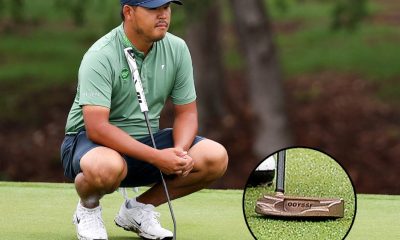
CJ Cup Byron Nelson Tour Report: Koepka and Kim’s newest putters finally get hot
-

 News2 weeks ago
Charles Schwab Challenge Tour Report: MacIntyre, Åberg and Spaun all switch putters, TaylorMade launches new Spider
-

 Equipment2 weeks ago
Details on J.J. Spaun’s surprise putter switch


Billable Hours
Feb 15, 2018 at 9:54 am
Unless you’re winning AJGA or other high level junior events, consider not playing college golf or using golf to get you into school with better academics regardless of whether it’s D1, D2, or D3. Top-tier college golf is a major commitment, and unless you have family money you should focus on academics as opposed to your scoring average.
It’s difficult to tell this to a kid, but they are most likely not good enough to be on tour and should focus on their careers after golf.