
Opinion & Analysis
The History of Course Design is Yours to Play at Oglebay

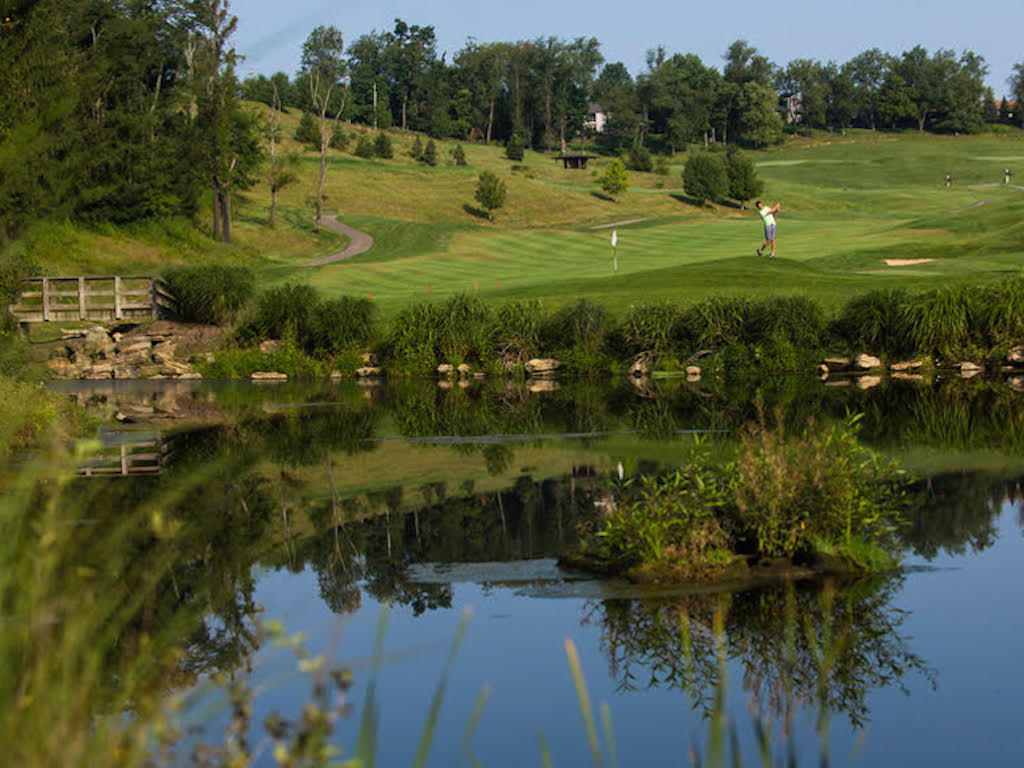
There is a much-talked about “New Golden Age” of golf course design underway that is driven by demand for ever-more spectacular courses at the top end of the resort golf market. Destinations such as Streamsong, Bandon Dunes, Cabot Links, Sand Valley and others provide the traveling golfer a spectacular golf experience; unfortunately, it comes at a price tag that is equally spectacular. When a week playing golf in Florida can cost as much as a week in Scotland, where do you go for a golf getaway that doesn’t require a second mortgage?
Oglebay Golf Resort in Wheeling, West Virginia, doesn’t just provide an affordable golf vacation option; with its three golf courses, it provides players the chance to experience a condensed history of American golf course design through its three courses. The resort sits on land that was once owned by a wealthy industrialist and is now a part of the city park system. Located about an hour from Pittsburgh, Oglebay draws the majority of its golfers from Pennsylvania, Maryland, Ohio, Virginia and West Virginia. It’s kind of cool that when you drive to Oglebay from Washington, D.C., you hit all of those states except Ohio, which is just a few minutes away from Wheeling. The area is especially picturesque in the autumn months when the changing colors of the leaves are at their peak.
The property has a rich history in the business and sporting history of West Virginia, but the three golf courses are a special prize that taken together form a primer on the history of golf design in the past 90 years. The 5,670-yard Crispin course is a one-off design by local golf enthusiast Robert Biery that was completed in 1930 and is a fascinating study of design techniques of that era. The slopes and elevation are severe and extreme by today’s standards. A clue was the raised eyebrow of the assistant pro when I said that I would walk the course. Uneven lies are the order of the day, the product of a time when there was neither the money nor equipment readily available to create gentle slopes and even surfaces; the course is true to the original contours of the West Virginia hillside. There is little relief on the greens, which run a little slower than typical greens but make up for it in size and slope. It is by far the shortest of the three courses but the par-4 8th hole and par-5 9th holes are a thousand yards of joy and pain.
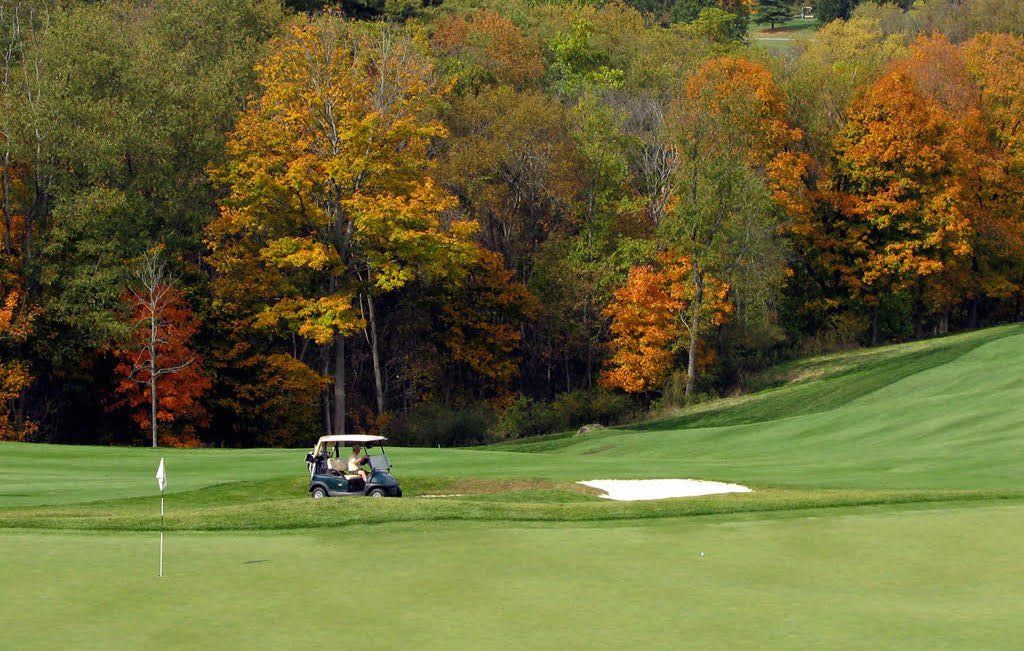
Hole No. 6 at the Klieves course
The Palmer Course is a 6,800-yard, par-71 Arnold Palmer design that was completed in 2000. The design features broad fairways, mildly undulating greens and opportunities for heroics on short par-4’s, all the prototypical characteristics of modern resort golf courses. While some architects choose to torture and torment, Palmer courses put a premium on fun and this one is no exception. The par-5, 515 yard 6th is a great example of risk/reward design that challenges the resort golfer without the need to humiliate. The course is very well maintained tee to green, and you’ll want to keep a fully charged battery to take photos of the vistas from the elevated tee boxes.

Hole No. 13 at the Jones course
In my humble opinion, the true gem is the Robert Trent Jones course. The 7,004-yard, par-72 Course carries a healthy 75.1 rating/141 slope from the back tees. It utilizes a gorgeous piece of land that meanders across the West Virginia hills to give a mesmerizing collection of holes that are equal parts scenery and challenge. Both nines start from elevated tee boxes hitting down into valleys that offer classic risk/reward propositions. Usually I have no problem identifying a favorite hole or two, but on this course it’s difficult. Having said that, the stretch of No. 4 (par 3, 193 yards), No. 5 (par-5, 511 yards) and No. 6 (par-4, 420 yards) are among the best I have played anywhere as a show of nature’s beauty and the art of laying out a golf hole. And the four par 3’s are not the place to pick up an easy birdie. The only one less that 190 yards from the tips is the 158-yard 15th, which is protected by a small, undulating green. All in all, it’s a perfect representation of the genius of Robert Trent Jones.
The golf is good at Oglebay and the prices are better. You can get in 18 at the Oglebay courses for as little as $32…on the weekend. And when you’re not playing golf, you can take advantage of the myriad of outdoor sports activities, tour the Oglebay mansion, hit the spa or visit the Glass Museum on the property (I promise it’s a lot more interesting than it sounds). There are a lot of great new golf resorts out there and that’s a good thing for the golf industry, but destinations like Oglebay prove that there’s a lot of life left in the old classics as well.




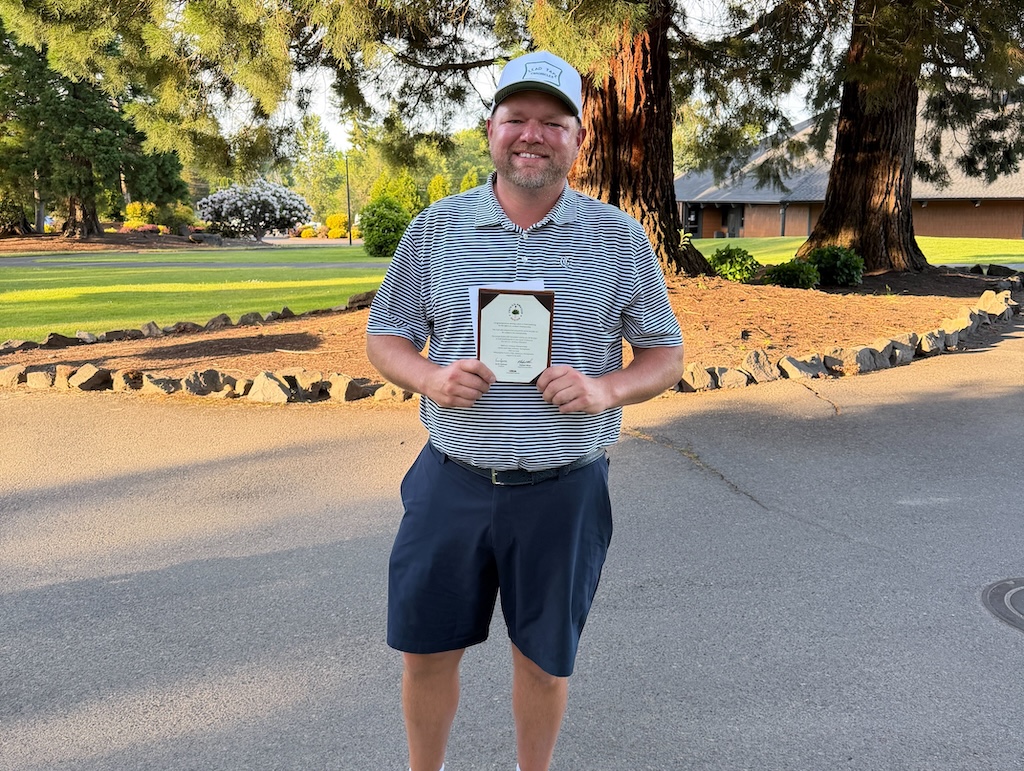
This past Monday, I played in the U.S. Amateur local qualifier at Rock Creek Country Club in Portland, Oregon. A full tee sheet from 7:30 a.m. to 1:55 p.m., the top 11 scores would make it to the U.S. Amateur final qualifying.
I teed off at 10:48 a.m.. With the 7:30 am tee time, you can get a feel for the leaders’ pace, and they were off and running on the challenging setup at Rock Creek.
View this post on Instagram
Getting to the highlight of the round on the par five 17th, a drive up the left side and 212 yards left to the front hole location. I took out a 5-iron with plans of middle of the green. The ball ended up 8 feet left of the hole, pin high. A slight downhill putt dropped in for an eagle 3 on the 17th. With the cut line looking to be anywhere from -2 to even par. This was the boost I had been waiting for all day.
With making par from the trees on 18, it was time to wait for a potential playoff with a posted score of one under par 71.
Three hours later, it was playoff time. 8 players for 6 spots. I made par on the playoff hole, which was good enough to advance to the U.S. Amateur final qualifying in July. USGA qualifiers sure deliver on all of the emotions in golf!
Club Junkie
Building my 2026 gamer WITB: Ranking the contenders and new putter projects – Club Junkie Podcast


The annual What’s In The Bag build is underway, and on this episode of Club Junkie, Brian breaks down the clubs currently leading the race for a spot in his 2026 gamer setup. From drivers and fairway woods to irons, wedges, and shafts, he ranks the equipment that’s performing best and explains what’s separating the front runners from the rest of the field.
Brian also heads into the workshop to discuss several putter projects currently on the bench. From head options and shaft choices to build ideas and testing plans, he shares what he’s working on and which putters could become serious contenders for the bag this season.
If you’re a gear junkie who loves equipment testing, club building, and the never-ending pursuit of the perfect setup, this episode is for you.
Follow Club Junkie:
Instagram: @clubjunkiepod
TikTok: @clubjunkiepod
Threads: @clubjunkiepod
X: @ClubJunkiePod
Club Junkie
Tour Edge Exotics mini driver review + TaylorMade Spider ZT Max first look – Club Junkie

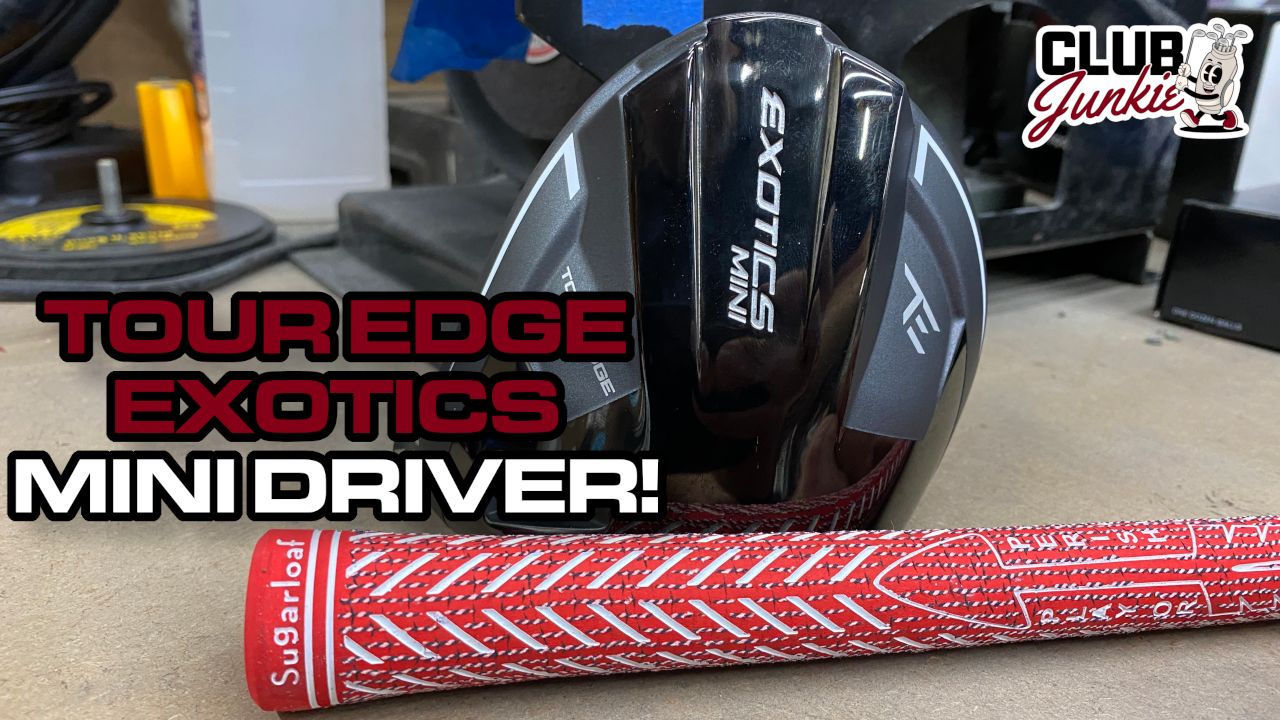
On this episode of Club Junkie, I put the new Tour Edge Exotics Mini Driver to the test and break down the performance, forgiveness, distance, and where it fits compared to a traditional driver or strong fairway wood. If you have been curious about adding a mini driver to the bag, this one is worth a look.
I also dive into the new TaylorMade Spider ZT Max putter that was recently spotted and discuss the growing zero torque putter trend. Plus, there is a closer look at the new Project X Titan Yellow shaft showing up on the PGA Tour and what makes it different from other profiles currently out there.

Justin Rose WITB 2026 (April): Full WITB breakdown with new McLaren irons

What’s the story behind Webb Simpson’s custom-stamped irons?

Memorial Tournament Tour Report: Rory McIlroy, Cameron Young switch up drivers, and more

Cadillac Championship Tour Report: Spieth’s sizable changes, McLaren Golf launches, and more

Russell Henley’s winning WITB: 2026 Charles Schwab Challenge

Kristoffer Reitan’s winning WITB: 2026 Truist Championship

Best irons 2026: Best irons overall, most forgiving irons, and more

J.T. Poston’s winning WITB: 2026 Memorial Tournament

Aaron Rai’s winning WITB: 2026 PGA Championship

Cameron Young’s winning WITB: 2026 Cadillac Championship


Ryan Palmer WITB 2026 (June)
Driver: Callaway Quantum Triple Diamond (9 degrees) Shaft: Project X HZRDUS Smoke Blue RDX 60 TX 3-wood: TaylorMade Qi10 (15 degrees) Shaft:...


Bud Cauley WITB 2026 (June)
Bud Cauley had >14 clubs in his bag when photographed prior to the Memorial Tournament. Driver: Titleist GTS2 (8 degrees) Shaft: Fujikura...


Hannah Green WITB 2026 (June)
Driver: Titleist GTS3 (10 degrees, D4 SureFit setting) Shaft: Mitsubishi Chemical Diamana RB 53 S 3-wood: Titleist GT3 (15 degrees,...


Asterisk Talley WITB 2026 (June)
Driver: TaylorMade Qi4D (9 degrees) Shaft: Fujikura Ventus Blue 6 S 3-wood: TaylorMade Qi4D (16.5 degrees) Shaft: Fujikura Ventus Blue...
-
 Equipment6 days ago
Memorial Tournament Tour Report: Rory McIlroy, Cameron Young switch up drivers, and more
-
 News2 weeks ago
Russell Henley’s winning WITB: 2026 Charles Schwab Challenge
-
 Equipment3 days ago
Best irons 2026: Best irons overall, most forgiving irons, and more
-
 Whats in the Bag4 days ago
J.T. Poston’s winning WITB: 2026 Memorial Tournament
-

 Equipment1 week ago
Details on Jason Day’s latest prototype Avoda iron setup
-

 Equipment3 weeks ago
CJ Cup Byron Nelson Tour Report: Koepka and Kim’s newest putters finally get hot
-

 News2 weeks ago
Charles Schwab Challenge Tour Report: MacIntyre, Åberg and Spaun all switch putters, TaylorMade launches new Spider
-

 Equipment2 weeks ago
Details on J.J. Spaun’s surprise putter switch


Ronald Montesano
Dec 17, 2017 at 9:41 am
Michael,
Nice piece on an under-the-rader resort, in a beautiful state.
During the times that you mention (AP and RTJ) only Pete Dye was doing anything wondrous with golf course architecture. RTJ tried to make everything as difficult as possible, ensuring that golfers would need a stiff drink after each round. Some RTJ is viable, such as the Golden Horseshoe Gold course, but much of it focuses too much on water and forced carries. I hope this isn’t the case with his Oglebay course.
Arnold Palmer (and this is difficult for me, a Wake Forest alum, to write) wasn’t much different. He seemed to approach golf course architecture from an everyone-should-be-able-to-hit-the-shots-that-we-tour-pros-hit perspective. His courses often have very narrow fairways, shrunk even more by hazards, and difficult greens situated just beyond trouble, again forcing the carry. I hope that I’m wrong again at Oglebay.
Jack Nicklaus, perhaps thanks to his time with Tom Doak at Sebonack, came to understand that penal golf, heroic golf, will ensure that thousands of golfers abandon the game each year. JWN builds courses today that are much friendlier, that still demand great shots for pars and birdies, but offer options and alternate routes that do not result in multiple lost balls.
As the one reader commented above, the one-off course sounds like the most fun. I hope it is that fun, but I hope that I’m wrong about the other two.
I enjoy writing with you at GolfWRX. Time to get all the writers together for a writers’ summit!!
Garrett
Dec 15, 2017 at 3:25 pm
Love Oglebay, been going on a guys’ trip for three years now and it is an awesome place to spend a couple days with a bunch of close friends. The Palmer course is one of my favorites because it is very scorable (5 Par 5’s) with wide fairways, and generous (but undulating) greens. With that being said, it is not overly ‘easy,’ but very fun for a group of guys with variable handicaps to be able to play a competitive match. The Palmer Course is also usually the best conditioned. The views are spectacular, and from some of the higher points you can see 8-10 holes in their entirety. Pretty sweet for someone who can appreciate a good layout.
The Jones course on the other hand is a little bit more difficult, in that it is a little bit less forgiving and does have some tighter, more difficult holes. It is not in as good of shape as the Palmer, but it is certainly worth playing if you are on a trip and are playing multiple rounds.
I cannot speak on the shortest, oldest course as I have not played it.
The main point is that this is by no means a 5-Star resort, but it is well worth making a trip if you don’t have unlimited funds. I have made the trip with a group of 8 guys and it has become an annual trip. I would suggest staying in one of the cabins there, which has 8 beds in 4 rooms with a large living area and a kitchen. It is not ‘luxury,’ but offers some privacy for a rowdy group of guys, like the ones I travel with. We have stayed in the Lodge, which is an older, somewhat dated hotel-type of accommodation and our late-night hangouts have been disrupting (so we were told) of others staying there. Also, if you like to book things in advance they have some pretty good stay and play packages, and reasonable same-day replay rates. The included breakfast buffet is top-notch.
My best suggestion is to take a group and play as much as you can. The Palmer and Jones courses are at the same place and playing 36 a day is no problem. Also, plan on seeing about 1,000 deer. That place is covered in them and it is pretty cool how close you can get to them without them being spooked.
Steve S
Dec 15, 2017 at 2:23 pm
Nice sales article. Been there. Liked the golf. The accommodations were mediocre and overpriced at best. Small, dark rooms with 1970’s colors and decorating. OK for a guys trip but I took my wife because they advertised “other activities” for non-golfers. Very little for her to do. And if you stay in the main building you have to drive or take a shuttle to get to the pool; not convenient.
The golf is challenging, don’t expect to walk, unless you are part mountain goat. The only flat lies are the tee boxes. Best part about it was the pricing(for the golf).
Matt Schulze
Dec 14, 2017 at 9:43 am
The older, shorter course sounds far more interesting than the other two.
Joe
Dec 14, 2017 at 9:23 am
Couldn’t agree more.
A couple buddies and I (all early 30s) went for a spring weekend a few years back. Simply, it was the midway point between Philly and Louisville.
The Greenbrier, it’s not—but that’s also the charm of the place. And I still recall the welcome from the starter, ‘Coach’. Especially for folks in the Mid-Atlantic, it’d be hard to find a better deal, including a fun set of courses.
Trey
Dec 14, 2017 at 9:00 am
I live in Wheeling and grew up with these courses. The captions under the pictures are WAY off. The first picture is the Jones course hole #3 fairway and #6 green. THe second picture is that of the Jones course #9.
rick
Dec 15, 2017 at 8:45 am
Wrong! The first picture is taken from behind #6 green looking back at the fairway on the Palmer course. The second picture is from above the 2nd green on the Palmer course. The third is from the tee on #9 on the Jones course. And #8 on the Crispin course is a par 5, NOT a par 4.
Trey
Dec 15, 2017 at 9:46 am
Whoops, you’re right. 2nd picture is from Palmer #2. I didn’t count the picture under the article title as picture #1. Regardless, the picture descriptions are way off.
David
Dec 13, 2017 at 10:06 pm
We visited Oglebay for the first time this past summer. It is spectacular! It’s now on our annual “must visit” list.