
Opinion & Analysis
The Book That Almost Wasn’t a Book: Ben Hogan’s “Five Lessons”

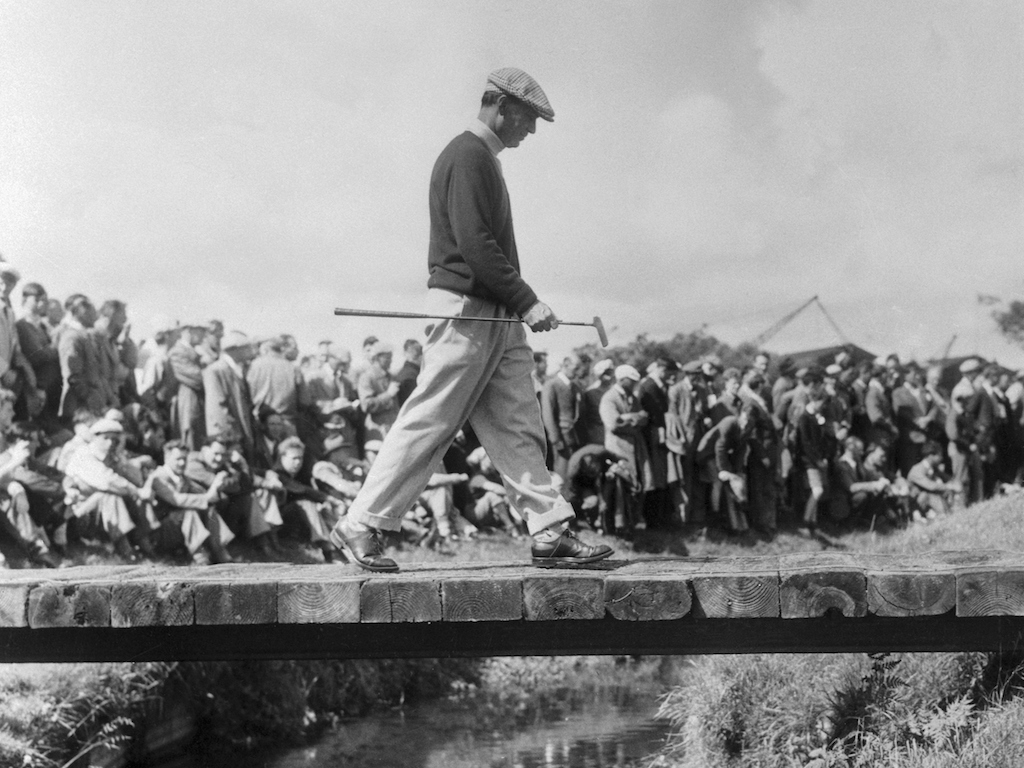
“Five Lessons: The Modern Fundamentals of Golf,” written by Ben Hogan and Herbert Warren Wind, continues to be the largest selling golf instructional book in history. This year marks the 60th anniversary of the book, which was first published in 1957.
Sports Illustrated
The story of how the book was published revolves around Sports Illustrated, which was owned by Time Magazine. The weekly magazine launched in 1954 as an experiment to see if an all-sport publication could survive. In 1956, the publication was on the brink of disaster, having yet to find its audience.
This is the backdrop against which Sydney James, the magazine’s managing editor, received a call from Ben Hogan. Hogan had an idea for an article. Would Sports Illustrated be interested?
James promised to get back to him shortly with an answer. And he did, telling him that the magazine would be very interested in collaborating with him, and that he would begin making the necessary arrangements to get the project off the ground.
Texas Three-Step
James explained his plan to Hogan, which was to arrange for the magazine’s most talented writer, Herbert Warren Wind, and top-rated freelance illustrator, Anthony Ravielli, to visit Hogan in Fort Worth to further discuss his idea.
“Would that be agreeable” he asked?
“Yes,” Hogan replied. He would make himself available as needed.
Writer and Illustrator
Herbert Warren Wind, a graduate of Yale University, was not just a writer, but a literary craftsman. He was without question the finest writer of his time, contributing regularly as a columnist for The New Yorker magazine from 1941-47.
For his part, Ravielli was quickly earning a reputation as one of the most talented illustrators in the country. His expertise was drawing the musculature of the human body in life-like detail. And then having the unique ability to convey a sense of motion with the human form.
A Single Idea
A few weeks later, the two met with Hogan at his office in Fort Worth, Texas. They then made their way to Colonial Country Club. And once there, they walked out to a part of the course where they would not be disturbed. And then Hogan began to explain to the two men what he had in mind.
As they listened to his ideas for the article, they suggested that he consider a five-part series. What they proposed was a sequential pattern of lessons beginning with the grip, the setup, the backswing, and the downswing. The fifth chapter would be a summary and review of what had been presented in the first four chapters.
Hogan liked the idea and agreed immediately.
As Hogan began to explain his thoughts on the swing, Wind began to scribble in his notebook, not wanting to miss a single word. (In later years, when interviewing a subject, modern-day reporters would use a tape recorder, but at that time it had not yet been invented.)
Wind would at times stop Hogan to ask a question or to clarify an important point. And when he reached the point at which he couldn’t possibly absorb another thought, Wind gave way to Ravielli, who armed with a still camera, snapped one photograph after another, capturing the various positions that would ultimately mirror Hogan’s thoughts.
During the next few days, Hogan continued to elaborate on his theories about the golf swing and the logic behind them. As they finished, the three men agreed that they would meet again, either at the end of 1956 or after the first of the year.
Scratch Board
After returning to New York, Wind began writing a rough draft of the five-part series. At the same time, Ravielli started working from the photographs that he had taken earlier. He began by drawing pencil sketches that he would later show to Hogan for his approval before moving on to the final version.
The three gathered together again for a week-long session in January 1957. Hogan was extremely impressed with Ravielli’s sketches, believing that he had managed to capture the very essence of what he was attempting to covey to his would-be readers.
The pencil sketches would be transformed a final time using a “scratch-board” technique that Ravielli had mastered. The scratch-board technique created a uniquely vivid picture, which invited the reader to reach out and touch the seemingly life-like image on the page.
Wind’s spirits were buoyed after meeting with Hogan a second time as he wrote, “Hogan had gone into a much more detailed description of the workings of the golf swing then we had anticipated. Moreover, he had patently enjoyed the challenge and had given it everything he had.”
On returning to New York, Wind and Ravielli begin working together, side by side, laying out the text, the illustrations, and captions in page form for each of the five chapters.
Seminole Review
As Wind recounted, “When an installment was completed and had gone through the production department, we airmailed photostats of the pages to Hogan, who was in Palm Beach getting ready for the Masters. I would telephone Ben at his apartment at an appointed time each week, and we would go over each paragraph line by line. A session usually took between 45 minutes to an hour.”
During these sessions, as they reviewed the copy, Hogan was insistent that each word and phrase precisely communicate exactly what he intended to say. Wind recalls one example, when he had written “that at a certain stage of the swing the golfer’s weight had shifted to his left side.” Hogan corrected, “Let’s not say left side,” Adding “That isn’t accurate. In golf, there’s no such thing as a player’s left side. At this point in the swing most of the golfer’s weight is on his left foot and left leg.”
Wind found these discussions exhausting as Hogan worked his way through the copy with a “fine-tooth comb.” As wind wrote, “After these protracted checking sessions with Hogan, I did some deep-breathing exercises to relax myself, but I also had the bracing feeling that even Sherlock Holmes wouldn’t be able to detect a smudged adjective or a mysterious verb in the text.”
As they were nearing completion of their work, Hogan asked Wind if he had any suggestions for the series name. As Wind recalls, “I thought for a long moment and then tossed up ‘The Fundamentals of Modern Golf?’”
Hogan mulled it over for a moment and then asked, “How about ‘The Modern Fundamentals of Golf?’” Wind agreed that the reversal in wording was a definite improvement. The series now, for the first time, had both a name and an identity.
The Magazine and the Book
The series was very successful, of course, boosting not only the sales of the magazine but also its circulation. The content of what would eventually become the book appeared in five installments beginning with the March 11, 1957 issue, which in Wind’s exact words, “sold like hotcakes.“
The book was released some five months later in September as a joint venture between Hogan and the magazine.
A Triple Play
Why has the book endured?
The first reason is because of the public’s fascinated with Hogan, not only as player, but as a man. He was a great ball-striker, maybe the best of all time, but there was more to the man than his ability to play golf. He is one of the more complex sports figures in the pantheon of great players. He was a man of secrets who preferred the shadows to the light.
The second reason is the wonderful prose of Herbert Warren Wind, which flows with ease from one paragraph to another, giving the reader at times the feeling of floating on air from one sentence to another.
The third reason is the illustrations of Anthony Ravielli, which describe in dramatic fashion the essence of what Hogan wanted to convey to the reader.
“Five Lessons” was then the collaboration of three men, each one of them the very best in their fields. They were, through luck and circumstance, thrown together in space and time. And maybe once joined together, they sensed the opportunity to create something very special with one purpose in mind — to write one of the best golf instruction books ever. And they succeed.





This past Monday, I played in the U.S. Amateur local qualifier at Rock Creek Country Club in Portland, Oregon. A full tee sheet from 7:30 a.m. to 1:55 p.m., the top 11 scores would make it to the U.S. Amateur final qualifying.
I teed off at 10:48 a.m.. With the 7:30 am tee time, you can get a feel for the leaders’ pace, and they were off and running on the challenging setup at Rock Creek.
View this post on Instagram
Getting to the highlight of the round on the par five 17th, a drive up the left side and 212 yards left to the front hole location. I took out a 5-iron with plans of middle of the green. The ball ended up 8 feet left of the hole, pin high. A slight downhill putt dropped in for an eagle 3 on the 17th. With the cut line looking to be anywhere from -2 to even par. This was the boost I had been waiting for all day.
With making par from the trees on 18, it was time to wait for a potential playoff with a posted score of one under par 71.
Three hours later, it was playoff time. 8 players for 6 spots. I made par on the playoff hole, which was good enough to advance to the U.S. Amateur final qualifying in July. USGA qualifiers sure deliver on all of the emotions in golf!
Club Junkie
Building my 2026 gamer WITB: Ranking the contenders and new putter projects – Club Junkie Podcast

The annual What’s In The Bag build is underway, and on this episode of Club Junkie, Brian breaks down the clubs currently leading the race for a spot in his 2026 gamer setup. From drivers and fairway woods to irons, wedges, and shafts, he ranks the equipment that’s performing best and explains what’s separating the front runners from the rest of the field.
Brian also heads into the workshop to discuss several putter projects currently on the bench. From head options and shaft choices to build ideas and testing plans, he shares what he’s working on and which putters could become serious contenders for the bag this season.
If you’re a gear junkie who loves equipment testing, club building, and the never-ending pursuit of the perfect setup, this episode is for you.
Follow Club Junkie:
Instagram: @clubjunkiepod
TikTok: @clubjunkiepod
Threads: @clubjunkiepod
X: @ClubJunkiePod
Club Junkie
Tour Edge Exotics mini driver review + TaylorMade Spider ZT Max first look – Club Junkie


On this episode of Club Junkie, I put the new Tour Edge Exotics Mini Driver to the test and break down the performance, forgiveness, distance, and where it fits compared to a traditional driver or strong fairway wood. If you have been curious about adding a mini driver to the bag, this one is worth a look.
I also dive into the new TaylorMade Spider ZT Max putter that was recently spotted and discuss the growing zero torque putter trend. Plus, there is a closer look at the new Project X Titan Yellow shaft showing up on the PGA Tour and what makes it different from other profiles currently out there.

What’s the story behind Webb Simpson’s custom-stamped irons?

Memorial Tournament Tour Report: Rory McIlroy, Cameron Young switch up drivers, and more

Cadillac Championship Tour Report: Spieth’s sizable changes, McLaren Golf launches, and more

Russell Henley’s winning WITB: 2026 Charles Schwab Challenge

Kristoffer Reitan’s winning WITB: 2026 Truist Championship

Best irons 2026: Best irons overall, most forgiving irons, and more

J.T. Poston’s winning WITB: 2026 Memorial Tournament

Aaron Rai’s winning WITB: 2026 PGA Championship

Cameron Young’s winning WITB: 2026 Cadillac Championship

Details on Jason Day’s latest prototype Avoda iron setup


Christiaan Maas WITB 2026 (June)
Driver: TaylorMade Qi4D LS (8 degrees) Shaft: Fujikura Ventus TR Blue 6 X 3-wood: TaylorMade Qi10 (15 degrees) Shaft: Fujikura Ventus Black...


Ryan Palmer WITB 2026 (June)
Driver: Callaway Quantum Triple Diamond (9 degrees) Shaft: Project X HZRDUS Smoke Blue RDX 60 TX 3-wood: TaylorMade Qi10 (15 degrees) Shaft:...


Bud Cauley WITB 2026 (June)
Bud Cauley had >14 clubs in his bag when photographed prior to the Memorial Tournament. Driver: Titleist GTS2 (8 degrees) Shaft: Fujikura...


Hannah Green WITB 2026 (June)
Driver: Titleist GTS3 (10 degrees, D4 SureFit setting) Shaft: Mitsubishi Chemical Diamana RB 53 S 3-wood: Titleist GT3 (15 degrees,...
-
 Equipment6 days ago
Memorial Tournament Tour Report: Rory McIlroy, Cameron Young switch up drivers, and more
-
 News2 weeks ago
Russell Henley’s winning WITB: 2026 Charles Schwab Challenge
-
 Equipment4 days ago
Best irons 2026: Best irons overall, most forgiving irons, and more
-
 Whats in the Bag4 days ago
J.T. Poston’s winning WITB: 2026 Memorial Tournament
-
 Equipment1 week ago
Details on Jason Day’s latest prototype Avoda iron setup
-

 Equipment3 weeks ago
CJ Cup Byron Nelson Tour Report: Koepka and Kim’s newest putters finally get hot
-

 News2 weeks ago
Charles Schwab Challenge Tour Report: MacIntyre, Åberg and Spaun all switch putters, TaylorMade launches new Spider
-

 Equipment2 weeks ago
Details on J.J. Spaun’s surprise putter switch


Bob Jones
Dec 13, 2017 at 11:45 am
My Dad subscribed to SI back then. I was just starting out as a golfer when the first lesson arrived at our house. I imprinted on Hogan for life. My favorite line from the book is, “The average golfer’s problem is not so much a lack of ability as it is a lack of knowing what he should do.” -p. 97.
And if you read other golf instruction books that were current in 1957 there was nothing close to the level and quality of analysis as what was contained in it.
Rich Douglas
Dec 12, 2017 at 10:14 pm
Except the book teaches a slice. Oh, for Hogan it was a fade–or, at least, a hook-fighter. But average players trying to put this to work who already had a slice merely exacerbated it.
The book had tremendous value for its time because it provided some semblance of realistic visualization and reasonable instruction. It’s value today, however, it mostly historic, not practical.
I recommend “Swing Like a Pro” (Mann), “Getting Back to Basics” (Watson), “Five Fundamentals” (Elkington), and/or “A True Swing (Larkin). Each teach a complete and useful swing.
J.W.
Dec 12, 2017 at 2:30 pm
Rod, excellent work and an interesting article. Not to be picky, but wasn’t the illustrator’s name “Ravielli” ? And Herb Wind was the best golf writer this side of Bernard Darwin.
OB
Dec 12, 2017 at 6:21 pm
I wonder how much of the book was from the mind of Wind.
Hogan was a quiet man who spoke little while competing on the tour. He was not an eloquent speaker nor a good writer. I can imagine him struggling to explain his golf swing and Wind helping Hogan define and refine what he really meant.
Personally, I believe The Five Lessons book was 50/50 Wind/Hogan. Some of the obvious errors can be attributed to Wind and not Hogan.
rex235
Dec 11, 2017 at 1:13 pm
Yes. Agree with the importance of the “Ben Hogan-Five Lessons” book to teaching the game, as well as the literary style of Herbert Warren Wind, and special artistry of Anthony Ravielli.
OB
Dec 11, 2017 at 4:49 pm
Please comment on the flaws in the 5 Lessons.
Based on later analysis of movies of Hogan’s swing it was determined that Hogan’s swing did not conform to what was written and illustrated in the 5 Lessons book.
Perhaps the 5 Lessons book was the first of the many “My Way” golf swing books by Palmer, Nicklaus, Player and many others.
Sasho
Dec 12, 2017 at 1:37 am
Hogan started the concept of “planes” in the golfswing. His “address” swing plane was a static plane and his downswing “plane” was slightly skewed to the right to illustrate swinging from the inside to out.
Unfortunately, there are no “planes” in the dynamics of the golf swing, only “paths”, e.g. hand path, clubhead path, even distal hip and shoulder paths. No swing planes.
However the vision of imaginary swing planes was easy to sell to the gullible golfing world and golf teachers began drawing lines on the club shaft and claiming they followed planes.
All the legitimate scientific analysis only calculates the paths, because planes are non-existent and if they were there they would be curved surfaces, not planes!
TeeBone
Dec 12, 2017 at 1:31 pm
You have no idea what you’re talking about. For starters, TrackMan, among other researchers, has established that the clubhead movement lies within a plane, from a point 2.5 feet or so before impact. Their machine reports the vertical and horizontal coordinates of that plane.
SK
Dec 13, 2017 at 7:05 pm
Correct, and if you take a 2.5 foot sector of a golfswing just before impact it flattens out due to the long swing radius and the shifting of the body.
However, the backswing and downswing from the top to the 2.5 foot increment are definitely on curved surfaces so that hand path is important to guide the downswing between the static address plane and skewed downswing plane.
Confusing, eh?
Steve S
Dec 14, 2017 at 9:00 am
“Please comment on the flaws in the 5 Lessons.
Based on later analysis of movies of Hogan’s swing it was determined that Hogan’s swing did not conform to what was written and illustrated in the 5 Lessons book.”
As far as I’m concerned this book ruined more golfers and continues to ruin swings since people I know still use it. Even after all the evidence shows that for the average golfer most of it is flawed.
Doesnotno
Dec 12, 2017 at 10:10 am
10/10 for politest way of pointing out the author should check the spelling of Ravielli.
Alec
Dec 11, 2017 at 1:08 pm
Nice article, but the author can’t be serious when he writes that Wind “was without question the finest writer of his time.” So I guess Hemingway, Faulkner, James Baldwin, Nabokov counted for nothing…
Dino
Dec 11, 2017 at 2:32 pm
Hi Alec … I agree with your sentiment, but I also think that the author was also most likely thinking along the lines of “sport writers” or “golf writers”?
I suppose even then, one could argue that several other writers were fine writers too such as Grantland Rice (albeit an aging Rice), etc.
SK
Dec 11, 2017 at 12:46 pm
“Modern Fundamentals” was the first book that analyzed the golfswing in a semi-scientific manner. Hogan himself pointed this out and said he had an open mind on new scientific discoveries about the golfswing. He realized that science, not feel only, was the path to even more ‘modern’ fundamentals.
Now 60 years later, many if not most golfers and teachers cling to subjective feel explanation of the golfswing because science is “too complicated”. Some even proclaim that The 5 Lessons is all that is needed for a functional golfswing and the rest can be ignored. Hogan would have embraced the new fundamental ‘science’ of the golfswing.
Golf teachers are more and more depending on scientific instruments like Trackman, 3D video, force plates, and the biomechanical papers coming out of universities.
Meanwhile, the average golfer is stuck in ignorance and seeks gearhead solutions to his flawed golfswing. Humanity is mired in fantasy.
Chuck
Dec 11, 2017 at 11:57 am
If anyone is wanting to look up Anthony Ravielli (his images to be found in an online search are amazing, no matter what the subject) will want to take note of the correct spelling.
His craft and artistry was developed as a medical illustrator; a highly specialized field. Look at a good medical textbook and you’ll see that style. But Ravielli was such an amazing artist.