
Opinion & Analysis
6 must-have exercises in any golf fitness program

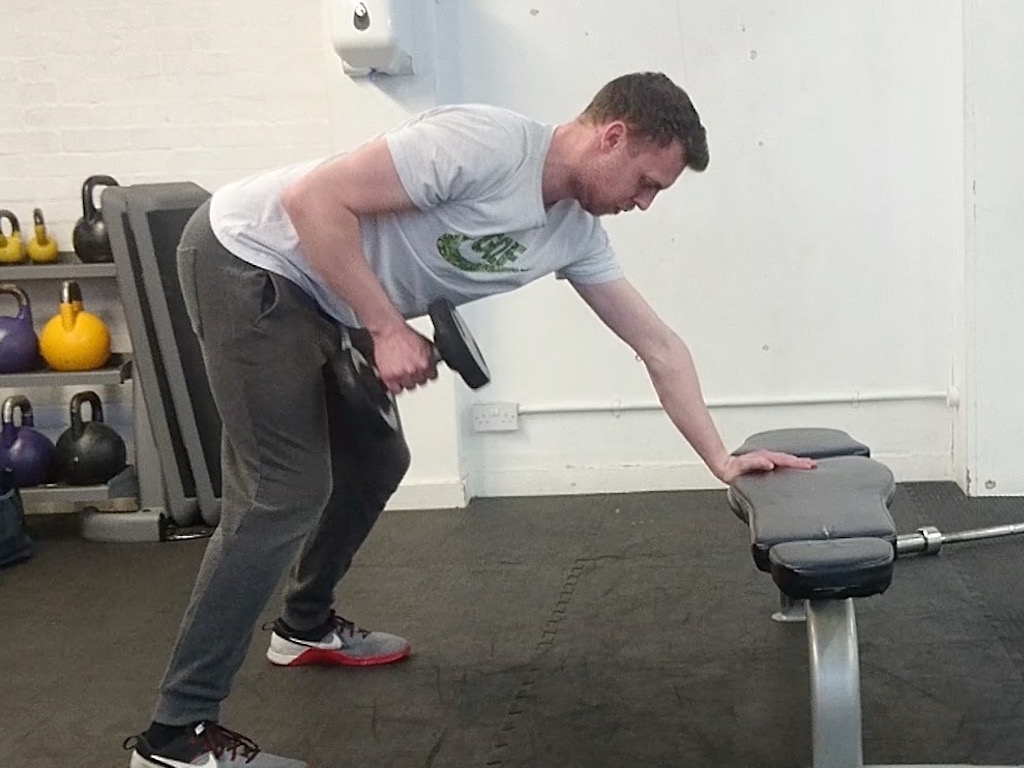
Golf is inherently an asymmetrical pattern. It also exposes the golfer to peak compressive forces of up to 8 times bodyweight through the lumbar spine. It’s no wonder then that the golf swing, when repeated over and over, can lead to the build up of physical asymmetries, overuse issues and injury.
Indeed, the literature relating to injuries in golf reports the most common injuries are due to overuse. Studies suggest time spent practicing and playing are significant factors that influence injury risk. Those who played at least four rounds per week or hit more than 200 balls per week were also shown to have significantly higher instances of injury. It has also been proposed in several studies that poor swing mechanics can accelerate this process. With this in mind, almost all keen golfers — not just the ones on tour — could benefit taking a proactive approach to managing their injury risk. It will likely prevent them from missing time on the course and keep them on the course for longer into old age.
It is fairly clear that managing the volume of golf swings and correcting faulty swing mechanics is likely a big part of the puzzle of preventing injury to golfers. There is also a large body of evidence to suggest appropriate strength training could also be used to reduce the injury risk to golfers. A huge, 2014 meta-study found that strength training reduced sports injuries by roughly 33 percent and overuse injuries by 50 percent. Interestingly, this study also found that stretching alone had no relationship to injury prevention.
“Implementing a training program that includes flexibility, strength and power training with correction of faulty swing mechanics will help the golfer reduce the likelihood of injury and improve overall performance,” another study concluded. The only problem is that golfers often make one of two mistakes in their training that prevent them from realizing these injury prevention benefits:
- They train with little regard to improved movement quality, jumping right to sexy-looking exercises without mastering the basic firsts. More on this later.
- They train too “sport-specific,” seeking to mimic the golf swing using bands and cables, for example. By training in a highly specific manner, they end up neglecting antagonist/ stabilizer muscles and reinforcing those asymmetries inherent in the golf swing.
As such, we do not want to spend a huge amount of gym time stressing the joints in the same specific way we do on the course already. MLB strength coach Eric Cressey probably said it best: “Specificity works great until you’re so specific that you wind up injured and have forgotten how to do everything else.”
Balanced strength development through foundational movement pattern training and compensation strength exercises should, instead, form the vast majority (at least 80 percent) of your training activities, both from a sports performance and injury prevention perspective. The foundational movement patterns in question are:
- Squat
- Hip Hinge
- Upper Body Push
- Upper Body Pull
- Single-Leg Work
- Core Intensive Work (such as dead-bugs, planks, pallof presses and weighted carries)
The real key to unlocking the benefits of the foundational movement patterns and long-term success in your training lies in emphasising movement quality and picking variations/ progressions of each movement to suit you, rather than sticking to dogmatically programmed exercises that may not fit your body, your current training experience or goals. In really broad terms, this probably equates to selecting the most difficult exercise progression you can do technically perfect for the desired number of reps.
With this in mind, the rest of this article will be focused on providing some specifics for the six foundational patterns. It will also outline a progression framework you can use to gauge the best variation for you currently and where you should aim to progress in the future. That said, I would be remiss not to mention that getting the exercise selection and progression right is where a good coach becomes really valuable. He or she is able to take a full injury history and complete various assessments of joint range of motion and dynamic mobility to make sure you’re starting in the right place and advancing at the proper pace.
Squat
The squat does a lot of great things. It teaches us to create and maintain appropriate position of the pelvis and core. It also helps us learn to create and absorb force while developing mobility in the hips, ankles and thoracic spine. I bet the image you have in your mind right now is that of a barbell back squat taken to the floor. That is one squat pattern variation, but it’s by no means the only way to squat. Everyone is different, therefore, everyone must squat differently and squat using the squat variation most appropriate for their current skill level and trainability.
The goblet squat is my favorite variation for most golfers, as the anterior loading helps to shift weight back while maintaining core/pelvic stability. It should also be noted that the barbell back squat might not be something the athlete ever uses, because their physical makeup might always be better suited to front-loaded squatting. That’s perfectly fine. Once again, the key is to find the “hardest” variation that you can do perfectly. From there, you’ll be able to train the squat pattern without internal restriction, get a great training effect and minimize joint stress. The goal is to move up the list over time and progress strategically.
Hip Hinge
The hinge is one of the most important patterns when it comes to protecting your lower back from injury, but many people have lost the ability do it. The hip hinge is often confused with the deadlift, which is a specific exercise that falls under the hip hinge umbrella (i.e. while not every hip hinge is a deadlift, every deadlift is a hip-hinge pattern).
Many people don’t deadlift because they think it’s too risky. And since the deadlift is the only hip hinge exercise they know, they skip training the entire movement pattern. This is a mistake. Master the hip hinge, and you’ll avoid chronic flare-ups, lower back tightness, and generalized “neural-lock” of your mobility and flexibility. The pattern should be slowly implemented at lower levels, however, which allows motor relearning to take place. Watch the video above to see the main progressions I use to reactivate the hip hinge from the ground up.
Not everyone will have the ability to pull a barbell off the floor with good neutral spine mechanics due to different body types. Again, totally fine. If that’s you, don’t feel the need to force it. Just stick with having the bar or kettlebell elevated off the floor as I have in the video. In fact, this is what I have the vast majority of my golfers do.
Single-Leg
Single-leg exercises unlock strength and movement quality potential. They tap into your “primitive patterning.” You learned to walk in a sequence. You rolled over, crawled, pulled yourself up and finally learned to stand and walk. Not all of that was unilateral, but the movement between the steps was. That primitive patterning is what single-leg movements are targeting for re-education.
There are few movements more powerful than single-leg variations for identifying weak links, sticking points and pain patterns. Again, we need to work from the ground up to build optimal patterns and movement efficiency to keep us strong and healthy.
The single-leg lunge pattern does include more dynamic lunges. Under its umbrella are single-leg squats involving standing only on one leg, lateral squat variations and hinge-based movements such as the single-leg RDL’s. For the sake of brevity I haven’t covered these, but this doesn’t devalue their importance in a good plan built around the non-negotiable foundational patterns. Be sure to include both the knee-dominant variations shown above, as well as the hip-dominant patterns such as single-leg RDLs to cover all your bases.
Upper Body Push
Movement patterns are classified as either open- or closed-chain depending on the contact points with the ground. If the hands and feet are in contact with a stable surface like the ground, the movement is a closed kinematic chain. If the hands or feet are freely moving through space, that’s an open kinematic chain.
With the push-up, the hands are anchored to the ground (or stable surface) that alter the way the spine, gleno-humeral joint, scapula and acute muscular stabilizers of the region move. In this closed chain, the shoulder blades are able to move freely against the thoracic cage placing more of a dynamic stability emphasis on the musculature controlling this position. This skill of creating stability and tension in the shoulders and upper back is something that must be mastered in order to translate into a more static, stability-based position such as the bench press.
Starting with the mastery of the plank and push-up allows the biggest bang for your buck in full-body motor learning through the push pattern. From integrated core and hip stability to upper back and shoulder tensional recruitment, the push-up is a key player in learning how to generate stability in order to display power and strength. Once this skill is honed in at the horizontal plane of motion, vertical pushing will be the next challenge.
Upper Body Pull
Strong and stable shoulders depend on pulling more than pushing. Our sitting- and bench press-dominated world (guys I’m looking at you) leads to tonic anterior shoulder and chest muscles, lengthened/weak posterior shoulder muscles and internally rotated shoulders. To combat this, I will often program pulling to pushing in a 2:1 or even 3:1 ratio. We must also bear in mind, however, that the vertical pull also places the shoulder into internal rotation during the movement pattern itself. This means we should bias the horizontal pull more than vertical pulling in our programming.
In order to create full-body stability at the shoulders through the pull, the horizontal pull must first be mastered before introducing the more complex vertical pull variations off the pull-up bar and beyond. Moreover, mastering the pull from a stable core and hips will help develop a strong posterior that can support athletic endeavors such as the golf swing. That’s exactly why this pattern must be a priority.
The pattern must first be introduced and perfected from a full-body, stability-based position. From this position, the pillar is challenged to generate tension and create stability through the legs, hips, pelvis and spine, while the upper body works to generate dynamic force.
Core Intensive Movements
The core muscles help safeguard the lumbar spine during sports, gym and everyday activities, and they are therefore crucial in preventing back pain. If the core is weak, then other muscles will have to compensate in order to stabilize the pelvis and spine, leading to faulty movement patterns, asymmetries and injury.
Golfers, for example, are more susceptible to lower back pain due to rotating at the lumbar spine. The rotation should occur through the pelvis and thoracic spine, with the lumbar spine remaining in a relatively fixed position. A strong core, in addition to the glutes and stretching out the anterior hip muscles, will help stabilize the pelvis back in more a neutral position. It helps prevent the lumbar spine from over extending and rotating into ranges of motion for which it is not designed.
Additionally, the core muscles link the upper and lower body. If a link in the body chain is broken, performance will suffer. Much of the power in the golf swing actually comes from the ground. In order to effectively transfer this ground reaction force through the body and to the club, the pelvis and spine need to be stable. This stability is achieved when the core muscles and glutes are strong and highly functioning.
Many train the core poorly, however. In short, you should train the function of the core — not it\s anatomy. This generally means training four patterns:
- Rotational Core Strength
- Anterior Core Strength
- Lateral Core Strength
- Hip Extension Strength/Bridging
For the sake of brevity, I offer an example of anterior or anti-extension core strength progressions in the video above.
Over To You
All you have to do now is give the variations a try. Pick the ones that work best for you. I suggest videoing yourself while doing them to ensure proper form.
Follow a sensible progression strategy, add in some mobility work for the weakness you’ll have identified by trying different variations and you have the nuts and bolts of a really useful injury prevention program. I willing to wager you’ll feel better and, as many of the physical qualities developed in these exercises are also needed in properly executing the golf swing, you’ll be playing better, too.



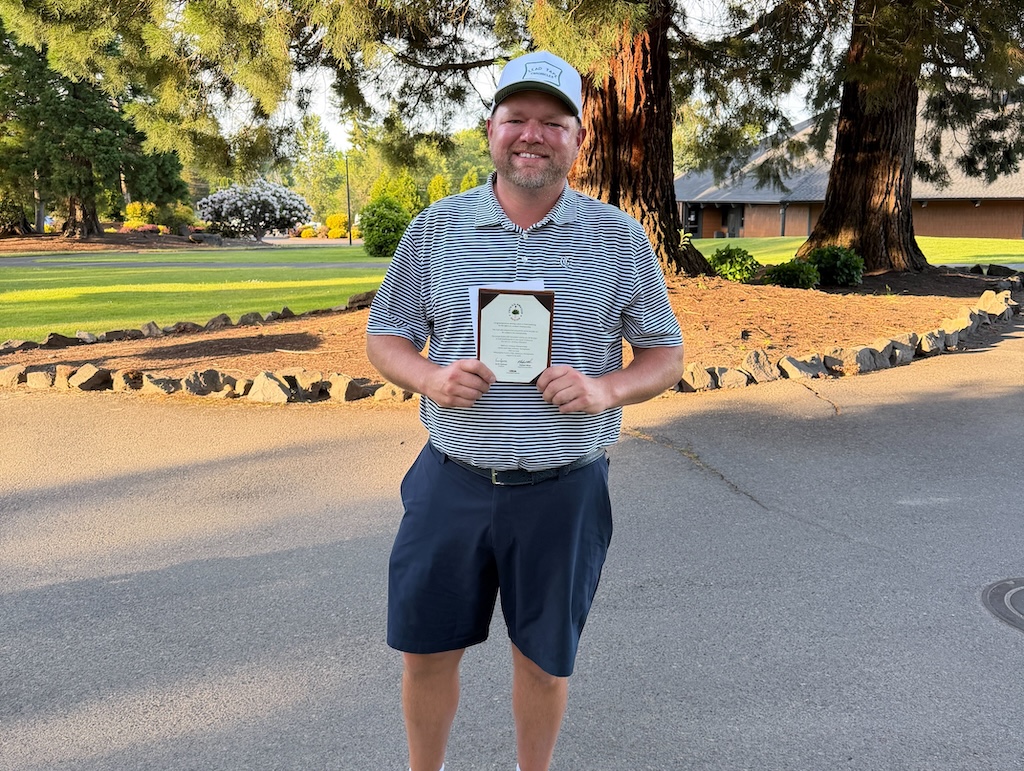
This past Monday, I played in the U.S. Amateur local qualifier at Rock Creek Country Club in Portland, Oregon. A full tee sheet from 7:30 a.m. to 1:55 p.m., the top 11 scores would make it to the U.S. Amateur final qualifying.
I teed off at 10:48 a.m.. With the 7:30 am tee time, you can get a feel for the leaders’ pace, and they were off and running on the challenging setup at Rock Creek.
View this post on Instagram
Getting to the highlight of the round on the par five 17th, a drive up the left side and 212 yards left to the front hole location. I took out a 5-iron with plans of middle of the green. The ball ended up 8 feet left of the hole, pin high. A slight downhill putt dropped in for an eagle 3 on the 17th. With the cut line looking to be anywhere from -2 to even par. This was the boost I had been waiting for all day.
With making par from the trees on 18, it was time to wait for a potential playoff with a posted score of one under par 71.
Three hours later, it was playoff time. 8 players for 6 spots. I made par on the playoff hole, which was good enough to advance to the U.S. Amateur final qualifying in July. USGA qualifiers sure deliver on all of the emotions in golf!
Club Junkie
Building my 2026 gamer WITB: Ranking the contenders and new putter projects – Club Junkie Podcast

The annual What’s In The Bag build is underway, and on this episode of Club Junkie, Brian breaks down the clubs currently leading the race for a spot in his 2026 gamer setup. From drivers and fairway woods to irons, wedges, and shafts, he ranks the equipment that’s performing best and explains what’s separating the front runners from the rest of the field.
Brian also heads into the workshop to discuss several putter projects currently on the bench. From head options and shaft choices to build ideas and testing plans, he shares what he’s working on and which putters could become serious contenders for the bag this season.
If you’re a gear junkie who loves equipment testing, club building, and the never-ending pursuit of the perfect setup, this episode is for you.
Follow Club Junkie:
Instagram: @clubjunkiepod
TikTok: @clubjunkiepod
Threads: @clubjunkiepod
X: @ClubJunkiePod
Club Junkie
Tour Edge Exotics mini driver review + TaylorMade Spider ZT Max first look – Club Junkie

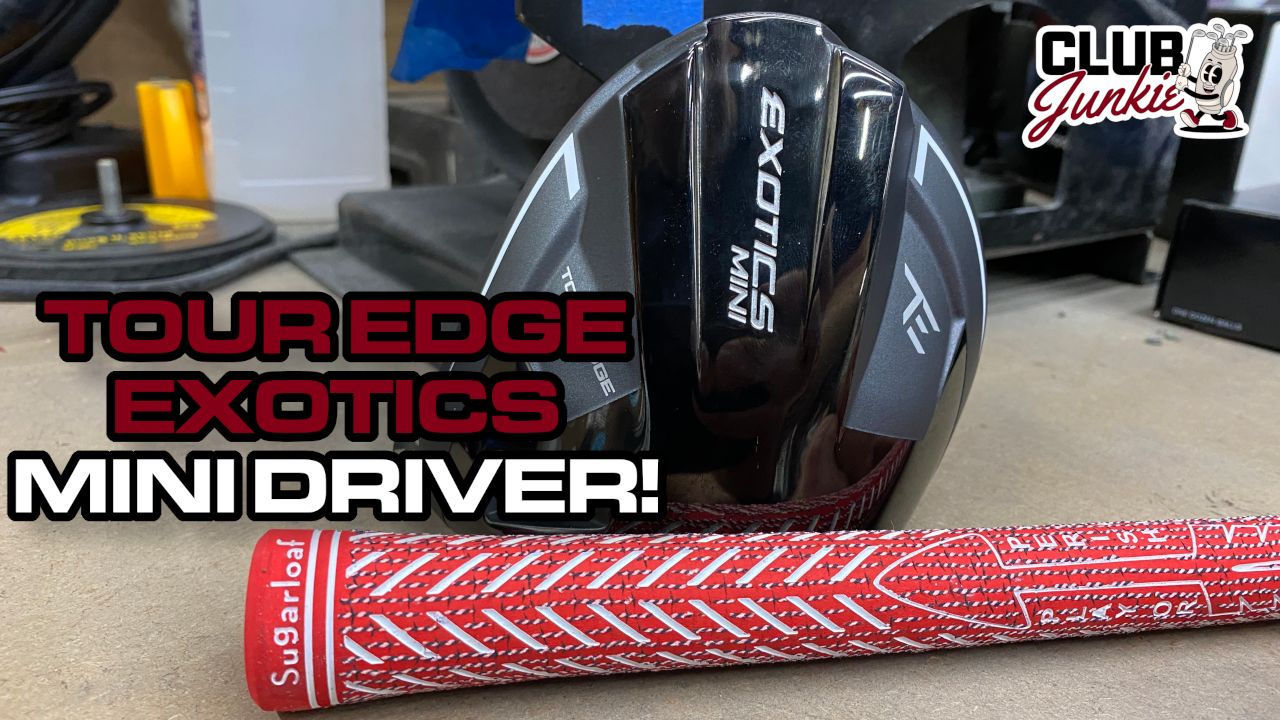
On this episode of Club Junkie, I put the new Tour Edge Exotics Mini Driver to the test and break down the performance, forgiveness, distance, and where it fits compared to a traditional driver or strong fairway wood. If you have been curious about adding a mini driver to the bag, this one is worth a look.
I also dive into the new TaylorMade Spider ZT Max putter that was recently spotted and discuss the growing zero torque putter trend. Plus, there is a closer look at the new Project X Titan Yellow shaft showing up on the PGA Tour and what makes it different from other profiles currently out there.

What’s the story behind Webb Simpson’s custom-stamped irons?

Memorial Tournament Tour Report: Rory McIlroy, Cameron Young switch up drivers, and more

Cadillac Championship Tour Report: Spieth’s sizable changes, McLaren Golf launches, and more

Russell Henley’s winning WITB: 2026 Charles Schwab Challenge

Kristoffer Reitan’s winning WITB: 2026 Truist Championship

Best irons 2026: Best irons overall, most forgiving irons, and more

J.T. Poston’s winning WITB: 2026 Memorial Tournament

Aaron Rai’s winning WITB: 2026 PGA Championship

Cameron Young’s winning WITB: 2026 Cadillac Championship

Details on Jason Day’s latest prototype Avoda iron setup


Christiaan Maas WITB 2026 (June)
Driver: TaylorMade Qi4D LS (8 degrees) Shaft: Fujikura Ventus TR Blue 6 X 3-wood: TaylorMade Qi10 (15 degrees) Shaft: Fujikura Ventus Black...


Ryan Palmer WITB 2026 (June)
Driver: Callaway Quantum Triple Diamond (9 degrees) Shaft: Project X HZRDUS Smoke Blue RDX 60 TX 3-wood: TaylorMade Qi10 (15 degrees) Shaft:...


Bud Cauley WITB 2026 (June)
Bud Cauley had >14 clubs in his bag when photographed prior to the Memorial Tournament. Driver: Titleist GTS2 (8 degrees) Shaft: Fujikura...


Hannah Green WITB 2026 (June)
Driver: Titleist GTS3 (10 degrees, D4 SureFit setting) Shaft: Mitsubishi Chemical Diamana RB 53 S 3-wood: Titleist GT3 (15 degrees,...
-
 Equipment6 days ago
Memorial Tournament Tour Report: Rory McIlroy, Cameron Young switch up drivers, and more
-
 News2 weeks ago
Russell Henley’s winning WITB: 2026 Charles Schwab Challenge
-
 Equipment4 days ago
Best irons 2026: Best irons overall, most forgiving irons, and more
-
 Whats in the Bag4 days ago
J.T. Poston’s winning WITB: 2026 Memorial Tournament
-
 Equipment1 week ago
Details on Jason Day’s latest prototype Avoda iron setup
-
 Equipment3 weeks ago
CJ Cup Byron Nelson Tour Report: Koepka and Kim’s newest putters finally get hot
-

 News2 weeks ago
Charles Schwab Challenge Tour Report: MacIntyre, Åberg and Spaun all switch putters, TaylorMade launches new Spider
-

 Equipment2 weeks ago
Details on J.J. Spaun’s surprise putter switch


bruce
Jun 7, 2018 at 3:43 pm
Most guys I see on the golf course can’t walk and invent a new golf swing every try. The sport of last resort.
Nick Buchan
Jun 8, 2018 at 8:51 am
There is some truth to that Bruce. Hence why I recommend most golfers start working on general patterns such as above to develop good movement, gait, etc before we start to add and supplement with some more golf specific stuff.
DB
Jun 5, 2018 at 8:58 am
Great article, and Imma let you finish, but… what is wrong with that guy’s arm?!?
Nick Buchan
Jun 8, 2018 at 8:50 am
I have a fair amount of laxity in my elbow joints – I can do some pretty freaky stuff with them and you should see my top of the backswing position. Something I probably should try to be aware of and correct more often as not the greatest stabilisation/ loading strategy but doesn’t seem to have any affect on me at all as yet to be honest.