
Equipment
Harris MacNeill, CEO of Champ Golf, talks new Slim-Lok spike, industry

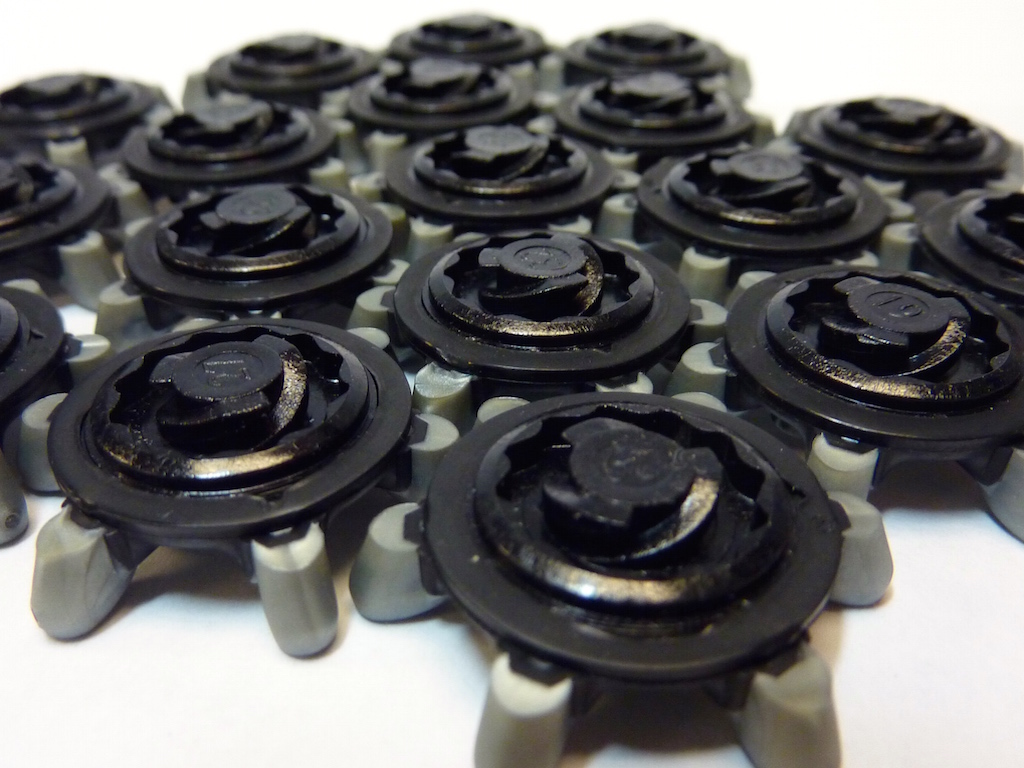
I spoke with Champ Golf’s CEO Harris MacNeill just after his visit to company factories in Hong Kong, where he also attended the Japan Golf Fair in Tokyo.
I asked him how the show differed from its equivalent in the States. He indicated that the Japanese market is much higher-end and very technically orientated. MacNeill said further that products are presented differently. Overall, he said the show was upbeat, positive, and well attended: a good sign for the second-largest golf market in the world.
Check out our conversation about the industry and the company’s new Slim-Lok spike below.
(Topics in bold with MacNeill’s words beneath)
How trends in golf shoes work

The reality of the shoe business is that there’s probably 35 or so brands that make golf shoes around the world. Ninety percent of the golf shoes are sold by four brands. You’ve really got four people—because every company has somebody at the top—that are driving technology or what is going to be saleable in the industry.
The spikeless craze over the last few years…it’s the chicken or the egg. Ecco does it, so other people follow, and the sales people say people are coming in looking for it. “We’ve gotta have spikeless” … on and on. It goes from 10 percent of the market to probably 30 percent or more very quickly…
What manufacturers are looking for
Manufacturers have challenged us: “What can you do to make a [better] lower profile spike?”
What we did develop…was called the One-Lok…as a technical system it was a snap-in and then twist-out. It works great from an execution and a technical standpoint. The problem is the tolerances were too tight for your average manufacturer. So as a development story, those things happen. We spent hundreds of thousands of dollars going down that path and building production tooling…and realizing that’s not what the industry wants.
Developing Slim-Lok
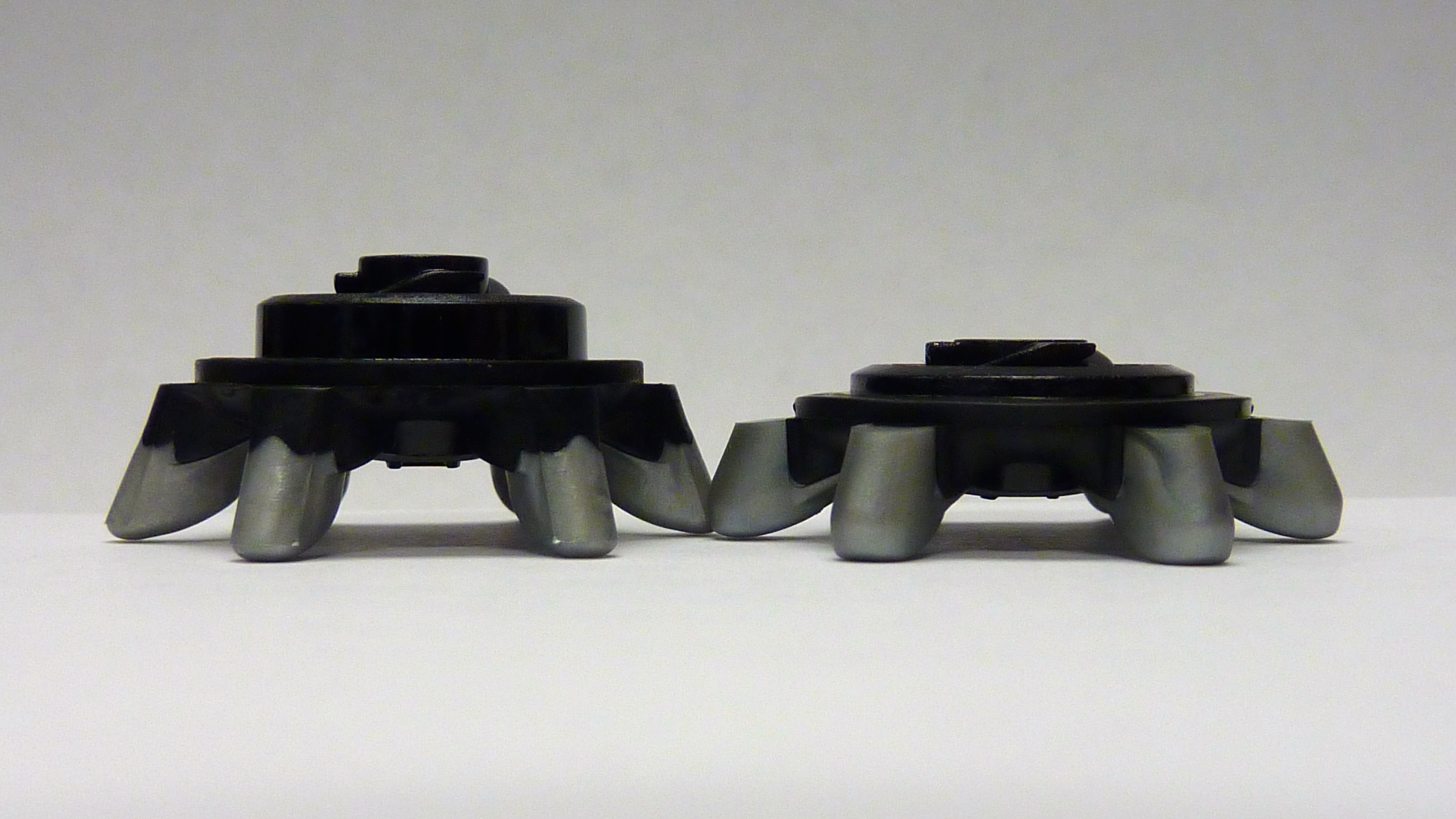
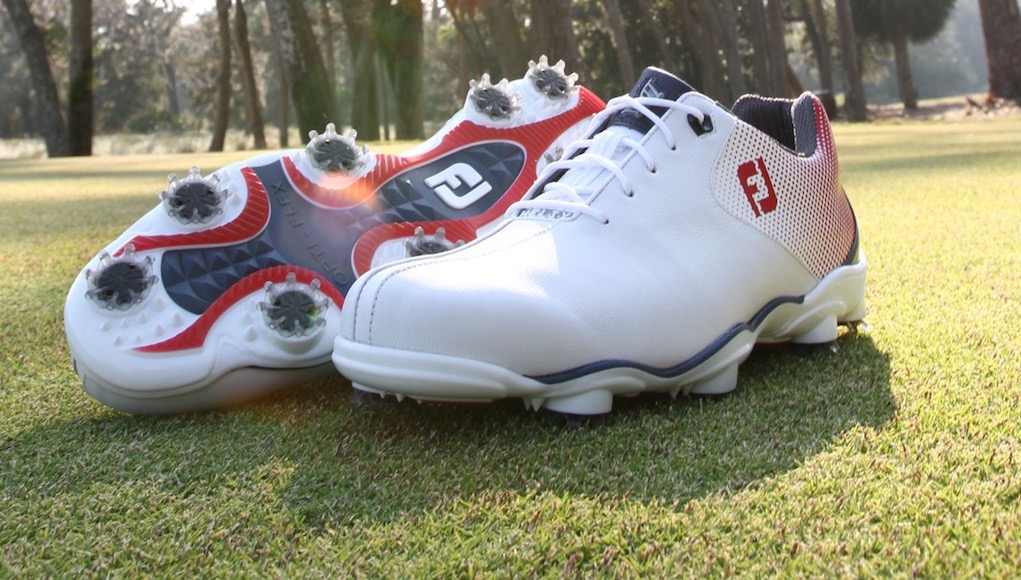
The Slim-Lok spike (right)
It was probably November of ’13. [We asked] What are all the issues with spikes in the marketplace? If we started completely from scratch, how would we do this? What do people want? They want low-profile: thin spike, thin outsole, lightweight. Also, it has to be user friendly and consumer friendly.
They’re used to using a threaded system…there are probably 25 million pairs of shoes out there like that…but from an industry perspective, there’s so many different fasteners that are there. In reality, there’s six or seven fastening systems that have been out there over the last 20 years.
We wanted to develop a spike where we could satisfy the shoe brands, where we’d make sure there were no returns and there were no issues with it…the reality is, they [brands] want spikes, but they don’t want to have to deal with it, because they’re in the business of selling shoes. The spike has to work, but they don’t want to think about it.
From a consumer standpoint…it’s the same thing.
The project
Let’s go back and re-engineer the standard in the industry, which is our Tri-Lock system. People know that, they recognize it. It works. We took that premise and we did a lot of redesign in terms of the thread configuration, the locking configuration, materials…we probably had 15 people in our company, both here in the U.S. and our Hong Kong office and our China office…between that November time frame and, say, March, we were able to fully develop the system, test the system, and then get commitments from the shoe brands to put them into their shoes starting with production in the summer and release through September first.
We were working in connection with the shoe companies, who were doing the testing and the molding.
We got equal or better torque or retention in the shoe, so the spikes don’t unscrew or pop out, which is critical, as that was the big knock on the lightweight system. We modified the thread, modified the locking mechanism, so you have a physical and audible click as you install it. You hear a click and know it’s seated and you put your wrench in and go “click, click” and it’s installed.
We made the thread so it’s backward compatible with all Tri-Lok and Fast Twist…so it’ll fit every shoe of those systems ever made. Fortunately, a lot of the work we had done previously in One-Lok with materials we were able to transfer into the Slim-Lok. That’s why we were able to get the retention that had been lacking.
From the consumer standpoint, it should be simple: they just want a spike to go in the shoe and then they can go play golf.
How the company tests and develops its products
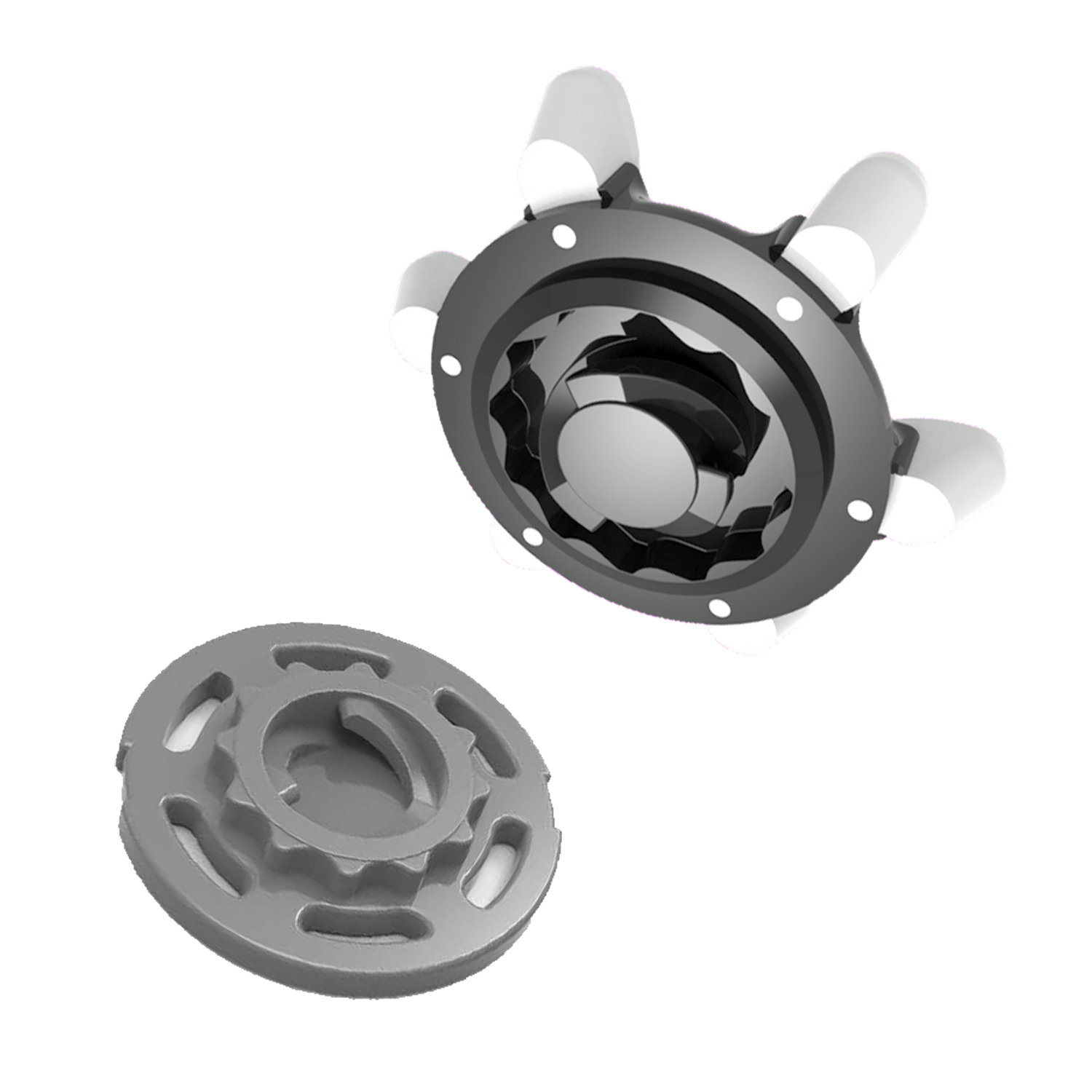
A lot goes into the modeling, designing, tooling, testing. We have a lot of internal testing programs for mechanical testing and for bonding, pull out, torque, impact, and all those things that you’d experience in real life. Plus we put it on a large group of golfers who actually go out and try to beat the hell out of it.
The Slim-Lok was a good combination of both sides of the world. A lot of the design and concepts came from here, we did a lot of physical testing here, but the sampling, development and toolwork was done in Asia.
We’re developing on a 24-hour cycle. We work on it here. We can send the files over at the end of the day. They work on it over there, send it back. We do a lot of that, so we can really move things along.
Why OEMs don’t make spikes
The reality is for [the OEMs] to go in and design and tool up for themselves, they’d probably actually pay more for the product than if they just buy from us because of the sheer volume that we do.
They’re getting our total focus on traction technology at a great price and they don’t have to think about it. The other thing is we work very closely with the designers. They will send us a concept. They’ll just say, “Here’s what the outsole looks like. Here’s the design idea of the shoe. Where it’s going to be sold. What conditions it’s going to be used in. What are the expectations? What are the price points? Here’s…what we’re looking for. Can you design something?”
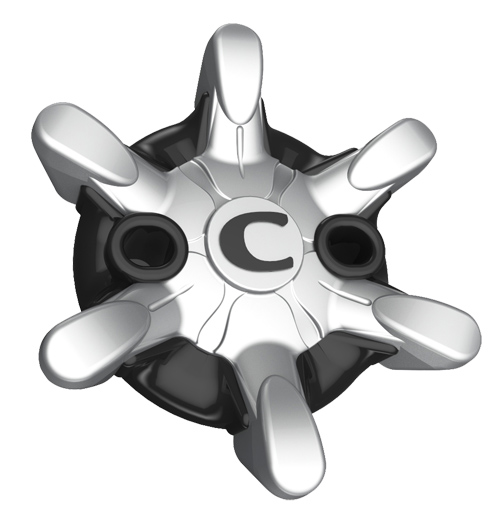
We take that from there and we’ll give them a range of designs. Sometimes they’re off-the-shelf designs we already have. Other times, they’re 100 percent custom. Typically the large brands can afford specific tooling, so they’ll do custom.
Collaborative process of shoe design
It’s very collaborative. We’re involved right at the beginning. When a shoe is manufactured, most people don’t think about, in the shoe there’s what we call the receptacle…that’s the…attachment mechanism that’s in the shoe. So they can’t start making shoes without the receptacle…that’s the first thing that happens.
We ship the receptacles to the outsole factory so they can start making outsoles. And those end up going to the assembly line so they can start making the shoe. The very last thing that happens at the assembly plant is they put the spikes on. We’re kind of the bookends.
The recent foray into grips
I looked at grips over 10 years ago. Grips at the time, Golf Pride was still dominant. There were a lot of other players, but they were all low-tech and they were all low price. I could go into the grip business, but I couldn’t make any money at it. And if you can’t offer anything different, why bother?
Fast-forward seven, eight years later: The price points change. There’s room for engineered product and price points we can make money at. The other thing that tied in at the same time was our…global distribution network: 100-plus really fine distributors around the world servicing 120 different countries and they were asking for more products and so this was just a perfect fit.
It took about three years to develop it. I wasn’t going to develop a line of grips that weren’t unique. Something that has technology but has the tradition in it as well. So we came up with four swing models to cover all the price points and technologies and a line of putter grips.





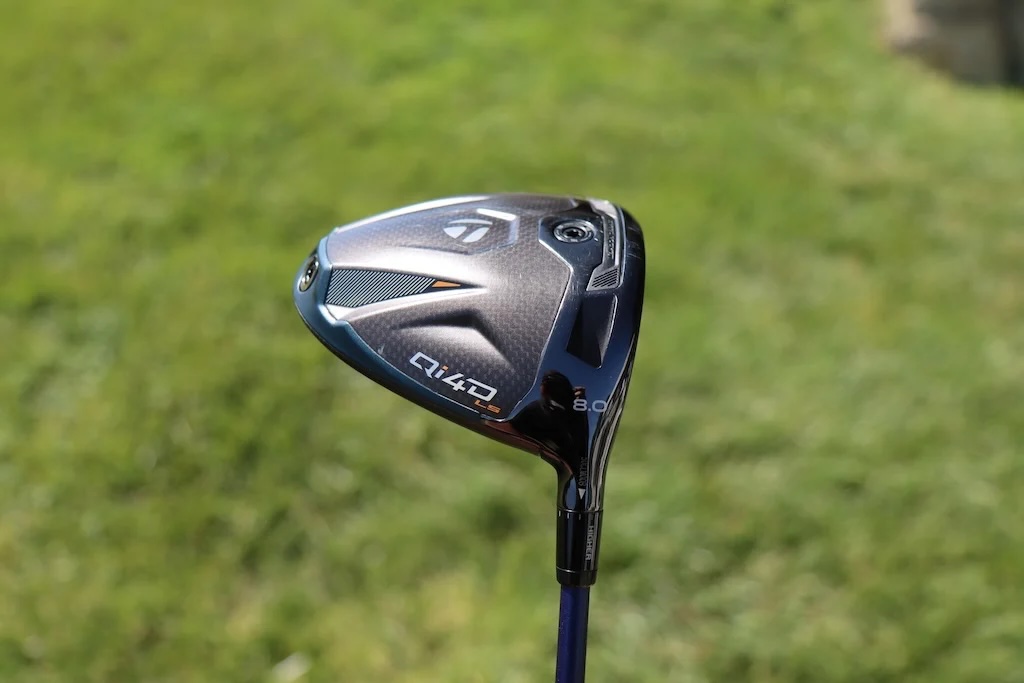
Driver: TaylorMade Qi4D LS (8 degrees)
Shaft: Fujikura Ventus TR Blue 6 X
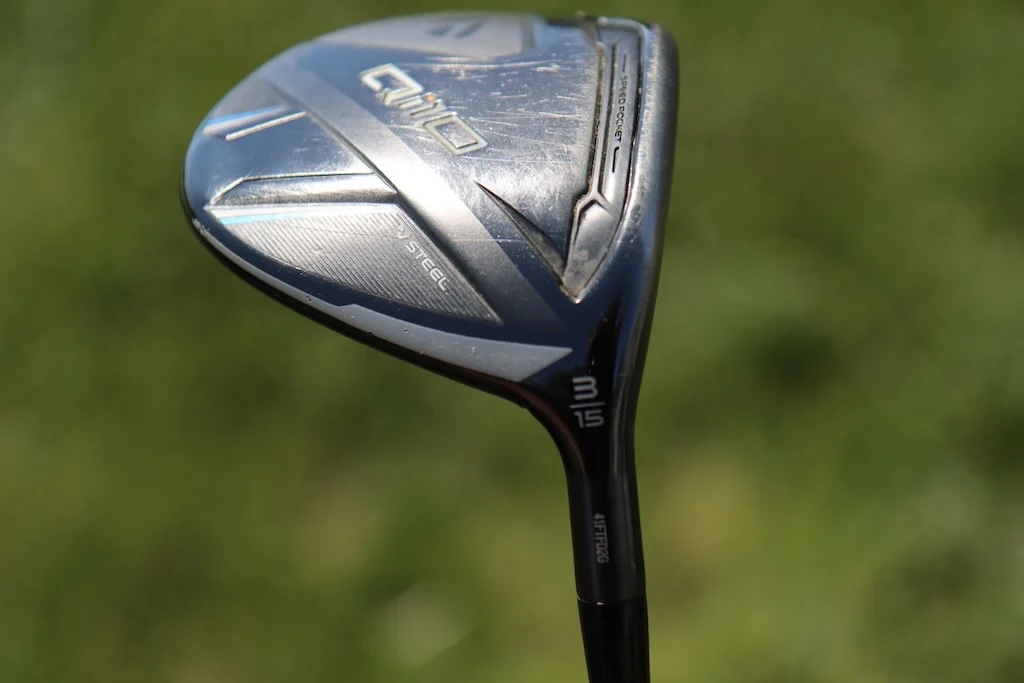
3-wood: TaylorMade Qi10 (15 degrees)
Shaft: Fujikura Ventus Black 9 TX
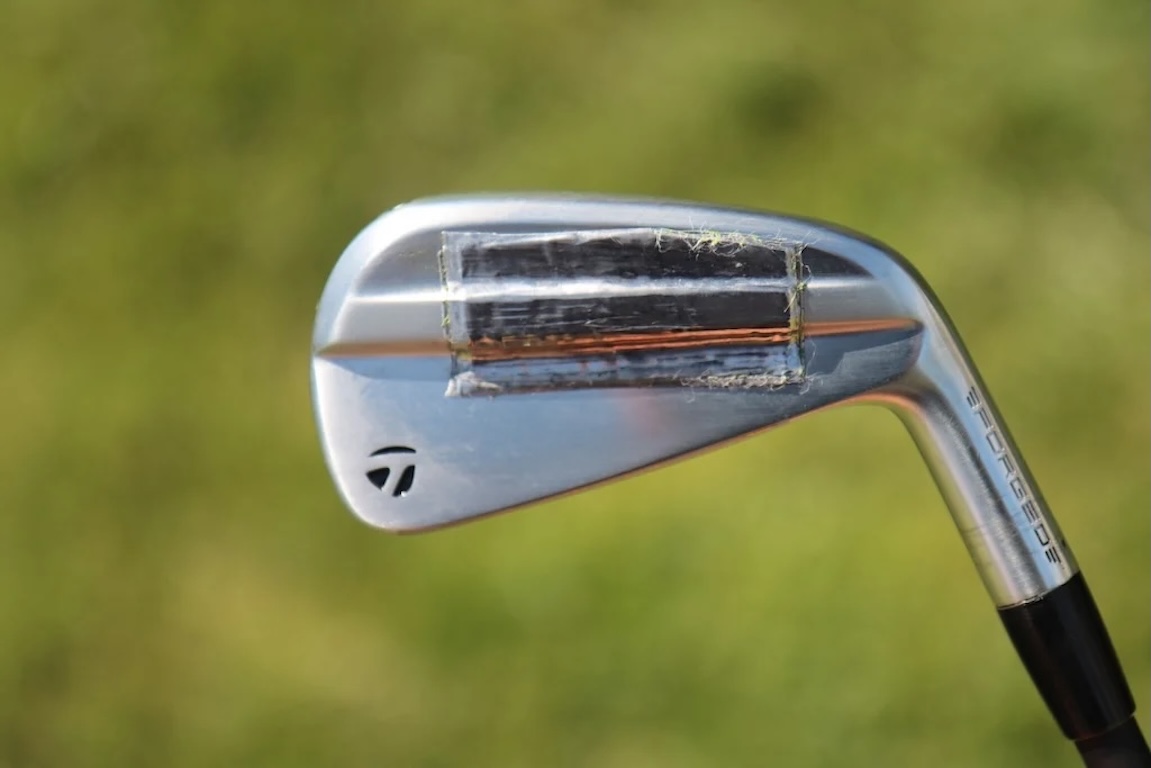
Irons: TaylorMade P770 (3), TaylorMade P7CB (4), TaylorMade P7TW (5-PW)
Shafts: Fujikura Ventus Black HB 10 X, True Temper Dynamic Gold X100
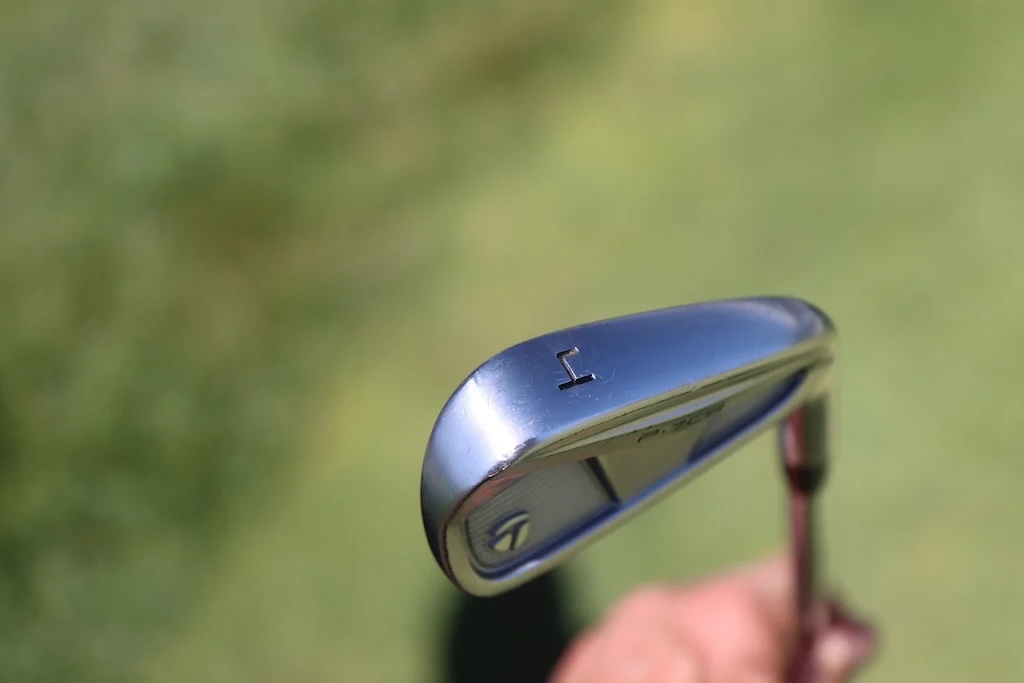
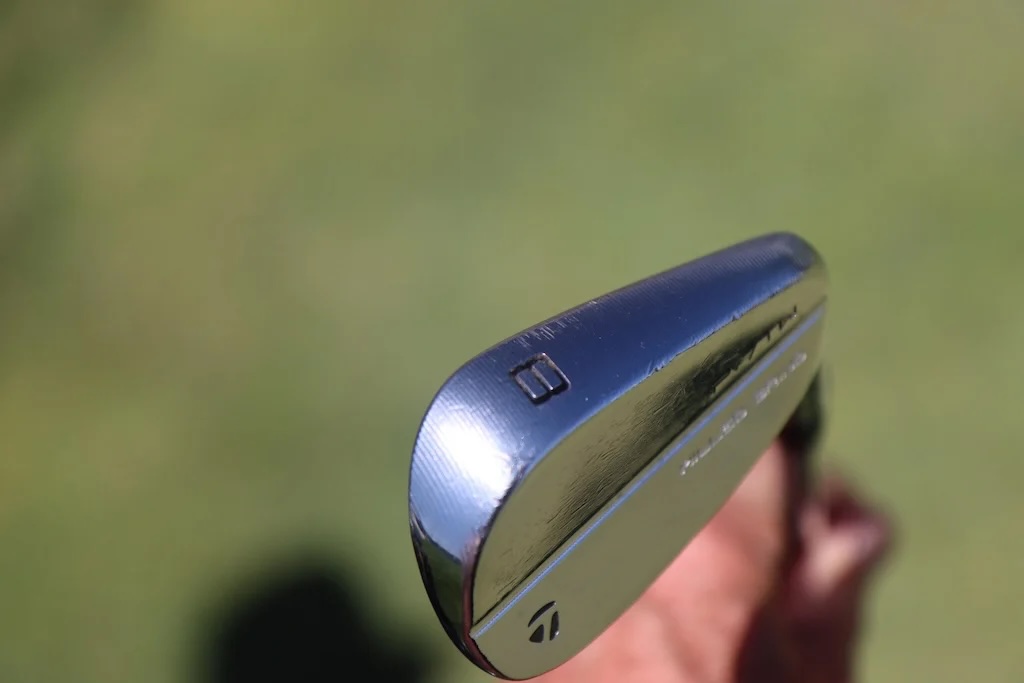
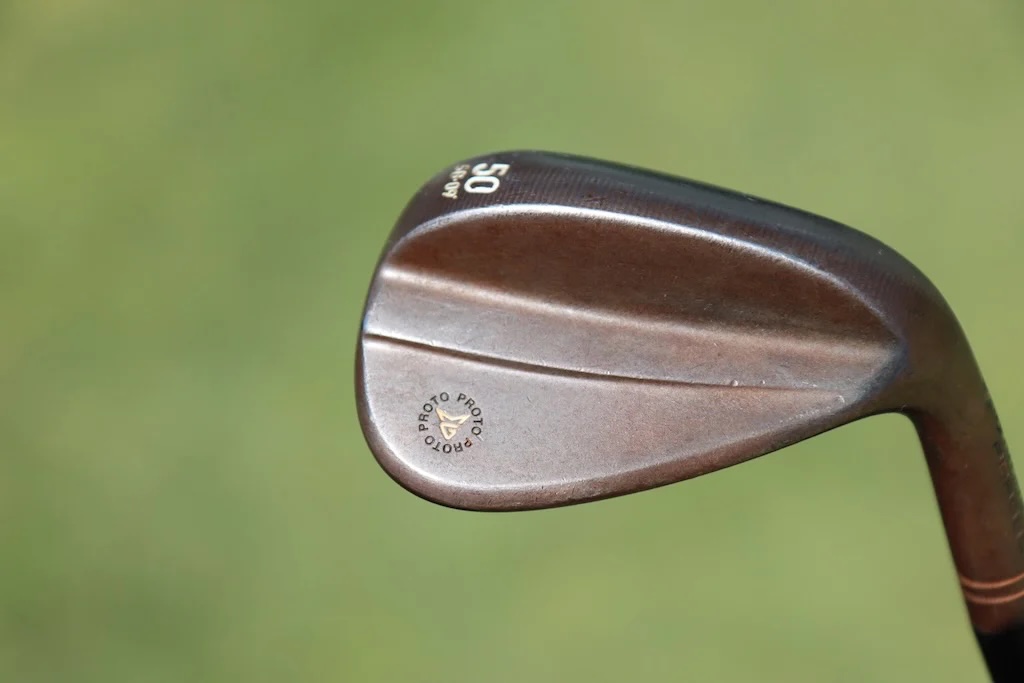
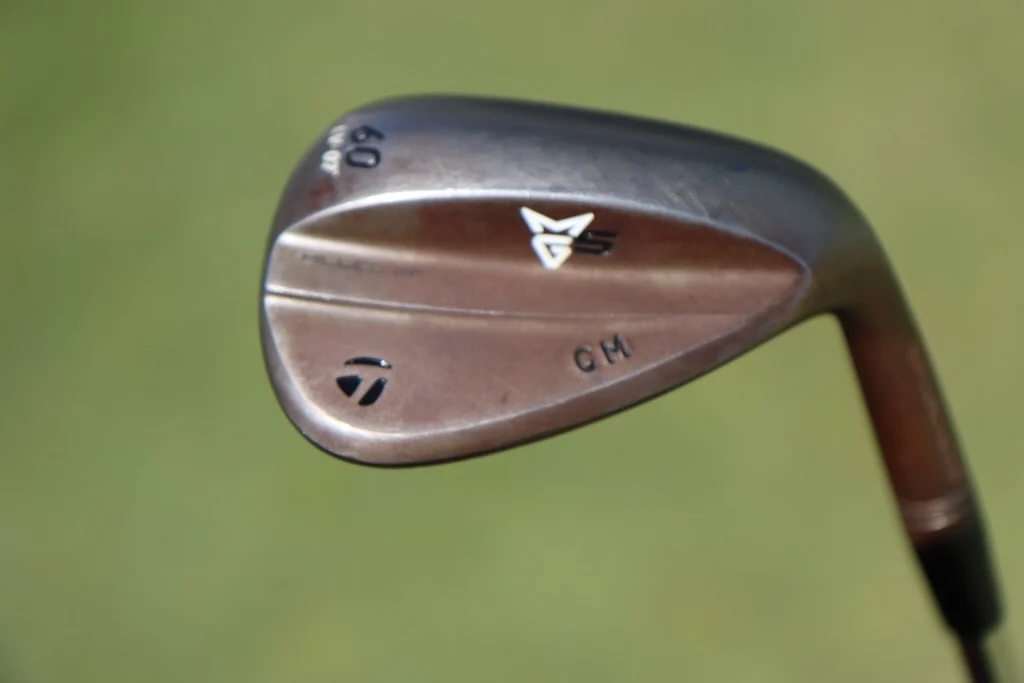
Wedges: TaylorMade Prototype (50-SB09), TaylorMade MG5 (56-HB12, 60-LV07)
Shafts: True Temper Dynamic Gold S400
Putter: TaylorMade TP Juno
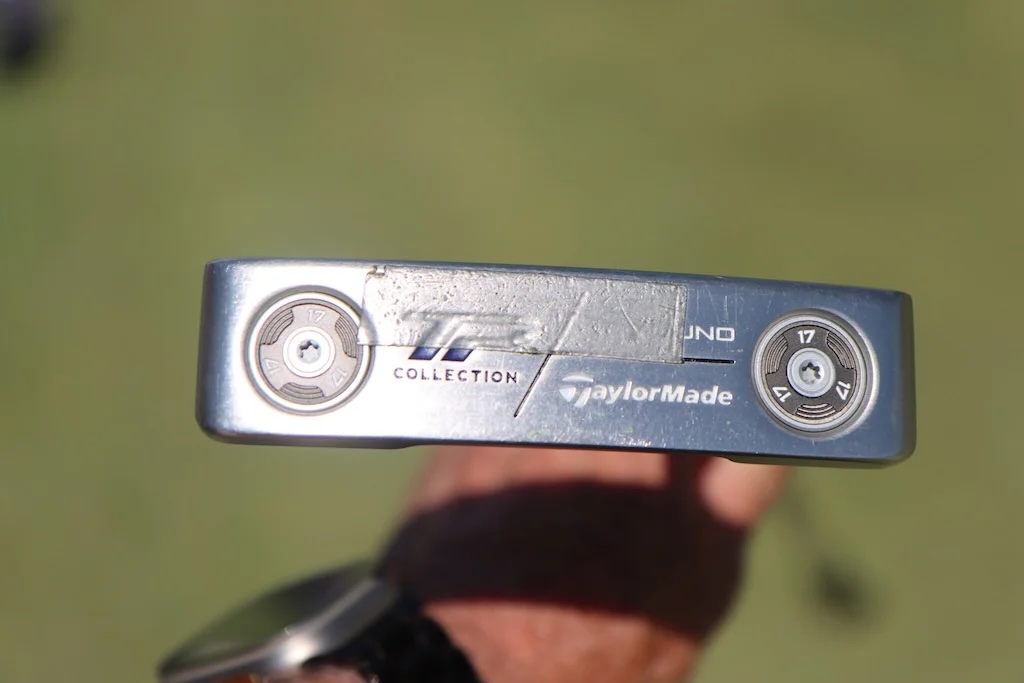
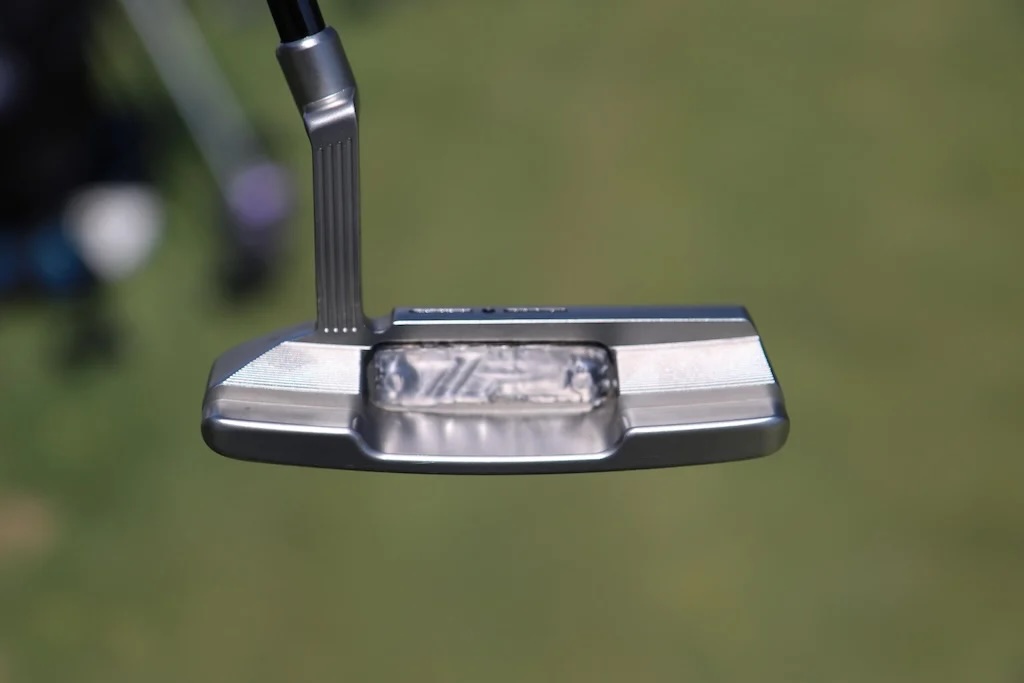
Ball: Titleist Pro V1x
Grips: Golf Pride Tour Velvet Cord
Check out more in-hand photos of Christiaan Maas’ clubs here.
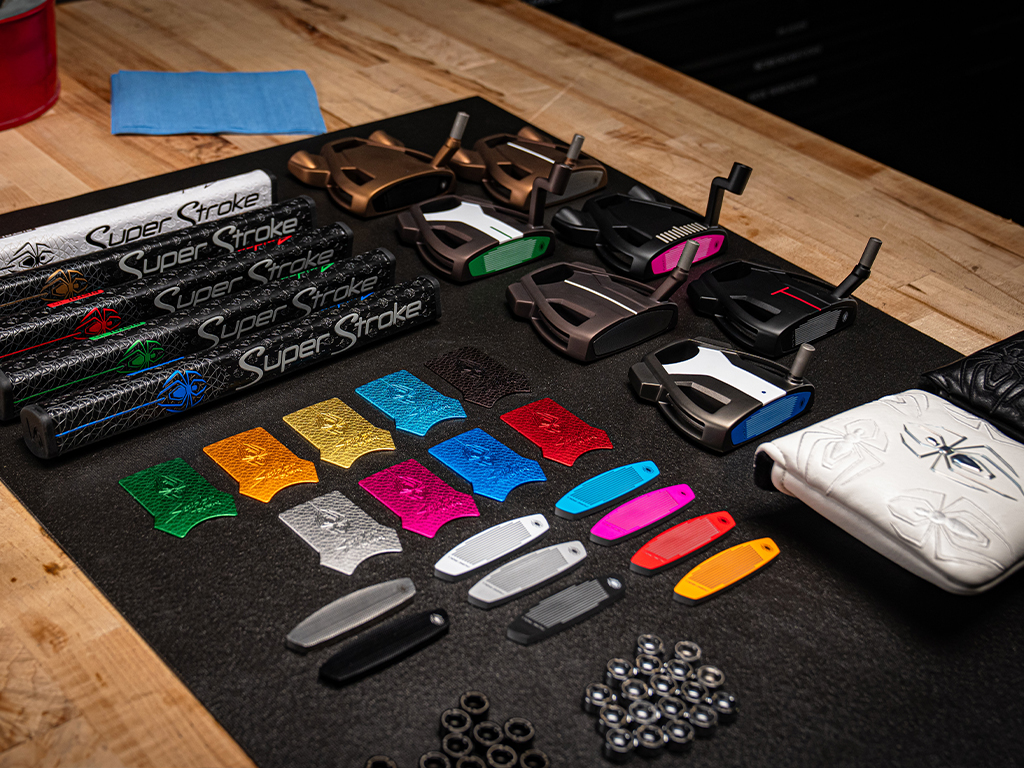
TaylorMade Golf’s MySpider program underwent a substantial overhaul over the last month. Firstly, the company launched the option to customize the Spider ZT model, and now the program has returned with the MySpider Tour and MySpider Tour X.
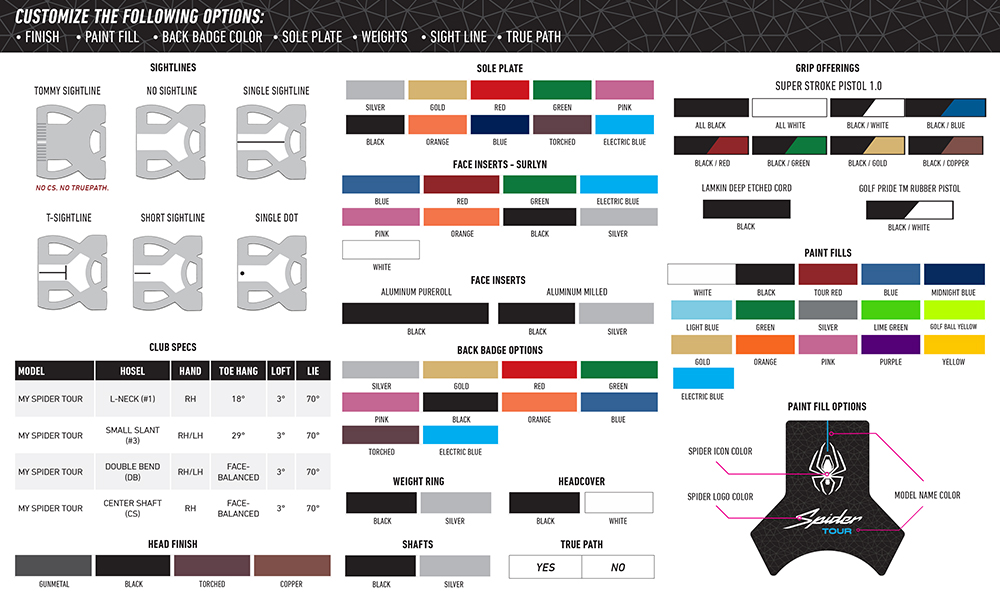
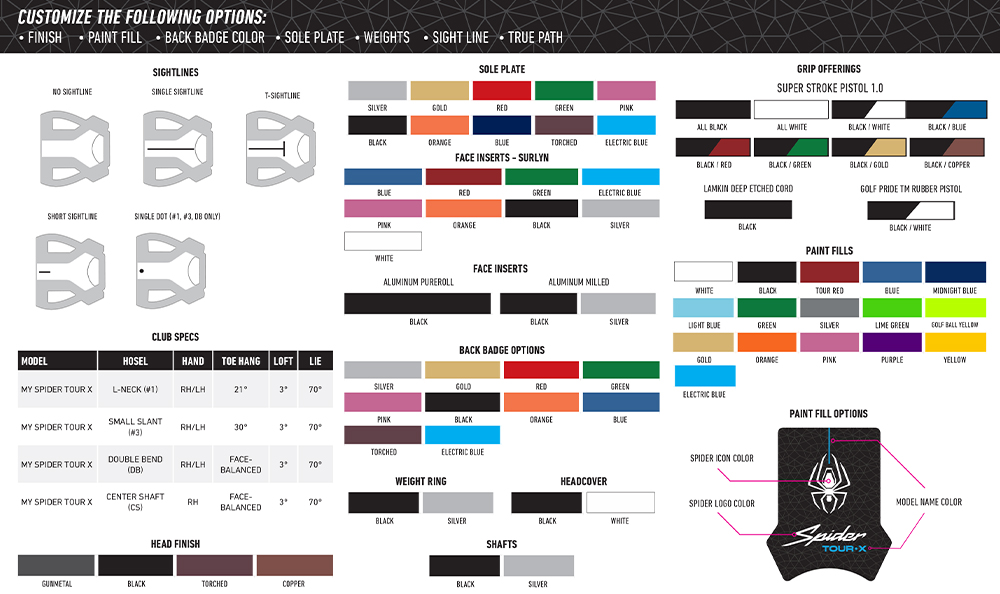
The revamped page now gives golfers complete control over every visual and functional detail of their putter on the popular Tour and Tour X head, with every cosmetic idea thought of. In MySpider Tour, golfers can choose from four head finishes, 16 paint fill colors, nine Surlyn face insert colors, three aluminum insert options, six sightline configurations, and four hosel options — L-neck, small slant, double bend, center shaft. Six sightline options are available in MySpider Tour, including the optically engineered True Path alignment system. MySpider Tour X gives builders the option of four head finishes, four hosel configurations, and five sightline options, also including True Path alignment.
One of the more interesting features of the new MySpider program is the availability of three distinct face insert options. Along with the usual Surlyn Pure Roll insert trusted by Scottie Scheffler and Rory McIlroy, which can be customized from nine colors, golfers can now also select firmer options. Two are offered with the black aluminum Pure Roll insert, slightly firmer than the traditional insert, or for the firmest feel, golfers can choose from two colors of milled aluminum inserts.
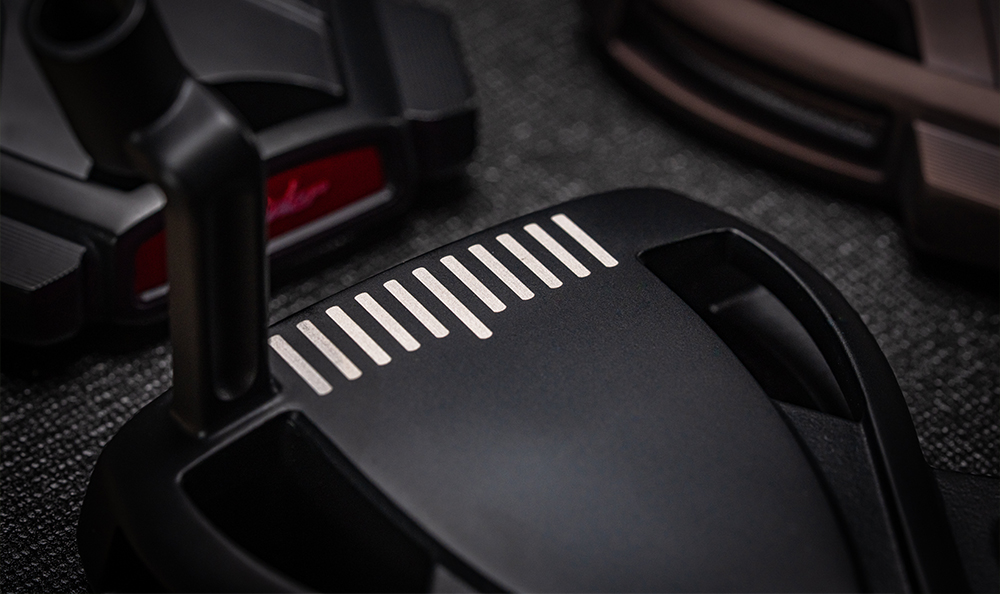
Another fun addition to the MySpider Tour is the ability to use the “Tommy Sightline.” The custom alignment aid design, which was first drawn onto Tommy Fleetwood’s putter by PGA Tour Rep James Holley, is based on the milled sightline on his Spider ZT head. There are five shorter lines on the left and right of a longer central line serving as the traditional short line alignment aid.
See below for the full specifications sheet for MySpider Tour and Tour X:
MySpider Tour
MySpider Tour X
Equipment
Then and now: Comparing Rory McIlroy’s current setup to his record-breaking 2019 Canadian Open victory

In Rory McIlroy’s first appearance at the 2019 RBC Canadian Open, he crushed the record books to earn his 16th PGA Tour title in dominating fashion, winning by seven shots over Shane Lowry and Webb Simpson.
McIlroy’s score of 22-under-par 258 is the lowest 72-hole score to date at the Canadian Open, and his closing 61 is also the best final-round score in the history of one of golf’s oldest tournaments. Finally, with his win in 2019, McIlroy became only the sixth player to win the career Triple Crown, adding to his victories at the U.S. Open in 2011 and The Open Championship in 2014, joining Tommy Armour, Walter Hagen, Arnold Palmer, Lee Trevino and Tiger Woods in a coveted list.
So, with that, why not compare his current setup to the clubs he used to break all the records?
Driver
2019: TaylorMade M5 (9 degrees), Shaft: Mitsubishi Tensei CK Pro White 70 TX
2026: TaylorMade Qi4D (9 degrees @8), Shaft: Fujikura Ventus Black 7X (45 5/8 inches)
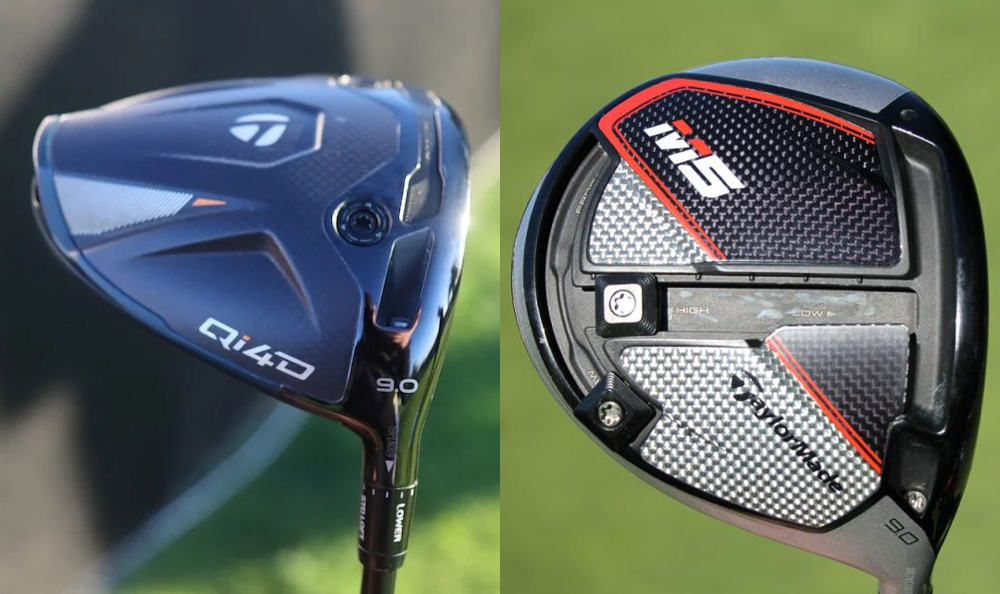
McIroy led the Tour in Strokes Gained: Off-the-Tee in 2019; he’s doing the same in 2026. Between now and then, McIlroy has switched from the Mitsubishi Tensei CK Pro White 70 TX (a shaft with slightly more feeling in the tip) to the original Fujikura Ventus Black 7X, having just made the change to the heavier version from playing the 60X.
What’s interesting about McIlroy’s 2019 setup is that the weighting on his driver is actually set in the high-draw setting, using the T-Track weighting system, whereas in the Qi4D, he’s currently using a heavily rear-weighted setup. (Two 13-gram weights in the rear and only two 4-gram front weights.)
The TaylorMade M5 driver he played in during his Canadian Open win was the company’s first head that they claimed to design to initially exceed the USGA’s COR limit, and then injected with tuning resin to bring it back in bounds.
Fairway woods
2019: TaylorMade M6 3-wood (15 degrees), Shaft: Mitsubishi Tensei CK Pro White 80 TX; TaylorMade M5 5-wood (19 degrees), Shaft: Mitsubishi Tensei CK Pro White 90 TX
2026: TaylorMade Qi4D 3-wood (15 degrees), Shaft: Fujikura Ventus Black 8X; TaylorMade Qi4D 5-wood (18 degrees), Shaft: Fujikura Ventus Black 9X

The TaylorMade M6 fairway wood that McIlroy was using during the 2019 season is still in the bag of some of the best golfers on Tour in 2026. Just check out Justin Rose’s winning setup from the Farmers Insurance Open earlier this year. This year, though, McIlroy has still been searching for his top-end-of-the-bag setup, having played both the new Qi4D and the Qi10, which he won the Masters with.

The same shaft swap can be seen in the fairway woods as the driver, along with slightly less loft on the 5-wood.
Irons
2019: TaylorMade P750 (4) Buy here, TaylorMade P730 (5-9), Shafts: Project X 7.0
2026: TaylorMade P760 (4), TaylorMade Rors Proto (5-9), Shafts: Project X 7.0

The biggest difference between McIlroy’s custom set and the stock P730s is the groove design. While the P730s were constructed with 14 MX-9 grooves on their milled faces, McIlroy’s proto heads instead use the higher-spinning, 16-groove layout of the TW2 grooves. Other big differences between the sets are that McIlroy’s 7- and 8-irons have thinner toplines, are 1 degree stronger in loft, and are 1/4 inch longer than the original P730 builds.
With McIlroy’s 4-iron, the switch from P750 to P760 sees a transition to a two-piece construction with Speed Foam in it, which allows McIlroy to launch the ball slightly higher, with more workability.
Wedges
2019: TaylorMade Milled Grind (48-09SB), TaylorMade MG Hi-Toe (52-09SB, 56-09SB, 60-LB09), Shafts: Project X Rifle 6.5
2026: TaylorMade MG5 (46-09SB, 50-09SB, 54-11SB, 60-08LB @61), Shafts: Project X 6.5 (46-54), Project X 6.5 Wedge (60)

Between 2019 and 2026, McIlroy’s focus on his short game has been much more apparent. It was the reason why he switched back to the TP5 golf ball, to help with launch, spin and control with his wedges leading up to his career Grand Slam victory in 2025. The most apparent changes to McIlroy’s wedge setup are his lofts and bounce. He’s slowly delofted his pitching to a sand wedge, but has increased the loft on the lob wedge, bending his current 60-degree to 61. With that, adding more loft to his lob wedge also slightly increases the bounce and leading-edge sit point, so, as a result, he plays a lower-bounce lob wedge compared to 2019. The MG5 wedges are also softer than the first Milled Grind option from 2019. McIlroy also no longer plays the full-face grooves found on the Hi-Toe.
Putter
2019: TaylorMade Spider X
2026: TaylorMade Spider Tour X
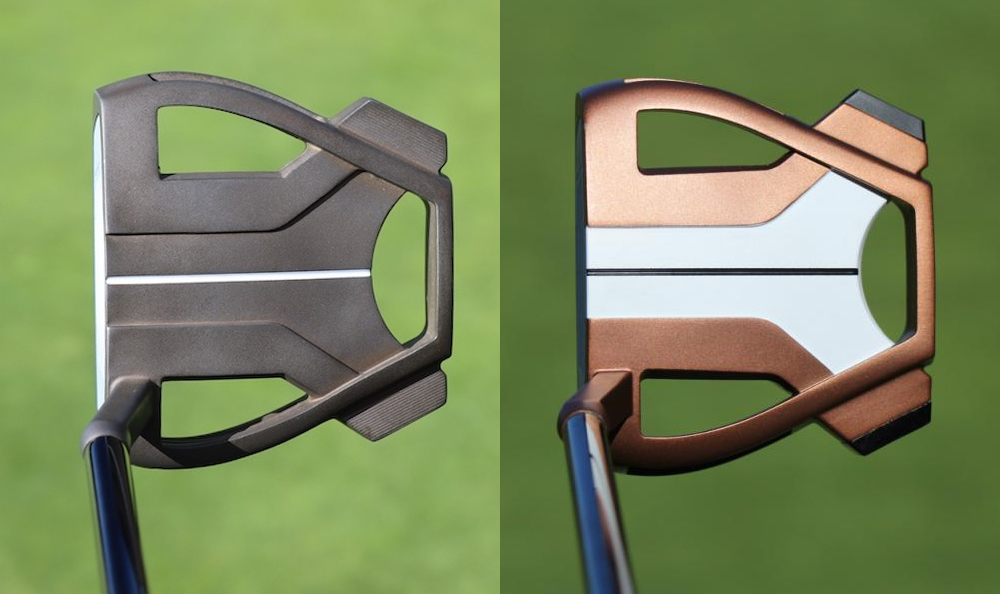
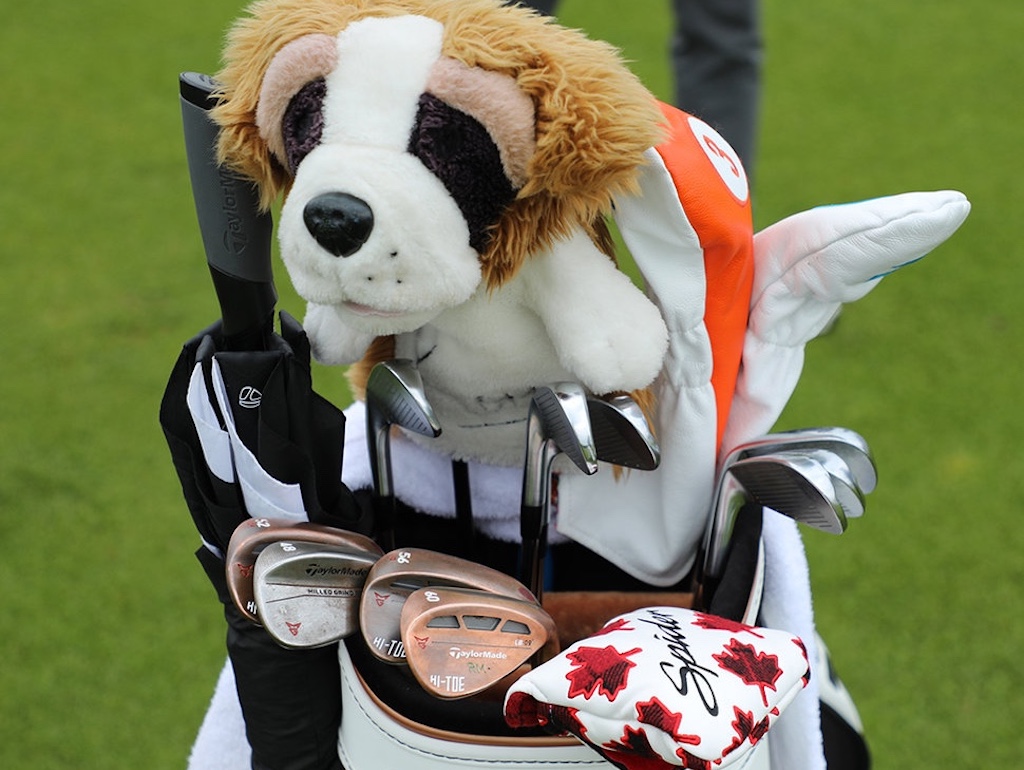
Notice anything similar. Yes, the copper finish on Rory McIlroy’s Spider X putter in 2019 is a slightly more reflective finish than the recently released torched PVD finish. McIlroy was using the True Path alignment system, but now uses only a single white sightline.
Ball
2019: 2019 TaylorMade TP5 (#22)
2026: 2025 TaylorMade TP5 (RORS)
As mentioned above, McIlroy had transitioned from the TP5 to TP5x golf ball since his victory in Canada in 2019, but now is black with the same style of golf ball as his victory at Hamilton Golf & Country Club.
Grips
2019: Golf Pride Tour Velvet Cord
2026: Golf Pride MCC
Interesting, McIlroy actually used Golf Pride’s Tour Velvet Cord grips during his victory in 2019 (it was during a 2+ year switch to the corded TV) as opposed to his usual MCC grips, which he has played for most of his career.

What’s the story behind Webb Simpson’s custom-stamped irons?

Memorial Tournament Tour Report: Rory McIlroy, Cameron Young switch up drivers, and more

Cadillac Championship Tour Report: Spieth’s sizable changes, McLaren Golf launches, and more

Russell Henley’s winning WITB: 2026 Charles Schwab Challenge

Kristoffer Reitan’s winning WITB: 2026 Truist Championship

Best irons 2026: Best irons overall, most forgiving irons, and more

J.T. Poston’s winning WITB: 2026 Memorial Tournament

Aaron Rai’s winning WITB: 2026 PGA Championship

Cameron Young’s winning WITB: 2026 Cadillac Championship

Details on Jason Day’s latest prototype Avoda iron setup


Christiaan Maas WITB 2026 (June)
Driver: TaylorMade Qi4D LS (8 degrees) Shaft: Fujikura Ventus TR Blue 6 X 3-wood: TaylorMade Qi10 (15 degrees) Shaft: Fujikura Ventus Black...


Ryan Palmer WITB 2026 (June)
Driver: Callaway Quantum Triple Diamond (9 degrees) Shaft: Project X HZRDUS Smoke Blue RDX 60 TX 3-wood: TaylorMade Qi10 (15 degrees) Shaft:...


Bud Cauley WITB 2026 (June)
Bud Cauley had >14 clubs in his bag when photographed prior to the Memorial Tournament. Driver: Titleist GTS2 (8 degrees) Shaft: Fujikura...


Hannah Green WITB 2026 (June)
Driver: Titleist GTS3 (10 degrees, D4 SureFit setting) Shaft: Mitsubishi Chemical Diamana RB 53 S 3-wood: Titleist GT3 (15 degrees,...
-
 Equipment6 days ago
Memorial Tournament Tour Report: Rory McIlroy, Cameron Young switch up drivers, and more
-
 News2 weeks ago
Russell Henley’s winning WITB: 2026 Charles Schwab Challenge
-
 Equipment3 days ago
Best irons 2026: Best irons overall, most forgiving irons, and more
-
 Whats in the Bag4 days ago
J.T. Poston’s winning WITB: 2026 Memorial Tournament
-
 Equipment1 week ago
Details on Jason Day’s latest prototype Avoda iron setup
-

 Equipment3 weeks ago
CJ Cup Byron Nelson Tour Report: Koepka and Kim’s newest putters finally get hot
-

 News2 weeks ago
Charles Schwab Challenge Tour Report: MacIntyre, Åberg and Spaun all switch putters, TaylorMade launches new Spider
-

 Equipment2 weeks ago
Details on J.J. Spaun’s surprise putter switch


Golden
Jan 11, 2020 at 9:50 am
The slim lok spikes don’t fit the old tri-lok shoes whatsoever. They are loose and fall out over the round. Where can we still get tri-lok spikes?
SANG
Aug 21, 2017 at 8:18 pm
I have 3 sets of old tri-lock spikes. Are they suitable for those shoes with a new slim-lock system?
So, I want to make sure if shoes using this new slim-lock spikes can accept the old tri-lock spikes or not.
Richard
May 19, 2015 at 10:27 am
First pair of shoes I bought with TRI-LOK I was happy.
I had spikes that were easy to change. ANd a system that appeared to be statndarized across several shoe brands.
Of course there is NO PROFIT MARGIN MONEY in standardization, there is more money in customer lock-in via a continuous stream of new proprietary fastening systems.
In the role of customer aka sheeple:
I only bought shoe brands that used the TRI-LOK system; if you were not using TRI-LOK I was not interested. WHy would I want to shop for and stock multiple cleat types.
Some shoe vendors decided they no longer wanted to sell me product. They were free to choose this road.
Now the games have really started – design Obsolescence in full force.
Now we have PINS, If any one had bothered to ask us loyal users of Tri-LOk we would have recommended the F-PINS system instead. Three of the guys I play with loose cleats every round out of their FootJoy DNA’s. Others loose cleats out of their Addidads shoes with PINS Cleats. This makes me wonder if this is not a scheme to force us doen the road of cleatless shoes. When these wear out yo buy whole new shoes. Hmmh
I loved the Original Champ Scorpion Stinger Spikes, the newer variants of Scorpion Stingers all suck.
Strangely enough you can still buy new e.g. Nike Shoes with Scorpion Stingers in them but as soon as they wear put you are SOL. So champ will make them for Nike but no longer for US – must be part of their customer loyalty rewards program.
christian
Mar 18, 2015 at 4:00 am
Haven’t Adidas offered low profile spikes and thin soles for at least 5 years already?
Also Starring
Mar 18, 2015 at 6:23 am
True. My Adidas Samba are low profile. And, by the way, the original spikes were ok for half a year. The replacement ones are shit. I have to change them every other month. 15$ x 6 times a year = 90$
For this price, my next shoes will be spikeless. In the article they write about the “spikeless craze” that has become a 30% of the market. Probably here is the answer. it is not crazy or a trend, it is money.
Double Mocha Man
Mar 20, 2015 at 7:38 pm
So you are cheap and don’t want a good grip on wet surfaces. When can we get together for a money round of golf in a light rain?
Also
Mar 18, 2015 at 6:29 am
True. My Adidas Samba (3 yrs old) are low profile. And, by the way, the original spikes were ok for half a year. The replacement ones are not of the same quality. I have to change them every other month. 15$ x 6 times a year = 90$
For this price, my next shoes will be spikeless. In the article they write about the “spikeless craze” that has become a 30% of the market. Probably here is the answer. it is not crazy or a trend, it is money.
Double Mocha Man
Mar 20, 2015 at 7:42 pm
I wear Footjoys with Champ spikes, play 4 to 5 times a week and need to change spikes 2-3 times a year. I buy bulk spikes from eBay and average $13 a year.
Gorden
Mar 17, 2015 at 8:12 pm
SO great you make special spikes for the OEMs that go in thier shoes and you can never buy the same spike again… are spikes going to get like the grip market you buy a new set of OEM irons and a year later you cannot replace with the same grip (maybe Ping) your stuck going after one of the grip companies way over priced models…this is the customer service thing others are talking about..the OEMs are the customers all these manufatures are worried about the end users are just left to fend for themselfes…Golf grips at 10 to 14 bucks each give us a break
Albert
Mar 17, 2015 at 5:12 pm
Sorry Mark, that one was for Eej.
Albert
Mar 17, 2015 at 12:55 pm
It is clear that you are focused in your product and your profit. But it won’t last if you don’t focus on your customers.
We, the end users of spikes, are only concerned in one thing: make them LAST MORE. Durability my friend. We couldn’t care less for your Slim project.
Listen to your customers, please. Either you make them more durable or another company will do. And you will be out of business.
If no one does, then ecco-like soles will be the only one, and you will be out of business anyway.
Eej
Mar 17, 2015 at 2:57 pm
Idiot.
If they make them more durable, they will sell less, therefore the price will go up and nobody will buy them.
Mark
Mar 17, 2015 at 3:31 pm
Be careful when you speak on behalf of customers you don’t know. When you speak it is just your opinion.
I am not that concerned with how long they last. I care that they provide traction and they are easy to change.
Albert
Mar 17, 2015 at 4:53 pm
I also want traction and easy to change. Someone will like them in yellow. But I don’t see the correlation with durability. It is just a matter of using a different plastic composition with the same shape.
Albert
Mar 17, 2015 at 4:56 pm
No need to insult. Don’t get nervous. It’s only spikes, not the malaria vaccine.
“Therefore price will go up…” Therefore what? Therefore they will make less money. That’s all. A chinese company will arrive and will make them even cheaper. There is competition out there man.
Kodak insisted in film, and kodak is out of business.
Do you remember when a Cd price was 35$ and you really only wanted one song?
Eej
Mar 17, 2015 at 5:41 pm
“A chinese company will arrive and will make them even cheaper.”
You asked for durability and this is the statement you make. What an Eejit
Albert
Mar 17, 2015 at 7:54 pm
Champs are made in China.
WAE
Mar 20, 2015 at 9:20 pm
What an eejit
Albert
Mar 22, 2015 at 4:17 pm
Oh..how smart!