
Opinion & Analysis
Common traits of the most critical holes on the PGA Tour


In the past I have written about what I call the “Critical Holes” in a golf tournament. My analysis shows that these are the holes in a tournament that separate the top finishers from the rest of the field.
Most tournament golfers worry most about the most difficult holes on the course, which isn’t the best thing to do. If the most difficult hole on a course has a small deviation in scores, then making a bogey on that hole will likely have a minimal impact on the golfer’s standing in a tournament if most of the golfers are making pars and bogeys. Conversely, if a golfer birdies an easy hole with a low deviation in score, that will not have much of an impact in their standing in a tournament if most of the field is also birdieing that hole.
The issue for non-Tour players is that they do not have the access (nor the time) to input the data and determine what holes separate the best finishers from the rest of the field in any non-PGA Tour event. In order to help combat this problem, I have computed the top-three par-3’s, par-4’s and par-5’s on the PGA Tour where historically the top finishers have gained the most strokes versus the field in those events.
I also examined the top par-3, par-4 and par-5 holes at Augusta National Golf Club and see a similar trend in terms of the design of these holes. I believe that the similar designs at courses from around the world are likely to be “critical holes” for golfers in their tournaments.
The Most Critical Par-3 Holes
TPC San Antonio No. 3: Valero Texas Open
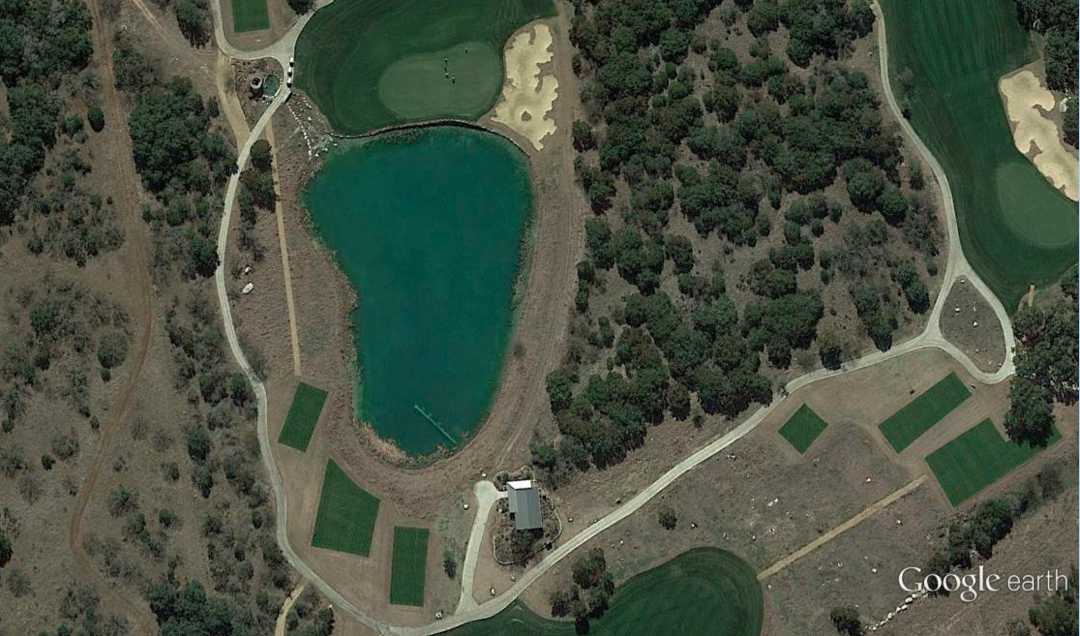
Event: Valero Texas Open
Course: TPC San Antonio
Hole: No. 3
Distance: 213 yards
Average Score: 3.165
Difficulty Rank: 7th
Note: “Difficulty Rank” was calculated based on avg. score in relationship to par against other holes on the course.
Colonial Country Club No. 13: Crowne Plaza Invitational
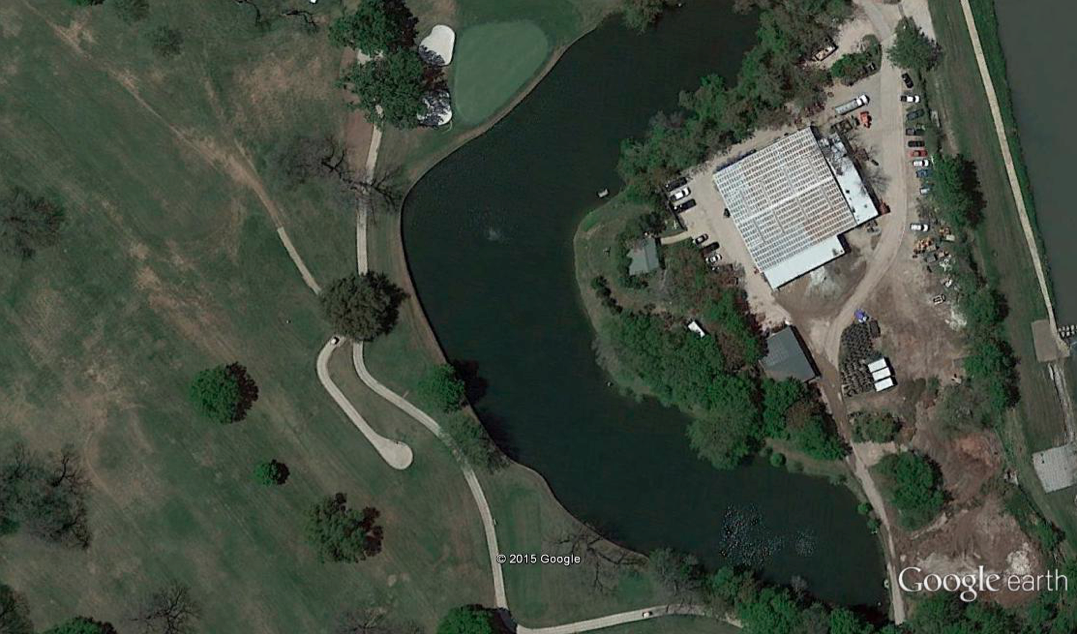
Event: Crowne Plaza Invitational
Course: Colonial Country Club
Hole: No. 13
Distance: 190 yards
Average Score: 3.088
Difficulty Rank: 6th
TPC Sawgrass No. 13: The Players Championship
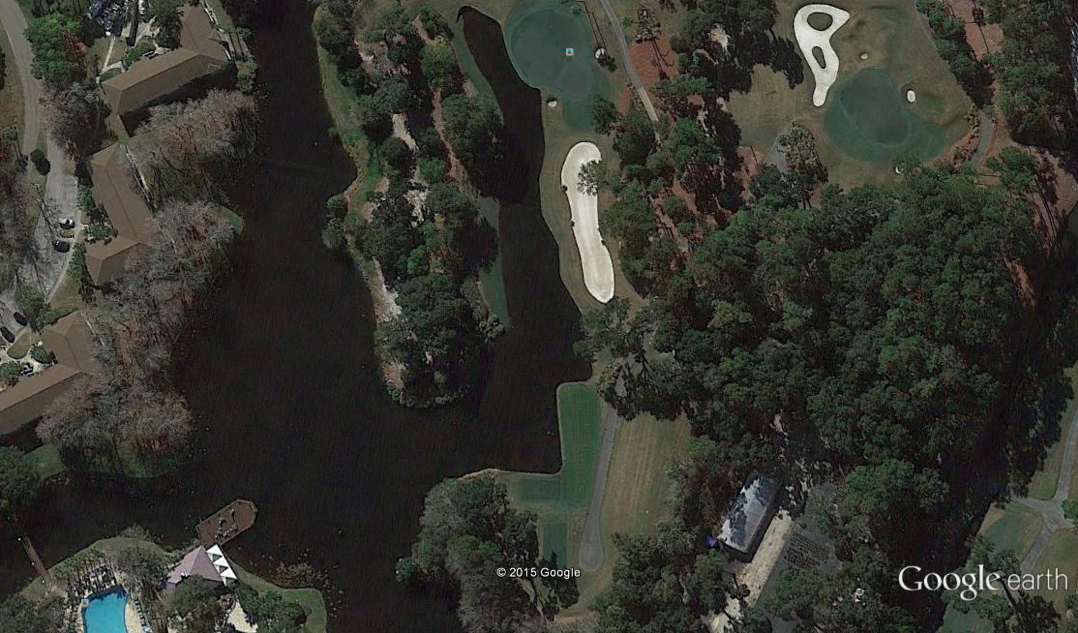
Event: The Players Championship
Course: TPC Sawgrass
Hole: No. 13
Distance: 181 yards
Average Score: 3.150
Difficulty Rank: 5th
Augusta National No. 12: The Masters
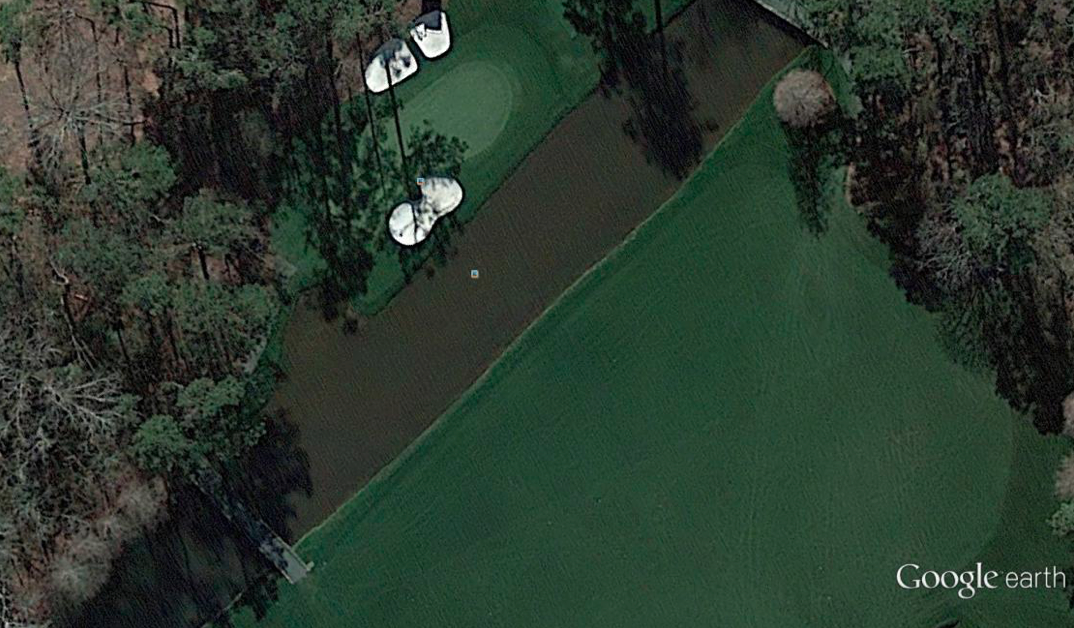
Event: The Masters
Course: Augusta National
Hole: No. 12
Distance: 155 yards
Average Score: 3.257
Difficulty Rank: 5th
There are two common traits in each of these par-3 holes.
- There is water in front of the green
- The green is not very deep.
If you were to go over the center of each green on these holes, you would find that the No. 3 at TPC San Antonio and No. 13 at Colonial are only about 20 yards deep. No. 13 at TPC Sawgrass is only about 25 yards deep and No. 12 at Augusta is extremely shallow at 12 yards long.
There is a clear distance-control factor involved with these holes and if the player misses short they are in the water and if they miss long they are going to have a difficult time saving par. Playing these holes well requires quality contact with the ball and a little bit of luck.
The Most Critical Par-4 Holes
Riviera Country Club No. 18: Northern Trust Open
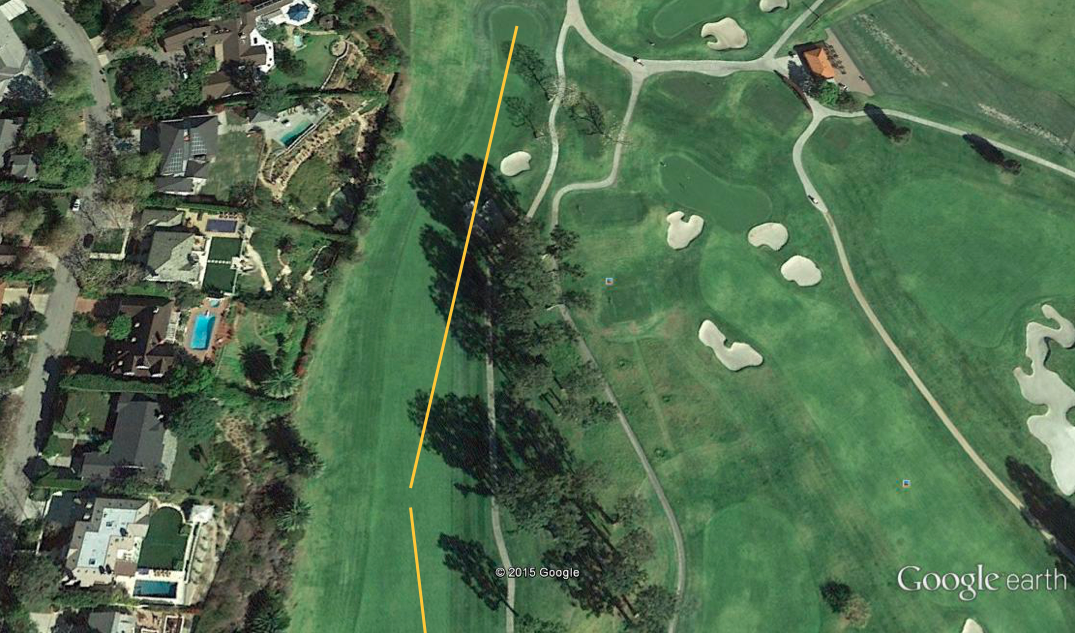
Event: Northern Trust Open
Course: Riviera Country Club
Hole: No. 18
Distance: 475 yards
Average Score: 4.121
Difficulty Rank: 6th
TPC Las Colinas No. 18: HP Byron Nelson Championship
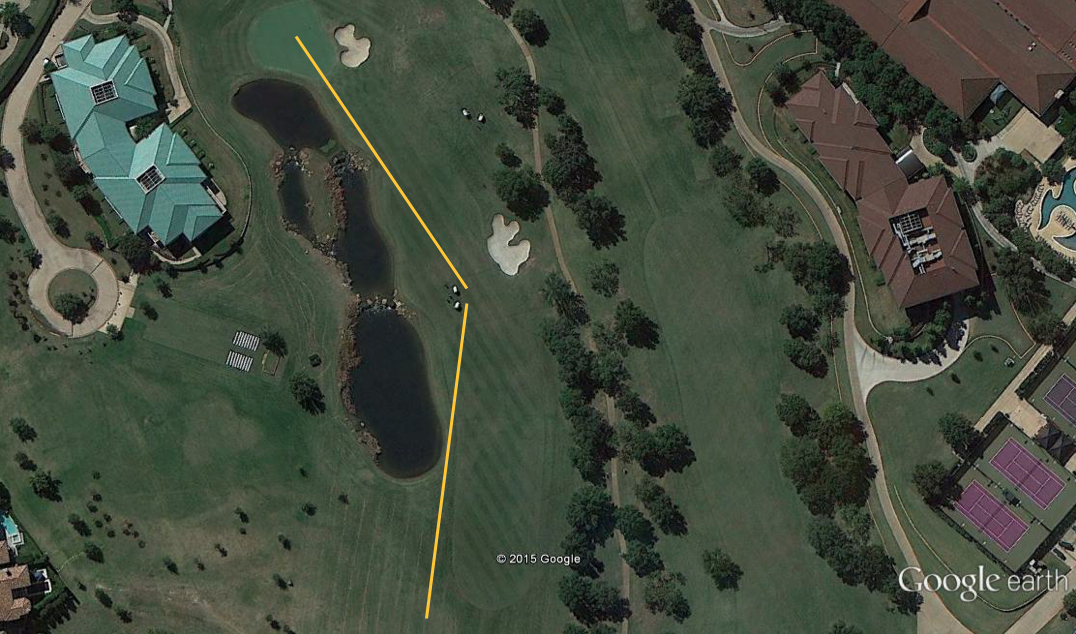
Event: HP Byron Nelson Championship
Course: TPC Las Colinas
Hole: No. 18
Distance: 423 yards
Average Score: 4.249
Difficulty Rank: 3rd
Muirfield Village No. 18: The Memorial
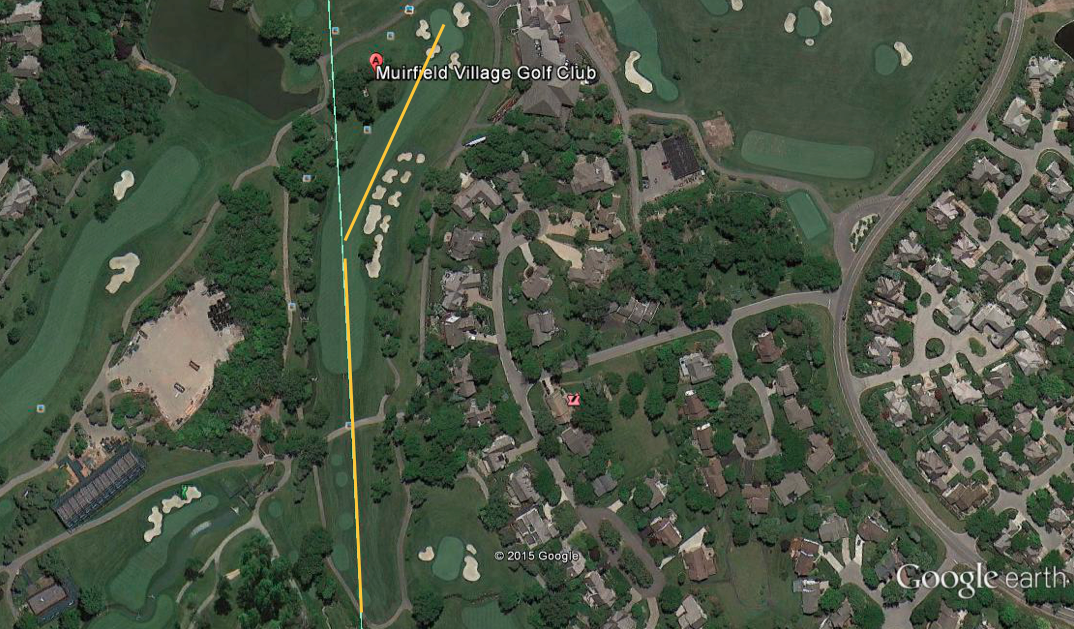
Event: The Memorial
Course: Muirfield Village
Hole: No. 18
Distance: 444 yards
Average Score: 4.338
Difficulty Rank: 1st
Augusta National No. 18: The Masters
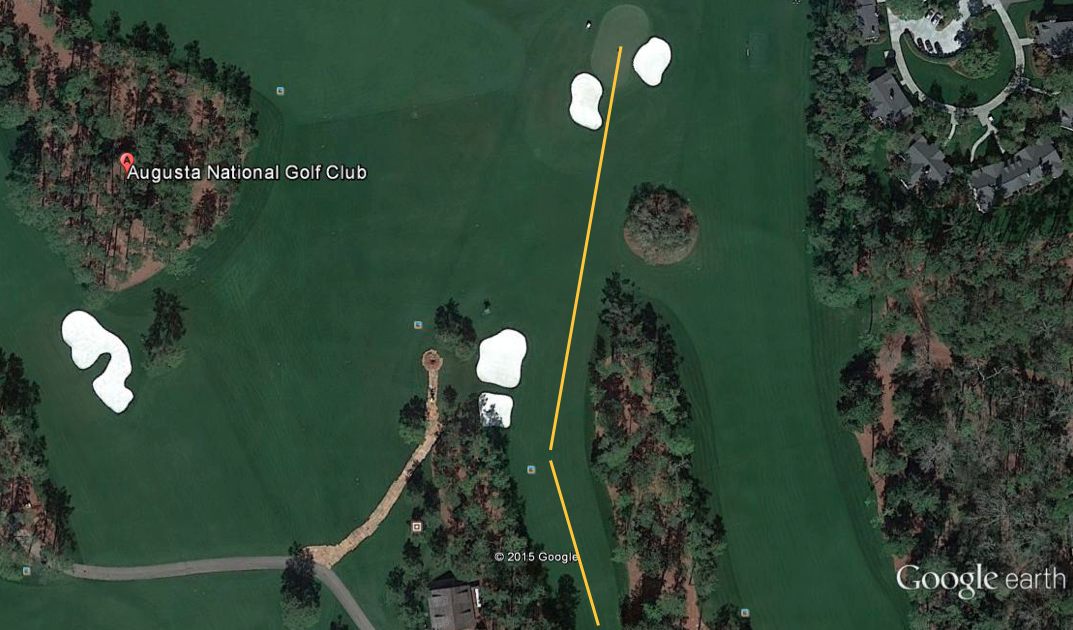
Event: The Masters
Course: Augusta National
Hole: No. 18
Distance: 465 yards
Average Score: 4.220
Difficulty Rank: 8th
We see that the common trait on these critical Par-4 holes is that they are fairly narrow dogleg holes. This requires not only a drive that is hit a good distance, but one that is positioned well enough to allow the golfer a clear angle into the green.
No. 18 at TPC Las Colinas is a bit different in that the angle to the green is not as critical if the golfer finds the fairway. It also has the penalizing water, however, and the fairway bunker that is right in line with where drives tend to end up — along with the woods to the right of the fairway.
The Most Critical Par-5 Holes
TPC Boston No. 2: Deutsche Bank Championship
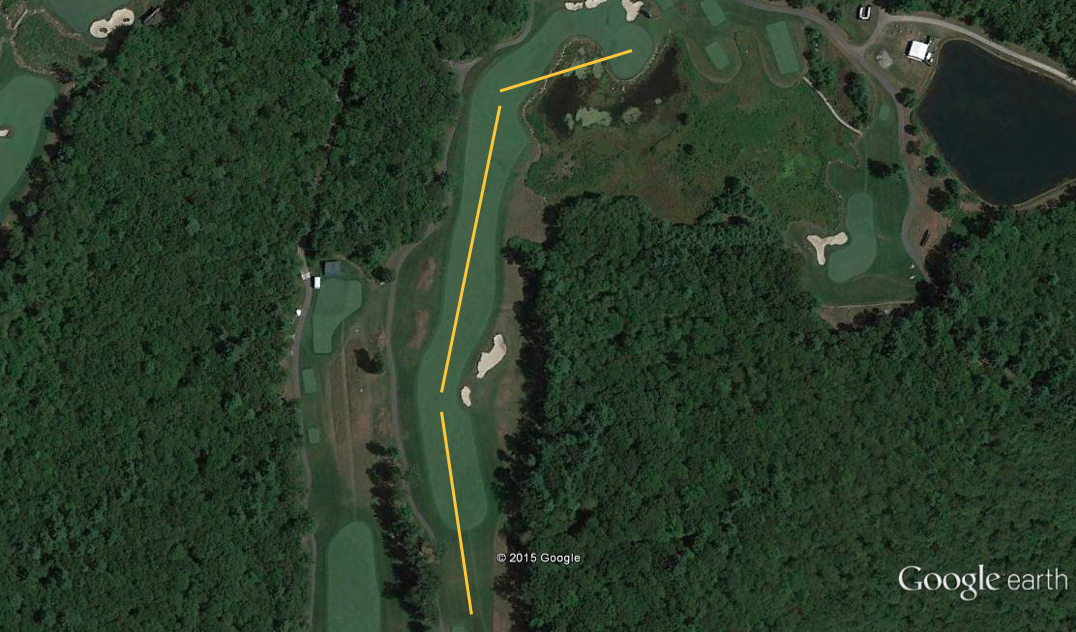
Event: Deutsche Bank Championship
Course: TPC Boston
Hole: No. 2
Distance: 542 yards
Average Score: 4.861
Difficulty Rank: 15th
Quail Hollow No. 16: Wells Fargo Championship
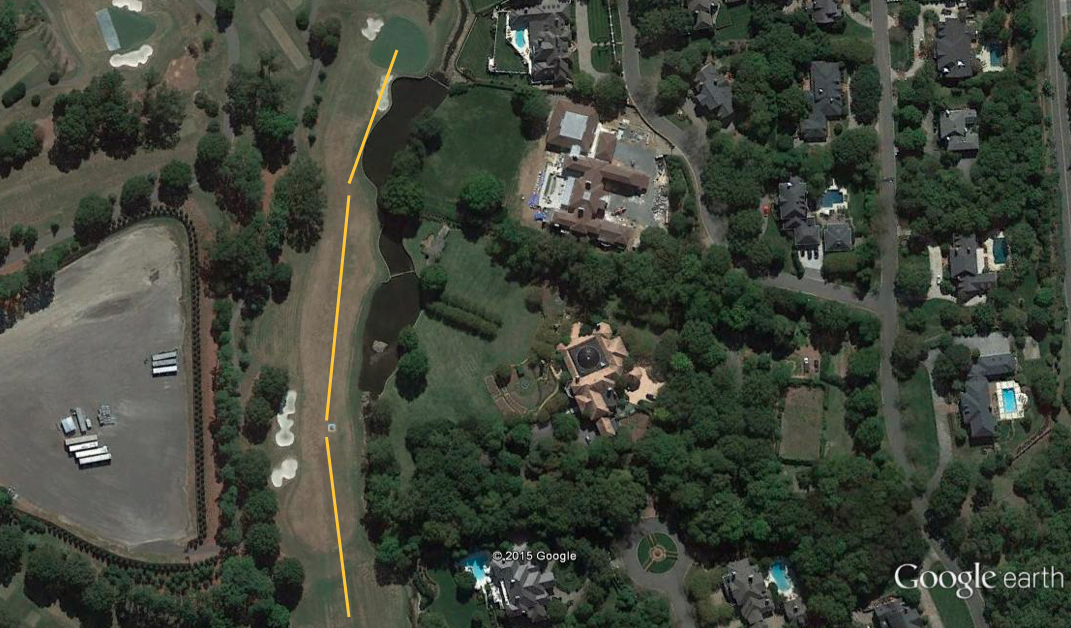
Event: Wells Fargo Championship
Course: Quail Hollow
Hole: No. 16
Distance: 532 yards
Average Score: 4.678
Difficulty Rank: 16th
Bay Hill No. 6: Arnold Palmer Invitational
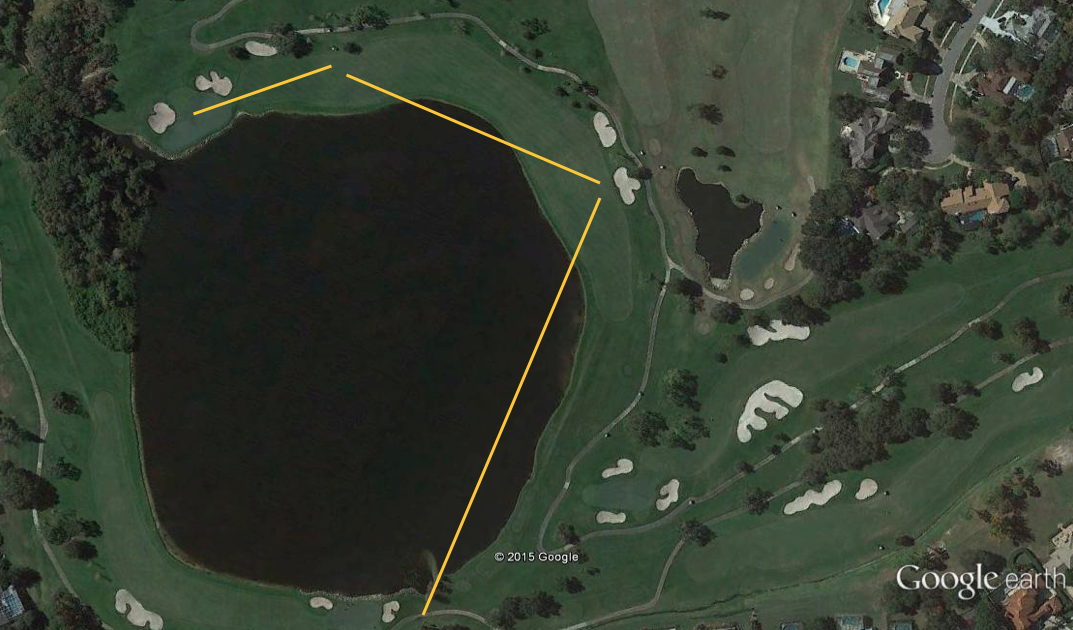
Event: Arnold Palmer Invitational
Course: Bay Hill
Hole: No. 6
Distance: 555 yards
Average Score: 4.772
Difficulty Rank: 15th
Augusta National No. 15: The Masters
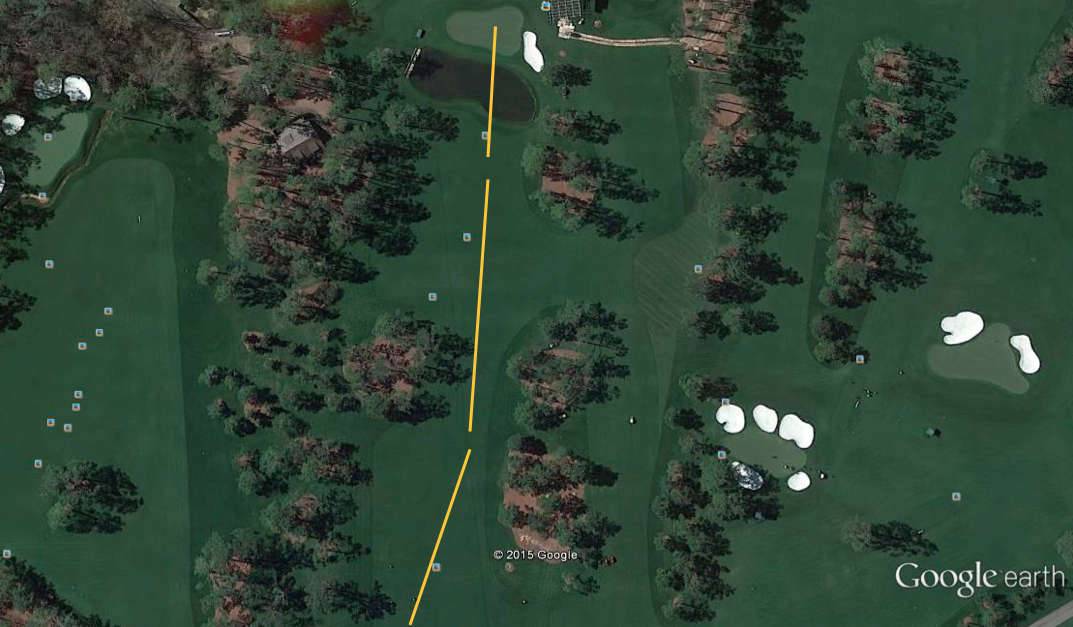
Event: The Masters
Course: Augusta National
Hole: No. 15
Distance: 530 yards
Average Score: 4.750
Difficulty Rank: 16th
The commonalities on these par-5’s are obvious:
- Dogleg design
- Reachable in two shots
- Water on the hole
Remember, the critical holes are not about their level of difficulty, but rather the variance in scores. No. 15 Augusta is a classic example as it is a hole that most players in the field can eagle, but it can also lead to a bogey or even a double bogey due to the dogleg design and the water up by the green.
Understanding that score variance is more critical that hole difficulty and examining these general design principles that create a high score variance can help you focus on the holes that will have a larger impact on your performance in your next tournament.




This past Monday, I played in the U.S. Amateur local qualifier at Rock Creek Country Club in Portland, Oregon. A full tee sheet from 7:30 a.m. to 1:55 p.m., the top 11 scores would make it to the U.S. Amateur final qualifying.
I teed off at 10:48 a.m.. With the 7:30 am tee time, you can get a feel for the leaders’ pace, and they were off and running on the challenging setup at Rock Creek.
View this post on Instagram
Getting to the highlight of the round on the par five 17th, a drive up the left side and 212 yards left to the front hole location. I took out a 5-iron with plans of middle of the green. The ball ended up 8 feet left of the hole, pin high. A slight downhill putt dropped in for an eagle 3 on the 17th. With the cut line looking to be anywhere from -2 to even par. This was the boost I had been waiting for all day.
With making par from the trees on 18, it was time to wait for a potential playoff with a posted score of one under par 71.
Three hours later, it was playoff time. 8 players for 6 spots. I made par on the playoff hole, which was good enough to advance to the U.S. Amateur final qualifying in July. USGA qualifiers sure deliver on all of the emotions in golf!
Club Junkie
Building my 2026 gamer WITB: Ranking the contenders and new putter projects – Club Junkie Podcast


The annual What’s In The Bag build is underway, and on this episode of Club Junkie, Brian breaks down the clubs currently leading the race for a spot in his 2026 gamer setup. From drivers and fairway woods to irons, wedges, and shafts, he ranks the equipment that’s performing best and explains what’s separating the front runners from the rest of the field.
Brian also heads into the workshop to discuss several putter projects currently on the bench. From head options and shaft choices to build ideas and testing plans, he shares what he’s working on and which putters could become serious contenders for the bag this season.
If you’re a gear junkie who loves equipment testing, club building, and the never-ending pursuit of the perfect setup, this episode is for you.
Follow Club Junkie:
Instagram: @clubjunkiepod
TikTok: @clubjunkiepod
Threads: @clubjunkiepod
X: @ClubJunkiePod
Club Junkie
Tour Edge Exotics mini driver review + TaylorMade Spider ZT Max first look – Club Junkie


On this episode of Club Junkie, I put the new Tour Edge Exotics Mini Driver to the test and break down the performance, forgiveness, distance, and where it fits compared to a traditional driver or strong fairway wood. If you have been curious about adding a mini driver to the bag, this one is worth a look.
I also dive into the new TaylorMade Spider ZT Max putter that was recently spotted and discuss the growing zero torque putter trend. Plus, there is a closer look at the new Project X Titan Yellow shaft showing up on the PGA Tour and what makes it different from other profiles currently out there.

What’s the story behind Webb Simpson’s custom-stamped irons?

Memorial Tournament Tour Report: Rory McIlroy, Cameron Young switch up drivers, and more

Cadillac Championship Tour Report: Spieth’s sizable changes, McLaren Golf launches, and more

Russell Henley’s winning WITB: 2026 Charles Schwab Challenge

Kristoffer Reitan’s winning WITB: 2026 Truist Championship

Best irons 2026: Best irons overall, most forgiving irons, and more

J.T. Poston’s winning WITB: 2026 Memorial Tournament

Aaron Rai’s winning WITB: 2026 PGA Championship

Cameron Young’s winning WITB: 2026 Cadillac Championship

Details on Jason Day’s latest prototype Avoda iron setup


Christiaan Maas WITB 2026 (June)
Driver: TaylorMade Qi4D LS (8 degrees) Shaft: Fujikura Ventus TR Blue 6 X 3-wood: TaylorMade Qi10 (15 degrees) Shaft: Fujikura Ventus Black...


Ryan Palmer WITB 2026 (June)
Driver: Callaway Quantum Triple Diamond (9 degrees) Shaft: Project X HZRDUS Smoke Blue RDX 60 TX 3-wood: TaylorMade Qi10 (15 degrees) Shaft:...


Bud Cauley WITB 2026 (June)
Bud Cauley had >14 clubs in his bag when photographed prior to the Memorial Tournament. Driver: Titleist GTS2 (8 degrees) Shaft: Fujikura...


Hannah Green WITB 2026 (June)
Driver: Titleist GTS3 (10 degrees, D4 SureFit setting) Shaft: Mitsubishi Chemical Diamana RB 53 S 3-wood: Titleist GT3 (15 degrees,...
-
 Equipment7 days ago
Memorial Tournament Tour Report: Rory McIlroy, Cameron Young switch up drivers, and more
-
 News2 weeks ago
Russell Henley’s winning WITB: 2026 Charles Schwab Challenge
-
 Equipment4 days ago
Best irons 2026: Best irons overall, most forgiving irons, and more
-
 Whats in the Bag4 days ago
J.T. Poston’s winning WITB: 2026 Memorial Tournament
-
 Equipment1 week ago
Details on Jason Day’s latest prototype Avoda iron setup
-

 Equipment3 weeks ago
CJ Cup Byron Nelson Tour Report: Koepka and Kim’s newest putters finally get hot
-

 News2 weeks ago
Charles Schwab Challenge Tour Report: MacIntyre, Åberg and Spaun all switch putters, TaylorMade launches new Spider
-

 Equipment2 weeks ago
Details on J.J. Spaun’s surprise putter switch


Fedidiah
Jan 27, 2015 at 2:36 pm
Richie you’re so adorable
Joe C
Jan 26, 2015 at 2:36 pm
Interesting analysis. I also noticed on the par 4’s that there is also significant elevation change from tee to green. By the way, the hole you show from Quail Hollow is actually number 7, not 16.
Richie Hunt
Jan 27, 2015 at 9:46 am
Thanks, Joe. I’m familiar with #18 at ANGC and #18 at Muirfield Village, but not the other par-4’s. As far as Qual Hollow goes, IIRC, the Tour changes the routing so the nines are switched around and that’s why #7 is #16.
Josh
Jan 26, 2015 at 11:47 am
Can you add the std deviation from average for each hole? Since you are talking score variation it would be nice to see that compared against the hole’s average score.
Preston
Jan 25, 2015 at 10:15 am
I’m with Adam. I like the discussion on the holes, but I don’t understand the ranking or difficulty system you are using.
Richie Hunt
Jan 26, 2015 at 11:19 am
The difficulty ranking listed under each hole is the difficulty for that hole on that particular golf course.
For example, 18 at Augusta is the 8th most difficult hole at Augusta.
However, when it comes to the deviation in scores, 18 at Augusta has the largest deviation of scores for any of the par-4’s. That means players are likely to have a wider range of scores (we’ll say birdie to double bogey) than the other par-4’s.
Let’s say you’re playing in a tournament and you want to figure out what holes to focus on. Instead of looking at the hardest holes, you really want to look at the holes with the largest deviation in score.
If a very hard hole is yielding bogeys (low deviation), then you making a bogey on that hole is not a big deal. But if a hole is yielding a large deviation from say birdie to double bogey, then the lowest scores in that tournament will very likely play that hole well because that is how they are gaining strokes on the field.
All this shows is that some of the holes on Tour that have the largest deviation in score are often times not the most difficult or easiest hole on that course.
Since most golfers don’t have access (or the time) to figure out what holes have the largest deviation in score, here are some of the holes on Tour that have the largest deviation in score and here’s the commonalities in their design features.
Richie Hunt
Jan 24, 2015 at 3:32 pm
Thanks for the inquiry, Adam. The ranking is the difficulty of that hole on that course. So, the par-5 15th hole at August ranks 16th in difficulty (3rd easiest) hole at Augusta.
The idea behind this was to show not only the design of some of the more critical holes on Tour, but also to show that their difficulty ranking isn’t always the strongest or the weakest because it is more about score deviation instead of hole difficulty.
Hope this helps. If not, feel free to e-mail me at [email protected] and I’ll try to explain better.
adam
Jan 24, 2015 at 11:48 am
Nice article but I don’t understand the logic used to determine the ranks, can you include in the article? You have a few duplicates and missing numbers in between, I assume from ties but can’t figure out that ranking system since the average scores are all different. There’s also only 12 holes ranked but you go up to 16. Just confused. Maybe it’s too early.