
Opinion & Analysis
Gleneagles Scouting Report: Who does the course favor?


It’s that time of year (or two) again where national (or continental) pride is on the line, and the Americans desperately search for a method to trounce their European overlords.
For the 2014 affair in Scotland, the site is the Gleneagles PGA Centenary Course. The 21-year-old layout has hosted plenty on the European Tour—including the Johnnie Walker Championship since 1999.
Gleneagles remains a bit of a mystery though, especially to American fans. Which players does the course favor? And, more importantly, which team is advantaged most by the layout?
We’ll answer below, but first we must outline the course itself.
Gleneagles: A Parkland Ball-Striker’s Paradise
This Perthshire layout was first designed by Jack Nicklaus in 1993 and much maligned by critics—particularly Lee Westwood—in the years thereafter.
Nicklaus was asked to redesign the layout in 2010 and that project commenced in October the next year, with the course re-opening under its makeover in April 2012. It will play as a par-72, measuring 7,262 yards for the event, making it the shortest layout to host the Ryder Cup in a decade.
Gleneagles may be in Scotland but is NOT a links course, as Golf Digest’s John Huggan surmised in his course preview.
This is a parkland track through and through. The course is green, lush and soft. The fairways are in immaculate, spongy form and the bunkers—both fairway and greenside—are of the American-dominated shallower variety.
And despite being a European Tour mainstay, the course hasn’t been traversed too much in competition by the home team. Golfweek’s Allistar Tait posits that only a quarter of the European squad can be considered Gleneagles experts.
As for the event’s dramatics, a few signature holes stick out at Gleneagles. The first is No. 5, a daunting 461-yard par-four players rave about for its beauty and unbelievably intimidating tee shot. This brute could sway matches early. The back-nine equivalent is No. 15, a 463-yard par four that is probably the toughest hole over the final nine, as it challenges a player at every juncture. The late matches could hinge on who is gobbled up by this monster.
The 18th hole though offers the most theatrics. The closing hole is an eminently reachable 513-yard par-five plastered into an amphitheater setting. The dramatization of this ending number was a large duty of Nicklaus’ re-design, and he seems to have succeeded here.
Now onto the most important inquiry: What kind of golfer succeeds most at Gleneagles?
Segmenting into the specific parts of the game, driving is important at Gleneagles, but not overly so. European Captain Paul McGinley has set up the rough to be a little thicker than usual, but we’re not talking U.S. Open style stuff here. The fairways at Gleneagles are generally pretty wide, and there are four par-fives (and maybe a driveable par-four). You want some modicum of accuracy at Gleneagles, but the long-hitters will be able wail it into some part of these generous fairways on most occasions. Bombers with some directional control off the tee profile well here.
Really though, Gleneagles is an approach-shot golf course. Nicklaus has stated so, and a flyover corroborates his verdict. The greens aren’t necessarily small, but many qualify as shallow, narrow, multi-tiered or some combination of the trio. Such characteristics require players to be quite on point with their approaches unless they want to find themselves on the wrong part of the surface or miss the green all together.
One aspect of the redesign was the implementation of numerous greenside run-offs and swales. This addition, along with the thickened greenside rough, should allow the short game to be more of a factor than usual, but nothing on the level of approach play’s paramount position.
The only part of the game that will be largely unimportant is putting. Some surfaces are decently undulated, yet these greens mostly offer slow, straightforward putts. This serves to minimize the difference between good and bad putters.
The Players who Benefit from Gleneagles
If we’re going to construct the perfect golfer for Gleneagles, a player whose strengths are exaggerated and weaknesses hidden by the layout’s design, we come to these four points:
- The golfer must be an excellent approach player; this is by far the most salient trait.
- He must possess impressive length off the tee and not completely disregard accuracy.
- His short game must be in good shape.
- And his flatstick must be mediocre or an outright nuisance, as this course does its best to protect poor putters.
Perusing through the 24 competitors at Gleneagles, only two names nail all four criteria: Justin Rose and Stephen Gallacher.
There may not be a better course in the world for Rose’s skill set. The Englishman has been one of the game’s premier iron players the last few years and was touted the top competitor in that category in 2013. The course is massively adept toward approach shots from 175-225 yards, a range Rose just happens to absolutely obliterate. His approach play has regressed in 2014, but he’s still top five in the game in that aspect.
Rose also possesses a deceptive amount of power off the tee (top-30 to top-50 stuff) and combines it with enviable accuracy (28th and 52nd on Tour in 2012 and 2013) for an excellent driving performance. He’s a sneaky good short game player—two top-five finishes in the PGA Tour’s Proximity to Hole (Around the Green) stat in the last three years. The man’s only flaw is his flatstick, with three finishes outside the top 100 in Strokes Gained: Putting from 2012-2014. But again, Gleneagles helps cover that up.
As for Gallacher, his resume isn’t as down-the-board perfect for Gleneagles as Rose’s, but it does fit all four criteria. The Scot is one of the European Tour’s signature approach players, and while his driving accuracy is actually below average, the fact that he has some at all is what’s important when combined with his great length. We know Gallacher is a dreadful putter because it’s been widely believed that’s what has held him back. As for the short game, the 38-year-old finished 66th and 65th on the European Tour in scrambling in 2013 and 2014–above average marks produced despite the significant negative skewing in the statistic courtesy of Gallacher’s awful flatstick.
But that’s just the tip of things. A player can still be viewed as a good fit for a course even if it doesn’t service every part of his game.
Under this less stringent view, plenty more names qualify for a successful marriage with Gleneagles.
There’s Sergio Garcia, who has been the best approach player on the PGA Tour in 2014 according to Mark Broadie’s calculations. Not only does that scream “I’m great for Gleneagles,” but Garcia retains a significant amount of tee power with some accuracy sprayed in and remains a good (and severely underrated) short game player. The fact that his improvement in putting is still apparent (61st in strokes gained this year) is the only part that keeps him from going 4-for-4.
Much the same goes for Rory McIlroy, except his driving is the game’s best and his approach play is only merely quite good. Henrik Stenson’s good, if overrated, approach play, lengthy and accurate driving, and poor putting all yearn to Gleneagles.
Three on the American side also stick out. Keegan Bradley is long and somewhat accurate, and a good approach and short game player. Bubba Watson shares those first two characteristics with Bradley but his below average flatstick being hidden is the third culprit here.
The final member is Jim Furyk. The 44-year-old ranked second in Strokes Gained: Approach in 2014, which is right in line with his normal legendary iron play, and is still a short game artist for the ages as well. Furyk only qualifies for two categories here (his slightly-above average putting just misses out), but he’s an absolute monster in both.
Overall, eight players, or a third of the field, have highly attractive games for the Gleneagles layout.
Does Gleneagles Favor the U.S. or Europe?
If we’re looking at just the guys posted above, the answer is definitely Europe. Of these select eight, five are Europeans and the only two who qualify as perfect matches for Gleneagles also represent the home squad.
Of course the European team on average has better players, so you would expect them to possess more and higher quality fits for Gleneagles. Yet even adjusting for this, Gleneagles seems to bring out the best in the games of the Europeans more than the Americans—regardless of talent.
But this isn’t a complete picture. There are 16 golfers that matter here not yet mentioned in the equation. Maybe Gleneagles offers the Europeans more and better fits for the layout, but what if their poor course matches are more pervasive and damaging? You can’t just evaluate the good in such enterprises, every part of the spectrum must be examined.
In that regard, I put the players into five “course fit” categories. The first two, “Perfect Fit” and “Solid Fit,” are expounded upon above. The remaining three are “Borderline Fit” (possess some good qualities for Gleneagles but not enough to really be enthralled by the course), “Not a Fit” (bad qualities, aka diluting of strengths or exposing of weaknesses, just as prevalent as good ones) and “Poor Fit” (bad qualities for Gleneagles more detrimental than good ones).
Here’s where I put the remaining 16.
Borderline Fit: Martin Kaymer, Phil Mickelson, Webb Simpson, Rickie Fowler, Jamie Donaldson, Victor Dubuisson, Hunter Mahan, Matt Kuchar
Not a Fit: Thomas Bjorn, Graeme McDowell, Zach Johnson
Poor Fit: Patrick Reed, Ian Poulter, Jimmy Walker, Lee Westwood, Jordan Spieth
Five Americans and three Europeans are borderline fits, one American and two Europeans are not fits and three Americans and two Euros are poor fits.
All in all, the totals for Europe are: 2 perfect fits, 3 sold fits, 3 borderline fits, 2 not a fit and 2 poor fits. The United States comes in at 0 perfect fits, 3 solid fits, 5 borderline fits, 1 not a fit and 3 poor fits.
What can we conclude?
Gleneagles still plays to the Europeans’ advantage. As mentioned above, even factoring in the sizable (if overblown) talent disparity, Europe is solidly better in the top two categories.
The U.S. needed to stem the tides by a significant amount on the other three to claim victory here, and that didn’t happen. They gained a little ground overall, but having three poor fits to Europe’s two dissolved any chance that Gleneagles would profile better for the Americans.
So if it wasn’t tough enough for the underdog Americans, less talented and on the road, they also have to compete on a course that caters more to the Europeans.
Good luck, fellas. You’re going to need it.
TV Times for the Ryder Cup
Thursday, Sept. 25
9 a.m. – 1 p.m. (Golf Channel)
Friday, Sept. 26
Session 1 (Four-ball): 2:35 a.m. (Golf Channel)
Session 2 (Foursomes): 8:15 a.m. (Golf Channel)
Saturday, Sept. 27
Session 1 (Four-ball): 3 a.m. (NBC)
Session 2 (Foursomes): 8:15 a.m. (NBC)
Sunday, Sept. 28
Singles: 6:36 a.m. (NBC)




This past Monday, I played in the U.S. Amateur local qualifier at Rock Creek Country Club in Portland, Oregon. A full tee sheet from 7:30 a.m. to 1:55 p.m., the top 11 scores would make it to the U.S. Amateur final qualifying.
I teed off at 10:48 a.m.. With the 7:30 am tee time, you can get a feel for the leaders’ pace, and they were off and running on the challenging setup at Rock Creek.
View this post on Instagram
Getting to the highlight of the round on the par five 17th, a drive up the left side and 212 yards left to the front hole location. I took out a 5-iron with plans of middle of the green. The ball ended up 8 feet left of the hole, pin high. A slight downhill putt dropped in for an eagle 3 on the 17th. With the cut line looking to be anywhere from -2 to even par. This was the boost I had been waiting for all day.
With making par from the trees on 18, it was time to wait for a potential playoff with a posted score of one under par 71.
Three hours later, it was playoff time. 8 players for 6 spots. I made par on the playoff hole, which was good enough to advance to the U.S. Amateur final qualifying in July. USGA qualifiers sure deliver on all of the emotions in golf!
Club Junkie
Building my 2026 gamer WITB: Ranking the contenders and new putter projects – Club Junkie Podcast

The annual What’s In The Bag build is underway, and on this episode of Club Junkie, Brian breaks down the clubs currently leading the race for a spot in his 2026 gamer setup. From drivers and fairway woods to irons, wedges, and shafts, he ranks the equipment that’s performing best and explains what’s separating the front runners from the rest of the field.
Brian also heads into the workshop to discuss several putter projects currently on the bench. From head options and shaft choices to build ideas and testing plans, he shares what he’s working on and which putters could become serious contenders for the bag this season.
If you’re a gear junkie who loves equipment testing, club building, and the never-ending pursuit of the perfect setup, this episode is for you.
Follow Club Junkie:
Instagram: @clubjunkiepod
TikTok: @clubjunkiepod
Threads: @clubjunkiepod
X: @ClubJunkiePod
Club Junkie
Tour Edge Exotics mini driver review + TaylorMade Spider ZT Max first look – Club Junkie

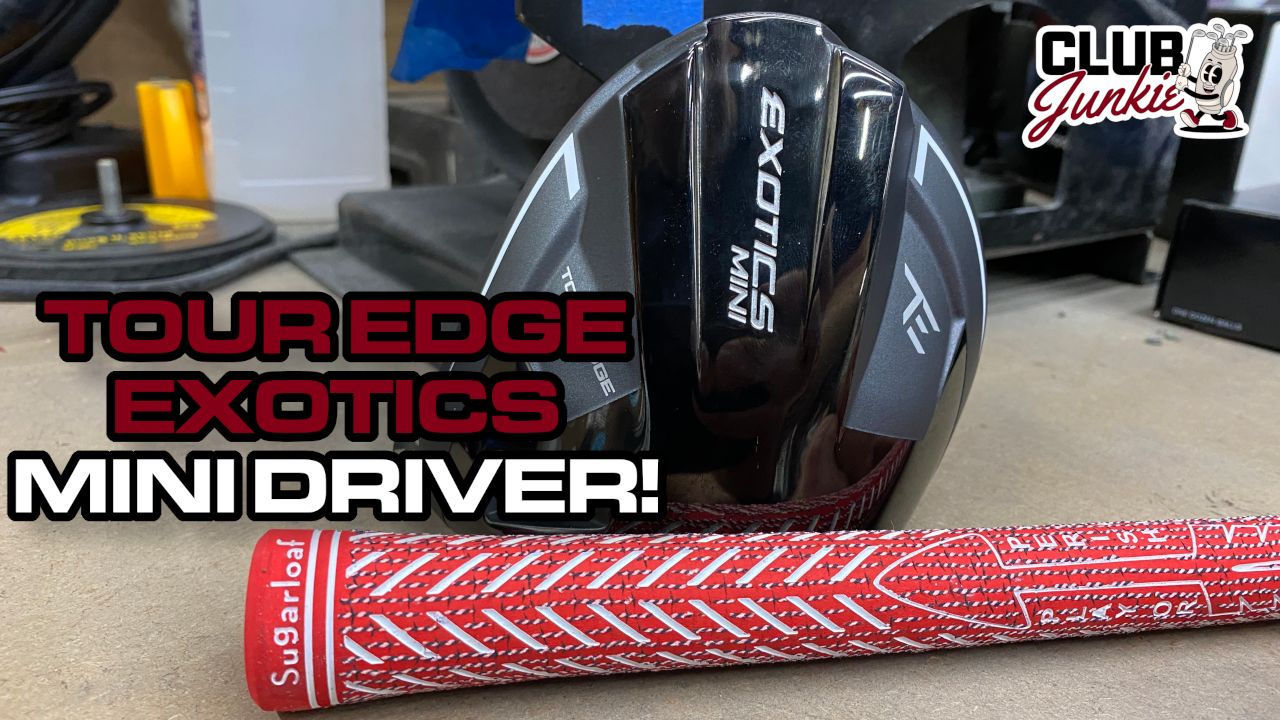
On this episode of Club Junkie, I put the new Tour Edge Exotics Mini Driver to the test and break down the performance, forgiveness, distance, and where it fits compared to a traditional driver or strong fairway wood. If you have been curious about adding a mini driver to the bag, this one is worth a look.
I also dive into the new TaylorMade Spider ZT Max putter that was recently spotted and discuss the growing zero torque putter trend. Plus, there is a closer look at the new Project X Titan Yellow shaft showing up on the PGA Tour and what makes it different from other profiles currently out there.

Justin Rose WITB 2026 (April): Full WITB breakdown with new McLaren irons

What’s the story behind Webb Simpson’s custom-stamped irons?

Memorial Tournament Tour Report: Rory McIlroy, Cameron Young switch up drivers, and more

Cadillac Championship Tour Report: Spieth’s sizable changes, McLaren Golf launches, and more

Russell Henley’s winning WITB: 2026 Charles Schwab Challenge

Kristoffer Reitan’s winning WITB: 2026 Truist Championship

Best irons 2026: Best irons overall, most forgiving irons, and more

J.T. Poston’s winning WITB: 2026 Memorial Tournament

Aaron Rai’s winning WITB: 2026 PGA Championship

Cameron Young’s winning WITB: 2026 Cadillac Championship


Bud Cauley WITB 2026 (June)
Bud Cauley had >14 clubs in his bag when photographed prior to the Memorial Tournament. Driver: Titleist GTS2 (8 degrees) Shaft: Fujikura...


Hannah Green WITB 2026 (June)
Driver: Titleist GTS3 (10 degrees, D4 SureFit setting) Shaft: Mitsubishi Chemical Diamana RB 53 S 3-wood: Titleist GT3 (15 degrees,...


Asterisk Talley WITB 2026 (June)
Driver: TaylorMade Qi4D (9 degrees) Shaft: Fujikura Ventus Blue 6 S 3-wood: TaylorMade Qi4D (16.5 degrees) Shaft: Fujikura Ventus Blue...


Brianna Do WITB 2026 (June)
Driver: Callaway Quantum Triple Diamond (9 degrees) Shaft: KBS PGW 3-wood: Callaway Elyte Titanium (15 degrees) Shaft: KBS PGW 5-wood:...
-
 Equipment6 days ago
Memorial Tournament Tour Report: Rory McIlroy, Cameron Young switch up drivers, and more
-
 News2 weeks ago
Russell Henley’s winning WITB: 2026 Charles Schwab Challenge
-
 Equipment3 days ago
Best irons 2026: Best irons overall, most forgiving irons, and more
-
 Whats in the Bag4 days ago
J.T. Poston’s winning WITB: 2026 Memorial Tournament
-

 Equipment1 week ago
Details on Jason Day’s latest prototype Avoda iron setup
-

 Equipment3 weeks ago
CJ Cup Byron Nelson Tour Report: Koepka and Kim’s newest putters finally get hot
-

 News2 weeks ago
Charles Schwab Challenge Tour Report: MacIntyre, Åberg and Spaun all switch putters, TaylorMade launches new Spider
-

 Equipment2 weeks ago
Details on J.J. Spaun’s surprise putter switch


JK
Sep 24, 2014 at 3:43 pm
USA! USA! USA!
\
\
\
hahaha j/k
AJ
Sep 24, 2014 at 9:32 am
Decent enough article but the headline is very misleading. Clearly a ‘scouting report’ suggests the author has actually visited the site.
I like that you include linked references to your articles, albeit having as many as ten at a time is a bit tiresome. You feel as a reader you are not getting the ‘full story’ if you don’t click through to every external link.
Just my opinion!
Rich
Sep 23, 2014 at 7:55 pm
I don’t care what anyone says, a good putter is always better than a bad putter, even on a course that apparently protects bad putters. This analysis makes no sense at all.
Rep
Sep 23, 2014 at 12:35 pm
I think it’s even. You can scramble fairly comfortably on this course, and you don’t necessarily have to be good at pitching or chipping, you can roll it and get away with it, the greens are so huge, there’s room to get away with some bad shots. Distance control on the putts is the biggest factor.
dot dot
Sep 23, 2014 at 11:31 am
As every tournament course does each time it will favor the golfer who is playing the best that week.
Jafar
Sep 23, 2014 at 10:22 am
Nice, I like the final analysis. It will be interesting to see how it plays out this weekend.
I wonder if Jim Furyk or Chris Kirk would have fit better.
imakaveli
Sep 23, 2014 at 10:21 am
Thomas Bjorn won at Gleneagles in 2011 🙂
Rep
Sep 23, 2014 at 12:38 pm
Exactly. What an idiotic analysis
Kevin Casey
Sep 23, 2014 at 1:11 pm
Yep, he did win at Gleneagles in 2011. Winning at a certain course does not imply that said layout is conducive to a player’s game. A player could simply happen to be in massively good form that week, in such great shape with his game that he can overcome a course that is a poor suit for his talents.
If Bjorn had won at Gleneagles two or three times in recent years, or had a couple of very high finishes, it would be tough to put him as a non-fit. After all, it’s pretty unlikely that Bjorn would just happen to enter the same tournament in some of the best form of his life (which he would have to be in order to win at an event where the course is a poor fit) in short succession.
But that’s not the case. In his past five starts at Gleneagles, Bjorn has the win, a T10 and three missed cuts. Besides the victory, that’s a very shoddy record. Speaks to the fact that more than likely that Gleneagles victory was the product of fluky incredible form, not a course fit.
Konnor
Sep 24, 2014 at 10:14 am
Plus one for you sir