
Opinion & Analysis
How has Hoylake changed and who serves to benefit?

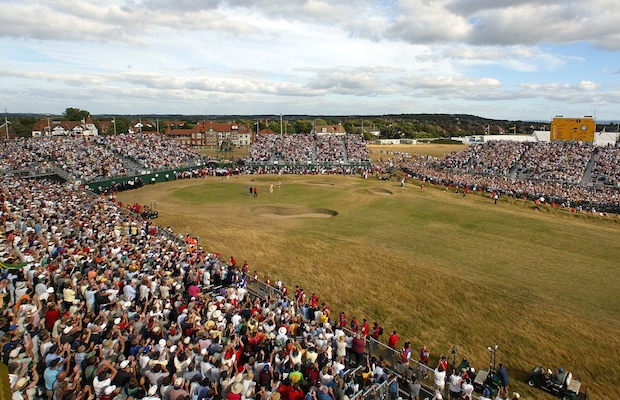
The power of Tiger Woods appears to, at times, blanket all blemishes it encounters.
If you are looking for proof, click back eight years when Royal Liverpool, hosting its first Open Championship in 39 years, re-emerged dry, browned out, prone to powdery explosions following fairway strikes and a more convincing impersonation of a racetrack than a golf course.
One may have hoped that the purple flower bombs dropped on the final green that Sunday added a distinctive hue to the colorless layout, but the sizable remnants instead painted the course as an abandoned lot further tainted by loosely organized graffiti.
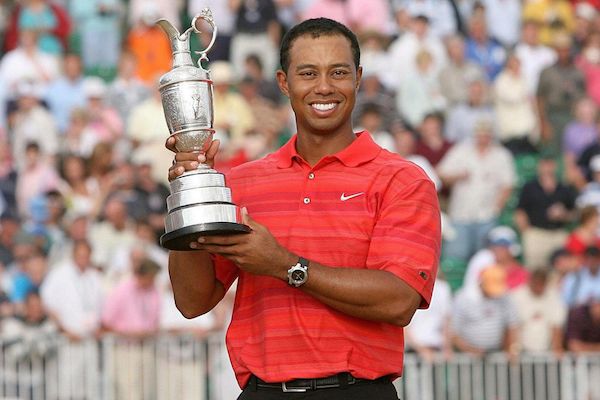
Yet, Woods’ merciless four-day assault on Hoylake became the main story for the week. The compelling narrative of golf’s dominant figure ironing the course into submission for an 11th major title covered up the damaging look of the layout brought on by unseasonably hot and dry weather. As Woods cried into caddy Steve Williams’ arms, no media were prepared to type up a scathing review of a course that was so baked out and such a fire hazard that spectator smoking was banned and the fire department was on hand throughout the event.
It’s 2014 now though, and Tiger’s fortunes have changed drastically in eight years—to the point that any hope he dominates the headlines this week with his play should be deemed quite unlikely.
But Royal Liverpool doesn’t need saving this time.
The course, affectionately known as Hoylake for the town it sits in, is almost unrecognizable from its 2006 incarnation. Sure, it only stands 54 yards longer, but the grass is lush and green, the balls aren’t running on the ground like…well this, and the rough has transformed from afterthought into bona fide hazard.
If you’re looking at the blueprint of how to play Hoylake from 2006, you might want to update a few things. These key alterations mean that players must be aware of how new factors change the strategy in attacking this course.
What exactly do these alterations mean for which parts of the game? We have a few thoughts here, including the players these factors favor at the end.
The Softer Conditions
Besides Tiger’s chances, the massive leveling down of the course’s firmness will be the prime story heading into the championship, and it already kind of is.
If it wasn’t enough for Rory McIlroy to be a media goldmine in terms of drama—significantly down campaign in 2013, lawsuit against his former agent, breakup of engagement with tennis star Caroline Wozniaki and winning days later—he gave the assembled press an expert rundown of what to expect at Hoylake.
As McIlroy pointed out, the biggest difference he noticed from 2006 (when he watched it on television with his parents), is the color of the course and what that means for the speed on the ground. With Hoylake’s lush and green look, balls are stopping almost immediately on fairways and greens, a stark contrast to what occurred in 2006.
These comments came 10 days before the championship’s start and McIlroy was quick to note that the course is likely being protected right now and should be significantly firmer and faster once tournament play starts.
But let’s be clear, we aren’t getting anything on the levels of 2006. Even as one of the few longest drivers in the game at the time, Tiger Woods and his 291-yard average off the tee hitting mostly irons and just one driver is absurd. For good measure, Chad Campbell hit a three-iron 330 yards during one practice round that week.
With the reduced firmness the course plays longer, something that usually falls into the hands of the bigger hitters. But the opposite should be true this week.
Hoylake simply isn’t a long golf course. It will stand at 7,350 yards for the Open Championship, compared to Augusta National’s 7,435 yards and Pinehurst No. 2’s max of 7,562. And these distances aren’t exactly analogous, as Hoylake remains significantly firmer than either of theose layouts.
The course’s four par-fives are reachable by all hitters in dry or wet conditions, so don’t expect softer fairways to offer the long bombers a sizable advantage here.
Instead, a less bouncy short grass forces the bigger hitters to move away a degree from the near-certain safety that long irons provide into the fading accuracy of fairway woods and drivers.
Of course there will certainly be plenty of irons on the driving ground this week, but the one-driver-every-72-holes strategy simply will not fly like it did eight years ago.
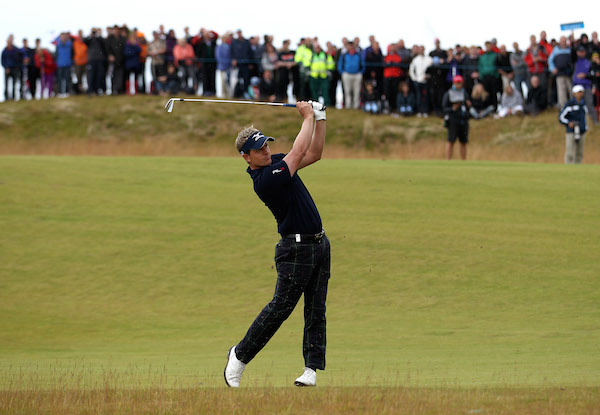
This little affects the Luke Donalds of the world, but the Bubba Watsons and Dustin Johnsons cannot hide behind their long irons quite as much as they could have last time around at Hoylake. They must pump out significantly more woods and drivers, and however confident they feel with those clubs, the bigger sticks don’t offer the same fairway confirmation as irons.
The short hitters, then, gain a bit more with a greener golf course.
All of this is assuming that the wind is not fierce and the forecast points a mild breeze. Whatever the case, the softer conditions aid in significantly reducing the long hitter’s advantage.
Rough around the Fairways
There’s no question what the biggest hazard is when you miss the fairway at Hoylake: the pot bunkers. The fear those virtually-guaranteed one-stroke hazards engender lead Woods to adopt his now famous strategy off the tee in 2006.
Those sandy caves of doom remain eight years later, but they are no longer Hoylake’s (largely) sole defense off the tee.
One of this biggest casualties of the heat wave the last time the Open came around these parts was the rough on the Hoylake layout. The lack of proper watering from Mother Nature allowed the thick grass to whither into a nearly non-existent nuisance for championship week.
Without the freak weather though, the rough has returned in 2014 and it appears to be some of the most luscious grass these pros have faced all year—er, or at least since Congressional two weeks ago.
McIlroy’s take on the tall grass was pretty interesting, as he cited the stuff as patchy and overall quite penalizing. You’re going to get very few chances to sky irons from the rough and land the ball softly on the green. Most of the lies, it seems, will allow you to advance it to the green, but keeping it on the dance floor is the big challenge. And good luck if you get it in one of those bad patches, where chipping out is really the only option.
This second line of defense off the tee has an obvious effect; driving accuracy will be even more of a premium at Hoylake than in 2006.

Aside from its tee boxes, there was very little green to be seen at Hoylake in 2006.
Keeping it in the fairway was already of paramount importance on this layout eight years ago, so the value of the short grass is at an astronomical level now. You could at least afford to be inaccurate if it meant hitting it in the rough back in the day of Tiger’s triumph.
That’s no longer true, although finding the rough remains preferable to a trip to the pot bunkers.
The softer and slower conditions necessitate more aggression off the tee, but if your longer clubs are wild here, you might want to lay back on drives, no matter how much it handicaps you.
The combination of uncompromising bunkers and tough and unpredictable rough (not to mention gorse as well) offers too much in terms of potential lost strokes for any player to hit 6 of 14 fairways and come off the course with a solid score.
Iron play will be quite important at Hoylake still, but as these two points illustrate, driving takes center stage for a player who has eyes for the Claret Jug.
Shots Around the Green
I think we can all admit that the average Open Championship set up minimizes the role of the flatstick. Hoylake is no different with its slow and mostly flat surfaces.
Yet, in this sport, putting and short game tend to get lumped together and that is a short-sighted move. This tendency leads people to predict Open favorites based on ball-striking prowess, wholly ignoring what the golfer offers (or doesn’t) from around the green and in.
That is a blatantly bad move. Much is said about the creativity links golf induces in shot making from tee-to-green, but the same occurs for strokes only a few yards off the putting surface.
Players can commit to all types of shots close to the green: bump-and-run, chip, pitch, flop or even a putt. There is a great existence of imagination that some tend to gloss over here and by doing so they outright miss the fact that the short game plays a massive roles in an Open’s outcome.
Hoylake was no different in this regard in 2006, and if you have any questions about that, I refer you to my man, Jim Furyk.
There is an added element this time though.
The being-talked-about rough is not singular to the fairways. Bunkers and run-offs were the real defenses around the green the previous time at Hoylake, and now we can add thick rough to this equation.
Once again, we turn to McIlroy, who referenced holes Nos. 12-to-14 containing heavy rough guarding the putting surfaces and potentially bringing nightmares to those less inclined in that area of the game.
And that’s not all. The toughest greenside rough might actually belong to No. 16, and, as McIlroy also alluded to, there are certain surfaces where missing on a specific side can be deadly. The places he was likely referencing were the thin sliver of rough before out of bounds right of No. 3 green, the thick patch of grass long and left on No. 7 and the nasty stuff short and left with the bunkers on No. 17.
With all of these dangers areas providing headaches with truly juicy rough this week, the underrated short game element becomes more magnified at this Open.
The thicker rough at Hoylake 2014 means more recognition for the short game, and it’s about time it got some.
The Players Who Benefit
As these changes have such sizable effects on certain parts of the game, some players gain significant good vibes.
The differences between 2006 and 2014 clearly aid players who register in the short-to-medium section on the driving-distance scale, those who are quite accurate off the tee and the competitors who possess a magic touch around the greens. Those who qualify significantly for two of these three factors, or all three, stand the most to profit off these changes.
Perusing through the field, the names that stick out on this end are, in no particular order: Jason Dufner, Ian Poulter, Chris Stroud, Matteo Manassero, Webb Simpson, Miguel Angel Jimenez, Luke Donald and Brendon Todd.
All eight of these players fit the criteria above, some in different ways than others.
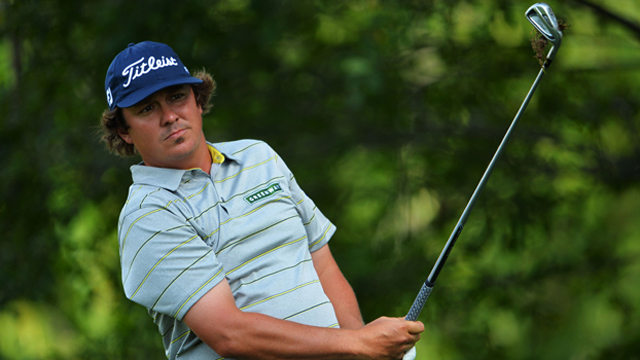
Dufner and Todd are the only two on the list who absolutely nail all three factors. Dufner is solidly in the middle pack of players for driving distance, as he is a bit below average overall in that category, has one of the best combinations of driving accuracy and precision on Tour and is a great short game player.
No, seriously. As poor a putter Dufner can be at times, especially inside five feet, he’s very much capable around the greens. In the PGA Tour’s Proximity to Hole (Around the Green) statistic—a much better indicator of short game success than scrambling, which is just as much about putting as off the green work—Dufner is top 25 three of the last four years, including first in the category in 2012.
Todd is decidedly a short hitter with high-end driving accuracy and precision numbers (35th in accuracy and 15th in distance from edge of the fairway). He’s also currently top 30 in Proximity to Hole (ARG).
No players will be better suited for Hoylake’s transformation as these two, but the others on this list will still see a great net plus.
Stroud and Simpson are just moderately accurate and precise drivers, but both prove mighty skilled around the greens. Simpson’s finishes in Proximity to Hole (ARG) from 2012 to 2014 are: T7, T38, T30, and Stroud’s are T10, T16, 8. The duo is is below average in driving distance, sticking them firmly in two of three categories.
The same goes for Poulter, Donald and Manassero. They possess the same traits here as Stroud and Simpson except that all three are exceptionally short drivers. The short game prowess is real though, as Donald has placed top-five in the Proximity metric three of the last five years with Poulter not far behind at four top-15 placements in six years. Manassero doesn’t have this data because he’s a European Tour man, but his reputation as the heir apparent to Seve Ballesteros should quell all doubts here.
The final one of the eight players most likely to take advantage of Hoylake’s changes doesn’t fit in with the rest.
That’s a pretty apt deal for Jimenez, who has been immortalized for his one-of-a-kind personality. (And we can’t forget this.) We don’t have full data on Jimenez due to his European Tour affiliation, but the limited metrics there show him to be both a very short and highly accurate driver.
Like many of the others here, that puts him in line to be a significant beneficiary of two of these three changes. As for his short game, he’s generally considered a solid player from that area, even if there is no objective data to back it up (or disprove it).
To be clear, this is not a short list of favorites. What we have here are the eight candidates whose games most directly benefit from Hoylake’s new look in its eight-year downtime since its last Open.
Maybe one wins, maybe not.
In any case, it would be unwise to use the results of the 2006 Open to determine this week’s standings. It’s been nearly a decade and the course is entirely different.
And even if Hoylake is still criticized for its bland views, at least the singed property that met us in 2006 is a thing of the past.



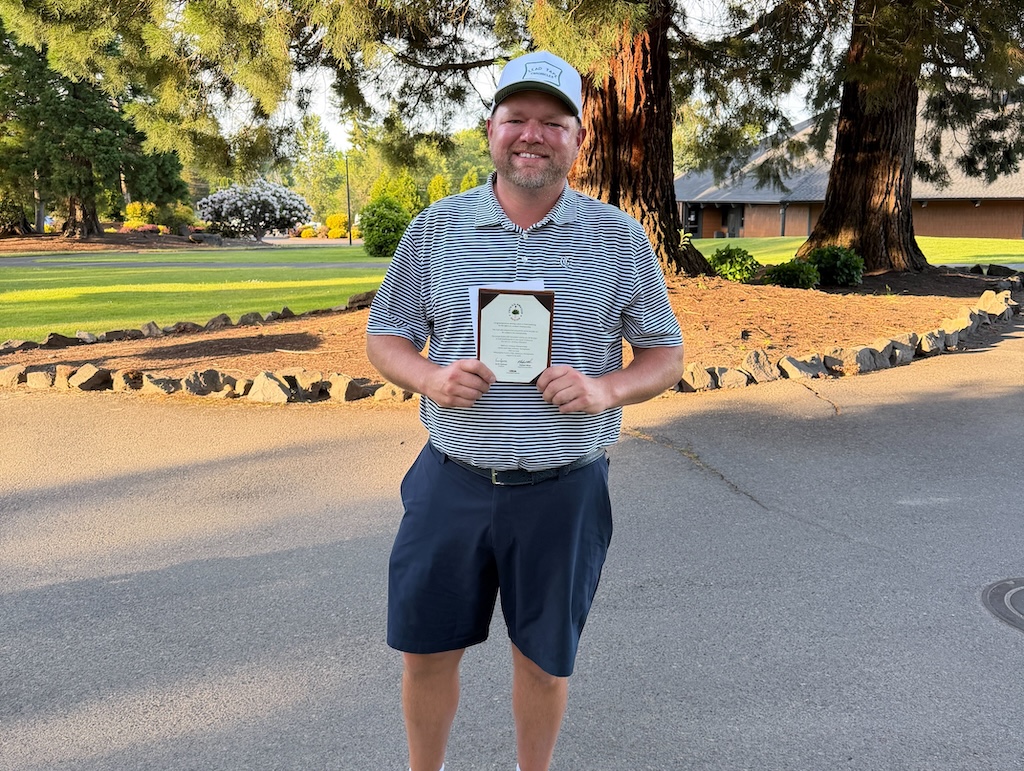
This past Monday, I played in the U.S. Amateur local qualifier at Rock Creek Country Club in Portland, Oregon. A full tee sheet from 7:30 a.m. to 1:55 p.m., the top 11 scores would make it to the U.S. Amateur final qualifying.
I teed off at 10:48 a.m.. With the 7:30 am tee time, you can get a feel for the leaders’ pace, and they were off and running on the challenging setup at Rock Creek.
View this post on Instagram
Getting to the highlight of the round on the par five 17th, a drive up the left side and 212 yards left to the front hole location. I took out a 5-iron with plans of middle of the green. The ball ended up 8 feet left of the hole, pin high. A slight downhill putt dropped in for an eagle 3 on the 17th. With the cut line looking to be anywhere from -2 to even par. This was the boost I had been waiting for all day.
With making par from the trees on 18, it was time to wait for a potential playoff with a posted score of one under par 71.
Three hours later, it was playoff time. 8 players for 6 spots. I made par on the playoff hole, which was good enough to advance to the U.S. Amateur final qualifying in July. USGA qualifiers sure deliver on all of the emotions in golf!
Club Junkie
Building my 2026 gamer WITB: Ranking the contenders and new putter projects – Club Junkie Podcast

The annual What’s In The Bag build is underway, and on this episode of Club Junkie, Brian breaks down the clubs currently leading the race for a spot in his 2026 gamer setup. From drivers and fairway woods to irons, wedges, and shafts, he ranks the equipment that’s performing best and explains what’s separating the front runners from the rest of the field.
Brian also heads into the workshop to discuss several putter projects currently on the bench. From head options and shaft choices to build ideas and testing plans, he shares what he’s working on and which putters could become serious contenders for the bag this season.
If you’re a gear junkie who loves equipment testing, club building, and the never-ending pursuit of the perfect setup, this episode is for you.
Follow Club Junkie:
Instagram: @clubjunkiepod
TikTok: @clubjunkiepod
Threads: @clubjunkiepod
X: @ClubJunkiePod
Club Junkie
Tour Edge Exotics mini driver review + TaylorMade Spider ZT Max first look – Club Junkie

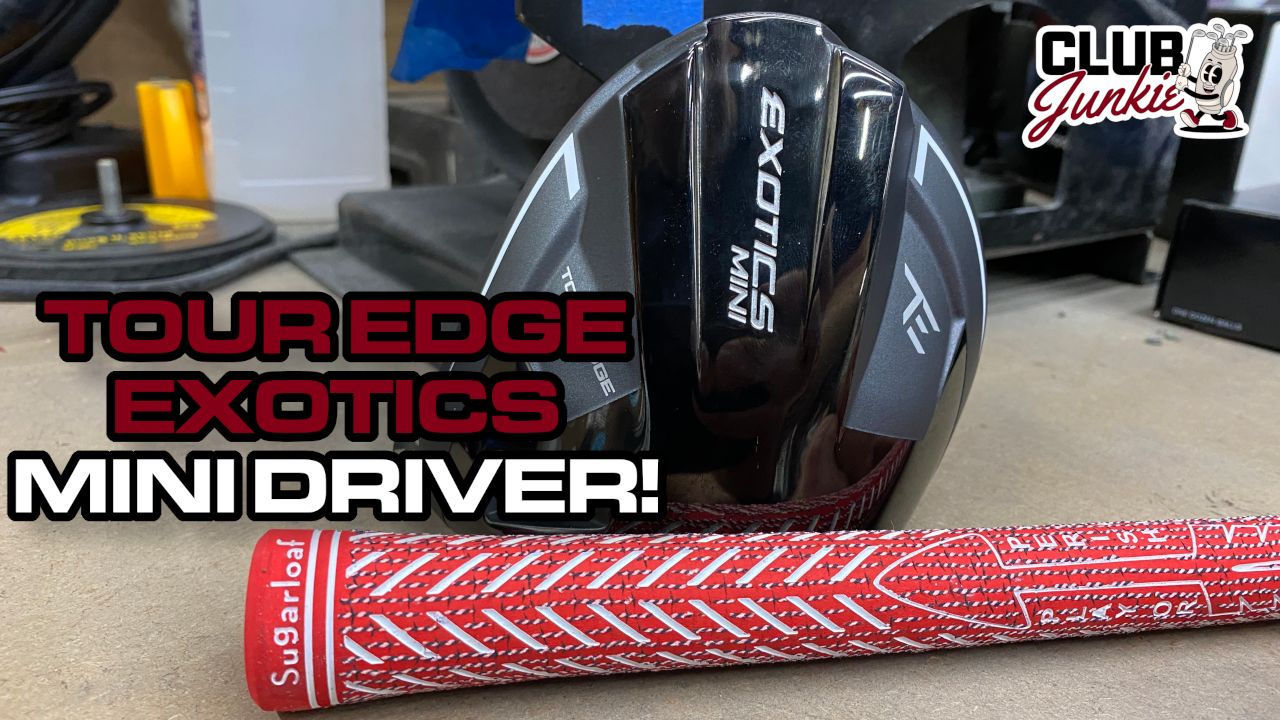
On this episode of Club Junkie, I put the new Tour Edge Exotics Mini Driver to the test and break down the performance, forgiveness, distance, and where it fits compared to a traditional driver or strong fairway wood. If you have been curious about adding a mini driver to the bag, this one is worth a look.
I also dive into the new TaylorMade Spider ZT Max putter that was recently spotted and discuss the growing zero torque putter trend. Plus, there is a closer look at the new Project X Titan Yellow shaft showing up on the PGA Tour and what makes it different from other profiles currently out there.

Justin Rose WITB 2026 (April): Full WITB breakdown with new McLaren irons

What’s the story behind Webb Simpson’s custom-stamped irons?

Memorial Tournament Tour Report: Rory McIlroy, Cameron Young switch up drivers, and more

Cadillac Championship Tour Report: Spieth’s sizable changes, McLaren Golf launches, and more

Russell Henley’s winning WITB: 2026 Charles Schwab Challenge

Kristoffer Reitan’s winning WITB: 2026 Truist Championship

J.T. Poston’s winning WITB: 2026 Memorial Tournament

Aaron Rai’s winning WITB: 2026 PGA Championship

Best irons 2026: Best irons overall, most forgiving irons, and more

Cameron Young’s winning WITB: 2026 Cadillac Championship


Bud Cauley WITB 2026 (June)
Bud Cauley had >14 clubs in his bag when photographed prior to the Memorial Tournament. Driver: Titleist GTS2 (8 degrees) Shaft: Fujikura...


Hannah Green WITB 2026 (June)
Driver: Titleist GTS3 (10 degrees, D4 SureFit setting) Shaft: Mitsubishi Chemical Diamana RB 53 S 3-wood: Titleist GT3 (15 degrees,...


Asterisk Talley WITB 2026 (June)
Driver: TaylorMade Qi4D (9 degrees) Shaft: Fujikura Ventus Blue 6 S 3-wood: TaylorMade Qi4D (16.5 degrees) Shaft: Fujikura Ventus Blue...


Brianna Do WITB 2026 (June)
Driver: Callaway Quantum Triple Diamond (9 degrees) Shaft: KBS PGW 3-wood: Callaway Elyte Titanium (15 degrees) Shaft: KBS PGW 5-wood:...
-
 Equipment6 days ago
Memorial Tournament Tour Report: Rory McIlroy, Cameron Young switch up drivers, and more
-
 News1 week ago
Russell Henley’s winning WITB: 2026 Charles Schwab Challenge
-
 Whats in the Bag3 days ago
J.T. Poston’s winning WITB: 2026 Memorial Tournament
-
 Equipment3 days ago
Best irons 2026: Best irons overall, most forgiving irons, and more
-

 Equipment1 week ago
Details on Jason Day’s latest prototype Avoda iron setup
-

 Equipment3 weeks ago
CJ Cup Byron Nelson Tour Report: Koepka and Kim’s newest putters finally get hot
-

 News2 weeks ago
Charles Schwab Challenge Tour Report: MacIntyre, Åberg and Spaun all switch putters, TaylorMade launches new Spider
-

 Equipment2 weeks ago
Details on J.J. Spaun’s surprise putter switch


Pingback: How has Hoylake changed and who serves to benefit? | Spacetimeandi.com
Tony
Jul 15, 2014 at 2:19 pm
Guarantee you Tiger has spent all his break perfecting his Stinger!
steve
Jul 15, 2014 at 3:39 pm
Haven’t seen the stinger in years. They say it is very green and lush. Not dry and fast
Paul
Jul 15, 2014 at 10:49 am
Well the green grass will get greener, the forecast is more rain on the way with a lot of wind to drive it into the players. Rory might come good if he can last the 4 days, but he has a tendency to mess it up on the Friday.
IH8
Jul 15, 2014 at 10:25 am
I’m surprised Graeme McDowell didn’t make your list. Ok, he’s short (not mid-range) but he’s a fairway seeker. And he’s pretty solid with a wedge in his hands.
Kevin Casey
Jul 15, 2014 at 2:40 pm
I’m not afraid to admit when I’ve made an error, be it factual or by omission.
You’re absolutely right, should’ve put him on that list. Tried to make sure I went through the field thoroughly there, but must have glossed over his name by accident.
As I said, as long as you significantly qualify for two of the three (short-medium length, driving accuracy and short game), you deserve to be on this list. And McDowell certainly does. He’s definitely a short driver and extremely accurate as well. Clearly qualifies in both categories.
The only contention I have is that I don’t see McDowell as a great short game player. He comes out pretty much average there in the PGA Tour metrics. Of course, he’s also a European Tour guy and has a lot more wins and has a lot better top-10s per event ratio. But it’s also an easier tour, and McDowell’s PGA Tour appearances have rarely been against anything but one of the circuit’s strongest fields (which was not the case for most of his European career). So I think the difference in competition level can mostly account for that gap, rather than him being a much better player in Europe. If the European Tour had the data, I’d think he comes out pretty much the same player, after you adjust for strength of competition.
The short game point is tangential though. McDowell should be on this list regardless. Thank you for pointing that out!
steve
Jul 15, 2014 at 10:01 am
Best quote of the week was Martin Kaymer interview “golf is a game where you play with yourself”. Love that, that should be the new golf campaign slogan “Golf, you can play with yourself”
MHendon
Jul 15, 2014 at 11:32 am
Lol that slogan applies to me and more than half the rounds I play.
paul
Jul 15, 2014 at 2:09 pm
I prefer to play with my wife, not by myself. You know, play a couple holes in the early evening, have some fun. Those twilight rounds can be nice ????
Mow
Jul 16, 2014 at 9:57 am
If it’s mowed down really well
bradford
Jul 16, 2014 at 12:06 pm
Indeed, your wife plays well…Really knows how to hit it.