
Opinion & Analysis
Looks or numbers: What makes a better golf swing?

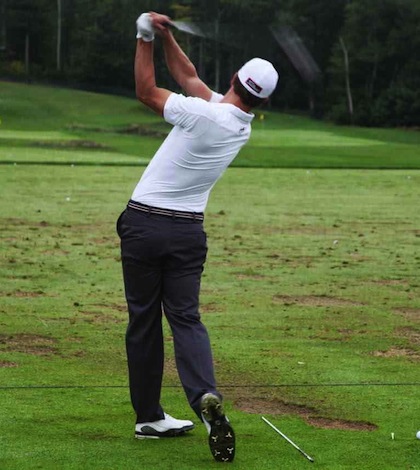
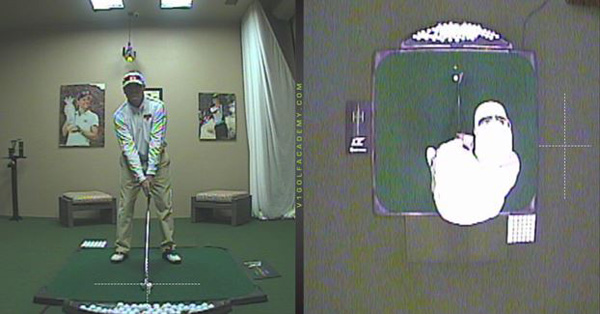
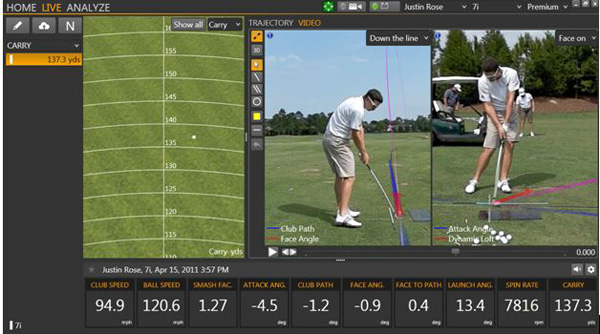
I have seen many things come and go during my 20 years on the lesson tee. But the two things that have stuck around and will continue to be a necessity for golf instructors are digital video analysis (the best is V1 by Interactive Frontiers), as well as club and golf radar systems such as Flightscope and Trackman. Those technologies have revolutionized the golf teaching industry and allowed golfers to improve faster and easier than ever before.
If you don’t think video and golf radar tools have made golf instruction easier, try to shorten a golfer’s swing without using video to show him or her the length of the old swing versus the new one. Or try and help someone to understand the ratio between swing direction, face angle and angle of attack without power of golf radar.
But all of the focus on modern teaching tools reminds me of a day on the lesson tee with a tour player I taught almost 15 years ago in Destin, Fla., named Don Reese, who said one of the most powerful things I have ever heard. Don and I were working on his backswing. I was trying to get his club and arms into a “more classic” position at the top, because it was my view that if there was less motion to the top, he would have an easier time with his transition and improve his consistency.
At the time, Reese was in his late 40s and had played professional golf for most of his adult life, so obviously he could play and didn’t need too much with his swing. But I wanted him to move into a much tighter position than he was used to at the top. As we discussed the new position and checked the video comparisons, Reese said that while he knew the new position looked better on camera, he “couldn’t play from there.” Since the player he has the final say, we moved in a different direction.
At that point in my instructional career, I incorrectly believed that if it looked “better” on camera that it MUST translate into better swings and better scores. This brings me to the current debate on golf radar and its merits or lack thereof when it comes to helping people play better, especially tour professionals. My question is this: Do better “looks” or better numbers always mean “better” swings?
Who knows if Nicklaus would have been better if he tightened his right elbow at the top, or if Tiger would have broken Jack’s record at this point in his career if his head was steadier. Would Phil have hit the ball more consistently off the tee if he shortened his backswing? Or would all these players have played WORSE if you they tried to correct these “flaws?”
I firmly believe that everyone has something in their swing that they always “fight.” Some golfers cannot get their grip right, while others can’t seem to get the takeaway on track. As always, there are many things that teachers and players can tighten up without too much work. But when I do so I am very cognizant that I keep the player’s individuality within their golf swing.
I do not believe in model swings, or forcing everyone into better “looks” or better “numbers” at all costs because my job is to take everything into account in order to make the best decision for the player in front of me. It is my job to maintain playability while improving the player’s overall motion based on his goals, not mine.
All too often, inexperienced teachers formulate their ideas of how the student should swing instantly after checking the video or launch monitor. These teachers are only making sure the “looks” are there without regard to what the player feels or what the ball actually does in the air.
So in order to more effectively use the modern tools of video and golf radar, I suggest interviewing the player, figuring out his goals, gathering the video and data during the course of a few shots using different clubs and then discussing with the player what you suggest as the best course of action. I firmly believe the better the player, the more give and take there should be between the teacher and the student. It’s my thought that I am only on the lesson tee to facilitate the gap between what the player feels and what fundamental changes will move them in the best direction.
A final thought: Sure, in most cases as the look and numbers get in a more positive direction the player should improve to some degree. However, sometimes it’s OK to have a flying right elbow, a funky grip or slight head motion on video. You can win golf tournaments with a faulty angle of attack, a path that is too across the line or launch angles that are not quite optimal. It ALL must work into what the player and you decide TOGETHER!
Remember, golf instruction is not all about pleasing the machine or making everyone look the same. It’s about what works best for that particular player in the end.
Read More Tom Stickney II : What Flightscope and Trackman can tell you (and me)




This past Monday, I played in the U.S. Amateur local qualifier at Rock Creek Country Club in Portland, Oregon. A full tee sheet from 7:30 a.m. to 1:55 p.m., the top 11 scores would make it to the U.S. Amateur final qualifying.
I teed off at 10:48 a.m.. With the 7:30 am tee time, you can get a feel for the leaders’ pace, and they were off and running on the challenging setup at Rock Creek.
View this post on Instagram
Getting to the highlight of the round on the par five 17th, a drive up the left side and 212 yards left to the front hole location. I took out a 5-iron with plans of middle of the green. The ball ended up 8 feet left of the hole, pin high. A slight downhill putt dropped in for an eagle 3 on the 17th. With the cut line looking to be anywhere from -2 to even par. This was the boost I had been waiting for all day.
With making par from the trees on 18, it was time to wait for a potential playoff with a posted score of one under par 71.
Three hours later, it was playoff time. 8 players for 6 spots. I made par on the playoff hole, which was good enough to advance to the U.S. Amateur final qualifying in July. USGA qualifiers sure deliver on all of the emotions in golf!
Club Junkie
Building my 2026 gamer WITB: Ranking the contenders and new putter projects – Club Junkie Podcast

The annual What’s In The Bag build is underway, and on this episode of Club Junkie, Brian breaks down the clubs currently leading the race for a spot in his 2026 gamer setup. From drivers and fairway woods to irons, wedges, and shafts, he ranks the equipment that’s performing best and explains what’s separating the front runners from the rest of the field.
Brian also heads into the workshop to discuss several putter projects currently on the bench. From head options and shaft choices to build ideas and testing plans, he shares what he’s working on and which putters could become serious contenders for the bag this season.
If you’re a gear junkie who loves equipment testing, club building, and the never-ending pursuit of the perfect setup, this episode is for you.
Follow Club Junkie:
Instagram: @clubjunkiepod
TikTok: @clubjunkiepod
Threads: @clubjunkiepod
X: @ClubJunkiePod
Club Junkie
Tour Edge Exotics mini driver review + TaylorMade Spider ZT Max first look – Club Junkie

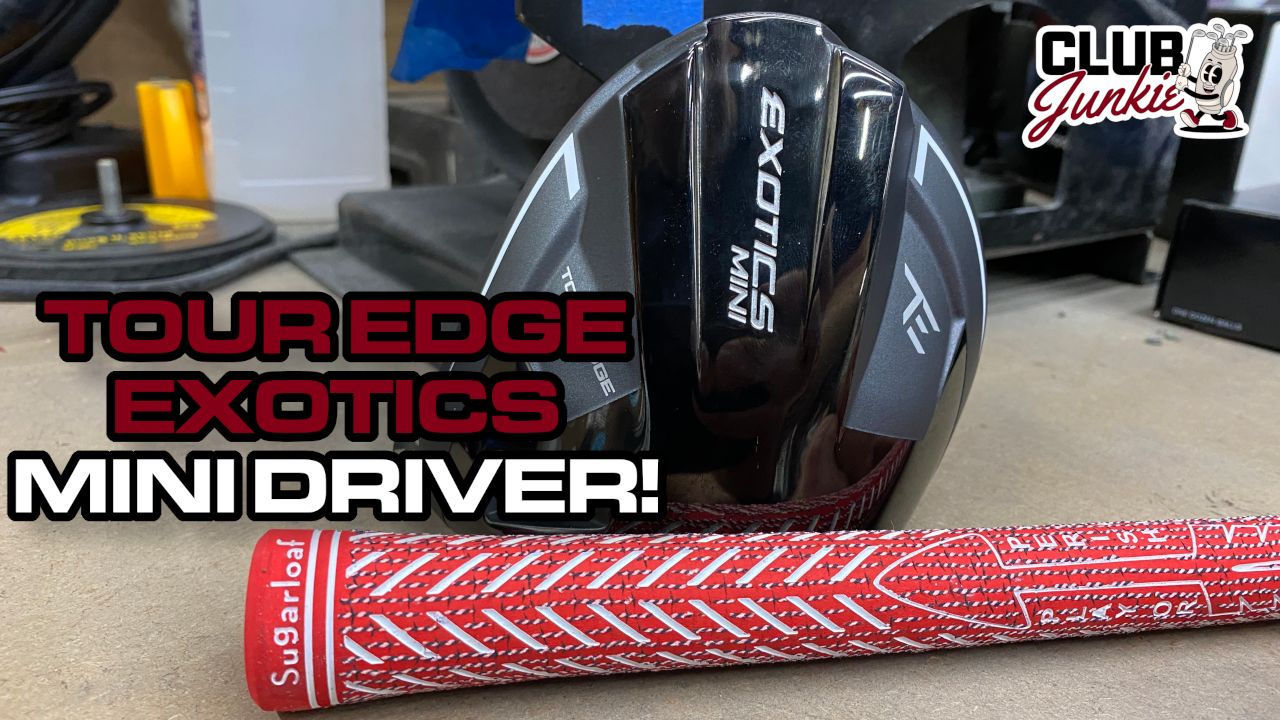
On this episode of Club Junkie, I put the new Tour Edge Exotics Mini Driver to the test and break down the performance, forgiveness, distance, and where it fits compared to a traditional driver or strong fairway wood. If you have been curious about adding a mini driver to the bag, this one is worth a look.
I also dive into the new TaylorMade Spider ZT Max putter that was recently spotted and discuss the growing zero torque putter trend. Plus, there is a closer look at the new Project X Titan Yellow shaft showing up on the PGA Tour and what makes it different from other profiles currently out there.

Justin Rose WITB 2026 (April): Full WITB breakdown with new McLaren irons

What’s the story behind Webb Simpson’s custom-stamped irons?

Memorial Tournament Tour Report: Rory McIlroy, Cameron Young switch up drivers, and more

Cadillac Championship Tour Report: Spieth’s sizable changes, McLaren Golf launches, and more

Russell Henley’s winning WITB: 2026 Charles Schwab Challenge

Kristoffer Reitan’s winning WITB: 2026 Truist Championship

J.T. Poston’s winning WITB: 2026 Memorial Tournament

Aaron Rai’s winning WITB: 2026 PGA Championship

Best irons 2026: Best irons overall, most forgiving irons, and more

Cameron Young’s winning WITB: 2026 Cadillac Championship


Bud Cauley WITB 2026 (June)
Bud Cauley had >14 clubs in his bag when photographed prior to the Memorial Tournament. Driver: Titleist GTS2 (8 degrees) Shaft: Fujikura...


Hannah Green WITB 2026 (June)
Driver: Titleist GTS3 (10 degrees, D4 SureFit setting) Shaft: Mitsubishi Chemical Diamana RB 53 S 3-wood: Titleist GT3 (15 degrees,...


Asterisk Talley WITB 2026 (June)
Driver: TaylorMade Qi4D (9 degrees) Shaft: Fujikura Ventus Blue 6 S 3-wood: TaylorMade Qi4D (16.5 degrees) Shaft: Fujikura Ventus Blue...


Brianna Do WITB 2026 (June)
Driver: Callaway Quantum Triple Diamond (9 degrees) Shaft: KBS PGW 3-wood: Callaway Elyte Titanium (15 degrees) Shaft: KBS PGW 5-wood:...
-
 Equipment6 days ago
Memorial Tournament Tour Report: Rory McIlroy, Cameron Young switch up drivers, and more
-
 News1 week ago
Russell Henley’s winning WITB: 2026 Charles Schwab Challenge
-
 Whats in the Bag3 days ago
J.T. Poston’s winning WITB: 2026 Memorial Tournament
-
 Equipment3 days ago
Best irons 2026: Best irons overall, most forgiving irons, and more
-

 Equipment1 week ago
Details on Jason Day’s latest prototype Avoda iron setup
-
 Equipment3 weeks ago
CJ Cup Byron Nelson Tour Report: Koepka and Kim’s newest putters finally get hot
-

 News2 weeks ago
Charles Schwab Challenge Tour Report: MacIntyre, Åberg and Spaun all switch putters, TaylorMade launches new Spider
-
 Equipment2 weeks ago
Details on J.J. Spaun’s surprise putter switch


Jack
Oct 18, 2013 at 5:57 am
From what I’ve seen with most amateurs, it’s easier to try to compensate for swing faults then to build a perfect swing. How many swings out there look like a computer model and is played by an amateur? I’d say a very small population. I’m trying to make my swing look good, but in the process I’ve lost the ball striking feel and free flow feeling in the swing. It’s much more mechanical feeling now, for better or worse.
corey
Oct 8, 2013 at 3:45 pm
couldnt agree more, fit the swing to the player not the player to the swing. i think its important that a teacher find out what physical issues/traits a student might have: how flexible they are, any injuries, and also what’s their dominant side/eye