
Opinion & Analysis
Shop safety: An often forgotten part of club building

The more I read forum threads in regards to club building, the more I see topics such as:
- How do I get started in club building and repair?
- What are the basic tools needed for club building and repair?
- How do you (insert any club repair task)?
The one topic that seems to get over looked is shop safety. Maybe it’s because we “Do-it-yourselfers” don’t expect to injure ourselves in the process. Unfortunately, many injuries occur when people least expect them to happen.
That’s I decided to invite some GolfWRXers to weigh in on the topic; members whose skills and experience range from master club builder to hobbyist. With over 60 years experience in the field, we came up some shop safety procedures and ideas that you can follow to reduce the risk of injury. Some of them are as basic as protective eye and footwear, while others relate to hazards you may not have been aware of.
Let’s start with basic shop set up. How you choose to lay out your work area is up to you, but it is a very good idea to add the following in your setup:
Ventilation: Working with chemicals and grinding/sanding machines can produce harmful fumes, smoke and other airborne particles such as graphite and dust. Along with a good ventilation system, it’s wise to wear a quality ventilation mask while working with items that may create breathing hazards.
Non-slip mats: Having them around your work area will reduce slip and fall injuries due to spilled chemicals. While we are speaking of slip and fall injuries, keep your work-area flooring clean and tidy. This will reduce the chances of injury for you, as well as those who might walk by.
Metal Garbage Can & Lid: The location of your garbage can/waste basket should be away from any open flames or sparks.Paper towels and chemical-soaked tape and rags can easily catch fire from sparks flying off grinders and cutters.
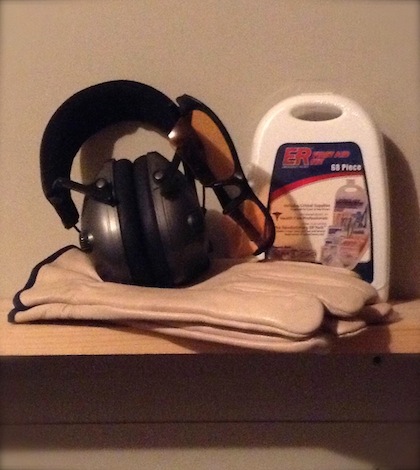
Basic First Aid Kit & Eye Wash Station: Any time chemicals and solvents are involved and there is a chance of eye contact, keep a basic first aid kit and eye wash station near the work area where eye irritants are being used.
Eye & Ear Protection: A pair of protective goggles were the No. 1 item discussed when it came to shop safety. Always wear eye protection, especially when using a wire brush wheel to deburr the end of a steel shaft after cutting or while using any other grinding/sanding wheel. The levels of noise power tools make can easily damage hearing over a period of time, sp be sure to wear ear protection as well.
Having “the right tools for the job” seems cliché, but the statement is worth repeating. Taking shortcuts with an improvised tool is one of the fastest ways to injure yourself. It’s just not worth cutting a corner to save time or a buck or two.
As an example: Never use a hypodermic type needle device to inject solvent between the grip and the tape as a way to remove and re-use the grip. While it certainly can work and has been done a lot over the years, the risk of an accidental “injection” into your hand is great. The chemicals and solvents used can cause serious infection, and in some cases they can lead to the loss of the finger or hand.
Another example of an ill-advised shortcut would be to sand lead tip weights rather cut them. Using a sanding wheel creates airborne lead dust and over time is not healthy to a club builder.
Hook Blade: Use a hook blade when removing grips or tape from a shaft and always cut AWAY from you.
Leather Work Gloves: Heating up club heads for removal and using sanding/grinding wheels tend to heat shafts and heads more than expected, even after they sit for a while. Wearing a pair of leather work gloves will reduce the chance of burning your hands on heated metal.
Take care of your tools and your tools will take care of you
Always check your tools to see if they are functioning properly before starting any project. A quick inspection can ensure a safe operating area and reduce the chance of injury. Before you start:
- Check all table-mounted tools to ensure they are mounted securely.
- Check sanding belts on a regular basis for cuts or splits. While it’s not common, a belt that separates completely while the machine is running can hit a club builder in the face or hands. Their edges can cut skin.
Prepping for the job can reduce cuts and scrapes. Taping off the ends of a broken shaft is a great example of this. When club builders prepare and plan, they reduce the chances of unwanted injuries and mishaps.
Dress for Success
Also much overlooked (especially for the Do-it-yourselfer) is dressing for the job. Never wear baggy or loose clothing that can be sucked into power tools or get tangled in them. Also, always wear protective closed-toed shoes. When working with chemicals, solvents and epoxy, wearing an apron can reduce the chance of soaking your clothes with flammable liquids. That’s good for your wallet (you won’t need to buy as many new clothes) and your safety.
The topic of shop safety is never ending discussion, as it should be. Safety procedures should always be learned and adhered to when working on clubs or any other home/shop projects.
I would like to take the time and thank the following GolfWRX members for all their input for this article: Mxtitleistgolfer, Tobybear, Super Tuna, Knudson81, Awalkspoiled, Hispl, Sean2, Dscvrr St Louis, Deck and a special thank you to Tom Wishon for taking the time out his busy schedule to give his input on this topic.




This past Monday, I played in the U.S. Amateur local qualifier at Rock Creek Country Club in Portland, Oregon. A full tee sheet from 7:30 a.m. to 1:55 p.m., the top 11 scores would make it to the U.S. Amateur final qualifying.
I teed off at 10:48 a.m.. With the 7:30 am tee time, you can get a feel for the leaders’ pace, and they were off and running on the challenging setup at Rock Creek.
View this post on Instagram
Getting to the highlight of the round on the par five 17th, a drive up the left side and 212 yards left to the front hole location. I took out a 5-iron with plans of middle of the green. The ball ended up 8 feet left of the hole, pin high. A slight downhill putt dropped in for an eagle 3 on the 17th. With the cut line looking to be anywhere from -2 to even par. This was the boost I had been waiting for all day.
With making par from the trees on 18, it was time to wait for a potential playoff with a posted score of one under par 71.
Three hours later, it was playoff time. 8 players for 6 spots. I made par on the playoff hole, which was good enough to advance to the U.S. Amateur final qualifying in July. USGA qualifiers sure deliver on all of the emotions in golf!
Club Junkie
Building my 2026 gamer WITB: Ranking the contenders and new putter projects – Club Junkie Podcast

The annual What’s In The Bag build is underway, and on this episode of Club Junkie, Brian breaks down the clubs currently leading the race for a spot in his 2026 gamer setup. From drivers and fairway woods to irons, wedges, and shafts, he ranks the equipment that’s performing best and explains what’s separating the front runners from the rest of the field.
Brian also heads into the workshop to discuss several putter projects currently on the bench. From head options and shaft choices to build ideas and testing plans, he shares what he’s working on and which putters could become serious contenders for the bag this season.
If you’re a gear junkie who loves equipment testing, club building, and the never-ending pursuit of the perfect setup, this episode is for you.
Follow Club Junkie:
Instagram: @clubjunkiepod
TikTok: @clubjunkiepod
Threads: @clubjunkiepod
X: @ClubJunkiePod
Club Junkie
Tour Edge Exotics mini driver review + TaylorMade Spider ZT Max first look – Club Junkie

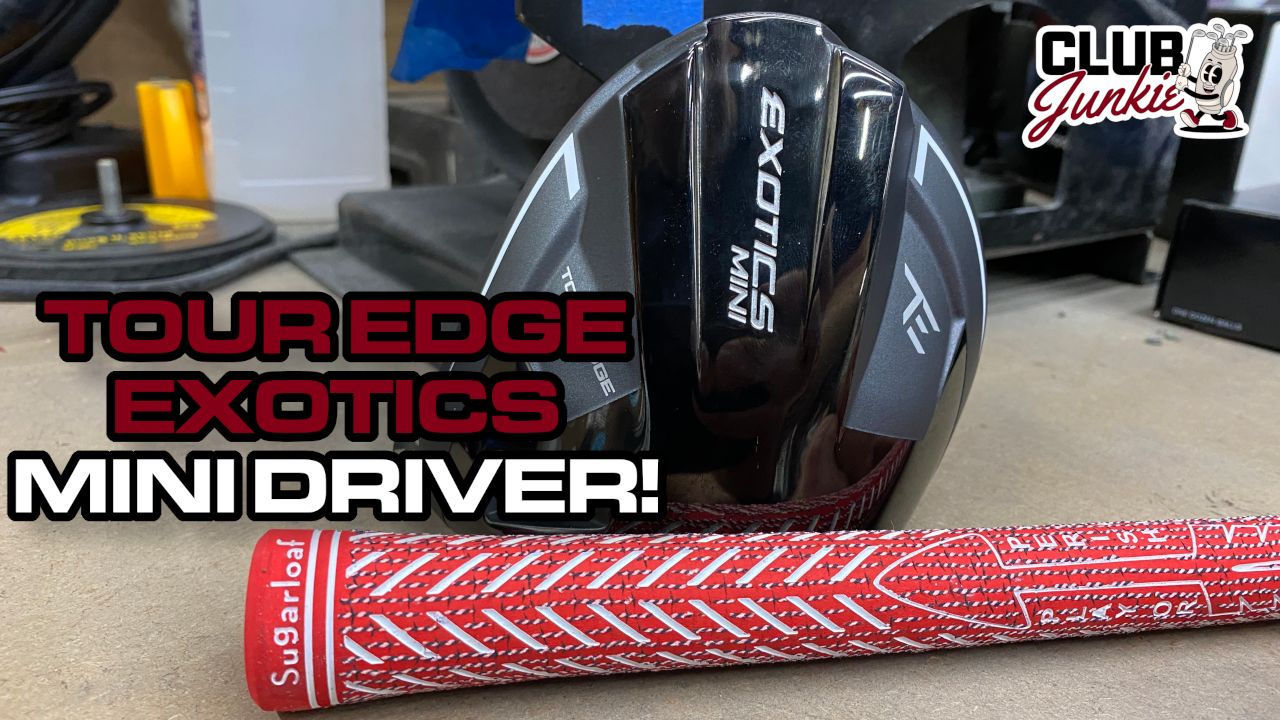
On this episode of Club Junkie, I put the new Tour Edge Exotics Mini Driver to the test and break down the performance, forgiveness, distance, and where it fits compared to a traditional driver or strong fairway wood. If you have been curious about adding a mini driver to the bag, this one is worth a look.
I also dive into the new TaylorMade Spider ZT Max putter that was recently spotted and discuss the growing zero torque putter trend. Plus, there is a closer look at the new Project X Titan Yellow shaft showing up on the PGA Tour and what makes it different from other profiles currently out there.

What’s the story behind Webb Simpson’s custom-stamped irons?

Memorial Tournament Tour Report: Rory McIlroy, Cameron Young switch up drivers, and more

Cadillac Championship Tour Report: Spieth’s sizable changes, McLaren Golf launches, and more

Russell Henley’s winning WITB: 2026 Charles Schwab Challenge

Kristoffer Reitan’s winning WITB: 2026 Truist Championship

Best irons 2026: Best irons overall, most forgiving irons, and more

J.T. Poston’s winning WITB: 2026 Memorial Tournament

Aaron Rai’s winning WITB: 2026 PGA Championship

Cameron Young’s winning WITB: 2026 Cadillac Championship

Details on Jason Day’s latest prototype Avoda iron setup


Christiaan Maas WITB 2026 (June)
Driver: TaylorMade Qi4D LS (8 degrees) Shaft: Fujikura Ventus TR Blue 6 X 3-wood: TaylorMade Qi10 (15 degrees) Shaft: Fujikura Ventus Black...


Ryan Palmer WITB 2026 (June)
Driver: Callaway Quantum Triple Diamond (9 degrees) Shaft: Project X HZRDUS Smoke Blue RDX 60 TX 3-wood: TaylorMade Qi10 (15 degrees) Shaft:...


Bud Cauley WITB 2026 (June)
Bud Cauley had >14 clubs in his bag when photographed prior to the Memorial Tournament. Driver: Titleist GTS2 (8 degrees) Shaft: Fujikura...


Hannah Green WITB 2026 (June)
Driver: Titleist GTS3 (10 degrees, D4 SureFit setting) Shaft: Mitsubishi Chemical Diamana RB 53 S 3-wood: Titleist GT3 (15 degrees,...
-
 Equipment7 days ago
Memorial Tournament Tour Report: Rory McIlroy, Cameron Young switch up drivers, and more
-
 News2 weeks ago
Russell Henley’s winning WITB: 2026 Charles Schwab Challenge
-
 Equipment4 days ago
Best irons 2026: Best irons overall, most forgiving irons, and more
-
 Whats in the Bag4 days ago
J.T. Poston’s winning WITB: 2026 Memorial Tournament
-
 Equipment1 week ago
Details on Jason Day’s latest prototype Avoda iron setup
-
 Equipment3 weeks ago
CJ Cup Byron Nelson Tour Report: Koepka and Kim’s newest putters finally get hot
-

 News2 weeks ago
Charles Schwab Challenge Tour Report: MacIntyre, Åberg and Spaun all switch putters, TaylorMade launches new Spider
-

 Equipment2 weeks ago
Details on J.J. Spaun’s surprise putter switch


AndrewD
Oct 7, 2013 at 7:18 am
Work gloves are good for lots of things but don’t use them while grinding! There’s nothing like getting your hand pulled into a bench grinder to ruin your day. If the club is getting too hot while grinding, you just need to take a break and let it cool in the air.
Hugo Lazarde
Oct 4, 2013 at 3:25 pm
Sorry for the misspeeling. It’s beca use of the Android corrector…
Hugo Lazarde
Oct 4, 2013 at 3:20 pm
Safety First… Even for the Most experienced, there is always the chance of ante accidente…
Good article…
Kadin Mahmet
Oct 4, 2013 at 7:33 pm
Thank you for taking the time to read and post! Simple steps can save a trip to the ER.