
Opinion & Analysis
The 4 majors: Equal pillars in golf’s grand cathedral


There’s a conversation that seems to resurface every May, right after the PGA Championship concludes. I heard it again this year, and frankly, it made my blood boil. “The PGA is the lesser major,” they said, dismissing it with the casual indifference of someone who hasn’t truly grasped what these championships represent. After 45 years of loving this game and serving as a PGA Professional, I feel compelled to address this misguided notion head-on.
Do I have a favorite major? Yes, indeed — the Masters captivates me like no other tournament. The anticipation I feel each April is unmatched. But my personal preference doesn’t diminish my admiration or respect for the other three championships. Appreciating one doesn’t require devaluing another.
Let me be crystal clear: There is no “lesser” major in golf. Each of the four stands as an equal pillar supporting the grand cathedral of our sport’s history. To suggest otherwise isn’t just wrong—it’s a fundamental misunderstanding of golf’s rich tapestry.
Augusta’s Springtime Splendor
The Masters, with its azaleas and green jackets, opens our major season each April. Augusta National presents a unique challenge with its undulating greens and strategic demands. The tournament’s traditions—from the Champions Dinner to the Par 3 Contest—create an atmosphere unlike any other. But does its beauty and exclusivity make it more important than the others? Absolutely not. It’s simply one magnificent chapter in our annual story.
The Ultimate Examination
June brings the U.S. Open, golf’s ultimate examination. The USGA’s commitment to testing every aspect of a player’s game through narrow fairways, punishing rough, and treacherous greens has created some of the most dramatic moments in golf history. From Hogan’s 1-iron at Merion to Tiger’s triumph on a broken leg at Torrey Pines, the U.S. Open has consistently demanded greatness. Its difficulty doesn’t make it superior—just distinctly challenging in its own right.
Golf’s Ancient Testament
The Open Championship (or British Open to some) carries the weight of being golf’s oldest major, dating back to 1860. Playing links golf in unpredictable weather along Scotland and England’s rugged coastlines connects modern players to the sport’s origins. The challenge of controlling ball flight in howling winds while navigating pot bunkers and undulating fairways creates a test unlike anything else in major championship golf. Its age and tradition are remarkable, but they don’t elevate it above its counterparts.
The People’s Championship
And then there’s the PGA Championship—the tournament that sparked this reflection. As the championship of the PGA of America, it represents the 30,000-plus professionals who serve as the game’s frontline ambassadors. These are the men and women who teach, grow, and nurture the game at courses across America. The tournament’s history of producing dramatic finishes and surprising champions speaks to its quality and importance. From John Daly’s improbable win in 1991 to Phil Mickelson becoming the oldest major champion in 2021, the PGA consistently delivers compelling golf.
Four Distinct Tests, Equal in Stature
What truly distinguishes each major isn’t some arbitrary hierarchy of importance, but rather their unique characteristics. The Masters is played on the same course annually, creating a familiar stage where history accumulates layer by layer. The U.S. Open travels to America’s greatest courses, testing players with conditions that border on the extreme. The Open Championship connects us to golf’s roots through links courses shaped by nature rather than bulldozers. The PGA Championship showcases the best players while honoring those who teach and grow the game.
The Grand Seasonal Narrative
Together, these four tournaments create a perfect seasonal narrative. They test different skills, reward different strengths, and collectively identify the most complete players in the world. The career Grand Slam remains golf’s most elusive achievement precisely because mastering all four majors requires extraordinary versatility.
Four Cornerstones, One Cathedral
When I hear someone diminish any major, particularly “my” PGA Championship, I don’t just hear an opinion—I hear a misunderstanding of what makes golf special. Each major carries its own history, its own challenges, and its own place in our sport’s pantheon. The Masters isn’t more important than the Open; the U.S. Open isn’t superior to the PGA.
They are four equal cornerstones supporting the magnificent structure of championship golf. Each deserves our respect, our attention, and our appreciation for what it contributes to the game we love. The next time you hear someone rank the majors, remind them that in golf’s grand cathedral, there are no lesser pillars—only different ones, each essential to the whole.
PGA Professional Brendon Elliott is an award-winning coach and golf writer. You can check out his writing work and learn more about him by visiting BEAGOLFER.golf and OneMoreRollGolf.com. Each Monday, check out his regular column “The Starter” on RG.org.
Editor’s note: “My Take” is an ongoing series where Brendon shares his thoughts and opinions on various aspects of the game and industry. These are Brendon’s opinions and do not necessarily reflect those of GolfWRX, its staff, and its affiliates.






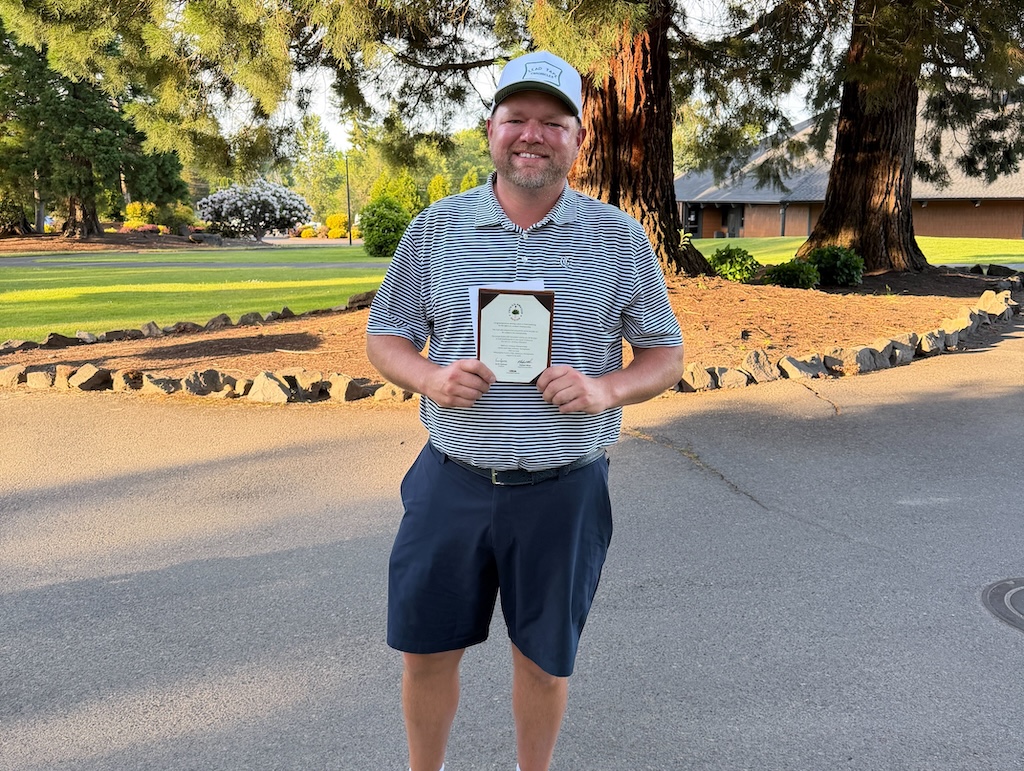
This past Monday, I played in the U.S. Amateur local qualifier at Rock Creek Country Club in Portland, Oregon. A full tee sheet from 7:30 a.m. to 1:55 p.m., the top 11 scores would make it to the U.S. Amateur final qualifying.
I teed off at 10:48 a.m.. With the 7:30 am tee time, you can get a feel for the leaders’ pace, and they were off and running on the challenging setup at Rock Creek.
View this post on Instagram
Getting to the highlight of the round on the par five 17th, a drive up the left side and 212 yards left to the front hole location. I took out a 5-iron with plans of middle of the green. The ball ended up 8 feet left of the hole, pin high. A slight downhill putt dropped in for an eagle 3 on the 17th. With the cut line looking to be anywhere from -2 to even par. This was the boost I had been waiting for all day.
With making par from the trees on 18, it was time to wait for a potential playoff with a posted score of one under par 71.
Three hours later, it was playoff time. 8 players for 6 spots. I made par on the playoff hole, which was good enough to advance to the U.S. Amateur final qualifying in July. USGA qualifiers sure deliver on all of the emotions in golf!
Club Junkie
Building my 2026 gamer WITB: Ranking the contenders and new putter projects – Club Junkie Podcast

The annual What’s In The Bag build is underway, and on this episode of Club Junkie, Brian breaks down the clubs currently leading the race for a spot in his 2026 gamer setup. From drivers and fairway woods to irons, wedges, and shafts, he ranks the equipment that’s performing best and explains what’s separating the front runners from the rest of the field.
Brian also heads into the workshop to discuss several putter projects currently on the bench. From head options and shaft choices to build ideas and testing plans, he shares what he’s working on and which putters could become serious contenders for the bag this season.
If you’re a gear junkie who loves equipment testing, club building, and the never-ending pursuit of the perfect setup, this episode is for you.
Follow Club Junkie:
Instagram: @clubjunkiepod
TikTok: @clubjunkiepod
Threads: @clubjunkiepod
X: @ClubJunkiePod
Club Junkie
Tour Edge Exotics mini driver review + TaylorMade Spider ZT Max first look – Club Junkie

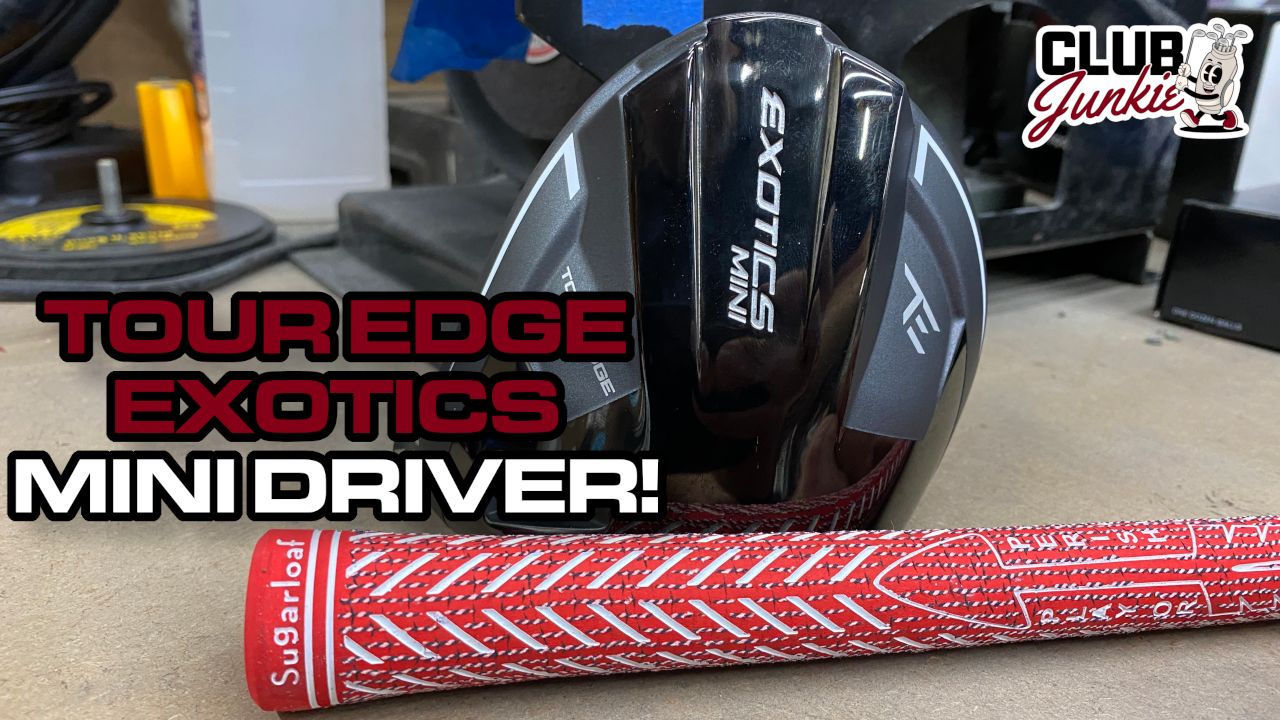
On this episode of Club Junkie, I put the new Tour Edge Exotics Mini Driver to the test and break down the performance, forgiveness, distance, and where it fits compared to a traditional driver or strong fairway wood. If you have been curious about adding a mini driver to the bag, this one is worth a look.
I also dive into the new TaylorMade Spider ZT Max putter that was recently spotted and discuss the growing zero torque putter trend. Plus, there is a closer look at the new Project X Titan Yellow shaft showing up on the PGA Tour and what makes it different from other profiles currently out there.

What’s the story behind Webb Simpson’s custom-stamped irons?

Memorial Tournament Tour Report: Rory McIlroy, Cameron Young switch up drivers, and more

Cadillac Championship Tour Report: Spieth’s sizable changes, McLaren Golf launches, and more

Russell Henley’s winning WITB: 2026 Charles Schwab Challenge

Kristoffer Reitan’s winning WITB: 2026 Truist Championship

Best irons 2026: Best irons overall, most forgiving irons, and more

J.T. Poston’s winning WITB: 2026 Memorial Tournament

Aaron Rai’s winning WITB: 2026 PGA Championship

Cameron Young’s winning WITB: 2026 Cadillac Championship

Details on Jason Day’s latest prototype Avoda iron setup


Christiaan Maas WITB 2026 (June)
Driver: TaylorMade Qi4D LS (8 degrees) Shaft: Fujikura Ventus TR Blue 6 X 3-wood: TaylorMade Qi10 (15 degrees) Shaft: Fujikura Ventus Black...


Ryan Palmer WITB 2026 (June)
Driver: Callaway Quantum Triple Diamond (9 degrees) Shaft: Project X HZRDUS Smoke Blue RDX 60 TX 3-wood: TaylorMade Qi10 (15 degrees) Shaft:...


Bud Cauley WITB 2026 (June)
Bud Cauley had >14 clubs in his bag when photographed prior to the Memorial Tournament. Driver: Titleist GTS2 (8 degrees) Shaft: Fujikura...


Hannah Green WITB 2026 (June)
Driver: Titleist GTS3 (10 degrees, D4 SureFit setting) Shaft: Mitsubishi Chemical Diamana RB 53 S 3-wood: Titleist GT3 (15 degrees,...
-
 Equipment7 days ago
Memorial Tournament Tour Report: Rory McIlroy, Cameron Young switch up drivers, and more
-
 News2 weeks ago
Russell Henley’s winning WITB: 2026 Charles Schwab Challenge
-
 Equipment4 days ago
Best irons 2026: Best irons overall, most forgiving irons, and more
-
 Whats in the Bag4 days ago
J.T. Poston’s winning WITB: 2026 Memorial Tournament
-
 Equipment1 week ago
Details on Jason Day’s latest prototype Avoda iron setup
-
 Equipment3 weeks ago
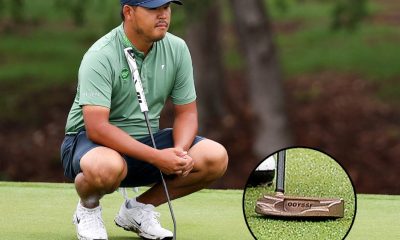
CJ Cup Byron Nelson Tour Report: Koepka and Kim’s newest putters finally get hot
-

 News2 weeks ago
Charles Schwab Challenge Tour Report: MacIntyre, Åberg and Spaun all switch putters, TaylorMade launches new Spider
-

 Equipment2 weeks ago
Details on J.J. Spaun’s surprise putter switch


Duane
May 27, 2025 at 11:06 am
I agree that the majors are the foundation of the game. I think the “lesser major” may come from the different strength of the fields. The U.S. Open and Open Championship have the strongest fields followed by the PGA. Realistically the club pros in the PGA field have no chance of winning which lessens the strength of field. The Masters has by far the weakest field along with the smallest. The older former champions and amateurs again have no realistic chance of competing.