
Opinion & Analysis
Buyer beware: The issues with golf coaching programs


Picture yourself at a crossroads, contemplating whether to enroll your child in a golf coaching program promising to unlock their potential and pave the path to collegiate golf success.
As you peruse the online mission statement, it becomes evident:
“Our coaching philosophy is dedicated to nurturing young talents for triumph in college golf. We employ cutting-edge scientific methods, including personality testing, to customize coaching for each individual. Emphasizing the importance of time management and a strong work ethic on the golf course and in the classroom, we recognize these principles as crucial not only in sports but in life. Golf serves as a platform for honing essential life skills such as discipline, perseverance, and fostering a growth mindset among our athletes. We appreciate the unique qualities of each golfer and strive to unleash their full potential through personalized coaching, viewing it as a partnership extending beyond technical skills. Our commitment is to holistic growth and well-being. If you aspire to elevate your child’s golf game, consider us as mentors.”
This mission statement brims with enticing buzzwords like deliberate practice, grit, science-backed methods, and a strong emphasis on academics. However, you may be pondering whether these buzzwords genuinely hold the key to success. Let’s explore what science and influential thinkers have to say on the topics of mentorship, the fixation on grades, the importance of practice and the objective of college golf.
Allow me to introduce you to the Somerville Youth Study, a research endeavor spanning decades since its inception in 1936. It aimed to answer a straightforward question: Does mentorship truly benefit children? The study divided children into two groups – one navigating life’s challenges independently and the other receiving academic guidance, medical support, and camaraderie from groups like the Boy Scouts. Surprisingly, those who ventured alone often thrived, challenging the prevailing belief in the transformative power of mentorship.
In “Barking up the Wrong Tree,” author Barker dismantles the notion that valedictorians are destined for unparalleled success. His analysis, rooted in research by Karen Arnold at Boston College, debunks this notion. While high school success correlates with college achievements, valedictorians rarely emerge as standout success stories in life. Instead, a survey of 700 millionaires reveals their average GPA was 2.9! Why? Because success transcends mere grades. Successful individuals possess the mental acumen to excel, but they are too engrossed in exploring, experimenting, and seizing various opportunities to be ensnared by the mundane details that often consume valedictorians.
Though we’ve been trained to believe that 10,000 hours of practice are critical for development, I must caution against this notion. Many coaches become entangled in the intricacies of technical aspects, perpetuating the illusion that mastering a solitary element can revolutionize a player’s game. The reality is that elite golfers possess a well-defined set of skills, and a coach’s role is to ensure junior players understand these skills and the fundamentals of executing shots – nothing more, nothing less.
The fact is college golf is not and should not be a destination. In fact, the evidence suggests that playing in college actually ruins most people’s relationship with golf making it a job, controlled by results rather than a genuine interest in developing skills, being with people, or just the pure joy of a nice walk in beautiful weather.
I hope that I have demonstrated that much of what we think our kids need from youth sports is not actually necessary. In fact, it is downright narcissistic. So what’s a parent to do? Encourage our kids to chase happiness. To explore golf on their own terms and learn when they need help and when they need time and space to just figure it out on their own.



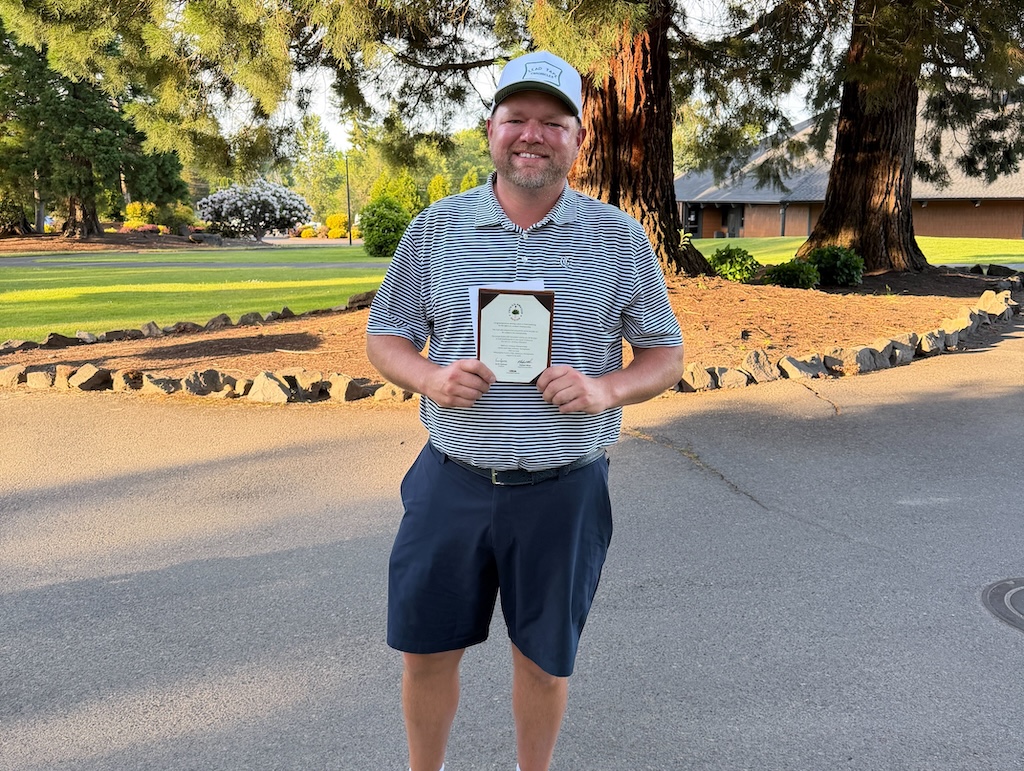
This past Monday, I played in the U.S. Amateur local qualifier at Rock Creek Country Club in Portland, Oregon. A full tee sheet from 7:30 a.m. to 1:55 p.m., the top 11 scores would make it to the U.S. Amateur final qualifying.
I teed off at 10:48 a.m.. With the 7:30 am tee time, you can get a feel for the leaders’ pace, and they were off and running on the challenging setup at Rock Creek.
View this post on Instagram
Getting to the highlight of the round on the par five 17th, a drive up the left side and 212 yards left to the front hole location. I took out a 5-iron with plans of middle of the green. The ball ended up 8 feet left of the hole, pin high. A slight downhill putt dropped in for an eagle 3 on the 17th. With the cut line looking to be anywhere from -2 to even par. This was the boost I had been waiting for all day.
With making par from the trees on 18, it was time to wait for a potential playoff with a posted score of one under par 71.
Three hours later, it was playoff time. 8 players for 6 spots. I made par on the playoff hole, which was good enough to advance to the U.S. Amateur final qualifying in July. USGA qualifiers sure deliver on all of the emotions in golf!
Club Junkie
Building my 2026 gamer WITB: Ranking the contenders and new putter projects – Club Junkie Podcast

The annual What’s In The Bag build is underway, and on this episode of Club Junkie, Brian breaks down the clubs currently leading the race for a spot in his 2026 gamer setup. From drivers and fairway woods to irons, wedges, and shafts, he ranks the equipment that’s performing best and explains what’s separating the front runners from the rest of the field.
Brian also heads into the workshop to discuss several putter projects currently on the bench. From head options and shaft choices to build ideas and testing plans, he shares what he’s working on and which putters could become serious contenders for the bag this season.
If you’re a gear junkie who loves equipment testing, club building, and the never-ending pursuit of the perfect setup, this episode is for you.
Follow Club Junkie:
Instagram: @clubjunkiepod
TikTok: @clubjunkiepod
Threads: @clubjunkiepod
X: @ClubJunkiePod
Club Junkie
Tour Edge Exotics mini driver review + TaylorMade Spider ZT Max first look – Club Junkie

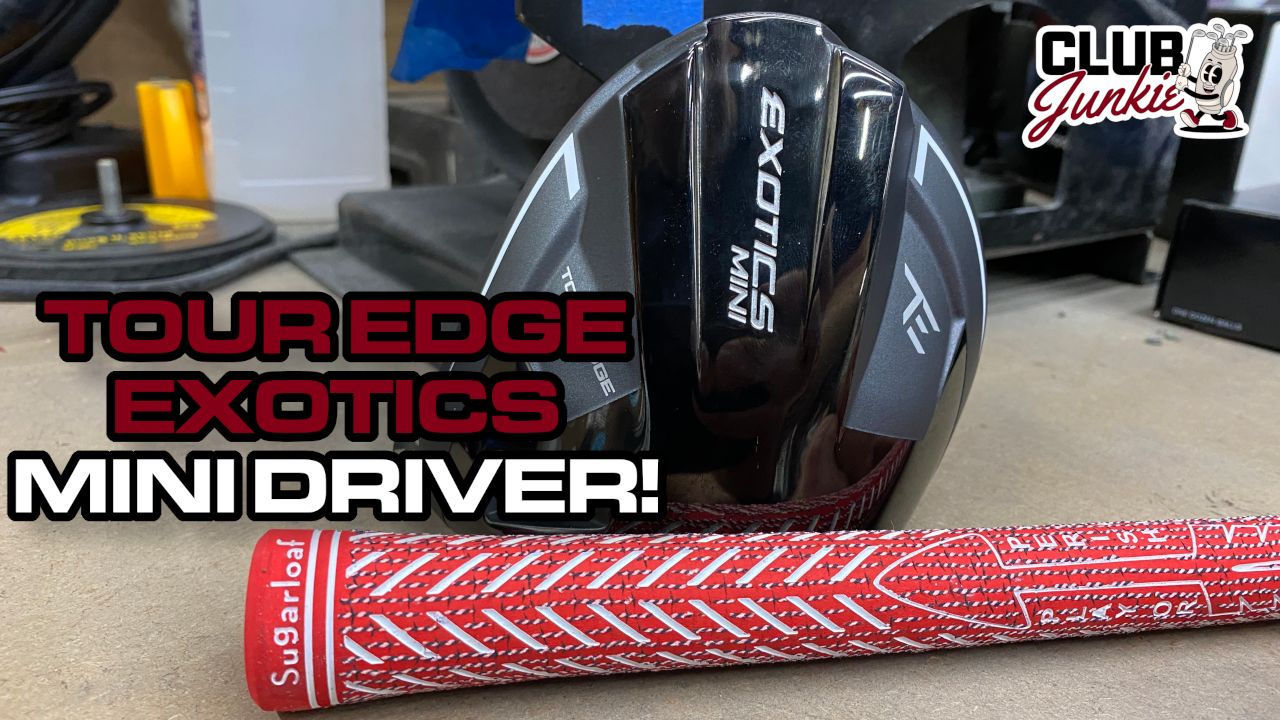
On this episode of Club Junkie, I put the new Tour Edge Exotics Mini Driver to the test and break down the performance, forgiveness, distance, and where it fits compared to a traditional driver or strong fairway wood. If you have been curious about adding a mini driver to the bag, this one is worth a look.
I also dive into the new TaylorMade Spider ZT Max putter that was recently spotted and discuss the growing zero torque putter trend. Plus, there is a closer look at the new Project X Titan Yellow shaft showing up on the PGA Tour and what makes it different from other profiles currently out there.

Justin Rose WITB 2026 (April): Full WITB breakdown with new McLaren irons

What’s the story behind Webb Simpson’s custom-stamped irons?

Memorial Tournament Tour Report: Rory McIlroy, Cameron Young switch up drivers, and more

Cadillac Championship Tour Report: Spieth’s sizable changes, McLaren Golf launches, and more

Russell Henley’s winning WITB: 2026 Charles Schwab Challenge

Kristoffer Reitan’s winning WITB: 2026 Truist Championship

Best irons 2026: Best irons overall, most forgiving irons, and more

J.T. Poston’s winning WITB: 2026 Memorial Tournament

Aaron Rai’s winning WITB: 2026 PGA Championship

Cameron Young’s winning WITB: 2026 Cadillac Championship


Ryan Palmer WITB 2026 (June)
Driver: Callaway Quantum Triple Diamond (9 degrees) Shaft: Project X HZRDUS Smoke Blue RDX 60 TX 3-wood: TaylorMade Qi10 (15 degrees) Shaft:...


Bud Cauley WITB 2026 (June)
Bud Cauley had >14 clubs in his bag when photographed prior to the Memorial Tournament. Driver: Titleist GTS2 (8 degrees) Shaft: Fujikura...


Hannah Green WITB 2026 (June)
Driver: Titleist GTS3 (10 degrees, D4 SureFit setting) Shaft: Mitsubishi Chemical Diamana RB 53 S 3-wood: Titleist GT3 (15 degrees,...


Asterisk Talley WITB 2026 (June)
Driver: TaylorMade Qi4D (9 degrees) Shaft: Fujikura Ventus Blue 6 S 3-wood: TaylorMade Qi4D (16.5 degrees) Shaft: Fujikura Ventus Blue...
-
 Equipment6 days ago
Memorial Tournament Tour Report: Rory McIlroy, Cameron Young switch up drivers, and more
-
 News2 weeks ago
Russell Henley’s winning WITB: 2026 Charles Schwab Challenge
-
 Equipment3 days ago
Best irons 2026: Best irons overall, most forgiving irons, and more
-
 Whats in the Bag4 days ago
J.T. Poston’s winning WITB: 2026 Memorial Tournament
-

 Equipment1 week ago
Details on Jason Day’s latest prototype Avoda iron setup
-

 Equipment3 weeks ago
CJ Cup Byron Nelson Tour Report: Koepka and Kim’s newest putters finally get hot
-

 News2 weeks ago
Charles Schwab Challenge Tour Report: MacIntyre, Åberg and Spaun all switch putters, TaylorMade launches new Spider
-

 Equipment2 weeks ago
Details on J.J. Spaun’s surprise putter switch

