
Opinion & Analysis
Kelley: Learn when to train and when to perform


Regardless of what you may be working on in your swing, it is imperative to understand when to train your swing and game and when to perform on the golf course. Being able to switch mindsets and understand where to place your attention when training your technique and playing on the course will dramatically improve your scores.
Training Your Technique
To start, go to the driving range with a plan. Rather than hitting countless seven irons with no structure in mind, decide where you are going to place your attention on and what your intent is when practicing. If training a new technique, be mindful of your body and club with each swing. This usually should be done slowly. Remember you have to learn a new movement slowly, before fast. This requires discipline and understanding contact may not be ideal when so thoughtful.
On top of slow, training the “technique based swings”, practice hitting different ball-flight shots. (This will be discussed more on performance). If you normally slice the ball from left to right, place an alignment stick five yards in front of you and learn to hit golf balls right to left, drawing the ball around the stick. This will develop shaft and face awareness.
You can also simply place your attention on good contact. With each shot, note where on the clubhead the ball is struck. Practice off-speed shots making contact on the center, heel and toe of the face. Research shows intentionally practicing hitting the ball off center will actually facilitate center contact.
With most golfers having limited time to practice, don’t undervalue the importance of practicing at home. Simply grab a club and train your swing inside or outside your home. This is a great opportunity to slow down the swing, programming the brain with the new movement. If you have a mirror, practice looking into the mirror face-on to get feedback on how your body is moving. If you are outside and the sun is out, simply stand with your shadow directly in front of you at 12 o’clock, noting the shape of the shadow (your body) as you swing.
Learning to Perform
When on the golf course, it is a time to shoot the lowest score possible. This sounds like an obvious statement, although it is a simple concept that is often overlooked. The work you have done on your swing on the driving range and at home will morph into your swing on the golf course. This is also a time to focus more on the ball flight, not what your swing looks like.
“Ask what is wrong with your golf shot, not your golf swing“ – Karl Morris, The Mind Factor. This is a powerful and very effective question you can ask yourself on the golf course. Your post-shot routine is just as important as the pre-shot routine. Paying attention to what your ball is doing will give you a clear understanding of where to place your mind on each shot. Being able to adapt on the golf course with what you have that day and what to slightly change is critical to playing great golf.
Rather than trying to create the swing to create the shot on the golf course, which can lead to frustration, let the shot create the swing. In other words, ask yourself, “What does this shot feel like?” in order to get the ball from point A to point B. This is inclusive to the individual, and where practicing shaping the ball in your practice session plays dividends, so you can adapt on the course. This question may develop a certain feel or simple technical thought that has been developed with your coach.
Lastly, don’t underestimate the power of your attitude. Remember that having the chance to be on a golf course playing this great game is a privilege. Embrace the fact that Golf will never be mastered, and there is always a learning curve, even for the best players in the world. Embracing this challenge will make your good shots better and your bad shots not as bad.



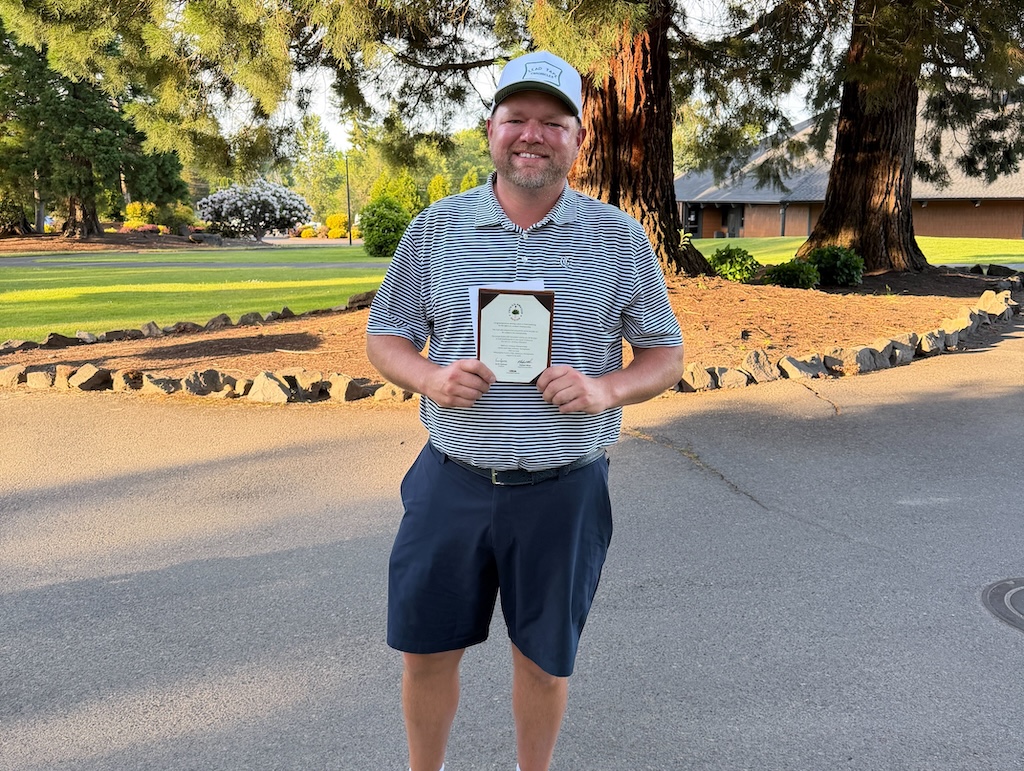
This past Monday, I played in the U.S. Amateur local qualifier at Rock Creek Country Club in Portland, Oregon. A full tee sheet from 7:30 a.m. to 1:55 p.m., the top 11 scores would make it to the U.S. Amateur final qualifying.
I teed off at 10:48 a.m.. With the 7:30 am tee time, you can get a feel for the leaders’ pace, and they were off and running on the challenging setup at Rock Creek.
View this post on Instagram
Getting to the highlight of the round on the par five 17th, a drive up the left side and 212 yards left to the front hole location. I took out a 5-iron with plans of middle of the green. The ball ended up 8 feet left of the hole, pin high. A slight downhill putt dropped in for an eagle 3 on the 17th. With the cut line looking to be anywhere from -2 to even par. This was the boost I had been waiting for all day.
With making par from the trees on 18, it was time to wait for a potential playoff with a posted score of one under par 71.
Three hours later, it was playoff time. 8 players for 6 spots. I made par on the playoff hole, which was good enough to advance to the U.S. Amateur final qualifying in July. USGA qualifiers sure deliver on all of the emotions in golf!
Club Junkie
Building my 2026 gamer WITB: Ranking the contenders and new putter projects – Club Junkie Podcast

The annual What’s In The Bag build is underway, and on this episode of Club Junkie, Brian breaks down the clubs currently leading the race for a spot in his 2026 gamer setup. From drivers and fairway woods to irons, wedges, and shafts, he ranks the equipment that’s performing best and explains what’s separating the front runners from the rest of the field.
Brian also heads into the workshop to discuss several putter projects currently on the bench. From head options and shaft choices to build ideas and testing plans, he shares what he’s working on and which putters could become serious contenders for the bag this season.
If you’re a gear junkie who loves equipment testing, club building, and the never-ending pursuit of the perfect setup, this episode is for you.
Follow Club Junkie:
Instagram: @clubjunkiepod
TikTok: @clubjunkiepod
Threads: @clubjunkiepod
X: @ClubJunkiePod
Club Junkie
Tour Edge Exotics mini driver review + TaylorMade Spider ZT Max first look – Club Junkie

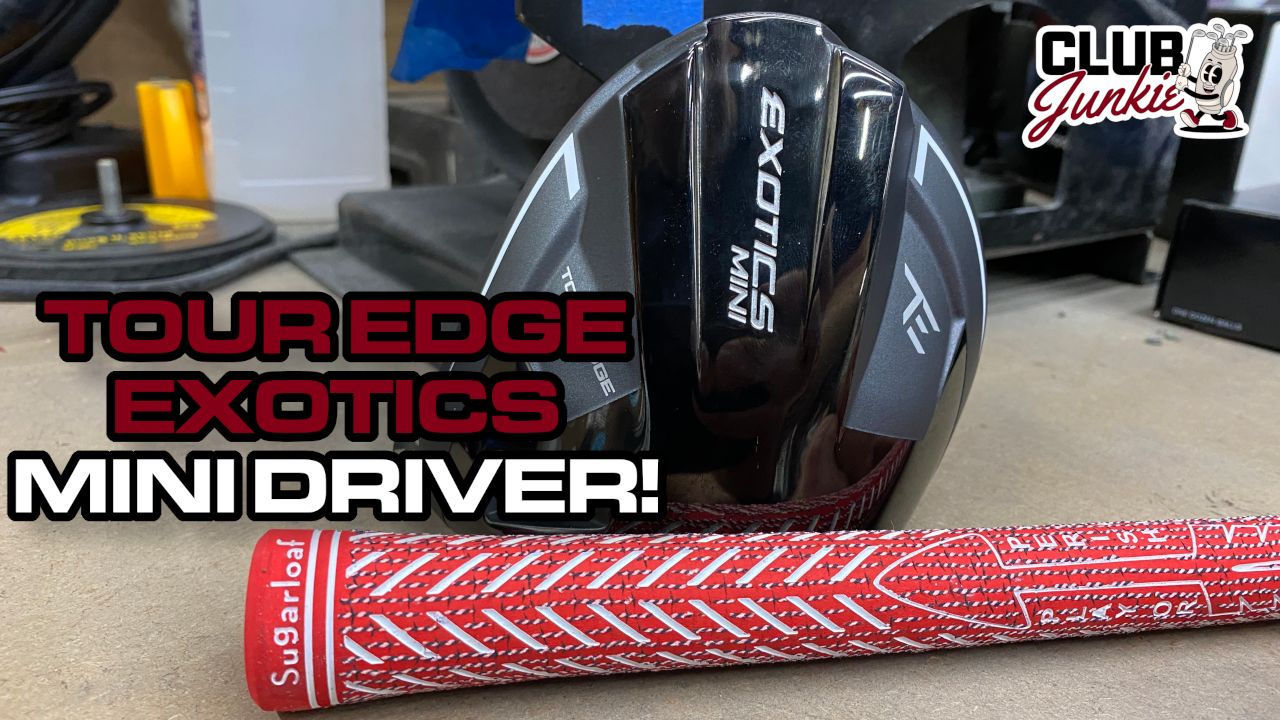
On this episode of Club Junkie, I put the new Tour Edge Exotics Mini Driver to the test and break down the performance, forgiveness, distance, and where it fits compared to a traditional driver or strong fairway wood. If you have been curious about adding a mini driver to the bag, this one is worth a look.
I also dive into the new TaylorMade Spider ZT Max putter that was recently spotted and discuss the growing zero torque putter trend. Plus, there is a closer look at the new Project X Titan Yellow shaft showing up on the PGA Tour and what makes it different from other profiles currently out there.

What’s the story behind Webb Simpson’s custom-stamped irons?

Memorial Tournament Tour Report: Rory McIlroy, Cameron Young switch up drivers, and more

Cadillac Championship Tour Report: Spieth’s sizable changes, McLaren Golf launches, and more

Russell Henley’s winning WITB: 2026 Charles Schwab Challenge

Kristoffer Reitan’s winning WITB: 2026 Truist Championship

Best irons 2026: Best irons overall, most forgiving irons, and more

J.T. Poston’s winning WITB: 2026 Memorial Tournament

Aaron Rai’s winning WITB: 2026 PGA Championship

Cameron Young’s winning WITB: 2026 Cadillac Championship

Details on Jason Day’s latest prototype Avoda iron setup


Christiaan Maas WITB 2026 (June)
Driver: TaylorMade Qi4D LS (8 degrees) Shaft: Fujikura Ventus TR Blue 6 X 3-wood: TaylorMade Qi10 (15 degrees) Shaft: Fujikura Ventus Black...


Ryan Palmer WITB 2026 (June)
Driver: Callaway Quantum Triple Diamond (9 degrees) Shaft: Project X HZRDUS Smoke Blue RDX 60 TX 3-wood: TaylorMade Qi10 (15 degrees) Shaft:...


Bud Cauley WITB 2026 (June)
Bud Cauley had >14 clubs in his bag when photographed prior to the Memorial Tournament. Driver: Titleist GTS2 (8 degrees) Shaft: Fujikura...


Hannah Green WITB 2026 (June)
Driver: Titleist GTS3 (10 degrees, D4 SureFit setting) Shaft: Mitsubishi Chemical Diamana RB 53 S 3-wood: Titleist GT3 (15 degrees,...
-
 Equipment6 days ago
Memorial Tournament Tour Report: Rory McIlroy, Cameron Young switch up drivers, and more
-
 News2 weeks ago
Russell Henley’s winning WITB: 2026 Charles Schwab Challenge
-
 Equipment3 days ago
Best irons 2026: Best irons overall, most forgiving irons, and more
-
 Whats in the Bag4 days ago
J.T. Poston’s winning WITB: 2026 Memorial Tournament
-
 Equipment1 week ago
Details on Jason Day’s latest prototype Avoda iron setup
-

 Equipment3 weeks ago
CJ Cup Byron Nelson Tour Report: Koepka and Kim’s newest putters finally get hot
-

 News2 weeks ago
Charles Schwab Challenge Tour Report: MacIntyre, Åberg and Spaun all switch putters, TaylorMade launches new Spider
-

 Equipment2 weeks ago
Details on J.J. Spaun’s surprise putter switch


Big G
Nov 16, 2022 at 6:58 am
TPI is garbage. Who listens to this garbage.
MICHAEL
Nov 16, 2022 at 6:15 pm
Why?