
Opinion & Analysis
The Wedge Guy: Buyer beware?

It was nearly 20 years ago, when a close friend and business partner suggested I sometimes shake up my blog posts by getting “deep in the weeds” with valuable information about golf equipment and the industry around it. Over a couple of beers and a great burger, we came up with my alter ego, “The Texas Wedgehog,” and his mantra, “Rootin’ out the truth.”
From time to time, I’ve donned that persona to dive into topics that are a somewhat edgy and that might seem a bit sacrilegious for a guy that has made his living in the golf equipment industry for over forty years now. But in my first life as an ad guy, one thing that I despised was advertising that was less than truthful about a product or service. I share that same set of values about the golf equipment industry.
So, today I want to share a couple of recent stories with you that seem to suggest that maybe we should approach buying golf equipment with a bit more research and exploration, rather than to just take manufacturer’s claims and published information at its face value.
This is not to demean the industry or any of its players. Golf club design and marketing is a fast-paced environment, and all golfers have benefited from the vast amount of science and manufacturing technologies that are applied to helping us hit better golf shots. There are a lot of great products for us to choose from.
But as I have noted in prior articles, there is a limit to what golf clubs can do for your game, while there are also great attributes to equipping yourself with modern and meaningful technologies. The point of today’s article is that you need to be careful and maybe inquire a bit deeper before you just assume things about the clubs you are considering, or that you have purchased. Just a couple of examples why . . .
Case Study #1 – What does “forged” really mean?
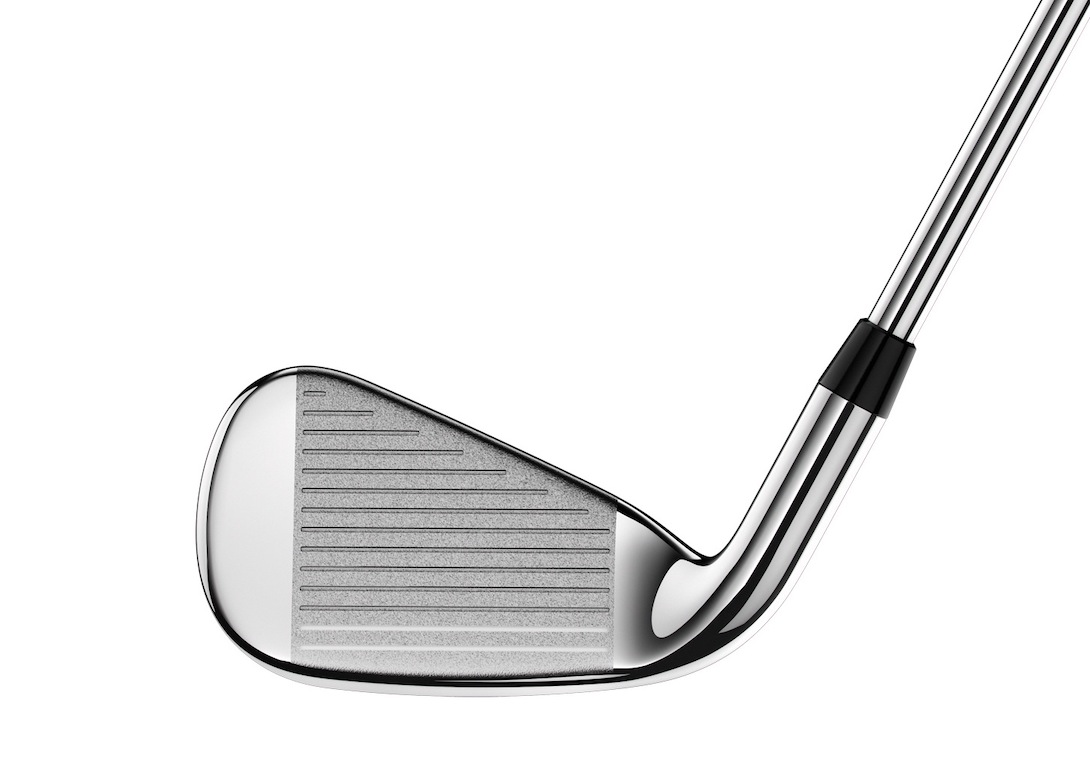
I often like to try things other companies are producing, so I recently purchased a set of modern blade irons – you know, the ones that claim to have added technologies to make blade style irons more “techy.” And because I’m a die-hard fan of forged irons, I selected a forged model, evidenced by the fact that “FORGED” was stamped right there on the hosel.
The first thing I did when I unpacked them was to run them through my loft/lie machine to make sure the lofts were accurate and to adjust the lie angles to my own spec of 2* flat. At least that was my goal.
I’ve adjusted lie angles on hundreds of clubs in my golf life, and anyone who has done that can quickly tell the difference between a forged head and a cast one. Forgings bend easily, and most castings are brutally hard and unmalleable. These were definitely not fully forged, as it took all my strength to move the lie angles even two degrees; at most they only have a forged face in their multi-piece construction. To me, putting “FORGED” on the hosel is more than misleading, it is downright untruthful. So, now I wonder if I can trust anything else this company says about its products?
Case Study #2 – Shaft flexes can be anything
My club’s general manager asked me why I thought his new irons from Company ‘A’ were performing so differently than his previous irons from Company ‘B’. Though both were similar modern blade designs, and both had shafts that were indicated as “stiff” flex, he was hitting the new irons out on the toe consistently and much higher. So, I suggested he bring both sets to the Edison shop and we’d put them through all the measuring devices to see just what might be causing that issue.
I will add that the two sets of irons had different shafts in them, the first set being one major shaft brand’s mid-weight steel shaft in a “stiff” flex, the newer set having a lighter weight shaft (by 10 grams) from a different major brand shaft company, also marked “stiff.”
But that’s where the similarity ended. Once I put them on the Mitchell Digital Frequency Analyzer, his performance issue came very clear. The newer set of irons delivered frequency readings of 28 to 35 CPM lower than his earlier set, which equates to three full flexes! So, with that much softer shaft in his new set, he was obviously experiencing more “shaft droop” through impact, which was causing the toe hit pattern and higher ball flight.
A major challenge of the golf club industry is that there are no recognized “standards” for anything. Not lofts, not lengths, not in shaft flex designations. Heck, companies don’t even agree on how club length should be measured, much less what a standard length might be. That makes it tough to compare one club to another in a fair manner.
My goal with this blog is to share things I’ve learned in a lifetime of golf and 40+ years in the golf equipment industry. These case studies definitely prove that you should be very careful when purchasing equipment to make sure you get what you think you bought.
If I were a consumer, I would always insist that a new club be put on measuring equipment before I ever hit it to make sure I’m getting what I think I purchased.




This past Monday, I played in the U.S. Amateur local qualifier at Rock Creek Country Club in Portland, Oregon. A full tee sheet from 7:30 a.m. to 1:55 p.m., the top 11 scores would make it to the U.S. Amateur final qualifying.
I teed off at 10:48 a.m.. With the 7:30 am tee time, you can get a feel for the leaders’ pace, and they were off and running on the challenging setup at Rock Creek.
View this post on Instagram
Getting to the highlight of the round on the par five 17th, a drive up the left side and 212 yards left to the front hole location. I took out a 5-iron with plans of middle of the green. The ball ended up 8 feet left of the hole, pin high. A slight downhill putt dropped in for an eagle 3 on the 17th. With the cut line looking to be anywhere from -2 to even par. This was the boost I had been waiting for all day.
With making par from the trees on 18, it was time to wait for a potential playoff with a posted score of one under par 71.
Three hours later, it was playoff time. 8 players for 6 spots. I made par on the playoff hole, which was good enough to advance to the U.S. Amateur final qualifying in July. USGA qualifiers sure deliver on all of the emotions in golf!
Club Junkie
Building my 2026 gamer WITB: Ranking the contenders and new putter projects – Club Junkie Podcast

The annual What’s In The Bag build is underway, and on this episode of Club Junkie, Brian breaks down the clubs currently leading the race for a spot in his 2026 gamer setup. From drivers and fairway woods to irons, wedges, and shafts, he ranks the equipment that’s performing best and explains what’s separating the front runners from the rest of the field.
Brian also heads into the workshop to discuss several putter projects currently on the bench. From head options and shaft choices to build ideas and testing plans, he shares what he’s working on and which putters could become serious contenders for the bag this season.
If you’re a gear junkie who loves equipment testing, club building, and the never-ending pursuit of the perfect setup, this episode is for you.
Follow Club Junkie:
Instagram: @clubjunkiepod
TikTok: @clubjunkiepod
Threads: @clubjunkiepod
X: @ClubJunkiePod
Club Junkie
Tour Edge Exotics mini driver review + TaylorMade Spider ZT Max first look – Club Junkie

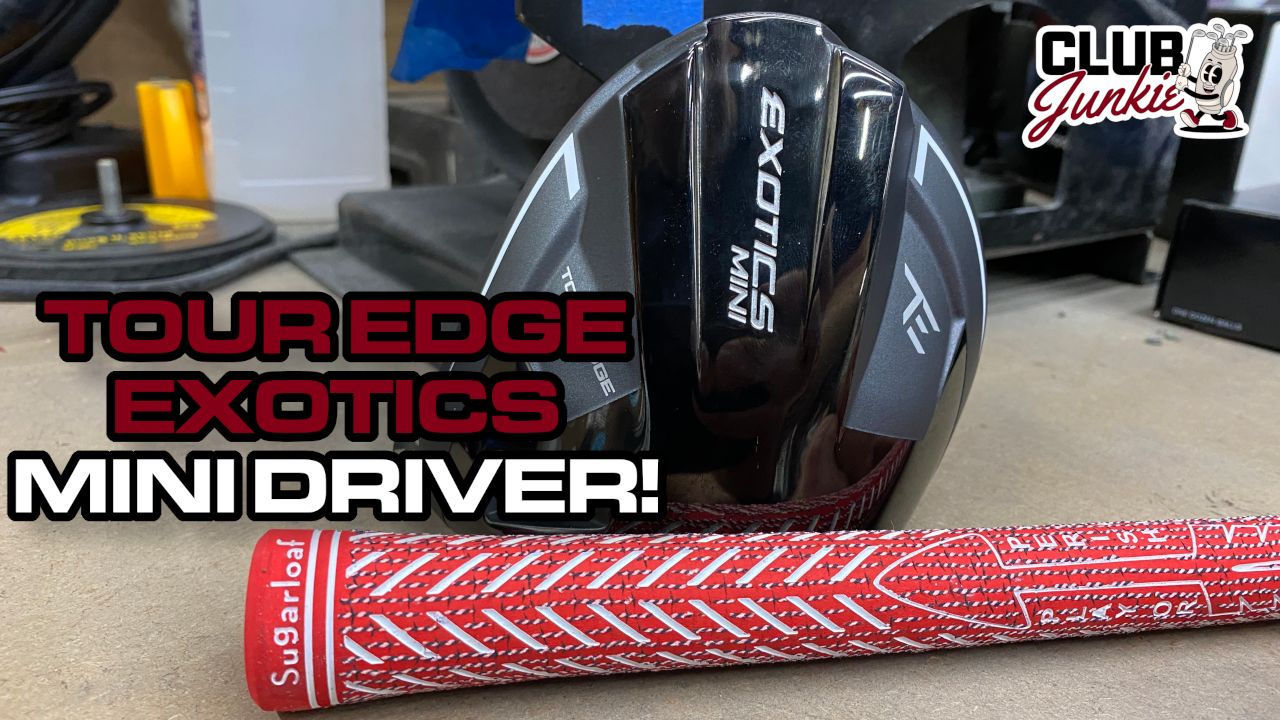
On this episode of Club Junkie, I put the new Tour Edge Exotics Mini Driver to the test and break down the performance, forgiveness, distance, and where it fits compared to a traditional driver or strong fairway wood. If you have been curious about adding a mini driver to the bag, this one is worth a look.
I also dive into the new TaylorMade Spider ZT Max putter that was recently spotted and discuss the growing zero torque putter trend. Plus, there is a closer look at the new Project X Titan Yellow shaft showing up on the PGA Tour and what makes it different from other profiles currently out there.

What’s the story behind Webb Simpson’s custom-stamped irons?

Memorial Tournament Tour Report: Rory McIlroy, Cameron Young switch up drivers, and more

Cadillac Championship Tour Report: Spieth’s sizable changes, McLaren Golf launches, and more

Russell Henley’s winning WITB: 2026 Charles Schwab Challenge

Kristoffer Reitan’s winning WITB: 2026 Truist Championship

Best irons 2026: Best irons overall, most forgiving irons, and more

J.T. Poston’s winning WITB: 2026 Memorial Tournament

Aaron Rai’s winning WITB: 2026 PGA Championship

Cameron Young’s winning WITB: 2026 Cadillac Championship

Details on Jason Day’s latest prototype Avoda iron setup


Ryan Palmer WITB 2026 (June)
Driver: Callaway Quantum Triple Diamond (9 degrees) Shaft: Project X HZRDUS Smoke Blue RDX 60 TX 3-wood: TaylorMade Qi10 (15 degrees) Shaft:...


Bud Cauley WITB 2026 (June)
Bud Cauley had >14 clubs in his bag when photographed prior to the Memorial Tournament. Driver: Titleist GTS2 (8 degrees) Shaft: Fujikura...


Hannah Green WITB 2026 (June)
Driver: Titleist GTS3 (10 degrees, D4 SureFit setting) Shaft: Mitsubishi Chemical Diamana RB 53 S 3-wood: Titleist GT3 (15 degrees,...


Asterisk Talley WITB 2026 (June)
Driver: TaylorMade Qi4D (9 degrees) Shaft: Fujikura Ventus Blue 6 S 3-wood: TaylorMade Qi4D (16.5 degrees) Shaft: Fujikura Ventus Blue...
-
 Equipment6 days ago
Memorial Tournament Tour Report: Rory McIlroy, Cameron Young switch up drivers, and more
-
 News2 weeks ago
Russell Henley’s winning WITB: 2026 Charles Schwab Challenge
-
 Equipment3 days ago
Best irons 2026: Best irons overall, most forgiving irons, and more
-
 Whats in the Bag4 days ago
J.T. Poston’s winning WITB: 2026 Memorial Tournament
-
 Equipment1 week ago
Details on Jason Day’s latest prototype Avoda iron setup
-

 Equipment3 weeks ago
CJ Cup Byron Nelson Tour Report: Koepka and Kim’s newest putters finally get hot
-

 News2 weeks ago
Charles Schwab Challenge Tour Report: MacIntyre, Åberg and Spaun all switch putters, TaylorMade launches new Spider
-

 Equipment2 weeks ago
Details on J.J. Spaun’s surprise putter switch


Mike
Jul 24, 2022 at 10:54 pm
I agree with many of your points regarding the lack of standards. However, when it comes to shaft frequencies, I think it’s important to understand that CPM readings do not necessarily equate between different brands and types of shafts. Your statement that a difference 28 to 35 CPM’s equates to 3 flexes is true ONLY if you are talking about the same model shaft! In your example, you are comparing different shaft models, so it is not a fair statement.
I have had a frequency analyzer for over 30 years, and have learned to use the term “adjustment factor” when comparing different shafts. Without getting too technical, I have used single frequency matching in my clubs, where I build all clucs to the same frequency…no need to get into a discussion about that here :-). In the past, I had a set of clubs shafted with TT Dynamic shafts measuring 300 CPM. When the Rifle shafts came out in the 1990’s, I started testing them and found that at 300 CPM they played much stiffer than the TT Dynamic shafts. Through trial and error, I learned that a Rifle shaft built to 291 CPM felt and played similar to my 300 CPM TT Dynamic shafts. Hence, I would call that a 9 cycle adjustment factor. Today, I am using a particular model of Fiberspeed iron shafts which I build at 277 CM, a 23 cycle adjustment factor. If I were to build the Fiberspeed shafts to 300 CPM I would find them to be WAY too stiff!
Again, I mention this so that people don’t simply use a CPM number to evaluate or compare the stiffness of different shafts.
MICHAEL
Jul 23, 2022 at 6:03 pm
Had a TERRIBLE experience w/ Mizuno. Ordered an iron set 2 deg upright & I couldn’t hit them for crap; every shot felt as if it were hit off the toe. Took them back to Golf Galaxy where I purchased them. They put all 7 irons on the lie angle machine & ALL were 2 to 3 degrees flatter than I ordered. They called Mizuno & Mizuno tried to blame it on them (even though the order form CLEARLY stated 2 deg upright). The Galaxy staff got into a huge yelling match on the phone w/ Mizuno (I witnessed all of this) before Mizuno FINALLY agreed to take the irons back & adjust them properly.
I know many folks swear by Mizuno but after that experience I never looked at another Mizuno club. The lesson here: when you receive your irons, as the article says, CHECK THEM!!!
Boisepro59
Jul 26, 2022 at 11:04 am
Have been in the industry 40 years and have to say Michael that your experience with Mizuno is extremely rare.
Having some experience with Golf Galaxy I would say the fault would lie more with them
than Mizuno, especially if the GG staff was “yelling” on the phone.
Ryan
Jul 22, 2022 at 12:35 pm
I’m betting TM
Geoffrey
Jul 22, 2022 at 11:04 am
We need to know the names of companies putting “forged” on a club that is perhaps only partly forged. Please name names.
Brian
Jul 23, 2022 at 12:34 pm
I mean…they’re pretty obvious. TM does it with their hollow irons, same with Callaway and their Apex/Pro line. Same with Titleist’s TS100 and Srixon ZX-5. Pretty much any player’s distance irons, with the exception of Mizuno’s 921 Forged which is a true one-piece forging, are multi-piece constructions where only the face or body is actually forged.
Mr. Amazed
Jul 21, 2022 at 5:21 pm
Groundbreaking
SpaceGolfer
Jul 21, 2022 at 4:32 am
Well it’s certainly not a news that there are assembled heads where only the face is forged…but usual is also declared into the specs…unless is intentionally not.
Hard to believe that with your knowledge of the market you were not aware of this.
If it’s a case of misleading advertising then name the company.
Andy
Jul 20, 2022 at 1:23 pm
Call the companies out!