
Opinion & Analysis
Why many former elite college golfers quit the game


About a year ago, I was on social media connecting with college friends when I noticed something: many of these former elite college players didn’t appear to play any golf anymore. A couple months later, I brought the topic up to Dr. Laura Upenieks at Baylor University and a study was born to examine the motivations of mid-amateur golfers.
With the support of Golf Ontario, Reg Millage, Jussi Pitkanen (Finnish Women’s National Coach) and Khan Pullen of Australia, we collected data from 69 mid-amateur players trying to better understand key elements of their development and motivation. This included 20 questions over a 5-minute survey which covered everything from their family, their demographics, their competitive history, and their current relationship with golf.
So what did we find? In a forthcoming study entitled, “A Lifespan Approach to the Social Correlates of Motivations of Elite Mid-Amateur Golf Competitors in North America,” forthcoming in the International Journal of Golf Science, we found that the players who still competed in elite mid-amateur competition still showed a healthy love of the game of golf. According to our findings, 58% of our respondents were motivated by the prestige of winning, and 37% by the fact that their skill level allows them to be well-regarded. In addition, 54% of the sample was motivated to feel good about oneself. This suggests that some level of extrinsic motivation was present, but that many of our respondents were not motivated by extrinsic factors.
On the other hand, almost 75% of our sample reported that they derived personal satisfaction from mastering the game (the highest level of agreement), and 62% reported competing because playing competitive golf was an integral part of life. These latter statistics suggest that more than anything else, those who stayed involved in elite mid-amateur competition were driven by extrinsic motives.
The study shows an interesting counter narrative to the current thought of many coaches and parents, which pushes junior golfers to use golf as a career and to secure a scholarship. The evidence suggests that this creates the wrong motivations and can eventually drive people away from golf. In fact, we found that those who continued to play elite mid-amateur golf reported very high levels of intrinsic motivation, motivated by a desire to master the game.
So many of my former college teammates no longer play our wonderful game due to burnout, pressure, and/or the failure of not ascending to the PGA Tour. As researchers, Laura and I love this game and hope that this research can help start an informed discussion about why juniors should play golf. Our study shows that encouraging junior golfers to play for reasons that are intrinsically motivated and do not involve capitulating to the goals set forth by parents, coaches, or sport organizers is a good place to start.



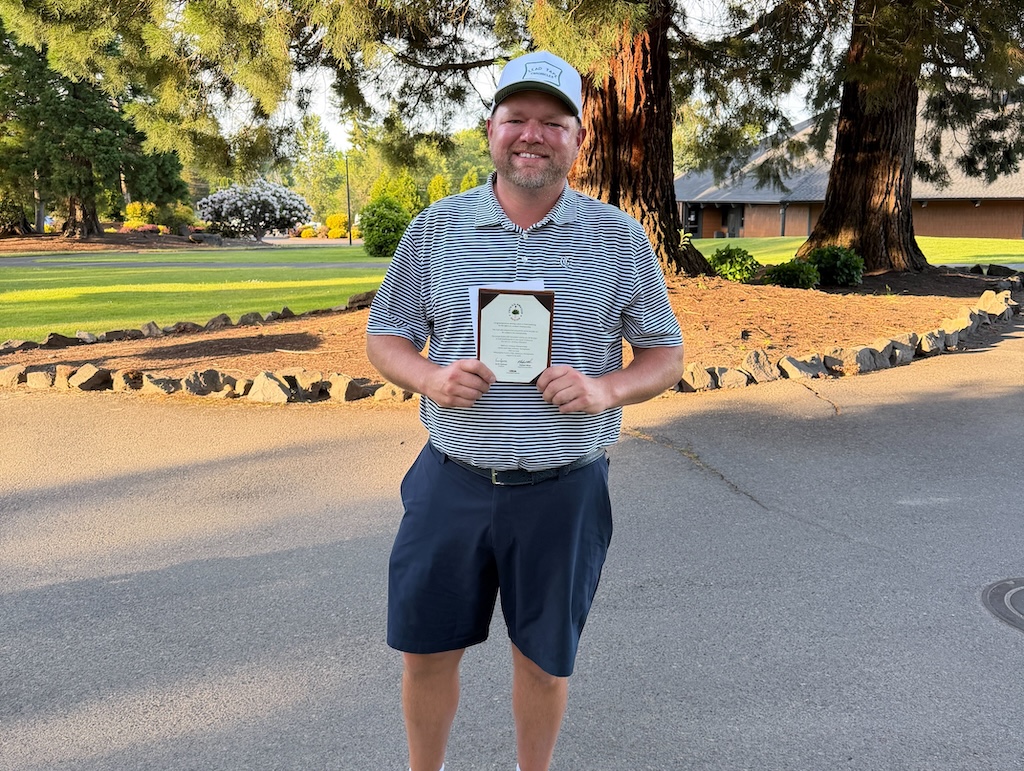
This past Monday, I played in the U.S. Amateur local qualifier at Rock Creek Country Club in Portland, Oregon. A full tee sheet from 7:30 a.m. to 1:55 p.m., the top 11 scores would make it to the U.S. Amateur final qualifying.
I teed off at 10:48 a.m.. With the 7:30 am tee time, you can get a feel for the leaders’ pace, and they were off and running on the challenging setup at Rock Creek.
View this post on Instagram
Getting to the highlight of the round on the par five 17th, a drive up the left side and 212 yards left to the front hole location. I took out a 5-iron with plans of middle of the green. The ball ended up 8 feet left of the hole, pin high. A slight downhill putt dropped in for an eagle 3 on the 17th. With the cut line looking to be anywhere from -2 to even par. This was the boost I had been waiting for all day.
With making par from the trees on 18, it was time to wait for a potential playoff with a posted score of one under par 71.
Three hours later, it was playoff time. 8 players for 6 spots. I made par on the playoff hole, which was good enough to advance to the U.S. Amateur final qualifying in July. USGA qualifiers sure deliver on all of the emotions in golf!
Club Junkie
Building my 2026 gamer WITB: Ranking the contenders and new putter projects – Club Junkie Podcast

The annual What’s In The Bag build is underway, and on this episode of Club Junkie, Brian breaks down the clubs currently leading the race for a spot in his 2026 gamer setup. From drivers and fairway woods to irons, wedges, and shafts, he ranks the equipment that’s performing best and explains what’s separating the front runners from the rest of the field.
Brian also heads into the workshop to discuss several putter projects currently on the bench. From head options and shaft choices to build ideas and testing plans, he shares what he’s working on and which putters could become serious contenders for the bag this season.
If you’re a gear junkie who loves equipment testing, club building, and the never-ending pursuit of the perfect setup, this episode is for you.
Follow Club Junkie:
Instagram: @clubjunkiepod
TikTok: @clubjunkiepod
Threads: @clubjunkiepod
X: @ClubJunkiePod
Club Junkie
Tour Edge Exotics mini driver review + TaylorMade Spider ZT Max first look – Club Junkie

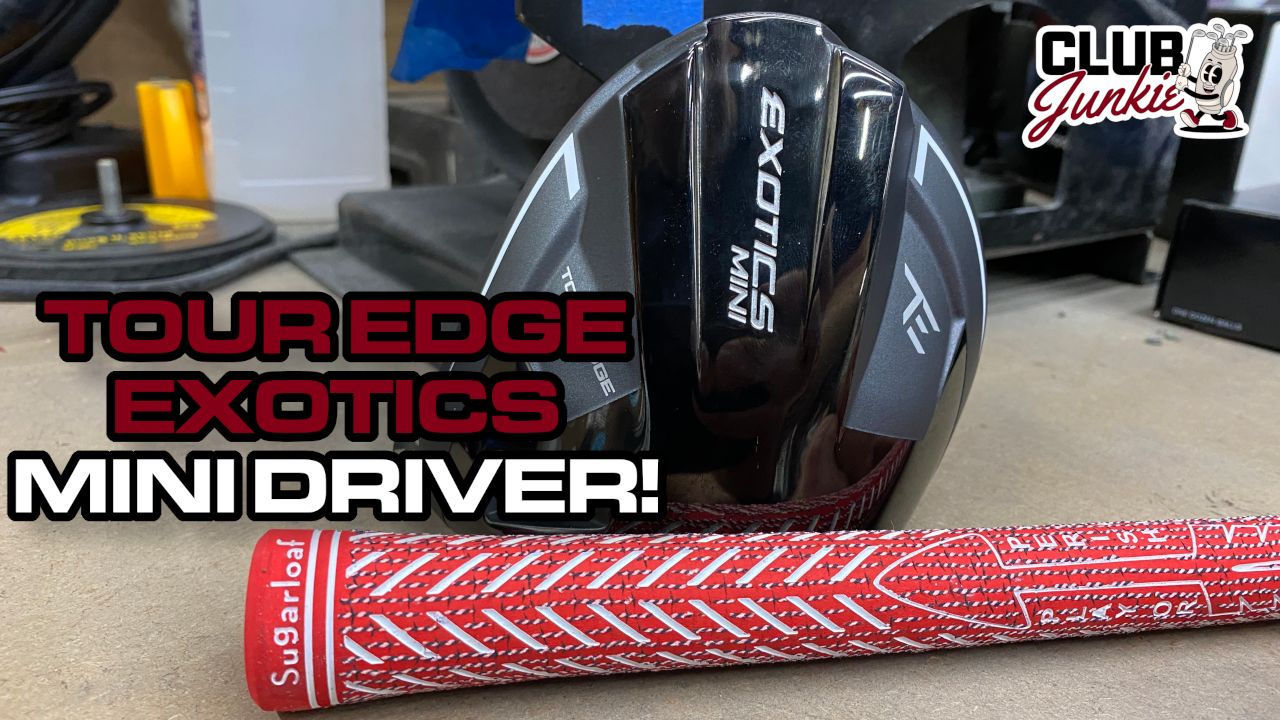
On this episode of Club Junkie, I put the new Tour Edge Exotics Mini Driver to the test and break down the performance, forgiveness, distance, and where it fits compared to a traditional driver or strong fairway wood. If you have been curious about adding a mini driver to the bag, this one is worth a look.
I also dive into the new TaylorMade Spider ZT Max putter that was recently spotted and discuss the growing zero torque putter trend. Plus, there is a closer look at the new Project X Titan Yellow shaft showing up on the PGA Tour and what makes it different from other profiles currently out there.

Justin Rose WITB 2026 (April): Full WITB breakdown with new McLaren irons

What’s the story behind Webb Simpson’s custom-stamped irons?

Memorial Tournament Tour Report: Rory McIlroy, Cameron Young switch up drivers, and more

Cadillac Championship Tour Report: Spieth’s sizable changes, McLaren Golf launches, and more

Russell Henley’s winning WITB: 2026 Charles Schwab Challenge

Kristoffer Reitan’s winning WITB: 2026 Truist Championship

Best irons 2026: Best irons overall, most forgiving irons, and more

J.T. Poston’s winning WITB: 2026 Memorial Tournament

Aaron Rai’s winning WITB: 2026 PGA Championship

Cameron Young’s winning WITB: 2026 Cadillac Championship


Bud Cauley WITB 2026 (June)
Bud Cauley had >14 clubs in his bag when photographed prior to the Memorial Tournament. Driver: Titleist GTS2 (8 degrees) Shaft: Fujikura...


Hannah Green WITB 2026 (June)
Driver: Titleist GTS3 (10 degrees, D4 SureFit setting) Shaft: Mitsubishi Chemical Diamana RB 53 S 3-wood: Titleist GT3 (15 degrees,...


Asterisk Talley WITB 2026 (June)
Driver: TaylorMade Qi4D (9 degrees) Shaft: Fujikura Ventus Blue 6 S 3-wood: TaylorMade Qi4D (16.5 degrees) Shaft: Fujikura Ventus Blue...


Brianna Do WITB 2026 (June)
Driver: Callaway Quantum Triple Diamond (9 degrees) Shaft: KBS PGW 3-wood: Callaway Elyte Titanium (15 degrees) Shaft: KBS PGW 5-wood:...
-
 Equipment6 days ago
Memorial Tournament Tour Report: Rory McIlroy, Cameron Young switch up drivers, and more
-
 News2 weeks ago
Russell Henley’s winning WITB: 2026 Charles Schwab Challenge
-
 Equipment3 days ago
Best irons 2026: Best irons overall, most forgiving irons, and more
-
 Whats in the Bag4 days ago
J.T. Poston’s winning WITB: 2026 Memorial Tournament
-

 Equipment1 week ago
Details on Jason Day’s latest prototype Avoda iron setup
-

 Equipment3 weeks ago
CJ Cup Byron Nelson Tour Report: Koepka and Kim’s newest putters finally get hot
-

 News2 weeks ago
Charles Schwab Challenge Tour Report: MacIntyre, Åberg and Spaun all switch putters, TaylorMade launches new Spider
-

 Equipment2 weeks ago
Details on J.J. Spaun’s surprise putter switch


ChipNRun
May 17, 2022 at 8:05 pm
The study reached out to mid-amateur players to find out what motivated them to stay active in golf.
Then, the study over-extrapolates, namely, uses the findings to guess about the motivations of those not included in the study, namely former college golfers who no longer play the game.
A more sound way to build the study. Select the following groups:
* 70 people who still play in mid-amateur events.
* 70 golfers with college playing experience who have quit the game. (selecting this group would require quota sampling)
Compare the Mid-Amateur vs. Quit Golf group to see the differences between the two groups.
As study stand now, lots of “noise” – unexplainable patterns – limit effectiveness of study.
(I have chaired 7 doctoral dissertations in the management area, so I know a bit about structuring valid research projects).
namewitheldbecausecoachknows
May 10, 2022 at 4:23 pm
Too many repetitive motion injuries from practicing so much was my biggest reason. You do not have to hit balls or play for 4 hours per day to get better.
Professor
May 12, 2022 at 9:10 am
Amen! I also believe there’s not enough attention paid to the mental side of golf. When you hit a bad shot it’s either swing mechanics or equipment when in reality it’s more likely lack of intention and/or commitment to the shot. Also, learning to control your breathing and heart rate and playing under pressure. And of course, learning to manage expectations.
phizzy
May 9, 2022 at 5:29 pm
Played at a D2 college for a year and the party lifestyle and health problems derailed my dreams to try and make on the PGA Tour. My love for the game is as strong as however after two organ transplants, herniated discs and a bad left knee. I will play for as long as I can until my body gives out or my mind goes.
Carl Spackler
May 8, 2022 at 6:27 am
I played at a high level between the ages of 14-17, burned out, took academic scholarship and didn’t play golf in college. Had 40 schools recruiting me for golf. I was sick of it. Fell in love with again while in college and today 30 years later I still love studying the game and playing to a scratch handicap. I think not playing golf in college the best decision I could have ever made. I was a really good player but was never going to be on TV. I focused on my eduction and build a professional career. All of my friends who played in college quite playing the game. I still play 20+ times a year and still enjoy every minute of it.
Duh
May 8, 2022 at 12:12 am
This is no shock. Not having the time to play , means it takes 3/4 holes to settle in. Well. That’s now grinding out a 75-79. For someone who once broke par 75 % of the time , shooting 75-79 and having to grind to do it , is just hell on earth.
It’s no different than anything else. Ignorance is bliss. The 18 handicap doesn’t know what he’s missing. The former D1 star , now insurance salesman with 3 kids does. And it’s akin to torcher to be around the game and never taste that sweet adrenaline rush of a heater again.
F
May 7, 2022 at 12:22 pm
The pyramid is narrow at the top for golf to be a steady income as a player is why most of them quit, not because they’re bad players, it’s because there’s only so few spaces up there and one bad shot can knock you out
Ivan Morris
May 7, 2022 at 5:16 am
No surprises here but I would like to read the whole report. It’s obvious that those with the propensity to quit would never have succeeded anyway. There are thousands upon thousands of young golfers good enough ball hitters to play on the PGA Tour but will never get there because they do not have the extremely rare mental capacity required. I like to win as much as anybody (and did!) but playing well and endeavouring to ‘master the game’ rather than winning was, indeed, a better motivation. I’m 77 now and will only quit when my ageing body ‘gives up’ first. I have had a few serious injury setbacks but I survived them and so has my golf, which at its most basic level is ‘too good for me physically and psychologically to give it up’. It’s my way of life. Golf has enriched my life in spite of some ‘big disappointments’ – in the end, triumphs and failures are only signposts. In golf, it is ALWAYS the next shot that counts. These days, I am consoled and motivated by being able to beat my age regularly if I play off tees that suit my 200-yards drives. As long as I can do that I’ll never give up golf! Keep up the good work, Brendan, give me a shout sometime. My email is attached.
Ray Neese
May 11, 2022 at 5:17 pm
Well said. Golf has given me going on 47 years this year plenty of joy and frustration. Life does get in the way and that’s why in the older days divorce golfers sacrificed either a wife, children or both to pursue their dreams. I love the challenge of golf for myself and enjoy once a week rounds with my friends, music and a few cold ones. I too will play until my bodies dictates I quit. At 62 I have many years until I can shoot my age or try to anyway.
Vas
May 6, 2022 at 2:56 pm
As someone who had a cup of coffee in D1 golf, it was burnout from the endless “relief or frustration” cycle that did me in. Funny story though… tearing up my shoulder in a different sport killed my plus handicap days, but I love golf more than ever these days. Not sure if it’s a blessing or a curse!
Cdub
May 5, 2022 at 10:17 pm
Refreshing article. While I would never consider myself elite (played at top 15 d3 level), I don’t find golf much fun anymore in my 40’s. I feel like my brain is ingrained with visuals of good shots that I just can’t execute anymore after many surgeries and middle aged life. This game is hard.
Jon
May 5, 2022 at 2:19 pm
For a mid am who was once a elite player, as life gets in the way and your no longer able to spend the time to keep your game , many would rather not play than be continually disappointed grinding out an 80. What used to be satisfying and rewarding is now just disappointment and anger
lenny
May 5, 2022 at 3:19 pm
Certainly true in my experience as well, but it can be overcome. I wasn’t “elite” by any measure, but I played competitively (DIII) through college. When I moved on to grad school, I only found time to play a handful of times a year, and practicing was non-existent other than putting on the carpet. It was a huge and frustrating adjustment coming to terms with the fact that it wasn’t reasonable to hold myself to the same standards and expectations anymore.
Tyler
May 6, 2022 at 10:04 am
I played at a low level D1 school and your last statement is my exact reason for playing less and less. I still expect low 70’s and it is just not possible with out continual practice that’s not possible with family and working a real job.
Mower
May 5, 2022 at 7:01 pm
Yeah, f*** golf.