
Opinion & Analysis
The Wedge Guy: A discussion of swingweight (Part 1: History)

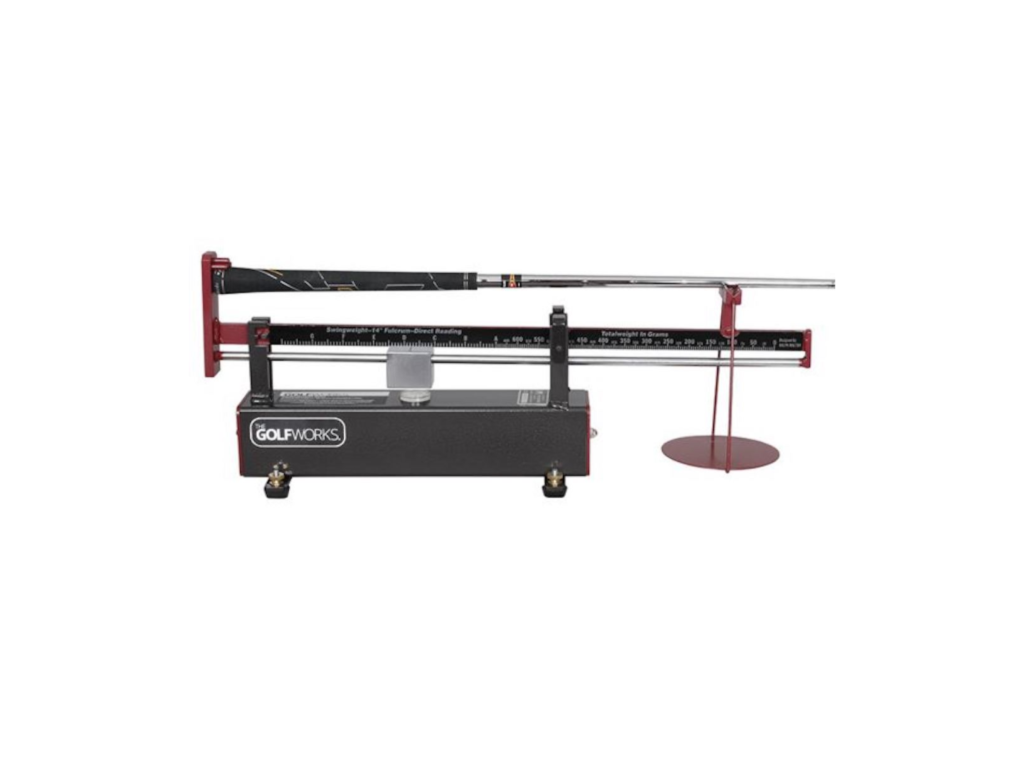
For the twenty-five plus years, I’ve been in the equipment business, one of the most commonly-asked-about subjects is that of swingweight. It mostly comes up when a golfer is requesting over-length clubs or is contemplating changing to graphite shafts. So, I’m going to direct a discussion of this topic. Please chime in to let me know your thoughts and input.
The concept of swingweight was developed by custom clubmaker Kenneth Smith about 60 years ago. He was trying to figure out how to “match” clubs, and settled on balance point as a way to do so. His swingweight scale had a “hook” to hold the grip end of the club, and a fulcrum 14 inches from the butt. He created an arbitrary scale of measure that consisted of letters A-F, each letter divided into ten segments, i.e. D1, D2, D3, etc. When he measured the clubs of the day, he found most of them to be in the D2 range, so that became recognized as the “standard” for men’s woods and irons.
The golf club industry quickly adopted this method of “matching” clubs…well, because they had no other way! Because the longer the shaft, the heavier the head feels, clubheads increase in weight as the shaft gets shorter, so that the swingweight will stay the same. The theory then, and now, is that if the swingweight is the same, the clubs will feel essentially the same in the golfer’s hands.
But let’s look at what has happened since Kenneth Smith invented the swingweight scale.
- Shafts have gotten longer by at least an inch. In the 1940s, a “standard” driver was only 42-43” long – now most are 45” if not more.
- Shafts have gotten much lighter. Those old steel shafts weighed 150 grams or more, compared to modern graphite driver shafts in the 55-75 gram range.
- Golfers have gotten stronger while clubs have gotten much lighter overall, but swingweights have always adhered to that D2 “standard.”
You must understand two very important factors about swingweight.
First, a “point” of swingweight–such as D2 to D3–is NOT a unit of measure like an ounce or gram. It takes much less weight to shift a driver one point, for example, than it does a wedge, because the shaft length is such an influence on this measure. Generally, the weight of a single dollar bill is a swingweight point on a driver—not much, huh?
And secondly, the overall weight of the club is at least as important as swingweight. Jack Nicklaus was noted for playing a driver in his prime that was 13.25 oz in overall weight–very heavy even for that time (most are about 10.5 oz now!), while his swingweight was only C9, considered very light. S
Swingweight by itself is a rather worthless piece of information!
So, that should get this discussion going. I’ll give you a few days to toss out your questions and comments on this subject, and then I’ll begin to address my own theories on swingweight for YOUR clubs.
Sound off, readers!




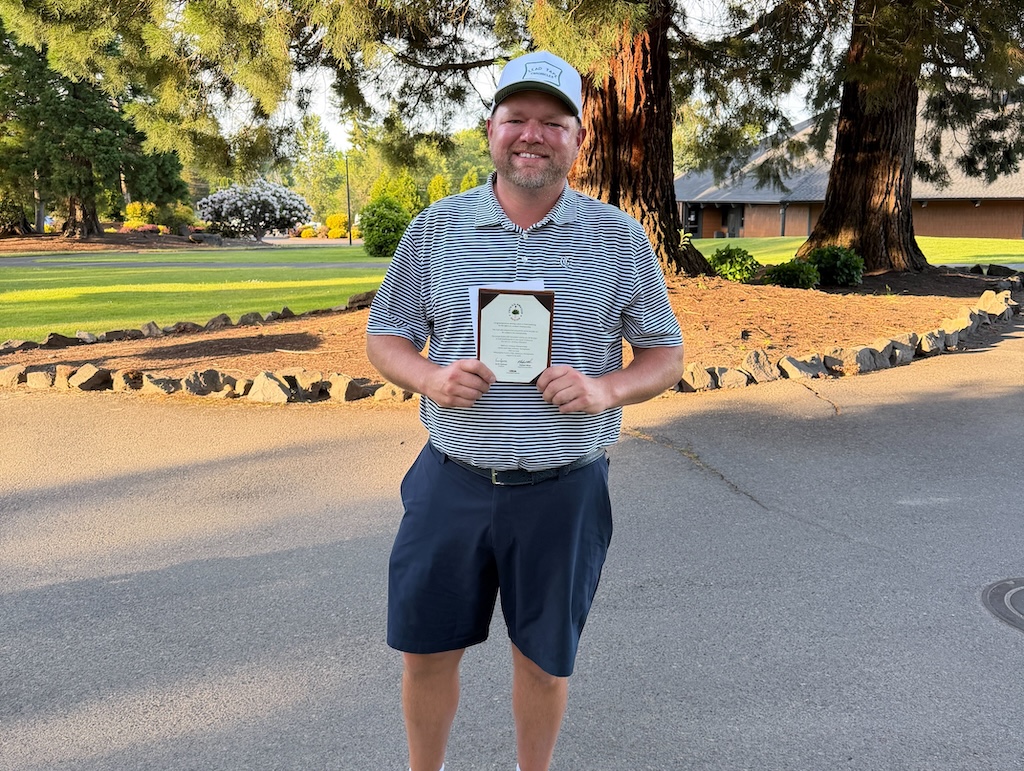
This past Monday, I played in the U.S. Amateur local qualifier at Rock Creek Country Club in Portland, Oregon. A full tee sheet from 7:30 a.m. to 1:55 p.m., the top 11 scores would make it to the U.S. Amateur final qualifying.
I teed off at 10:48 a.m.. With the 7:30 am tee time, you can get a feel for the leaders’ pace, and they were off and running on the challenging setup at Rock Creek.
View this post on Instagram
Getting to the highlight of the round on the par five 17th, a drive up the left side and 212 yards left to the front hole location. I took out a 5-iron with plans of middle of the green. The ball ended up 8 feet left of the hole, pin high. A slight downhill putt dropped in for an eagle 3 on the 17th. With the cut line looking to be anywhere from -2 to even par. This was the boost I had been waiting for all day.
With making par from the trees on 18, it was time to wait for a potential playoff with a posted score of one under par 71.
Three hours later, it was playoff time. 8 players for 6 spots. I made par on the playoff hole, which was good enough to advance to the U.S. Amateur final qualifying in July. USGA qualifiers sure deliver on all of the emotions in golf!
Club Junkie
Building my 2026 gamer WITB: Ranking the contenders and new putter projects – Club Junkie Podcast

The annual What’s In The Bag build is underway, and on this episode of Club Junkie, Brian breaks down the clubs currently leading the race for a spot in his 2026 gamer setup. From drivers and fairway woods to irons, wedges, and shafts, he ranks the equipment that’s performing best and explains what’s separating the front runners from the rest of the field.
Brian also heads into the workshop to discuss several putter projects currently on the bench. From head options and shaft choices to build ideas and testing plans, he shares what he’s working on and which putters could become serious contenders for the bag this season.
If you’re a gear junkie who loves equipment testing, club building, and the never-ending pursuit of the perfect setup, this episode is for you.
Follow Club Junkie:
Instagram: @clubjunkiepod
TikTok: @clubjunkiepod
Threads: @clubjunkiepod
X: @ClubJunkiePod
Club Junkie
Tour Edge Exotics mini driver review + TaylorMade Spider ZT Max first look – Club Junkie

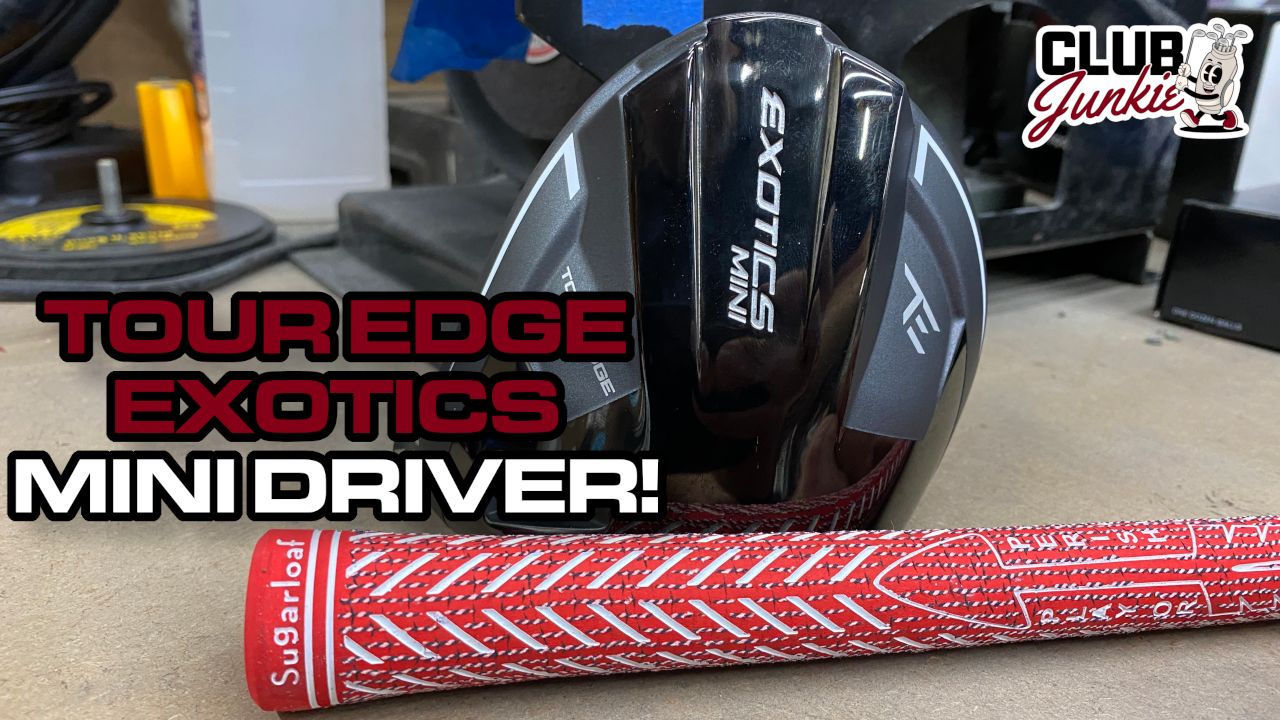
On this episode of Club Junkie, I put the new Tour Edge Exotics Mini Driver to the test and break down the performance, forgiveness, distance, and where it fits compared to a traditional driver or strong fairway wood. If you have been curious about adding a mini driver to the bag, this one is worth a look.
I also dive into the new TaylorMade Spider ZT Max putter that was recently spotted and discuss the growing zero torque putter trend. Plus, there is a closer look at the new Project X Titan Yellow shaft showing up on the PGA Tour and what makes it different from other profiles currently out there.

Justin Rose WITB 2026 (April): Full WITB breakdown with new McLaren irons

What’s the story behind Webb Simpson’s custom-stamped irons?

Memorial Tournament Tour Report: Rory McIlroy, Cameron Young switch up drivers, and more

Cadillac Championship Tour Report: Spieth’s sizable changes, McLaren Golf launches, and more

Russell Henley’s winning WITB: 2026 Charles Schwab Challenge

Kristoffer Reitan’s winning WITB: 2026 Truist Championship

Best irons 2026: Best irons overall, most forgiving irons, and more

J.T. Poston’s winning WITB: 2026 Memorial Tournament

Aaron Rai’s winning WITB: 2026 PGA Championship

Cameron Young’s winning WITB: 2026 Cadillac Championship


Ryan Palmer WITB 2026 (June)
Driver: Callaway Quantum Triple Diamond (9 degrees) Shaft: Project X HZRDUS Smoke Blue RDX 60 TX 3-wood: TaylorMade Qi10 (15 degrees) Shaft:...


Bud Cauley WITB 2026 (June)
Bud Cauley had >14 clubs in his bag when photographed prior to the Memorial Tournament. Driver: Titleist GTS2 (8 degrees) Shaft: Fujikura...


Hannah Green WITB 2026 (June)
Driver: Titleist GTS3 (10 degrees, D4 SureFit setting) Shaft: Mitsubishi Chemical Diamana RB 53 S 3-wood: Titleist GT3 (15 degrees,...


Asterisk Talley WITB 2026 (June)
Driver: TaylorMade Qi4D (9 degrees) Shaft: Fujikura Ventus Blue 6 S 3-wood: TaylorMade Qi4D (16.5 degrees) Shaft: Fujikura Ventus Blue...
-
 Equipment6 days ago
Memorial Tournament Tour Report: Rory McIlroy, Cameron Young switch up drivers, and more
-
 News2 weeks ago
Russell Henley’s winning WITB: 2026 Charles Schwab Challenge
-
 Equipment3 days ago
Best irons 2026: Best irons overall, most forgiving irons, and more
-
 Whats in the Bag4 days ago
J.T. Poston’s winning WITB: 2026 Memorial Tournament
-

 Equipment1 week ago
Details on Jason Day’s latest prototype Avoda iron setup
-

 Equipment3 weeks ago
CJ Cup Byron Nelson Tour Report: Koepka and Kim’s newest putters finally get hot
-

 News2 weeks ago
Charles Schwab Challenge Tour Report: MacIntyre, Åberg and Spaun all switch putters, TaylorMade launches new Spider
-

 Equipment2 weeks ago
Details on J.J. Spaun’s surprise putter switch


Stuart
Oct 29, 2023 at 5:24 am
Based on what I’ve read – Kenneth Smith did not design the swing weight scale. The scale was originally designed by R.W. Adams, who got the patent in 1934. As I understand it, Kennith Smith bought the rights to use Adam’s invention in 1945 and started producing them with both 14″ and 12″ fulcrum points.
Also, they certainly did have ways to match the clubs before the scale – but the calculations were tedious. Adam’s wanted to find an easier way.
Bob Pegram
Jul 13, 2020 at 5:00 am
The reason Nicklaus’ clubs were heavy, but with a light swing weight is that they were backweighted which simultaneously makes the clubs heavier, but reduces the swing weight.
My clubs are MOI weighted. The irons are 1-1/2 inches overlength and have graphite X shafts to keep the swing weight down. Also, 2 inches longer length is a whole flex difference. In other words they flex only a little stiffer than S flex. The cheating way to do MOI matching is to make each higher numbered club 0.65 swing weight higher for each 1/2 inch shorter it is (or 1.3 swing weights heaver per 1 inch shorter). They are easier to hit consistently with MOI weighting.
Bob Pegram
Jul 13, 2020 at 5:04 am
Forgot to mention: All of my wedges (PW, 54, 60) are the same length (37 inches), but each one gets heaver by approximately 0.65 swing weight. The Lob is a little heavier than that. All have the same graphite shafts as the other irons.
Grey
Jul 10, 2020 at 1:01 am
I’ve just received my custom built wedges. TM MG2 52, 56, 60 all .5” over standard. The swing weights are coming in at D10, E0, E1. I notice pretty small changes in the feel of equipment. I feel like I’m swinging a garden hoe. Shafts are Nippon Modus 120 S. Is there something about the balance or kickpoint making the swingweight so high? I’ve always thought .5” adds 3 SW points.
joro
Jul 10, 2020 at 11:56 am
The sad part is that the big club companies do not care. They take a head and shaft and put it together with a grip and call it a custom. I bought a couple of Vokey Wedges and specified what I wanted. The Two Wedges came and they were two different models and not even close to what I had ordered. I had to rebuild them myself to get them right.
BD
Jul 8, 2020 at 3:30 pm
I laugh when people are so concerned about swingweight. I can make a telephone pole D2 if I wanted to.
Regardt van Rooyen
Jul 8, 2020 at 2:28 pm
100% agree with William Terry. My clubs have been MOI’d for over 10 years now. It’s all about feel weight and not swing weight. Like you’ve explained, you can have a VERY heavy golf club but have a light swingweight.
A simple way to MOI your irons without a Swing Weight machine is to build your 7i light and go through a specific swing weight test. Keep adding weight until you find your desired feel. Measure that 7i, let’s say it comes out at D2 then follow the next clubs up and down with a half a swing weight, for example:
3i – D0
4i – D0.5
5i – D1
6i – D1.5
7i – D2
8i – D2.5
9i – D3
PW – D3.5
This will get you VERY close to the same MOI (feel kr how much force it takes to move your club) in your irons
Regardt van Rooyen
Jul 8, 2020 at 2:31 pm
Correction, “to MOI your irons without a MOI Machine”
William Terry
Jul 8, 2020 at 12:02 pm
Do you think people would be better off matching MOI instead of swing weight?
Hurley
Jul 8, 2020 at 4:59 pm
Yes – to a degree – but the important thing is to get a baseline. And that takes trial and error to find that starting point. I’ve noticed for me and many others, there’s definitely a small range where things feel good. Way above or below this, and it’s no good. So you have to MOI a test club then break out the lead tape and get to work.
Other thing to note is MOI matching really shouldn’t be for an entire bag – same as SW. You should generally break it down to woods, irons, and wedges – and most will prefer woods and wedges higher than irons. Also, here’s another consideration, courtesy of @howard_jones – even though SW isn’t a unit of measure, it can still come in handy. Let’s say there’s a test club built – a 9i – and we get an MOI measurement. Now we take that same 9i and take the SW value on it. Now you have baseline SW and MOI. Think of these as the two “extremes” and the rest of the set may fall somewhere in between. If you SW match a 4i, the MOI will be very different than the MOI matched value. The individual can hit both and see how they each feel, or do the same thing as the test club – break out the lead tape and build it up until it feels right. At the end, you’ll find some people may perform better with MOI match (progressive SW), some with SW match (progressive MOI), and some will fall somewhere in between. It’s crucial to get the measurements of a short and long test club and then draw the slope to find out where the rest of them may fall.
The advantage of MOI over SW is 1) it’s a measurement and 2) it’s transferable across clubs. SW is not – it’s only valid when the components are all the same (heads, shafts, ferrules, grips, etc). So if you get a new set of irons, you CAN say, “my MOI is 2800” and have them built to that and unless head or shaft weights are WAY different, they’ll feel the same. What you CAN’T do is say “I want them at D3” and expect them to be the same. For this reason alone, MOI is way more valuable.
All in all, in club building there is no shortcut. I think length and total weight are most important. It’s a combination of art and science to get it right.
drkviol801
Jul 9, 2020 at 8:10 am
You guys have no idea what you’re talking about. If you don’t play for a living your opinion is meaningless.
51TJesx
Jul 9, 2020 at 1:50 pm
Dumbest comment on here in awhile. Newsflash – pros get paid to play and don’t work on their clubs. That’s why they have tour vans and those guys are paid to build clubs, not paid to play.
Go try to refute a single thing that was stated – you can’t.
You likely don’t get paid much for anything.
joro
Jul 10, 2020 at 10:45 am
Let me tell you that the “ones that play for a living” aren’t that aware, and that is why they have a club maker in the Tour Dept. to do it for them. I made a lot of clubs for Tour Pros and most had no clue, it mot have felt right but they did not know how to correct. Leave it to the pro club makers who know what to do.
Like one poster said, yoo can lighten a telephone pole to the B range or make a Graphite shaft into the F range by where you put the weight, that is simple and also applies to the completed club… There is a danger to all that though, one is length if you cut or extend the shaft, and the other can by overall weight. So I say, if there is a problem look up a competent club maker and not a person who plays for a living. They know their specs and so does the guy that makes their clubs.
Ted Noel
Jul 11, 2020 at 5:11 pm
I agree that MOI is a great improvement over SW. I build clubs (hobbyist) and if I MOI match clubs, they will work well as a set. Note that MOI integrates weight distribution, elements of flex, and more. It’s a dynamic measurement that approximates how clubs feel in the hand.
Of key importance, MOI measured from the butt cap is not what you feel MOI measured from 3 1/2- 4 1/2 inches down from the butt cap is much better, and if done properly, works from Drivers through wedges. Unfortunately, the only available MOI machine is set up to measure from the butt cap only, so masking tape kluges come into play.
Perfect MOI matching is one reason that equal length irons play better for many people. (A single swing is the other, but that’s a different discussion.)