
Opinion & Analysis
The Wedge Guy: An examination of proper “release”

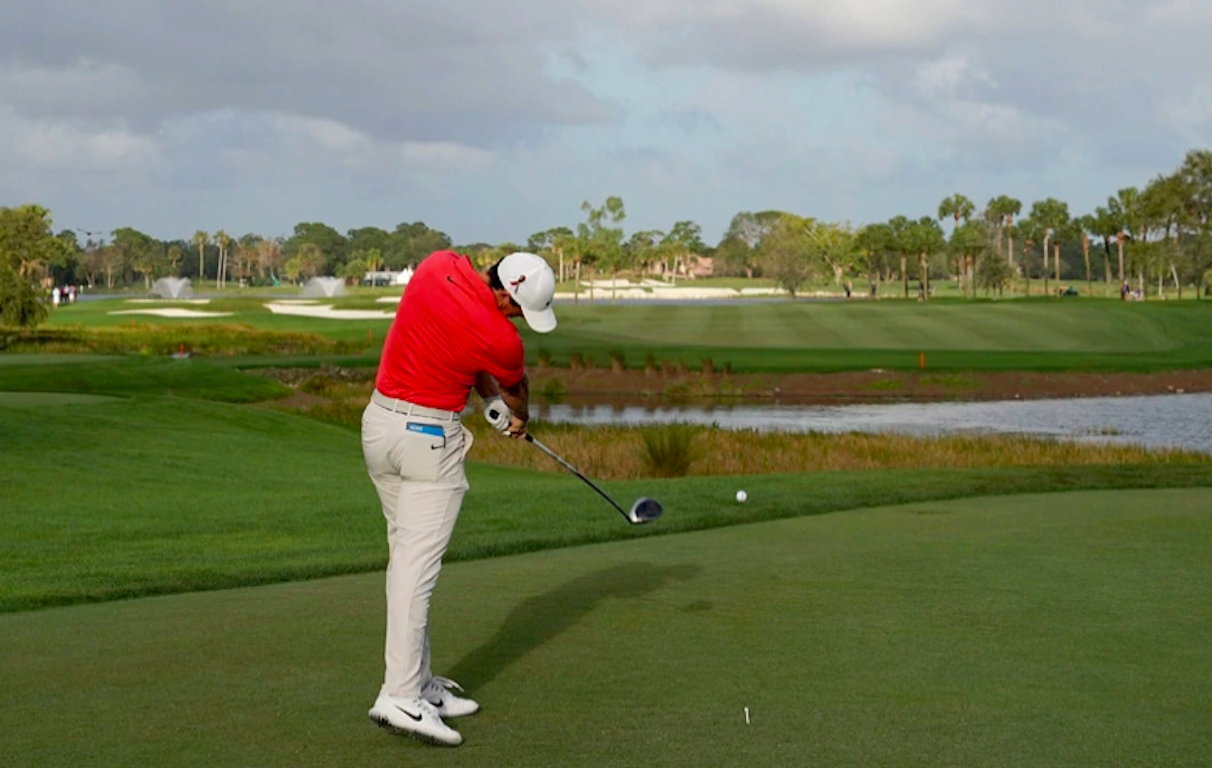
One of my favorite ‘contributions’ to this game I love is helping golfers t an “ah-ha” moment, wherein they gain an understanding of the idiosyncrasies of the golf swing that helps them make progress in their ball striking. In so many cases with recreational golfers, keys to improvement can be much more conceptual than physical. In other words, helping a golfer discover what really should be happening in various parts of the golf swing leads them to make their own swing alterations to adopt this new understanding.
I firmly believe that teaching through understanding is much more productive than trying to teach “a new move” through the physical approach. From my observation of recreational golfers, particularly those with “homemade” swings (which all have the potential to produce better and more consistent results in my opinion), one of the most misunderstood intricacies of the golf swing is how the club should be “released” through the impact zone.
Almost universally, golfers seem to think that the club releases through impact by or with an unhinging of the wrists, so that the left arm and shaft form a straight line.
If you genuinely want to improve your ball striking, your distance, your consistency and your scores, I suggest you pursue a genuine and technical understanding of this critical segment of the golf swing. Because most of you are
stuck in front of your TV right now–watching more golf than you are playing–you can make this time count. Every chance you get, watch the slow-motion videos of the golf swing from behind the golfer, looking down the line. A
straight-on view of the golf swing does not reveal this angle, but that is mostly what we are given in swing analysis by television and magazines, unfortunately.
[I’ll offer too, that you can learn a lot more from watching the LPGA players than the guys, as these very talented ladies are much closer to our own strength profiles. In my opinion, most of them are much more fundamentally
sound in their mechanics as they simply have to get the most efficiency out of the swing.]
What you will see, particularly with the wedge and short iron shots is that the hands and arms follow a path through impact that very nearly “covers” their position at address, where a distinct angle is formed by the left arm and shaft of the club…again, looking from behind the golfer down the target line.
As you study these videos and still photos, you’ll see that in the longer, more powerful swings–driver, metals, hybrids–the hands drift a little higher and away from the body more than they do with the middle and short irons, but the angle is still there. As you watch these guys hit the delicate short shots around the greens, the hands almost identically cover their address position.
That’s because a proper “release” of the club is not as much an unhinging of the wrists, but rather a rotation of the hands and arms through impact, in concert with and driven by the rotation of the body core itself. Close examination shows that the hands remain almost directly in front of the sternum through the entire impact zone, and the forearms and hands rotate – not unhinge – so that the club is squared at the ball for consistent impact.
Now, all this diagnosis would not be worth a dime to you if I didn’t show you how to experience this for yourself. Like most new physical activities, you are always best served by trying to LEARN IT IN SLOW MOTION! Simply pick up your 8- or 9-iron and find a place in your house or garage where you won’t take out a table lamp, and make very S-L-O-W swings, while concentrating on making this rotational release motion.
Your goal is to set up at address with the left arm hanging naturally from your shoulder, not pushed out toward the ball. Take the club back with a rotation of the body core, and then back through the impact zone, concentrating on making the left arm and hands exactly “cover” their address position. The angle of the wrists is maintained, and the club rotates through the ball, as your body rotates through impact.
Once you get the feel of it in slow motion, make slightly faster swings, concentrating on the path of the arms and that rotational release. When you actually hit balls with this newly-learned release–DO IT AT 35-50% POWER–you’ll be amazed at the boring trajectories and effortless distance you will get!
Let’s get some feedback on this, guys. How did you do?










This past Monday, I played in the U.S. Amateur local qualifier at Rock Creek Country Club in Portland, Oregon. A full tee sheet from 7:30 a.m. to 1:55 p.m., the top 11 scores would make it to the U.S. Amateur final qualifying.
I teed off at 10:48 a.m.. With the 7:30 am tee time, you can get a feel for the leaders’ pace, and they were off and running on the challenging setup at Rock Creek.
View this post on Instagram
Getting to the highlight of the round on the par five 17th, a drive up the left side and 212 yards left to the front hole location. I took out a 5-iron with plans of middle of the green. The ball ended up 8 feet left of the hole, pin high. A slight downhill putt dropped in for an eagle 3 on the 17th. With the cut line looking to be anywhere from -2 to even par. This was the boost I had been waiting for all day.
With making par from the trees on 18, it was time to wait for a potential playoff with a posted score of one under par 71.
Three hours later, it was playoff time. 8 players for 6 spots. I made par on the playoff hole, which was good enough to advance to the U.S. Amateur final qualifying in July. USGA qualifiers sure deliver on all of the emotions in golf!
Club Junkie
Building my 2026 gamer WITB: Ranking the contenders and new putter projects – Club Junkie Podcast

The annual What’s In The Bag build is underway, and on this episode of Club Junkie, Brian breaks down the clubs currently leading the race for a spot in his 2026 gamer setup. From drivers and fairway woods to irons, wedges, and shafts, he ranks the equipment that’s performing best and explains what’s separating the front runners from the rest of the field.
Brian also heads into the workshop to discuss several putter projects currently on the bench. From head options and shaft choices to build ideas and testing plans, he shares what he’s working on and which putters could become serious contenders for the bag this season.
If you’re a gear junkie who loves equipment testing, club building, and the never-ending pursuit of the perfect setup, this episode is for you.
Follow Club Junkie:
Instagram: @clubjunkiepod
TikTok: @clubjunkiepod
Threads: @clubjunkiepod
X: @ClubJunkiePod
Club Junkie
Tour Edge Exotics mini driver review + TaylorMade Spider ZT Max first look – Club Junkie

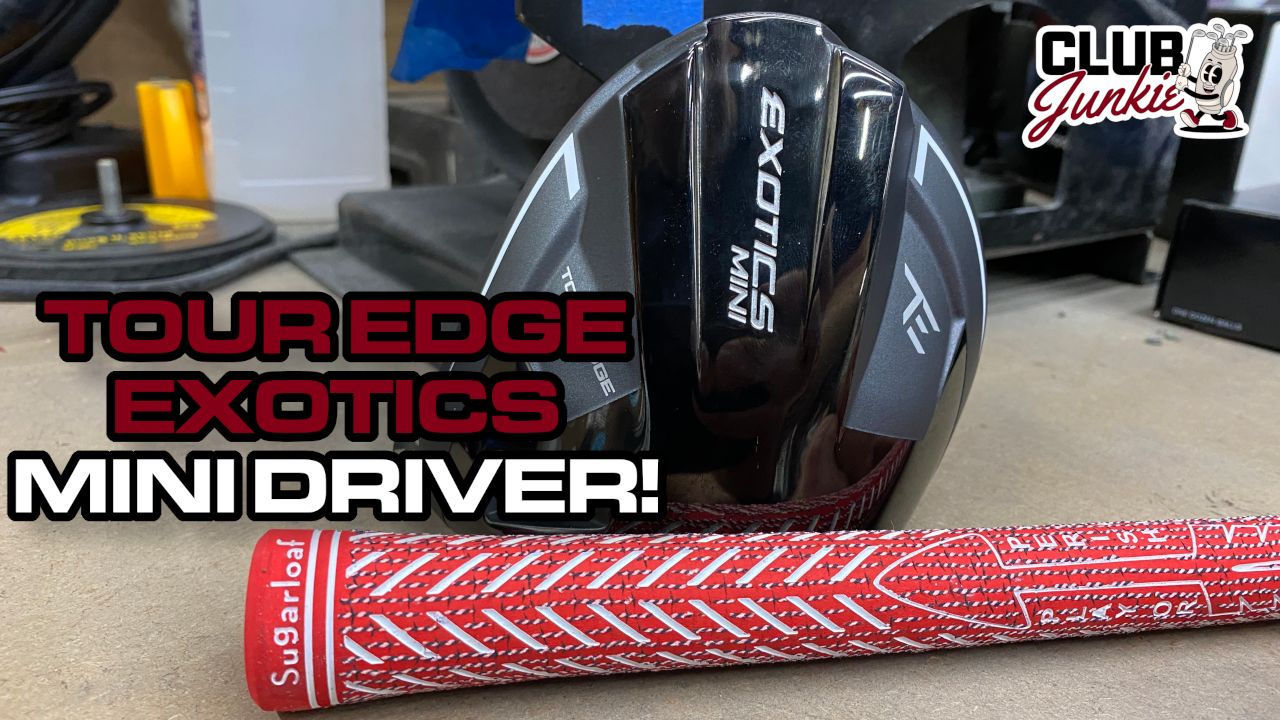
On this episode of Club Junkie, I put the new Tour Edge Exotics Mini Driver to the test and break down the performance, forgiveness, distance, and where it fits compared to a traditional driver or strong fairway wood. If you have been curious about adding a mini driver to the bag, this one is worth a look.
I also dive into the new TaylorMade Spider ZT Max putter that was recently spotted and discuss the growing zero torque putter trend. Plus, there is a closer look at the new Project X Titan Yellow shaft showing up on the PGA Tour and what makes it different from other profiles currently out there.

Justin Rose WITB 2026 (April): Full WITB breakdown with new McLaren irons

What’s the story behind Webb Simpson’s custom-stamped irons?

Memorial Tournament Tour Report: Rory McIlroy, Cameron Young switch up drivers, and more

Cadillac Championship Tour Report: Spieth’s sizable changes, McLaren Golf launches, and more

Russell Henley’s winning WITB: 2026 Charles Schwab Challenge

Kristoffer Reitan’s winning WITB: 2026 Truist Championship

J.T. Poston’s winning WITB: 2026 Memorial Tournament

Aaron Rai’s winning WITB: 2026 PGA Championship

Best irons 2026: Best irons overall, most forgiving irons, and more

Cameron Young’s winning WITB: 2026 Cadillac Championship


Bud Cauley WITB 2026 (June)
Bud Cauley had >14 clubs in his bag when photographed prior to the Memorial Tournament. Driver: Titleist GTS2 (8 degrees) Shaft: Fujikura...


Hannah Green WITB 2026 (June)
Driver: Titleist GTS3 (10 degrees, D4 SureFit setting) Shaft: Mitsubishi Chemical Diamana RB 53 S 3-wood: Titleist GT3 (15 degrees,...


Asterisk Talley WITB 2026 (June)
Driver: TaylorMade Qi4D (9 degrees) Shaft: Fujikura Ventus Blue 6 S 3-wood: TaylorMade Qi4D (16.5 degrees) Shaft: Fujikura Ventus Blue...


Brianna Do WITB 2026 (June)
Driver: Callaway Quantum Triple Diamond (9 degrees) Shaft: KBS PGW 3-wood: Callaway Elyte Titanium (15 degrees) Shaft: KBS PGW 5-wood:...
-
 Equipment6 days ago
Memorial Tournament Tour Report: Rory McIlroy, Cameron Young switch up drivers, and more
-
 News1 week ago
Russell Henley’s winning WITB: 2026 Charles Schwab Challenge
-
 Whats in the Bag3 days ago
J.T. Poston’s winning WITB: 2026 Memorial Tournament
-
 Equipment3 days ago
Best irons 2026: Best irons overall, most forgiving irons, and more
-

 Equipment1 week ago
Details on Jason Day’s latest prototype Avoda iron setup
-
 Equipment3 weeks ago
CJ Cup Byron Nelson Tour Report: Koepka and Kim’s newest putters finally get hot
-

 News2 weeks ago
Charles Schwab Challenge Tour Report: MacIntyre, Åberg and Spaun all switch putters, TaylorMade launches new Spider
-
 Equipment2 weeks ago
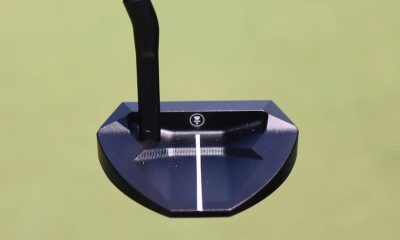
Details on J.J. Spaun’s surprise putter switch


Ray Bennett
Feb 19, 2020 at 4:45 pm
Reads like an open to shut release or a knuckle over through impact. This release doesn’t match up well with a core or spine driven swing because there are too many closing elements present during the strike. A better match is a square to square or a a shut to open release where the clubface is square or shut to the swing plane immediately before impact and remains square or opens past the divot (left palm up to left palm down through the release with a neutral grip).
Ed LeBeau
Feb 19, 2020 at 10:57 am
I think I agree with Terry but I think the term “release” carries a lot of baggage. To experience what he is describing, here is a drill you can do. 1) insert about a half inch of a long tee into the hole in the butt end of a grip, 2)set up at address, 3)observe the relationship of the tee to your leading forearm [its probably an inch or so from the forearm], 4) assume the shaft at address is 6 o’clock, s l o w l y make a backswing to 7 o’clock while carefully maintaining the tee’s relationship to your left forearm. 5) do the same now from 7 o’clock to 8 o’clock, 6) now reverse this and make the forward swing s l o w l y from 8 to 7 to 6 to 5 to 4, 7) what you will see is that your body and club are in the same position as in the photo in Terry’s article.
By maintaining the tee’s position relative to your forearm you are in fact maintaining the club’s relationship to you. The club stays in front of you and as you turn the club turns with you. As your body rotates through the ball the club does as well and arrives square to the target line producing the ball flight Terry describes.
Drew
Feb 19, 2020 at 2:42 am
This doesn’t make much sense to me either. “Covering” the ball is a term I’ve heard before but I’m convinced it only makes sense until after you’ve learned how to do it. It’s not an action you can teach players to do by just saying the word “cover!”. No idea at all what you’re talking about in this article, unfortunately. It’s amazing how much poorly written golf instruction is out there. Try not to be a part of it!
freowho
Feb 18, 2020 at 11:50 pm
Could not disagree with this more.
Pause the video below at 1:49min.
https://www.youtube.com/watch?v=ln-3D-NxH0E
Blixt is trying to keep his arms extended. Snead is trying to fold them as much as possible. You shouldn’t be trying to replicate impact. It occurs because of momentum from folding the arms back to folding the arms through while spinning with the legs. What you see at impact is not what the greats were trying to do.
Luke Keefner
Feb 18, 2020 at 8:07 pm
Jason dufners waggle seems like a great preparatory practice drill for the feeling of a correct release. Check out Mike Malaska’s videos on YouTube. I’ve been working on this all winter in the living room. Come on spring!!!
RayRise
Feb 19, 2020 at 11:20 am
Two important points you make Luke – Dufner does indeed waggle his line away and to the ball in a relaxed manner and I also find Malaska is an exceptional. I too can’t wait for the rain and cold to end in UK.
Kyle Leskiw
Feb 18, 2020 at 7:23 pm
Extending the club shaft up your lead arm with an alignment stick to prevent the wrists from flipping is probably a better way to explain this ????
Tour Player (retired)
Feb 18, 2020 at 2:33 pm
Amateur golfers are notoriously arm swingers…and higher handicap amateurs also attempt to use their hands and wrists. Whereas the golf swing of professionals and scratch golfers is initiated from the center of the body – the unwinding rotation of their torso or their shoulders, not from any intentional use of their arms. Your shoulders are like the middle of a merry-go-round – they don’t have to spin very fast in order for there to be tremendous forces at play that you can’t overcome. When you can learn to lead the downswing with either the torso or the shoulders unwinding that in-turn bring the (lagging behind) arms and clubs with that unwinding motion you’ll see results like never before. Trying to intentionally pull the lead arm down causes you to stall the shoulders, early extension, over-the-top and lack of clubhead speed. The arms, wrists/hands should be passive to the motor unwinding of the shoulders or torso. It’s a matter of changing your intentions because our golf swings reflect what we believe, and that’s where our incorrect concepts get us into trouble. The release happens naturally when your swing is driven from the unwinding of your torso or shoulders.
Pete S
Feb 18, 2020 at 1:57 pm
This would be much easier to follow if there were pictures or video included.
Jack
Feb 18, 2020 at 8:59 pm
That’s exactly what I was thinking.
Jim T
Feb 19, 2020 at 11:53 am
Likewise
Cam
Feb 20, 2020 at 12:10 am
Yes! Diagrams or something to explain the angles you’re referring to!