
Opinion & Analysis
Watch for players lofting up at altitude at the WGC-Mexico Championship

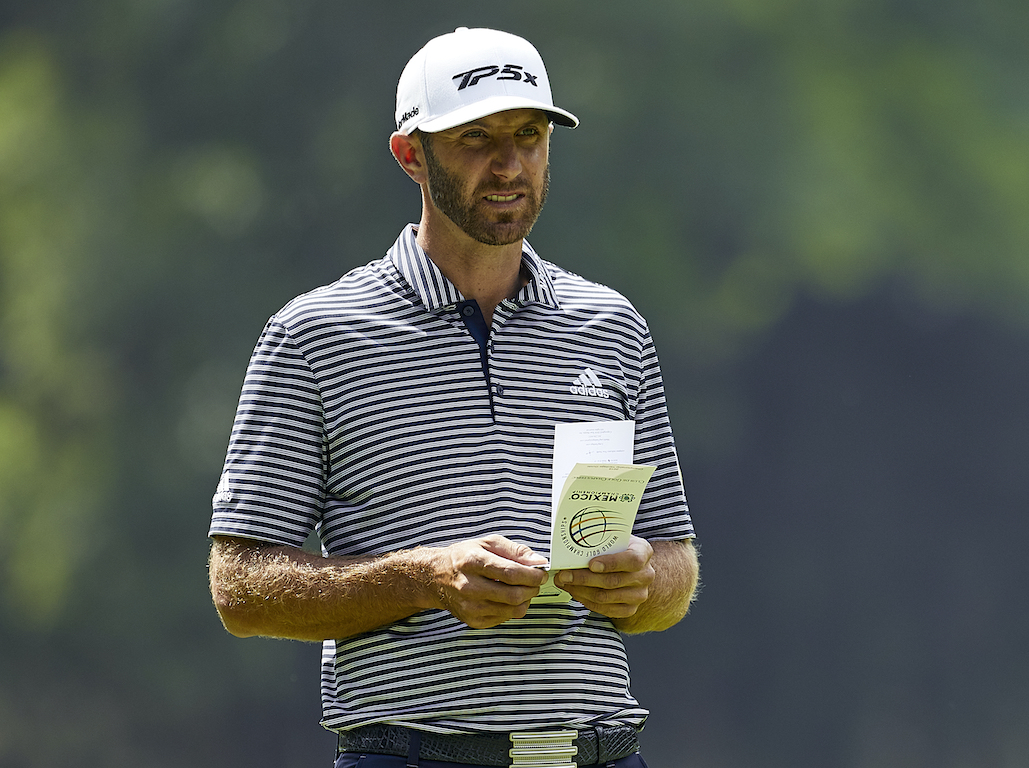
This week, at the PGA Tour’s WGC-Mexico Championship, we are going to watch some of the best and longest players on the planet play what will effectively be one of the shortest courses on tour.
Now, 7,341 yards is by no means a cakewalk, and there are shorter courses from a pure yardage perspective played on tour—Harbour Town, as an example, only plays at 7,099 yards from the very back. The difference is Harbour Town is played at sea level while Club de Golf Chapultepec is at over 7,500 feet of elevation, and when you factor in the altitude difference between the two courses, they play very differently—more on the math in a moment.
The altitude will also factor in how some players will be setting up their equipment and we could see some adjustments. The most obvious is lofting up the driver or fairways woods to increase carry, which is something Tiger Woods specifically mentioned last year.
The biggest misconception when talking about playing golf at altitude is that the ball doesn’t spin the same in thinner air and players “loft up” to maintain spin. Let’s get into the physics to bust this “spinning less” myth and simplify the science behind playing at altitude,
The golf ball is an inanimate object, and it has no idea it’s at altitude; the air will not have an impact on how much the ball will actually spin. Yes, increasing loft should, by almost every imaginable measure, increase spin but the air it travels through will not change the spin rate.
However, playing at altitude has an effect, Let’s break down what happens
- Thinner air exerts less drag force (resistance/friction) on the ball. The ball moves more easily through this less dense air and won’t decelerate as quickly as it flies. But note that the faster an object moves the more drag force will occur
- Less resistance also means that it is harder to shape shots. So you when you see Shot Tracer, the pros are going to be hitting it even straighter (this makes Tiger’s fairway bunker shot last year even more unbelievable)
- Less force = less lift, the ball will fly lower and on a flatter trajectory
Time for some math from Steve Aoyama, a Principal Scientist at Titleist Golf Ball R&D (full piece here: The Effect of Altitude on Golf Ball Performance)
“You can calculate the distance gain you will experience (compared to sea level) by multiplying the elevation (in feet) by .00116. For example, if you’re playing in Reno, at 1 mile elevation (5,280 ft.) the increase is about 6% (5,280 x .00116 = 6.1248). If you normally drive the ball 250 yards at sea level, you will likely drive it 265 yards in Reno.”
Not every player will be making changes to their bag, and some will instead focus on the types of shots they are hitting instead. When speaking to Adam Scott earlier this week, I was able to ask if he planned on making any changes heading into Mexico the week after his win at the Genesis Invitational.
“It’s very rare for me to make club changes week-to-week beyond playing in the Open Championship and adding a longer iron. The one thing I focus on when playing at altitude is avoiding partial shots where I’m trying to reduce the spin because as spin goes down the ball doesn’t want to stay in the air. I’ve experienced partial shots with longer clubs that end up 25 yards short, and because of that I want to hit as many full shots as possible”
With Club de Golf Chapultepec sitting just over 7,800 feet above sea level, we’re looking at 9.048 or an increase of just over 9 percent. That makes this 7,341-yard course play 6,677 yards (+/- where the tees are placed).




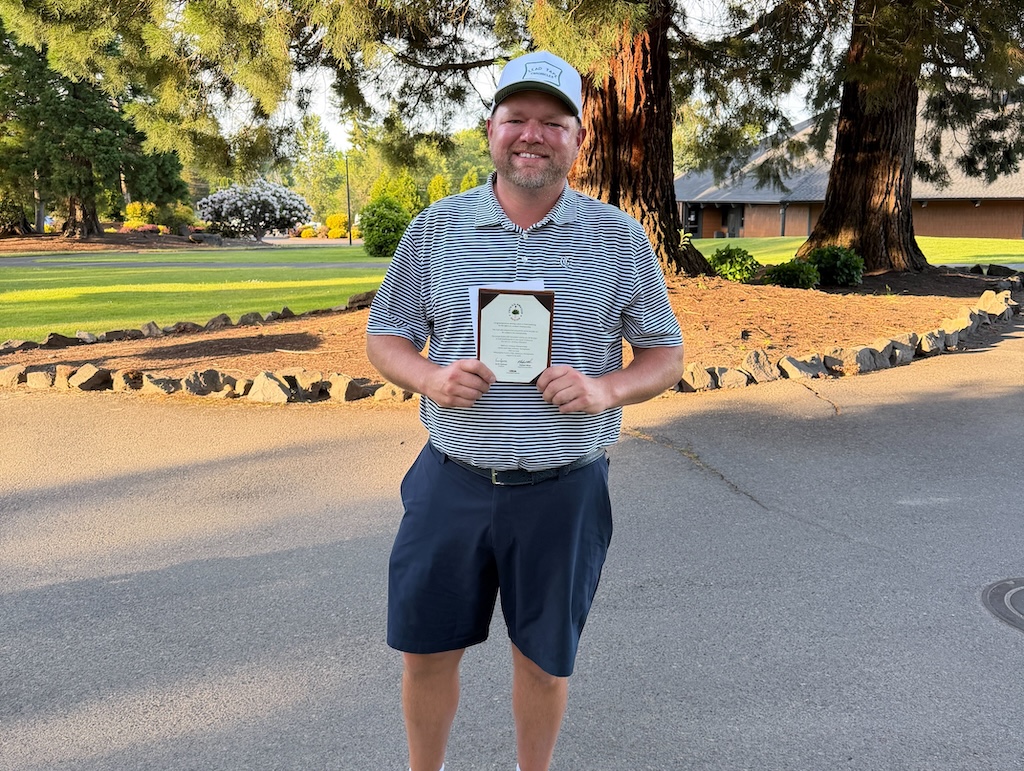
This past Monday, I played in the U.S. Amateur local qualifier at Rock Creek Country Club in Portland, Oregon. A full tee sheet from 7:30 a.m. to 1:55 p.m., the top 11 scores would make it to the U.S. Amateur final qualifying.
I teed off at 10:48 a.m.. With the 7:30 am tee time, you can get a feel for the leaders’ pace, and they were off and running on the challenging setup at Rock Creek.
View this post on Instagram
Getting to the highlight of the round on the par five 17th, a drive up the left side and 212 yards left to the front hole location. I took out a 5-iron with plans of middle of the green. The ball ended up 8 feet left of the hole, pin high. A slight downhill putt dropped in for an eagle 3 on the 17th. With the cut line looking to be anywhere from -2 to even par. This was the boost I had been waiting for all day.
With making par from the trees on 18, it was time to wait for a potential playoff with a posted score of one under par 71.
Three hours later, it was playoff time. 8 players for 6 spots. I made par on the playoff hole, which was good enough to advance to the U.S. Amateur final qualifying in July. USGA qualifiers sure deliver on all of the emotions in golf!
Club Junkie
Building my 2026 gamer WITB: Ranking the contenders and new putter projects – Club Junkie Podcast

The annual What’s In The Bag build is underway, and on this episode of Club Junkie, Brian breaks down the clubs currently leading the race for a spot in his 2026 gamer setup. From drivers and fairway woods to irons, wedges, and shafts, he ranks the equipment that’s performing best and explains what’s separating the front runners from the rest of the field.
Brian also heads into the workshop to discuss several putter projects currently on the bench. From head options and shaft choices to build ideas and testing plans, he shares what he’s working on and which putters could become serious contenders for the bag this season.
If you’re a gear junkie who loves equipment testing, club building, and the never-ending pursuit of the perfect setup, this episode is for you.
Follow Club Junkie:
Instagram: @clubjunkiepod
TikTok: @clubjunkiepod
Threads: @clubjunkiepod
X: @ClubJunkiePod
Club Junkie
Tour Edge Exotics mini driver review + TaylorMade Spider ZT Max first look – Club Junkie

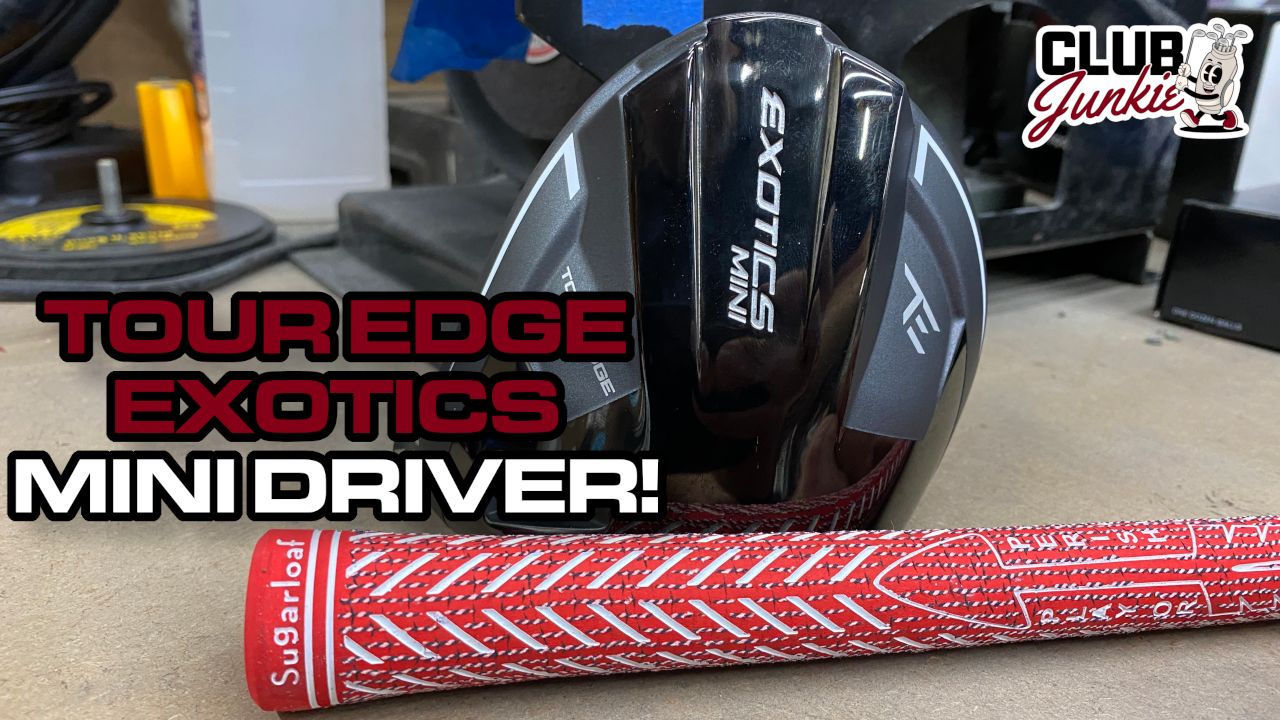
On this episode of Club Junkie, I put the new Tour Edge Exotics Mini Driver to the test and break down the performance, forgiveness, distance, and where it fits compared to a traditional driver or strong fairway wood. If you have been curious about adding a mini driver to the bag, this one is worth a look.
I also dive into the new TaylorMade Spider ZT Max putter that was recently spotted and discuss the growing zero torque putter trend. Plus, there is a closer look at the new Project X Titan Yellow shaft showing up on the PGA Tour and what makes it different from other profiles currently out there.

What’s the story behind Webb Simpson’s custom-stamped irons?

Memorial Tournament Tour Report: Rory McIlroy, Cameron Young switch up drivers, and more

Cadillac Championship Tour Report: Spieth’s sizable changes, McLaren Golf launches, and more

Russell Henley’s winning WITB: 2026 Charles Schwab Challenge

Kristoffer Reitan’s winning WITB: 2026 Truist Championship

Best irons 2026: Best irons overall, most forgiving irons, and more

J.T. Poston’s winning WITB: 2026 Memorial Tournament

Aaron Rai’s winning WITB: 2026 PGA Championship

Cameron Young’s winning WITB: 2026 Cadillac Championship

Details on Jason Day’s latest prototype Avoda iron setup


Christiaan Maas WITB 2026 (June)
Driver: TaylorMade Qi4D LS (8 degrees) Shaft: Fujikura Ventus TR Blue 6 X 3-wood: TaylorMade Qi10 (15 degrees) Shaft: Fujikura Ventus Black...


Ryan Palmer WITB 2026 (June)
Driver: Callaway Quantum Triple Diamond (9 degrees) Shaft: Project X HZRDUS Smoke Blue RDX 60 TX 3-wood: TaylorMade Qi10 (15 degrees) Shaft:...


Bud Cauley WITB 2026 (June)
Bud Cauley had >14 clubs in his bag when photographed prior to the Memorial Tournament. Driver: Titleist GTS2 (8 degrees) Shaft: Fujikura...


Hannah Green WITB 2026 (June)
Driver: Titleist GTS3 (10 degrees, D4 SureFit setting) Shaft: Mitsubishi Chemical Diamana RB 53 S 3-wood: Titleist GT3 (15 degrees,...
-
 Equipment6 days ago
Memorial Tournament Tour Report: Rory McIlroy, Cameron Young switch up drivers, and more
-
 News2 weeks ago
Russell Henley’s winning WITB: 2026 Charles Schwab Challenge
-
 Equipment3 days ago
Best irons 2026: Best irons overall, most forgiving irons, and more
-
 Whats in the Bag4 days ago
J.T. Poston’s winning WITB: 2026 Memorial Tournament
-
 Equipment1 week ago
Details on Jason Day’s latest prototype Avoda iron setup
-
 Equipment3 weeks ago
CJ Cup Byron Nelson Tour Report: Koepka and Kim’s newest putters finally get hot
-

 News2 weeks ago
Charles Schwab Challenge Tour Report: MacIntyre, Åberg and Spaun all switch putters, TaylorMade launches new Spider
-
 Equipment2 weeks ago
Details on J.J. Spaun’s surprise putter switch


TheSBSGroup
Feb 22, 2020 at 1:51 am
I’m just glad to see that someone is willing to take the time to post about the statistical evidence and procedures being applied in today’s game. Keep it going!
Cheesehead42
Feb 19, 2020 at 7:27 pm
I’m not sure I agree with the math. I am sure that someone far smarter than me studied it. However, from personal experience playing both ocean courses as well in Denver, I hit the ball a lot longer than a 6% increase in Denver. It was at least +10% if not more.
Just speaking from experience.