
Opinion & Analysis
The need for speed


In golf culture, as we all know, certain dreaded words must avoided. However, contrary to popular belief, the worst is not “shank”—it is either “bunter” or “short knocker.” How do I know? Years of abuse at the hands of friends who love to bomb it by me and then taunt me. This reached a tipping point in early December with my buddy Fredrick Lindblom of the PGA Tour Latinoamerica. Right after we teed off he asked, “You catch that?”
“Ripped it,” I said, as we both got into the cart and started driving to our balls.
“Yeah. Looked like you sent it at least 201,” he said with a chuckle. “By the way, did you hear about all the new construction around here? I hear it includes a new Super Walmart!”
“A new Super Walmart around here! Cool. Where’s it going?” I asked.
“Right between my ball and yours,” he could barely get the words out before exploding into laughter.
That evening, as I sat at home reflecting, I decided it was time to make a change. It wasn’t just Freddy, it was a lot of people. I needed to be able to hit it further: I set a new goal for myself: fly the ball 250 by September 1, 2019.
What follows is the story of my journey.
It’s not just swinging harder
Going into this process, because of my background in golf, I knew my best shot would be to learn to move more efficiently to create more optimal launch conditions. My first step was to call the people at K-Motion. K-Motion makes a technology in golf called K-Coach—they use wireless sensors to provide data to software that produces an evaluation report that explains how a player uses their body to hit the ball. How good? 51 of the coaches on the top 100 list, 21 major league teams, and Freddy all use it.
Data collection with K-Coach and a Flightscope took less than ten minutes. One sensor went on my back with a vest (hence the name), one around my waist with a belt, one on my arm with a Velcro strap and one on my golf glove with a clip. I took five swings with my six iron and that was it. Out popped the report and graphs.
“You’re obviously aware of your FlightScope numbers,” my friend Joe DiChiara, Director of education at K-Motion, who coaches elite junior and your players, reminded me. “You swing your 6-iron about 79 mph with a path way right”
I nodded.

“Here is what your body is doing” said Joe, as he turned the computer screen show me some data in the evaluation. “You start with your arms and hands first and that limits your ability to transfer the energy your body is creating to the golf ball through what we call the kinematic chain.“
“And what should I be doing?” I asked.
“In an efficient swing, and not all great golfers are efficient, in the transition sequence, from the top of the swing, you want the lower body to fire first, then the upper body, then the lead arm, and then the hand, like when you crack a whip.”
“Makes sense,” I told him.
“And the other thing I would suggest, you need to focus on your side bend at the top of your swing. As you can see,” he said pointing to another page of the report, “you have flat shoulders at the top, and that’s making it hard for you to deliver the club at impact.”
“What does the rest of the report say?” I asked
“That’s all you need to know right now” Joe told me.
“So, here is the million-dollar question, how do I get better on this?” I asked. “Hit a ton of balls?”
“Actually, we are going to do no range work. We are going to design you a biofeedback training program for your K-Coach and you have super speed weighted clubs, and I want you to use the program I give you for those too.”
Joe spent another two minutes creating my programs, emailed them to me and I was ready to go. As I shook Joe’s hand and left, I was excited but also worried, no range? Is this going to work? I mean, it’s where people practice?
I caught my flight home and as soon as I got home, I downloaded the biofeedback training program from Joe, put on my K-Coach and got to work. Immediately I could feel how different the patterns were. My posture was way different, and I really had to struggle to follow the avatar that guided me through my new movement patterns, engaging my muscles in new ways.
I stuck with the program, upping my work to three times a day for the first 10 days. Slowly, I improved, the work got easier, and I got better at getting into position. I called Joe and told him it was getting easy at day 15, so he tightened the tolerances on my biofeedback activities. It got harder again.
About 20 days into the program, I felt confident in my new movement patterns and ready to test my work. I headed out to my home course TPC Pebble Creek.

I got up on the first tee. I did a step through drill, then addressed the ball and whack! So far left, it was crazy. No Bueno. Lack of separation on the downswing with some forward bend, I thought.
No problem, needed to side bend more at impact and not be so forward. Rehearsing the change, I hit another and this time, crushed it. I was pumped to see where it was, so I quickly put my driver away and darted down the fairway to find it about 20 yards past where I have ever hit it on a course that I have probably played a million times. That was the story of the day, everything way longer than ever before.
After the round, I pulled out the Flightscope and tested my 6-iron speed, 87 mph, ten miles per hour faster. Wow. I called Joe.
“Fantastic stuff, time for new clubs,” he told me.
Studio 360 club fitting
Now that I had better movement patterns, I enlisted the help of my friend Lyndon Wilson at Golf Studio 360 based at Orange County National in Orlando, Florida. Lyndon is a world-class fitter who has done work for many of the best players including Justin Rose and Graeme McDowell to name a few. I was excited to get his opinion on if equipment might be able to help me get more distance.
After watching a couple shots with my irons, Lyndon in his English accent said, “are you ready for something that will change your life?”
I nodded. He turned away and I could tell he was screwing some components together. He turned around and immediately, my smile turned upside down; Lyndon has put in a graphite shaft. I immediately protested, “Lyndon, I may not hit it far, but I love the stability of my steel shafts. I don’t want a couple yards at the cost of accuracy.”
Lyndon smiled and said, “Read it, what shafts are those?”
“KBS C-Taper Lites” I responded.
“Yes, and these are the new KBS graphite. Designed by your buddy Kim (Braly – the owner of KBS). They have the same profile as the steel but have a range of weights from 50 grams to 80 grams. We are going to try you in the 70 grams with the same TaylorMade head you currently play). I want you to hit 10 with yours and then 10 with these. Let’s see what happens?”
The last sentence should have been a hint; a Wiley veteran like Lyndon never guesses, he knew that the KBS graphite would make a huge difference and of course, he was right. The results were not even close; I had now gotten even more distance, flying my 6-iron close to 190 yards: Boom!
Lyndon was clearly happy, but we were not done yet, it was time for the moment of truth; how far would the driver fly? “Mate, now that you have better side bend, sequencing and speed, your driver launch conditions are going to be mad different. I think if we can get +2 AoA (angle of attack) we have a real chance of going 250+” said Lyndon. “Give me 1 second, think I got the perfect fit”.
Again, he turned his back, fiddled with some things and then reached out to hand me a new weapon to try.
I immediately went to check it out; a TaylorMade M5 with an Accra TZ6. The club looked sexy AF. I was pumped. Teed one up and smackkkkkkk. I turned quickly and saw a cheeky little smile on my buddy’s face: “257 carry, 274 total, mate!” said Lyndon.

“Wow, that’s a missile launcher” I said.
“Yes, those TaylorMade heads are really good, but this new Accra Shaft mate…whoooo. It’s so unique because it’s low torque but has an active tip. This means we can give you a really low spin head and it won’t just noise dive,” he said as he showed me the numbers on FlightScope. “Look at these numbers; you hit up two, 103 mph and spin of 2,200. Couldn’t be any better.”
“I also love the feel,” I said, as I smashed a couple more. “Also, really like how everything looks.”
“You know those Accra’s also come in custom finish. I got something in mind that you are going to love. Trust me, you’re going to have a killer set when I’m done building these things!” explained Lyndon as he shook hands and ended the fitting.
My new best friend Chuck
Recently my buddy Katie, invited me out to play golf with her, her dad and his friend Chuck. Don’t let the sweet name fool you, Katie is a stud; former college lacrosse player, who’s super athletic and had just qualified for her first USGA championship (US AM). She was also down in our series 2-1 and very eager to tie it up. 4 hours later, it was not even close, after Katie laid a complete beatdown on me, she did something extremely admirable; she invited me in for a beer and nachos. As I numbed the loss with a delicious pint of Guinness, Chuck looked at me and said “you hit is so good day, way better than Katie! You kill it brother! What’s your secret?” I smiled, the circle was complete, and the loss quickly faded from my mind.



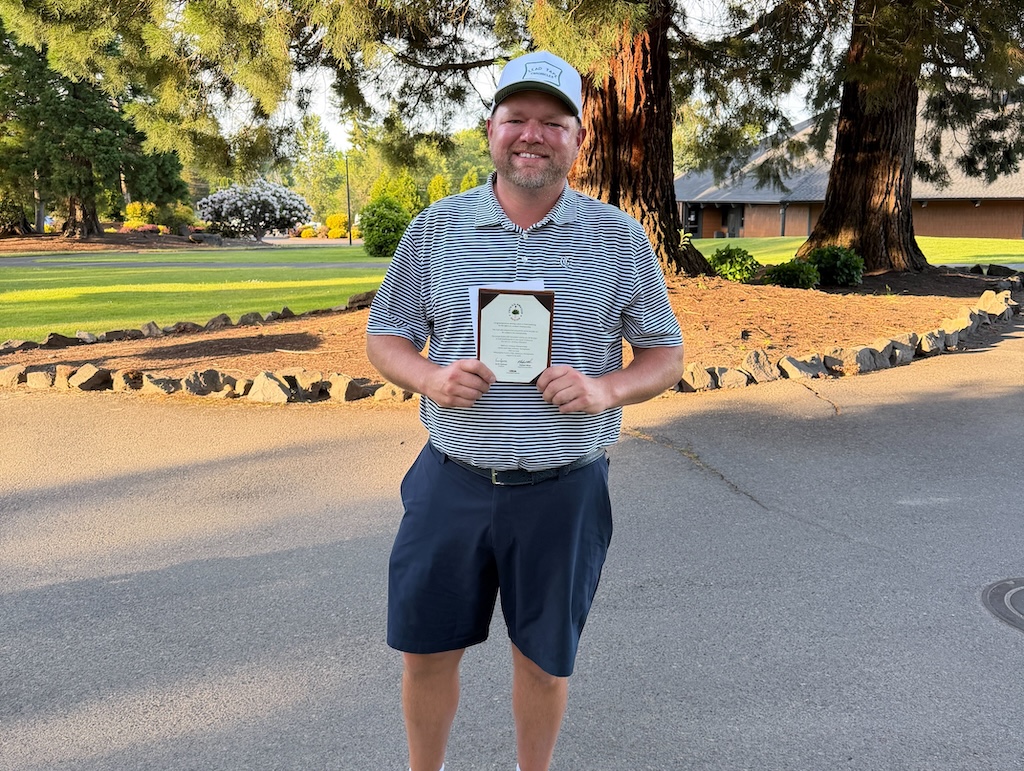
This past Monday, I played in the U.S. Amateur local qualifier at Rock Creek Country Club in Portland, Oregon. A full tee sheet from 7:30 a.m. to 1:55 p.m., the top 11 scores would make it to the U.S. Amateur final qualifying.
I teed off at 10:48 a.m.. With the 7:30 am tee time, you can get a feel for the leaders’ pace, and they were off and running on the challenging setup at Rock Creek.
View this post on Instagram
Getting to the highlight of the round on the par five 17th, a drive up the left side and 212 yards left to the front hole location. I took out a 5-iron with plans of middle of the green. The ball ended up 8 feet left of the hole, pin high. A slight downhill putt dropped in for an eagle 3 on the 17th. With the cut line looking to be anywhere from -2 to even par. This was the boost I had been waiting for all day.
With making par from the trees on 18, it was time to wait for a potential playoff with a posted score of one under par 71.
Three hours later, it was playoff time. 8 players for 6 spots. I made par on the playoff hole, which was good enough to advance to the U.S. Amateur final qualifying in July. USGA qualifiers sure deliver on all of the emotions in golf!
Club Junkie
Building my 2026 gamer WITB: Ranking the contenders and new putter projects – Club Junkie Podcast

The annual What’s In The Bag build is underway, and on this episode of Club Junkie, Brian breaks down the clubs currently leading the race for a spot in his 2026 gamer setup. From drivers and fairway woods to irons, wedges, and shafts, he ranks the equipment that’s performing best and explains what’s separating the front runners from the rest of the field.
Brian also heads into the workshop to discuss several putter projects currently on the bench. From head options and shaft choices to build ideas and testing plans, he shares what he’s working on and which putters could become serious contenders for the bag this season.
If you’re a gear junkie who loves equipment testing, club building, and the never-ending pursuit of the perfect setup, this episode is for you.
Follow Club Junkie:
Instagram: @clubjunkiepod
TikTok: @clubjunkiepod
Threads: @clubjunkiepod
X: @ClubJunkiePod
Club Junkie
Tour Edge Exotics mini driver review + TaylorMade Spider ZT Max first look – Club Junkie

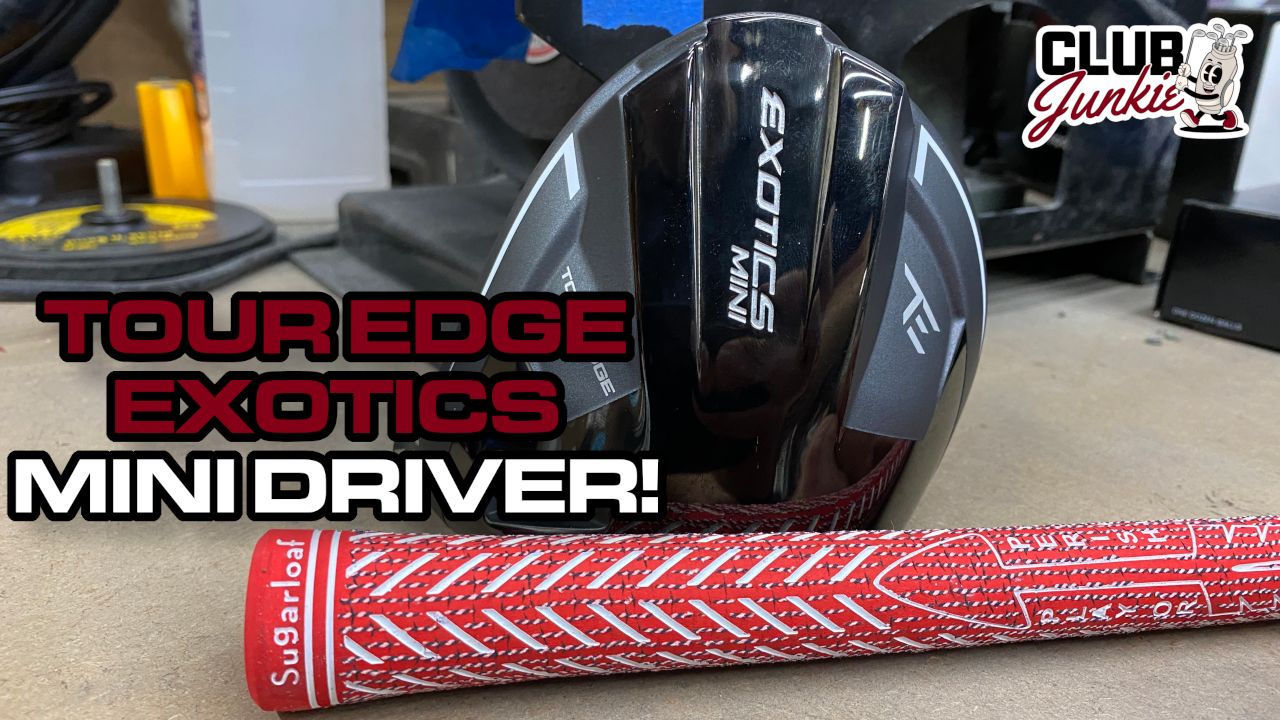
On this episode of Club Junkie, I put the new Tour Edge Exotics Mini Driver to the test and break down the performance, forgiveness, distance, and where it fits compared to a traditional driver or strong fairway wood. If you have been curious about adding a mini driver to the bag, this one is worth a look.
I also dive into the new TaylorMade Spider ZT Max putter that was recently spotted and discuss the growing zero torque putter trend. Plus, there is a closer look at the new Project X Titan Yellow shaft showing up on the PGA Tour and what makes it different from other profiles currently out there.

Justin Rose WITB 2026 (April): Full WITB breakdown with new McLaren irons

What’s the story behind Webb Simpson’s custom-stamped irons?

Memorial Tournament Tour Report: Rory McIlroy, Cameron Young switch up drivers, and more

Cadillac Championship Tour Report: Spieth’s sizable changes, McLaren Golf launches, and more

Russell Henley’s winning WITB: 2026 Charles Schwab Challenge

Kristoffer Reitan’s winning WITB: 2026 Truist Championship

J.T. Poston’s winning WITB: 2026 Memorial Tournament

Best irons 2026: Best irons overall, most forgiving irons, and more

Aaron Rai’s winning WITB: 2026 PGA Championship

Cameron Young’s winning WITB: 2026 Cadillac Championship


Bud Cauley WITB 2026 (June)
Bud Cauley had >14 clubs in his bag when photographed prior to the Memorial Tournament. Driver: Titleist GTS2 (8 degrees) Shaft: Fujikura...


Hannah Green WITB 2026 (June)
Driver: Titleist GTS3 (10 degrees, D4 SureFit setting) Shaft: Mitsubishi Chemical Diamana RB 53 S 3-wood: Titleist GT3 (15 degrees,...


Asterisk Talley WITB 2026 (June)
Driver: TaylorMade Qi4D (9 degrees) Shaft: Fujikura Ventus Blue 6 S 3-wood: TaylorMade Qi4D (16.5 degrees) Shaft: Fujikura Ventus Blue...

Brianna Do WITB 2026 (June)
Driver: Callaway Quantum Triple Diamond (9 degrees) Shaft: KBS PGW 3-wood: Callaway Elyte Titanium (15 degrees) Shaft: KBS PGW 5-wood:...
-
 Equipment6 days ago
Memorial Tournament Tour Report: Rory McIlroy, Cameron Young switch up drivers, and more
-
 News2 weeks ago
Russell Henley’s winning WITB: 2026 Charles Schwab Challenge
-
 Whats in the Bag4 days ago
J.T. Poston’s winning WITB: 2026 Memorial Tournament
-
 Equipment3 days ago
Best irons 2026: Best irons overall, most forgiving irons, and more
-

 Equipment1 week ago
Details on Jason Day’s latest prototype Avoda iron setup
-
 Equipment3 weeks ago
CJ Cup Byron Nelson Tour Report: Koepka and Kim’s newest putters finally get hot
-

 News2 weeks ago
Charles Schwab Challenge Tour Report: MacIntyre, Åberg and Spaun all switch putters, TaylorMade launches new Spider
-
 Equipment2 weeks ago
Details on J.J. Spaun’s surprise putter switch


Ron Donald
Oct 30, 2019 at 12:08 am
Beautiful story! Did you make Katie breakfast in the morning?