
Opinion & Analysis
The Rule of 24: How to shoot low scores like a tour pro without changing anything in your game

I play a lot of golf, mostly at municipal courses, generally with average golfers who suffer from the current epidemic of LOFT (Lack of F***ng Talent). A couple of months ago, watching a pair older guys ride the struggle bus, I thought “someone’s gotta make this better.” When one of my regular playing partners called to tell me had quit, that he was done with the game, that he had other ways to torture himself, I set out to find a solution for him and everyone else who ain’t never gonna play on tour.
Unlocking a solution wasn’t easy. I thought about the question for months and months getting nowhere. And then one day I asked myself a simple question: How far does the average PGA Tour pro hit the ball? The number 300 immediately popped into my head. Next, I asked myself, how long is the average PGA tour course? 7,200 yards popped into my head. Then, I started doing some simple math in my head and stumbled on a simple key: 7,200 divides by 300 into a nice, neat number: 24. The average PGA Tour course is roughly 24 times as long as the average tour player drives the ball.
Could 24 times your driving distance be a basic anchor for how long of a course people should play? Could 24 be some sort of a key to unlocking the game?
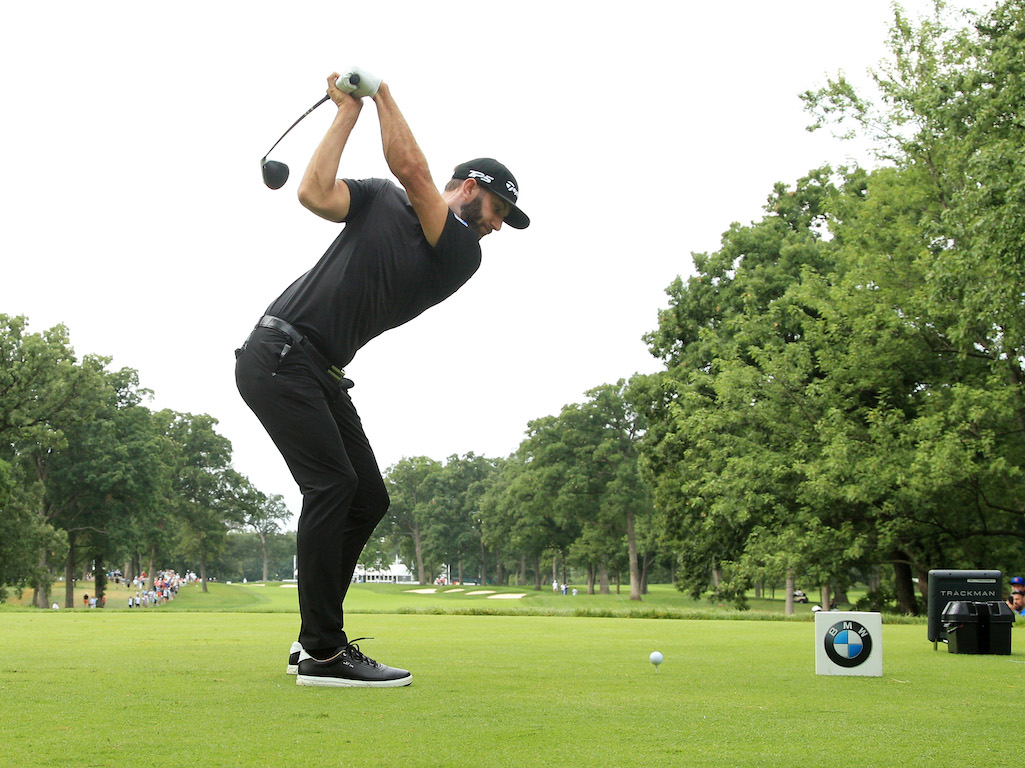
Walking on the golf course the other day, I wondered what the rule of 24 would mean for my playing companions. First, there was Steve. He is a mid-40s investment banker who says he hits the ball 210 off the tee but really hits it about 180. He plays a course that is 6,200 yards short. His ratio? 34.4. Yikes. Then there is Patricia, his wife. She hit it about 130 and plays from 5,600—a ratio of 43! Okay folks, Dustin Johnson’s ratio is below 24, Steve’s is 34 and Patricia’s is 43. Who do you think is having more fun playing golf? No wonder the average golfer struggles, I thought, they are playing courses almost 2x the proportional length of a PGA Tour player’s course with 50 percent less power and accuracy. That ain’t nothing but crazy.
Based on that small piece of research, I decided to take the question a step further by asking a couple of more questions: How many greens in regulation does the average PGA Tour player hit vs the average 20 handicap male? The answer is approximately 12 for the PGA Tour player and one for the 20 handicaps. But why? My instincts suggested distance. I called a couple of stats people and asked a question: At what distance does the average 20 handicap man and 20 handicap women hit the green approximately 50% of the time? No one knew. So, I decided to do some really basic data collection to see what I would find. A week later and several 1,000 balls hit on the range by anyone and everyone I could round up later and measured on my launch monitor, the data suggested the distance of the 20 handicap men is approximately 110 yards and for the women, it’s 60 yards.
So how many times would a guy who hits it 180 have 110 yards on an average 6,200 golf course? Basically never. Pretty much same with the ladies hitting it from 5,600. No wonder the average 20 handicapper hits one green per round (if they are lucky)!
Armed with the data, I decided to test it with my favorite golfer—my mom. On a normal drive, my mom hits it about 135 yards. She plays to a 38 handicap. Based on my math, she should be playing a course that is about 2,430 yards. From that distance, she should hit 14 drives approximately 1,890 yards, leaving approximately 30 yards to each green on an 18 hole course.
With this math in mind, I created a 9-hole course and took her to play. The result? She hit 7 greens in regulation, had 2 birdies and 2 bogeys and shot even par. Did she have fun? Did she feel good. How did you feel the last time you shot even par? Exactly…
Since that day with my mom, I have been testing my method with others. Yesterday, I got paired with a lovely older gentleman named Michael. Michael is in his late 60s, is a lifetime golfer with a lovely swing and keenness for the game that was evident from the moment I met him.
Unfortunately, through the first 6 holes, from the senior tees, Michael failed to make anything better than double bogey and was very frustrated; his two longest shots were nowhere close to the green. On 7, I told him about the rule of 24 and asked if he would like to try it out? He agreed. I did the math. I walked him to 203 yards from the green. He hit an average driver and had about 85 yards. He pulled his 7 iron and hit a nice shot that hopped twice and ended about 18 feet from the pin. I gave him a high five and said “good par!”
“Par?” Michael asked, “Really, Brendan, I’m knocking that putt in!” Which he did. His first birdie in two years. Pretty cool.
Okay, folks, you all like to hit the big club far, but I gotta tell you something, I have yet to find someone who doesn’t prefer shooting par.
At this point, some of my math-inclined readers might be upset because they have figured out that based on my math, someone who flies it 240 would play 5,760. Immediately this might raise some eyebrows; that’s why there is another step: adding additional yardage to account that some of the holes will be par 5’s. To account for this, based on conditions, here are the additions of yardage
- Players who drive it up to 100 yards; add up to 250 yards
- Players who drive it between 101-225; add up to 750 yards
- Players who drive it more than 225; add up to 1,000 yards
So do your own math or email me, and I will figure out your real average driving distance by 24 for you and tell you how long your average course should be to have the same chance at par (and fun) tour players do.



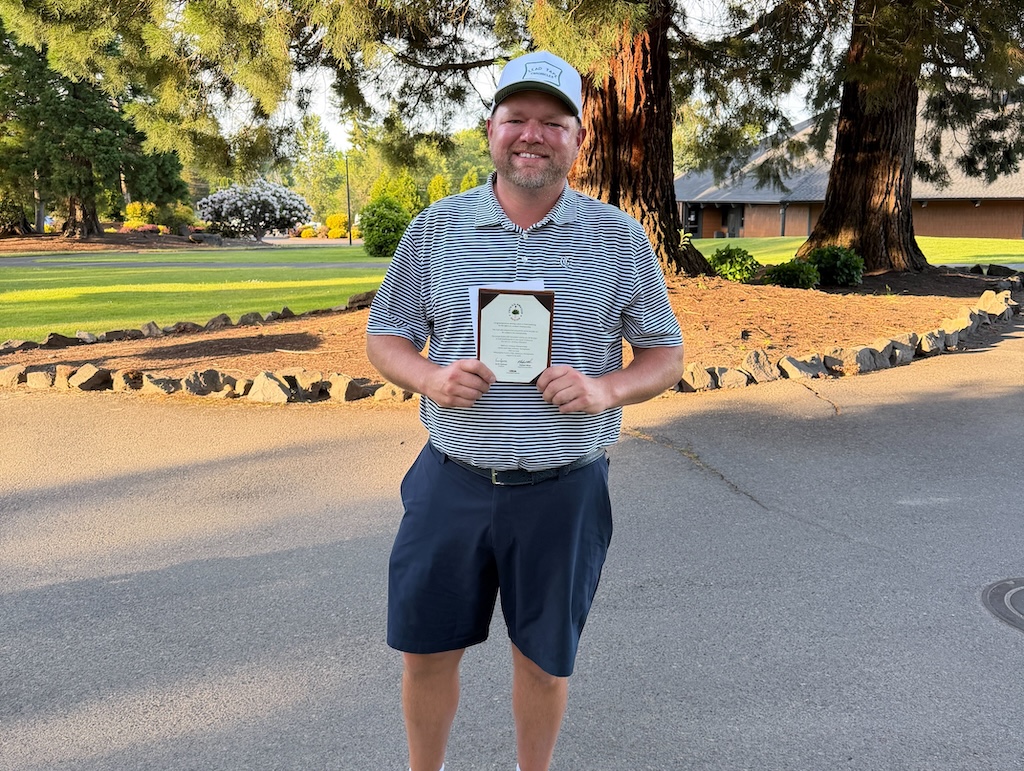
This past Monday, I played in the U.S. Amateur local qualifier at Rock Creek Country Club in Portland, Oregon. A full tee sheet from 7:30 a.m. to 1:55 p.m., the top 11 scores would make it to the U.S. Amateur final qualifying.
I teed off at 10:48 a.m.. With the 7:30 am tee time, you can get a feel for the leaders’ pace, and they were off and running on the challenging setup at Rock Creek.
View this post on Instagram
Getting to the highlight of the round on the par five 17th, a drive up the left side and 212 yards left to the front hole location. I took out a 5-iron with plans of middle of the green. The ball ended up 8 feet left of the hole, pin high. A slight downhill putt dropped in for an eagle 3 on the 17th. With the cut line looking to be anywhere from -2 to even par. This was the boost I had been waiting for all day.
With making par from the trees on 18, it was time to wait for a potential playoff with a posted score of one under par 71.
Three hours later, it was playoff time. 8 players for 6 spots. I made par on the playoff hole, which was good enough to advance to the U.S. Amateur final qualifying in July. USGA qualifiers sure deliver on all of the emotions in golf!
Club Junkie
Building my 2026 gamer WITB: Ranking the contenders and new putter projects – Club Junkie Podcast

The annual What’s In The Bag build is underway, and on this episode of Club Junkie, Brian breaks down the clubs currently leading the race for a spot in his 2026 gamer setup. From drivers and fairway woods to irons, wedges, and shafts, he ranks the equipment that’s performing best and explains what’s separating the front runners from the rest of the field.
Brian also heads into the workshop to discuss several putter projects currently on the bench. From head options and shaft choices to build ideas and testing plans, he shares what he’s working on and which putters could become serious contenders for the bag this season.
If you’re a gear junkie who loves equipment testing, club building, and the never-ending pursuit of the perfect setup, this episode is for you.
Follow Club Junkie:
Instagram: @clubjunkiepod
TikTok: @clubjunkiepod
Threads: @clubjunkiepod
X: @ClubJunkiePod
Club Junkie
Tour Edge Exotics mini driver review + TaylorMade Spider ZT Max first look – Club Junkie

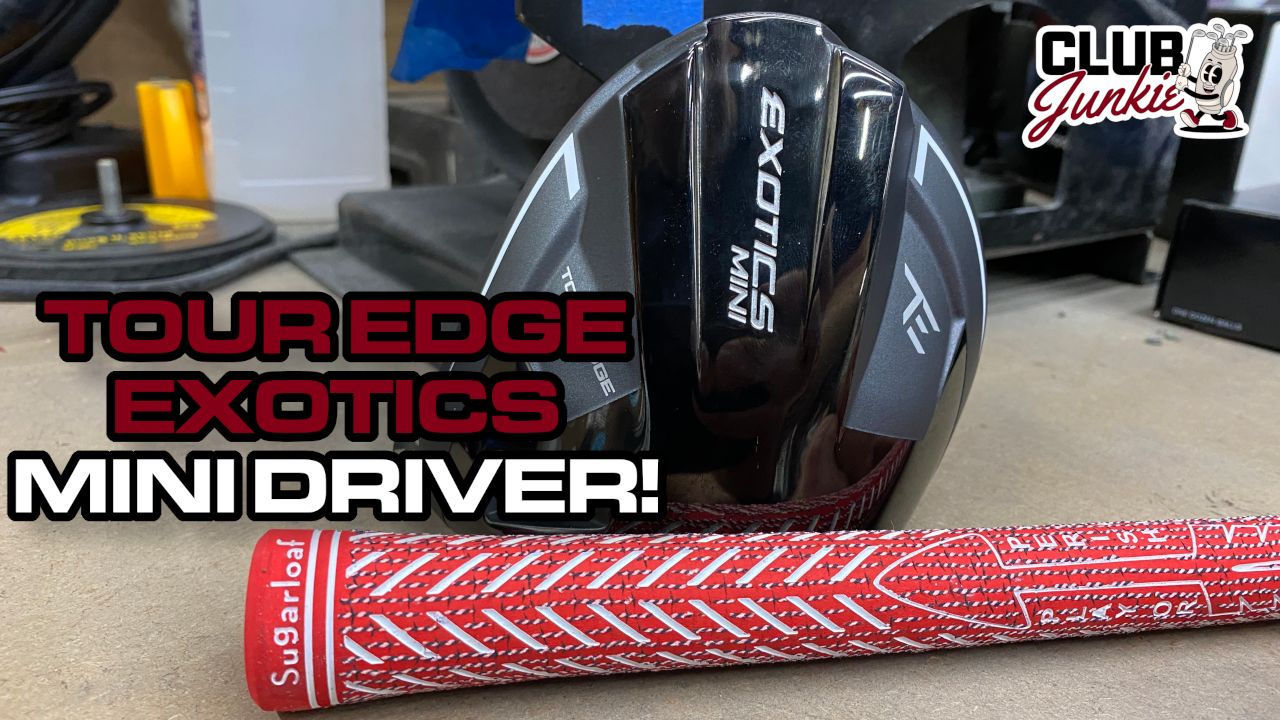
On this episode of Club Junkie, I put the new Tour Edge Exotics Mini Driver to the test and break down the performance, forgiveness, distance, and where it fits compared to a traditional driver or strong fairway wood. If you have been curious about adding a mini driver to the bag, this one is worth a look.
I also dive into the new TaylorMade Spider ZT Max putter that was recently spotted and discuss the growing zero torque putter trend. Plus, there is a closer look at the new Project X Titan Yellow shaft showing up on the PGA Tour and what makes it different from other profiles currently out there.

What’s the story behind Webb Simpson’s custom-stamped irons?

Memorial Tournament Tour Report: Rory McIlroy, Cameron Young switch up drivers, and more

Cadillac Championship Tour Report: Spieth’s sizable changes, McLaren Golf launches, and more

Russell Henley’s winning WITB: 2026 Charles Schwab Challenge

Kristoffer Reitan’s winning WITB: 2026 Truist Championship

Best irons 2026: Best irons overall, most forgiving irons, and more

J.T. Poston’s winning WITB: 2026 Memorial Tournament

Aaron Rai’s winning WITB: 2026 PGA Championship

Cameron Young’s winning WITB: 2026 Cadillac Championship

Details on Jason Day’s latest prototype Avoda iron setup


Christiaan Maas WITB 2026 (June)
Driver: TaylorMade Qi4D LS (8 degrees) Shaft: Fujikura Ventus TR Blue 6 X 3-wood: TaylorMade Qi10 (15 degrees) Shaft: Fujikura Ventus Black...


Ryan Palmer WITB 2026 (June)
Driver: Callaway Quantum Triple Diamond (9 degrees) Shaft: Project X HZRDUS Smoke Blue RDX 60 TX 3-wood: TaylorMade Qi10 (15 degrees) Shaft:...


Bud Cauley WITB 2026 (June)
Bud Cauley had >14 clubs in his bag when photographed prior to the Memorial Tournament. Driver: Titleist GTS2 (8 degrees) Shaft: Fujikura...


Hannah Green WITB 2026 (June)
Driver: Titleist GTS3 (10 degrees, D4 SureFit setting) Shaft: Mitsubishi Chemical Diamana RB 53 S 3-wood: Titleist GT3 (15 degrees,...
-
 Equipment7 days ago
Memorial Tournament Tour Report: Rory McIlroy, Cameron Young switch up drivers, and more
-
 News2 weeks ago
Russell Henley’s winning WITB: 2026 Charles Schwab Challenge
-
 Equipment4 days ago
Best irons 2026: Best irons overall, most forgiving irons, and more
-
 Whats in the Bag5 days ago
J.T. Poston’s winning WITB: 2026 Memorial Tournament
-
 Equipment1 week ago
Details on Jason Day’s latest prototype Avoda iron setup
-

 Equipment3 weeks ago
CJ Cup Byron Nelson Tour Report: Koepka and Kim’s newest putters finally get hot
-

 News2 weeks ago
Charles Schwab Challenge Tour Report: MacIntyre, Åberg and Spaun all switch putters, TaylorMade launches new Spider
-

 Equipment2 weeks ago
Details on J.J. Spaun’s surprise putter switch


Barry
Oct 28, 2019 at 10:24 pm
Loved it, great article. We just need course designers to incorporate additional tees to accommodate the appropriate length of course.
Ian
Oct 26, 2019 at 7:21 am
in Germany where I live most courses are longer than 6000m (over 6500 yards) from the mens tees. So nice theorie but no chance ????
Pete
Oct 24, 2019 at 5:41 pm
Holy cow, please re-write that first paragraph … I think you showed a LOFT and were riding the struggle bus as an author when tryIng to draw in your audience with that start. Otherwise, very interesting article.
Brandon
Oct 24, 2019 at 3:07 pm
I like to cheat at things I’m bad at, too.
larrybud
Oct 24, 2019 at 3:51 pm
Who is to say the ratio should be linear or that the ratio should use a driver for the baseline?
According to trackman, the average pga tour player carries a 6 iron 183 yards. If i use a 6 iron ratio, I would be playing a course 700 yards longer than if I use the “rule of 24”. Why is your method any better than mine?
This simple example proves the ratio should not be linear.
You can also prove this to yourself by calculating the ratio between driver and, say, 9 iron, for a pro vs your own distances.
The pro carries his 9 iron 54% of his carry distance on driver. The slower your swing speed, the larger ratio a 9 iron is to your driver.
BTW, the average carry distance on tour is 275.
larrybud
Oct 24, 2019 at 3:52 pm
sorry, didn’t mean to reply to you, but to the article.
MarkBlack
Oct 24, 2019 at 1:13 pm
Great article. Gets me thinking. The problem is determining a driver length average. I know, seems doable enough but I vary between 220 and 310 on the same hole and with the same wind. YES – no bueno. Am a 5 handicap.
5 iron much more predictable.
I feel bad for short hitters, such as many ladies. They rarely get the opportunity to have GIR, even with pretty swings. 90% of courses do not have tees for someone who drives it 150.
For me, distance of the course has less to do with my score than focus and staying on my game plan.
Thank you for a thought provoking article.
Brad M
Oct 24, 2019 at 12:38 pm
I’m always curious about the “average drive” as a basis for this type of advice. Is it avg. drive in the fairway? Avg. drive that’s playable (not needing a punch-out from trees, for example)?
I typically play 6400-6800 yards. I’m 55 years old and an 10.6 hcap, maybe I’m your target for this article, maybe I’m not. If I’m not, then you might not need to read the rest.
Here’s my barometer for fun, enjoyable golf. If I hit a decently struck drive in the fairway (for me 260), there are few 4’s and 5’s I can’t reach in regulation (or better) with my next shots. The challenge is that sometimes that’s a 4 iron, sometimes that’s a wedge. And if I miss the fairway, I want par to less likely and to use all my skill/creativity to eke one out. I like to play all my clubs, so this challenge is one of my favorite parts of the game. Will I hit a high percentage? Sometimes yes, sometimes no. But to have it be all driver/wedge would remove a significant part of the fun.
I play one very easy course, par 71, 6570yds and wide open, very little trouble. My 78’s and 79’s there are not nearly as satisfying as my 83’s and 84’s at more challenging courses, and even some of my 89’s elsewhere are more fun than driver/wedge all day.
Many of us play for the challenge, and going lower by shortening the course isn’t that fun. When I start holding up golfers behind me because I’m taking too long, I promise I’ll shorten things up. But playing shorter just to shoot more 70’s than 80’s isn’t my idea of having more fun with golf. I do completely agree that many should move up. But there are reasons why some of us don’t.
S
Oct 24, 2019 at 9:42 am
This is great stuff. Good research.
B-Dubbs
Oct 24, 2019 at 6:55 am
I like it. I’ve heard a similar thing that I like better. Take your 5 iron carry distance and multiply by 36. Carry it 150? Should play from 5400. 195? 7000 is your distance.
Brad M
Oct 24, 2019 at 12:43 pm
I think this is a better barometer, the distance variability is reduced with 5iron so you’ll have a more accurate number. This actually shows I should be playing longer than my usual 6600-6800, and I can survive at 7000, but at the moment, that’s usually too much of a grind.
paul rooney
Oct 24, 2019 at 6:09 am
Its a great insight into driving distance and length of course, it would be interesting to have a formula for SSS or slope! or a personal slope(ability) for example:
driving distance /2 – handicap = personal slope – slope = score
just a thought
freowho
Oct 24, 2019 at 4:16 am
Longleaf tee system has already done all the work. You might get sued for plagiarism!
Drew
Oct 24, 2019 at 12:11 am
I like the rule of 24. But shouldn’t we also account for handicap. My 20+ buddie can crush a drive 300 yards no problem (1 out of 5 tries). But no way should he be playing from the tips.
Bob Jones
Oct 23, 2019 at 7:24 pm
I agree wholeheartedly with the rule of 24. My research several years ago produced a number of 25, but that’s close enough.
What I do now is take the distance of my average (not best) drive, and add on the distance I carry a 7-iron. I play from the tees that give me half the par fours at that combined distance or less.